
Learning Center - What Are Bad Leads? How to Identify and Avoid Them
Are you looking to identify bad leads in your sales funnel, and possibly convert them? Here's an in depth guide to fill you in on everything you need to get started.
On this page
Bad leads are basically those prospects that aren’t worth contacting or cold calling.
That’s the short-term summation of the overall experience.
From a wider perspective, there’s a lot that goes into the dynamics of bad leads, how to spot bad leads, and qualify your prospects accordingly.
Bad Leads: How To Identify and Recognize Them
Leads aren’t inherently “bad.” It comes down to your business niche, requirements, and the type of value offering on the product that you’re selling. On a related note, these sales could be made through cold emails, cold calls, or vice versa. So, the channel/ approach also matters when pursuing leads and differentiating between good vs. bad leads.
Some of the traits associated with bad leads are:
- The inability to recognize how the said prospect matches your product features.
- The timeframe for making a decision on your end isn’t very lax.
- The pricing is too high on your end. The prospect won’t be the right match in that sense, because they’re already using something similar to your service/ product at a much lower price.
Then we have the lead generation and management system on our end. Often times, due to the type of leads that a lead generation software compiles, a wide chunk could not be worth getting in touch with.
- Fun Fact: Did you know that bad leads cost around $3 trillion annually due to poor data quality and its overall relevancy.
It calls for filtering through the entire list, and then sorting those leads as per your priorities. If you won’;t do that manually, then you need to have a solid lead capture and management software.
Usually, bad leads are also a result of low quality email lists that are bought from a 3rd party source. There’s no “harm” in doing that, but it would not be as good as the type of leads that you usually get through your own lead capture forms, and interaction with prospects, day in; day out.
On a related note, lack of nurturing leads is another factor that falls into the equation of bad leads. In other words, poor lead nurturing strategies. They are a result of inadequate follow-up with leads, and how they’re contacted during the “cold” stage.
Speaking of the cold state, where leads are contacted for the first time, we can’t deny the importance of cold calling.
Imagine a scenario where a sales rep calls someone without too much information on the prospect. What would be the possible outcome? Chances are that they’ll drop the call, or they’ll probably mention getting back later, but that won’t be happening anytime soon.
Even for argument’s sake, if a prospect does seem interested in the value offering from your reps’ end, what if there’s a technical question in the form of cold calling objection? In this case, although research stacks up with how the response is made, communication skills also pan in.
Ultimately, bad leads come from the assumption that a general buyer persona can be created based on what a lead might look like. In fact, it should be around the desired outcome a lead would expect. So, you have your product’s value and pricing factor to play with.
Common Telltale Signs of Bad Leads That Show Your Sales Team Might Be Wasting Time
Every single wasted conversation on a sales rep’s end also means that it’s wasted time that could’ve been spent elsewhere.
Some of the common signs that usually help with identifying bad leads are:
Leads Ghosting Your Sales Reps:
Ghosting usually occurs when a sales rep gets in touch with a prospect. Usually, the other side seems interested, and they’ll also mention getting back later, but it never happens.
It could possibly mean two things:
- Their problem isn’t urgent, or they might be getting a better price elsewhere.
- At the time of the call, the other party may have been evaluating alternatives, and they are biding time on their end. Or it might be possible that they got a better deal and never bothered to get in touch later.
In either case, the pitch didn’t align properly.
The best course of action would be to not push harder. A one time follow up is okay, but contacting thise folks repeatedly shows desperation. And ultimately, it devalues the product you’re standing behind.
If the same lead revisits your product page, or demo page, then you can send a second follow up message. This could say:
Subject: Hey, are you still looking for a solution?
Or something that is urgent, but doesn’t sound pushy on your end.
Leads are interested, but they go mute after the cold email/ cold call!
Of all the reasons that stand out, the fact that your sales rep didn’t satisfy the lead when they objected to something during the cold call is kind of a red flag.
So, send them in with qualified leads, and ask them to do proper research on the prospects’ pain points BEFOREHAND. Research stacks up in terms of the knowledge that your sales team has in terms of the leads’ business requirements, a general idea about the price bracket they might be looking to go for, or existing price vs. whatever your price is, and vice versa.
On a technical level, prospects may ask questions around how your product or service functions or fulfills a certain business requirement. This could only be answered if the sales reps know the ins and outs of your product offerings, value proposition, and overall features.
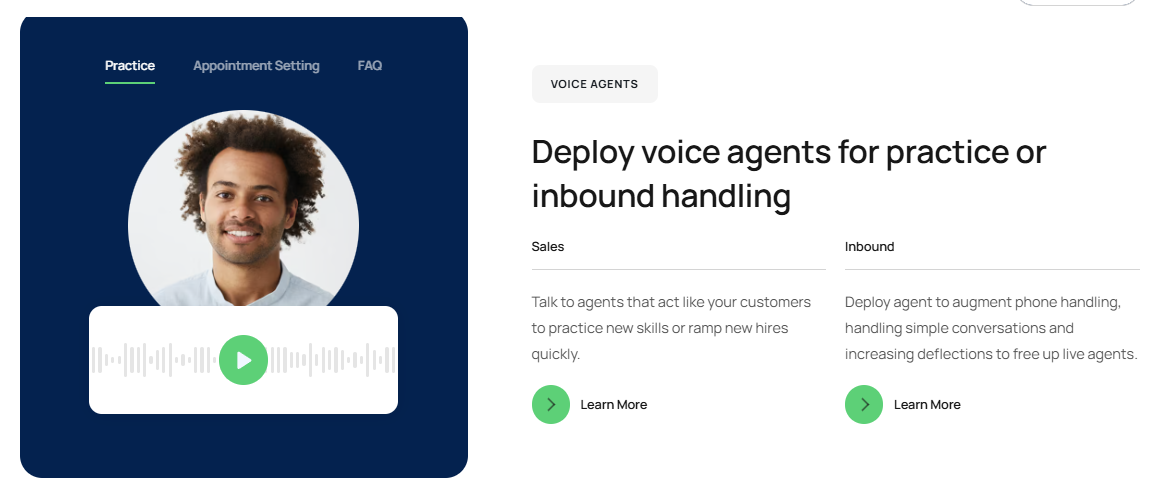
Finally, we’ve got the communication barrier tied to speaking skills. It’s the art of speaking effectively and convincing leads on the spot to close the deal, or setup a date for another call that would lead to deal closure.
For argument’s sake, if the sales rep is lacking in communication skills, that can easily be filled up through practice calls with peers, or through software assistance. Speaking of the latter, Trellus.ai comes with a built-in AI practice bot module that’s basically set up to train SDRs on cold calling skills.
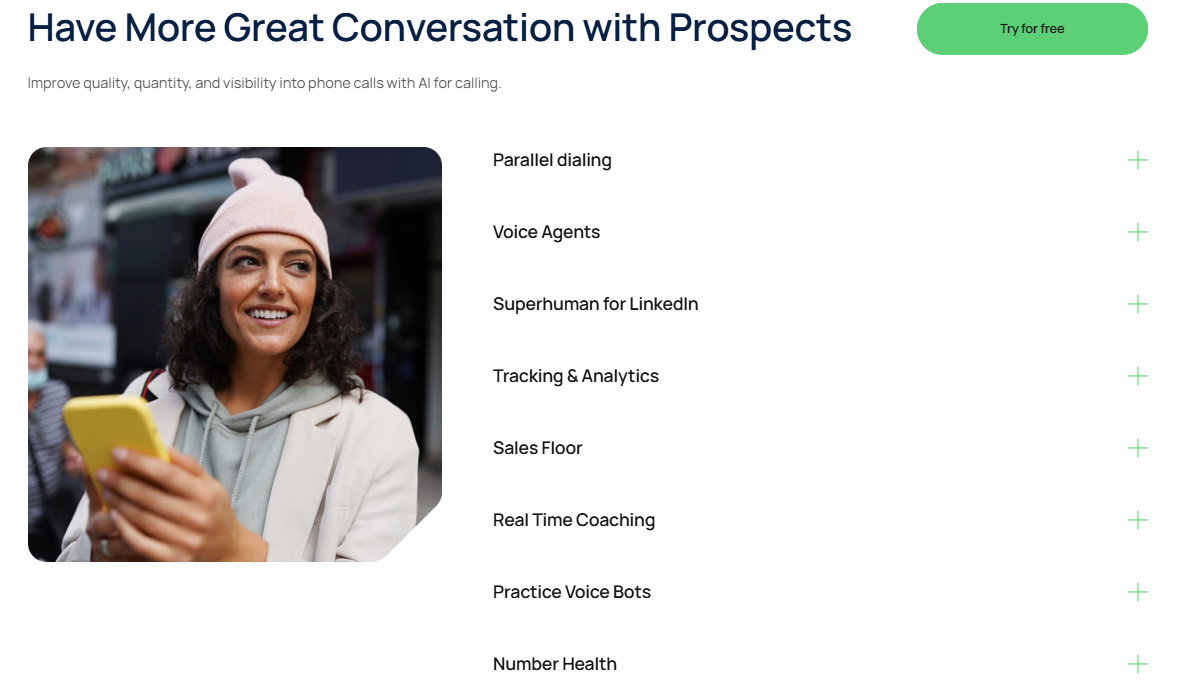
These practice calls are against a well trained AI agent that acts as a human prospect. These calls are a great way for polishing up rep’s skill on all forefronts. Besides that, the platform also has a Live AI Coaching system that gives cues to SDRs in real time, during the course of an ongoing call.
Reps can get ideas and insights into formulating a proper response as a comeback to cold call objection, and they can steer the conversation on their own terms that way.
Sales cycles keep stretching, but deals aren’t closing
There’s a specific kind of frustration that creeps in when deals seem alive, but never actually move forward. Prospects reply, they attend calls, sometimes they even ask thoughtful questions. Yet somehow, everything drags on. Weeks turn into months, and your pipeline starts to feel heavy instead of promising.
This is usually one of the clearest signals that something is off with qualification. When sales cycles get longer without an increase in win rates, it often means your team is investing time and energy into conversations that were never likely to convert in the first place. In simple terms, too many bad leads are slipping through and clogging the system.
What’s really going on here
A bloated pipeline can look impressive on paper, but in reality, it slows everything down. Sales reps end up juggling too many conversations, many of which lack urgency or real buying intent. This creates a false sense of progress, where activity is high but outcomes remain flat.
Leads that are not ready to buy tend to ask for more time, more information, more follow ups. None of that is inherently bad, but when the majority of your pipeline behaves this way, it becomes a pattern. Instead of moving deals forward, your team is stuck maintaining them.
How to fix it without burning your team out
Requalify your mid funnel leads
Not every lead deserves equal attention, especially once they are already in your pipeline. This is where requalification becomes critical.
Take a step back and evaluate your existing opportunities with fresh eyes. Look at behavioral signals instead of relying only on initial qualification. Pay attention to things like response frequency, engagement with emails, demo participation, and website activity.
Leads show interest, but lack budget, authority, or real need
You’ve probably seen this play out before. A lead seems engaged, replies quickly, maybe even joins a demo. Then suddenly, the deal falls apart. They do not have the budget, they are not the decision maker, or the problem you solve is not urgent enough for them.
This is one of the most expensive forms of bad leads because it creates the illusion of progress. Time is invested, momentum builds, and then everything collapses late in the process.
What this usually points to
This situation often starts much earlier than it appears. Leads are entering your pipeline too quickly without proper filtering. Sometimes the targeting is off, sometimes the outreach reaches the wrong roles within a company.
In other cases, the criteria used to qualify leads at the top of the funnel is simply too loose. That allows unfit prospects to move forward, only to be disqualified much later when more time has already been spent.
How to tighten things up
Revisit your lead scoring criteria
If a large portion of your leads drop off due to budget or lack of authority, your scoring system needs a reset.
Look at the patterns in lost deals. Are smaller companies consistently unable to afford your solution? Are early stage startups showing interest but failing to convert? These insights should directly influence how you score and prioritize leads.
Strong scoring criteria should reflect real buying capability, not just surface level engagement.
Leads don’t fit your ideal customer profile (ICP)
At first glance, everything seems fine. Leads are replying, meetings are getting booked, and activity looks healthy. But once conversations go deeper, it becomes clear that many of these prospects are not a good fit.
Their budget is off, their industry does not align, or their needs fall outside what your product solves. This is another classic case of bad leads entering your pipeline too easily.
What’s causing the mismatch
This usually comes down to weak targeting at the top of the funnel. When your filters are too broad, you attract a wide range of prospects, many of which will never convert.
It can also be a result of outdated or incomplete data. Even a strong prospect can appear unqualified if your information about them is inaccurate.
How to realign your pipeline with the right audience
Strengthen your ICP filters
Your ideal customer profile should act as a strict gate, not a loose guideline.
Think about the characteristics of your best customers. Consider factors like company size, industry, revenue, growth stage, and specific challenges they face. These attributes should guide both your outbound and inbound efforts.