10 Best CRM Tools for Cold Calling Success in 2026 [Ranked & Reviewed]
Looking for a CRM with dialer? We've got you covered with a list of the best CRM for cold calling that come with all the bells and whistles to get you started. Read on...
![10 Best CRM Tools for Cold Calling Success in 2026 [Ranked & Reviewed]](/_media/trellus-marketing-preview-20261014-v1/_assets/cdn.prod.website-files.com/633ef5e495fbc55a9bea70b1/68027340f5e843b0e109f1aa_Best%20CRM%20for%20Cold%20Calling_%20Features%20That%20Make%20or%20Break%20a%20Sales%20Team.webp)
On this page
Our Top Picks


Cold calling isn’t dead.
It’s been actively evolving over the course of last few years. The same goes for CRMs online because they’ve been under development since 1950s.
Yes, you read that right. Regardless of the best CRM for cold calling, or for any other purpose we use these days, the origins of a customer relationship management system took off from a pen and paper trail.
What we see these days on a virtual sales floor are two things. One is a CRM, and the other one’s a Dialer; it could be any dialer for that matter.
The important thing is that outbound sales calling companies work in a very fast paced environment, where time is LITERALLY money!
On that note, companies need latest software that offer time saving, performance optimization toward processes, better workflow and of course, better conversions. The best of the both world comes in the form of CRM for cold calling that have integrated dialers.
If you can get your hands on such software, you can definitely do a lot more. And yes, switching between a dialer and a CRM will be the least of your concern since the CRM itself is offering a built-in dialer.
The problem is that despite this integration that’s, to some extent, available in modern-day CRMs, not all CRM for cold calling are worth it. Some of these programs have a basic dialer, while other lack the ai dialing feature, which is pretty much required in terms of advanced experience.
That aside, here’s another thing: with so many options out there, how do you pick the best CRM for cold calling that fits your team’s workflow?
Well, today, you’re in luck because we comparing top CRMs, and helping you decide which one will actually move the needle for your sales reps.
Quick Verdict: The Best CRM Tools for Cold Calling in 2026
How We Ranked the Best CRMs for Cold Calling
Most CRM rankings focus on general popularity instead of what actually matters for outbound sales performance.
This guide evaluates tools specifically through the lens of cold calling CRM workflows, sales dialing performance, and outbound sales productivity.
Instead of rewarding bloated feature lists, we focused on whether these platforms help SDRs and sales teams move faster, have better conversations, and generate more pipeline.
Built-In Dialer or Dialer Compatibility
Cold-calling teams need either:
- A native dialer built directly into the CRM
- Or clean compatibility with external AI dialers, VoIP systems, and power dialing software
We evaluated whether each CRM supports:
- Power dialing — Automatically calling the next lead in queue
- Predictive dialing — Dialing multiple numbers simultaneously and routing answered calls to reps
- Parallel dialing — Calling multiple prospects at the same time to maximize connects
- Click-to-call workflows — One-click outbound dialing from inside the CRM
The faster reps move between conversations, the more productive outbound operations become.
Automatic Call Logging and CRM Hygiene
Manual note-taking destroys outbound momentum.
The best CRM software for cold calling automatically logs:
- Call outcomes
- Notes
- Dispositions
- Follow-up reminders
- Call recordings
- Contact activity
Good CRM hygiene matters because reps should spend time talking to prospects instead of updating spreadsheets.
Call Recording, Coaching, and Conversation Intelligence
Modern outbound sales teams rely heavily on:
- Call recordings
- AI transcription
- Conversation intelligence
- Objection tracking
- Coaching workflows
Managers use these systems to identify patterns, improve scripts, and coach reps more effectively.
This is also where Trellus differentiates itself. Beyond call recording and analytics, the platform supports:
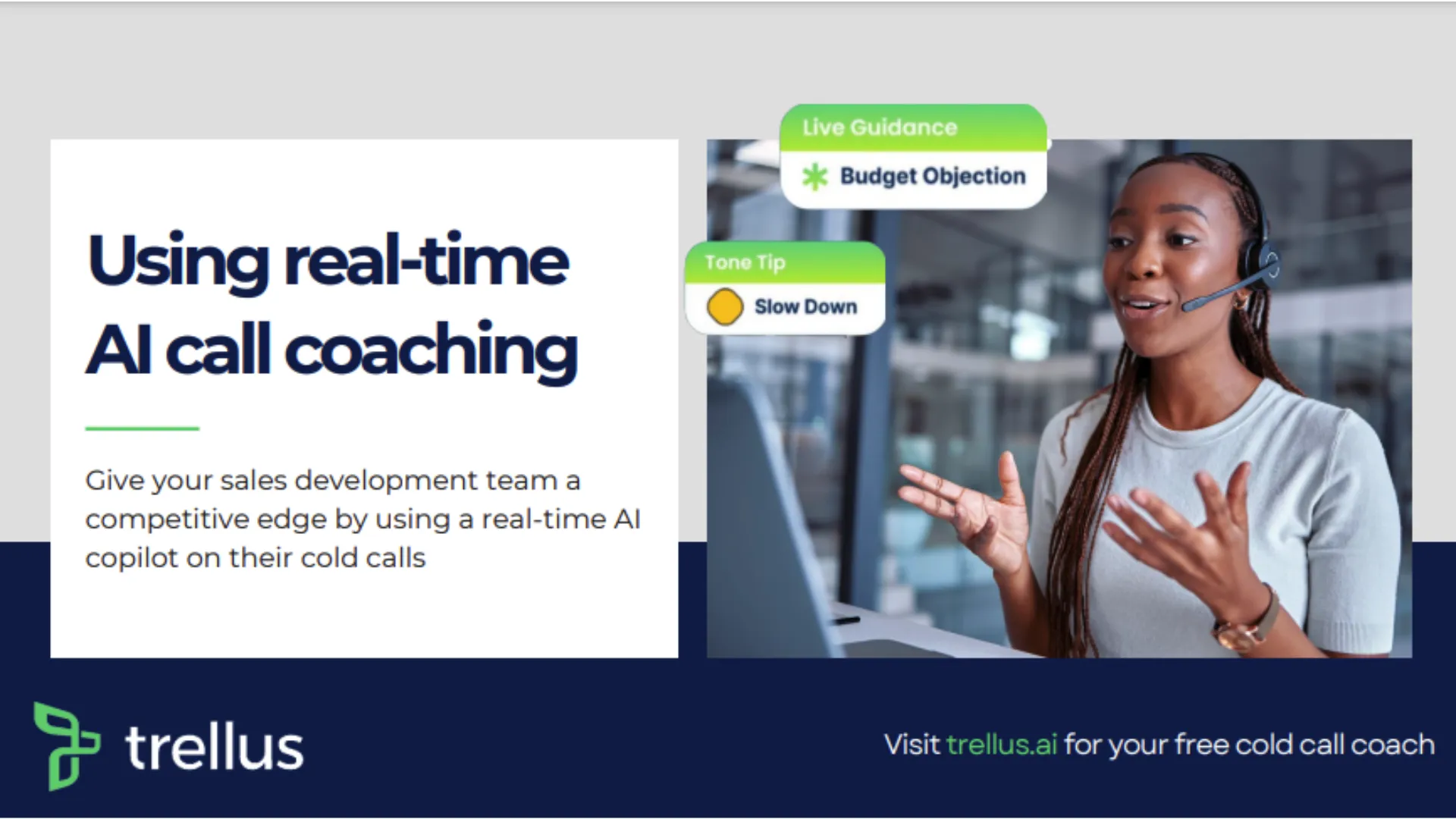
- Real-time AI coaching
- Objection detection
- Live conversational guidance
- Mock-call practice environments
That combination makes it more than just a dialer.
Caller ID Reputation and Spam Prevention
Caller ID reputation has become one of the biggest hidden problems in outbound sales.
Even strong sales teams struggle when numbers are repeatedly flagged as spam.
We evaluated whether platforms help protect outbound performance through:
- Caller ID reputation support
- Number rotation
- Spam prevention workflows
- Better outbound number management
Because ultimately, even the best scripts fail if prospects never answer.
Workflow Speed Across CRM, Email, LinkedIn, and Follow-Up
Modern outbound sales rarely happens over the phone alone.
The best cold calling CRM systems support workflows across:
- Calling
- Email follow-ups
- LinkedIn outreach
- Pipeline updates
- Reminders
- Task automation
Sales reps perform better when the workflow feels connected rather than fragmented across multiple tabs.
Pricing, Scalability, and Team Fit
There is no single CRM that works perfectly for every sales organization.
The best choice depends on:
- Team size
- Call volume
- Existing tech stack
- Budget
- Reporting requirements
- Whether you need a full CRM replacement or an outbound execution layer
Some companies need enterprise customization.
Others simply need an AI dialer for sales teams that works with the CRM they already use.
CRM vs Dialer vs Sales Engagement Platform: What Do You Actually Need?
One of the biggest sources of confusion in outbound sales software is understanding the difference between:
- CRMs
- Dialers
- Sales engagement platforms
Many tools overlap, but they solve very different problems.
Understanding which category you actually need can prevent expensive software mistakes.
Choose a CRM If You Need Pipeline, Contacts, Deals, and Reporting
A CRM is primarily your system of record.
It stores:
- Accounts
- Contacts
- Deals
- Tasks
- Notes
- Pipeline stages
- Revenue reporting
Platforms like Salesforce, HubSpot, Pipedrive, and Zoho are designed to organize customer data and sales workflows.
CRMs are essential, but they are not always optimized for high-speed outbound calling.
Choose a Dialer If You Need More Conversations Per Hour
Dialers are execution tools.
Their goal is to increase:
- Calls per hour
- Connect rates
- Rep efficiency
- Workflow speed
Modern AI dialers, parallel dialers, and power dialers reduce:
- Manual dialing
- Tab switching
- Idle time
- Repetitive voicemail work
This is especially important for outbound SDR teams running high-volume prospecting campaigns.
Choose a Sales Engagement Platform If You Need Multi-Touch Sequences
Sales engagement platforms help teams coordinate:
- Email sequences
- Calls
- LinkedIn touches
- SMS
- Automated follow-ups
These tools often integrate with CRMs rather than replacing them.
They are useful when outbound workflows rely on multiple communication channels.
Choose Trellus If You Already Have a CRM but Need AI Calling Performance
Many sales teams already have a CRM they like.
The real bottleneck is not pipeline storage.
The bottleneck is:
- Calling speed
- Coaching quality
- Connect rates
- Workflow execution
- Conversation performance
That is where Trellus fits.
Instead of replacing your CRM, Trellus acts as an AI-powered cold-calling workspace that improves the execution layer around your existing system.
The platform combines:
- AI-powered smart dialing
- Parallel dialing
- Real-time coaching
- Call recording
- Analytics
- Objection detection
- Caller ID reputation support
- LinkedIn workflow management
For many teams, that is a far more practical upgrade than migrating to a completely new CRM.
The 10 Best CRM Tools for Cold Calling Success in 2026
We understand that the aforementioned highlights could be too much, as in beyond your go-to CRM’s feature scope.
Don’t worry, here’s a list of different software that work as an ai dialer, crm with dialer, or a customer relationship management system that allows the integration of a dialer.
Read on…
1. Trellus - Best AI Cold-Calling Layer for CRM-Driven Sales Teams
Having mentioned all these CRMs for dialers, what if you already have a robust CRM system, and you’re looking for a reliable ai dialer?
Modern sales teams tied to large-scale businesses and call centers that get contract work in bulk for selling products or services, need more than just speed.
They need smart dialing, more so we can call it parallel dialing, better conversation rates, and tools that help them connect with the right prospects, not just dial more numbers.
That’s where Trellus comes in.
1. AI-Powered Smart Dialing
Many CRMs with ai or non ai dialers rely on the traditional dialing technology.
Why so?
Thats because these tools are not primarily meant for dialing. They are meant for customer relationship management side of things. It’s only due to advancement in technology integration that we’ve got a combination of a bunch of best free CRM with dialer options available.
For instance, Float is a great CRM, and it doesn’t have a dialer. While we didn’t initially mention it on the list above, the program has plenty of features that enable rich communication, better resource management, built-in budgeting system and plenty of other bells and whistles to get your the ball moving.
The “problem” is that Float doesn’t have a dialer. Or atleast, when the last time ,we checked it, it didnt have one. The point being, CRMs are not traditionally made to dial.
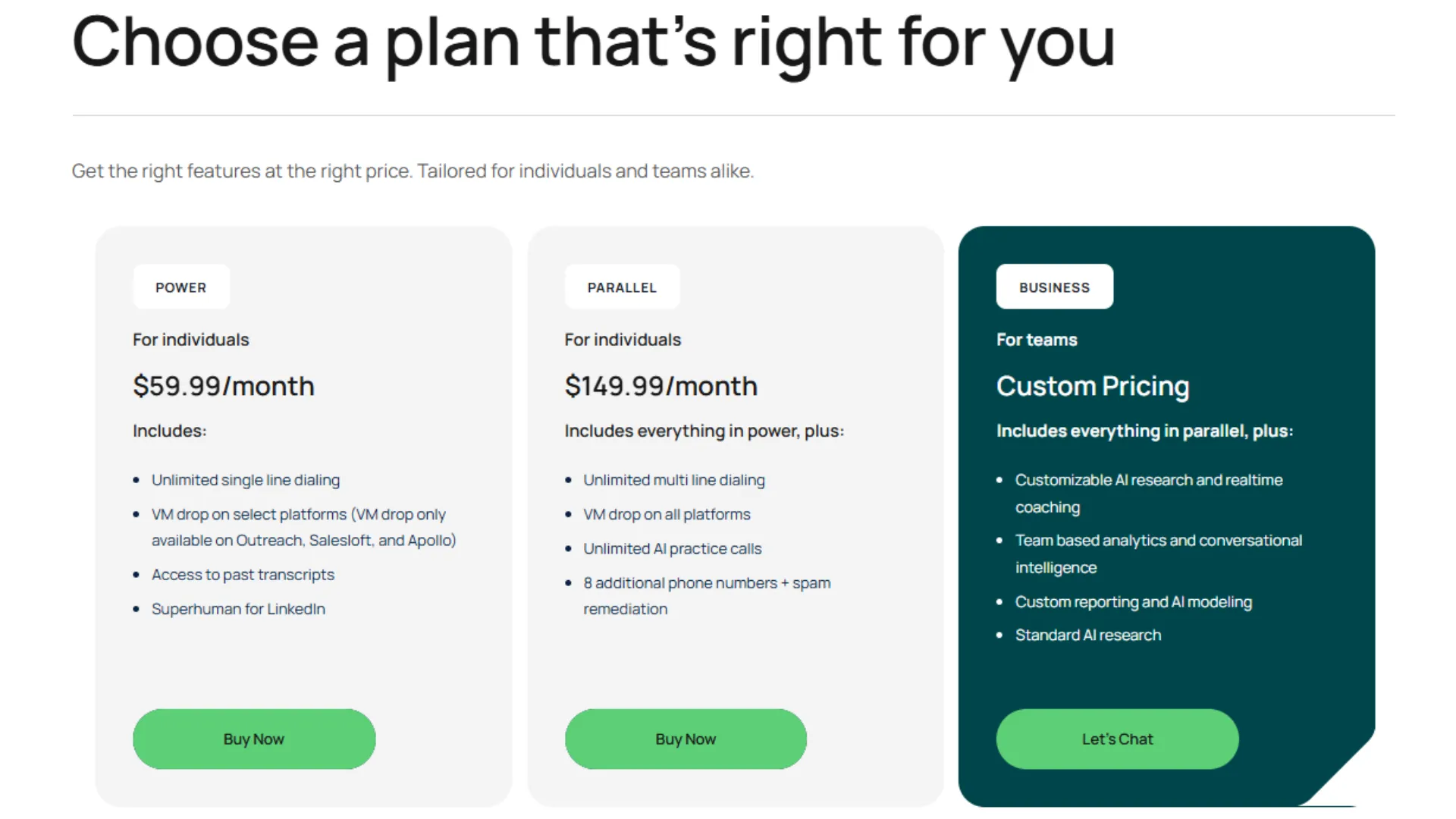
But with Trellus, you get access to a superlightweight Google Chrome extension that works as a cold calling solution, sales enablement software, a robust tool with conversational AI technology, LinkedIn lead management system and whatnot.
This means fewer wasted calls and more actual conversations with leads that matter the most.
2. More Lines = More Connections
Speaking of close, it maxes out at power dialing and predictive dialing.
What if you need to dial multiple prospects at the same time, AND in real time?
We’re talking about have a software with robust parallel dialing system.
To easily handle large lead pools, Trellus lets you dial up to 5 lines at once, dramatically increasing connect rates.
3. Better Coaching & Analytics
A simple CRM with dialer gives you basic call logs, but Trellus goes further with it by offering plenty of features:
- Call Recording & Playback – Review conversations to improve pitches.
- Real-Time Analytics – See which reps are crushing it and who needs help.
- Objection Detection – AI flags common objections so managers can train reps better.
Trellus’s live coaching system works through a signature AI technology that recognizes the ongoing call’s behavioral pattern.
Anytime there’s a possibility for your teams’ callers to come up with better cold call objections and overall better conversational skills, Trellus helps to mitigate the situation with cues that show up during an ongoing live call.
This is the best way for your SDRs to not only brush up on their conversational skills right then and there, but also learn from their experience so that such calls can go better the next time there’s a similar situation at hand.
At the same time, you can warm up your conversational skills with a practice session before hitting the phone to make every live conversation count.
Trellus offers mock calls where agents can engage in practice sessions against A.I. prospects to develop new skills and expand their comfort zone.
4. Spam Prevention
Nothing kills outreach faster than getting marked as spam. Trellus uses caller ID reputation management to keep your numbers clean, while other AI dialers don’t offer this level of protection.
5. LinkedIn Superhuman
Take back control of your LinkedIn Inbox and never miss a message again.
See all your LinkedIn Messages, including Sales Nav, in one place.
Organize all your DM’s by snoozing, categorizing, and tracking conversations.
In other words, move faster than ever before with snippets and hotkeys.
2. Close — Best CRM with Native Power Dialing
Best for
Outbound sales teams that spend most of their day on the phone.
Close has earned a strong reputation because it is one of the few CRMs that was genuinely built around outbound calling workflows from the beginning.
Many CRM platforms add calling functionality later through integrations or lightweight dialer add-ons. Close took a different approach by making outbound communication central to the product itself. That difference becomes obvious the moment sales reps begin using the platform daily.
The CRM is heavily optimized for teams that spend large portions of the workday making calls, sending follow-ups, managing conversations, and pushing prospects through outbound pipelines.
One of the reasons Close performs well for cold calling is workflow consolidation. Reps can handle calling, SMS, email sequences, pipeline management, and follow-up activity from within one environment instead of jumping between disconnected tools. For outbound teams making hundreds of calls weekly, that reduction in friction can have a major impact on productivity.
Close’s native power dialing system is one of its biggest advantages. Reps can move rapidly between conversations without manually entering phone numbers or constantly reopening contact records. Predictive dialing support further improves outbound efficiency by helping teams increase call activity throughout the day.
Key features
- Native power dialing
- Predictive dialing
- Built-in SMS and email workflows
- Automatic call logging
- Conversation intelligence
- Workflow automation
- Call recording
- Pipeline management
Limitations
- Less optimized for social selling workflows
- Enterprise customization is limited compared to Salesforce
Pricing note
Pricing scales upward depending on advanced calling and automation requirements.
Verdict
Close is one of the strongest all-in-one CRM options for outbound teams that want a native dialer instead of assembling multiple tools.
3. HubSpot Sales Hub — Best CRM for Marketing and Sales Alignment
Best for
Teams combining inbound marketing, outbound sales, and CRM reporting inside one ecosystem.
HubSpot Sales Hub works particularly well for companies where outbound sales exists alongside inbound marketing rather than operating independently.
Unlike phone-first outbound systems such as Close, HubSpot approaches sales through a broader revenue-operations perspective. The platform connects CRM workflows with marketing automation, website tracking, email engagement, attribution reporting, and customer journey visibility.
That broader ecosystem is exactly why many companies adopt HubSpot.
Sales teams gain far more context before making outbound calls because they can see how prospects previously interacted with the business.
Key features
- Marketing and CRM alignment
- Email sequences
- Pipeline reporting
- Lead tracking
- Workflow automation
- Built-in calling support
- Conversation tracking
Limitations
- Native calling functionality is relatively basic
- Pricing rises quickly at scale
- Heavy outbound teams may outgrow its calling features
Pricing note
Free plans exist, but advanced automation and sales features require premium tiers.
Verdict
HubSpot is a strong CRM if your cold-calling team works closely with inbound marketing, but heavy outbound teams may need a stronger calling layer.
4. Pipedrive — Best Visual Sales Pipeline CRM with Dialer Integrations
Best for
Small and mid-sized sales teams that want simple pipeline visibility.
Pipedrive has remained popular for years largely because of its simplicity.
Many CRM systems overwhelm sales teams with excessive configuration, bloated interfaces, and complicated onboarding. Pipedrive takes the opposite approach by focusing heavily on visual pipeline management and straightforward workflow organization.
That simplicity makes it especially attractive for small and mid-sized sales organizations that want structure without enterprise-level complexity.
From a cold-calling perspective, Pipedrive works best as the organizational center of a broader outbound stack rather than as the calling engine itself.
Key features
- Visual sales pipeline management
- Workflow automation
- Reporting dashboards
- Email sync
- Dialer integrations
- Task automation
Limitations
- No strong native dialing system
- Requires external calling tools for serious outbound operations
Pricing note
Generally affordable for growing SMB teams.
Verdict
Pipedrive is a good choice for small and mid-sized teams that want a clean sales pipeline, but it needs a dedicated calling integration to become a serious cold-calling setup.
5. Salesforce Sales Cloud — Best Enterprise CRM for Cold-Calling Workflows
Best for
Large enterprises with complex sales operations.
Salesforce continues to dominate the enterprise CRM market because of the sheer depth of customization and operational control it offers.
For large organizations running sophisticated sales processes across multiple departments, regions, and revenue teams, Salesforce provides a level of flexibility that few competitors can match.
That flexibility is exactly why Salesforce appears inside so many enterprise outbound environments.
Key features
- Enterprise workflow automation
- Extensive reporting
- AI features through Einstein
- Deep customization
- Third-party dialer integrations
- Large ecosystem support
Limitations
- Expensive implementation costs
- Requires admin resources
- Steep learning curve
Pricing note
Costs rise significantly depending on customization and integrations.
Verdict
Salesforce is best for large teams with complex processes, dedicated admins, and the budget to connect the right dialer and data tools.
6. Zoho CRM — Best Value CRM with Calling Add-Ons
Best for
Budget-conscious outbound sales teams.
Zoho CRM occupies an interesting position in the market because it balances affordability with a surprisingly broad set of business features.
Many CRM platforms force growing teams into expensive pricing structures long before they fully scale. Zoho appeals to smaller and mid-sized organizations by offering flexible CRM functionality at a much lower entry cost.
Key features
- Workflow automation
- Lead capture
- Call support
- Reporting dashboards
- Sales pipeline management
- CRM customization
Limitations
- Interface can feel dated
- Advanced outbound workflows may require additional integrations
Pricing note
One of the more cost-effective CRM platforms for growing teams.
Verdict
Zoho is a practical choice for teams that want a cost-conscious CRM with enough calling and automation flexibility to support outbound sales.
7. Freshsales — Best Simple CRM for Built-In Communication
Best for
Small and mid-sized teams that want communication features without enterprise complexity.
Freshsales is designed for organizations that want communication functionality directly embedded inside the CRM without the operational heaviness of enterprise systems.
One reason smaller sales teams gravitate toward Freshsales is that it combines several important sales functions into a relatively approachable interface.
Key features
- Built-in calling features
- Lead scoring
- Workflow automation
- Contact management
- Call recording
- Email integration
Limitations
- Less customizable than Salesforce
- Advanced outbound teams may outgrow it
Pricing note
Accessible pricing for SMB sales organizations.
Verdict
Freshsales is best for small to mid-sized sales teams that want a CRM with communication features without the complexity of Salesforce.
8. noCRM — Best Lightweight CRM for Small Outbound Teams
Best for
Founders, solo sellers, and lean outbound teams.
noCRM takes a very different approach compared to traditional CRM systems.
Most CRM platforms focus heavily on database structure, reporting systems, and pipeline administration. noCRM instead prioritizes action-oriented selling.
The platform is intentionally lightweight because it was built for teams that care more about maintaining prospecting momentum than managing highly sophisticated CRM processes.
Key features
- Action-focused workflows
- Lightweight lead management
- Task tracking
- Easy onboarding
- Minimal setup complexity
Limitations
- Limited enterprise reporting
- Not built for complex pipeline structures
Pricing note
Affordable for small outbound organizations.
Verdict
noCRM is a strong fit for solo sellers, founders, and small outbound teams that want a simple way to keep call actions moving.
9. NetHunt CRM — Best CRM for Gmail-Based Cold Calling
Best for
Sales teams heavily dependent on Gmail and Google Workspace.
NetHunt CRM is designed specifically for organizations that spend most of their working time inside Gmail and Google Workspace.
Instead of forcing reps to constantly move between inboxes and separate CRM platforms, NetHunt embeds CRM workflows directly into Gmail itself.
That integration is the platform’s core strength.
Key features
- Gmail-native CRM workflows
- Pipeline management
- Email tracking
- Contact organization
- Workflow automation
Limitations
- Limited advanced dialing functionality
- Less suitable for large outbound operations
Pricing note
Competitive pricing for smaller sales teams.
Verdict
NetHunt is a useful CRM for Gmail-first teams, but it is not the strongest option for high-volume cold-calling operations.
10. Attio — Best Modern CRM for Startup GTM Teams
Best for
Startups, product-led companies, and modern GTM teams.
Attio has gained significant attention because it approaches CRM design very differently from older legacy platforms.
Traditional CRM systems often feel rigid, bloated, and operationally outdated. Attio instead focuses heavily on flexibility, modern usability, and customizable relationship workflows.
Key features
- Automatic enrichment
- Flexible CRM customization
- Modern UI
- Startup workflow support
- Relationship tracking
Limitations
- Limited native outbound calling capabilities
- Requires external dialers for high-volume cold calling
Pricing note
Pricing varies based on workspace and team requirements.
Verdict
Attio is a strong modern CRM for startups, but teams with high call-volume targets should pair it with a dedicated dialer or AI calling layer.
Which CRM for Cold Calling Should You Choose?
The best CRM depends entirely on where your outbound bottleneck actually exists.
Some teams need better reporting.
Others need more conversations.
And many simply need a faster calling workflow layered on top of their existing CRM.
Choose Trellus If You Want More Conversations From Your Existing CRM
Trellus is ideal when your CRM is not the problem.
If your reps struggle with:
- Dialing speed
- Workflow friction
- Coaching
- Connect rates
- Manual logging
then adding an AI-powered calling layer often creates more impact than replacing the CRM itself.
Choose Close If You Want the Most Phone-First CRM
Close is one of the strongest choices for outbound teams that want:
- CRM management
- Native dialing
- SMS
- Calling workflows
inside one unified system.
Choose HubSpot If Marketing Attribution Matters
HubSpot works best when outbound sales is tightly connected to:
- Marketing automation
- Landing pages
- Campaign attribution
- Inbound lead generation
It is particularly useful for revenue teams combining sales and marketing analytics.
Choose Salesforce If You Already Run Enterprise Sales Operations
Salesforce makes the most sense for:
- Enterprise sales organizations
- Complex reporting environments
- Multi-team workflows
- Dedicated admin teams
The platform becomes especially powerful when paired with advanced outbound dialers.
Choose Pipedrive, Zoho, or Freshsales If You Need CRM Value and Flexibility
These platforms work well for SMB and mid-market teams looking for:
- Affordable CRM software
- Simpler onboarding
- Workflow flexibility
- Outbound integrations
They become significantly stronger when paired with dedicated cold-calling software.
Common Mistakes When Choosing a CRM for Cold Calling
Many sales teams choose software based on marketing hype instead of actual workflow needs.
These are some of the most common mistakes.
Mistake #1: Buying a CRM When the Real Problem Is Dialing Speed
A CRM stores the work.
A dialer accelerates the work.
If reps spend most of their day:
- Clicking between tabs
- Manually dialing
- Logging notes
- Updating records
then the organization may need a better outbound execution layer instead of a new CRM.
Mistake #2: Ignoring Caller ID Reputation
Spam labeling destroys connect rates.
Even strong prospect lists and scripts underperform when outbound numbers develop a poor reputation.
Caller ID reputation management should be treated as a real outbound performance factor.
Mistake #3: Choosing Based on Feature Count Instead of Workflow Fit
The best CRM is the one reps consistently use.
Heavy enterprise software can become a productivity problem if it slows down daily outbound activity.
Workflow speed matters.
Mistake #4: Forgetting About Coaching and Conversation Quality
More calls do not automatically create more pipeline.
Teams also need:
- Coaching
- Conversation review
- Objection handling
- Feedback loops
- AI conversation intelligence
Otherwise, outbound volume simply scales bad conversations.
Mistake #5: Loading Bad Data Into a Good CRM
Even the best CRM cannot compensate for:
- Poor contact data
- Invalid numbers
- Duplicate records
- Weak segmentation
Verified contact information and clean CRM hygiene are foundational to outbound success.
How to Build a High-Performance Cold-Calling Stack
The best outbound teams combine multiple systems together instead of relying on one tool to do everything.
Step 1: Store Accounts, Contacts, and Deals in Your CRM
Your CRM should remain the central system of record.
This includes:
- Accounts
- Contacts
- Deals
- Notes
- Pipeline stages
- Reporting
Step 2: Use Verified Contact Data Before Reps Start Calling
Good outbound performance starts with clean data.
Teams should prioritize:
- Verified mobile numbers
- Direct dials
- Segmentation
- Deduplication
- Accurate enrichment
Step 3: Use Trellus to Dial Faster and Coach Better Calls
Trellus acts as the execution layer that transforms CRM records into real outbound conversations.
Its combination of:
- AI dialing
- Parallel dialing
- Coaching
- Analytics
- Objection handling
helps teams increase calling productivity without changing CRMs.
Step 4: Automate Follow-Up Tasks and Call Outcomes
Strong outbound systems automatically manage:
- Call notes
- Dispositions
- Follow-up reminders
- Next-step tasks
- Follow-up emails
Automation reduces administrative work and keeps reps focused on selling.
Step 5: Review Analytics Weekly
High-performing outbound teams consistently review:
- Connect rates
- Call volume
- Meetings booked
- Pipeline generated
- Rep performance
- Objection trends
Continuous optimization matters far more than raw activity volume.
FAQs About CRM Tools for Cold Calling
What is the best CRM for cold calling in 2026?
Trellus is one of the best AI cold-calling layers for CRM-driven sales teams, while Close remains one of the strongest native CRM-with-dialer platforms.
The right choice depends on whether you need a full CRM replacement or a calling-performance layer for your existing stack.
Do I need a CRM with a built-in dialer?
Not always.
A built-in dialer is convenient, but many teams prefer pairing their existing CRM with a dedicated AI dialer or cold-calling platform for better flexibility and outbound performance.
What is the difference between a CRM and cold-calling software?
A CRM stores:
- Accounts
- Contacts
- Deals
- Tasks
- Notes
Cold-calling software focuses on:
- Dialing speed
- Call automation
- Voicemail drops
- Call recording
- Coaching
- Conversation performance
Can Trellus work with my current CRM?
Yes.
Trellus is best positioned as a calling-performance layer for teams that want to keep their CRM while improving:
- Dialing workflows
- Coaching
- Connect rates
- Outbound execution speed
Which CRM is best for small sales teams that cold call?
Close, Pipedrive, Zoho, Freshsales, noCRM, and HubSpot can all work well depending on:
- Budget
- Call volume
- Workflow needs
- Native dialing requirements
Which CRM is best for enterprise cold-calling teams?
Salesforce remains the enterprise standard for complex sales operations.
However, high-volume outbound teams typically pair it with dedicated dialers or AI calling platforms.
Is HubSpot good for cold calling?
HubSpot is strong for organizations that combine:
- Marketing automation
- Sales workflows
- Pipeline visibility
- Attribution reporting
However, heavily outbound-focused teams may eventually require a stronger dialing layer.
What features matter most in a CRM for cold calling?
The most important features include:
- Dialing capability
- Automatic call logging
- Call recording
- AI coaching
- Analytics
- Voicemail drop
- Caller ID reputation support
- Follow-up automation
- CRM integrations
Final Verdict: The Best CRM for Cold Calling Depends on Your Bottleneck
There is no single perfect CRM for every outbound sales organization.
The stark reality is that the right platform depends on the bottleneck your team is trying to solve.
If your CRM already works well but your outbound execution feels slow, disconnected, or inefficient, adding an AI-powered calling layer like Trellus can create far more impact than replacing your CRM entirely.
Meanwhile, teams looking for an all-in-one phone-first CRM may find Close more practical, while enterprise organizations may still prefer Salesforce for scalability.
Ultimately, the best CRM for cold calling, AI sales calling software, and outbound sales platform is the one that helps your reps spend less time managing tools and more time having productive conversations.