Our Top Picks


Choose a sales coaching platform around the moment your SDRs need help. A rep who freezes during a pricing objection needs something different from a new hire rehearsing an opener, or a manager trying to find one useful call to review before a one-to-one.
Start with that problem, then shortlist two or three tools. Don't replace a working call-review system just because another vendor has added an AI label. And don't buy live prompts when the real problem is that nobody has agreed on what a good discovery question sounds like.
Trellus publishes this guide and sells dialing and coaching software. Product descriptions below are based on current public vendor materials checked October 5, 2026, not equivalent hands-on testing or a scored ranking. The evaluation worksheet is a suggested method, not a survey or a report of customer results.
Before, during or after the call?
Before the call: Look for practice scenarios that match the buyer, objection and next step your reps actually encounter. A useful rehearsal gives the rep a specific change to try, then lets them try again.
During the call: Check where guidance appears, what triggers it and whether a rep can read it without losing the conversation. A prompt that arrives after the prospect has moved on may be accurate but still unhelpful.
After the call: Look for a recording or transcript tied to the feedback, a rubric your managers understand and a way to turn one observation into the next coaching session. A score alone doesn't tell a rep what to do differently.
These categories overlap. The distinction is which job you need first, not a claim that each vendor offers only one type of coaching.
11 platforms to put on an SDR coaching shortlist
For each option, separate the documented capability from the question you should test. The order below isn't a league table. Ask every shortlisted vendor to demonstrate the same objection, the same permitted call and the same follow-up coaching task.
Trellus: coaching beside a supported calling workflow
Trellus is worth considering when reps want to keep their supported CRM or sales platform and add dialing with guidance during calls. Its live-coaching workflow presents a transcript, prospect context, pace and talk-time cues, and coaching suggestions beside the conversation. Managers can describe call moments and the behavior they want guidance to reinforce.
Try this: Bring a recurring objection and the exact worklist your team uses. Ask to see a supported call from that list, the guidance when the objection comes up, and the call record afterward. Check the relevant integration page and confirm feature access for your plan. If your main need is formal training certification or review of an existing recording library, start by testing those jobs in your current system.
Gong: structured feedback on recorded conversations
Gong's scorecards provide structured call feedback. Its AI Call Reviewer can suggest answers to scorecard questions or review calls automatically. The documentation also describes finding calls by score or scorecard and reviewing team-level scorecard performance; access depends on the company's plan and assigned seat.
Try this: Give a manager and a rep the same call. Can both find the moment behind a disputed score, agree on what happened and record a useful next action? Gong belongs on the shortlist when consistent call review is the priority, especially if the recordings are already there.
Nooks: connecting cold-call review with practice
Nooks AI Coaching describes automatic call scoring, roleplays based on real calls, a searchable call library and live battlecards. That combination is relevant when you want a cold-call problem identified in review to become a practice exercise before the next calling session.
Try this: Choose one objection from a call your team may use. Ask to turn it into a roleplay, inspect the feedback and then see how the related battlecard appears during a call. Judge the usefulness of that sequence rather than treating the vendor's published outcome numbers as a forecast for your team.
Outreach Kaia: guidance within a sales-engagement workflow
Outreach's conversation-intelligence workflow includes recording and transcription, live content cards, meeting summaries and action items. Playlists let teams collect recordings for review. Put Kaia on the shortlist when the coaching task needs to sit alongside the team's Outreach workflow.
Try this: Ask to see the exact call type your reps use, a relevant content card during the conversation and a manager sharing one moment afterward. Confirm which calls, integrations and package support that sequence.
Salesloft Conversation Intelligence: call evidence and review
Salesloft Conversation Intelligence describes live battlecards, searchable conversations and AI summaries. Its coaching guide also covers criteria-based scoring, Key Moments and Gametapes for reviewing examples. The former Clari Copilot product URL now redirects to this Salesloft page, so this guide doesn't count it as a second independent choice.
Try this: Find one example of a well-handled objection and one that needs work. Can a manager share them with enough context for the rep to understand the difference? If you already use Clari or Salesloft, verify your actual account's product access; a changed website doesn't establish that packages or entitlements are identical.
Highspot: practice tied to enablement material
Highspot's AI role-play uses content, messaging, training and deal context to build practice scenarios. Its feedback connects to skill frameworks, Rep Scorecards and dashboards. Highspot's current site identifies the product as Highspot by Seismic; evaluate the product and offered package, not an assumed separate vendor relationship.
Try this: Bring an approved messaging document and ask to build a scenario from it. Check whether the feedback reflects that material and whether a manager can see a specific skill improve across attempts.
Mindtickle: structured practice and readiness
Mindtickle's AI sales role-play provides a conversational AI buyer, immediate feedback, scenario creation and review, and progress reporting for administrators. It is relevant when a manager needs a repeatable practice assignment, rather than relying only on whichever customer calls happened that week.
Try this: Build a scenario for a common objection, review the scoring with a manager and assign a second attempt. Ask how scenario quality is reviewed and how progress reports distinguish completing an exercise from demonstrating the intended behavior.
Avoma: reviewing the evidence behind a call score
Avoma's call-scoring workflow presents scores with reasoning and timestamps. Its product materials describe filtering calls by score, leaving comments and reviewing rep trends. Those capabilities make it a candidate when managers need to move from a score to the actual conversation.
Try this: Pick a score you disagree with. Can you locate the relevant exchange, understand the rationale and give the rep better feedback? Ask the vendor to demonstrate the rubric controls available in the package you're considering instead of assuming every scorecard can be customized.
Jiminny: organizing calls for manager-led coaching
Jiminny's sales-coaching tools include call libraries and playlists, configurable frameworks and scorecards, and Team Insights for performance trends. That is a useful combination to evaluate when the immediate job is finding, discussing and reusing examples from real calls.
Try this: Have a manager assemble a short playlist around one behavior and leave feedback using your rubric. Check recording coverage for your call sources. A call library doesn't by itself establish that live prompts are available on every type of call.
SecondNature: conversational rehearsal
SecondNature's public discovery-call practice page describes generating a buyer persona from a website URL and practicing a conversation with an AI buyer, followed by feedback. It supports considering the product for rehearsal; it doesn't establish the production package, administrative controls or suitability of a scenario for your team.
Try this: Check the generated buyer context before practicing. Then ask an unexpected but realistic follow-up question and see whether the conversation and feedback remain relevant. Have a manager review the feedback before treating it as a readiness decision.
Allego: role-play with a shared coaching rubric
Allego's AI sales-coaching materials describe unscripted, adaptive role-play, AI scorecards using a shared rubric, structured feedback and skill or readiness dashboards. Shortlist it when you want practice assignments and manager review to use a consistent standard.
Try this: Use the same rubric for an initial attempt and a retry. Can a rep identify the behavior to change, and can a manager verify that change in the conversation? Check what the dashboard measures before interpreting a higher score as readiness for a live buyer.
A coaching-platform evaluation worksheet
The old version of this article included an illustrative survey framed as measured findings. That material has been removed. The worksheet below asks you to gather observations from your own team instead.
Make one copy for each shortlisted platform. Choose an evaluation period and participating reps before starting. Keep the scenarios, rubric and definitions the same; write “not observed” when a feature hasn't been demonstrated.
1. Name the behavior you want to change
Write a sentence a manager could hear on a call. “Ask a follow-up question before responding to the price objection” is more useful than “improve confidence.” Record how coaching works today, including how long a rep waits for feedback. You need a starting point, not a flattering after-only screenshot.
2. Use the same practice scenario
Give each platform the same buyer context and objection. Have the rep attempt it, review the feedback and try again. Record the actual suggestion, whether it fits your product and whether the second attempt addresses the issue. Don't compare one tool's polished vendor demo with another tool's unconfigured trial.
3. Challenge one piece of feedback
Use a call you have permission to share. Ask a rep and manager to review the same moment independently before looking at the automated feedback. When they disagree with the software, can they locate the evidence and explain the difference? Record missed context and incorrect suggestions as carefully as helpful ones. If reviewers disagree with each other, use a calibration session before treating a score as a performance judgment.
4. Follow the advice into normal work
Check what happens the next day. Can the rep find the feedback, practice the suggested change and bring it to the next conversation? Note extra logins, setup steps and manager review time. For live assistance, record whether a prompt arrived while it was still useful and whether it distracted the rep. These are observations to collect, not benefits to assume.
5. Compare behavior before meeting totals
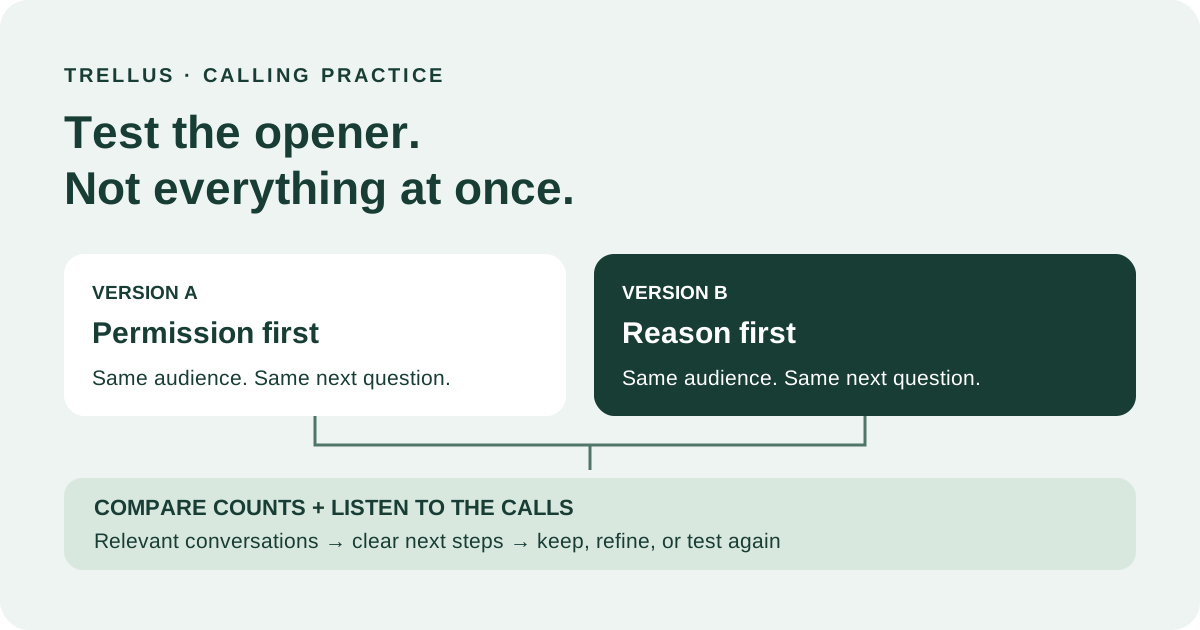
Track the specific behavior from step one on comparable calls. If you also compare meetings booked, record the number of live conversations, the audience, the dates and any changes in call volume or offers. Keep booked meetings separate from held meetings and qualified opportunities. A small pilot can help you decide what to test next; it doesn't establish that software caused a revenue lift.
6. Write down the full buying requirement
Ask for the exact seats and features in the quote, usage limits, implementation work, required integrations, recording access and retention controls. Include the time someone will spend configuring scenarios and reviewing feedback. Confirm the workflow on the package you intend to buy, not just in a demonstration account.
7. Make a decision someone else can understand
Use this note: “For our [team and calling workflow], [platform] helped with [specific observed behavior]. It took [observed setup and review effort]. We haven't verified [open question]. We'll [continue, run another check or stop] because [reason].”
A fictional example: A manager wants reps to ask one clarifying question before answering “we already have a vendor.” In the demonstration, the prompt appears after the rep has already ended the conversation. The advice may be sensible, but that example doesn't establish useful live timing. The next check is another permitted call with the prompt visible, not a claim that the tool improved objection handling.
When you should keep what you have
If your existing software can surface the right calls and your manager has time to discuss them, a clearer rubric and a regular review habit may be the next step. Buying another platform won't decide what your team should coach.
Choose a practice-focused tool when rehearsal is the missing piece. Choose conversation review when managers need to see and discuss actual calls. Choose live assistance when the rep needs help during the conversation—and test its timing in the workflow you will really use.
For Trellus, the next step is to see live coaching with your team's calling workflow. Bring an objection, the platform your reps work in and the behavior you want to improve. That gives you something concrete to evaluate before changing the stack.


Power and parallel dialing in your CRM.