Our Top Picks


Finding prospects. Researching companies. Writing personalized emails. Logging calls. Updating CRMs. Deciding who deserves another follow up.
All of those tasks consume hours every week.
The result is something every sales leader has seen before. Reps spend half the day preparing to sell and far less time having conversations that generate revenue.
That is exactly where the new generation of leading AI platforms for automated outreach has found its place.
Thanks to the way technology has advanced over the last couple of years, especially the AI aspect, because that’s been more of a stepping stone, we’ve got tons of solutions right now. Needless to say, mere “Outreach” isn’t the issue anymore.
You could slap a bunch of messages and send them through an automated outreach software, but that won’t get the job done. It requires personalization, a bunch of tweaks and background research for you to see any modicum of conversions, but we’ll get to that later in detail.
For now, let’s say you are conceptually askingWhat are the best AI platforms for automated outreach in 2026? The answer depends on how your team sells.
A startup booking twenty demos every month needs something very different from a global sales organization running hundreds of outbound campaigns across multiple markets.
- Some teams care about massive contact databases.
- Others need AI coaching during live conversations.
Then there’s the remote sales team aspect that may need just better overall communication without any near misses. The difficult part worth noting in these situations is separating products with genuinely useful AI from platforms that simply added "AI" to their marketing pages.
Without further ado, we’re going for a detailed drill down of the best leading AI platforms that are hot right now for outreach, sales and workflow optimization.
Along the way, we'll also answer questions like:
- How do AI outreach platforms improve response rates and booking rates?
- Can AI automate outreach while maintaining personalization and authenticity?
- Which AI outreach platforms work across email, phone, and LinkedIn?
- How to implement AI outreach automation without losing the human touch?
If your outbound team wants more conversations without hiring twice as many SDRs, you're in exactly the right place.
What Makes an AI Automated Outreach Tool Different From Traditional Sales Software?
Focus on the “automation” part, and that pretty much sums it up for you. Automated outreach software is a counterpart of traditional programs that were used for contacting prospects. The main difference is that automation has helped to improve a bunch of different things, in a good sense, of course.
It has completely eliminated or minimized time and resource allocation around prospect research, personalized messaging, appropriate time to call someone, prioritization or deprioritization of accounts, workflow management, and vice versa.
Modern Automated prospecting and outreach software changes different things aside from workflow in more of an end to end optimization manner. You are looking at better scaling, numbers, performance, and other things too, besides outreach.
If prospects consistently reply on Tuesday mornings, many modern systems begin prioritizing those send windows automatically. If one messaging style outperforms another across hundreds of campaigns, AI adjusts future recommendations.
According to Salesforce's State of Sales research, cited by ADAI News, 83 percent of sales teams already use AI or plan to adopt AI tools within the next twelve months.
That number tells a much bigger story than software adoption. Outbound sales have entered a completely different era.
Types of AI Outreach Software
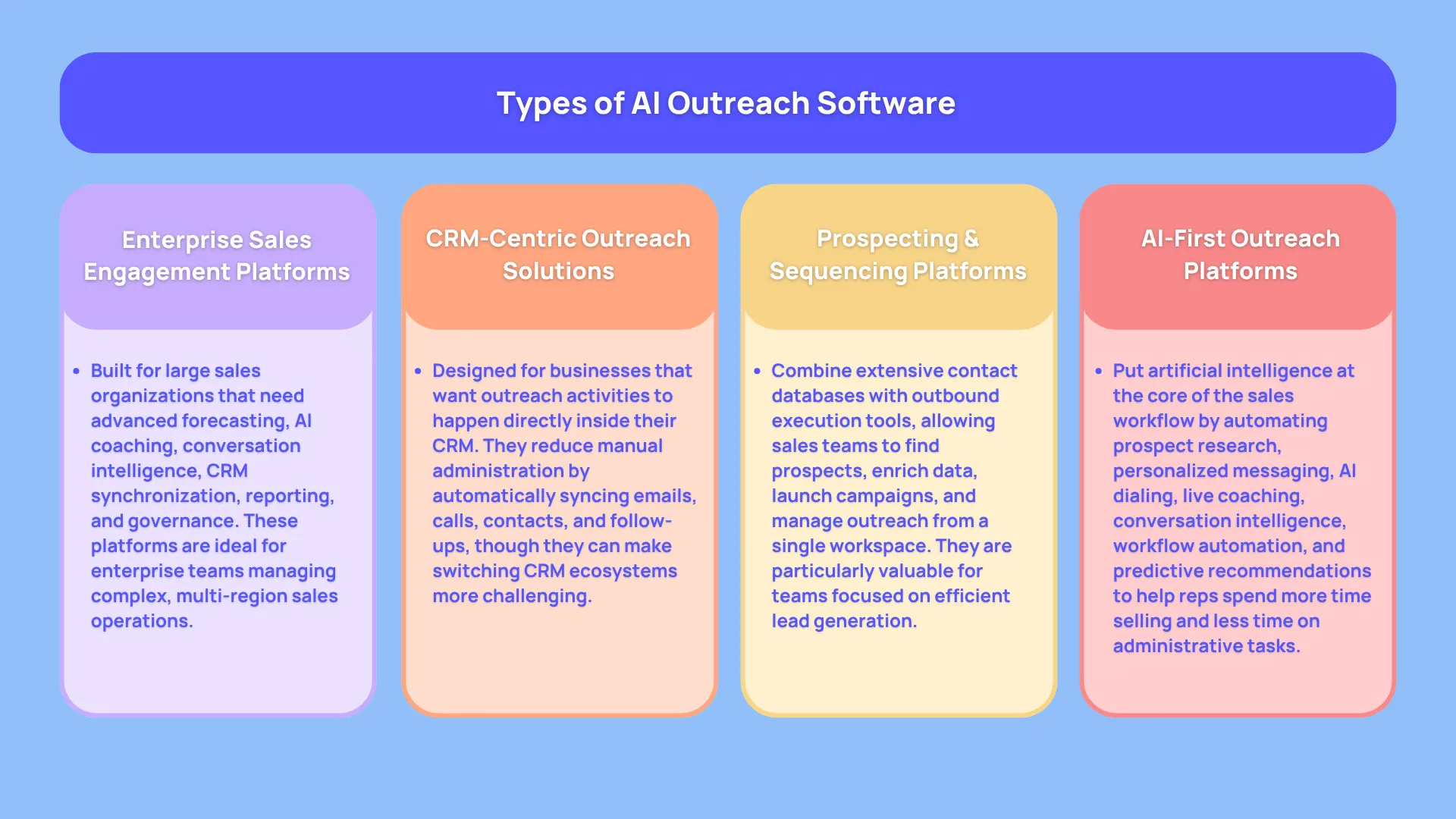
Yes, you guessed it right. There are multiple types of digital solutions that people use daily. Some of them are partly automated, while others come with full on automated features, alongside the usual deliverables that are part of the tech stack.
Understanding the major categories helps narrow your search much faster.
Enterprise Sales Engagement Platforms
Large sales organizations typically need much more than email sequencing.
They require forecasting, territory management, conversation intelligence, AI coaching, advanced reporting, permission controls, CRM synchronization, and support for thousands of active opportunities.
Enterprise platforms combine all those capabilities inside one ecosystem.
Products like Outreach.io and Salesloft dominate this segment because they were designed for organizations managing large outbound teams across multiple regions.
These platforms make sense when multiple departments share customer data and every sales activity contributes toward larger revenue forecasts.
For smaller businesses, the investment can become difficult to justify.
The software is powerful, although many startups never use enough features to recover the higher subscription costs.
CRM Native Outreach Platforms
Many companies prefer keeping every customer interaction inside the CRM their sales team already uses every day.
CRM native solutions follow that philosophy.
Rather than forcing sales representatives to jump between several applications, outreach becomes part of the existing workflow.
Activities, conversations, follow ups, contact records, and reporting stay synchronized automatically.
That reduces administrative work and minimizes duplicate data.
The trade off is flexibility.
Once your outreach process depends heavily on one CRM ecosystem, changing platforms later becomes a much larger project.
Data Plus Sequencing Platforms
These products combine prospect databases with outbound execution.
Sales representatives search millions of contacts using company size, industry, technology stack, hiring activity, intent signals, funding events, and dozens of other filters.
Once the ideal audience has been identified, campaigns launch immediately without exporting spreadsheets between separate applications.
Apollo has become one of the strongest examples of this category because it combines contact intelligence with sequencing, CRM capabilities, AI research, and calling inside one workspace.
Teams looking for efficient prospecting often find tremendous value here because every stage of the outbound process happens inside one interface.
AI First Outreach Platforms
A newer category has emerged over the last couple of years.
These platforms place artificial intelligence at the center of the workflow instead of adding AI features onto existing software.
Their emphasis extends beyond email generation.
Many combine Conversational AI for sales outreach, live coaching, AI dialing, conversation intelligence, personalized messaging, workflow automation, and predictive recommendations throughout every stage of outbound sales.
Several also include AI voice and messaging automation tools that help sales representatives handle larger call volumes while maintaining personalized conversations.
For organizations looking to maximize selling time, this category has become increasingly attractive because the AI assists before, during, and after every customer interaction.
1. Trellus: AIO Sales Enablement, Automated Cold Outreach and Conversion Platform
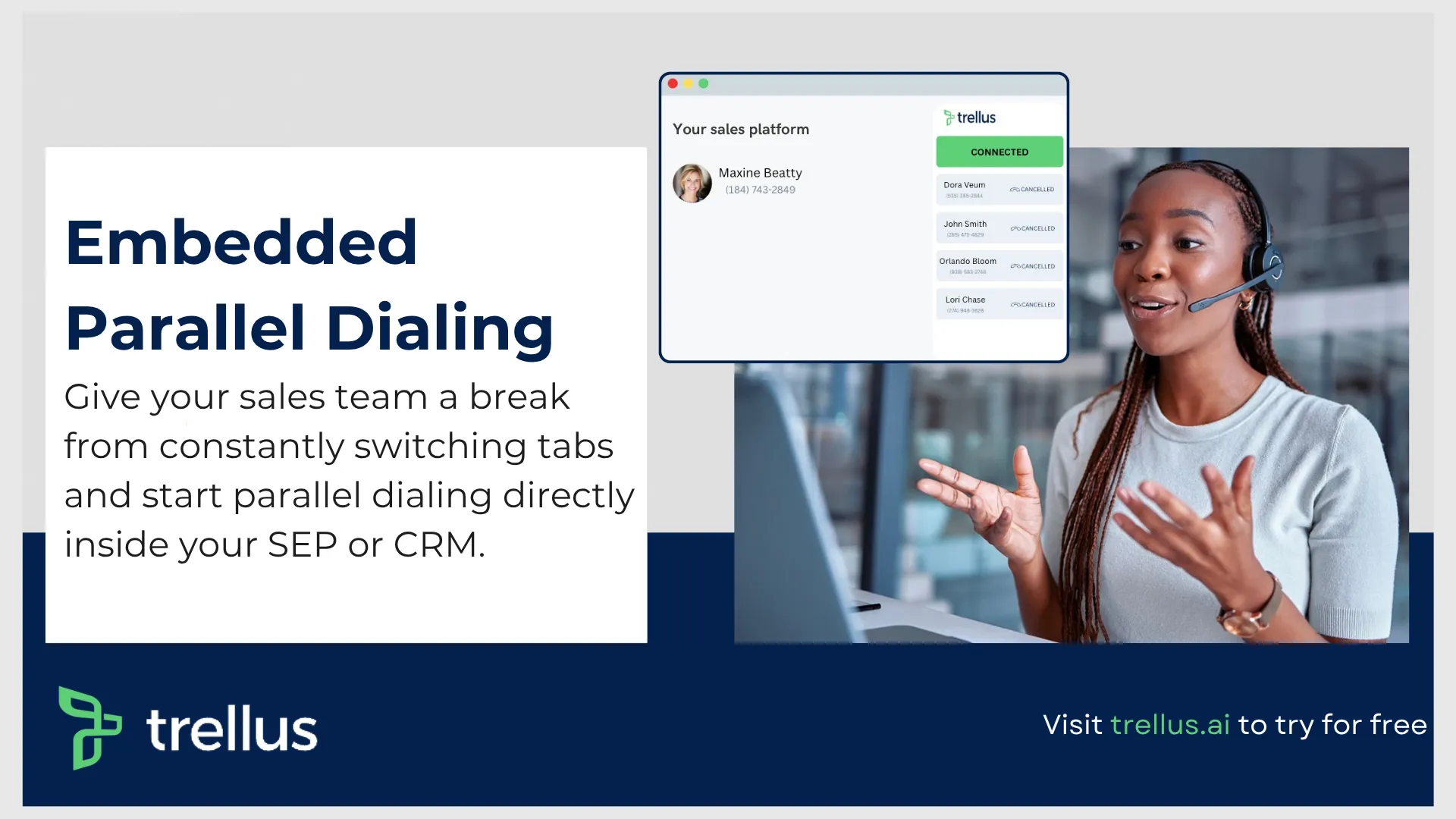
Trellus earns the top position among the leading AI platforms for automated outreach for a variety of reasons.
We created this platform around a simple observation, i.e. sales representatives do not lose deals because they lack email templates. They lose opportunities because administrative work, context switching, manual dialing, CRM updates, and scattered workflows consume hours that could have been spent talking to buyers.
Every minute spent researching an account or logging call notes is a minute that could have been another live conversation.
Trellus.ai removes much of that operational friction.
It combines intelligent dialing, AI coaching, conversation intelligence, workflow automation, and prospect research inside a single workspace, giving SDRs everything they need without bouncing between five or six browser tabs.
For outbound teams measured on meetings booked, conversations started, and pipeline created, that difference becomes obvious very quickly.
While many products market themselves as AI powered email and outreach automation, this platform places equal emphasis on phone outreach because conversations still close deals faster than inboxes alone.
That makes it particularly attractive for teams running high volume outbound campaigns where speed and consistency matter just as much as personalization.
Another strength is how naturally artificial intelligence fits into the selling process.
The AI is not trying to replace the salesperson. On the contrary, our technology supports them before the call, during the conversation, and after the meeting ends.
- Prospecting becomes faster.
- Calling becomes smarter.
- Follow ups happen sooner.
Managers gain better visibility without asking every representative to complete another spreadsheet.
For companies searching for Automated prospecting and outreach software that keeps human conversations at the center of outbound sales, few platforms feel as purpose built.
Best features
Before looking at the highlights below, it is worth understanding why these capabilities matter together.
Many competitors offer one or two AI features.
Few connect prospecting, calling, coaching, and workflow automation into a single experience.
That connected workflow reduces context switching, shortens administrative work, and allows representatives to remain focused on selling.
AI Parallel Dialing
Sales representatives spend an incredible amount of time waiting.
- Waiting for calls to connect.
- Waiting through voicemail.
- Waiting for unanswered numbers.
Parallel dialing changes that equation.
The platform intelligently works through multiple prospects, helping representatives reach more live conversations during every calling block without sacrificing compliance or visibility.
For outbound teams measured on activity and meetings booked, this alone can transform daily productivity. The main downside to parallel dialing is that numbers are called simultaneously, so you never know who will pick up the call first.
Therefore, have your research notes and script ready because you DO NOT want to mess up a high ticket call on parallel dialing.
Real Time AI Sales Coaching
Coaching becomes valuable when it happens during the conversation, not three days later.
The AI analyzes live calls and provides guidance that helps representatives navigate objections, maintain momentum, and handle difficult moments with greater confidence.
New hires ramp faster because experienced coaching becomes available from day one. Managers also spend less time correcting repeated mistakes after the fact.
AI Practice/ Mock Calls
Every SDR remembers how uncomfortable the first cold calls felt.
Practice environments solve that problem.
Representatives can rehearse conversations against AI personas that simulate realistic buyer responses, helping them build confidence before speaking with actual prospects.
It creates a safer learning environment while improving consistency across the sales organization.
LinkedIn Superhuman
Researching prospects often consumes more time than contacting them.
This feature surfaces relevant account information while representatives browse LinkedIn, helping them personalize outreach without opening multiple research tools.
Small productivity improvements like this compound throughout the day.
Conversation Intelligence
Every customer interaction contains valuable information.
The platform captures those insights automatically, helping managers identify successful messaging, common objections, coaching opportunities, and performance patterns across the team.
That visibility becomes increasingly valuable as outbound organizations grow.
Workflow Automation
Administrative work quietly steals selling time.
Follow up reminders, activity logging, CRM synchronization, and repetitive tasks happen automatically, allowing representatives to stay focused on customer conversations instead of operational work.
Pros
Before comparing strengths, remember that every outbound organization measures success differently.
Some prioritize conversation volume.
Others emphasize coaching quality or workflow efficiency.
The advantages below make the platform especially attractive for sales teams focused on pipeline generation.
- AI powered parallel dialing helps representatives reach significantly more live prospects during every calling session.
- Real time coaching supports sales conversations while they are happening, helping SDRs improve performance without waiting for manager feedback.
- Practice calls create a realistic training environment that shortens onboarding and accelerates ramp time for new hires.
- LinkedIn research tools reduce preparation time while making personalization easier for every outbound campaign.
- Conversation intelligence provides managers with actionable coaching insights without reviewing every recording manually.
- Workflow automation minimizes repetitive administrative work, keeping representatives focused on revenue generating activities.
- Strong integration with modern sales engagement workflows reduces context switching throughout the workday.
2. Apollo
Ask almost any SDR to recommend a prospecting platform and Apollo will appear within the first few answers.
That reputation did not happen by accident.
Apollo has built one of the largest commercially available prospect databases on the market, giving sales teams access to hundreds of millions of contacts alongside sequencing, CRM functionality, meeting scheduling, enrichment, and AI assistance.
For many companies, it becomes the first serious investment after spreadsheets stop being enough.
The biggest attraction is convenience.
Prospect discovery, account research, email sequences, calling, and engagement tracking all happen inside one platform. There is very little exporting and importing between separate tools, which keeps the outbound workflow moving.
Its AI capabilities have matured considerably over the past couple of years.
The built in assistant can recommend prospects, summarize accounts, generate personalized messaging, suggest follow ups, and help launch campaigns through a conversational interface.
For busy SDRs, that removes a surprising amount of repetitive work every single day.
That makes Apollo one of the strongest examples of Intelligent lead engagement platforms currently available.
It also combines data with execution, giving representatives both the audience and the tools needed to start conversations.
Still, there are a few trade offs worth understanding before committing.
The credit system works well during moderate prospecting activity. Large outbound teams can burn through allocations much faster than expected, especially when running multiple campaigns across several representatives.
Mailbox limits are another consideration.
Organizations managing very large email operations may eventually outgrow those restrictions and begin looking elsewhere.
Why sales teams choose Apollo
The biggest selling point remains simplicity. Many companies purchase separate products for prospect data, email sequencing, CRM management, enrichment, and meeting scheduling.
Apollo combines those functions under one subscription.
That reduces software costs while creating a smoother workflow for outbound representatives.
The AI assistant also deserves attention.
Finding prospects used to involve applying filters one by one, opening profiles, researching accounts, and writing outreach manually.
Now much of that work can happen through conversational prompts.
That productivity gain becomes increasingly valuable as outbound teams scale.
If your primary question is Can AI automate outreach while maintaining personalization and authenticity?, Apollo demonstrates that it can, provided representatives still review and refine AI generated messaging before sending.
Blind automation rarely performs as well as thoughtful personalization supported by AI.
3. Smartlead

If your sales organization measures success by the number of campaigns running simultaneously, Smartlead deserves serious attention.
Many outreach platforms were designed around one sales team working from one company.
Smartlead was built with agencies and large outbound operations in mind.
That difference becomes obvious within the first few minutes of using it.
Managing multiple clients usually means managing multiple domains, dozens of inboxes, different sending schedules, separate reply handling rules, and completely different campaign strategies. Keeping all of that organized manually quickly becomes exhausting.
Smartlead simplifies that workload through automation.
Its biggest strength is large scale inbox management.
The platform allows teams to connect a very high number of mailboxes while automatically rotating sending activity across accounts. That helps distribute email volume naturally, protecting sender reputation and reducing the chances of one mailbox carrying all the risk.
For agencies handling outreach on behalf of several clients, this alone can remove hours of repetitive operational work every week.
It also includes AI that categorizes incoming replies into meaningful groups.
Positive replies, objections, unsubscribe requests, automatic responses, and neutral conversations are organized automatically, allowing sales teams to prioritize the conversations that deserve immediate attention.
That makes Smartlead one of the stronger AI powered email and outreach automation platforms for organizations where campaign scale is more important than individual personalization.
Where opinions become more divided is the writing quality.
The AI performs well for creating structured cold emails, but many experienced SDRs still rewrite large portions before launching campaigns. The messaging often feels generic, especially when targeting executive buyers who receive dozens of cold emails every day.
Why agencies gravitate toward Smartlead
Running outreach for one business is manageable.
Running outreach for ten clients at the same time is an entirely different operational problem.
Every client has separate branding, different domains, unique messaging, independent reporting, and different campaign objectives.
Without automation, inbox management alone becomes a full time job.
Smartlead removes much of that administrative burden.
Campaigns remain organized, mailboxes stay healthier, and teams spend more time optimizing outreach instead of maintaining infrastructure.
That operational efficiency explains why many lead generation agencies consider it one of the strongest Automated prospecting and outreach software options available today.
Pros
Before looking through the highlights below, remember that Smartlead was built primarily for scale.
Companies sending a few hundred emails each week may never use many of these capabilities.
Large outbound operations, however, will appreciate the flexibility.
- Supports a very large number of mailbox connections, making high volume outreach much easier to manage.
- AI automatically categorizes replies according to intent, helping sales representatives focus on promising conversations first.
- Built specifically for agencies managing multiple client campaigns from one workspace.
- Strong deliverability controls through intelligent mailbox rotation.
- Campaign management remains organized even across large outbound teams.
- Simple interface makes campaign deployment relatively straightforward despite the platform's scale.
Cons
Every platform makes trade offs.
Smartlead focuses heavily on campaign infrastructure, leaving room for improvement in several areas.
- AI generated email copy often requires editing before it feels genuinely personalized.
- Built in prospect database is not as comprehensive as platforms centered around sales intelligence.
- Native calling capabilities remain limited compared with platforms designed around phone outreach.
- Reporting can feel basic for organizations looking for deep revenue attribution.
4. Lemlist
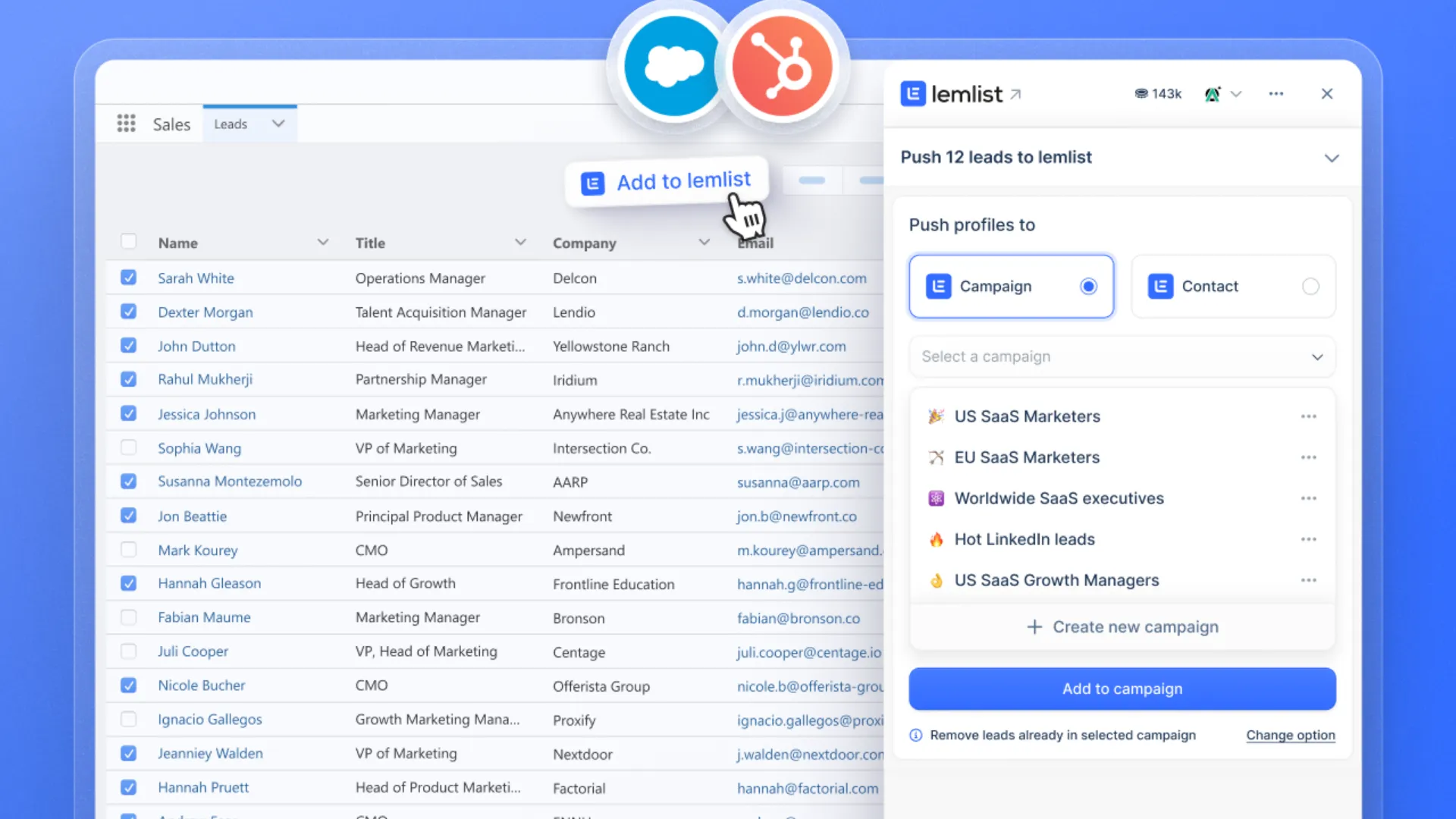
There was a time when nearly every cold email looked exactly the same.
- Plain text.
- Generic introductions.
- Predictable sales pitches.
- Recipients learned to ignore them almost instantly.
- Lemlist built its reputation solving that problem.
The platform became well known for visual personalization, allowing sales teams to embed customized images, personalized landing pages, company logos, screenshots, and dynamic elements directly into outreach campaigns.
Also Read:
Those creative touches helped emails stand out in crowded inboxes long before artificial intelligence became part of everyday sales software.
Today, AI has expanded those capabilities considerably.
The platform now generates personalized opening lines, suggests follow up messaging, researches LinkedIn profiles, and assists with campaign creation while still keeping personalization at the center of the experience.
That makes it one of the more creative leading AI platforms for automated outreach available in 2026.
If your outbound strategy depends on making memorable first impressions, Lemlist continues to perform extremely well.
Personalization extends beyond inserting someone's first name into an email. The AI can reference recent company updates, professional achievements, industry trends, and public information that makes outreach feel considerably more thoughtful.
That level of personalization often produces better engagement than sending thousands of generic emails.
Still, there are practical considerations. High volume senders may find themselves relying on additional deliverability tools for mailbox warm up and infrastructure management.
Some competitors provide stronger built in deliverability systems, reducing the need for external software.
The platform also rewards creativity.
Sales representatives willing to experiment with visuals, landing pages, and personalized campaigns usually get much more value than teams looking for simple email automation.
Why creative sales teams like Lemlist
Every buyer receives hundreds of cold emails every month.
Standing out matters.
Visual personalization creates curiosity before prospects even begin reading the message.
That curiosity often translates into higher open rates, stronger engagement, and better reply opportunities. The AI prepares much of that information automatically, allowing sales teams to personalize campaigns across hundreds of prospects without sacrificing relevance.
For companies asking How do AI outreach platforms improve response rates and booking rates?, this is one of the strongest examples.
Better personalization usually leads to better conversations.
Better conversations often produce more meetings.
Pros
The strengths below explain why Lemlist remains popular among outbound teams focused on relationship building.
- AI generates personalized introductions using publicly available prospect information.
- Visual personalization helps emails stand out inside crowded inboxes.
- Personalized landing pages increase campaign engagement beyond traditional cold emails.
- LinkedIn data supports richer account research before outreach begins.
- Multichannel campaigns combine email, LinkedIn, and follow ups inside one workflow.
- Strong community with extensive educational resources for outbound sales professionals.
Cons
No outreach platform performs perfectly across every category.
These limitations are worth considering before making a purchasing decision.
- Deliverability infrastructure is not as comprehensive as platforms dedicated primarily to inbox management.
- Advanced personalization features require more campaign preparation than simpler email tools.
- Reporting lacks some enterprise level analytics available from larger sales engagement platforms.
- New users often need time to understand the platform's creative campaign capabilities.
5. Snov.io
I'll admit, I underestimated Snov.io the first time I looked at it.
The starting price made me skeptical.
Many affordable outreach platforms promise an impressive list of features, only for you to discover that the important capabilities sit behind expensive upgrades or usage limits.
Snov.io turned out to be more capable than I expected.
It combines lead generation, email verification, campaign management, CRM functionality, AI email writing, and prospect tracking inside a single platform. That makes it appealing for startups and growing sales teams that want one subscription covering most of their outbound workflow.
The AI writing assistant deserves particular attention.
Creating personalized cold emails for hundreds of prospects usually requires significant effort. Snov.io speeds up that process by generating email drafts, subject lines, and follow up sequences based on your prompts. It also supports translation into dozens of languages, making international outreach much easier for companies selling across multiple regions.
For businesses building multilingual outbound campaigns, that feature alone can eliminate hours of manual work every week. Another pleasant surprise is the inclusion of unlimited sender accounts and unlimited email warm up across all pricing tiers.
Those capabilities are frequently reserved for premium plans elsewhere.
Having them available from the beginning makes the platform considerably more attractive for companies planning to scale their outreach over time.
That said, Snov.io is not trying to compete with enterprise sales engagement platforms.
Its emphasis remains email centric, with LinkedIn automation available as a separate paid add on.
If your outbound strategy revolves around coordinated engagement across email, phone, LinkedIn, SMS, and calling, you may eventually outgrow its core feature set.
For organizations primarily interested in AI powered email and outreach automation, however, Snov.io offers excellent value.
Pros
Before reviewing the highlights below, remember that affordability is only one part of the equation.
The platform succeeds because it delivers practical functionality without overwhelming new users.
- Competitive starting price makes advanced outreach technology accessible for smaller businesses.
- AI email writer creates personalized cold emails, subject lines, and follow up sequences from simple prompts.
- Native translation across 36 languages supports international sales campaigns without relying on external translation tools.
- Unlimited email warm up helps protect sender reputation as outreach volume grows.
- Unlimited sender accounts allow teams to scale campaigns without immediate infrastructure upgrades.
- Built in email verification improves deliverability by reducing bounced messages before campaigns launch.
- Unibox centralizes responses from multiple campaigns into one organized workspace.
Cons
No platform is perfect, and there are a few areas where buyers should set realistic expectations.
- LinkedIn automation requires a separate monthly subscription, increasing the total cost for multichannel outreach.
- Analytics remain fairly basic compared with larger enterprise platforms.
- Monthly credits expire if unused, which can be frustrating for companies with inconsistent outreach schedules.
- Contact data quality varies across niche industries and smaller regional markets.
- Phone outreach capabilities remain limited compared with platforms built around calling.
6. Klenty
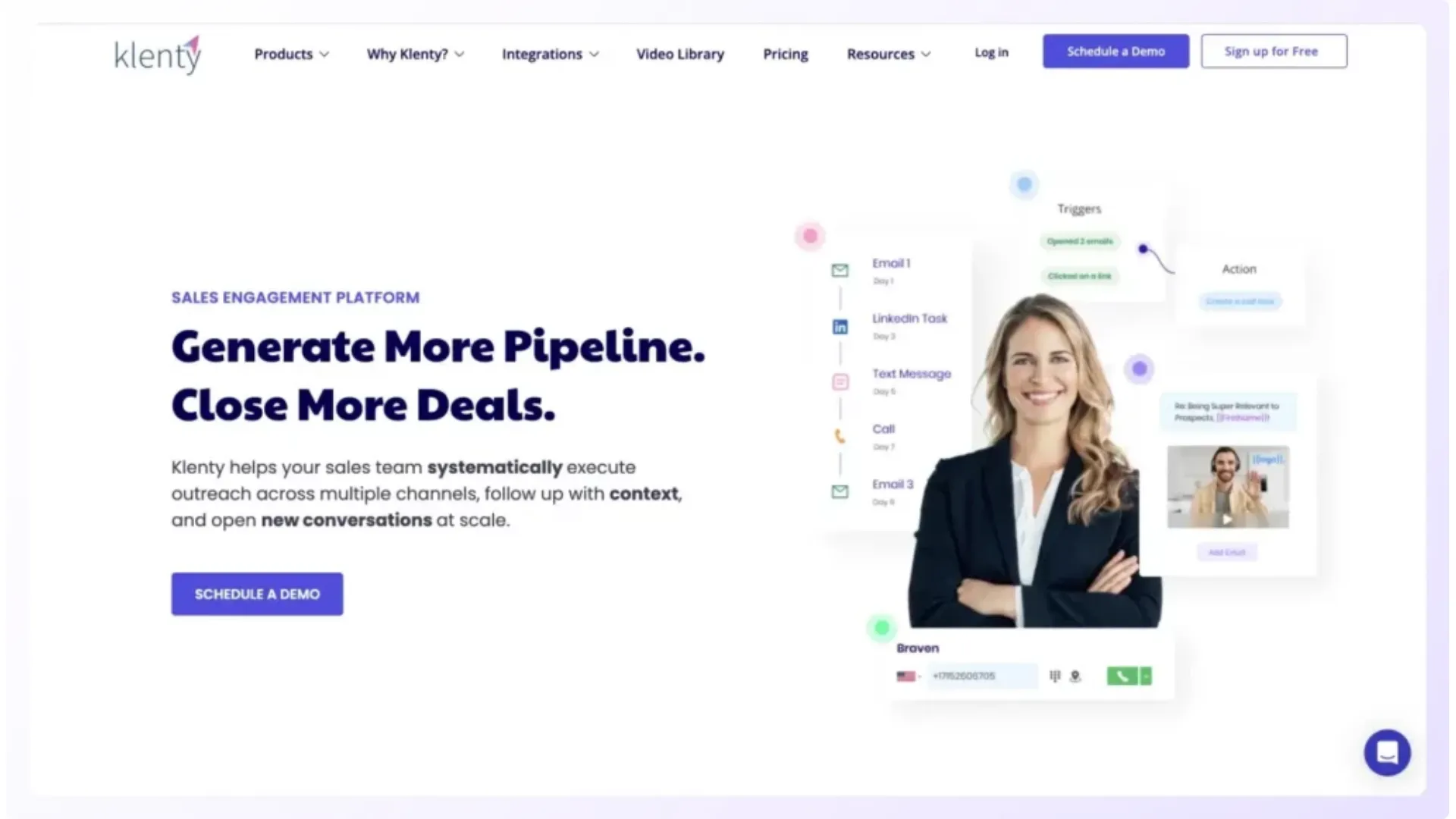
Klenty surprised me for a completely different reason.
I expected another multichannel outreach platform.
What caught my attention was how much effort had gone into helping sales representatives during live conversations.
Many AI tools focus on preparing emails before the outreach begins. Klenty spends just as much time helping reps once someone finally answers the phone. That matters because booking a meeting rarely depends on sending another email.
It depends on handling objections, asking better questions, and keeping conversations moving in the right direction.
Klenty's AI coaching system listens to live calls and provides contextual guidance while the conversation is still happening.
- Battle cards appear automatically.
- Potential objections are identified in real time.
Conversation scorecards begin building before the call even ends.
For newer SDRs, it feels almost like having an experienced sales manager sitting quietly beside them throughout every conversation.
That coaching capability makes Klenty one of the more interesting Conversational AI for sales outreach platforms available today. The platform also supports multichannel cadences across email, LinkedIn, phone calls, SMS, and WhatsApp.
That flexibility allows sales organizations to reach prospects through the communication channels they already use every day.
One feature worth paying attention to is Action AI.
After a conversation ends, the system automatically triggers the next appropriate activity within the sales cadence.
- Successful conversation?
- Schedule the follow up.
- Voicemail reached?
- Queue another touchpoint.
- Prospect requested more information?
Move them into the next sequence automatically.
Removing those manual decisions saves meaningful time for representatives making dozens of calls every day.
Pricing becomes the biggest consideration.
As teams grow, per user subscription costs rise quickly, making Klenty more attractive for organizations that value coaching enough to justify the additional investment. For companies wondering How to implement AI outreach automation without losing the human touch?, Klenty provides a compelling answer.
Pros
The strengths below explain why Klenty continues to build a loyal following among outbound organizations.
- AI coaching delivers live battle cards, objection detection, and conversation guidance while calls are taking place.
- Action AI automatically advances prospects through the correct sales cadence after each interaction.
- Multichannel engagement supports email, LinkedIn, calls, SMS, and WhatsApp from one platform.
- AI detects voicemail and interactive voice response systems, reducing wasted dialing time.
- Outcome detection categorizes conversations automatically, simplifying reporting and follow up.
- CRM synchronization keeps customer records updated without requiring additional administrative work.
- Customer support consistently receives positive feedback across review platforms.
Cons
There are still a few limitations worth considering before making a long term commitment.
- Per user pricing becomes expensive for larger outbound organizations.
- User interface feels dated compared with several newer competitors.
- Performance can slow during larger campaigns involving significant contact volumes.
- CRM synchronization delays occasionally appear in customer reviews.
- Reporting customization remains limited for revenue operations teams seeking advanced analytics.
7. Outreach.io

If you've spent time around enterprise sales teams, you've almost certainly heard Outreach.io mentioned in conversations about sales engagement.
The platform has been one of the category leaders for years, and for good reason.
Large revenue organizations need far more than email automation. They need accurate forecasting, standardized sales processes, conversation intelligence, coaching, analytics, CRM synchronization, and visibility across hundreds of representatives. That is exactly where Outreach.io performs well.
The platform uses artificial intelligence to analyze millions of customer interactions, helping sales teams identify which messaging performs best, when prospects are most likely to engage, and which opportunities deserve immediate attention.
Over time, those recommendations become increasingly valuable because they're based on a massive volume of engagement data gathered across enterprise customers.
One of the strongest capabilities is sequence optimization.
Sales managers spend countless hours experimenting with send times, follow up intervals, subject lines, and messaging variations. Outreach.io continuously analyzes campaign performance and recommends adjustments that can improve engagement over time. That makes it one of the more mature leading AI platforms for automated outreach available today.
Conversation intelligence is another major advantage.
Every recorded meeting and sales call becomes a learning opportunity. The platform identifies customer sentiment, tracks important discussion topics, surfaces objections, and highlights coaching opportunities for managers.
Instead of manually reviewing dozens of recordings every week, leaders can focus on conversations that need attention.
That becomes increasingly valuable as sales organizations grow. Where Outreach.io asks for patience is implementation. This is not software most companies purchase on Monday and master before Friday. Enterprise deployments typically involve CRM integration, workflow configuration, permission management, sales process alignment, and extensive onboarding.
Organizations willing to invest the time usually gain an exceptionally capable platform. Smaller companies may find the complexity unnecessary for their current stage. It also serves organizations looking for sophisticated AI powered email and outreach automation tied directly to forecasting and revenue operations. Rather than simply measuring email opens and reply rates, Outreach.io connects engagement activity with pipeline progression and sales outcomes.
That broader business visibility explains why it remains a popular enterprise choice.
Pros
Before reviewing the strengths below, remember that Outreach.io was designed for larger organizations with structured sales operations.
Many of these capabilities become more valuable as teams grow.
- AI optimizes outreach sequences using engagement patterns collected across millions of customer interactions.
- Conversation intelligence delivers sentiment analysis, keyword tracking, coaching insights, and call summaries.
- Advanced forecasting tools support revenue leaders with better pipeline visibility.
- Strong CRM integrations with enterprise sales ecosystems.
- Excellent analytics for measuring team performance across multiple outbound channels.
- Enterprise grade workflow automation reduces repetitive administrative work.
- Extensive reporting supports sales leadership, revenue operations, and executive decision making.
Cons
Large platforms inevitably introduce additional complexity.
These considerations are worth evaluating before moving forward.
- Enterprise pricing places the platform outside the budget of many startups and small businesses.
- Initial implementation requires planning, onboarding, and internal change management.
- New users often face a steeper learning curve than lighter outreach platforms.
- Customization options can feel overwhelming for organizations with simple outbound processes.
- Smaller teams may never use the platform's full feature set.
8. Salesloft
Salesloft has spent years competing directly with Outreach.io, and the competition has pushed both platforms to become considerably stronger.
Although they overlap in several areas, Salesloft brings its own philosophy to outbound sales.
The platform places significant emphasis on helping representatives execute consistent sales cadences while giving managers deep visibility into performance.
Artificial intelligence now supports nearly every stage of that workflow.
Email creation, meeting preparation, opportunity insights, conversation summaries, deal risk analysis, and coaching recommendations all benefit from AI assistance. For enterprise organizations managing hundreds of active opportunities, those productivity gains become meaningful very quickly. Salesloft also performs well across multiple communication channels.
Representatives can coordinate email, phone, LinkedIn, meetings, and follow ups without constantly switching between disconnected applications.
That unified experience creates a smoother workflow and reduces administrative effort throughout the day.
One capability that deserves recognition is deal intelligence. The platform analyzes engagement activity across active opportunities, helping managers identify deals showing signs of slowing down before problems become obvious in the pipeline. Early visibility gives sales leaders more time to coach representatives and re engage buyers before opportunities stall completely.
Salesloft also continues investing heavily in Conversational AI for sales outreach, helping managers understand how top performers handle conversations and where coaching can improve team performance.
The primary consideration remains cost.
Like Outreach.io, Salesloft targets enterprise customers.
Smaller organizations may struggle to justify the investment unless they expect significant outbound growth.
Why large revenue teams choose Salesloft
Scaling outbound sales involves much more than increasing activity.
Consistency becomes equally important.
Managers want every representative following proven workflows.
Leadership wants accurate forecasting.
Revenue operations wants reliable reporting.
Representatives want fewer administrative tasks.
Salesloft addresses each of those priorities through one connected platform.
Artificial intelligence supports decision making throughout the sales process while allowing representatives to remain focused on customer conversations.
For organizations asking Which AI outreach platforms work across email, phone, and LinkedIn?, Salesloft belongs firmly on the shortlist.
Its multichannel engagement capabilities continue to rank among the strongest in the enterprise market.
Pros
Salesloft combines enterprise functionality with mature AI capabilities that continue expanding every year.
- AI assisted email creation speeds campaign development while maintaining personalization.
- Strong multichannel engagement across email, phone, LinkedIn, meetings, and follow ups.
- Conversation intelligence supports coaching and performance improvement.
- Deal intelligence identifies opportunities requiring immediate attention.
- Excellent CRM integration with Salesforce and other enterprise ecosystems.
- Robust analytics and reporting for revenue operations teams.
- Highly scalable for organizations with growing outbound teams.
Cons
Like every enterprise platform, there are trade offs that buyers should understand.
- Premium pricing may exceed the budgets of startups and smaller businesses.
- Onboarding requires planning and dedicated administrative resources.
- Some advanced capabilities require additional configuration before teams receive maximum value.
- Interface can feel overwhelming for new users unfamiliar with enterprise sales engagement platforms.
How We Selected These Leading AI Platforms for Automated Outreach
There are hundreds of outreach tools claiming to use artificial intelligence. To create this list, we looked beyond marketing claims and focused on how these platforms perform during everyday sales activities.
Several factors influenced the rankings.
AI capabilities
Artificial intelligence should solve meaningful business problems.
We looked for platforms that automate repetitive work, improve prospect prioritization, provide useful coaching, enhance personalization, and help representatives spend more time selling.
Multichannel outreach
Modern outbound sales rarely happens through email alone.
The strongest platforms support coordinated engagement across email, phone, LinkedIn, SMS, and other communication channels whenever appropriate.
Ease of adoption
Powerful software loses value if sales teams struggle to use it.
Platforms received higher consideration when they balanced advanced functionality with an intuitive workflow.
Automation depth
Basic email sequences are no longer enough.
The products included here automate prospect research, follow ups, workflow management, coaching, conversation analysis, or lead prioritization in meaningful ways.
Overall value
Price always matters.
A platform does not need to be the cheapest.
It should deliver measurable value relative to its subscription cost and target audience.
Go On a Trialing Spree!
A lot of things come down to your sales motion and business requirements. Therefore, it’s possible that the software that you’re considering signing up for may not be the perfect fit.
We recommend trying different programs on this list through trial plans or basic paid plans to get the lay of the land. Once you have a program that marks all the checkboxes, feel free to onboard your entire sales team and move to a paid tier.
.jpeg)

Embed Trellus Parallel Dialer Within Your SEP & 4x Your Conversations