Our Top Picks


Jim Rohn once said:
“To succeed in sales, simply talk to lots of people every day. And here’s what’s exciting—there are lots of people!”
For most new SDRs, prospecting feels like the hardest part of sales. You spend hours researching accounts, writing cold emails, finding phone numbers, and trying to get someone to simply reply. That pressure is exactly why so many teams are searching for the best tools for sales prospecting that can reduce manual work and help reps build pipeline faster.
The good news is that modern free sales prospecting tools have become far more capable than they were a few years ago. New SDRs now have access to AI powered writing assistants, lead databases, LinkedIn automation tools, call intelligence platforms, and workflow software that previously only large enterprise sales teams could afford.
Many of these platforms also offer free ai prospecting software trials, making it easier for SDRs to test different workflows before committing to expensive subscriptions. That matters because every outbound motion works differently. A SaaS startup targeting mid market buyers needs a different prospecting stack than an agency selling into local businesses.
TL;DR
- The best SDR prospecting stacks combine multiple tools: Most successful outbound teams do not rely on one platform alone. They combine email research tools, AI writing assistants, calling software, LinkedIn prospecting platforms, and sales engagement systems to create a more complete workflow.
- Free prospecting tools are strong enough for new SDRs to start building pipeline: Several of the best tools for sales prospecting now offer free plans, browser extensions, limited credits, or free trials. That gives SDRs a chance to improve outreach quality without needing a massive software budget.
- AI is changing outbound prospecting fast: Modern b2b sales prospecting tools increasingly automate repetitive work like writing emails, researching prospects, organizing outreach sequences, summarizing calls, and identifying buying signals. SDRs who learn these tools early usually ramp faster and manage larger outbound volumes more efficiently.
So, if you’re building your outbound prospecting toolkit, here are some of the best and free sales prospecting tools every new SDR should know about. These aren’t ranked in any particular order, because the “best” tool really depends on your workflow, your company’s sales process, and the kind of prospects you’re chasing.
And if you stick with me until the end, I’ll share a few bonus recommendations too.
Do You Need Sales Tools? (Well… Yes!)
A lot of new SDRs initially think prospecting success comes down to effort alone. Make enough calls, send enough emails, message enough people on LinkedIn, and eventually meetings will happen.
Activity matters, but manual prospecting has limitations very quickly.
Without software support, SDRs spend huge portions of their day switching tabs, researching companies one by one, copying CRM notes, searching for emails, updating records, and writing repetitive outreach from scratch. That administrative work slows down pipeline generation and reduces the amount of actual selling time available during the day.
That creates several major advantages:
Better lead targeting
Many new SDRs waste time prospecting companies that were never a good fit in the first place. Strong b2b prospecting tools help narrow down ideal accounts through filters like company size, industry, revenue, hiring trends, technologies used, geography, and seniority levels.
That means reps spend more time talking to buyers who are more likely to convert.
Faster outbound workflows
Outbound sales depends heavily on momentum. When SDRs constantly stop to update spreadsheets or search for contact details, outreach velocity drops.
Tools like Apollo, Hunter, and Sales Navigator reduce those interruptions significantly. SDRs can move from prospect discovery to outreach far faster, which improves daily activity levels without sacrificing personalization.
Improved personalization
Personalization has become one of the biggest differentiators in outbound sales. Generic cold emails rarely perform well anymore.
Modern AI powered platforms help SDRs reference recent company news, LinkedIn updates, job changes, hiring patterns, funding rounds, and industry pain points quickly. That context makes outreach feel far more relevant.
Better coaching opportunities
Sales leaders also benefit heavily from prospecting software. Conversation intelligence tools, email analytics, and engagement tracking platforms help managers understand what top performers are doing differently.
That creates better coaching loops for new SDRs.
The strongest outbound organizations rarely rely on effort alone anymore. They combine disciplined prospecting habits with the right software infrastructure to improve efficiency at scale.
1. Lavender.ai
Cold email is often the first touchpoint in outbound prospecting.
It’s also the touchpoint where most SDRs stumble. Your email either gets ignored, deleted, or, worst of all, marked as spam.
The difference between a dead email and one that sparks a reply often comes down to two things: relevance and clarity.
That’s where Lavender.ai shines. Think of it as Grammarly for sales emails, but built with the SDR in mind. It doesn’t just correct grammar; it analyzes the structure, tone, and personalization of your emails to help you land more replies.
Here’s what makes it powerful for SDRs:
- Email analysis and scoring: Lavender gives your message a score based on clarity, tone, and structure. If your message is too long, too complex, or too generic, you’ll know right away.
- Personalization insights: It pulls in recipient data—like LinkedIn bios, social profiles, and even personality traits—so you can add meaningful context without spending hours researching.
- Coaching dashboard: Lavender shows you trends in your emails and points out what’s actually working. Over time, you learn what makes your audience respond.
- AI writing assistance: If you’re stuck, you can start with a short prompt and Lavender will generate a message draft you can refine.
For a new SDR, this tool takes a lot of the stress out of email prospecting. You don’t need to second-guess every sentence—you get real-time feedback before you hit send. Lavender has a free plan (with limited features), which is great when you’re starting out. Paid plans start at $29/month, but the free version is enough to sharpen your early email game.
If you’re looking for one of the best AI tools for sales prospecting focused purely on outbound email, Lavender is worth adding to your stack.
2. Hunter.io

Even the best-written email won’t matter if you can’t reach the right person.
That’s why SDRs spend a big chunk of time just trying to track down accurate contact information.
Starting with Hunter.io, all we can say is that a lot of sales people regard this program as a classic tool in the world of prospecting.
Hunter helps you find professional email addresses tied to a company’s domain. Say you’re trying to reach an IT manager at Acme IT Solutions but you don’t have their email. All you need to do is type “acmeIT.com” into Hunter, and you’ll get a list of verified email addresses at that company.
For outbound sales prospecting, that’s gold. Here’s why SDRs love it:
- Domain search: Pulls up email addresses connected to a company’s domain.
- Email verification: No more wasted time on bounced emails. Hunter verifies addresses so you know your message will land.
- Chrome extension: Find and save email addresses directly while browsing LinkedIn or company sites.
- Cold email campaigns: Hunter also lets you send and track email campaigns directly inside the tool, so you can manage outreach without switching platforms.
Hunter has a free plan that gives you 25 searches per month. Paid plans start at $49/month, but the free version is often enough for SDRs who are prospecting in smaller batches.
If you’re asking what are the best AI sales tools for outbound prospecting?
Hunter isn’t strictly AI-driven, but it pairs perfectly with AI writing tools like Lavender. Together, they cover both “finding the contact” and “crafting the message.”
3. Apollo.io

While Hunter is focused on finding emails, Apollo.io takes things several steps further. Think of Apollo as an all-in-one AI-powered sales prospecting tool that combines data, outreach, and analytics.
What makes Apollo stand out is the size and quality of its database. With over 220 million contacts and 30 million businesses, you can build highly targeted lists of prospects in just a few clicks.
But Apollo doesn’t stop at data. It also helps you:
- Collect verified emails and phone numbers directly from LinkedIn.
- Segment prospects using over 200+ filters (like company size, tech stack, funding stage, etc.).
- Build sequences that mix emails, calls, and LinkedIn touches.
- Get insights into what’s working with real-time analytics through its Intelligence Engine.
For new SDRs, Apollo is like a Swiss army knife. You can do your prospect research, build a list, launch outreach campaigns, and measure results—all without leaving the platform.
Apollo’s free plan gives you 50 credits per month, which is plenty to start testing outbound campaigns. If you’re serious about outbound sales, this is one of the top AI sales agent tools that automate prospecting and help you scale faster.
4. LinkedIn Sales Navigator

If outbound prospecting is about “going where your prospects are,” then LinkedIn is the obvious place to be. It’s where decision-makers hang out, and it’s where SDRs can build real professional connections.
But searching and filtering manually on LinkedIn eats up time. That’s why LinkedIn created Sales Navigator, a prospecting tool built directly into the platform.
Sales Navigator helps you:
- Get customized lead suggestions based on your ideal customer profile.
- Reach people outside your immediate network with InMail.
- Track real-time updates like job changes or company news.
- Organize prospects with notes and tags.
- Sync leads with supported CRMs.
For SDRs, the biggest advantage is that Sales Navigator lets you cut through LinkedIn’s massive network and zero in on the people who actually fit your target profile.
The downside? You can’t export leads as a CSV or XLS file, which makes it a little less flexible than other tools. That said, for outbound prospecting, Sales Navigator is still one of the best sales prospecting tools available, especially when combined with a strong outreach strategy.
There’s a free trial if you qualify, but after that, plans start at $79.99/month. It’s pricey compared to the others on this list, but for serious SDRs working in B2B, it’s often worth the cost.
5. Pidgi

Most prospecting tools focus on finding new contacts. Pidgi takes a different angle—it helps you reconnect with people who’ve already used your product in the past. That’s a clever twist, because reaching out to someone who already knows your product often leads to warmer conversations.
Here’s what Pidgi offers:
- Identifies past users of your product when they move to new companies.
- Tracks job changes at your target accounts.
- Sends email alerts when prospects leave, join, or change roles.
- Refreshes contact data monthly.
- Integrates with CRM systems.
For SDRs, Pidgi cuts down on the time you’d normally spend tracking people manually on LinkedIn.
Imagine knowing the moment a power user of your software joins a new company, that’s an instant warm lead for you.
Pidgi reportedly has a free trial, though pricing details aren’t public.
You’ll likely need to talk to their sales team to test it out. But for SDRs in SaaS especially, this is one of the AI tools for sales prospecting that can give you a real edge.
6. Aircall

Cold calling isn’t dead—it’s just evolved. And if you’re an SDR, you’ll probably be making more calls than you’d like to admit. Aircall is a phone system built to make that process less painful and more efficient.
Unlike traditional call center software, Aircall is designed with sales teams in mind. Here’s why SDRs should care:
- Click-to-dial: No more copy-pasting numbers.
- CRM integrations: Calls log automatically, so you don’t waste time updating records.
- Call tagging and organization: Makes it easy to track campaigns and follow-ups.
- Post-call workflows: Automates notes, assignments, and follow-ups so you can move straight to the next call.
When you connect Aircall with conversation intelligence tools like Avoma, you can even record, transcribe, and analyze calls. That means SDRs not only make more calls, but also learn from every conversation to refine their approach.
Aircall isn’t free forever, but it does offer trials and affordable entry-level pricing. For outbound SDRs, it’s one of the AI sales tools that automate prospecting and outreach on the phone channel.
7. Outreach.io

Finally, we have Outreach—one of the most well-known names in sales engagement. While many tools on this list specialize in one aspect of prospecting, Outreach brings it all together.
Outreach is more than just an email sequencer. It’s a full sales engagement platform that helps SDRs:
- Build outbound sequences across email, calls, and LinkedIn.
- Track engagement across every channel.
- Automate reminders and follow-ups.
- Use AI insights to improve messaging and targeting.
- Give managers visibility into SDR performance for coaching.
For outbound SDR teams, Outreach is like mission control. Everything from prospecting to outreach to tracking lives in one platform. That makes it one of the best AI tools for sales prospecting if you want to scale beyond the basics.
The downside is cost, Outreach doesn’t list pricing publicly, and it tends to be on the higher end. But many SDR teams swear by it as the backbone of their outbound process.
8. CamCard
Business cards still play a role in conferences, networking events, trade shows, and in person meetings. The problem is that manually transferring contact details into CRMs takes time and often creates data entry errors.
CamCard solves that issue through mobile scanning and AI powered contact extraction.
The platform scans physical business cards and converts them into digital contact records within seconds. SDRs can quickly organize leads, export contacts, and sync information into CRM systems without manually typing every detail.
For SDRs attending events or handling inbound networking opportunities, this tool simplifies contact management significantly.
Useful features include:
• AI powered business card scanning
• CRM syncing capabilities
• Contact organization tools
• Mobile accessibility for field sales teams
• Team sharing functionality
CamCard works particularly well for SDRs handling hybrid outbound and event driven prospecting workflows.
9. Boomerang
Email timing can heavily influence reply rates. Some SDRs send strong messages at the wrong time and never receive engagement.
Boomerang helps solve that problem through email scheduling, reminders, inbox management, and response tracking.
The tool integrates directly into Gmail and helps SDRs manage follow ups more consistently. One of its strongest features is the ability to remind reps when prospects fail to respond within a specific timeframe.
That creates stronger follow up discipline without requiring manual tracking spreadsheets.
Boomerang also includes AI assisted response suggestions and meeting scheduling features that help reduce back and forth communication.
Key advantages include:
• Email scheduling optimization
• Automated follow up reminders
• Inbox pause functionality
• Response tracking insights
• Calendar coordination tools
For SDRs managing high outbound email volume, Boomerang helps maintain organization and follow through more effectively.
10. Voila Norbert
Voila Norbert remains one of the more reliable b2b prospecting tools for finding and verifying professional email addresses.
The workflow is simple. SDRs enter a prospect's name and company domain, and the platform attempts to identify verified email patterns connected to that organization.
What makes Voila Norbert useful is its balance between simplicity and accuracy. Many SDRs prefer lightweight prospecting tools that focus on one function and execute it well.
The platform also includes enrichment capabilities that provide additional company and contact context for outbound research.
Core features include:
• Email lookup and verification
• Bulk lead enrichment
• CRM integrations
• Outreach list building
• API access for automation workflows
For SDRs running targeted outbound campaigns, accurate email discovery remains one of the most valuable prospecting capabilities available.
11. Sales Table
Sales prospecting becomes difficult very quickly when data lives across disconnected spreadsheets, CRMs, browser tabs, LinkedIn lists, and email platforms. Many SDRs spend more time organizing information than speaking with prospects.
Sales Table helps solve that operational problem through centralized prospect management and workflow organization.
The platform focuses heavily on simplifying outbound coordination for SDR teams that need cleaner collaboration and easier lead tracking. Instead of bouncing between multiple systems constantly, reps can organize prospect data, manage outreach activity, and monitor account progress from one workspace.
For growing outbound teams, that operational clarity becomes extremely important.
A common issue inside many SDR organizations is that reps accidentally duplicate outreach efforts or lose visibility into account activity. Sales Table helps reduce those problems through shared visibility and structured workflows.
Key capabilities include:
• Centralized lead management
• Shared outbound collaboration tools
• Prospect tracking workflows
• CRM synchronization
• Team visibility into account activity
• Outreach organization support
For SDRs who feel overwhelmed managing multiple prospecting channels simultaneously, Sales Table can create much cleaner day to day outbound operations.
12. Trellus.ai
Modern outbound calling requires more than just dialing faster. SDRs now need coaching insights, workflow automation, conversation visibility, and productivity support built directly into the calling process.
That is where Trellus.ai positions itself differently from many traditional sales dialers.
Rather than functioning purely as a phone system, Trellus focuses heavily on improving outbound calling efficiency and SDR productivity during live prospecting sessions.
The platform is particularly useful for SDR teams handling high volume cold calling workflows inside CRM driven outbound motions.
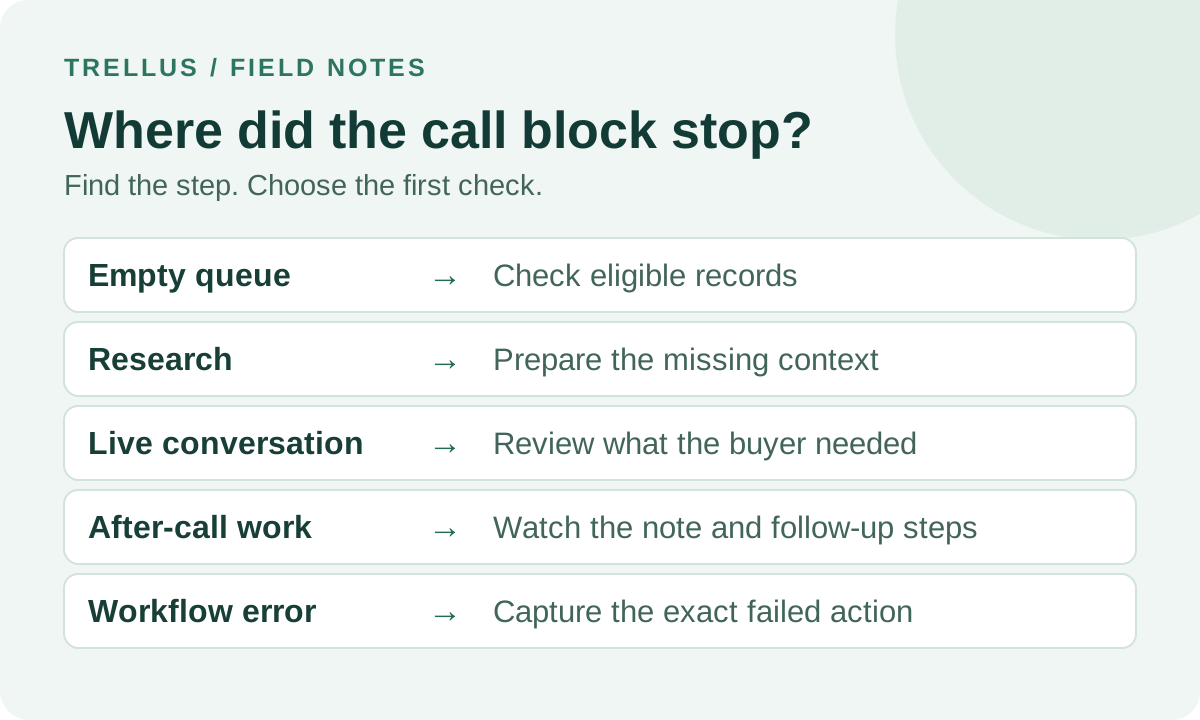
One of the biggest challenges for new SDRs is maintaining momentum throughout long prospecting blocks. Reps often lose time handling repetitive post call tasks, navigating tabs, or manually updating CRM notes.
Core strengths include:
• AI assisted outbound calling workflows
• CRM integrated dialing support
• Conversation visibility and coaching
• Reduced manual post call work
• Faster call task management
• SDR productivity optimization
For teams heavily focused on outbound phone prospecting, Trellus fits well into a modern AI enabled sales workflow.
Among emerging sales prospecting tools, platforms focused on conversation acceleration are becoming increasingly important because outbound teams are under growing pressure to improve both activity volume and conversation quality simultaneously.
13. Symbo
Prospecting data becomes less valuable when SDRs cannot identify intent signals or prioritize accounts properly. Many outbound teams waste significant effort contacting low priority prospects at the wrong time.
Symbo helps address this challenge through buyer intelligence and prospect engagement insights.
The platform focuses on helping SDRs identify stronger outbound opportunities through behavioral signals and engagement analysis. That allows sales teams to prioritize outreach more strategically rather than treating every lead equally.
For SDRs handling large account lists, prioritization matters enormously.
Strong prospecting is not only about reaching more people. It is also about identifying the right timing windows for outreach. Platforms like Symbo help surface accounts showing stronger interest patterns or buying intent signals.
Features commonly associated with this category include:
• Buyer intent analysis
• Prospect engagement insights
• Account prioritization workflows
• Lead intelligence tracking
• Sales signal monitoring
• Outbound targeting support
As outbound prospecting becomes increasingly data driven, intelligence platforms like Symbo are becoming more valuable inside larger SDR organizations.
14. GetProspect
GetProspect has become a popular option among SDRs searching for lightweight but effective lead generation software.
The platform combines LinkedIn prospecting, email discovery, enrichment, and list building into a relatively simple workflow. That simplicity is one reason many new SDRs adopt it early.
Complex prospecting platforms can overwhelm inexperienced reps. GetProspect keeps the workflow easier to manage while still providing valuable outbound functionality.
One of the strongest aspects of the platform is its LinkedIn integration. SDRs can quickly collect verified business emails while researching prospects directly inside LinkedIn workflows.
Important features include:
• LinkedIn email extraction
• Lead enrichment capabilities
• Verified B2B contact discovery
• Prospect list management
• CRM export functionality
• Team collaboration support
For SDRs looking for accessible free online sales tools that support outbound lead generation, GetProspect offers a relatively approachable starting point.
Its free plan also makes it attractive for smaller sales teams testing outbound workflows without major upfront software costs.
15. ZoomInfo Community Edition
While full ZoomInfo subscriptions can become expensive for smaller teams, the Community Edition gives SDRs access to a limited version of one of the most recognized data platforms in B2B sales.
The system works through a contribution model. Users share business contact data and gain access to a broader network of verified professional information in return.
For SDRs trying to scale outbound account research, access to reliable company and contact intelligence can dramatically improve targeting quality.
ZoomInfo’s database strength comes from the depth of company level insights available across industries, technologies, organizational structures, and buying committees.
Areas where SDRs benefit include:
• Company intelligence research
• Contact discovery support
• Organizational hierarchy visibility
• Technographic filtering
• Industry segmentation
• Account based prospecting workflows
For outbound teams handling larger account lists, platforms with deeper company intelligence often improve prospect qualification quality significantly.
16. Findymail
Data quality is one of the biggest hurdles in outbound sales. Sending campaigns to outdated or guessed addresses doesn't just waste a rep's time, it can quietly tank your domain's sender reputation.
That's where Findymail comes in. Instead of pulling from static databases, it runs every contact through a real-time verification system, which is how it backs a guaranteed bounce rate of 5% or less. For new SDRs running multi-channel sequences, that extra layer of verification helps make sure outreach actually lands in the inbox instead of getting flagged as spam.
Here's what makes it useful for SDRs:
- Email/Phone Finder: Findymail finds and verifies emails and phone numbers in real time at the moment you request it.
- Intellimatch (AI Lead Finder): Describe your ideal customer profile in plain English to generate a targeted lead list, skipping complex filtering strings.
- Signals: New Hire, Job Title Change, Keyword Mention, and Topic Engagement (all running continuously in the background, filterable by industry, company size, country, seniority, and job title).
- Catch-all domain handling: Uses advanced validation to surface safe-to-send emails hidden behind catch-all domains that other scrapers mark as "risky."
- Chrome extension: Source and verify business email addresses on the go while researching accounts on LinkedIn or company sites.
- Datacare automation: An enrichment add-on that monitors, cleans, and updates your CRM records when prospects change roles or companies.
Findymail offers a free trial with 10 credits to test data accuracy. Paid plans start at $49/month for 1,000 finder and verifier credits, with full access to the browser extension, AI search, and native CRM integrations.
If Hunter or Voila Norbert have been your go-to for contact discovery, Findymail is worth a side-by-side test, especially if bounced emails have been hurting your deliverability.
How Can B2B Sales Prospecting Tools Help?
Prospecting software impacts almost every stage of the outbound process. Some tools focus on lead generation, some improve communication quality, while others automate repetitive administrative tasks that normally drain SDR productivity.
Understanding how different categories of b2b sales prospecting tools work together makes it easier to build an effective outbound stack.
Prospect research becomes faster
Research is one of the most time consuming parts of outbound sales. SDRs need to understand companies, identify decision makers, analyze industries, and uncover potential pain points before outreach even begins.
Platforms like Apollo.io, LinkedIn Sales Navigator, and GetProspect dramatically reduce research time. SDRs can filter thousands of companies based on detailed firmographic and technographic data within minutes.
That level of targeting improves outbound precision significantly.
Contact discovery becomes more accurate
Finding accurate contact information has always been a major challenge in prospecting. Bad data leads to bounced emails, disconnected phone numbers, and wasted outreach efforts.
Tools like Hunter.io, Voila Norbert, and GetProspect specialize in verified contact discovery. Many also include email verification systems that improve deliverability rates.
That matters because even strong messaging fails if it never reaches the prospect.
Cold outreach quality improves
Many SDRs struggle with writing concise outbound messaging. Emails become too long, too generic, or overly focused on product features.
AI powered writing assistants like Lavender help reps improve tone, clarity, readability, and personalization. Some platforms also analyze reply rates and recommend improvements based on previous campaign performance.
This shortens the learning curve for new SDRs significantly.
Multi channel outreach becomes manageable
Modern outbound prospecting rarely happens through one channel alone. SDRs often combine email, LinkedIn, phone calls, SMS, and follow ups into coordinated sequences.
Platforms like Outreach and Apollo help organize those workflows through automated cadences and reminders. SDRs can maintain consistent outreach across hundreds of prospects without losing track of conversations.
Call performance improves over time
Calling remains one of the fastest ways to generate pipeline, but it also creates pressure for new reps.
Conversation intelligence tools and cloud calling systems like Aircall and Trellus help SDRs review calls, analyze objections, improve talk tracks, and refine their approach after every conversation.
That continuous feedback loop helps new SDRs ramp faster.
CRM hygiene improves
One overlooked benefit of strong free prospecting tools is better CRM consistency.
Manual CRM updates often create missing notes, duplicate records, and incomplete pipeline tracking. Modern prospecting tools automate much of that work through integrations and workflow syncing.
Sales managers gain cleaner reporting, while SDRs spend less time handling repetitive administrative tasks.
What to Consider When Evaluating Free B2B Prospecting Tools
Free tools can dramatically improve outbound prospecting, but not every platform fits every SDR workflow. Some tools prioritize automation, others focus on data quality, while some specialize in outbound calling or email engagement.
Evaluating software properly helps SDRs avoid building bloated tech stacks filled with overlapping functionality.
Data accuracy matters more than feature count
One of the biggest mistakes SDRs make is choosing platforms loaded with features but filled with unreliable contact information.
Prospecting depends heavily on data quality. Even sophisticated automation workflows fail when emails bounce or phone numbers are outdated.
When evaluating free ai prospecting software trials, test data accuracy first. Pull sample leads, verify emails, and check how current the company information appears.
Reliable contact data creates far more value than excessive feature lists.
Workflow simplicity matters for new SDRs
Many outbound platforms market themselves as all in one sales ecosystems. While that sounds appealing, overly complicated software can slow down new SDRs significantly.
The strongest prospecting systems usually simplify daily workflows rather than adding operational complexity.
Good prospecting tools should help reps move smoothly between research, outreach, follow up, and CRM updates without creating confusion.
Simple workflows often outperform overloaded systems.
Integration support is critical
Disconnected software creates operational headaches very quickly.
When evaluating b2b sales prospecting tools, check how well they connect with CRMs, email providers, dialers, LinkedIn workflows, calendar systems, and sales engagement platforms.
Strong integrations reduce duplicate work and improve reporting consistency across the sales organization.
AI features should improve productivity, not create noise
Many prospecting platforms now advertise AI functionality aggressively. Some features provide meaningful workflow improvements, while others add unnecessary clutter.
Useful AI features typically help SDRs:
• Personalize outreach faster
• Summarize conversations
• Prioritize accounts
• Improve email quality
• Automate repetitive tasks
• Analyze engagement trends
The strongest AI prospecting systems reduce manual workload without making outreach sound robotic.
Scalability matters
A tool that works for a solo SDR may struggle once a team grows larger.
When evaluating prospecting platforms, consider how the software handles collaboration, reporting, permissions, workflow visibility, and team management.
Outbound teams usually expand their prospecting processes over time. Choosing scalable systems early can reduce migration headaches later.
Free plans should still provide meaningful functionality
Some "free" plans are so limited that they become difficult to evaluate properly.
Strong free sales prospecting tools usually provide enough functionality for SDRs to test workflows realistically before upgrading.
The goal of free trials should be helping teams understand long term workflow compatibility, not simply acting as restricted demos.
Wrapping up: Building your outbound SDR toolkit
Prospecting is tough. It’s the part of sales that requires the most discipline, the thickest skin, and the sharpest tools. The good news is, you don’t have to tackle it empty-handed.
From writing better emails (Lavender), to finding the right contacts (Hunter), to building sequences (Apollo and Outreach), to smarter calling (Aircall), to leveraging networks (Sales Navigator), to re-engaging warm leads (Pidgi)—these sales prospecting tools give SDRs a massive advantage.
If you’re asking:
- Where to buy AI-powered sales prospecting tools? Most of these tools offer free plans or trials right on their websites—perfect for SDRs getting started.
- What top AI sales agent tools automate prospecting? Apollo and Outreach are the standouts for scaling.
- What AI sales tools automate prospecting and outreach? Tools like Apollo, Outreach, and Aircall combine automation with personalization.
The trick is not to overwhelm yourself with too many platforms at once.
Pick one or two that solve your biggest bottleneck—maybe email personalization, maybe contact finding—and get comfortable with those first.
Remember, prospecting is about momentum. Like Jeb Blount says in Fanatical Prospecting: “One more call.” The right tools just make that call, email, or LinkedIn message more effective.
So start simple, stay consistent, and let these tools handle the heavy lifting while you focus on what really matters: building relationships and creating opportunities.


Power and parallel dialing in your CRM.