Our Top Picks


In the fast-paced world of B2B sales, every second counts. Sales development representatives (SDRs) are under constant pressure to hit quotas, and traditional cold-calling methods are no longer enough. To stay ahead, sales teams need powerful tools that can automate tedious tasks, provide valuable insights, and ultimately, drive more conversations. This is where AI-powered parallel dialers come in, and three of the top contenders in this space are Nooks, Salesfinity, and Trellus AI.
This article will provide a comprehensive comparison of these three platforms, examining their features, pricing, and unique selling points. By the end, you will have a clear understanding of which of these powerful sales tools is the right fit for your team.
The Contenders: A Brief Overview
Trellus AI
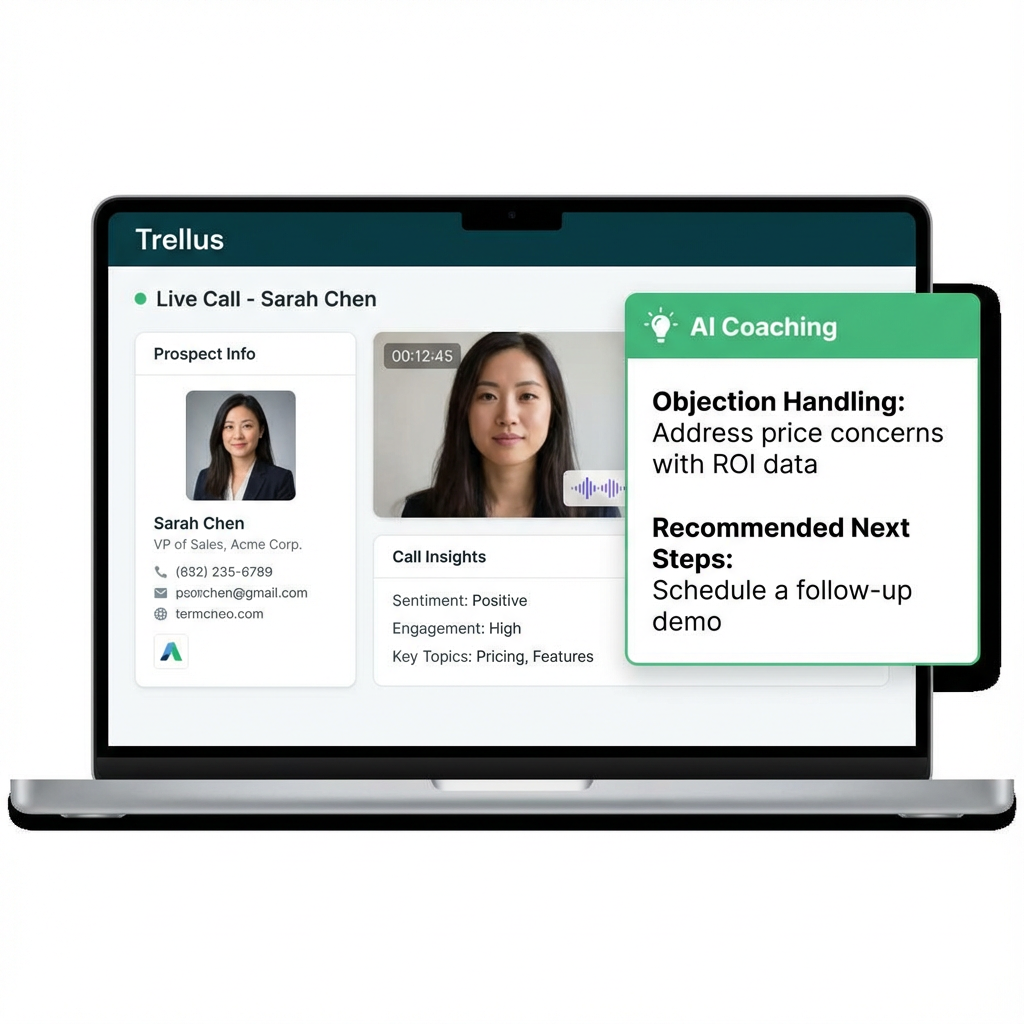
Trellus AI is an AI-powered sales assistant that aims to improve the quality and quantity of sales calls. It offers a parallel dialer that can call up to five numbers at once, along with real-time AI coaching, voice agents for practice, and a unique "Superhuman for LinkedIn" feature. Trellus AI positions itself as a comprehensive coaching and engagement platform, designed to help sales teams have more effective conversations.
Nooks
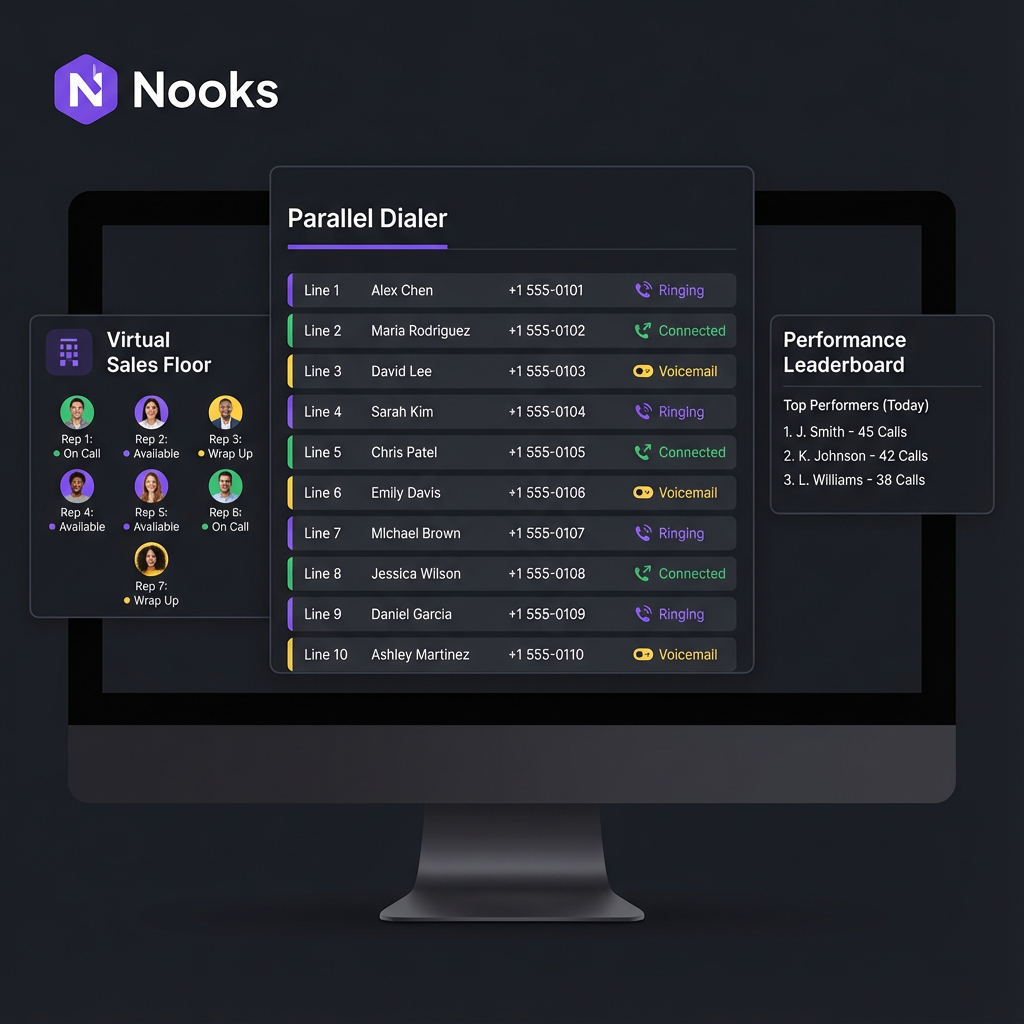
Nooks is an AI-powered pipeline engine that focuses on helping sales teams double their pipeline. It offers a parallel dialer, along with features for prospect research, buying signal detection, and AI-powered email generation. Nooks positions itself as a complete pipeline generation platform, designed to help sales teams find and engage with the right prospects.
Salesfinity
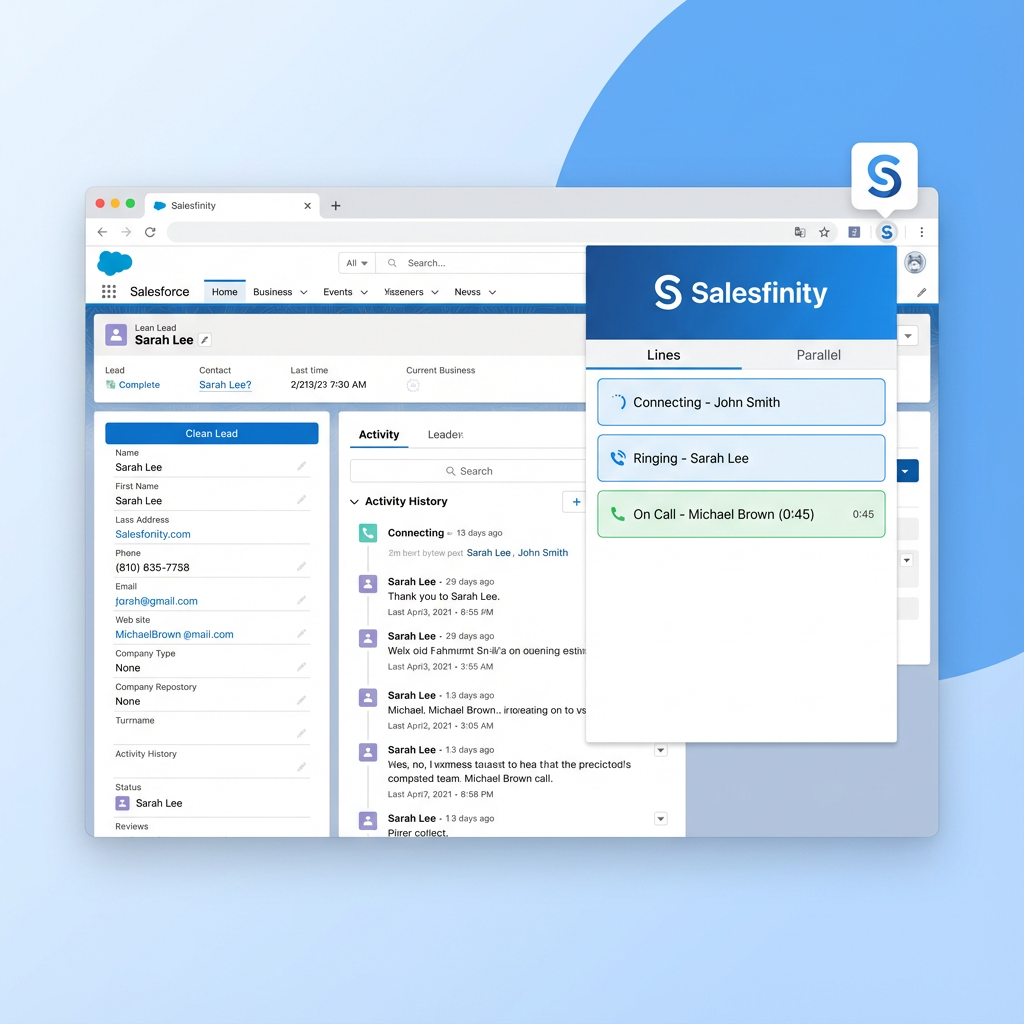
Salesfinity is an AI parallel dialer that focuses on compound prospecting and data accuracy. It offers a unique "SmartFlow" technology that intelligently scores contacts based on their likelihood to pick up, as well as waterfall data enrichment and automated follow-up categorization. Salesfinity positions itself as a tool for long-term relationship building and sustainable pipeline growth.
Feature Comparison: Nooks vs. Salesfinity vs. Trellus AI
Dialing Dynamics and Technology
All three platforms offer parallel dialing, but they each have their own unique approach. Trellus AI and Nooks both allow for dialing up to five numbers at once, which can significantly increase the number of calls an SDR can make. However, this approach can also lead to a higher number of hang-ups and a greater risk of being flagged as spam.
Salesfinity, on the other hand, uses a proprietary technology called "SmartFlow" to intelligently score contacts based on their likelihood to pick up. This allows for a more strategic approach to dialing, with high-scoring contacts being dialed individually or with minimal parallel dialing. This can lead to fewer hang-ups, a better prospect experience, and a lower risk of being flagged as spam.
AI and Coaching Capabilities
All three platforms leverage AI to provide coaching and insights to sales reps. Trellus AI offers real-time coaching during calls, with AI-powered suggestions for objection handling and competitor positioning. It also offers voice agents for practice, allowing reps to hone their skills in a safe environment.
Nooks also offers AI-powered coaching, with call scoring and analysis to help managers identify areas for improvement. It also offers AI training bots for ramp, allowing new reps to get up to speed quickly.
Salesfinity offers AI-driven objection analysis, with sentence-level insights into what prospects are pushing back on and how reps are responding. It also offers AI-powered script writing and real-time counters to help reps handle objections effectively.
Data and Prospecting Features
Nooks and Salesfinity both offer strong data and prospecting features. Nooks offers prospect research and buying signal detection, allowing teams to identify and prioritize high-intent accounts. It also offers AI-powered email generation, which can help reps craft more effective outreach.
Salesfinity offers waterfall data enrichment with over six data providers, ensuring that reps are always calling the most accurate and up-to-date numbers. It also offers a "Boss Mode" feature that validates numbers before dialing, further improving data accuracy.
Trellus AI, while not as focused on data and prospecting as the other two platforms, does offer a "Superhuman for LinkedIn" feature that consolidates LinkedIn and Sales Navigator inboxes, making it easier for reps to manage their outreach on the platform.
Integrations and Ecosystem
All three platforms offer integrations with popular CRMs and sales engagement platforms, including Salesforce, HubSpot, and Outreach. Trellus AI also offers integrations with Google Sheets and GoHighLevel, while Salesfinity offers an open API that allows for seamless integration with any system.
Team Collaboration and Salesfloor
All three platforms offer a virtual salesfloor, allowing reps to dial together, share insights, and celebrate wins. This can help to foster a sense of camaraderie and healthy competition, even in a remote work environment.
Pricing and Transparency
Salesfinity & Trellus are the most transparent with their pricing, with plans starting at $59.99 per user per month in the case of Trellus.
Use Cases and Target Audience
•Trellus AI is best for teams that want to focus on improving the quality of their sales calls through real-time coaching and practice.
•Nooks is best for teams that want to focus on prospecting and pipeline generation, with features for identifying and prioritizing high-intent accounts.
•Salesfinity is best for teams that want to focus on long-term relationship building and sustainable pipeline growth, with features for data accuracy and automated follow-up.
Pros and Cons
Trellus AI
Pros:
•Real-time AI coaching
•Voice agents for practice
•"Superhuman for LinkedIn" feature
Cons:
•Less focus on data and prospecting
Nooks
Pros:
•Prospect research and buying signal detection
•AI-powered email generation
•Strong focus on pipeline generation
Salesfinity
Pros:
•"SmartFlow" technology for intelligent dialing
•Waterfall data enrichment
•Automated follow-up categorization
•Transparent pricing
Cons:
•Less focus on real-time coaching
How Parallel Dialers Impact SDR Productivity at Scale
When sales leaders evaluate platforms such as Trellus AI, Nooks, and Salesfinity, the conversation often starts with dialing speed. Productivity gains, however, come from a combination of conversation rates, workflow efficiency, coaching effectiveness, and data quality.
An SDR making 80 manual dials per day operates in a very different environment than an SDR leveraging an AI powered parallel dialer. The goal is not simply generating more call attempts. The objective is generating more live conversations while reducing time spent navigating voicemail, disconnected numbers, and administrative tasks.
Platforms approach this challenge differently.
Nooks focuses heavily on pipeline creation and prospecting acceleration. Teams that prioritize top of funnel activity often appreciate its ability to help reps identify accounts showing intent signals and engage those prospects faster.
Salesfinity emphasizes contact accuracy and intelligent call sequencing. Rather than maximizing raw dial volume, it attempts to improve connection rates through data validation and predictive contact scoring.
Trellus AI takes a different path, combining parallel dialing with real time coaching and conversational intelligence. This can be particularly valuable for organizations where improving call quality carries equal importance to increasing call quantity.
For sales leaders, one of the most important metrics to monitor is not dials per day but conversations per day. That metric provides a clearer view of how effectively a platform contributes to pipeline generation.
Nooks Parallel Dialer Case Study: Fintech Sales Teams
Many fintech organizations face a difficult prospecting environment. Decision makers are busy, competition is intense, and sales cycles frequently involve multiple stakeholders.
In these environments, Nooks often appeals to teams seeking greater outbound volume combined with prospecting intelligence.
A common fintech SDR workflow may involve:
- Identifying accounts displaying buying signals
- Prioritizing high intent prospects
- Launching outbound call sequences
- Following up through email and LinkedIn engagement
- Routing qualified opportunities to account executives
The value proposition for fintech teams lies in reducing research time and increasing engagement opportunities. When representatives spend less time gathering information, they can spend more time initiating conversations.
Another factor that makes Nooks attractive for fintech organizations is the collaborative sales floor environment. Fast growing companies frequently onboard large SDR teams, and virtual sales floors can help replicate the coaching culture traditionally found in office environments.
Fintech companies evaluating Nooks should pay particular attention to pipeline creation metrics, opportunity conversion rates, and average meetings booked per representative after deployment.
Nooks Parallel Dialer SaaS Sales Case Study Considerations
SaaS companies often operate under aggressive growth targets where incremental improvements in SDR efficiency can have significant revenue implications.
For SaaS organizations, evaluating a parallel dialer requires examining more than activity metrics.
Important evaluation criteria include:
- Meeting conversion rates
- Average opportunities created per rep
- Ramp time for new SDRs
- Coaching effectiveness
- CRM adoption rates
- Data quality maintenance
Nooks positions itself strongly in environments where pipeline generation remains the primary objective. Teams with mature enablement processes may benefit from combining prospecting insights with parallel dialing capabilities.
One area SaaS leaders should examine carefully is onboarding efficiency. If a platform reduces the time required for new hires to reach quota attainment, the long term financial impact can significantly exceed the value created through additional call volume alone.
When reviewing any SaaS sales case study involving dialers, decision makers should measure results over multiple quarters rather than a few weeks. Sustainable performance improvements provide a much more accurate assessment of platform value.
Nooks AI Dialer Case Study for Sales Development Representatives
Sales Development Representatives operate at the front lines of revenue generation. Their success depends heavily on balancing activity volume with conversation quality.
An AI dialer can influence SDR performance in several ways.
The first is time efficiency. Reps spend less time waiting for connections and more time engaging prospects.
The second is prioritization. AI systems can help determine which contacts deserve immediate attention based on engagement signals and historical performance patterns.
The third is coaching. Feedback delivered during or after conversations can accelerate skill development and improve consistency across teams.
For SDR organizations evaluating Nooks, Salesfinity, or Trellus AI, leadership teams should establish baseline metrics before implementation.
These typically include:
- Daily conversations
- Meetings booked
- Opportunity creation rate
- Pipeline generated
- Average talk time
- Connect rate
- Quota attainment percentage
Capturing these metrics before deployment creates a clear framework for measuring impact after adoption.
Questions Revenue Leaders Should Ask Before Choosing a Dialer
Many organizations compare feature lists without fully understanding how each platform aligns with their sales process.
Several questions can help narrow the evaluation process.
How Important Is Real Time Coaching?
Organizations with newer SDR teams often benefit significantly from live guidance and call intelligence. In these environments, Trellus AI may offer advantages due to its coaching capabilities.
How Important Is Prospecting Intelligence?
Teams that spend substantial time researching accounts may prioritize platforms that surface buying signals and account insights.
How Important Is Contact Accuracy?
Organizations experiencing poor connection rates should carefully evaluate enrichment quality, number verification processes, and data maintenance workflows.
How Important Is Team Culture?
Virtual sales floors, collaborative environments, and manager visibility can influence rep engagement and performance over time.
A platform that aligns with company culture often delivers stronger adoption than one chosen solely on feature depth.
Measuring ROI After Implementation
Selecting a sales dialer represents only the beginning of the process. Revenue teams should establish a structured framework for measuring success after rollout.
Key performance indicators typically include:
- Increase in live conversations
- Growth in meetings booked
- Pipeline generated per SDR
- Reduced ramp time
- Improvement in connect rates
- Increased quota attainment
- Manager coaching efficiency
The most successful deployments focus on both activity outcomes and revenue outcomes.
Higher dial volume can create positive short term metrics, but sustainable growth usually comes from combining efficiency, coaching, prospecting intelligence, and strong data quality.
Spam Risk and Caller Reputation: What Sales Teams Often Overlook
One of the biggest challenges facing outbound sales teams today has little to do with scripts, coaching, or prospecting strategy. It comes down to a simple question:
Can prospects even see your calls?
As mobile carriers and spam detection systems become more aggressive, caller reputation has become a major factor in outbound performance. Many organizations discover that increasing dial volume does not automatically increase conversations. In some cases, it can create the opposite outcome.
When evaluating Nooks, Salesfinity, and Trellus AI, sales leaders should examine how each platform fits into their broader caller reputation strategy.
A parallel dialer can create tremendous efficiency gains. At the same time, aggressive calling patterns may increase the likelihood of numbers being flagged if proper safeguards are not in place.
This is particularly important for teams operating in competitive industries such as SaaS, fintech, cybersecurity, insurance, and recruiting, where prospects receive large volumes of sales outreach every week.
The best sales organizations understand that outbound success depends on balancing efficiency with deliverability.
Understanding How Caller Reputation Works
Every outbound phone number develops a reputation over time.
Telecom providers and spam detection systems evaluate numerous signals, including:
- Call frequency
- Call duration
- Answer rates
- Call rejection rates
- Prospect complaints
- Number consistency
- Historical engagement patterns
When a number begins generating negative signals, carriers may label incoming calls as spam, potential spam, or unknown risk.
Once that occurs, connect rates can drop significantly.
A sales team may continue making thousands of dials per week while experiencing steadily declining conversation rates. Many managers initially assume their messaging has deteriorated when the underlying issue is deliverability.
This makes caller reputation management a critical component of any outbound strategy.
How Nooks Approaches High Volume Outbound
Nooks is designed for organizations seeking aggressive pipeline growth.
The platform's parallel dialing capabilities enable representatives to engage significantly more prospects than traditional manual workflows.
For high growth companies, this creates clear advantages.
Representatives spend less time navigating voicemail systems and more time speaking with prospects. Pipeline generation efforts can scale much faster compared to conventional dialing approaches.
However, sales leaders implementing any high volume dialing strategy should continuously monitor:
- Connect rates
- Answer rates
- Spam flag indicators
- Number health metrics
- Call abandonment rates
The goal is maintaining strong prospect engagement without creating dialing patterns that negatively impact reputation.
Companies running large SDR organizations often rotate numbers, monitor carrier feedback, and regularly audit outbound performance to preserve long term effectiveness.
How Salesfinity Addresses Deliverability Concerns
Salesfinity's positioning emphasizes intelligent prospecting and contact prioritization.
Its SmartFlow methodology seeks to identify prospects who are more likely to answer calls, helping representatives focus efforts where conversations are most likely to occur.
This approach offers several potential advantages.
When teams concentrate on contacts with higher engagement probability, they may experience:
- Improved connect rates
- Better conversation quality
- Lower abandonment rates
- Reduced unnecessary call volume
Sales organizations concerned about long term number health often appreciate approaches that emphasize strategic outreach rather than maximizing activity volume alone.
Deliverability challenges rarely originate from one week of outbound calling. They typically develop over months of repetitive outreach patterns.
A more targeted dialing approach can help organizations maintain stronger performance over longer periods.
How Trellus AI Balances Activity and Conversation Quality
Trellus AI approaches the outbound challenge from a different perspective.
While the platform includes parallel dialing functionality, a major portion of its value proposition centers on improving conversation effectiveness through coaching and AI assistance.
This creates an interesting dynamic.
If representatives become more effective during live conversations, teams may require fewer total conversations to achieve the same pipeline outcomes.
Improved objection handling, stronger discovery conversations, and better qualification processes can increase the value generated from each connected call.
For sales leaders, this creates an important consideration.
Outbound success should not be measured solely through dial volume.
A team generating twenty high quality conversations may outperform a team generating forty low quality conversations.
As a result, platforms that improve rep effectiveness can contribute to pipeline growth even when raw activity numbers remain similar.
The Cost of Poor Caller Reputation
Many organizations underestimate the financial impact of spam labeling.
Consider a team of twenty SDRs.
If each representative loses only a handful of conversations per day due to spam filtering, the cumulative impact can become substantial over the course of a quarter.
Consequences often include:
- Lower meeting volume
- Reduced pipeline generation
- Higher cost per opportunity
- Longer sales cycles
- Lower SDR morale
- Increased quota pressure
These issues can persist for months before leadership identifies the root cause.
For this reason, caller reputation should be treated as a revenue metric rather than a telecommunications metric.
Best Practices for Protecting Outbound Performance
Regardless of platform selection, several best practices can help organizations maintain healthy outbound operations.
Rotate Calling Infrastructure Strategically
Many high performing outbound teams avoid relying on a small number of heavily used phone numbers.
Distributing call activity across multiple numbers can reduce concentration risk and help preserve reputation.
Monitor Connect Rates Weekly
Connect rates often provide an early warning signal.
Sudden declines may indicate data quality problems, prospect fatigue, or deliverability concerns.
Tracking these metrics consistently allows teams to identify issues before they significantly impact pipeline generation.
Prioritize Data Accuracy
Poor data quality creates wasted activity.
Calling invalid, disconnected, or outdated numbers contributes little value while increasing unnecessary outbound volume.
Organizations that maintain clean contact databases frequently achieve stronger performance with fewer dialing attempts.
Improve Conversation Quality
Prospects who remain engaged during conversations generate positive interaction signals.
Coaching, call analysis, and continuous training can improve outcomes while reducing negative engagement patterns.
Align Dialing Strategy With Target Market
Enterprise prospects often require a different outreach approach than SMB buyers.
Teams should avoid applying identical dialing strategies across vastly different customer segments.
The highest performing outbound organizations tailor activity levels to buyer behavior and market expectations.
Enterprise Buying Considerations Beyond Features
Many software comparisons focus heavily on feature matrices.
Enterprise buying decisions usually involve a much broader set of considerations.
When evaluating Nooks, Salesfinity, and Trellus AI, leadership teams should examine operational factors that may influence long term success.
These considerations often have greater impact on adoption than individual features.
Onboarding Requirements
Every sales organization experiences some level of disruption during platform implementation.
Questions buyers should ask include:
- How long does deployment take?
- How much training is required?
- What resources are provided during onboarding?
- How quickly can managers begin measuring ROI?
Platforms that shorten time to value often achieve stronger adoption across larger sales teams.
Manager Visibility
Sales managers need access to meaningful insights, not just activity dashboards.
Visibility into coaching opportunities, conversation quality, objection trends, and rep performance can influence overall team development.
Organizations should evaluate how effectively each platform supports frontline managers.
Scalability
A tool that works well for ten SDRs may not perform the same way for one hundred SDRs.
Revenue leaders should consider:
- User management capabilities
- Reporting flexibility
- Administrative controls
- Workflow customization
- Integration scalability
Future growth plans should influence platform selection decisions.
Revenue Impact Measurement
The strongest business case often comes from measurable revenue outcomes.
Leadership teams should establish success metrics before implementation begins.
Common benchmarks include:
- Pipeline generated
- Meetings booked
- Opportunity creation
- Revenue influenced
- Rep productivity
- Ramp speed
When measured consistently, these metrics provide a clearer understanding of platform effectiveness than activity statistics alone.
Which Platform Fits Different Sales Organizations?
Different platforms tend to align with different organizational priorities.
Teams focused heavily on prospecting intelligence and pipeline creation may gravitate toward Nooks.
Organizations emphasizing contact accuracy and strategic outreach workflows may find Salesfinity appealing.
Companies seeking a combination of dialing efficiency, coaching support, and rep development may view Trellus AI as a strong option.
The most successful buying decisions occur when leaders evaluate platforms against their specific operational challenges rather than chasing feature parity.
A company struggling with low connect rates has different needs than a company struggling with poor discovery conversations.
Similarly, an early stage startup may prioritize rapid pipeline generation, while an enterprise sales organization may focus more heavily on coaching consistency and rep development.
Understanding those priorities creates a much clearer path toward selecting the right outbound platform.
Conclusion
All three of these platforms are powerful tools that can help sales teams improve their performance. The best choice for your team will depend on your specific needs and priorities.
If you are looking for a platform that can help you improve the quality of your sales calls through real-time coaching and practice, then Trellus AI is an excellent choice. Its unique features, such as voice agents for practice and the "Superhuman for LinkedIn" integration, make it a powerful tool for any sales team that wants to have more effective conversations.
If you are looking for a platform that can help you generate more pipeline through prospect research and buying signal detection, then Nooks is a great option. Its focus on pipeline generation and AI-powered email generation make it a powerful tool for any sales team that wants to find and engage with the right prospects.
And if you are looking for a platform that can help you build long-term relationships and sustainable pipeline growth, then Salesfinity is the way to go. Its "SmartFlow" technology, waterfall data enrichment, and automated follow-up categorization make it a powerful tool for any sales team that wants to focus on data accuracy and long-term relationship building.
Ultimately, the best way to decide which platform is right for you is to request a demo and see for yourself how each of them can help your team achieve its goals.
Frequently Asked Questions
1. What is a parallel dialer?
A parallel dialer is a sales tool that allows reps to call multiple numbers at once. When a prospect answers, the dialer connects them to the rep, while the other calls are dropped.
2. What are the benefits of using a parallel dialer?
The main benefit of using a parallel dialer is that it can significantly increase the number of calls a rep can make in a day. This can lead to more conversations, more meetings, and ultimately, more sales.
3. What are the drawbacks of using a parallel dialer?
The main drawback of using a parallel dialer is that it can lead to a higher number of hang-ups and a greater risk of being flagged as spam. This is why it is important to choose a platform that offers features for mitigating these risks, such as intelligent dialing and number reputation management.
4. What is AI coaching?
AI coaching is a feature that uses artificial intelligence to provide real-time feedback and suggestions to sales reps during calls. This can help reps improve their performance and handle objections more effectively.
5. What is data enrichment?
Data enrichment is the process of adding or enhancing the information in a database. In the context of sales, this typically involves adding or updating contact information, such as phone numbers and email addresses.
.jpeg)

Embed Trellus Parallel Dialer Within Your SEP & 4x Your Conversations