Our Top Picks


For over a decade or so, outbound sales strategies have remained more or less the same.
At least, that holds true at the core level where the basic outbound customer acquisition strategies matter. These days, we’ve got an influx of tools that have made it easier to prospect and convert.
The question is: going forward, are these strategies going to take an entirely different curve, or are they going to remain the same?
That’s what this post is all about.
We’re going to talk about different aspects of outbound sales strategies, but more so along the lines of main KPIs, metrics, and the latest digital tool based approaches. This is to help you understand the modern landscape and how your business needs to adapt to the current workflow.
Modern outbound sales strategy revolves around clarity.
Teams know exactly who they want to speak with, why that person should care, and how the conversation fits into a broader sales pipeline building motion. Instead of chasing volume alone, outbound prospecting strategy now emphasizes relevance at scale. Data, intent signals, and automation support this shift, but human judgment still drives outcomes.
Outbound sales tactics also evolved because buyers changed. Decision makers receive hundreds of messages every week. They respond only when outreach respects their time and context. This is why outbound sales personalization, account based selling, and multi channel prospecting are no longer advanced tactics.
They are baseline expectations.
- Fun Fact: Over 63% buyers are likely to engage with a salesperson reaching out through personalized outreach campaigns.
Another important shift lies in accountability. Revenue leaders now demand clear outbound sales ROI.
That pressure forces teams to tighten outbound sales process steps, measure outbound sales metrics properly, and connect activity directly to pipeline creation. Vanity numbers lost influence. Pipeline generated, outbound sales conversion rate, and customer acquisition cost now shape strategy decisions.
Outbound vs Inbound Sales: Where Outbound Still Wins

Outbound vs inbound sales discussions often turn emotional. Inbound gets credit for warmth and efficiency, outbound gets criticized for interruption.
That framing misses reality.
In fact,both motions serve different roles inside revenue engines, and outbound sales still holds unique advantages that inbound cannot replace.
Outbound sales strategy creates opportunities on demand. Teams decide which accounts matter and initiate conversations instead of waiting for interest signals. This matters most in competitive B2B markets where timing defines success. When multiple vendors chase the same buyer, the first credible conversation often shapes the shortlist.
Inbound sales depends heavily on buyer self education. Content, ads, and SEO attract prospects already searching for solutions. That works well for known problems and established categories. Outbound sales tactics shine when buyers are unaware, misinformed, or distracted. Many high value deals begin with a cold outreach message that reframes a problem the buyer did not actively prioritize.
Also Read:
- Best Outbound Prospecting Tools in 2025: The Definitive Guide
- Best Sales Dialer Software for High-Volume Outbound Calling in 2025
- Inbound Vs Outbound Sales: What To Do When Your Inbound Leads Dry Up
Another major difference lies in the deal profile. Outbound sales for SaaS companies often produces larger contracts because targeting starts at the account level.
Account based selling allows teams to align messaging to revenue potential, not form fills. Inbound may deliver higher volume leads, but outbound sales pipeline building delivers focus and control.
The strongest organizations never choose one motion over the other. They align both. Marketing warms markets, outbound sales teams open doors, and both contribute to a unified revenue motion. This alignment matters even more when outbound sales automation and marketing automation tools share data and intent signals.
Outbound selling did not survive in 2025 because it refused to change. It survived because it adapted faster than inbound alone ever could.
Step by Step Guide to Building an Effective Outbound Sales Funnel
A strong outbound sales funnel does not start with outreach.
Normally, any such process starts with decisions. In that order, whenever teams skip foundational work, they end up blaming reps, tools, or markets. High performing teams treat the outbound sales process as a repeatable system.
Defining the Ideal Target Before Any Outreach
Outbound sales strategy examples consistently show one shared behavior. Top teams narrow focus aggressively. Instead of chasing everyone, they define clear ideal customer profiles tied to revenue outcomes.
- Did you know that businesses that reportedly use outsourced outbound sales agents are more than likely to get faster access to global talent, proven systems and intent data.
This stage includes firmographics, buying roles, trigger events, and pain alignment. For outbound sales for SaaS, this often includes tech stack signals, growth stage, and expansion indicators. The quality of outbound prospecting strategy depends entirely on this clarity.
Without this step, even the best outbound sales tools fail to produce results.
Structuring Outreach as a Sales Cadence
Once targeting is clear, teams design an outbound sales cadence that balances persistence with respect. Sales cadence defines timing, channel mix, and message progression across touches.
Effective outbound sales cadence design includes phone, email, LinkedIn, and occasionally video or events. Each touch builds context instead of repeating the same pitch. Multi channel prospecting works because it mirrors how buyers communicate, not because it increases noise.
Sales leaders monitor cadence performance closely since cadence quality directly impacts outbound sales conversion rate.
Qualification and Pipeline Creation
Outbound sales funnel success depends on qualification discipline. Not every response deserves a meeting. Reps assess urgency, relevance, authority, and timing before advancing opportunities.
This stage directly affects outbound sales ROI. Poor qualification inflates meetings booked but weakens pipeline quality. Strong outbound sales techniques emphasize fewer, better opportunities rather than volume alone.
Once qualified, opportunities move into structured sales pipeline building managed through CRM platforms and analytics dashboards.
Outbound Sales Tools and Automation Without Losing the Human Touch
Outbound sales automation plays a critical role in modern teams, yet automation never replaces judgment. The best tools remove friction so reps focus on conversations.
Best Tools to Automate Outbound Sales Strategy for B2B Companies
Automation platforms handle sequencing, follow ups, call logging, and task management. This allows consistent execution of outbound sales playbook standards across teams.
Strong platforms support multi channel prospecting, CRM sync, analytics, and personalization fields. Automation becomes dangerous only when teams allow it to replace thinking. High performers treat automation as structure, not autopilot.
- Dont give up as a salesperson if you aren’t getting a lot of positive response from prospects. According to sales experts, almost 80% of your leads are likely to say ‘No’ before the answer turns into a ‘Yes.’
How to Create an Outbound Sales Strategy Using CRM Platforms
CRM platforms anchor outbound sales process steps. They store account context, track conversations, and surface insights across the funnel.
When CRM systems align with outbound sales tactics, leaders gain visibility into what works. Messaging, cadence performance, and pipeline attribution become measurable. This clarity enables smarter forecasting and coaching.
Best Cold Calling Software to Enhance Outbound Sales Efforts
Cold calling remains central to outbound sales techniques, but tools have improved dramatically.
Understanding a robust cold calling strategy is crucial for maximizing the effectiveness of these modern tools.
Modern dialers support call recording, local presence, analytics, and coaching insights.
Trellus: The Best AIO Outbound Sales Software To Jumpstart Your Virtual Sales Floor
Outbound sales teams often struggle with one core problem.
They know what good outbound looks like, but execution breaks down at scale.
Calls normally get rushed, follow ups lose context, coaching becomes reactive, and managers lack visibility into what actually happens inside conversations. This is where a conversation intelligence and coaching focused platform fits naturally into the outbound sales ecosystem.
Instead of acting as just another outbound sales tool, this solution operates closer to the moment of truth, the live conversation. Calls are automatically captured, transcribed, and analyzed, giving sales leaders a clear window into how outbound sales tactics play out in the real world.
This matters because outbound success is rarely decided inside a CRM field. It is decided in tone, phrasing, objection handling, and confidence during cold outreach.
Strengthening the Outbound Sales Process at the Conversation Level
Every outbound sales process step depends on conversation quality. Prospecting creates opportunity, but calls convert interest into momentum. With call level insights, managers can see which openers create engagement, which objections stall deals, and which reps consistently move conversations forward.
Instead of guessing why outbound sales conversion rate varies between reps, leaders gain evidence. Patterns emerge across teams, industries, and buyer personas. This turns outbound sales coaching from opinion based feedback into data supported guidance.
Supporting Outbound Sales Training and Team Development
Outbound sales team structure only works when skill development stays continuous.
To further enhance skill development, consider exploring the best sales coaching software available, which can provide targeted feedback and improve overall team performance.
New hires ramp faster when they can listen to real examples instead of theoretical scripts. Experienced reps sharpen performance when feedback highlights specific moments rather than generic advice.
Trellus actively enables targeted coaching through various embedded AI coaching solutions.
Managers tag key moments, share call snippets, and align feedback to outbound sales best practices. Over time, it ends up creating a shared language across the team around what good outbound sales techniques sound like.
Meanwhile, sales leaders and business owners also gain leverage. Instead of sitting in on endless calls, they review insights asynchronously and coach with precision. This improves consistency without micromanagement.
Improving Outbound Sales Metrics That Actually Matter
Conversation quality directly impacts pipeline outcomes. When reps handle objections better, meetings convert more often. When discovery improves, sales cycles shorten. When messaging aligns with buyer reality, outbound sales ROI increases.
Rather than tracking activity alone, teams understand why activity succeeds or fails.
Why This Matters for Modern B2B Outbound Sales
Modern outbound sales approach depends on relevance, empathy, and timing.
Technology supports scale, but conversations close deals. Tools that live inside the conversation layer help teams improve where it matters most.
Our cold calling and outreach solution does not replace outbound sales automation or CRM systems. It complements them. It strengthens multi channel prospecting by ensuring phone conversations match the quality promised in emails and LinkedIn outreach.
For teams serious about improving outbound sales tactics that work, conversation intelligence becomes a competitive advantage rather than a nice to have.
How to Track Outbound Sales Performance Using Analytics Platforms
Outbound sales metrics shape decision making in modern revenue teams.
Activity without insight creates noise. Insight without action creates stagnation. Analytics platforms connect effort to outcomes and turn outbound sales strategy into a predictable growth engine.
Strong tracking begins with clarity on what matters. Open rates and clicks still offer signals, yet they rarely reflect revenue impact.
A clear understanding of key sales metrics and KPIs is essential for evaluating the success of your outbound efforts and making data-driven adjustments.
High performing B2B outbound sales teams prioritize metrics tied to pipeline creation and deal progression.
Core Outbound Sales Metrics That Matter
Meetings booked remains the first meaningful checkpoint. It shows whether outbound sales tactics resonate enough to earn time from prospects. Tracking this metric over time highlights messaging strength and targeting accuracy.
Lead to meeting conversion rate reveals quality. A high volume of meetings with low conversion suggests poor targeting or weak qualification. This metric helps teams refine outbound prospecting strategy and ICP assumptions.
Pipeline generated represents real success. Revenue leaders evaluate outbound sales ROI based on pipeline value influenced directly by outbound activity. This metric aligns sales leadership, finance, and operations around shared outcomes.
Sales cycle length adds context. Outbound sales for SaaS often shortens cycles when urgency and relevance align. Longer cycles may indicate misalignment between message and buyer readiness.
Customer acquisition cost ties everything together. When outbound sales automation, tools, and headcount costs align with pipeline returns, leadership gains confidence to scale.
Analytics platforms centralize these insights. Dashboards reveal trends, surface bottlenecks, and support coaching conversations grounded in data rather than opinion.
How to Integrate Outbound Sales With Marketing Automation Tools
Outbound sales strategy performs best when sales and marketing operate as one system. Separation creates friction, duplication, and missed signals. Integration aligns timing, messaging, and buyer context.
Marketing automation tools capture intent. Website visits, content engagement, webinar attendance, and ad interactions reveal readiness. When outbound sales teams access these signals, cold outreach becomes warm and relevant.
Sales teams use these insights to prioritize accounts, tailor messaging, and adjust cadence timing. Outreach references real behaviors instead of assumptions. This improves outbound sales personalization and response rates.
Marketing benefits as well. Feedback from outbound conversations informs content themes, objection handling, and positioning.
For a deeper dive into optimizing your B2B sales process, explore comprehensive guides that outline each critical stage.
This loop strengthens inbound and outbound simultaneously.
Integration also supports attribution. Revenue teams see which outbound sales channels, messages, and campaigns influence pipeline. This clarity improves budget allocation and strategic planning.
The result feels seamless to buyers. Messages align across touchpoints. Conversations feel timely. Trust builds faster because communication respects context.
What Are Proven Outbound Sales Strategies for SaaS Startups
Outbound sales for SaaS startups requires balance. Speed matters, yet credibility matters more. Early stage teams win by combining focus with experimentation.
One proven outbound sales strategy centers on narrow targeting. SaaS startups perform better when they own a small segment before expanding. This allows messaging depth and faster learning cycles.
Account based selling works especially well for SaaS. Instead of chasing individual leads, teams engage buying groups within target accounts. Messaging aligns across stakeholders, improving deal momentum.
Another effective approach involves problem led outreach. SaaS buyers respond when outreach highlights operational friction, inefficiency, or risk they recognize. Product features matter later, after relevance lands.
Outbound sales tactics that work for startups also include founder led outreach. Early conversations build credibility and accelerate learning. Insights gathered inform outbound sales playbook development for future hires.
Technology supports scale later. Early success comes from clarity, not tools. Once patterns emerge, outbound sales automation amplifies what already works.
Where to Find Outbound Sales Templates and Scripts Online
Templates and scripts accelerate execution, yet they never replace thinking. The best outbound sales templates act as frameworks, not scripts read word for word.
High quality outbound sales scripts focus on structure. Openers establish relevance. Middle sections frame value. Questions invite dialogue. Closings respect time and propose next steps.
Email templates follow similar logic. Strong subject lines create curiosity. Opening lines reference context. Body copy stays concise and buyer centered. Calls to action feel low pressure.
Templates work best when customized per role, industry, and account tier. Teams that blindly copy templates sound identical to competitors. Teams that adapt frameworks sound thoughtful.
Sales leaders store templates inside outbound sales tools and CRM platforms. This ensures consistency while allowing personalization. Reps save time without sacrificing authenticity.
Outbound Sales Challenges Teams Still Face in 2025
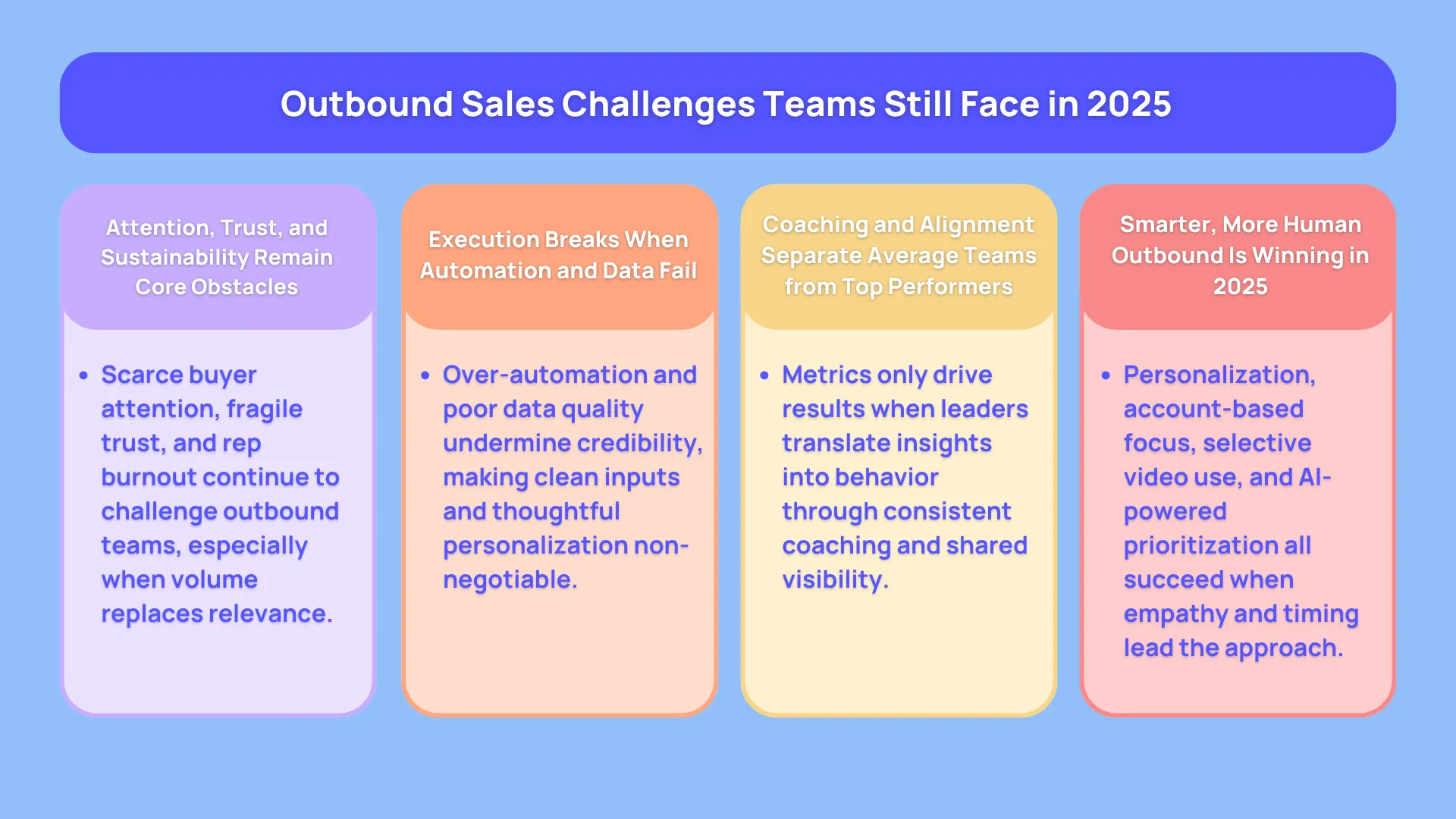
Outbound sales challenges persist even as tools improve. Buyer attention remains scarce. Trust remains fragile. Internal alignment remains difficult.
One challenge involves over automation. When outbound sales automation replaces relevance, response rates fall. Buyers recognize sequences instantly and disengage.
Another challenge involves data quality. Poor contact data wastes time and damages sender reputation. Strong outbound sales strategy depends on clean inputs.
Coaching presents another hurdle. Many teams track metrics without translating insights into behavior change. Analytics only matter when managers coach effectively.
Burnout also remains real. Outbound sales team structure must support sustainability through reasonable targets, skill development, and recognition.
Teams that address these challenges openly outperform those that ignore them.
Outbound Sales Trends 2025 That Matter Most
Outbound sales trends 2025 point toward smarter execution, not louder outreach. Personalization deepens. Account based selling expands. AI supports analysis and preparation rather than replacement.
Video outreach grows selectively. Buyers respond when video adds clarity, not novelty. Intent driven prioritization continues to shape outbound prospecting strategy.
Revenue teams align around shared dashboards. Outbound sales metrics integrate directly into forecasting models. Trust between sales and leadership improves.
The human element remains central. Empathy, timing, and relevance still close deals.
Frequently Asked Questions
Is cold calling completely dead?
Nope.
If anyone says so, they have either given up after receiving rejections, which is a naturally occurring process. Or it could be due to the fact that cold calling has an average 2% conversion rate. At max, this rate could go to 10%, but a lot of the percentages depend on the callers’ research and communication skills.
Moving on, cold calling remains effective when relevance exists. Buyers reject interruption, not conversation. Research, context, and respect determine outcomes.
Will AI for outreach make sales teams sound robotic?
AI supports preparation and analysis.
Human judgment still shapes tone and intent. That means that as a team or an SDR, or anyone in the sale industry, you do not have to rely 100% on AI solutions. Human element is always going to gain precedence over any artificial approach.
To make things easier, spend more time on pulling up research data on prospects, rather than skimming through their profiles and hitting the Dial button.
To streamline your operations further, consider integrating advanced sales automation tools that can handle repetitive tasks and free up your team for more strategic activities.
How do you measure the success of an outbound campaign?
Success reflects pipeline generated, conversion rates, sales cycle impact, and outbound sales ROI rather than activity volume alone.
To effectively measure anything, you need to set-up corresponding KPIs at different funnel levels. When and how did the lead generate? Which element of your website are leads interacting with? Likewise, other questions such as the call quality of your salesperson, highest vs. lowest converting calls and many other things shape different metrics that’ll eventually help you to create a better consumer experience in the long run.
.jpeg)

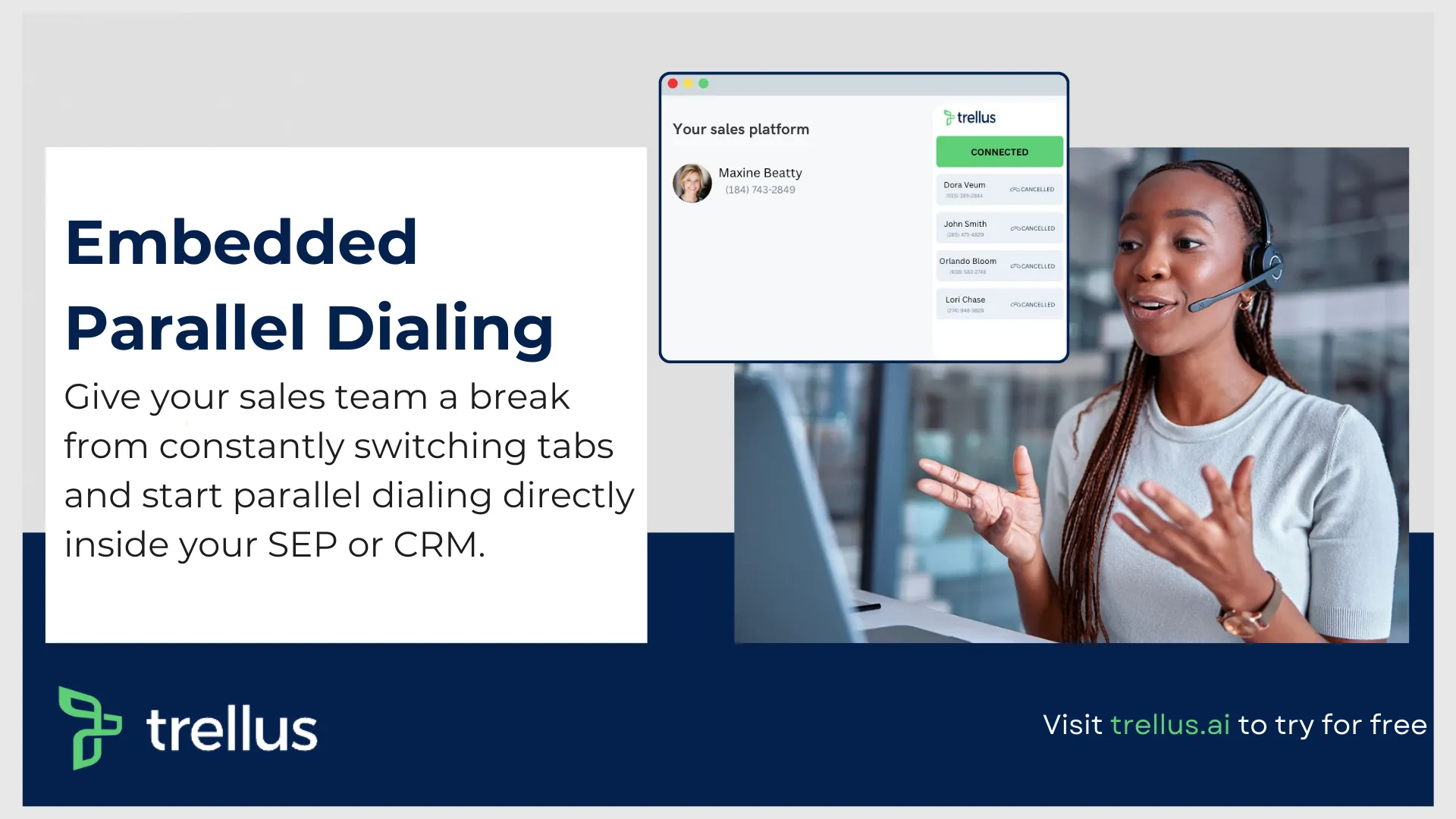
Power and parallel dialing in your CRM.