Our Top Picks


If you were to look up SDR career or something along the lines of how to become an SDR online, there’s a fat chance that it’ll bump you into something all flowery as far as the definition of everything that constitutes sales development representatives.
For instance, I was recently doing the same thing, and when I typed down SDR career guide on the search engine, it gave me a load of this:
‘SDRs are highly motivated individuals who "enjoy" talking to others, learning about their challenges, and guiding them toward solutions that can genuinely help them.’
Yeah, that’s not accurate.
SDRs do not necessarily enjoy talking to “people”. The person on the other side of the line is a prospect that needs to be converted. Higher conversions mean a bigger sales volume, and hence a better incentive for the SDR in question.
It’s a high pressure job, paved with challenges and certain setbacks that might come up as a lack of conversational skills, lack of persuasion power, lack of research on a prospect, and vice versa. But then again, an SDR career is more of the first rung of the ladder, promising improvements along the way. You could be promoted to an AE (*Account Executive) or a BDR (*Business Development Representative), and handle big ticket item accounts exclusively.
Also the salary and perks, aside from that pressure thing are well enough to compensate for the time crunch and overall workflow.
Seeing to that, we decided to double down on everything associated with how to get started as a sales development representative, the overall SDR career path, where does it branch into, and other stuff.
Let’s get started.
What is a Sales Development Representative?

A sales development representative is responsible for generating qualified opportunities for account executives.
Their work centers on identifying potential customers, starting conversations, understanding prospect pain points, and moving them closer to a meeting or demo. Many people come across the SDR job description while researching entry level sales roles, and quickly discover that the position is the heartbeat of modern sales teams.
Primarily, the role can take two forms.
- Inbound SDRs focus on leads coming from marketing channels such as ads, website form fills, webinars, and content downloads.
- Outbound SDRs hunt for prospects through lead lists, cold outreach, social selling, and event follow up.
Both categories of SDR career demand excellent communication, product understanding, and consistent activity across calls, emails, and sales engagement tools.
On top of that, particularly, in the outbound sales development representative’s case, these days companies use outbound sales calling software. So, at some level, it is required to have a knowledge of the cold calling software to cut time on the learning curve.
Moving on, the SDR job description has evolved in tech companies.
On that note, modern SDRs use CRM software, intent data tools, AI sales assistants, and multi-channel messaging strategies to reach prospects more thoughtfully. It is no longer just cold calling. It is structured outreach supported with training, coaching, and advanced technology.
What Does an SDR Do? Daily Responsibilities Explained
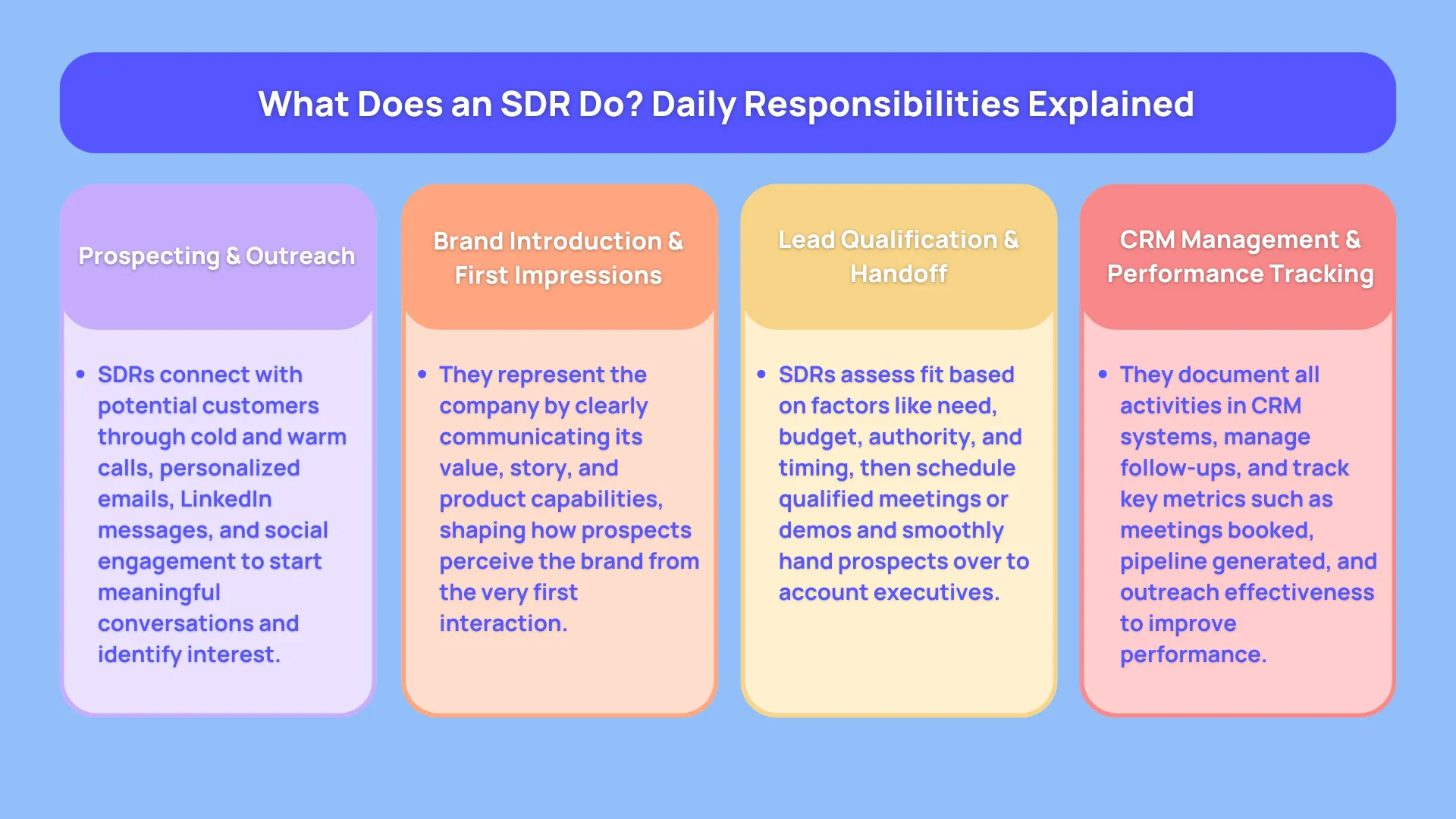
SDRs have a rhythm of daily activities, each linked to pipeline creation.
These tasks help them identify who to reach out to, how to start a meaningful interaction, and what information should be shared when passing a qualified lead to an AE.
Key SDR job responsibilities include the following.
Connecting with prospects
SDRs reach out to potential customers, mainly through phone calls.
These calls are interpreted as ‘cold calls’ when the SDR is contacting the prospect for the first time. If it’s the second or third time, or through a mutual connection, we can say that the call in question is a warm call.
Other modes of outreach for SDRs could be anything ranging over personalized emails, LinkedIn voice notes, and social engagement. The goal is simple. Start a conversation and uncover whether the prospect has a real need.
Creating the first impression of the brand
SDRs introduce prospects to the company’s story, core values, and product capabilities. This first impression must feel helpful and human.
Prospects tend to judge the entire product experience based on how the SDR communicates, which is why empathy, clarity, and product knowledge matter so much.
Qualifying leads
Not every prospect is a match. SDRs gather information about challenges, budget, timeline, authority, and existing tools to understand how serious the opportunity is.
This qualification stage saves time for account executives and ensures that meetings have a higher chance of converting.
Scheduling meetings or demos
SDRs hand off warm prospects to AEs through scheduled calls, demos, or discovery sessions. The quality of this handoff influences conversion rate, customer experience, and sales velocity.
Managing lead data inside CRM software
CRM software such as Salesforce and HubSpot keeps track of every conversation, activity, and qualification note. SDRs rely heavily on these platforms to remain organized, follow up consistently, and measure quota attainment.
Following performance metrics
SDRs typically track meetings booked, qualified pipeline generated, email reply rates, call connection rates, and activity benchmarks. These SDR performance metrics guide coaching sessions and help reps understand where they are improving or falling behind.
Functions of a Sales Development Representative
The core function of an SDR is simple. Fill the sales pipeline with qualified opportunities. Everything else they do ladders up to that objective.
Functions of SDRs include the following:
Initiating first contact (*AKA making that cold call)
An SDR becomes the bridge between a company and a potential customer. This early engagement introduces the product, starts the discovery process, and determines whether continued conversations make sense.
Educating and informing
SDRs explain what the company offers, how the product solves problems, and how other customers have benefitted. It is not a full sales pitch, rather it is a guided introduction that helps prospects understand the value.
Filtering out unsuitable prospects
SDRs protect the time of account executives by identifying mismatches. This qualification process ensures that only prospects with legitimate buying signals or pain points move forward.
Handing over the opportunity
The SDR shares meeting notes, qualification details, and relevant observations with the AE. This handoff process helps account executives run a smooth discovery call without repeating questions.
Meeting lead generation goals
SDRs operate on defined quotas related to meetings booked or qualified pipeline generated. They track their progress closely and adjust their outreach strategy to hit monthly targets.
SDR Salary Range and Compensation Structure
The SDR salary range differs across companies, industries, and cities. In the United States the average SDR salary sits near the mid fifties for base pay, with additional variable compensation tied to meetings set and opportunities created.
According to BuiltIn, the average base salary for an SDR is 57,754 dollars, and the typical variable compensation adds another 25,054 dollars, bringing the total estimated average to 82,808 dollars.
SDR compensation is split into two parts.
The base salary remains fixed each month.
The variable pay depends on performance and usually rewards meeting quota, exceeding pipeline goals, or enabling deals that eventually close.
If you are researching what is the average salary range for SDRs in major US cities, here is a quick snapshot.
Approximate Salary Ranges in Key Markets
• San Francisco: 65,000 to 95,000 dollars base plus commission
• New York: 60,000 to 90,000 dollars base plus commission
• Austin: 50,000 to 75,000 dollars base plus commission
• Seattle: 55,000 to 85,000 dollars base plus commission
• Chicago: 48,000 to 78,000 dollars base plus commission
• Boston: 55,000 to 85,000 dollars base plus commission
Salaries in enterprise tech companies are usually higher because the pipeline value is larger and sales cycles require deeper research. Companies in cybersecurity, dev tools, AI, and enterprise SaaS often offer some of the best SDR salary packages.
Is SDR a Good Career Path?
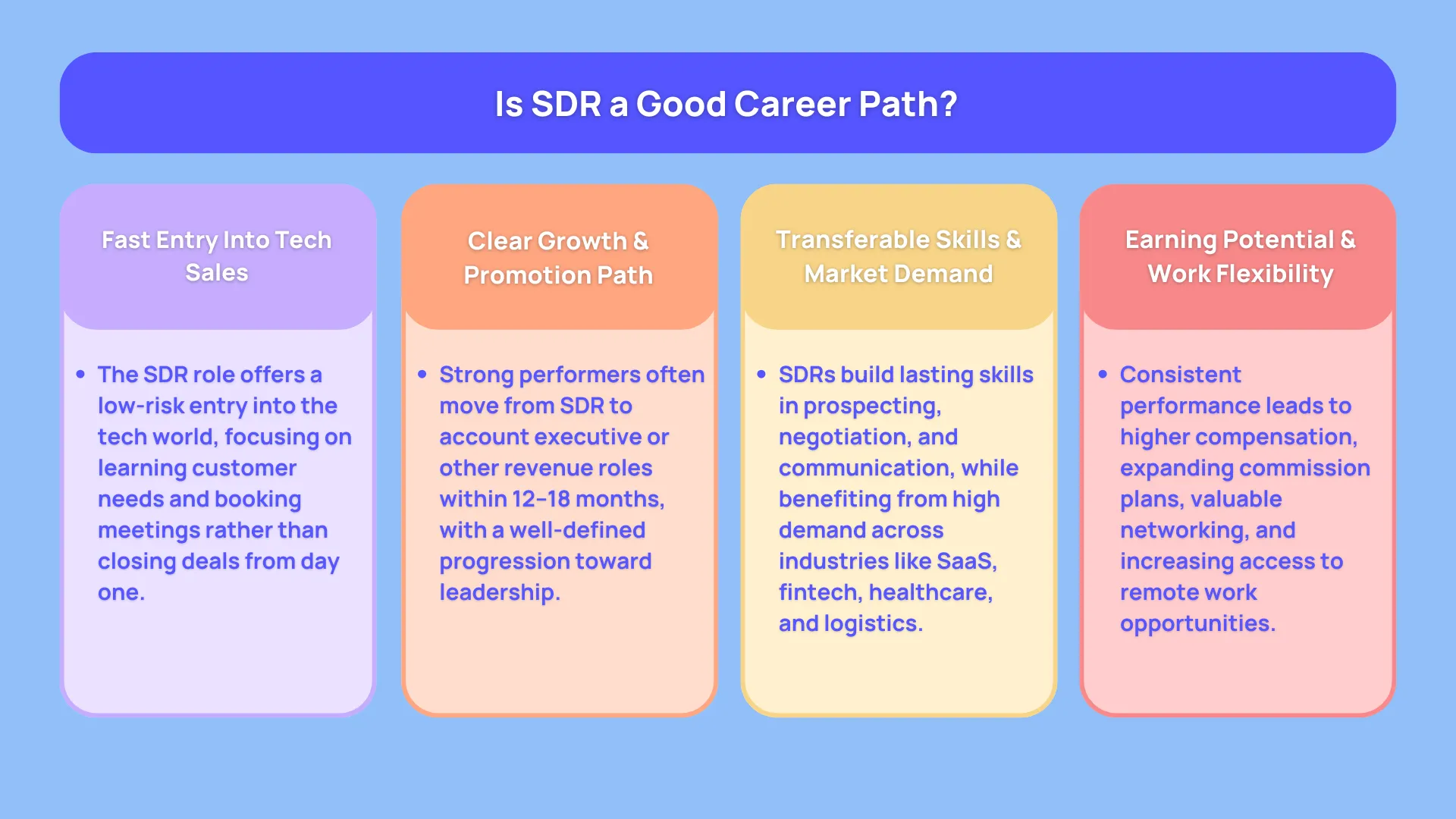
An SDR career gives you fast learning, skill development, and access to the tech world. It teaches negotiation, outbound prospecting, product positioning, objection handling, and resilience. These are skills that translate into almost any revenue role later.
Many people choose the SDR career path because it is one of the quickest ways into tech. It also provides a manageable entry point. You are not expected to close deals on day one. You are expected to ask the right questions, book meetings, and learn the customer mindset.
Growth can be fast. Many SDR to AE promotions happen within twelve to eighteen months in strong companies. Others move into sales operations, marketing, or customer success depending on strengths.
Below is a breakdown of what makes the SDR career appealing.
• Opportunities for advancement
SDRs regularly progress into account executive roles, team leads, and eventually revenue leadership. The path is clear and well structured.
• Skill development
You learn how to speak with executives, analyze markets, conduct outreach, and understand business challenges. These skills remain valuable across your entire sales career progression.
• Industry demand
Tech, healthcare, fintech, and logistics constantly hire SDRs. If you are searching for what are the top companies hiring SDRs in the tech industry, you will notice names such as HubSpot, Salesforce, Outreach, Gong, ZoomInfo, Twilio, Rippling, and SaaS startups backed by major venture capital firms.
• Networking opportunities
SDRs connect with founders, executives, and industry peers daily. These connections often lead to mentorship, referrals, or job opportunities.
• Compensation growth
Meeting quota consistently moves you closer to higher roles and larger commission structure plans.
• Flexibility and remote work
SDR remote work has become common, especially with companies adopting digital sales motions.
The only challenge is the intensity. SDR work requires consistency. Targets are clear and transparent. Your daily activity matters. If you enjoy structured goals, communication, and problem solving, the role feels energizing.
Common Steps to Becoming an SDR
People enter the SDR job from different backgrounds.
Some come from customer support, retail, or marketing roles. Others move from university straight into tech sales. The path is flexible.
Here are the core steps that help you become an SDR.
Gain foundational education
A degree in business, marketing, communications, or management can help and to some level, it does help.
But sometimes, given the job opportunity, a degree may not be required. They will, however, need you to have good conversational and communication skills.
Many SDR hiring managers care more about communication skills than academic background, but understanding basic business concepts is helpful.
Get practical experience
Any experience involving customer conversations strengthens your profile.
Retail sales, hospitality, internships, or volunteer roles help show that you can communicate clearly and handle pressure.
If you are fresh out of college, or a university and don’t have practical experience, that is okay. Many companies recruit SDRs that have no prior experience. These businesses train their SDRs over a couple of weeks, or assign a manager who coaches them through the daily workflow and other activities.
Complete relevant SDR training programs
People often ask which online platforms offer the best SDR training courses. Popular choices include
• Aspireship
• SV Academy
• Vendition
• Re:Skill
• Pavilion
• LinkedIn Learning
• HubSpot Academy
• John Barrows JB Sales
• Gong Academy
These programs teach you outbound messaging, cold calling frameworks, CRM usage, and objection handling.
Build strong networks
Networking accelerates your career. People looking for where to find networking groups or communities for SDR professionals often join communities such as SDR Nation, RevGenius, Bravado, Pavilion, Women in Sales, and local LinkedIn groups.
Specialize in an industry
Understanding a niche such as cybersecurity, fintech, HR tech, AI tools, or martech gives you a competitive edge. Industry specific SDR roles demand higher knowledge and often pay more.
Prepare for interviews
Common SDR interview questions test your communication skills, resilience, organization, and understanding of outbound strategy. Topics usually include handling objections, prioritizing leads, managing quota expectations, and creating personalized messaging.
Career Progression for an SDR
The SDR career progression path is one of the most defined growth ladders inside the revenue organization. Here is what the journey usually looks like.
Sales Development Representative
Salary range: 45,000 to 81,976 dollars
You focus on pipeline generation, meeting booking, and consistent outreach.
Account Executive
Salary range: 52,633 to 137,792 dollars
You run discovery calls, product demos, negotiations, and manage the entire sales cycle.
Sales Manager
Salary range: 50,000 to 128,807 dollars
You coach SDRs and AEs, review pipelines, and guide sales strategy in your segment.
Sales Director
Salary range: 75,068 to 174,214 dollars
You take responsibility for regional performance, forecasting, and team expansion.
VP of Sales
Salary range: 120,000 to 200,000 dollars or more
You shape the revenue organization, own company wide sales strategy, and partner closely with leadership.
Many SDRs follow the SDR to AE promotion path because it offers the highest earnings potential. Others move toward sales operations, growth, partnerships, or customer success depending on strengths and interest.
Different SDR Career Tracks
SDRs can grow into specialized roles as companies mature and segment their sales teams.
Enterprise SDR
Works larger accounts, communicates with senior stakeholders, and supports long enterprise sales cycles.
Strategic SDR
Focuses on high intent accounts, outbound research, competitive analysis, and multi-threaded engagement.
Outbound SDR
Builds pipeline from scratch through cold calling, email sequences, LinkedIn outreach, and intent data.
Inbound SDR
Handles marketing generated leads, responds quickly, assesses urgency, and books qualified meetings.
Industry specific SDR
Develops knowledge of niche sectors and builds credibility through specialized understanding of buyer challenges.
These tracks give SDRs flexibility to choose roles that match their strengths, whether it is research heavy outbound work or fast response inbound communication.
Tools and Software Used by SDRs
Modern SDR teams rely on a full tech stack to reach prospects effectively. People regularly ask what CRM software do SDRs use most effectively and which sales engagement tools are popular among SDR teams. Here is a complete overview.
Common CRM platforms
These tools are not the only one’s out there as far as CRMs are concerned.
There are plenty of other solutions, but they are mainly employed by the company’s management. As an SDR, your job is to work through the CRM to manage your outreach campaigns and cold calling processes.
• Salesforce
• HubSpot
• Pipedrive
• Zoho CRM
Sales engagement tools
• Outreach
• Salesloft
• Apollo
• Groove
These platforms help SDRs create personalized sequences, automate follow ups, and analyze engagement.
Conversational intelligence tools
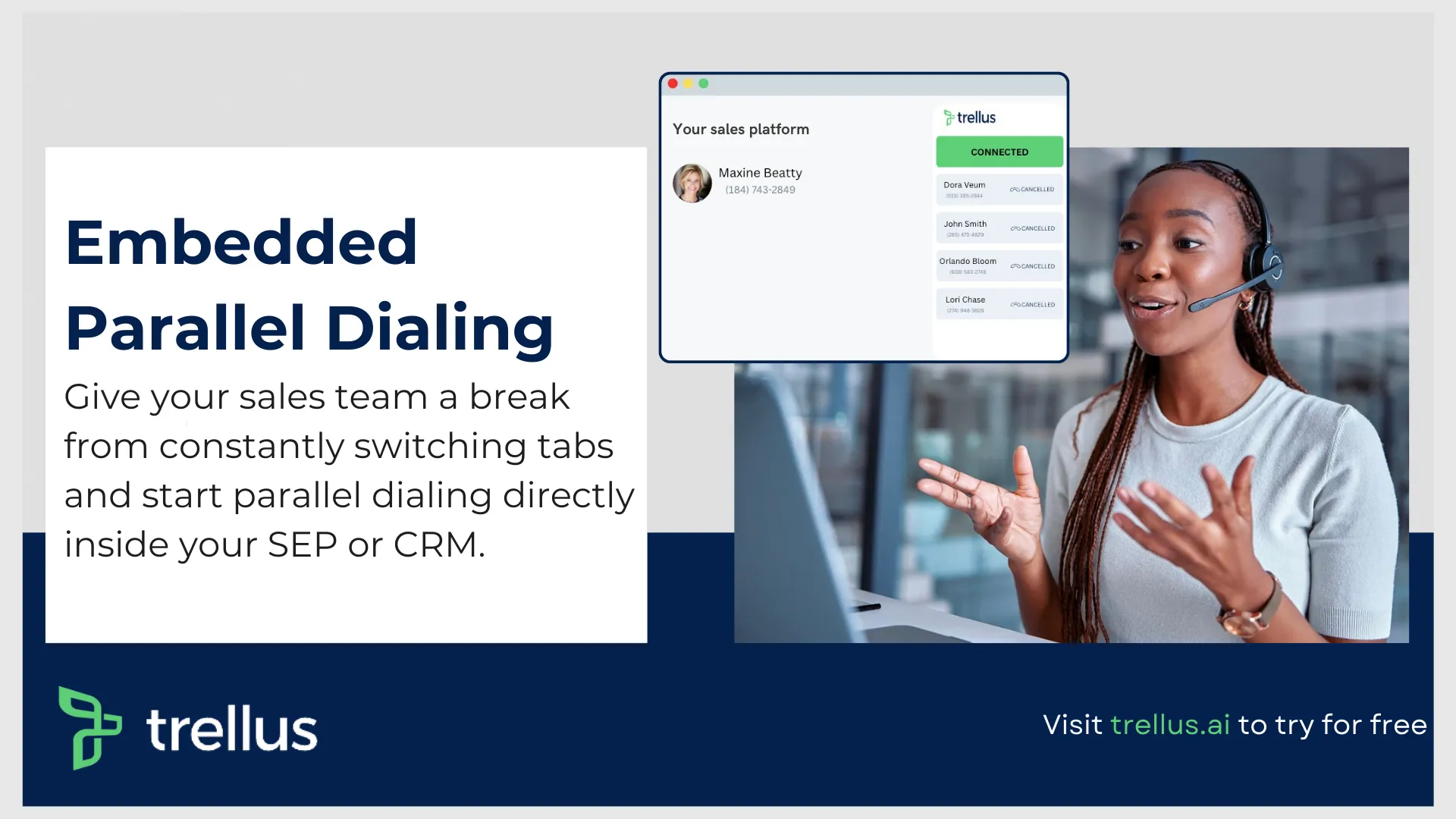
• Trellus
• Gong
• Chorus
• Wingman
Besides helping SDRs to understand call quality and refine messaging, these tools are primarily responsible for enabling cold and warm calls.
Plus, depending on the program’s features, tools such as Trellus.ai offer an AIO sales enablement experience where you can not only touch base with a prospect through cold calling, but also manage your CRM workflow, outreach campaigns, set up custom SDR KPIs and metrics, and do a lot more.
SDR Best Practices and Success Tips
Success in an SDR career comes from consistency, quality outreach, and a mindset that welcomes feedback.
• Personalize outreach creatively
• Follow up more than prospects expect
• Track performance metrics inside the CRM consistently
• Use short and clear messaging
• Ask strong discovery questions
• Maintain a positive tone even during rejection
• Block daily time for calling
• Build a support system with other SDR professionals
Every SDR who eventually becomes an AE remembers one thing. The most predictable path to promotion combines consistent pipeline creation with coachability and curiosity.
.jpeg)

Power and parallel dialing in your CRM.