Our Top Picks


In a physical office, SDRs could hear each other make calls. Managers could spot hesitation. New reps could learn by listening to stronger sellers handle objections in real time. Wins were visible, coaching was immediate, and the team felt like a team.
That environment is harder to recreate when reps are dialing from different cities, homes, and time zones. Yet remote and hybrid work is not going away. Gallup reports that among U.S. employees with remote-capable jobs, 52% work hybrid, 26% work exclusively remote, and only 22% work on-site.
That is why the virtual sales floor has become an important part of the modern sales stack. It gives remote SDR teams a shared place to call, coach, collaborate, and improve together.
What Is a Virtual Sales Floor?

A virtual sales floor is a digital workspace where sales reps, SDR managers, and revenue leaders work together during live selling activity. It recreates the best parts of a physical sales floor inside a software environment.
Think of it as a remote sales bullpen. Reps can join shared calling sessions, managers can listen to calls, teams can celebrate wins, and coaching can happen while the work is still fresh.
A virtual sales floor is sometimes called a digital sales floor or remote sales floor. The terms overlap, but the core idea is the same: sales teams need one place where live calls, coaching, collaboration, and performance visibility come together.
This is different from a normal video meeting. A meeting tool helps people talk. A virtual sales floor helps reps sell, managers coach, and teams learn from real conversations.
Why Sales Teams Are Moving From Physical Floors to Digital Sales Floors
The old sales floor worked because it created proximity. Reps were close to managers, peers, feedback, and momentum.
Remote work changed that. SDRs still need coaching, encouragement, and visibility, but those things no longer happen by default. A rep can make 80 calls in a day and still feel isolated.
The workforce data supports this shift. Gallup found that six in 10 remote-capable employees want a hybrid work arrangement, while about one-third prefer fully remote work and fewer than 10% prefer being fully on-site.
For sales leaders, the lesson is simple: instead of trying to force everyone back to the old floor, build a better digital one.
Virtual Sales Floor vs. Traditional Sales Floor
A traditional sales floor creates energy through physical presence. A virtual sales floor creates energy through visibility.
In an office, reps learn by overhearing conversations. They see who is making calls. Managers can walk the floor and coach in the moment.
In a remote environment, those signals disappear unless software brings them back. That is where virtual sales floor software becomes valuable.
The practical difference is simple:
- A physical floor is powered by proximity.
- A virtual floor is powered by software-driven visibility.
- The best teams use that visibility to coach behavior, not just monitor activity.
How Does a Virtual Sales Floor Help Remote Sales Teams?
A virtual sales floor helps remote sales teams by making sales work visible, collaborative, and coachable again.
That matters because remote selling often turns into solo selling. Reps sit alone with a dialer, a CRM, and a list of prospects. When calls go badly, they absorb the rejection alone. When a great objection comes up, the learning opportunity stays trapped in one call.
A remote sales floor changes that dynamic. It gives the team a shared place to run call blocks, ask questions, compare talk tracks, and learn from real conversations.
It also helps managers see what is happening before the end of the week. Instead of waiting for call recordings or pipeline reports, they can observe active selling behavior and coach faster.
This is important because Salesforce reports that 75% of sales reps say they are more likely to hit targets with a coach or mentor. Coaching is not a side activity. It is part of how sales teams perform.
Key Benefits of a Virtual Sales Floor

The biggest benefit of a virtual sales floor is not simply that reps feel less alone. The bigger benefit is that the entire team gets better information, faster feedback, and a more consistent way to improve.
For SDR teams, that can affect everything from call quality to ramp time. A new rep can hear how top performers open calls. A manager can catch a weak objection response before it becomes a habit.
A virtual sales floor also helps rebuild motivation. Cold calling involves rejection. Shared call blocks, live wins, and team visibility make the work feel less disconnected.
The value usually shows up in three areas:
- For reps: more support, faster feedback, and better examples to learn from.
- For managers: better visibility into call behavior, coaching needs, and team momentum.
- For revenue leaders: a clearer view of how sales activity turns into pipeline.
Better Sales Coaching in Real Time
Delayed coaching has a place, but it has limits.
If a manager reviews a call three days later, the rep may barely remember the moment being discussed. The feedback can still help, but it is less immediate and less connected to the behavior.
A virtual sales floor makes coaching more timely. Managers can listen to calls, review moments soon after they happen, and give specific guidance while the experience is still fresh.
This matters because the manager role is already stretched. Gartner states that effective sales managers can boost seller performance by up to six times, yet only 18% actually lead high-performing teams. Gartner also reports that 40% of sales managers feel overwhelmed by their responsibilities.
That is the real value of live sales coaching software. It does not just help managers coach more. It helps them coach at the right moment.
Collaboration, Peer Learning, and Productive Call Blocks
Sales is often treated like an individual sport. In practice, high-performing SDR teams learn collectively.
A good virtual sales floor makes that easier. Reps can hear what is working for peers, join group call blocks, and review strong examples after a session. Managers can turn one rep’s great call into a learning moment for the whole team.
This is especially useful for objection handling. A pricing objection, timing objection, or “send me an email” response can be discussed right after it happens. The team can compare phrasing and improve together.
A virtual sales floor can also improve consistency. When reps dial alone, it is easier to lose momentum. When the team joins a shared call block, the environment creates accountability and energy.
Salesforce reports that sales reps spend 60% of their time on non-selling tasks. That makes structured call time even more important. If reps have limited selling hours, those hours need to be focused, supported, and productive.
A strong call block usually has a simple structure:
- A clear start and end time.
- A specific coaching theme, such as openers or objection handling.
- Manager presence during the session.
- A quick recap of wins, lessons, and patterns.
What Features Should Virtual Sales Floor Software Include?
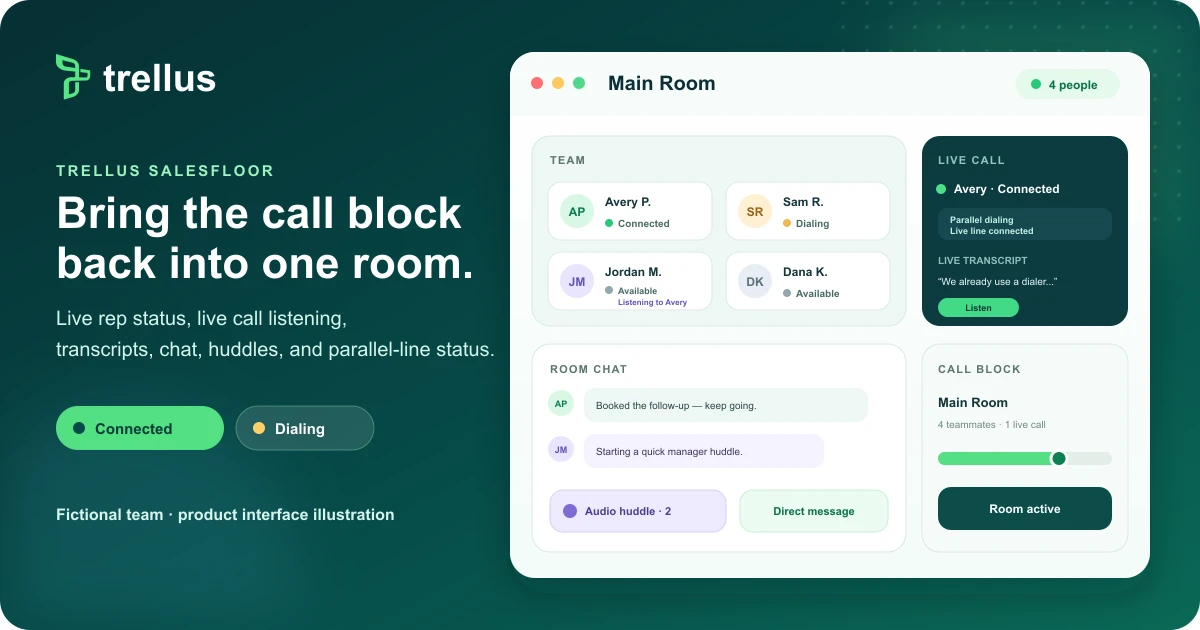
The best virtual sales floor software is not just a video room with a dialer attached. It should help teams call together, coach in real time, and turn sales activity into useful performance insight.
At minimum, it should include live call listening, real-time coaching tools, shared team rooms, activity visibility, CRM or dialer integrations, and reporting that managers can actually use.
The goal is to reduce friction. If reps have to jump between too many tools, the platform can become another distraction. Salesforce reports that sellers use an average of eight tools to close deals, and 42% of sales reps feel overwhelmed by too many tools.
That is why a sales floor management platform should centralize the parts of sales work that belong together: calling, coaching, collaboration, and performance review.
Live Call Listening and Real-Time Coaching
Live call listening is one of the most important features of a virtual sales floor.
In a physical office, managers could hear tone, pacing, confidence, and hesitation. In remote teams, those details are invisible unless the software makes them visible again.
Real-time coaching turns that visibility into improvement. The best coaching is specific. It does not sound like “be better on calls.” It sounds like “slow down after the opener,” “ask one more discovery question,” or “pause after the pricing objection before responding.”
That kind of feedback helps reps make small changes quickly. Over time, those small changes compound.
AI can support this process by helping managers identify patterns across calls. HubSpot’s 2025 State of Sales Report found that 84% of sales professionals say AI saves time and optimizes processes, while 82% say AI surfaces better insights from data.
Team Rooms, Dashboards, and Sales Activity Visibility
Team rooms are where the virtual sales floor starts to feel like a real sales environment.
A manager might create a room for new SDRs, another for a specific campaign, and another for a daily call blitz. Reps can join, dial together, and share quick feedback between calls.
Dashboards then help managers understand what is happening across calls. That can include calls made, connects, conversations, outcomes, talk-time patterns, objection trends, and follow-up behavior.
The important point is that visibility should not feel like surveillance. Reps should understand that the purpose is support, not punishment.
When dashboards are used well, they make coaching conversations more objective. Instead of saying, “I feel like your calls are weak,” a manager can say, “Your connect-to-meeting rate is lower on pricing objections, so let’s review those calls together.”
CRM, Dialer, and AI Integrations
A virtual sales floor works best when it fits the tools the team already uses.
If the platform does not connect with the CRM, dialer, or sales engagement workflow, adoption will suffer. Reps do not want another disconnected tab. Managers do not want another place to manually reconcile data.
AI is becoming a normal part of the sales workflow too. HubSpot found that 37% of reps use AI tools, more than any other sales tool category in its 2025 report. Salesforce also reports that 85% of sales reps with agents say AI frees them to focus on higher-value work.
For a virtual sales floor, the best AI use cases are practical. AI can summarize calls, surface coaching moments, detect patterns, and help managers decide where to spend their time.
Useful AI coaching features may include:
- Call summaries and key moments.
- Objection trend detection.
- Talk-track insights.
- Rep-level coaching recommendations.
- Team-level performance patterns.
How Can Managers Coach SDRs in a Virtual Sales Floor?
Managers should coach SDRs inside a virtual sales floor by creating a simple workflow: set the goal before the call block, observe behavior during calls, give specific feedback after calls, and turn patterns into team learning.
Before the session, choose one coaching focus. It might be opening lines, discovery questions, tone, pacing, objection handling, or next-step setting. One clear focus is better than trying to coach everything at once.
During the session, listen for patterns. A manager should not only look for mistakes. They should also identify what top performers are doing well so the team can repeat it.
After the session, feedback should be short and actionable. Reps need to know exactly what to keep, stop, or change.
When Does a Sales Team Need a Virtual Sales Floor?
A sales team needs a virtual sales floor when remote work starts creating gaps in coaching, culture, visibility, or performance consistency.
The signs are usually easy to spot. New reps take too long to ramp. Managers do not know what is happening on calls. Reps feel disconnected. Call activity exists, but conversion is inconsistent.
A virtual sales floor is especially useful for SDR teams, BDR teams, outbound AEs, and any revenue team that depends on live prospecting conversations.
It is also useful when the team is growing. The larger the sales team gets, the harder it becomes to coach through scattered recordings, Slack messages, and weekly one-on-ones alone.
How Trellus.ai Supports a Modern Virtual Sales Floor?

Trellus.ai is built for the reality of modern outbound sales: reps need support while they are selling, and managers need better visibility into what is happening across the team.
A modern virtual sales floor should not make managers chase recordings days later. It should help them coach closer to the moment of performance.
That is where Trellus.ai can play an important role. By combining AI-powered sales coaching, real-time call visibility, and rep performance insights, Trellus helps teams turn daily selling activity into a stronger coaching system.
For SDR managers, that means fewer blind spots. For reps, it means more timely support. For revenue leaders, it means a clearer view of how outbound behavior connects to pipeline.
Virtual Sales Floor FAQs
What is a virtual sales floor?
A virtual sales floor is a digital workspace where sales teams call, coach, collaborate, and monitor performance together. It recreates the energy and learning environment of a physical sales floor for remote or hybrid teams.
Is a virtual sales floor the same as a digital sales floor?
In most contexts, yes. A digital sales floor and virtual sales floor both describe software-based environments for remote sales collaboration, live coaching, and performance visibility.
What teams benefit most from virtual sales floor software?
SDR teams, BDR teams, outbound sales teams, remote sales teams, hybrid teams, and sales managers benefit most. The platform is especially useful when teams rely on live calling and need frequent coaching.
Can a virtual sales floor improve cold calling performance?
Yes, when it is used correctly. It can improve cold calling performance by making call blocks more structured, helping managers coach in real time, and giving reps stronger examples to learn from.
Final Takeaway: Remote Selling Should Not Mean Isolated Selling
A virtual sales floor is not just a remote-work substitute for the old office. It is a better way to make sales work visible, coachable, and collaborative.
The best systems recreate the energy of the physical sales floor while adding the intelligence of modern software. Reps get support. Managers get visibility. Teams learn faster.
For sales organizations that want remote flexibility without losing sales-floor culture, a virtual sales floor is becoming essential.
And for teams that want to make that environment smarter, Trellus.ai provides a practical path forward: real-time coaching, AI-powered insights, and a modern workflow for helping SDRs improve while they sell.