Our Top Picks


Quick Answer: Successful B2B cold calling requires mastering both soft skills; relatability, critical thinking, resilience, and positive tone; and hard skills like research, strategic timing, and objection handling. While the average success rate is 2.3%, top performers achieve 6.7-15% by combining quality data with refined technique. Cold calling remains one of the most powerful B2B channels, contributing over 50% of leads for growing companies when executed with skill and persistence.
If you've been in B2B sales for more than a minute, you've probably heard the familiar refrain: "Cold calling is dead." It's a comforting thought when you're staring at a list of numbers, but the data tells a completely different story. Cold calling remains one of the most powerful tools in your arsenal, provided you have the right strategy.
In fact, recent industry analysis reveals that cold calling contributes over 50% of B2B leads for growing companies. That's a massive slice of the pipeline you simply can't afford to ignore.
The real problem isn't the medium itself; it's how most reps approach it. We expect instant gratification, but successful B2B outreach requires serious persistence. Studies show that a staggering 93% of successful conversions happen after six or more follow-ups. Yet, the majority of reps throw in the towel after just one or two attempts. If you want to stop leaving money on the table, it's time to refine your approach. Here are seven expert tactics to elevate your cold calling skills and significantly boost your close rate.
Does Cold Calling Still Work in B2B Sales in 2026?
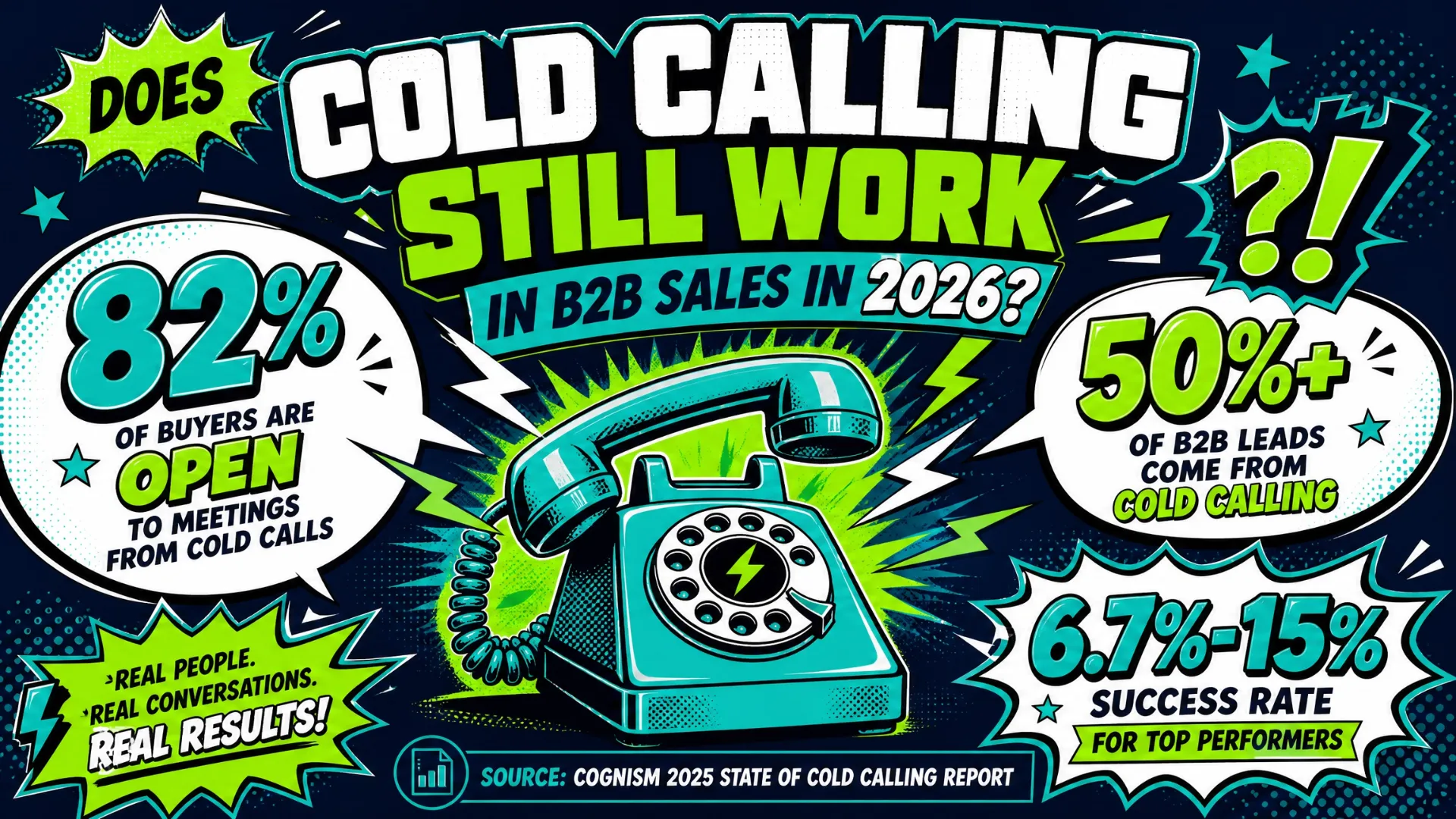
Absolutely. Cold calling remains one of the most effective channels for B2B sales teams, but only when you combine it with the right cold calling skills and strategic execution.
Key Statistics:
- 50%+ of B2B leads originate from cold calling, making it impossible to ignore as a revenue driver for growth-focused companies.
- 82% of buyers are open to meetings from cold calls, proving that decision-makers haven't abandoned the phone as a communication channel.
- High-performing teams achieve 6.7% to 15% success rates by leveraging quality data, precise timing, and refined cold calling skills.
The reality is that cold calling has evolved. It's no longer about volume dialing and generic pitches. Today's successful reps understand that cold calling skills — like strategic timing, personalization, and persistence — are what separate quota-crushers from struggling performers.
The average success rate of 2.3% exists because most reps lack these critical skills. They call at the wrong times, they haven't researched their prospects, and they give up after one or two rejections. But when you master the fundamentals and apply data-driven tactics, you can triple or even quadruple your success rate.
The channel isn't dead. Your approach to it might be.
While mastering cold calling skills is essential, the right technology amplifies your efforts. AI power dialers combine intelligent dialing acceleration with real-time coaching to help you execute these skills at scale without sacrificing the quality of each conversation
How to Master Cold Calling Skills: 7 Expert Tactics for B2B Sales
The gap between a sales rep who hits quota and one who struggles often comes down to one thing: a mastery of fundamental cold calling skills. It's not about having the perfect script or the loudest voice; it's about executing a complex set of behaviors that build trust and drive action in a matter of seconds. When we talk about expert tactics for B2B sales, we're really talking about a hybrid skill set. You need the technical proficiency to navigate complex organizational structures and the emotional intelligence to connect with a stranger instantly.
The modern buyer is sophisticated. They can spot a generic pitch from a mile away. To break through the noise, you need a balanced approach. This means developing both the intangible human elements that make conversations flow and the rigid, process-driven techniques that keep your pipeline full. In this section, we'll break down the essential cold calling skills into two distinct categories: soft skills and hard skills. By mastering both sides of this equation, you transform cold calling from a dreaded task into a predictable revenue engine. Let's dive into the core competencies every top performer relies on.
What Are the Essential Soft Skills for Cold Calling Success?
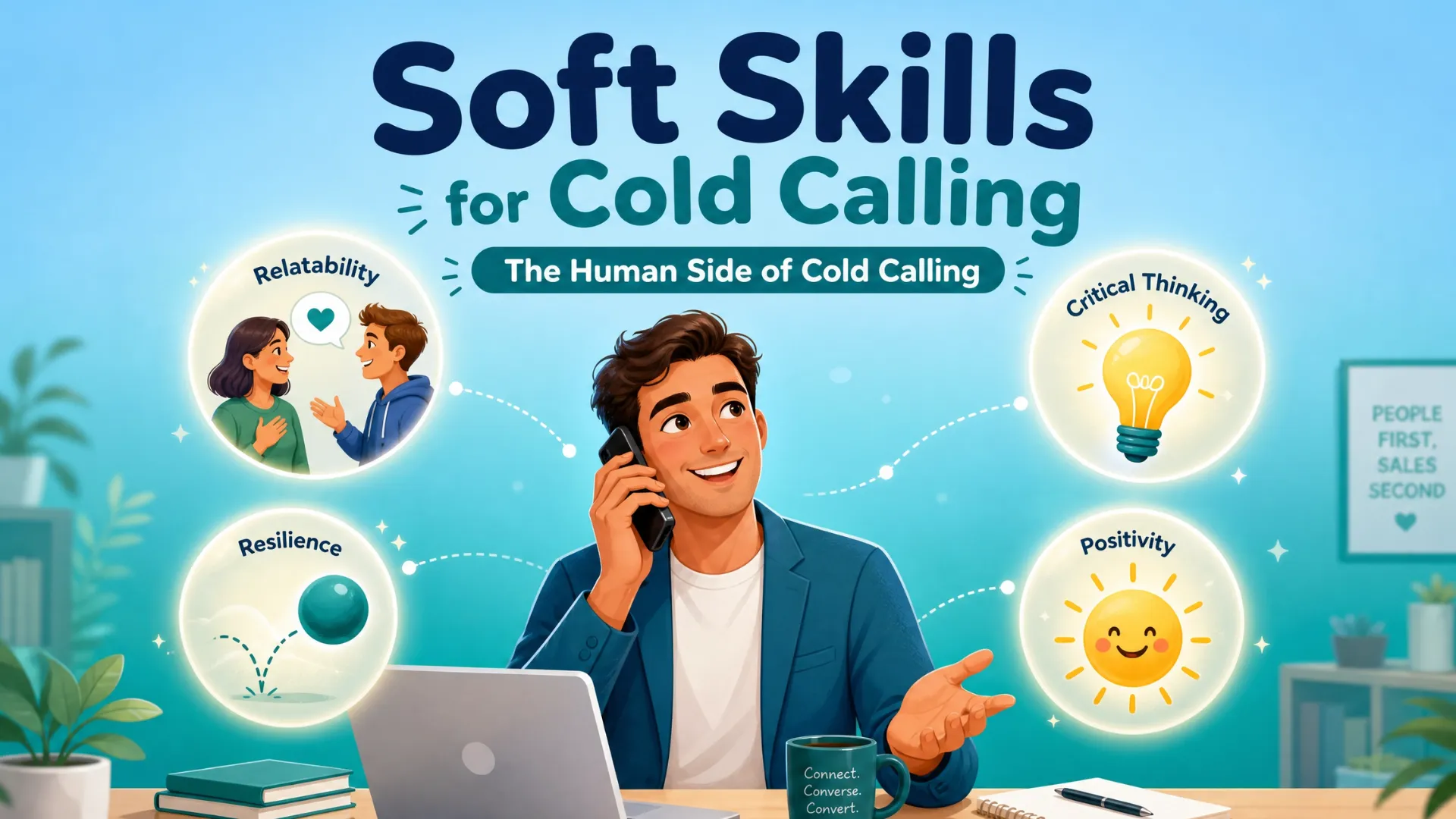
Soft skills are the invisible engine behind every successful cold call. They are the interpersonal attributes and emotional intelligence traits that allow you to connect with prospects on a human level. While hard skills get you to the right person, soft skills are what keep them on the line. These skills dictate how you handle rejection, how you adapt to unexpected responses, and how you make a stranger feel understood in less than thirty seconds.
Without a strong foundation in these areas, even the most meticulously researched pitch will fall flat. They are often harder to teach than technical processes because they require self-awareness and emotional regulation. However, mastering these intangible traits — like your ability to bounce back from a harsh "no" or your capacity to sound genuinely helpful rather than pushy — is the ultimate differentiator in B2B sales.
How to Build Relatability in Sales: Connecting with Prospects Instantly
Relatability is the art of closing the psychological distance between you and the prospect. It's the skill that transforms you from a "bothersome salesperson" into a "trusted peer." When a prospect answers the phone, their guard is up. Your immediate goal isn't to pitch; it's to disarm. This requires matching their tone, pacing, and energy — a technique often called mirroring. If they are speaking quickly and formally, you match that efficiency. If they are more relaxed, you soften your approach.
Consider a scenario where you're calling a busy Chief Marketing Officer. Instead of launching into a high-energy monologue, you might say, "I know you're likely in the middle of a campaign sprint, so I'll be brief." This shows empathy for their specific world. The data supports this human-centric approach: using inclusive language like "we" and "our" instead of "I" and "you" can increase meeting booking rates by up to 55%.
Example in Action: Instead of: "I want to show you how my product helps your team." Try: "We've been seeing a lot of marketing leaders struggle with attribution this quarter. Is that something your team is currently navigating?" This subtle shift in language makes the conversation collaborative rather than adversarial, establishing a relatable foundation for the rest of the call.
Your opening line is critical—it's your chance to disarm the prospect and establish relatability. Learn specific cold call openers that demonstrate empathy for their world and show you've done your research, transforming a generic pitch into a collaborative conversation
Why Critical Thinking is the Most Underrated Sales Skill
Critical thinking in cold calling is your ability to process new information in real-time and pivot your strategy instantly. It's the opposite of reading blindly from a script. When a prospect throws a curveball — a unique objection, a competitor mention, or a specific pain point you didn't anticipate — your critical thinking skills dictate whether the call lives or dies. You must rapidly analyze what they said, understand the underlying implication, and formulate a relevant, value-driven response.
This skill is crucial because no two calls are identical. A rigid approach will fail when confronted with complex B2B buying scenarios. Interestingly, top-performing reps ask an average of 11 to 14 targeted questions during a successful cold call. You can't ask insightful, probing questions if you aren't critically analyzing the prospect's previous answers.
Example in Action: A prospect says, "We already use Software X, and it's fine." A rep lacking critical thinking might just say, "Okay, thanks," and hang up. A critical thinker analyzes the word "fine." Response: "I hear that a lot. Software X is great for basic reporting. When you say it's 'fine,' are you finding it handles your multi-touch attribution, or are you still pulling those reports manually?" This pivots the conversation from a dead-end to a targeted discovery of a potential gap in their current solution.
How to Build Resilience and Handle Rejection in Sales
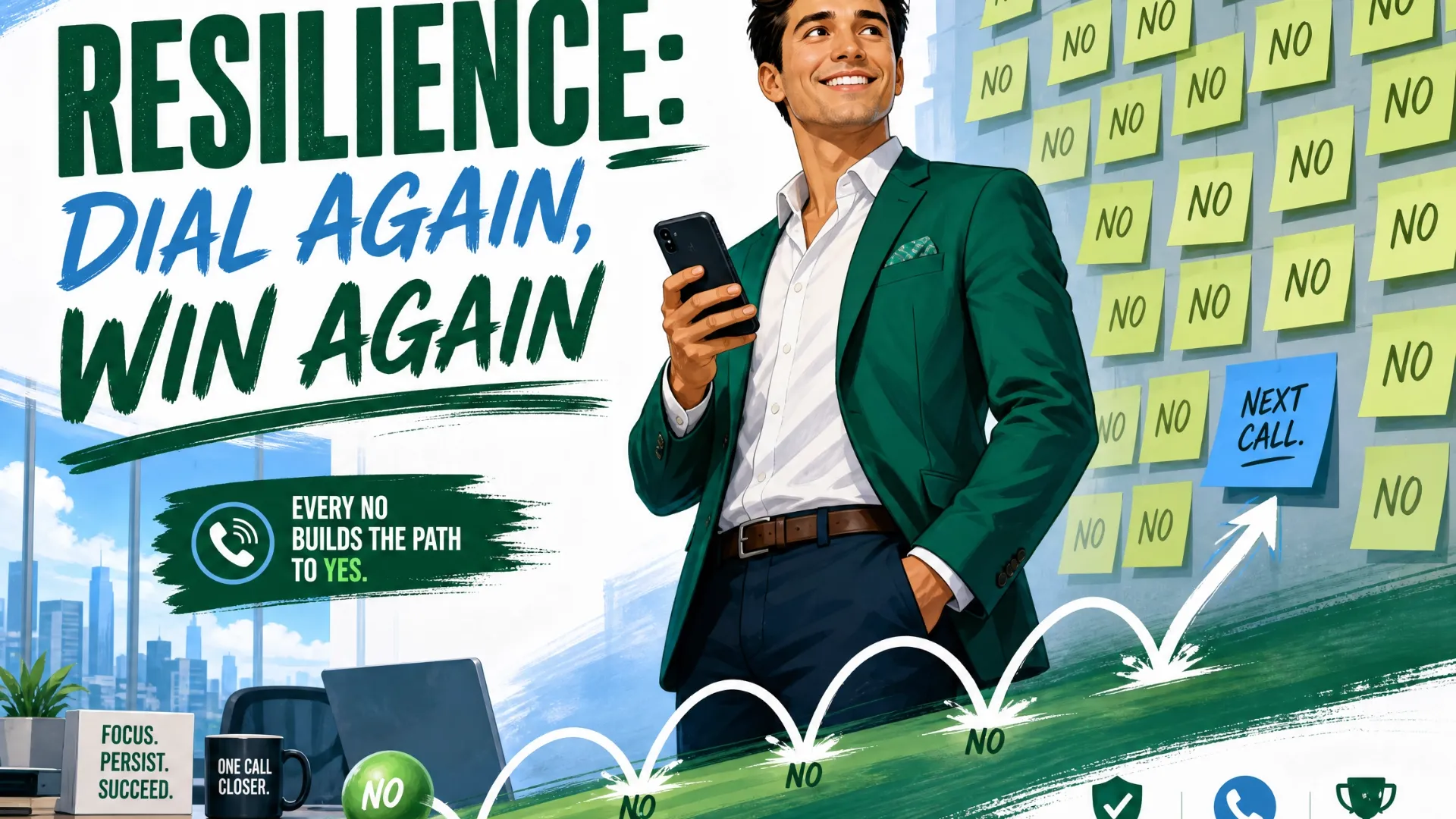
Resilience is the psychological armor every cold caller must wear. It is the capacity to absorb rejection, hostility, and indifference without letting it impact your performance on the very next dial. In B2B sales, rejection is not an anomaly; it is the statistical norm. The reality is that the average cold calling success rate hovers around a mere 2.3%. This means you will hear "no" vastly more often than you hear "yes."
Without resilience, reps experience call reluctance, burnout, and a sharp decline in tone quality. A resilient rep understands that a rejection is not a personal indictment; it's simply a data point indicating bad timing or a poor fit. They maintain emotional equilibrium.
Example in Action: You make a call, and the prospect aggressively says, "Take me off your list, I don't have time for this!" and hangs up. A non-resilient rep might need a ten-minute break, letting their anxiety spike before the next call. A resilient rep logs the outcome in the CRM, takes a single deep breath, and dials the next number with the exact same upbeat, professional tone they used on the first call of the day. They separate the outcome of the previous call from the potential of the next one.
Resilience and positive tone are critical soft skills, but they're even more powerful when paired with real-time call coaching that surfaces objection-handling guidance and battlecards during live conversations, helping you maintain confidence and composure through high-volume calling sessions.
Maintaining Positivity in Sales: Why Tone Matters More Than Words

Positivity in cold calling isn't about being overly enthusiastic or artificially cheerful; it's about projecting confidence, warmth, and a genuine belief in the value you offer. Your tone of voice transmits your attitude before you even finish your first sentence. Prospects can hear a smile, and conversely, they can hear defeat, boredom, or desperation. If you sound like you expect to be rejected, the prospect will happily oblige.
This auditory positivity is a critical component of your cold calling skills. Research indicates that starting a call with a positive, friendly opener — such as a warm "How have you been?" — can increase success rates by 6.6x compared to standard, rigid corporate greetings.
Example in Action: It's 4:30 PM on a Friday. You've made 60 dials and haven't booked a single meeting. Negative Tone: (Sighs) "Hi, this is John from TechCorp... do you have a minute?" (Sounds exhausted and apologetic). Positive Tone: "Hi Sarah! It's John from TechCorp. I know it's late on a Friday, but I was hoping to catch you before the weekend..." (Sounds energetic, empathetic, and confident). Even at the end of a grueling day, maintaining that baseline of professional positivity makes the prospect feel like they are speaking to a peer who is excited to help them, rather than a beaten-down telemarketer.
What Are the Core Hard Skills for B2B Cold Calling?
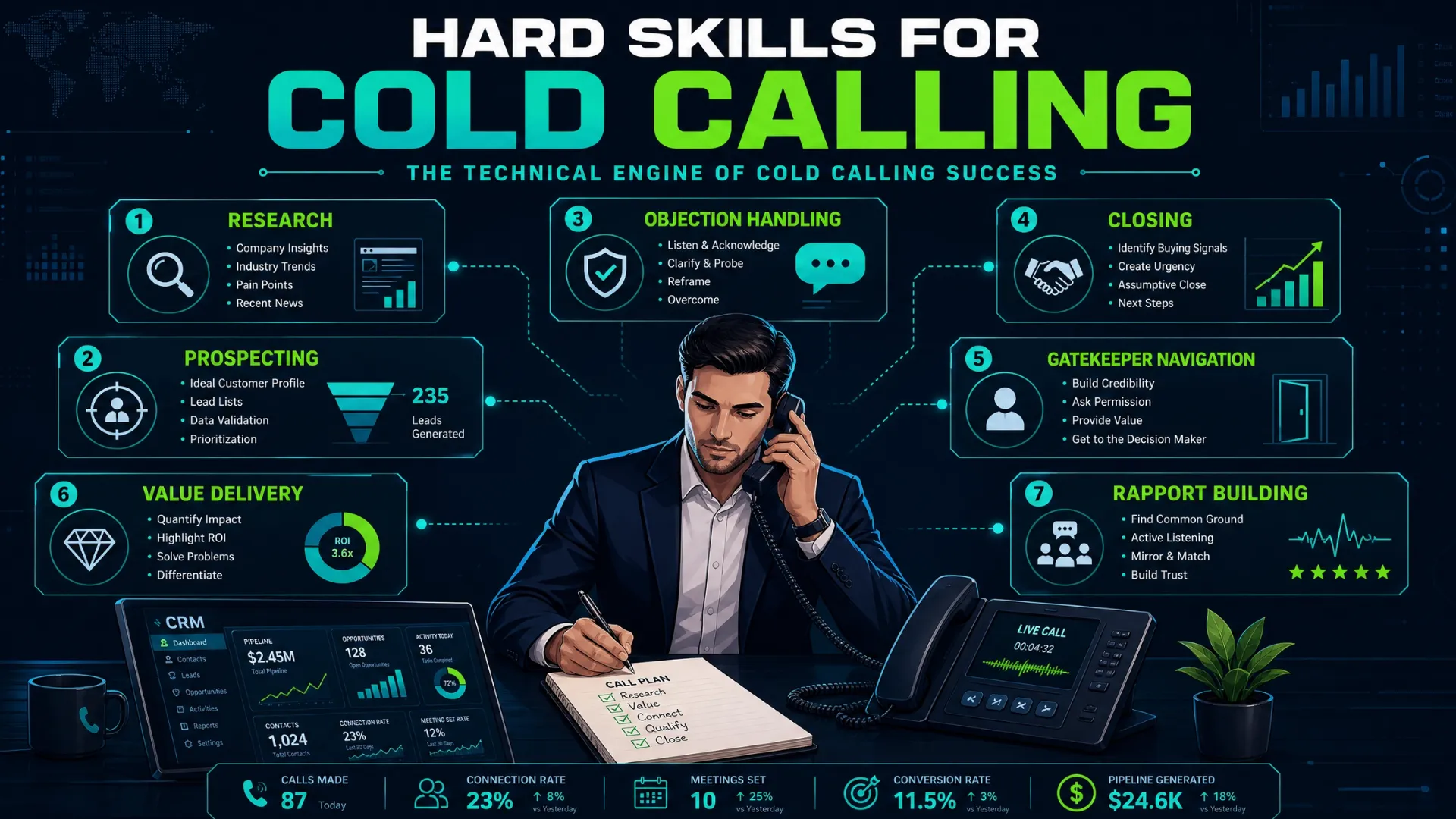
While soft skills govern how you interact, hard skills dictate what you actually do. These are the measurable, process-oriented, and highly trainable techniques that form the mechanics of a cold call. Hard skills encompass the entire lifecycle of the outreach process, from the pre-call preparation to the final attempt to secure a meeting on the calendar.
These competencies rely heavily on methodology, data utilization, and product expertise. If you lack hard skills, you might have a very pleasant conversation with a prospect, but you will fail to uncover their business pain, navigate their objections, or drive the interaction toward a measurable sales outcome. Mastering these technical elements is what turns a friendly chat into a qualified pipeline opportunity.
B2B Sales Research: How to Prepare for a Cold Call
Research is the foundation of any effective cold outreach strategy. It is the hard skill of gathering, analyzing, and synthesizing data about a prospect and their company before you ever pick up the phone. In the modern B2B landscape, generic "spray and pray" tactics are dead. You must understand the prospect's industry, their company's recent news, and their specific role within the organization.
Failing to research is a surefire way to lose credibility instantly. In fact, 82% of decision-makers report that sales reps often come across as unprepared during calls. Effective research allows you to craft a hypothesis about the prospect's pain points, making your outreach highly relevant.
Example in Action: Instead of calling a VP of HR blindly, you spend three minutes researching. You notice on LinkedIn that they just acquired a smaller company, and on their careers page, they are hiring aggressively. Your opening: "Hi Mark, I saw the recent news about the acquisition of Company Y — congratulations. Usually, when teams scale that quickly, onboarding and payroll integration become a massive headache. Is your team currently managing that transition manually?" This demonstrates immediate value and proves you aren't just reading from a list.
Mastering these cold calling skills is foundational, but pairing them with the right software multiplies your impact. The best cold calling software tools combine dialing efficiency, real-time coaching, and CRM integration to help you execute these tactics consistently across your entire team
Effective Prospecting Skills: Building a High-Quality Call List
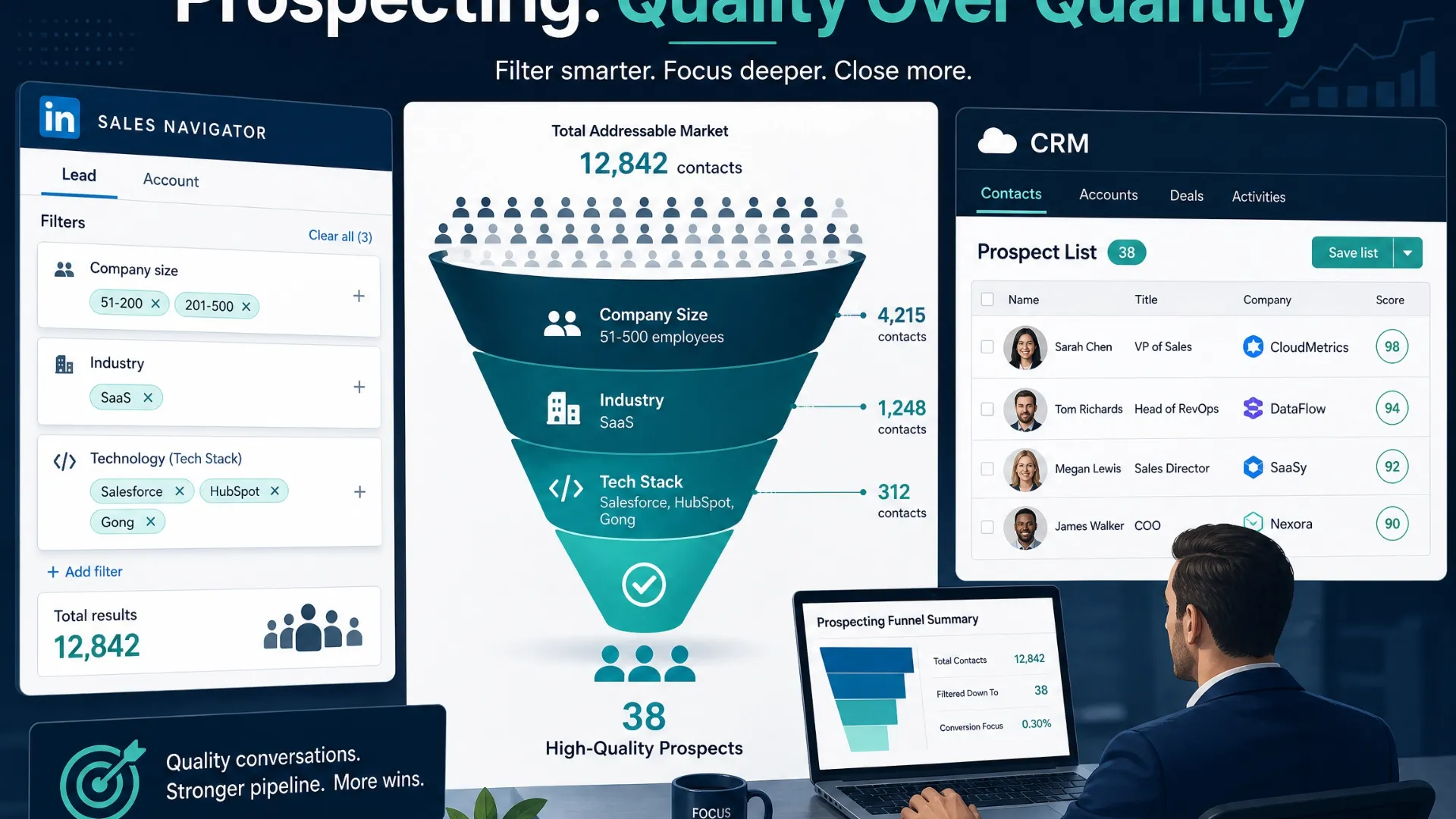
Prospecting is the systematic hard skill of identifying and qualifying potential buyers who fit your Ideal Customer Profile (ICP). It's not just about finding names and numbers; it's about finding the right names and the right numbers. Poor prospecting leads to wasted dials, low morale, and terrible conversion rates.
This skill involves using databases, LinkedIn Sales Navigator, and intent data to build targeted lists. The quality of your prospecting directly impacts your connection rates. Data shows that when sales teams use verified, high-quality contact databases, their answer rates can jump to 13.3% — which is remarkably close to the connection rates of warm leads.
Example in Action: A rep with poor prospecting skills downloads a generic list of "Marketing Managers in the US" and starts dialing, hitting mostly gatekeepers or disconnected numbers. A rep with strong prospecting skills filters their search: "Director of Demand Generation," at SaaS companies with 50–200 employees, who use HubSpot, and have recently posted about lead quality. They then use a data enrichment tool to find verified direct-dial mobile numbers. They make fewer calls, but have significantly more high-quality conversations.
Value Delivery in Sales: Crafting a Compelling Pitch
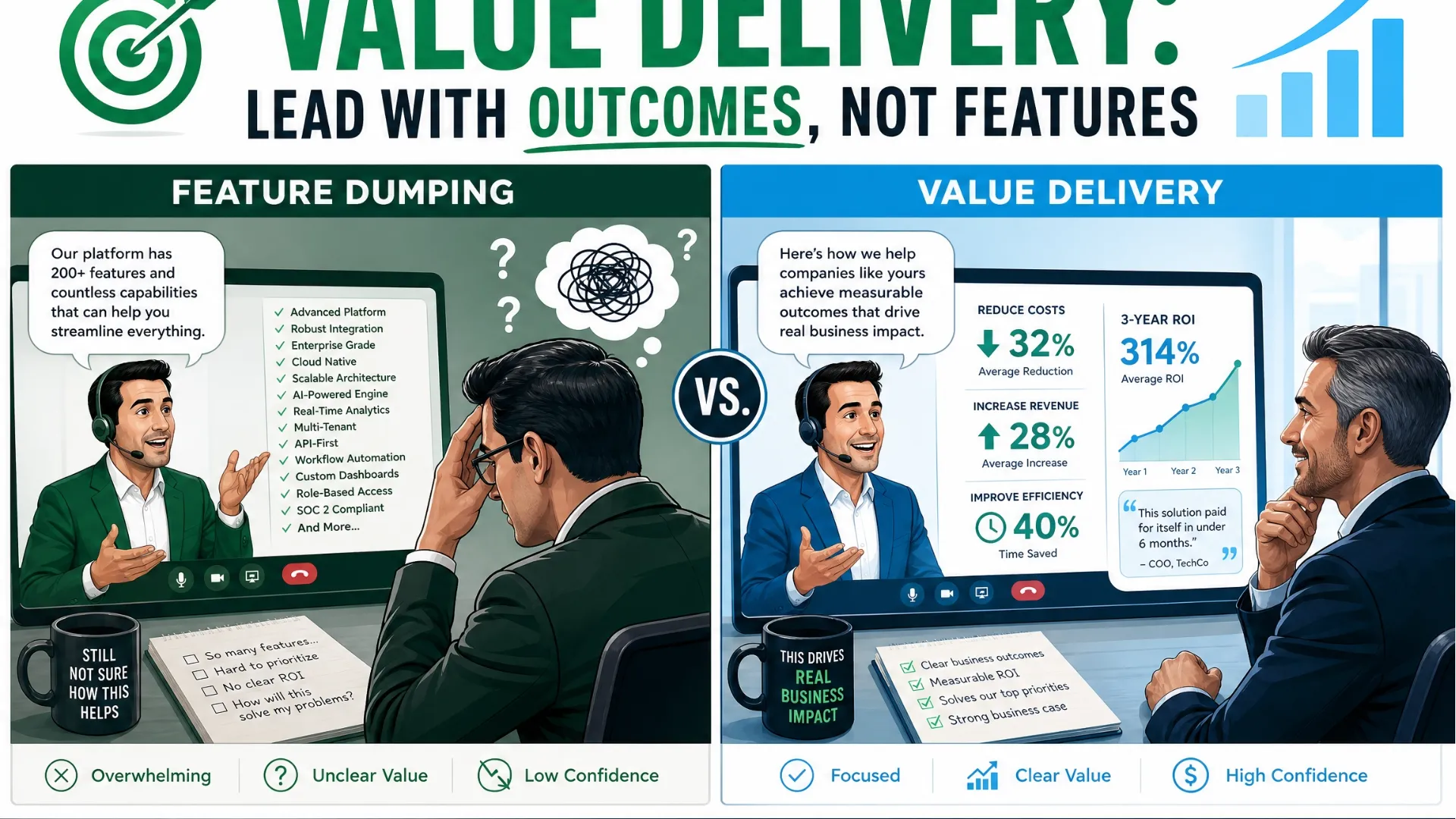
Value delivery is the hard skill of articulating exactly how your product or service solves a specific, painful problem for the prospect — and doing it concisely. It is the translation of complex product features into clear, bottom-line business benefits. On a cold call, you don't have time for a full presentation; you have seconds to deliver a "hook" that earns you the right to continue the conversation.
This skill requires a deep understanding of your buyer personas and the metrics they care about (e.g., time saved, revenue generated, risk mitigated). Being upfront and clear about this value is critical; stating your reason for calling clearly can boost success rates by 2.1x.
Example in Action: Feature-dumping (Poor Value Delivery): "We sell a cloud-based CRM with AI routing, predictive analytics, and custom dashboarding." Value Delivery (Strong): "We help VPs of Sales like you reduce the time reps spend on admin work by about 30%, giving them back two hours a day to actually sell. If I could show you how we did that for [Competitor Name], would you be open to a brief conversation next week?" The second approach focuses entirely on the outcome — time saved, more selling — rather than the technical features.
The Art of Questioning: Uncovering Pain Points on a Cold Call
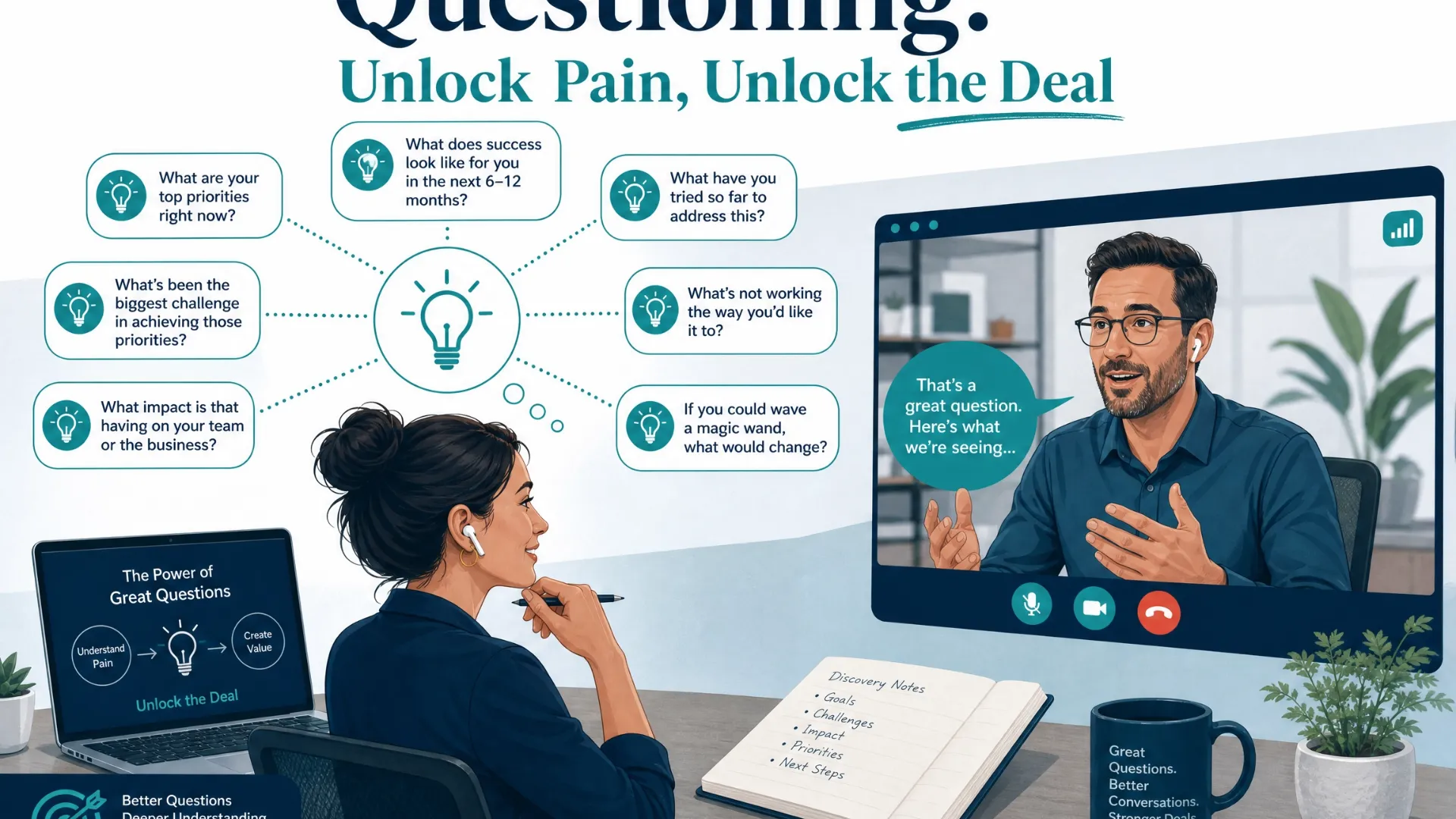
Questioning is perhaps the most strategic hard skill in a cold caller's toolkit. It is the method by which you uncover pain, qualify the prospect, and guide them toward recognizing their own need for your solution. Effective questioning moves the prospect off their defensive script and gets them talking about their business.
This isn't about interrogating the prospect; it's about asking open-ended, thought-provoking questions that challenge their status quo. Top-performing calls typically involve the rep asking 11 to 14 questions. The quality of your questions dictates the quality of the information you receive.
Example in Action: Closed Question (Poor): "Are you happy with your current IT provider?" (Answer: "Yes." Call over.) Open-Ended Question (Strong): "When you look at your IT infrastructure right now, what's the one bottleneck that's slowing down your remote team the most?" This forces the prospect to think critically about their operations and provides you with a specific pain point to anchor your value proposition against.
Gatekeeper Navigation: Strategies for Reaching the Decision Maker
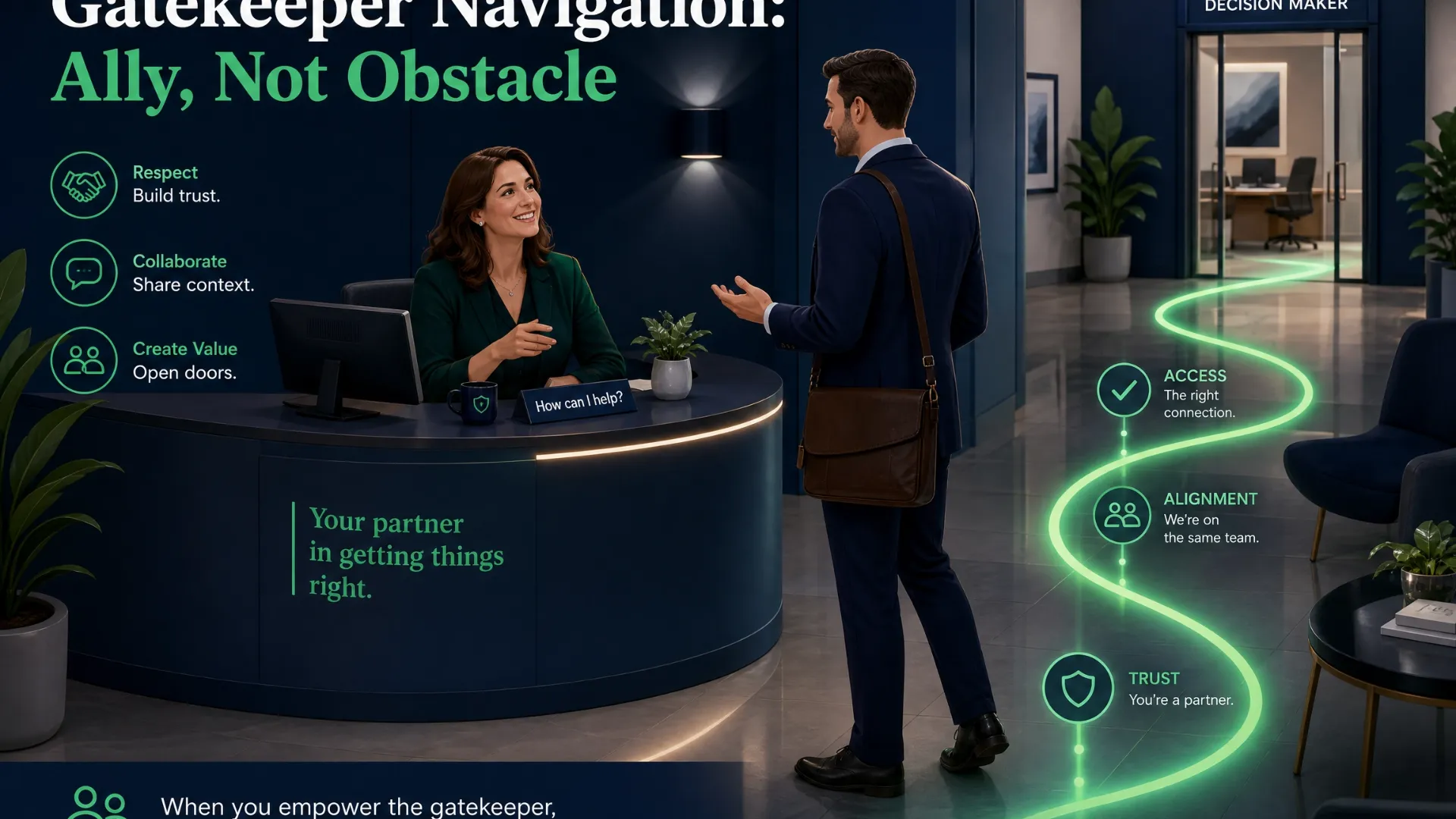
Gatekeeper navigation is the tactical skill of working with — not against — executive assistants, receptionists, and office managers to reach your target prospect. Gatekeepers are trained to block unsolicited sales calls. If you treat them as obstacles, you will fail. If you treat them as valuable resources and allies, they can be your greatest asset.
This skill involves projecting executive presence, using assumed familiarity, and asking the right questions to gather intelligence even if you don't get patched through. A staggering 71% of reps say that getting past gatekeepers is their biggest hurdle in cold calling.
Example in Action: Adversarial approach: "Put me through to the CEO." (Gatekeeper: "He's not available, send an email.") Collaborative approach: "Hi there, I was hoping you could help me out. I need to speak with whoever handles your cybersecurity compliance, and I want to make sure I'm not bothering the wrong person. Would that be Sarah in IT, or does someone else manage that?" By asking for help and demonstrating that you value their time and knowledge, the gatekeeper is much more likely to point you in the right direction or put you through.
Objection Handling Techniques: Turning a 'No' into a 'Maybe'
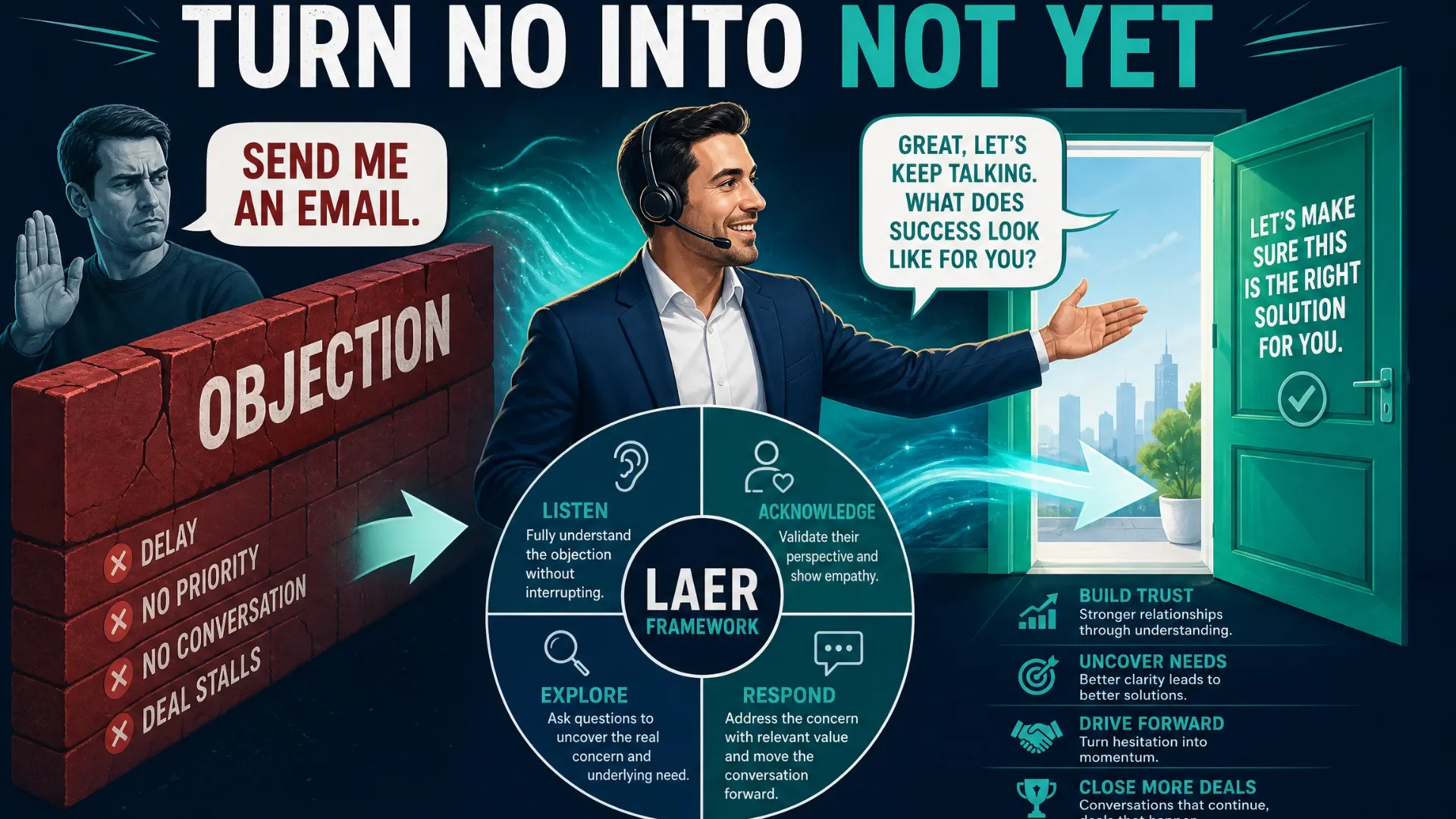
Objection handling is the hard skill of anticipating, isolating, and resolving the reasons a prospect gives for not wanting to meet or buy. Objections on a cold call are rarely final; they are usually reflex responses designed to get you off the phone (e.g., "We don't have budget," "Send me an email," "Call me in six months").
Mastering this skill means not taking the first "no" at face value. It requires a framework — like the classic Listen, Acknowledge, Explore, Respond (LAER) model — to dig deeper into the real concern.
Example in Action: Prospect: "Just send me an email with some info." Poor handling: "Okay, what's your email address?" (You will never hear from them again). Strong handling: "I can absolutely do that. Just so I don't send you a generic 20-page PDF that wastes your time, what is your primary focus right now: reducing churn or increasing acquisition?" This acknowledges their request but uses a strategic question to keep them engaged and uncover actual pain, transforming a brush-off into a real conversation.
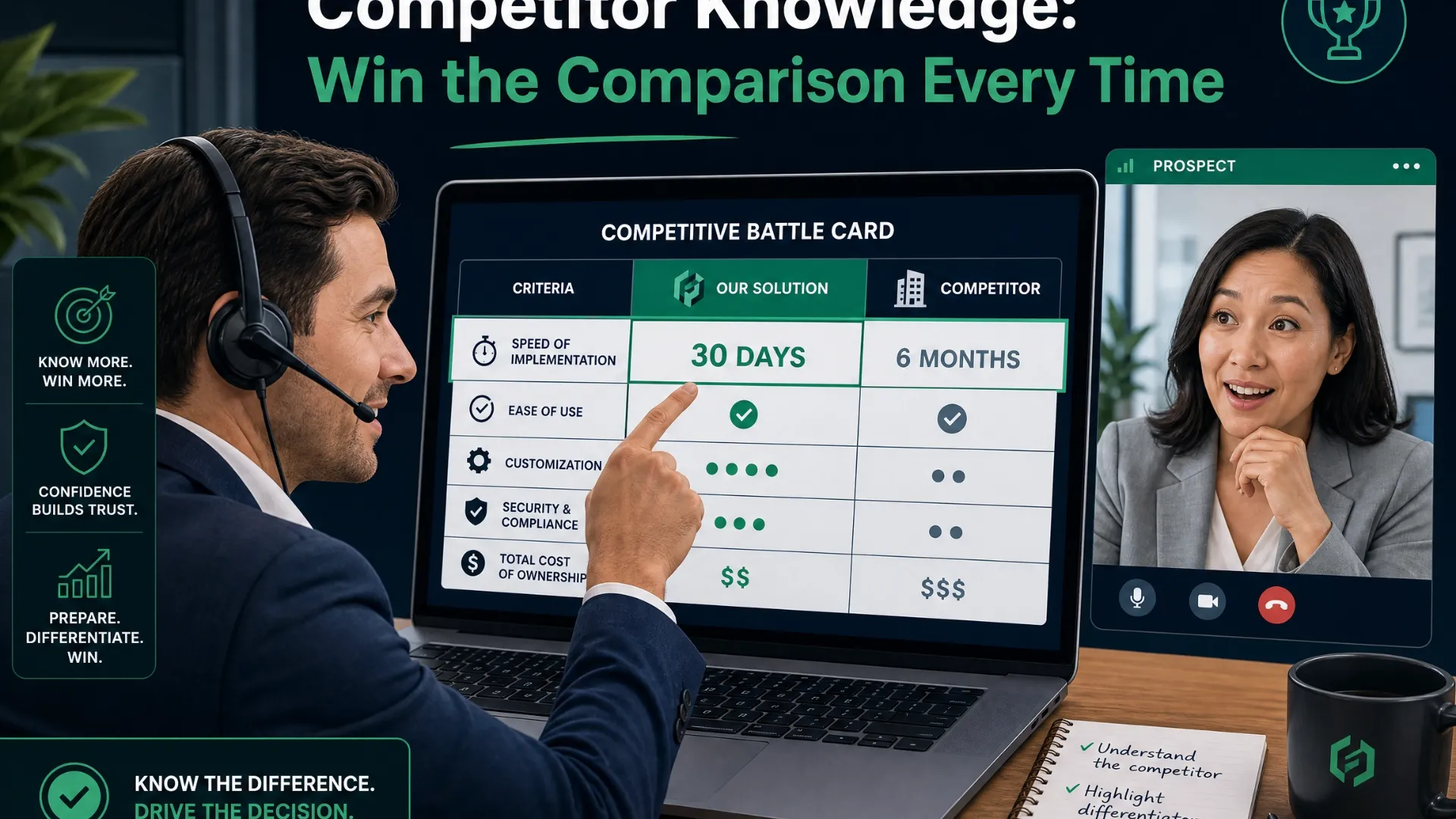
Competitor and Product Knowledge: Win the Comparison Every Time
Product and competitor knowledge is the foundational hard skill of knowing exactly what you sell, how it works, and how it compares to every other option in the market. If you hesitate, guess, or provide incorrect information when a prospect asks a technical question or brings up a competitor, your credibility evaporates instantly.
You don't need to be an engineer, but you must understand your competitive differentiators — your "moat." Prospects are highly educated; 96% of them do their own research before engaging with sales. You must know more about the market landscape than they do.
Example in Action: Prospect: "We're currently looking at [Major Competitor]. Why should we talk to you?" Poor response: "Well, our product is better and we have great customer service." Strong response: "[Major Competitor] makes a great product, especially for enterprise-level reporting. However, where we typically win against them is in implementation speed. They usually take 6 months to deploy; we have teams fully onboarded in 30 days. Is speed to value a priority for this project?" This shows deep market knowledge, respects the competitor, and highlights a specific, measurable advantage.
Sales Note-Taking Skills: Maximizing CRM Data
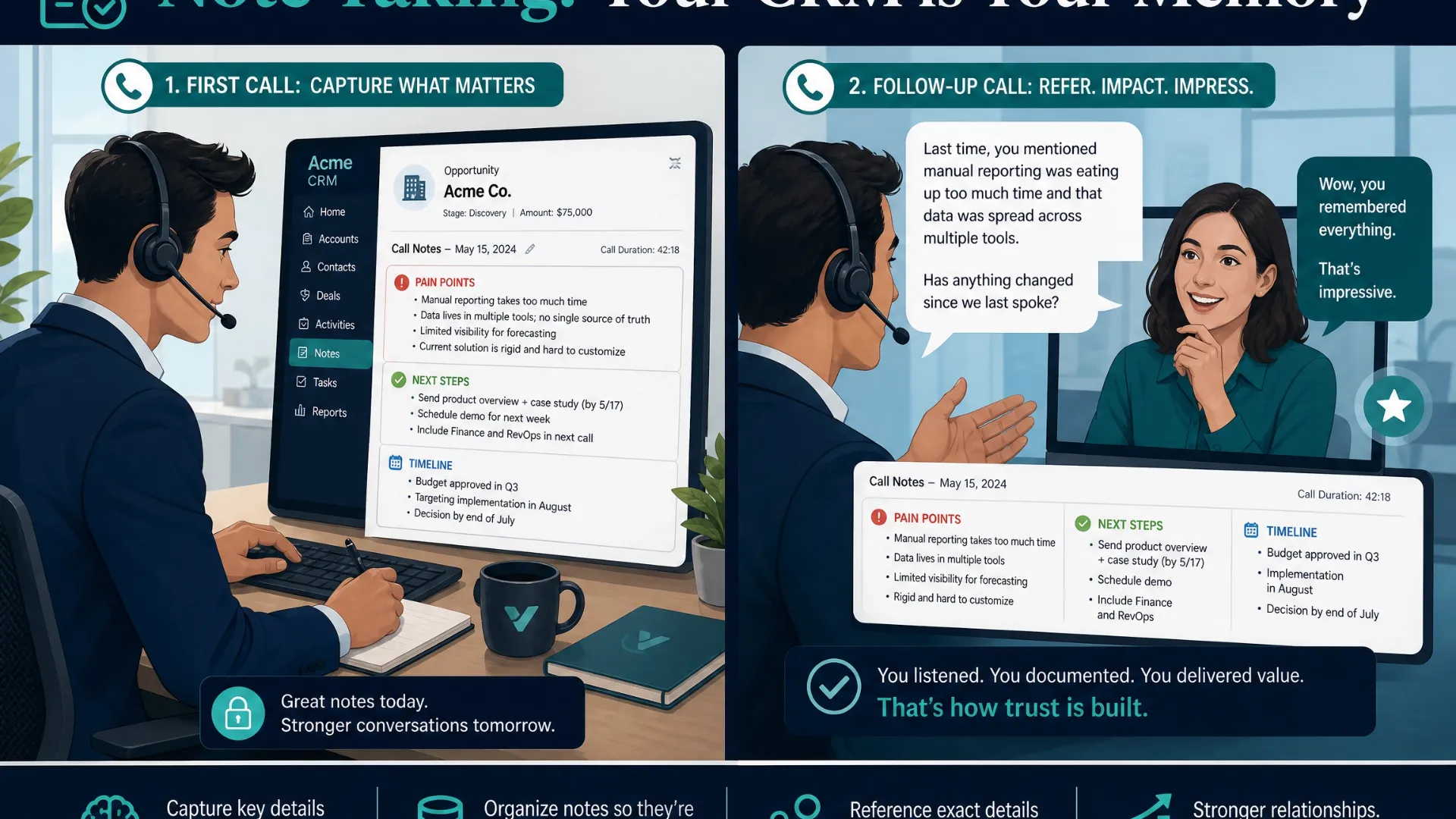
Note-taking is the administrative hard skill of accurately and efficiently recording the intelligence gathered during a cold call into your CRM. While it may seem mundane, it is critical for long-term success. A cold call is a data-gathering exercise. If you don't document the prospect's tech stack, pain points, or timeline, that data is lost forever.
Effective note-taking ensures that when you follow up — which, as data shows, you must do multiple times — you can reference specific details from the previous conversation, proving you listened and building trust. Reps spend up to 35% of their time on administrative tasks; efficient note-taking skills streamline this process.
Example in Action: Poor notes: "Called John. Not interested right now. Call back Q3." Strong notes: "Connected with John (VP Ops). Currently using legacy on-prem system. Main pain point: server maintenance costs are 20% over budget. No budget until October. Action: Set task to follow up Sept 15th with case study on cloud migration cost savings." The second set of notes provides a highly specific, actionable blueprint for the next touchpoint.
How to Close on a Cold Call: Securing the Next Step
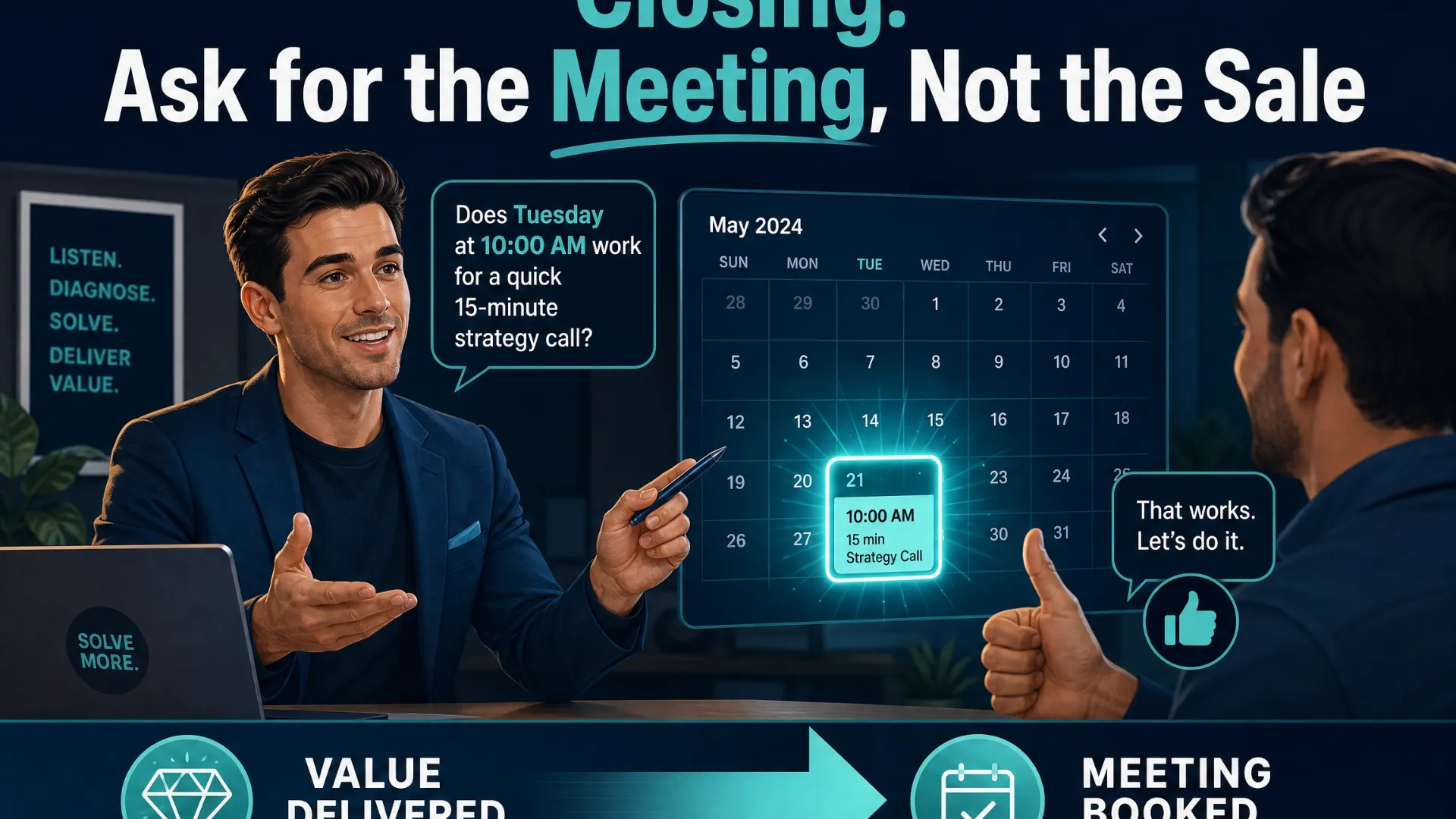
Closing on a cold call does not mean selling the product; it means successfully securing the next logical step in the sales process — which is almost always a booked meeting or discovery call. It is the hard skill of asking for a micro-commitment with confidence and clarity.
Many reps do the hard work of building rapport and delivering value, but then fail to ask for the meeting definitively. You must make it easy for the prospect to say yes by proposing a specific time or offering a clear alternative.
Example in Action: Weak close: "So, do you think you'd want to learn more sometime?" Strong close: "Based on what you mentioned about your lead routing issues, I think it makes sense for us to set up a 15-minute call where I can show you exactly how we fixed that for [Similar Company]. Do you have your calendar handy? How does next Tuesday at 10 AM look for you?" This close is presumptive, specific, and tied directly to the value uncovered during the call.
Building Rapport in B2B Sales: The Bridge Between Hard and Soft Skills
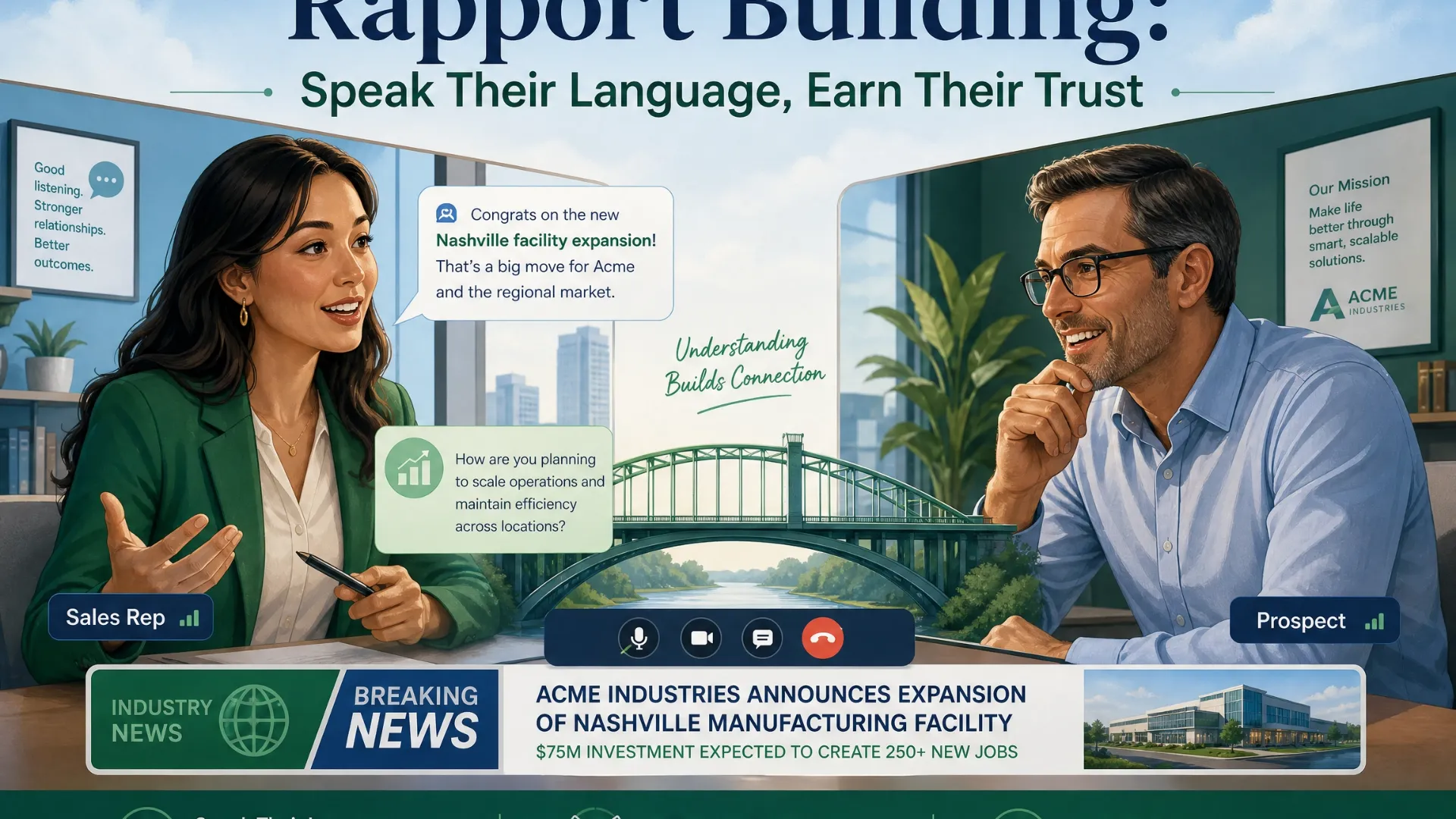
Building rapport is a unique competency that bridges the gap between soft and hard skills. It utilizes the emotional intelligence of relatability (soft) but relies on the tactical execution of research and questioning (hard) to create a genuine business connection. Rapport in B2B sales isn't about talking about the weather or sports; it's about establishing professional credibility and mutual respect.
It is the skill of making the prospect feel that you are an expert who understands their industry and their specific challenges. While Friday afternoons are notoriously bad for booking meetings, data shows they are actually the most productive days for building these types of relationships and rapport with prospects.
Example in Action: Instead of forced small talk ("How's the weather in Chicago?"), a skilled rep builds business rapport based on industry knowledge. "I noticed your team just expanded into the EMEA market. I was speaking with another logistics VP last week who said dealing with the new customs regulations has been a nightmare. Has your team hit those same roadblocks yet?" This builds immediate rapport because it proves you speak their language, understand their world, and are engaging with them as a peer facing similar industry challenges.
Tips for Sharpening Your Cold Calling Skills: How Top B2B Reps Stay Ahead
Great cold calling skills are never static. The best reps in B2B sales treat their craft like a professional athlete treats their sport — always training, always refining, always looking for a competitive edge. Whether you're a seasoned SDR or a newly promoted AE, there are clear, actionable habits that separate those who plateau from those who consistently improve. From structured coaching to staying ahead of industry shifts, the following strategies will help you build a continuous improvement mindset that keeps your cold calling performance sharp, relevant, and consistently above the industry average.
How Sales Coaching and Call Feedback Loops Accelerate Cold Calling Improvement
One of the fastest ways to improve your cold calling skills is to put your calls under a microscope. Recording and reviewing your calls — ideally with a manager or peer — reveals patterns you simply cannot detect in the moment. Are you talking too much? Are you asking closed questions? Are you stumbling on the same objection repeatedly? Structured feedback sessions transform these blind spots into deliberate practice targets. Reps who receive consistent, specific coaching improve their close rates significantly faster than those who rely on experience alone. Make call reviews a weekly non-negotiable, not an occasional exercise.
How to Use Your Professional Network to Sharpen Your Cold Calling Game
Your professional network is one of the most underutilized resources for improving cold calling skills. Connecting with fellow sales professionals — through LinkedIn communities, sales-focused Slack groups, or industry events — exposes you to diverse tactics, scripts, and objection-handling frameworks you'd never encounter in isolation. Peer learning is particularly powerful because it comes from practitioners who face the same real-world challenges you do. Sharing call recordings, swapping scripts, and discussing what's working in your specific market creates a collaborative intelligence loop. The best reps are never learning in a vacuum; they are constantly benchmarking against and learning from their peers.
Why Staying Current on Industry Trends Makes You a Better Cold Caller
Cold calling doesn't happen in a vacuum — it happens inside a specific industry context. When you understand the macro trends, regulatory changes, and competitive pressures affecting your prospect's world, your calls immediately become more relevant and credible. A rep who references a recent industry development earns instant authority; a rep who sounds out of touch loses credibility before the pitch even begins. Dedicate time each week to reading industry publications, following relevant thought leaders, and monitoring your target accounts' news. This intelligence becomes the raw material for highly personalized, timely outreach that resonates far beyond a generic cold call.
How Trellus.ai Helps B2B Sales Reps Build Better Cold Calling Skills in 2026
In 2026, the most effective cold calling skills are built and reinforced with the right technology — and Trellus.ai is purpose-built for exactly that.
At its core, Trellus is an AI-powered parallel dialer that embeds directly inside your existing sales engagement platform (SEP), allowing reps to dial up to five lines simultaneously without switching tabs. This dramatically increases call volume and live conversation rates, giving reps more at-bats to practice and refine their skills in real time.
Beyond dialing, Trellus delivers real-time AI coaching during live calls — surfacing objection-handling prompts, competitor positioning cues, and talk track guidance exactly when you need them. This transforms every call into a live coaching session.
Its Practice Voice Bots allow reps to rehearse against AI prospects modeled on real call recordings, accelerating ramp time for new hires and helping experienced reps stress-test new scripts before going live.
Conversational analytics automatically score 100% of calls, identifying performance gaps between top and bottom performers and giving managers the data they need to coach with precision.
Finally, the virtual Sales Floor recreates the high-energy, collaborative environment of an in-person sales team — keeping remote reps accountable, motivated, and connected. For any B2B sales team serious about improving cold calling skills in 2026, Trellus.ai is a foundational tool.
These cold calling skills form the foundation of success, but executing them consistently across your entire team requires the right support. Explore Trellus's sales solution to see how AI-powered coaching and real-time guidance help your reps master these skills and close more deals.
Wrapping Up
Cold calling skills are not a fixed trait — they are a dynamic, trainable, and continuously evolving competency. The reps who consistently outperform their peers are not necessarily the most naturally gifted; they are the ones who invest in both the soft skills that build human connection and the hard skills that drive measurable outcomes.
From building instant relatability to navigating gatekeepers with confidence, every skill covered in this article represents a lever you can pull to improve your close rate. The data is clear: the channel works when the approach is right.
Start with one skill. Practice it deliberately. Then build from there. Mastery in cold calling is not a destination — it is a daily discipline.
Frequently Asked Questions
1. Does cold calling still work in B2B sales?
Absolutely. Cold calling contributes over 50% of B2B leads for growing companies, and 82% of buyers are open to meetings from cold calls. The issue isn't the channel—it's execution. While the average success rate is only 2.3%, high-performing teams achieve 6.7-15% by combining quality data, precise timing, and refined cold calling skills. The channel isn't dead; your approach might be.
2. What's the difference between soft skills and hard skills in cold calling?
Soft skills are the interpersonal attributes that keep prospects on the line—relatability, critical thinking, resilience, and positive tone. Hard skills are the measurable, process-oriented techniques that form the mechanics of a cold call—research, prospecting, value delivery, and objection handling. You need both: soft skills build trust and connection, while hard skills uncover pain points and drive toward a measurable outcome.
3. How many follow-ups does it take to close a deal?
Studies show that 93% of successful conversions happen after six or more follow-ups, yet the majority of reps give up after just one or two attempts. This persistence gap is a massive opportunity—most of your competition is leaving money on the table by not following up consistently. Building a follow-up cadence into your process is critical to maximizing pipeline conversion.
4. How can I improve my relatability on cold calls?
Use mirroring to match the prospect's tone, pacing, and energy level. Show empathy for their specific world—if they're a busy CMO, acknowledge they're likely in the middle of a campaign sprint. Most importantly, use inclusive language like "we" and "our" instead of "I" and "you"—this simple shift can increase meeting booking rates by up to 55% by making the conversation collaborative rather than adversarial.
5. How do I handle rejection without losing momentum?
Resilience is the psychological armor every cold caller needs. Understand that rejection is not personal—it's simply a data point indicating bad timing or poor fit. Log the outcome, take a deep breath, and dial the next number with the same upbeat, professional tone you used on your first call of the day. Separate the outcome of the previous call from the potential of the next one.
6. What's the impact of tone on cold calling success?
Your tone transmits your attitude before you finish your first sentence. Prospects can hear a smile, but they can also hear defeat, boredom, or desperation. Research shows that starting a call with a positive, friendly opener—like a warm "How have you been?"—can increase success rates by 6.6x compared to standard, rigid corporate greetings. Even at the end of a grueling day, maintaining baseline professional positivity makes prospects feel like they're speaking to an excited peer rather than a beaten-down telemarketer.
.jpeg)

Power and parallel dialing in your CRM.