Our Top Picks


Quick Answer: Cold calling software in 2026 must solve two problems simultaneously: the volume problem (reps wasting time on voicemail and dialing mechanics) and the quality problem (reps unprepared for actual conversations). The best tools combine intelligent parallel dialing with AI-powered real-time coaching, live answer detection, and CRM integration to maximize both call volume and conversation effectiveness without replacing your existing sales stack.
Cold calling has two distinct problems that most software vendors treat as one. The volume problem is measurable and well-documented, but the quality problem requires more than just dialing speed. Learn more about how AI power dialers are evolving to address both challenges simultaneously.
The volume problem is measurable and well-documented: according to Salesforce's State of Sales report, the average sales rep spends only 28% of their time on direct selling activity, with the remaining 72% consumed by voicemail navigation, ring-listening, call logging, and the dead space between dials.
But the quality problem is harder to quantify and even harder to solve with dialing speed alone. Even when parallel dialers improve connect rates, reps often lack the preparation and real-time guidance needed to convert those connections into meaningful conversations.
The best cold calling software in 2026 recognizes this dual challenge and combines intelligent dialing acceleration; live answer detection, voicemail automation, number health monitoring; with real-time AI coaching, objection handling guidance, and post-call analytics to ensure sales leaders can simultaneously maximize call volume, improve conversation quality, and accelerate rep development without fragmenting their existing tech stack.
What qualifies the best Cold Calling Tools?
Not all cold calling software is created equal, and the right tool depends on your team's specific constraints and priorities. We evaluated the top 10 platforms across six critical dimensions that separate effective solutions from feature-rich distractions.
Dialing Efficiency & Call Acceleration
The foundation of any cold calling tool is its ability to minimize wasted time between conversations. We assessed power dialing, parallel dialing capabilities, live answer detection accuracy, voicemail automation, local presence dialing, and the overall workflow design that keeps reps talking rather than managing mechanics.
The distinction between parallel and power dialing is central to choosing the right cold calling tool; our parallel dialer vs power dialer guide provides a detailed comparison of how each approach maximizes call volume.
A truly efficient dialer reduces idle time dramatically—the difference between a rep making 40 dials per day and 120 dials per day often comes down to how intelligently the platform handles the gaps between calls.
Real-Time AI Coaching & Guidance
Modern cold calling tools go beyond dialing speed to address the quality problem. We evaluated whether platforms provide real-time objection handling support, competitor positioning guidance, call scripts and battlecards surfaced during live conversations; all essential cold calling skills that platforms must support in the moment, not in a post-call review days later.
CRM Integration Depth
Outbound teams spend enormous amounts of time updating records. We examined how deeply each platform integrates with Salesforce, HubSpot, and other sales engagement platforms—specifically whether call logging is automatic or manual, whether data syncs in real-time or requires batch processing, and whether the integration is native or requires third-party connectors.
Seamless CRM integration is essential for eliminating manual data entry; our CRM integrations learning center resource explains best practices for ensuring your cold calling tool works seamlessly with your existing sales stack.
Platforms that force reps to switch contexts between the dialer and CRM create friction that undermines adoption.
Team Coaching & Performance Analytics
Enterprise sales leaders need visibility into what's working across thousands of conversations. We scored platforms based on automated call summaries, transcription capabilities, sentiment analysis, performance tracking, call scoring, and real-time call coaching capabilities that enable managers to identify coaching moments and scale what's working without manually reviewing every recording.
Number Reputation & Deliverability
Carrier filtering and spam flagging continue to impact outbound sales performance. We looked closely at spam prevention features, caller ID reputation management, number rotation capabilities, local presence functionality, and the platform's approach to maintaining call deliverability as dial volume scales. A platform that maximizes dials but tanks your caller reputation is ultimately counterproductive.
Ease of Adoption & Tech Stack Alignment
Even the most sophisticated platform fails if representatives refuse to use it or if it fragments your existing workflow. We considered deployment speed, user experience design, workflow simplicity, whether the tool integrates into existing platforms or requires context switching, and the overall adoption potential for growing teams. The best tools fit into how your team already works rather than forcing them to work around the tool.
10 Best Cold Calling Tools in 2026
1. Trellus.ai: Best AI Parallel Dialer in 2026
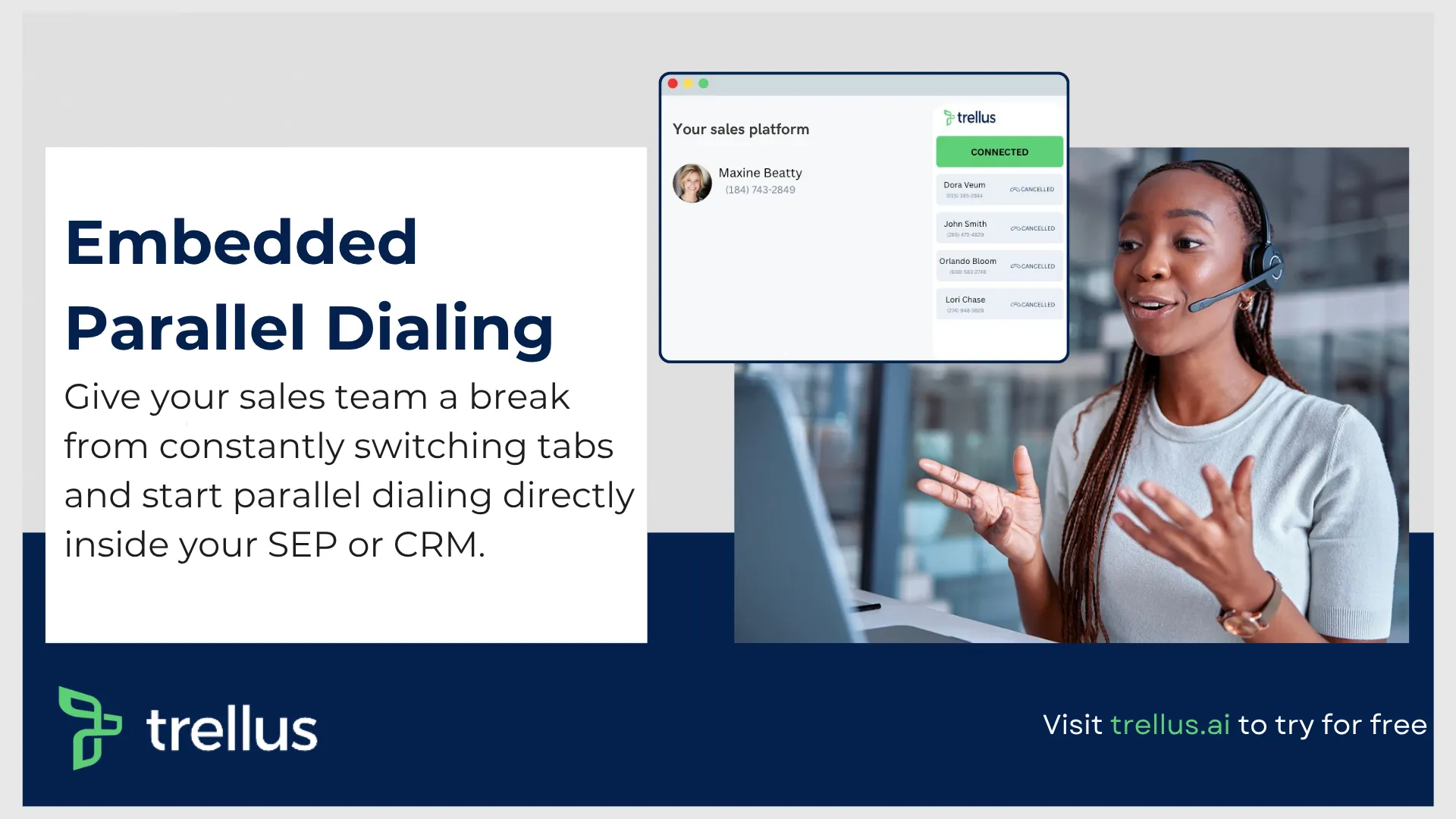
Trellus is an AI-powered parallel dialer and real-time sales coach built for outbound teams that want to maximize both call volume and conversation quality without replacing their existing tech stack. The AI Dialer handles parallel dialing with intelligent live answer detection and number health monitoring, while AI agents provide real-time coaching nudges, call summaries, and objection-handling guidance so reps spend more time talking to prospects and less time preparing for conversations they'll never have.
Key features:
- AI parallel dialing with live answer detection connects reps only when a real person picks up, with voicemail drop and spam-protected number rotation built in so higher dial volume translates to more live conversations, not more spam flags
- Real-time coaching surfaces objection-handling guidance and battlecards during live calls based on what's actually being said, with AI call scoring and automated call summaries generated immediately after each conversation
- Native integration with your existing platform (Salesloft, Outreach, HubSpot, Orum, Apollo) means reps never switch contexts—the dialer and coaching layer work directly inside the tools they already use
- Conversational intelligence and call analytics give managers immediate visibility into what's working across every call, not just the handful they can manually review each week
- Music feature and morale-boosting elements keep reps energized through high-volume calling sessions, turning the grind of rejection into momentum and maintaining team energy during call blitzes
Best for: Outbound teams that want to add AI parallel dialing and real-time coaching to their existing sales stack without the cost and disruption of switching platforms. Teams that need both higher connect rates and better rep performance in the moment.
"Trellus is a game-changer for XDRs—its music feature keeps my energy and morale high through the grind of cold calling, turning rejection into rhythm. Paired with real-time call analytics and coaching, it gives me immediate, actionable feedback that helps me improve with every conversation."Brandon Macer, Sr. ENT SDR @ AppOmni
2. Nooks: Best Unified Agent Workspace for Sales
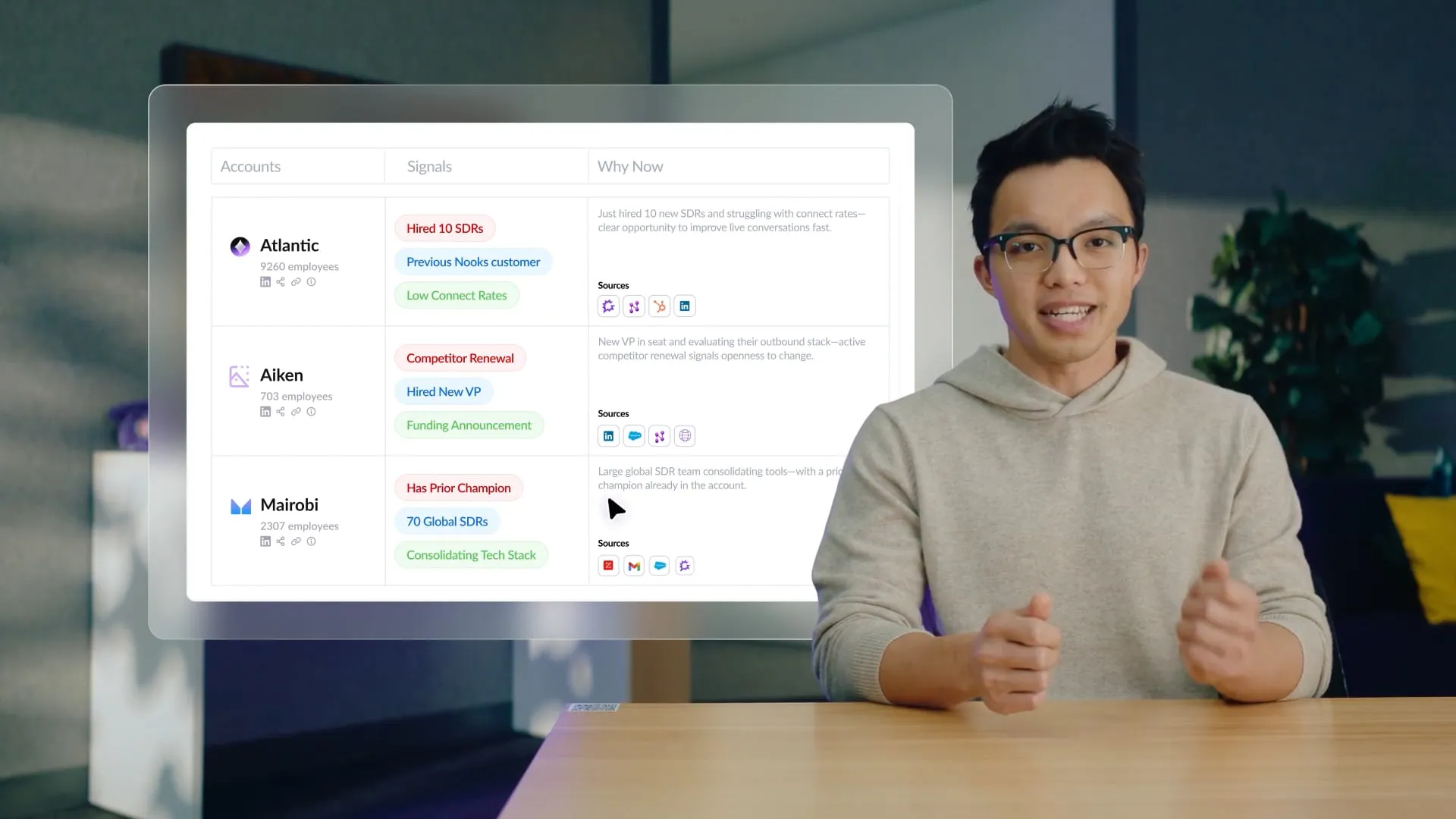
Nooks is the AI-native Agent Workspace for Sales built for outbound teams that want calling, sequencing, prospecting, and coaching in one place. The AI Dialer handles AI parallel dialing with live answer detection, spam protection, and number health monitoring, while AI agents handle call prep, account research, and post-call logging automatically so reps start every conversation with context and finish with their CRM already updated.
Key features:
- AI parallel dialing with live answer detection connects reps only when a real person picks up, with voicemail drop and spam-protected number rotation built in so higher dial volume translates to more live conversations, not more spam flags
- AI Assistant generates account research, call scripts, and battlecards before each call based on CRM signals and prospect context, so reps aren't walking into cold conversations without preparation
- Real-time coaching surfaces objection-handling guidance and battlecards during live calls, with AI call scoring and AI Coaching roleplay available for practice between sessions
- Virtual salesfloor lets distributed teams run call blitzes, shadow each other's calls, and receive live manager feedback in a shared environment, giving remote teams the energy and accountability of a co-located floor
- CRM-first architecture logs every call outcome, note, and follow-up task directly to Salesforce or HubSpot in real time with no manual entry required after the call ends
Best for: Outbound teams ready to consolidate their entire calling, sequencing, and coaching workflow into a single unified platform, eliminating the need for multiple tools and fragmented processes.
Brian DeRosa, VP Global Business Development at HubSpot, reported a 95% increase in dials and a 50% improvement in connect rate after switching to Nooks. Greenhouse Senior Director of Sales Development Mariah Donnelly reported 4x dials, 7x connect rate, and a 70% increase in pipeline.
3. Orum: Best Dedicated Parallel Dialer for High-Volume Outbound
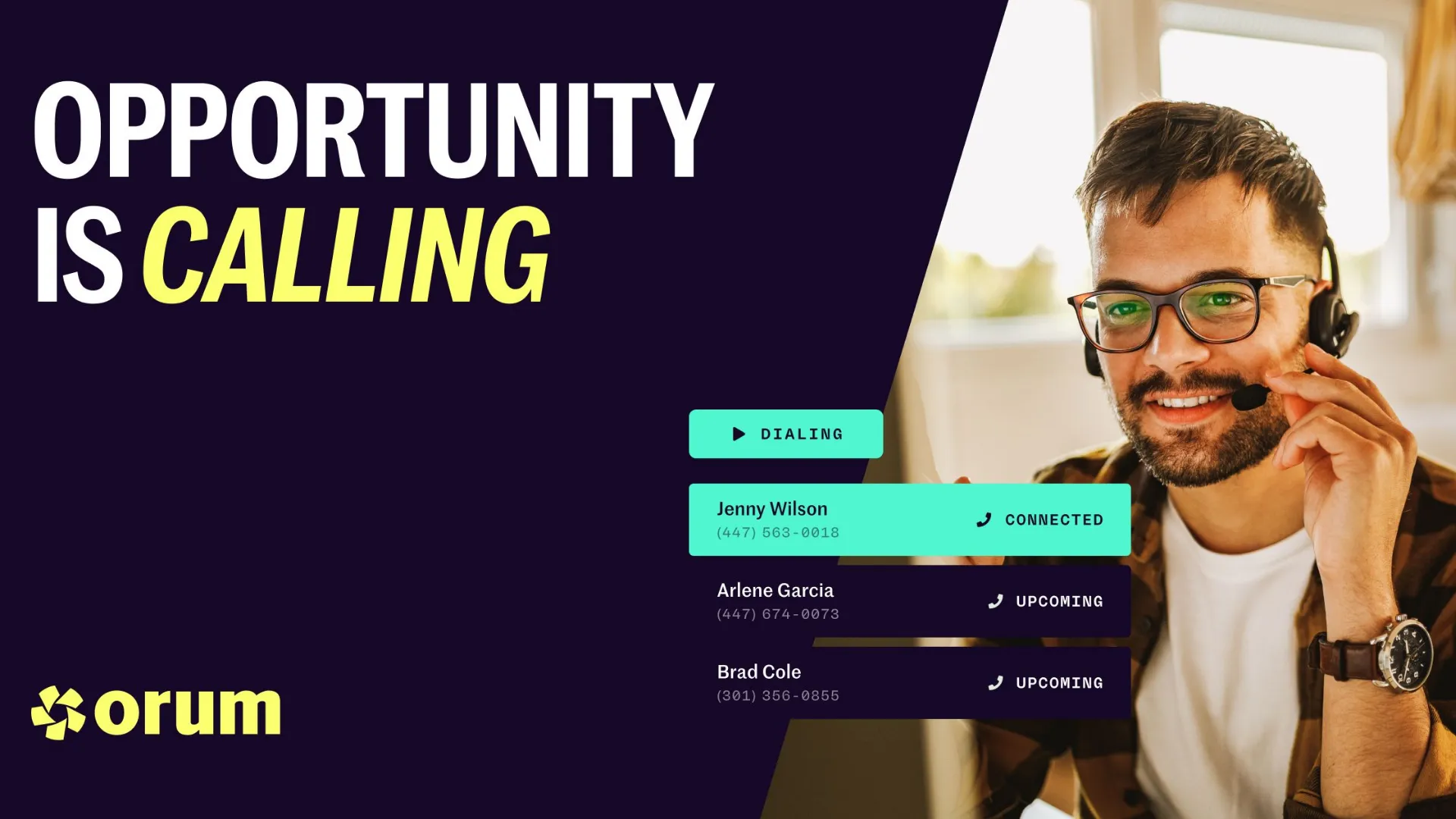
Orum is a cloud-based parallel dialer built specifically for high-volume outbound calling.
Orum is one of the most feature-rich parallel dialers on the market; to understand its capabilities, pricing, and how it compares to alternatives, read our comprehensive what is Orum guide.
It uses AI-powered live answer detection to route reps to a conversation the moment a real person picks up, with automatic voicemail drop and local presence dialing included. Orum's AI is trained on over 1 billion real sales calls, making its live answer detection and call routing some of the most accurate in the industry.
Key features:
- Parallel dialing with AI-powered live answer detection routes reps only when a human picks up, with voicemail drop to leave pre-recorded messages automatically and local presence dialing that matches caller ID to prospect area code
- Orum AI trained on 1B+ real sales calls powers intelligent call routing and connection optimization, so higher dial volume consistently translates to higher connect rates
- Team calling features including a shared salesfloor environment for running call blitzes, shadowing calls in real time, and receiving live manager feedback during high-volume sessions
- CRM integration with Salesforce and HubSpot for automatic call logging and outcome tracking after each call, with no manual entry required
- AI Coaching Suite provides real-time guidance and post-call analytics so managers can identify coaching moments and scale what's working across the entire team
Best for: SDR teams that want a dedicated, purpose-built parallel dialer for maximizing call volume and connect rates, with the flexibility to run separate tools for sequencing and prospecting in the rest of their stack.
Parker Eide, Director of Sales Development at OnBoard, reported 2x more meetings with fewer reps after implementing Orum. Alex Lynn, VP Sales Development at Abnormal Security, achieved a 20% increase in meetings booked.
4. Kixie: Best CRM-Integrated Power Dialer
Kixie is a power dialer and business phone system built around CRM integration depth. It has one of the broadest CRM compatibility lists in the category, covering HubSpot, Salesforce, Pipedrive, and 25+ others, with automatic call logging and click-to-call from within the CRM interface. For teams that need reliable calling without the complexity of parallel dialing, Kixie delivers consistent performance and seamless CRM hygiene.
Key features:
- Click-to-call from within the CRM interface with automatic activity logging after each call, so reps never have to switch between the phone system and their CRM to update records
- Multi-line dialing mode for teams transitioning from power to parallel calling without requiring a complete platform switch or implementation overhead
- Local presence dialing and voicemail drop for improving answer rates and leaving consistent messages at scale across large prospect lists
- SMS integration that adds text outreach to the same interface reps use for calls, without a separate messaging tool
- Broad native CRM compatibility (25+ platforms) ensures reliable integration regardless of which CRM your team uses
Best for: Teams with complex CRM setups that need reliable, deeply integrated calling with automatic logging across a wide range of CRM platforms, and who prioritize CRM hygiene over maximum dial volume.
5. Apollo.io: Best All-in-One Data and Engagement Platform
Apollo is a B2B sales engagement platform that combines a massive, constantly updated contact database with built-in calling, email sequencing, and automation tools. For teams that want their prospecting data, dialing, and outreach in one subscription, Apollo eliminates the need to stitch together multiple tools and keeps all prospect intelligence in a single system.
Key features:
- Vast B2B contact database with advanced segmentation allows teams to build highly targeted prospect lists without relying on third-party data providers
- Built-in dialer with click-to-call and automatic CRM logging keeps reps in Apollo while making calls, reducing context switching
- Automated email sequencing and multi-touch cadences trigger follow-ups based on call outcomes, ensuring no prospect falls through the cracks
- Call recording and transcription provide visibility into conversations and create coaching opportunities for managers
- Engagement tracking and analytics show which outreach channels and messages are driving pipeline
Best for: Full-cycle account executives, smaller SDR teams, and organizations that want their contact data, calling, email sequencing, and basic analytics in a single platform without managing multiple subscriptions.
6. Salesfinity: Best AI Parallel Dialer for Growing Teams
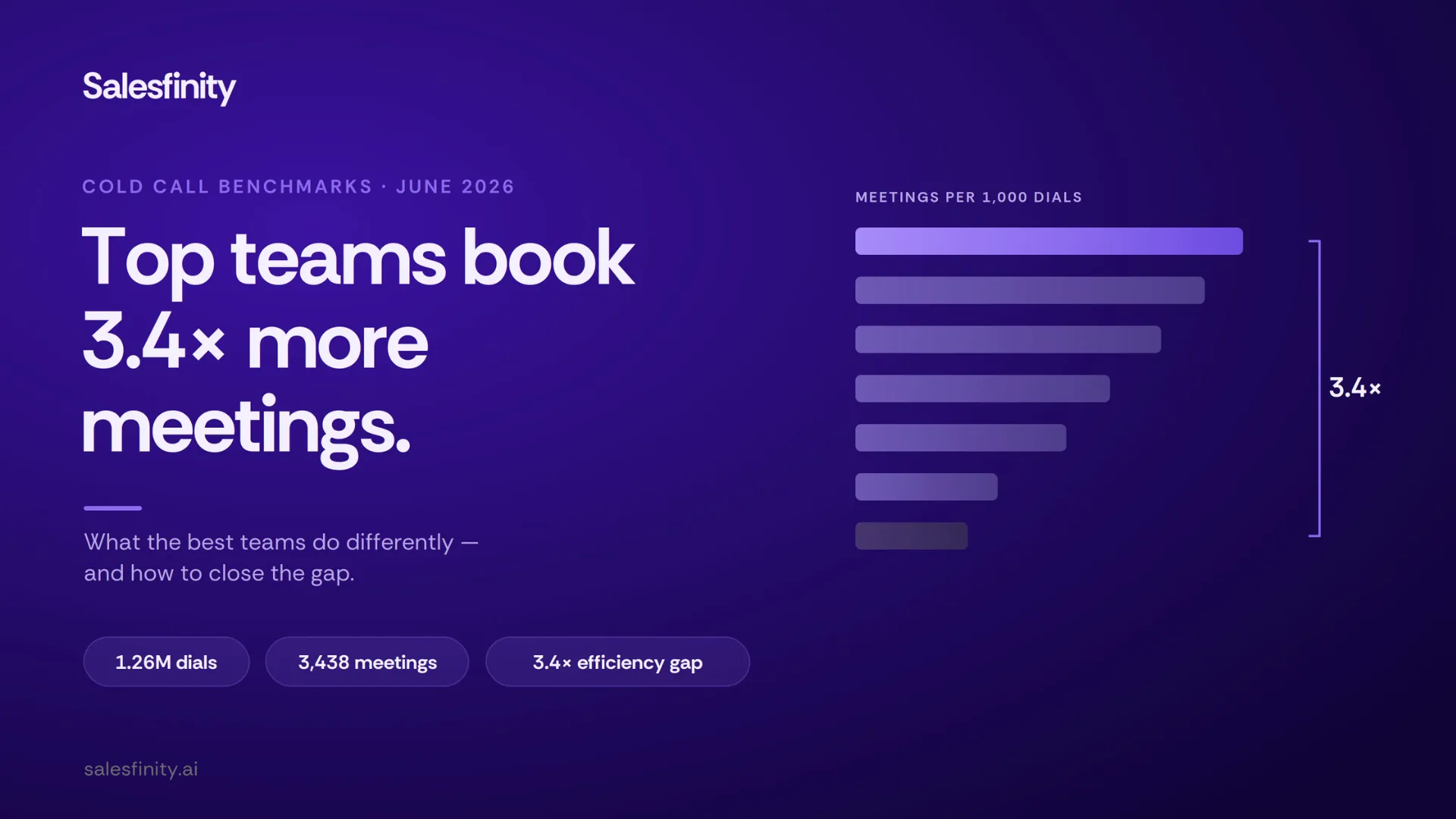
Salesfinity is an AI parallel dialer built for teams moving from power dialing to multi-line calling. It offers parallel dialing with AI-assisted call management and post-call follow-up automation at a price point more accessible than legacy enterprise dialer platforms. Salesfinity is designed for growing SDR teams that want the efficiency of parallel dialing without the configuration overhead of larger enterprise tools.
Key features:
- Parallel dialing with AI live answer detection and automatic voicemail drop reaches more prospects per hour without adding rep headcount
- Post-call follow-up automation triggers email follow-ups based on call outcomes, so reps don't have to manually initiate next steps after every conversation
- CRM integration for automatic call logging with Salesforce and HubSpot, keeping prospect records current without manual data entry
- Straightforward interface designed for quick rep onboarding with less configuration overhead than more complex enterprise dialer platforms
- Accessible pricing makes parallel dialing available to growing teams that don't have enterprise budgets
Best for: Scaling SDR teams ready to upgrade from single-line power dialing to AI-assisted parallel dialing at an accessible price point, without heavy implementation lift or enterprise pricing.
7. Aircall: Best Cloud Phone System for Mixed Inbound and Outbound
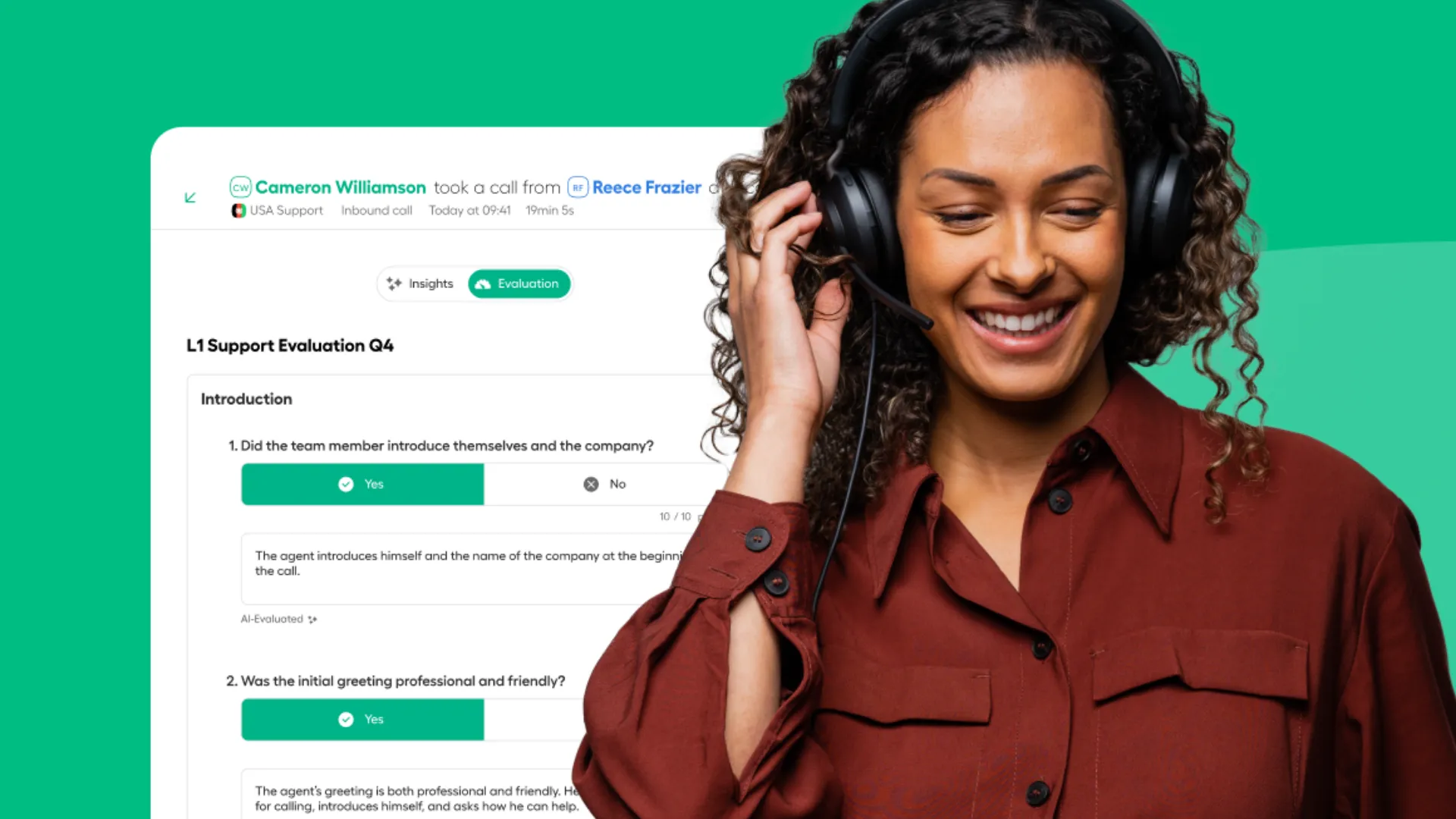
Aircall is a cloud-based business phone system built for teams that manage both inbound and outbound calls from the same platform. It includes IVR routing, call queuing, team phone numbers, analytics, and CRM integration. Aircall is ideal for inside sales teams and support organizations that need a unified phone system handling both inbound inquiries and outbound prospecting without running separate infrastructure.
Key features:
- IVR and call queuing for managing inbound calls alongside outbound prospecting from the same platform, without running two separate phone systems
- Team analytics including call volume, wait times, and activity tracking across inbound and outbound calls in a shared dashboard, giving managers visibility into team performance
- CRM integrations with HubSpot, Salesforce, and others for automatic call logging and contact record syncing
- Call recording and monitoring features for quality assurance and coaching review across both inbound and outbound call types
- Shared team phone numbers and routing rules ensure calls are distributed fairly and no prospect inquiry falls through the cracks
Best for: Inside sales teams that handle inbound inquiries and outbound prospecting from the same phone system, and need IVR, call queuing, and team analytics alongside basic outbound calling.
8. ConnectAndSell: Best Legacy Parallel Dialer for Enterprise Organizations
ConnectAndSell is a parallel dialer that uses a combination of automated dialing and human screeners to filter live answers before routing calls to reps. It's an enterprise-focused platform that has been in the market since 2007, with a price point and architecture that reflect its position as a mature, established solution. ConnectAndSell remains in use at large organizations with established outbound programs and long-term contract commitments built on proven infrastructure.
Key features:
- Human-assisted live answer filtering screens calls before connecting reps, reducing time spent waiting through rings and disconnected numbers
- Enterprise-grade outbound dialing with compliance features and reporting for large-scale outbound programs running thousands of calls daily
- CRM integration with major enterprise CRM platforms for call logging and activity tracking across the entire organization
- Dedicated account management and implementation support for enterprise organizations, ensuring smooth deployment and ongoing optimization
- Proven track record at scale with established infrastructure supporting millions of calls annually
Best for: Large enterprise organizations with established outbound programs already running on legacy dialer infrastructure and the budget for premium, human-assisted call screening and dedicated support.
9. PhoneBurner: Best Power Dialer for Remote Teams
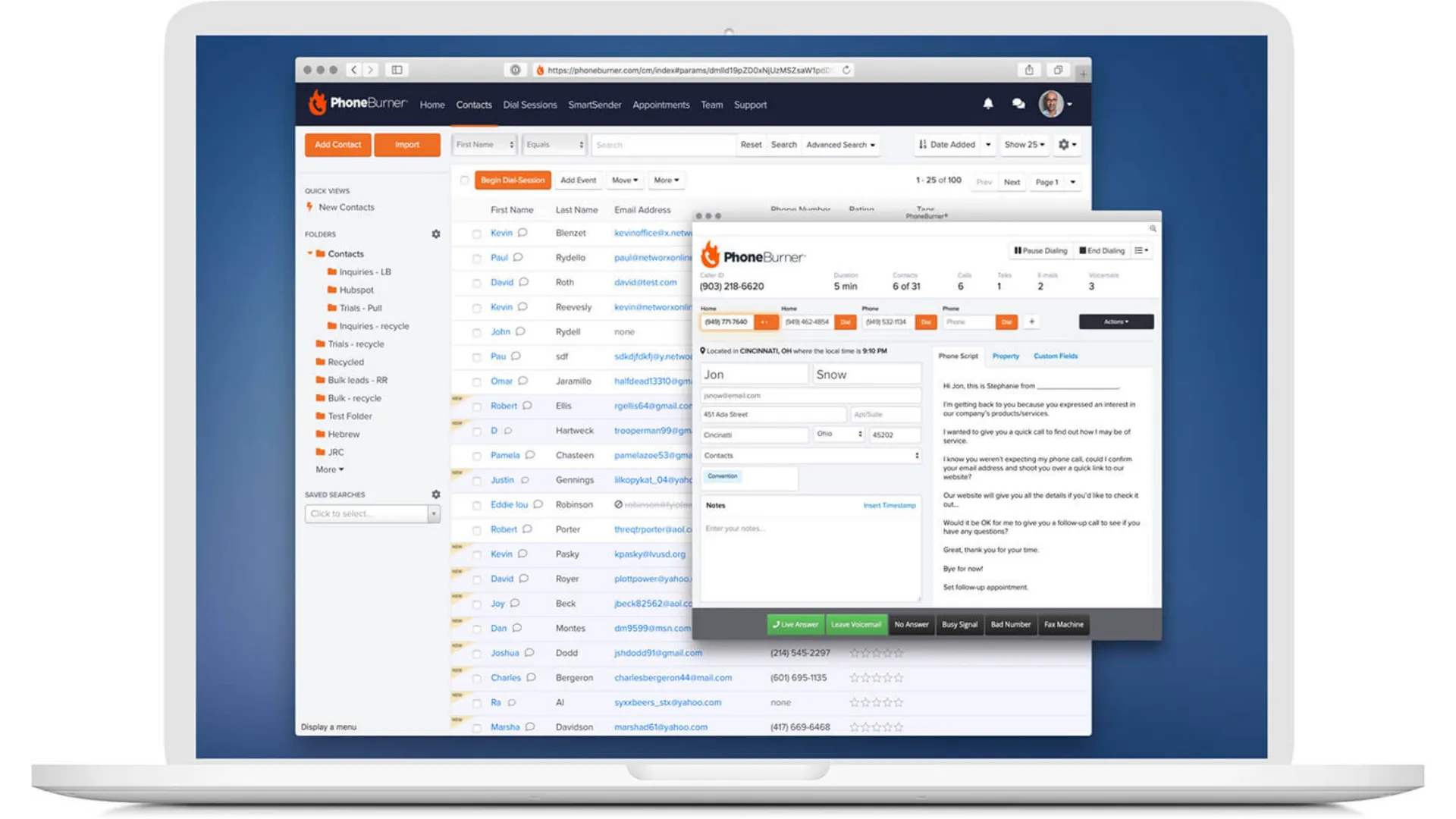
PhoneBurner is a cloud-based power dialer known for its stability, ease of use, and zero-latency connections. It focuses on connecting reps with leads quickly and reliably without the complexity of parallel dialing or the integration overhead of larger platforms. PhoneBurner is ideal for distributed sales teams that prioritize connection quality and straightforward dialing over multi-line efficiency.
Key features:
- Cloud-based power dialing with zero-delay connections ensures reps reach prospects quickly without technical latency issues
- Workflow automation and lead distribution keeps reps focused on calling without manual list management or task switching
- Local presence dialing and voicemail drop improve answer rates and allow teams to leave consistent messages at scale
- CRM integration for automatic activity logging with popular platforms, keeping prospect records current
- Ease of use and quick rep onboarding means teams can be productive on day one without extensive training
Best for: Distributed sales teams that prioritize connection quality, ease of use, and reliable performance over maximum dial volume or complex feature sets.
10. Frontspin: Best Power Dialer for Phone-First Multi-Touch Cadences
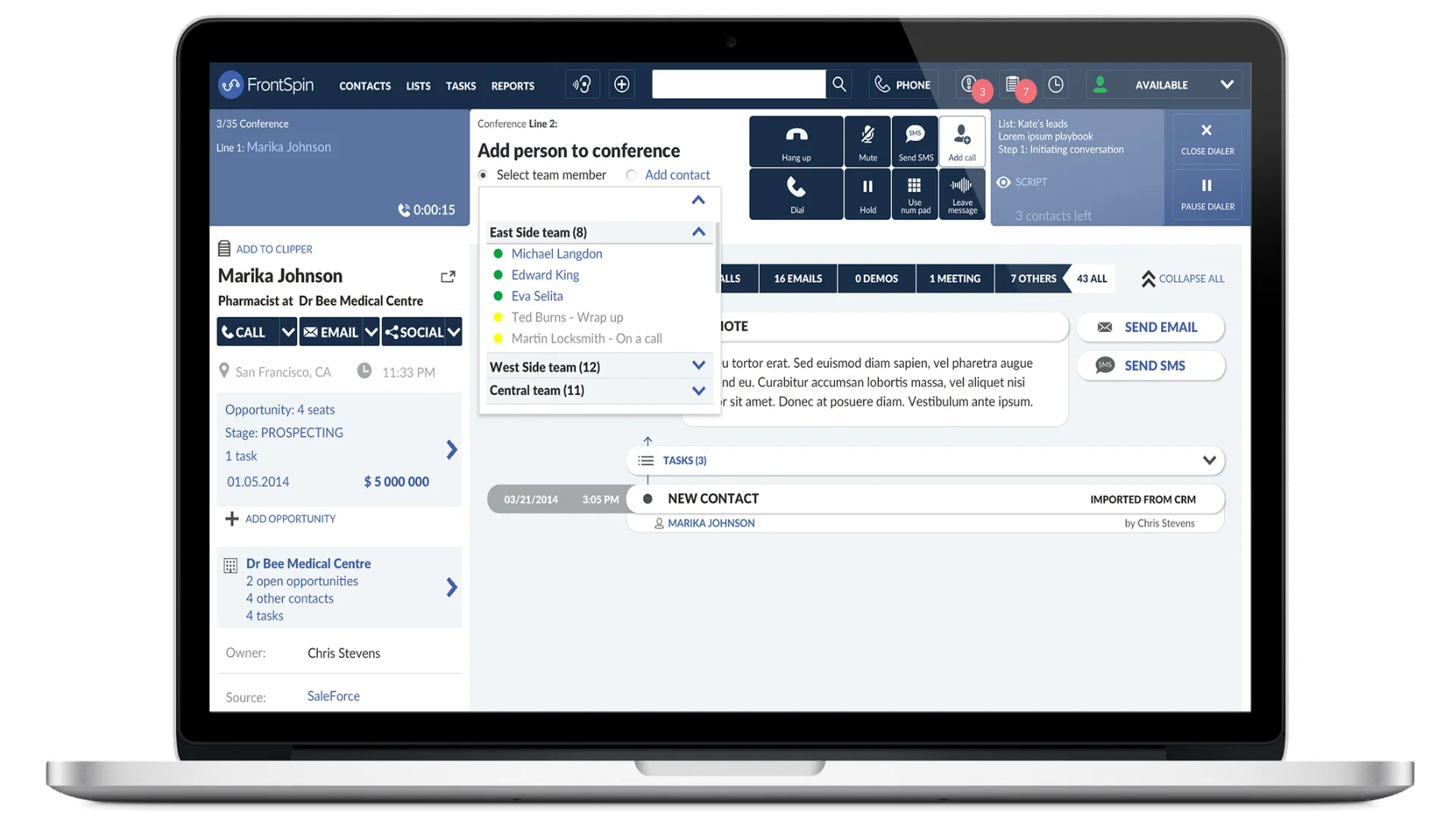
Frontspin is a sequential power dialer that layers manual task reminders for email and LinkedIn touches directly into the calling workflow. It's designed for SDR teams running multi-touch cadences where phone is the primary channel and reps want a prompt to handle email and social touches without leaving the dialer. Frontspin keeps reps focused on calling while ensuring they don't forget secondary outreach channels.
Key features:
- Power dialing with voicemail drop and local presence connects reps with prospects efficiently, with automatic voicemail messages left for missed calls
- Cadence management that schedules phone as the primary touch with manual task prompts for email and social steps, rather than fully automated cross-channel sequencing
- Salesforce integration with automatic activity logging for calls, emails, and social tasks completed within the platform
- Rep-focused interface designed to minimize context-switching and dead time between tasks during an active outbound session
- Multi-touch coordination keeps reps on track with follow-up touches without requiring a separate sequencing platform
Best for: SDR teams running phone-first multi-touch cadences who want basic task reminders for email and LinkedIn touches alongside their dialer, without automated cross-channel sequencing or advanced AI coaching.
How We Evaluated the Best Cold Calling Tools?
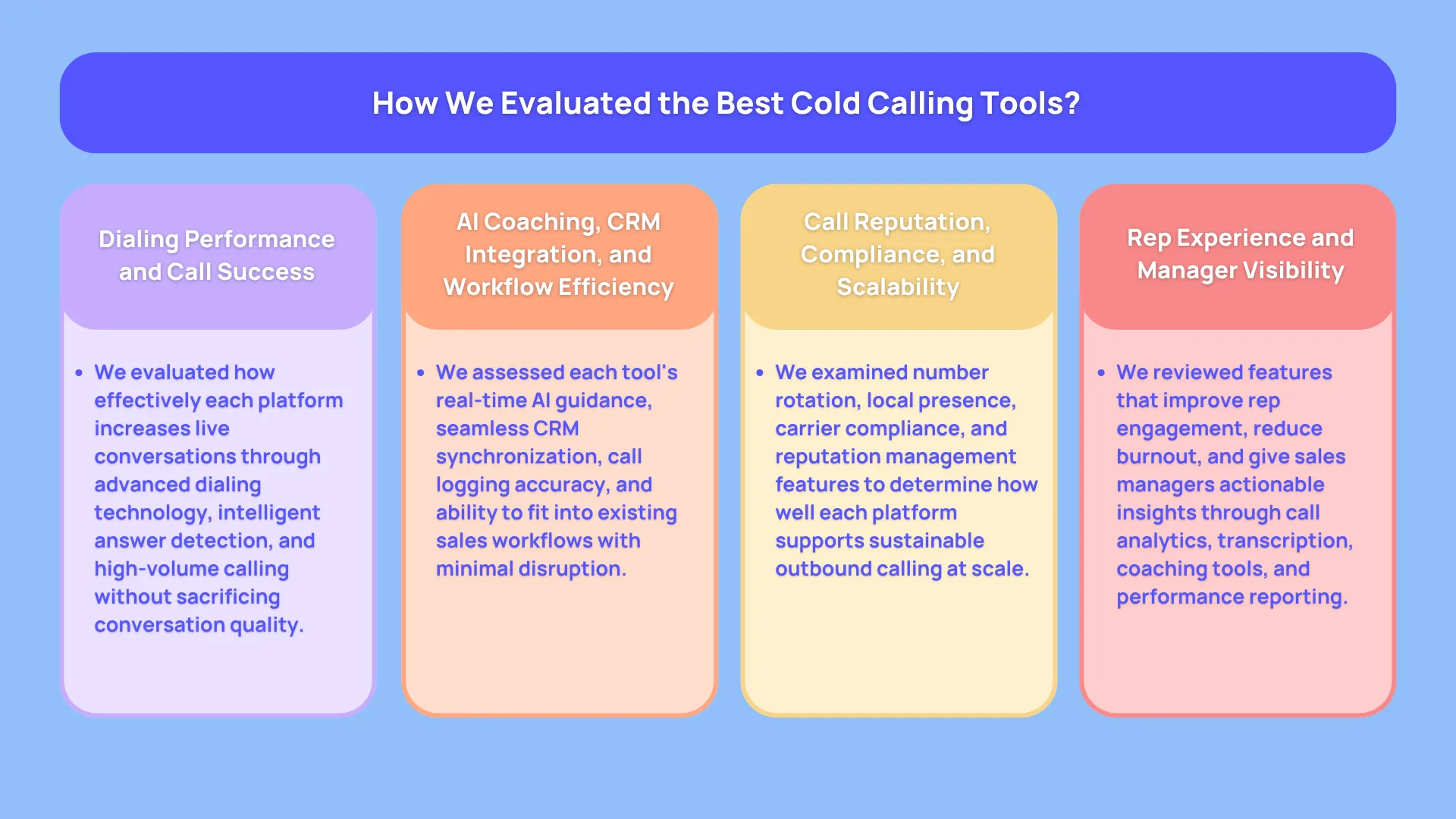
We assessed these platforms using criteria that matter most to outbound teams: the ability to increase rep productivity, maintain call quality, and reduce the friction between dialing and closing deals.
Dialing efficiency and call volume. Not all dialers are created equal. We looked at whether platforms use true parallel dialing with intelligent answer detection versus sequential calling with basic automation. We examined how each tool performs at scale—whether higher dial volume actually translates to more meaningful conversations or just more voicemail and carrier flags.
Number reputation and carrier compliance. A high dial rate means nothing if your numbers get blacklisted. We evaluated how each platform protects outbound reputation through number rotation strategies, local presence capabilities, and proactive carrier management. We also checked whether these protections are built-in or bolted on as afterthoughts.
In-the-moment AI support for reps. The gap between dialing and closing often comes down to rep preparation and real-time guidance. We assessed whether platforms deliver contextual coaching during calls—not just post-call analysis—and whether that guidance actually helps reps navigate objections and steer conversations toward outcomes.
CRM data integrity and workflow integration. Teams lose productivity when calling data lives in a separate system from their CRM. We examined how each platform handles call logging: whether it maintains the CRM as the source of truth or creates a secondary database that requires constant syncing. We also looked at whether solutions can work within existing tech stacks or force teams to replace core systems.
Rep sustainability and team energy. Burnout is real in high-volume calling. We evaluated whether platforms include features that help reps stay motivated through rejection and repetition—whether that's through engagement mechanics, team collaboration features, or other elements that make the work feel less grinding.
Manager visibility and coaching at scale. Managers can't listen to every call. We assessed how each platform surfaces coaching opportunities automatically through call scoring, transcription, and analytics. We looked for systems that turn call data into actionable insights rather than just historical records.
Flexibility and integration depth. Some teams need a complete replacement platform; others need to enhance what they already have. We evaluated whether each solution works as a standalone system, integrates into existing workflows, or requires significant platform migration. We also assessed the ease of implementation and time to productivity.
How to Choose the Right Cold Calling Tool?
Picking the wrong platform in this space creates a double tax: you're paying for a tool that doesn't solve your actual problem, and your reps are losing productive calling time to platform friction. The best cold calling tool for your team depends on identifying what's actually holding back your pipeline.
Diagnose Your Bottleneck Before You Shop
Most teams buy a dialer without first understanding what's broken. Are reps hitting voicemail constantly? That's a connection problem. Are they connecting but struggling to move deals forward? That's a conversation execution problem. Are they stuck in post-call admin instead of dialing? That's a workflow problem. Each requires a different solution. Spend a week tracking how reps actually spend their time—measure talk time, dead time between calls, and administrative overhead.
Measuring talk time is a critical metric for evaluating cold calling tool effectiveness; our talk time learning center resource explains how to calculate and optimize this key performance indicator.
The constraint that shows up most clearly is the one your tool needs to address.
Carrier Health and Number Reputation Are Non-Negotiable
Parallel dialing only works if your numbers stay healthy. Aggressive dialing without proper number rotation and carrier registration gets flagged fast, and once flagged, your connect rates crater. Before committing to any dialer, dig into the vendor's number management strategy: How do they rotate numbers? What's their carrier registration process? How quickly do they pull numbers when spam flags spike? A platform with weak number health will make you regret the upgrade within weeks.
Standalone Dialer vs. Integrated Calling System
A dialer improves how many people you reach. An integrated system improves what happens before you dial, during the call, and after it ends. If you're buying a standalone dialer, you're still managing separate tools for prospecting, sequencing, and coaching. If you're buying an integrated system, those pieces work together. The total cost of "dialer plus four point solutions" often exceeds the cost of a unified platform—but most teams don't realize it until they're already locked into multiple vendors.
CRM Integration Quality Determines Data Reliability
Your RevOps team cares about one thing: is the CRM the source of truth, or is it a sync destination? Ask vendors exactly what gets logged automatically after a call versus what still requires manual rep entry. Platforms that natively log everything in real time reduce RevOps headaches and give you accurate reporting. Platforms that sync periodically or require manual steps introduce data drift that compounds as your team grows.
Plan for Growth, Not Just Today
A five-rep power dialer might not scale to fifteen reps without a platform switch. A standalone parallel dialer might become your bottleneck once you've solved the connection problem. Buying for your current team size is cheaper today and more expensive in eighteen months when you're migrating anyway. Ask vendors about pricing at your target team size, what happens to your data in a migration, and whether they can support your full outbound motion as you scale or if you'll need to bolt on more tools later.
What's Reshaping the Cold Calling Landscape in 2026?
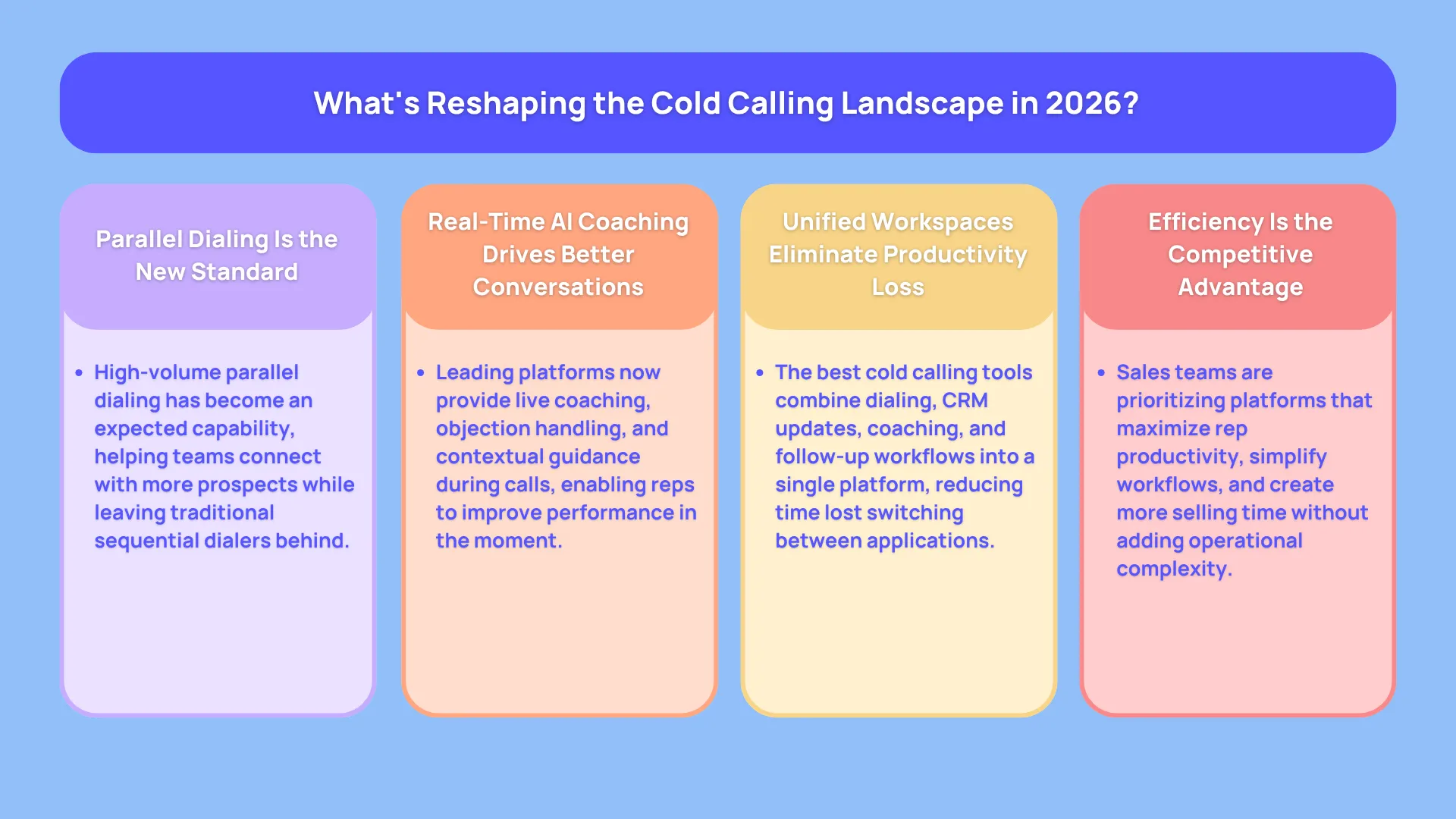
The cold calling tools market is undergoing a fundamental shift. Three major trends are redefining what teams expect from their calling infrastructure.
Volume Efficiency Has Become Table Stakes
Three years ago, parallel dialing was a premium feature reserved for high-velocity teams. Today, it's the minimum viable standard. Teams still relying on sequential power dialing are leaving connection opportunities on the table at a time when email is becoming less reliable and phone conversations are reclaiming their position as the highest-intent outbound channel. The question teams are asking isn't "should we parallel dial?" but "why haven't we yet?" This shift has forced even traditional power dialer vendors to add parallel capabilities or risk obsolescence.
Real-Time Coaching Is Becoming Embedded, Not Bolted On
The old coaching model—manager reviews three calls on Friday, delivers feedback Monday—doesn't survive at scale. Modern teams expect coaching to happen during the call, not after it. Real-time battlecards, contextual objection prompts, and live performance nudges are now native features in leading platforms, not add-ons from separate vendors. Reps are getting immediate, actionable guidance in the moment it matters most, which is changing how quickly teams can improve rep performance and consistency.
Context Switching Is the Hidden Productivity Killer
Reps finishing a call and toggling between a sequencing tool, a coaching platform, an analytics dashboard, and their CRM are losing more time than most teams realize. That friction compounds across every rep, every call, every day. The platforms winning market share are those that keep reps in one environment where dialing, prospecting, sequencing, and post-call actions all happen in the same workspace. The cost of "dialer plus three integrations" is often higher than a unified system, but teams don't see it until they calculate the total spend and lost productivity.
Why Trellus.ai Wins for Teams Ready to Upgrade Their Calling Game
The best cold calling tool for outbound teams in 2026 is the one that multiplies rep performance without forcing a complete platform migration.
Trellus embeds AI-powered parallel dialing and real-time coaching directly into the platforms your team already uses—Salesloft, Outreach, HubSpot, Orum, Apollo. You get intelligent call routing with live answer detection, in-the-moment battlecards and objection guidance, automated call summaries, and performance analytics—all without switching platforms or retraining your team. Parallel dialing with spam protection runs seamlessly inside your existing dialer. Real-time coaching surfaces during calls based on what's actually being said. Call outcomes and insights feed back into your CRM and sequencing without manual entry.
Reps stay focused on conversations instead of context switching. Managers get visibility into what's working across every call, not just the handful they can manually review. Your tech stack gets smarter without getting more complicated.
Trellus is an AI-powered parallel dialer and real-time sales coach built for outbound teams that want to maximize both call volume and conversation quality without replacing their existing tech stack. Explore how Trellus embeds directly into your sales workflow to deliver dialing, coaching, and analytics in one unified experience.
Frequently Asked Questions
What Is the Difference Between a Power Dialer and a Parallel Dialer?
A power dialer dials one prospect at a time, automatically moving to the next number after a set interval or when the rep hangs up. This sequential approach minimizes rep idle time but still requires listening through rings and voicemails. A parallel dialer simultaneously dials multiple prospects (typically 3-5) and connects the rep only when a live person answers, dramatically reducing time spent on dead air and voicemail. For teams running high-volume outbound campaigns, parallel dialing can increase connect rates by 40-60% compared to power dialing. The tradeoff is that parallel dialers require more sophisticated technology to manage multiple simultaneous connections and prevent call quality issues. Modern parallel dialers also include spam protection and number health monitoring to ensure aggressive dialing doesn't damage outbound reputation.
What Should I Look for When Evaluating Cold Calling Software?
Start by identifying your actual constraint: are you struggling with connection rates, conversation quality, or post-call administration? Different tools solve different problems, and buying the wrong solution wastes money and rep productivity. Evaluate dialing efficiency (parallel vs. power), number health and spam protection, real-time coaching capabilities, and how seamlessly the tool integrates with your CRM and existing tech stack. Check whether the platform logs call data natively to your CRM or creates a separate database that requires syncing, as this impacts data reliability and RevOps overhead. Consider total cost of ownership across all your calling tools, not just the headline price of a single platform. Finally, assess implementation time and ease of adoption—a platform that takes three months to deploy and requires extensive training may not be worth the efficiency gains.
How Does Nooks Compare to Trellus for Cold Calling?
Nooks is a unified Agent Workspace that consolidates calling, sequencing, prospecting, and coaching into a single platform, requiring teams to migrate their entire outbound workflow. Trellus is an embedded AI layer that adds parallel dialing and real-time coaching to the platforms you already use—Salesloft, Outreach, HubSpot, Orum, Apollo—without requiring a platform switch. Nooks is ideal for teams ready to replace their entire calling stack with a single solution, while Trellus is built for teams that want to enhance their existing infrastructure without migration overhead. Both platforms deliver AI-powered parallel dialing and real-time coaching, but they differ fundamentally in deployment model: Nooks replaces your dialer, while Trellus sits on top of it. The choice depends on whether your team values platform consolidation (Nooks) or stack flexibility with minimal disruption (Trellus). Nooks typically requires longer implementation and team retraining, while Trellus can be deployed and productive within days.
Is Parallel Dialing Worth It for My Team?
Parallel dialing delivers measurable ROI for teams running 50+ calls per rep per day, where the efficiency gains compound across every rep and every call. Teams using parallel dialing typically see 40-60% improvements in connect rates and 20-30% increases in meetings booked compared to power dialing, depending on list quality and number health. The real value isn't just higher volume—it's the time freed up for reps to focus on conversation quality and objection handling instead of listening to rings and voicemails. However, parallel dialing only works if your outbound numbers stay healthy; aggressive dialing without proper spam protection and number rotation can actually hurt your results. For smaller teams (under 10 reps) or teams with lower daily call targets, the complexity and cost of parallel dialing may not justify the investment. The decision should be based on your current connect rates, daily call volume, and whether connection rate is actually your primary constraint.
What Is a Virtual Salesfloor?
A virtual salesfloor is a shared digital environment where distributed SDR teams can dial together, shadow each other's calls, and receive real-time coaching from managers—replicating the energy and accountability of a co-located sales floor.
A virtual salesfloor creates a collaborative environment for remote sales teams; our virtual sales floor guide explains how this feature enables real-time coaching and team alignment.
In a virtual salesfloor, reps can see each other's activity in real time, celebrate wins together, and create friendly competition that boosts morale during high-volume calling sessions. Managers can listen to live calls, provide whisper coaching, and jump into conversations when needed, without the overhead of recording and reviewing calls after the fact. The feature is particularly valuable for remote teams that lack the natural accountability and energy of an in-office environment. Virtual salesfloors also create coaching opportunities by allowing managers to identify best practices in real time and share them across the team immediately. Platforms offering virtual salesfloors report higher team engagement, faster rep ramp time, and improved coaching consistency compared to teams relying on recorded call review.
Why Are Outbound Teams Moving Away from Legacy Dialers?
Legacy dialers were built for a different era of outbound calling—when volume was the primary metric and coaching happened in quarterly business reviews. Modern outbound teams need real-time intelligence, AI-powered coaching, and seamless integration with sequencing and prospecting tools, capabilities that legacy systems weren't designed to provide. Legacy dialers also create significant data hygiene problems because they maintain separate databases from the CRM, leading to reconciliation overhead and unreliable pipeline reporting as teams scale. The cost of running a legacy dialer alongside modern sequencing, coaching, and prospecting tools often exceeds the cost of a unified platform, making the "cheap legacy dialer" strategy expensive in total cost of ownership. Younger, faster-growing teams are choosing platforms built for 2026 calling—with AI coaching, parallel dialing, and native CRM integration—because they can deploy faster, train reps quicker, and scale without platform migrations. Legacy dialers are increasingly becoming a liability rather than an asset for teams trying to compete in a market where call quality and rep productivity are the differentiators.
Can a Small SDR Team Benefit from Parallel Dialing?
Small SDR teams (5-10 reps) can benefit from parallel dialing, but the ROI depends on daily call volume and current connect rates rather than team size alone. If your reps are making 40+ calls per day and struggling with connection rates below 15-20%, parallel dialing will likely improve results and free up time for higher-quality conversations.
The implementation complexity and cost of parallel dialing are lower than they used to be, with modern platforms offering straightforward setup and affordable per-seat pricing that works for small teams. However, if your team is making fewer than 30 calls per day or already has strong connect rates, the efficiency gains from parallel dialing may not justify the investment.
Small teams should also consider embedded solutions like Trellus that layer parallel dialing onto existing platforms, avoiding the cost and complexity of a full platform migration. The key is evaluating your actual constraint—if connection rate is holding back pipeline, parallel dialing is worth it regardless of team size; if conversation quality is the issue, investing in coaching and training may deliver better ROI.
.jpeg)

Power and parallel dialing in your CRM.