Our Top Picks


If I were a VP of Sales, what would I worry about most?
As an empathetic sales executive I would assess the different pressures on my sales team today.
For me the biggest challenge in 2026 is how can sales teams can effectively manage their cold calling routines and not burn out in the process.
Over the past couple of years new sales enablement software solutions have been released in the market which have made sales departments much more successful.
One such sales enablement category includes AI Dialers.
The best AI dialers in 2026 are not the ones that simply maximize call volume, but the ones that improve connection quality, rep efficiency, and coaching feedback at scale.
By integrating AI-powered auto dialer software into their daily workflows, sales teams can eliminate tedious manual dialing tasks while simultaneously gathering actionable insights from every conversation.
In this detailed post, we'll be covering all the nitty gritty in this category including:
- What is the most overrated feature in this category?
- What is the most underrated buying criterion?
- What would a sales manager care about that a rep might not?
- What does a team realize only after implementation?
TL;DR / Key Takeaways
AI dialers are helping sales reps reclaim their time and focus on what actually moves deals forward, real conversations.
- Automated dialing tools increase talk time
Reps no longer waste time manually dialing or navigating bad numbers. The system handles connection flow so reps stay in active conversations longer. - The best AI dialer for sales teams prioritizes conversation quality
High call volume means nothing if conversations do not convert. Modern tools balance speed with context, insights, and timing. - Parallel dialers eliminate dead time between calls
A parallel dialer connects reps only when a live person answers, which dramatically improves efficiency for outbound teams. - AI calling software now extends beyond dialing
Coaching, sentiment analysis, and real time prompts are becoming standard. Dialing is just one piece of a larger performance system. - Trellus leads with an embedded parallel dialer approach
Instead of treating dialing as a standalone tool, it combines prospecting, calling, and coaching into one continuous workflow. - Other tools specialize in specific areas
Platforms like Talkdesk, Orum, and Five9 focus more on telephony, routing, or enterprise infrastructure rather than full sales workflow alignment.
What Makes a Great AI Dialer in 2026
There is a clear difference between traditional dialing software and modern AI dialer platforms. The gap is not just about automation, it is about intelligence layered on top of automation.
A strong AI calling software today needs to align with how SDRs and AEs actually work throughout the day.
1. Speed Without Wasted Motion
Having worked with thousands of outbound sales teams as a founder of Trellus, I can confidently say that speed is no longer a vanity metric.
In 2026, experienced teams care less about raw dialing velocity and more about whether the platform protects high value selling time.
This implies that "faster is not necessarily better".
The Best AI Dialers compress non-selling, so reps can spend more of the day in prepared, high quality live conversations.
And that's where I believe and coin the term as "activity efficiency vs conversation efficiency". Many tools can increase attempts per hour but there are only a handful of sales software out there which actually increase the time spent in meaningful conversations.
Does this platform simply accelerate call attempts, or does it improve how rep time is spent? An ideal Dialer solution should provide:
- Faster Dialing: Reduced idle time between quality conversations.
- Bad Number Filtering: Better rep energy allocation and cleaner list usage
- Instant call transitions: Less context switching and less productivity leakage
- Predictive Logic: Higher chance that rep attention is used at the right moment.
2. Parallel Dialing Done Right
From our demo calls of prospective users and from our interaction with existing customers of Trellus we've discovered a very big pain point for users in this segment.
Parallel dialing is one of those categories where poor implementation punishes the team twice: it can hurt prospect experience and create internal chaos for reps.
Parallel dialing should not be judged by the number of dials alone. It should be judged by whether the platform can maintain timing discipline, rep readiness and compliance safeguards at scale.
Many buyers in the AI Dialer segment get impressed by throughput claims. Throughput without control creates fragile outbound operations.
Takeaway by Craig Bonoitt (Co-Founder, Trellus.ai):
The question is not whether a platform supports parallel dialing. The question is whether it can do it without damaging live-call quality, rep readiness, or compliance posture.
3. Built-in Coaching and Feedback
Coaching features matter because most outbound gains do not come from one brilliant script.
They come from many small improvements in objection handling, talk tracks, timing, and follow-up discipline across dozens or hundreds of calls.
AI Coaching matters when it turns call activity into usable learning loops for both reps and managers.
Since I am dealing daily with VP Sales, Directors & Managers of Outbound Sales functions, I can tell you as a fact that sales executives are more concerned about improving rep performance than just generating more data.
- Real-time prompts are most valuable when they improve consistency without making calls sound robotic
- Post-call summaries matter when they reduce admin burden and make coaching more specific
- Pattern recognition becomes powerful when it reveals repeatable objections, winning talk tracks, and skill gaps across the team
4. Workflow Alignment with Outbound Sales
Poor integration is not just inconvient.
It quietly erodes the value of the dialer itself. When context is fragmented, logging is manual, and follow-up is inconsistent, the team loses the compounding benefits that should come from a modern outbound stack.
Workflow alignment determines whether the dialer becomes a daily operating system or just another tab that reps tolerate.
Sales leaders know that even good tools fail if they create friction inside real workflows.
Some notable features that warrant alignment include:
- CRM Integration: Protects data quality, reporting accuracy and manager visibility.
- Prospect Context on Call: Improves relevance, confidence, and transition quality during live conversations.
- Auto-Logging: Reduce admin drag and improves process consistency.
- Follow-Up Suggestions: Helps teams maintain momentum instead of losing value after the call ends.
The best dialers do not just connect calls. They preserve context before the call, reduce friction during the call, and strengthen follow-through after the call.
Best AI Dialers for Sales Teams in 2026 & Beyond…
Now that the baseline is clear, the real question becomes which tools actually deliver on these expectations. Each platform below takes a slightly different approach to call automation, depending on the type of team and goals.
1. Trellus.ai
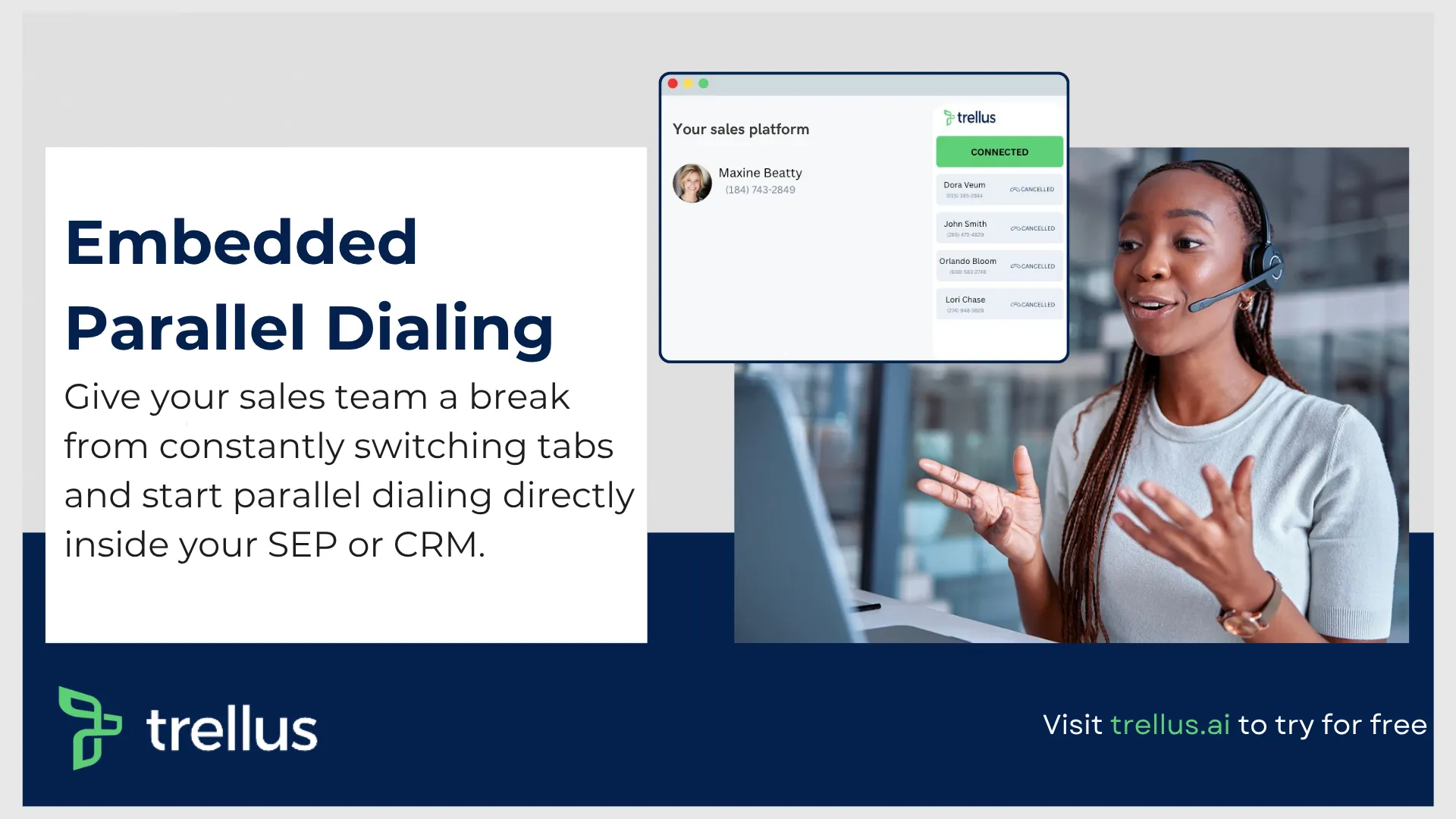
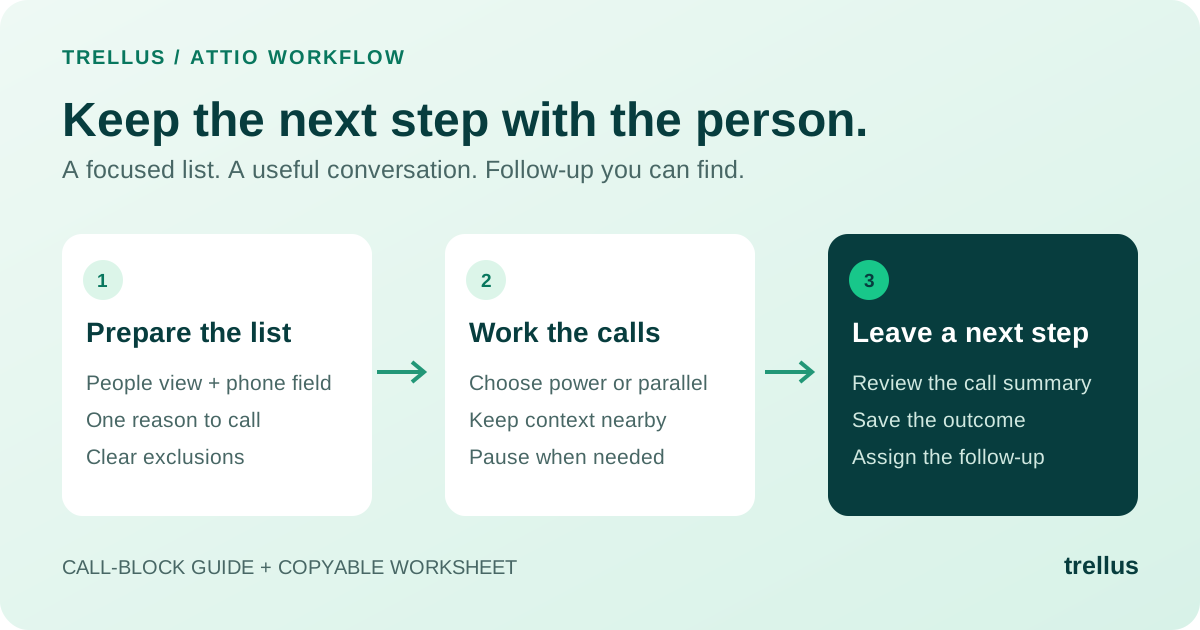
Trellus ranks first because it treats dialing as part of a broader outbound execution system rather than as a standalone activity tool. That unified workflow matters because it reduces handoff friction that often slows reps down when dialing, coaching, and prospecting are done in separate tools.
Its biggest advantage is that it turns call activity into a repeatable improvement loop, which is often where ordinary dialers fall short.
For teams that want one system to support calling, rep guidance, and prospecting efficiency, it offers a stronger operating model than tools focused mainly on raw dialing speed.
You must be anxious to know what category weakness does Trellus solve?
Many AI Dialers still operate like speed tools with AI layered on afterwards, while Trellus is positioned more like an outbound workflow system where calling, coaching and prospecting reinforce each other.
Trellus ranks first not just because it adds the most AI Labels, but because it integrates the parts of outbound execution that are usually fragmented across separate tools.
Key Features
- Embedded Parallel Dialer: It improves rep time allocation and reduces wasted motion, which becomes critical for teams trying to scale outbound without burning selling hours on unproductive attempts.
- Real-Time Coaching Prompts: This matters most for consistency across reps, especially when the team wants to reduce variance in live call execution. This is not just convenience; it is a tool for tightning message discipline.
- Continuous Feedback Loops: The real value is that it helps teams turn call volume into institutional learning, so the team improves collectively rather than leaving performance gains to individual rep instincts.
Why it Stands Out
Speed first platforms often optimise top of funnel activity without doing enough to improve conversational quality or rep development. That makes Trellus stand out as a stronger long term choice for teams that care about durable outbound performance.
- Many tools optimise throughput, but not help reps improve live call quality or message execution.
- Trellus stands out because it links dialing activity to coaching and iteration, which makes performance gains repetable.
Rep vs Manager vs Revenue Lens
Through the rep lens, Trellus reduces workflow fragmentation and helps sellers spend more time in real conversations. Through the manager lens, it creates better visibility and more consistent coaching across the team. Through the revenue lens, it stands out because it is designed to improve conversation quality and pipeline outcomes over time, not just increase dialing speed.
Final Verdict
Trellus is the strongest for teams that want fewer tool handoffs, tighter rep guidance and a more integrated outbound workflow.
2. Zeeg
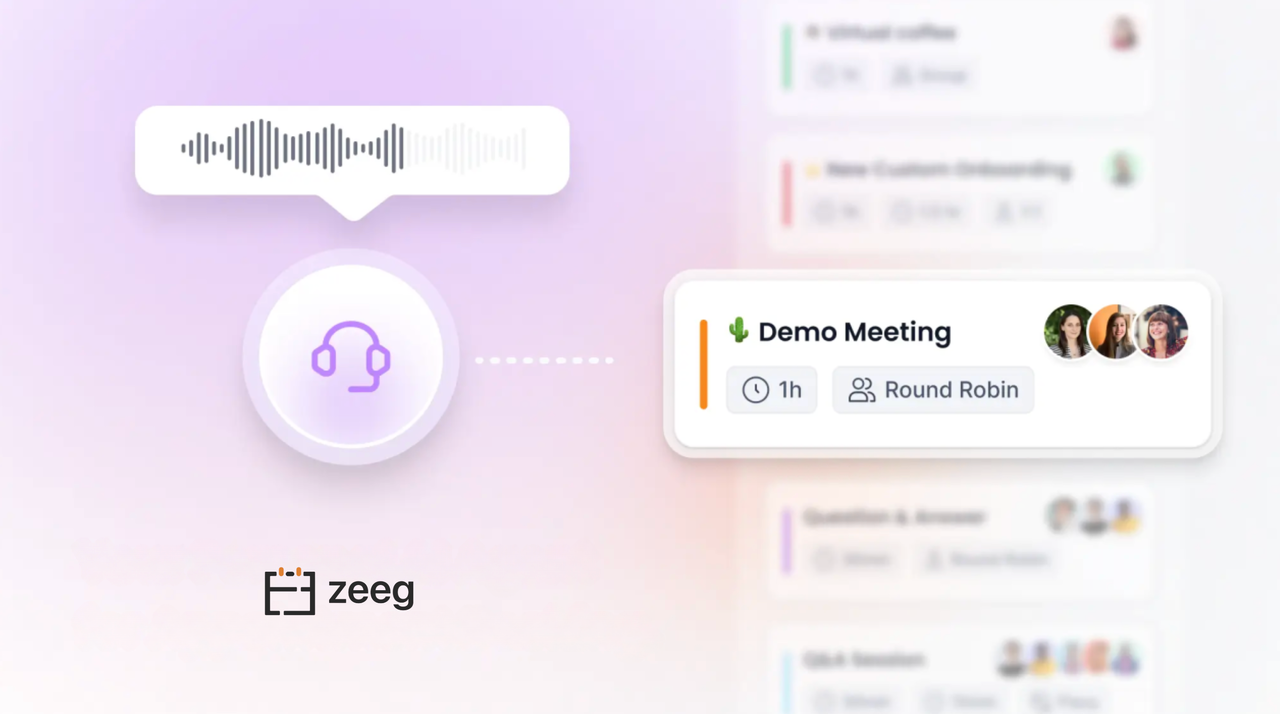
Zeeg earns its place on this list because it approaches AI calling from a different angle than most traditional dialers. Rather than focusing on high-volume outbound activity, it combines voice AI, scheduling, and CRM workflows into one system designed to qualify leads and book meetings with minimal manual effort.
That makes it especially valuable for sales and customer-facing teams that want to capture inbound demand, automate call handling, and reduce the friction between first conversation and confirmed meeting.
The tradeoff is that it is less of a fit for teams whose main priority is scaling raw outbound dialing volume.
Key Features
- Zeeg is not built around raw dial volume.
- Why it matters: This separates it from parallel-dialing-first tools
- Voice AI handles qualification and booking
- This shifts the value from activity to conversion workflow efficiency
- CRM, scheduling, and calling live together
- This reduces operational handoffs and follow-up leakage
- Best for inbound and hybrid customer-facing teams
- Zeeg solves a different problem than most AI dialers. Instead of helping reps push through more outbound calls, it helps teams capture, qualify, route, and book opportunities with less manual involvement.
Why it Stands Out
Based on experimenting with the product, Zeeg is a better fit for teams that care about automated lead handling and meeting conversion than for teams primarily focused on high-volume outbound dialing.
Zeeg fits best where the real operational bottleneck is not making more calls, but making sure every live interaction is qualified, routed correctly, and converted into a booked next step without manual follow-up gaps.
Rep vs. Manager vs. Revenue Lens for Zeeg
- Rep lens: For reps, Zeeg reduces admin and handoff work by letting voice AI handle qualification, routing, and booking inside the same workflow. That is especially useful for teams that want fewer manual steps between first contact and scheduled meeting.
- Manager Lens: For managers, Zeeg improves visibility because transcripts, booking outcomes, and lead details are captured automatically in the same system. That makes it easier to review what happened, monitor lead handling quality, and keep workflows consistent.
- Revenue Lens: From a revenue perspective, Zeeg is strongest when the goal is to reduce missed opportunities and convert more inbound or warm interactions into booked meetings. Its value comes less from boosting call volume and more from tightening the path from conversation to calendar.
Final Verdict
Zeeg is not the best pick for teams chasing maximum outbound call volume, but it is one of the strongest options for teams that want AI-powered qualification, routing, and meeting booking inside a single workflow.
Zeeg stands out because it treats AI calling as part of a booking and qualification workflow, not just a way to increase calling activity.
3. Convoso
Convoso earns its place on this list because it is purpose-built for large-scale outbound operations where contact rates and deliverability matter as much as dialing speed.
Its strengths are less about conversation coaching and more about helping teams sustain efficient outreach across high call volumes through predictive dialing, answering-machine detection, and deliverability-focused infrastructure. That makes it a particularly strong fit for lead generation teams and campaign-driven outbound environments.
The tradeoff is that it is less suited to organizations looking for a more integrated, coaching-oriented, or workflow-heavy AI dialing platform.
Key Features
- AI Answering Machine Detection: Helps teams move faster through low value call outcomes and improve rep efficiency.
- Deliverability protection tools: Reduces the risk of spam labeling, blocked numbers, and wasted outbound effort.
- Advanced Predictive Dialing: Supports higher calling throughput for large scale outbound operations.
- High Volume Campaign Infrastructure: Makes the platform more suitable for lead gen environments than smaller, workflow heavy teams.
- Operational focus on contact rates: Keeps the system aligned with teams that measure success through scale and connection efficiency.
Why It Stands Out
Convoso stands out because it addresses a problem that many AI dialers do not prioritize enough: maintaining outbound performance at scale. In large calling environments, speed alone is not enough if deliverability drops or too many attempts are wasted.
Convoso is designed for that reality. Its strength is not that it creates the most guided or coaching-rich rep workflow, but that it helps teams preserve contact rates when call volume is high. That makes it a better fit for lead generation and campaign-driven operations than for teams focused on rep development or integrated outbound workflows.
In that sense, Convoso is less a polished calling assistant and more a scale engine for serious outbound volume.
Rep vs. Manager vs. Revenue Lens for Convoso
From the rep lens, Convoso is most useful when the job is to maximize live connect opportunities rather than rely on in-call coaching or a highly guided workflow. Features like predictive dialing and answering machine detection help reduce wasted motion, even if the platform is not primarily built around rep development.
From the manager lens, its value is clearer at the operational level: it helps large teams maintain contact rates, protect deliverability, and keep outbound campaigns running consistently as volume increases.
From the revenue lens, Convoso makes the most sense in environments where reliable contact volume directly influences pipeline or lead generation results. Its contribution is less about improving conversation quality and more about preserving the scale and efficiency needed to keep outbound performance commercially viable.
Final Verdict
Convoso is a strong choice for high-volume outbound teams that need reliable scale, better deliverability, and consistent predictive dialing performance. It is especially well suited to lead gen and campaign-heavy environments where contact rates matter more than coaching depth. Teams looking for a more integrated, rep-centric, or coaching-led dialer may find stronger options elsewhere.
4. Five9
Five9 earns its place on this list because it offers a more mature outbound calling environment than many newer AI dialers. Rather than focusing mainly on rep prompts or simplified workflow design, Five9 is built around dialing flexibility, operational reporting, and enterprise-grade outbound management.
Its mix of predictive, power, progressive, and preview dialing modes makes it useful for teams with different campaign structures and call volumes. It also stands out for features tied to compliance, caller verification, and number reputation management.
That makes Five9 especially relevant for larger outbound teams or blended contact center environments that need control, scale, and reliability more than lightweight sales simplicity.
Key Features
- Multiple dialing modes: Supports predictive, power, progressive, and preview dialing for different team structures and campaign goals
- Number reputation management: Helps protect outbound performance by reducing spam or scam labeling issues
- Certified Caller (STIR/SHAKEN): Adds caller validation and supports more trusted outbound calling
- Answering machine detection and automatic voicemail: Helps teams reduce wasted attempts and move faster through large call lists
- Real-time reporting and campaign management: Gives managers stronger visibility into performance, productivity, and outbound operations.
Why It Stands Out
Five9 stands out because it is built less like a modern sales add-on and more like a full outbound contact center system. That gives it more operational depth than many AI dialers aimed at smaller sales teams. Its real advantage is flexibility: teams can choose different dialing modes depending on call volume, compliance needs, and personalization requirements.
At the same time, it brings in reporting, campaign management, caller verification, and number reputation tools that matter when outbound programs become more complex. For that reason, Five9 is especially compelling for larger organizations that need structure and control, not just faster dialing.
Rep vs. Manager vs. Revenue Lens for Five9
From the rep lens, Five9 is most valuable when sellers or agents need a dialing setup that matches different outreach scenarios, whether that means working through large prospect lists quickly or using preview dialing for more informed conversations. It may feel more operational than lightweight sales dialers, but it gives reps more structured calling options.
From the manager lens, Five9 is where the platform becomes more compelling, because reporting, campaign controls, number reputation management, and compliance-oriented features make it easier to oversee larger outbound programs with consistency.
From the revenue lens, Five9 is strongest when stable outbound execution, better connect efficiency, and stronger operational visibility have a direct impact on pipeline creation or customer outreach results. Its value comes less from flashy AI assistance and more from helping teams run outbound programs with fewer breakdowns.
Final Verdict
Five9 is a strong choice for larger sales teams and contact center-style outbound operations that need dialing flexibility, operational visibility, and more enterprise-level control. It is especially useful when multiple dialing modes, compliance features, and reporting depth matter as much as raw speed. Smaller teams looking for a simpler, more coaching-led experience may prefer a lighter platform.
5. NICE CXone
NICE CXone earns its place on this list because it approaches outbound calling as part of a broader proactive engagement strategy. Rather than focusing only on sales reps making more calls, it combines predictive dialing, AI-driven outreach, omnichannel campaign support, and built-in compliance controls in a more enterprise-oriented platform.
That makes it especially relevant for organizations that need to manage outbound communication at scale across both voice and digital channels. Its strength lies in balancing efficiency, operational oversight, and risk management, which is why it stands out more in structured contact center environments than in lightweight SDR workflows built mainly around speed and coaching.
Key Features
- Predictive dialing: Helps maximize connect rates and minimize agent idle time through agent-availability logic
- AI-driven proactive outreach: Supports more scalable and automated outbound engagement across campaigns
- Omnichannel campaign support: Extends outbound workflows beyond voice into digital engagement channels
- Built-in compliance controls: Helps teams balance aggressive outreach with risk management and regulatory requirements
- Enterprise-scale outbound orchestration: Makes the platform more suitable for large, structured outreach operations than smaller ad hoc sales teams.
Why It Stands Out
NICE CXone stands out because it treats outbound calling as one part of a larger proactive engagement system. That makes it more strategic than a dialer built only for call acceleration. Its predictive dialing capabilities help teams improve contact efficiency, but the bigger differentiator is that NICE pairs outbound voice with digital outreach and compliance-aware campaign management.
This makes the platform especially attractive for enterprise teams that need more control over how outreach is executed at scale. In that sense, NICE CXone is less about helping a single rep move faster and more about helping a large organization run smarter, safer, and more coordinated outbound programs.
Rep vs. Manager vs. Revenue Lens for NICE CXone
From the rep lens, NICE CXone is most useful when agents need efficient call delivery and a structured outbound environment rather than a lightweight, coaching-led sales workflow. Predictive dialing helps reduce manual effort and idle time, while broader outbound orchestration can support more consistent outreach.
From the manager lens, the platform becomes much more compelling because it offers stronger oversight across compliance, campaign execution, workload balancing, and multi-channel outbound strategy. That makes it easier to manage complex outreach programs without sacrificing control.
From the revenue lens, NICE CXone is strongest when better contact efficiency, more coordinated proactive outreach, and fewer compliance-related breakdowns directly improve business outcomes. Its value comes less from rep-level AI guidance and more from making enterprise outreach more scalable, disciplined, and reliable.
Final Verdict
NICE CXone is a strong choice for enterprise teams that need predictive dialing, omnichannel outbound engagement, and tighter compliance control in one platform.
It is especially useful for structured contact center environments where scale and oversight matter as much as efficiency. Smaller sales teams looking for a simpler, more rep-centric dialer may prefer a lighter option.
6. Orum
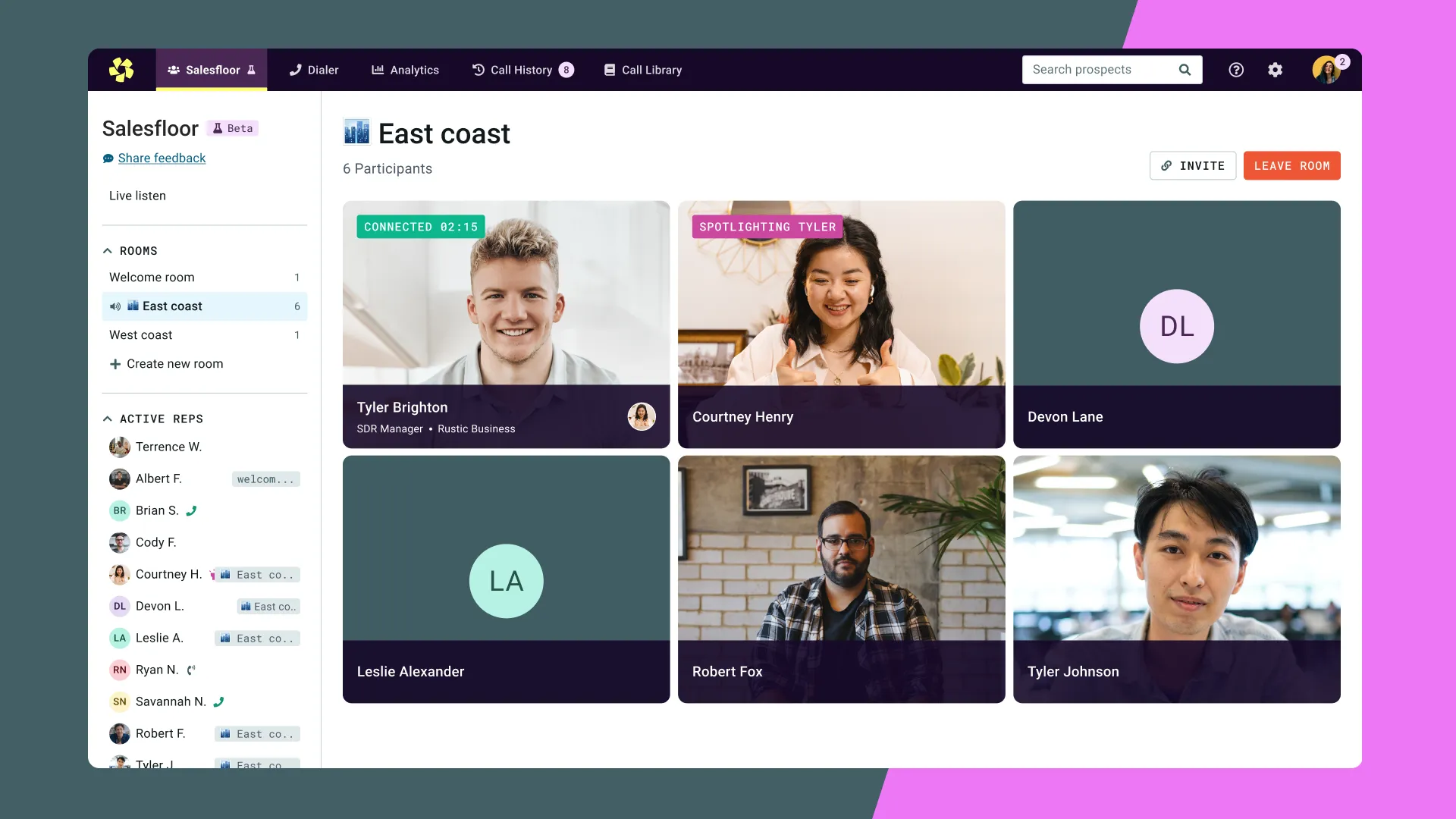
Orum earns its place on this list because it is built specifically to help sales teams create more live conversations, not just more activity. Instead of treating calling as one feature inside a broader engagement platform, Orum turns it into a focused system built around connect rates, rep efficiency, and pipeline creation. Its mix of power dialing, parallel dialing, AI call detection, and coaching tools makes it especially attractive for outbound teams that want more time speaking with buyers and less time navigating voicemails, dead numbers, and admin friction.
That makes Orum a strong fit for SDR organizations where calling remains a primary pipeline channel.
Key Features
- Power and parallel dialing: Gives reps flexible ways to increase call volume and reach more prospects faster
- AI call detection: Detects humans, screeners, voicemails, and dial trees to reduce wasted time between live connects
- Connect-rate intelligence: Helps surface stronger numbers and better calling opportunities so reps spend more time in real conversations
- Voicemail automation and flow handling: Keeps reps moving without breaking rhythm when they hit screeners or voicemail
- AI coaching and manager insights: Turns call activity into clearer feedback loops for both reps and managers
Why It Stands Out
Orum stands out because it is built around a metric many sales teams care about more than raw call volume: live conversations. Plenty of dialers can increase activity, but fewer are designed to reduce the friction that sits between a rep and a real buyer.
Orum focuses on that gap by combining fast dialing, call detection, number health protections, and coaching insight inside one sales-oriented platform. That makes it feel more purposeful than a basic CRM dialer and more focused than a broad contact-center suite. For outbound teams that still depend heavily on cold calling, that specialization can translate into more consistent pipeline creation.
Rep vs. Manager vs. Revenue Lens for Orum
From the rep lens, Orum is valuable because it removes a large amount of the dead time that usually makes cold calling inefficient. Reps spend less time dealing with voicemails, screeners, and bad numbers, and more time getting connected to actual prospects.
From the manager lens, the platform becomes stronger because it does not only increase dialing speed; it also gives managers more visibility into connect quality, rep activity, and where coaching can improve outcomes.
From the revenue lens, Orum makes the most sense for teams where more live conversations lead directly to more meetings and more pipeline. Its value comes from making outbound calling more repeatable, measurable, and scalable, rather than simply adding another dialer to the stack.
Final Verdict
Orum is a strong choice for outbound sales teams that want a calling platform built around live conversation volume, connect quality, and rep productivity. It is especially useful for SDR organizations where cold calling remains a major source of pipeline.
Teams looking for broader enterprise contact-center orchestration may need a heavier platform, but for sales-focused dialing, Orum is one of the sharper options in the market.
7. Talkdesk AI
Talkdesk AI brings a different angle to the conversation. Instead of focusing purely on outbound efficiency, it leans into voice automation and customer interaction intelligence.
It combines call automation with real time analysis, making it useful for both sales and support environments.
Key AI dialer features
- Real time emotion and intent detection during calls
- Automated call routing and follow up summaries
- Centralized dashboard for quality assurance and coaching
How it fits
Talkdesk works well for teams that handle both inbound and outbound conversations at scale. It is especially valuable when understanding customer sentiment is just as important as increasing connection rates.
Bottom line
A strong option for teams that need a balance between automated calling and deep conversation insights, rather than pure outbound speed.
Emerging AI Calling Tools Worth Mentioning
Not every platform fits neatly into the traditional AI dialer category. Some tools extend the value of AI calling software by enhancing conversations instead of focusing on dialing itself.
8. Wingman (by Clari)
.webp)
Wingman acts like a real time assistant during live calls. It is not a predictive dialer AI, but it significantly improves what happens after the call connects.
- Provides live talking points and objection handling suggestions
- Flags risks like competitor mentions or pricing concerns
- Syncs insights into CRM and communication tools
Best for
Teams that want to improve rep performance during conversations rather than increase dialing speed.
9. Regie.ai
Regie.ai focuses on messaging and personalization across outbound channels, including calls.
This digital solution complements automated dialing tools by ensuring reps always have strong, relevant messaging ready.
- Generates personalized talk tracks for cold calls
- Analyzes performance trends to refine outreach
- Integrates with major sales engagement platforms
Best for
SDRs running high volume outbound campaigns who need personalization at scale alongside call automation.
How to Choose the Best AI Dialer for Your Team
Choosing the best AI dialer for sales teams comes down to how your team actually operates on a daily basis. Not every tool fits every workflow, and picking the wrong one can slow things down instead of improving performance.
Here are a couple of things you need to keep in mind while you’re looking to sign up for a dialing solution…
If your focus is high volume outbound
You need speed, efficiency, and strong connection rates.
- Look for a robust parallel dialer or predictive dialer AI
- Prioritize deliverability and spam prevention
- Tools like Convoso or Orum are strong fits
If your focus is conversation quality and coaching
You want reps to improve with every call, not just make more calls.
- Choose AI calling software with built in coaching and feedback
- Look for real time prompts and post call insights
- Platforms like Trellus or Wingman stand out here
If your focus is on enterprise scale and compliance
You need structure, reporting, and governance across large teams.
- Prioritize platforms with compliance controls and deep analytics
- Look for full ecosystem solutions rather than standalone tools
- Five9 and NICE CXone are strong options
If your focus is balanced voice automation
You want both efficiency and insight across customer interactions.
- Look for tools that combine voice automation with analytics
- Prioritize platforms that support both inbound and outbound
- Talkdesk is a solid choice in this category
Try One, Or Try Them All!
The definition of a sales dialer has changed. It is no longer just about dialing faster or increasing call volume. The real advantage now comes from how well a platform improves conversations over time.
The best AI dialers in 2026 are built around three core ideas, reducing wasted effort, increasing meaningful conversations, and continuously improving rep performance.
Some tools focus heavily on speed. Others prioritize compliance or infrastructure. A few are starting to connect everything into a single workflow.
That trend associated with unified systems, where automated calling, coaching, and prospecting work together, is shaping the next phase of outbound sales.
.jpeg)

Power and parallel dialing in your CRM.