Our Top Picks


Sales reps rarely spend their entire day selling.
Most of the work happens before and after every conversation. Prospect research, CRM updates, writing follow up emails, scheduling meetings, updating opportunity stages, looking for buying signals, and keeping dozens of conversations moving all compete for attention. Before long, selling becomes one task squeezed between a long list of administrative responsibilities.
Recent workplace research paints a familiar picture. Office professionals lose more than an hour every day completing repetitive administrative work that artificial intelligence could handle. Email alone consumes well over four hours during an average workday for many professionals. For sales teams juggling dozens of active prospects, those hours add up quickly.
This growing workload explains why AI sales assistants have become one of the fastest growing software categories in revenue technology.
These platforms are not trying to replace salespeople. Good sales conversations still depend on trust, curiosity, timing, and experience. No software can replicate the judgment that helps a salesperson handle objections, uncover buying motives, or recognize when a prospect is ready to move forward.
What modern AI powered sales copilots can do remarkably well is remove everything surrounding those conversations.
They can research prospects before the first outreach, draft personalized follow ups after meetings, summarize calls, update CRM records, surface buying signals, recommend next actions, and keep opportunities moving without forcing reps to spend their evenings catching up on administrative work.
Every hour saved becomes another hour available for prospecting, discovery calls, demos, or customer conversations.
Also Read:
- 10 Super Powerful AI Sales Assistant Platforms in 2026 (Expert Review)
- 9 Best AI Based Sales Assistants for 2026 that Pack a Punch
- Best AI Sales Assistants
That simple value proposition explains why sales organizations of every size are beginning to evaluate Intelligent sales assistant software alongside traditional CRMs and sales engagement platforms.
AI Sales Assistants Are Solving Two Very Different Problems
One reason buyers become confused is because almost every vendor now markets itself as an AI sales assistant.
The category has grown far beyond simple email writers. Today there are two very different groups of products.
The first group focuses on filling your pipeline.
These products help sales development representatives identify prospects, enrich contact data, personalize outreach, launch multi touch campaigns, and book first meetings. Platforms like Apollo.io, Cognism, and outbound focused sales engagement systems belong here.
The second group focuses on helping salespeople after conversations begin.
These products summarize meetings, prepare follow ups, capture CRM notes, recommend next steps, provide coaching during calls, and organize pipeline activity automatically. They spend less time helping you find prospects and far more time helping you convert opportunities into revenue.
Many organizations eventually adopt both categories.
One helps generate conversations.
The other helps move those conversations toward closed business.
If you're asking What are the best AI sales assistants to demo in 2026?, the answer depends heavily on where your team spends the most time every week. Teams struggling with outbound prospecting will prioritize one type of platform. Teams overwhelmed with administrative work after meetings will often see faster returns from another.
How We Evaluated These AI Sales Assistants
Marketing pages make every platform sound revolutionary.
Every vendor promises automation, productivity improvements, intelligent recommendations, and personalized outreach.
Daily usage tells a much different story.
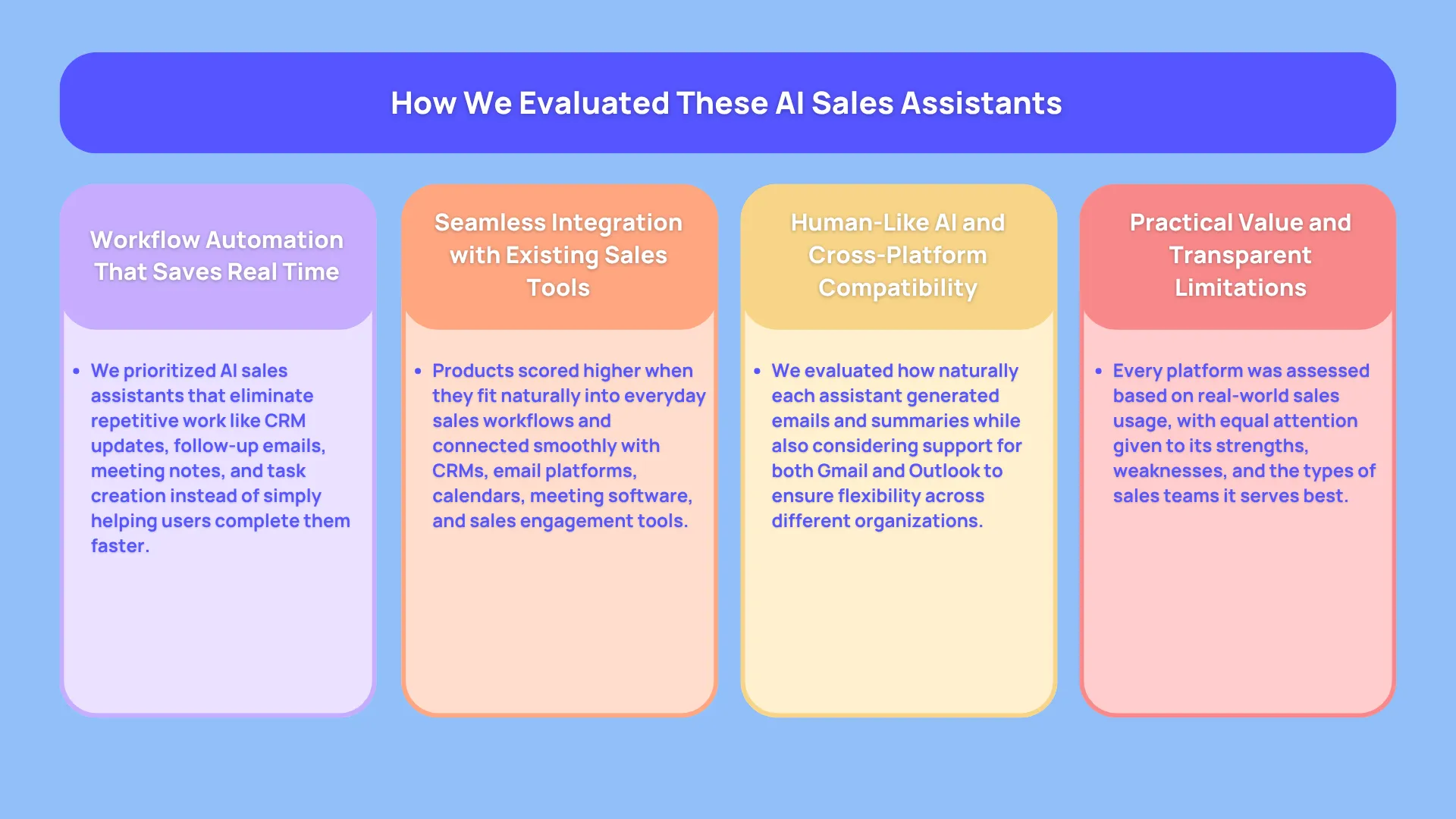
To separate useful software from impressive marketing, every product on this list was evaluated during two weeks of realistic sales activity. Prospect research, outbound sequences, discovery calls, follow up emails, CRM updates, and meeting preparation all became part of the evaluation process.
Several products performed well in one area while creating unnecessary friction somewhere else. Others looked simple at first but quietly removed hours of repetitive work every week.
These were the five areas that mattered most.
Removes Administrative Work Instead of Simply Helping With It
Many products describe themselves as AI assistants.
Some simply generate content after you click a button.
Others complete the work with very little involvement from the salesperson.
That difference matters.
Writing an email draft saves a few minutes.
Preparing the follow up, updating CRM fields, scheduling the next task, logging meeting notes, and surfacing buying signals without constant prompting creates a much larger productivity gain.
The best Automated sales task and workflow assistants quietly complete repetitive work while the rep stays focused on customer conversations.
Fits Naturally Into Existing Sales Workflows
Sales teams already live inside several different systems every day.
- Email.
- CRM.
- Calendar.
- Sales engagement platforms.
- Calling software.
- Meeting tools.
Adding another isolated application rarely improves productivity.
The platforms earning higher scores integrated naturally with existing workflows. Reps spent more time selling and less time switching between browser tabs.
This also answers one of the most common buying questions:
Which AI sales assistants integrate with your existing sales engagement platform?
Products supporting major ecosystems such as Salesforce, HubSpot, Gmail, Outlook, Microsoft Teams, Zoom, and popular dialers naturally ranked much higher.
Works Across Gmail and Outlook
Many vendors quietly prioritize Gmail while offering limited Outlook support.
Large enterprise organizations continue running Microsoft environments, while startups often live entirely inside Google Workspace.
Compatibility across both ecosystems reduces deployment headaches and allows mixed sales organizations to standardize on one platform.
Produces Output That Sounds Human
Prospects immediately recognize generic AI writing.
Follow ups filled with corporate clichés rarely receive replies.
Every drafting feature was evaluated for personalization, context awareness, conversational flow, and writing quality.
Good AI powered sales copilots should sound like experienced salespeople who understand previous conversations.
They should never sound like a template generated five seconds ago.
Honest About Product Limitations
No software solves every problem. Some tools specialize in prospecting; others focus on coaching.
Those limitations deserve as much attention as feature lists because they determine long term adoption inside a sales organization.
1. Apollo.io

Apollo.io continues to be one of the easiest recommendations for outbound sales teams because it combines several products that companies often purchase separately.
Everything lives under one platform.
Sales teams looking for an efficient way to build prospect lists, launch campaigns, and manage outbound activity can move from research to first outreach without jumping across multiple applications.
Over the past couple of years the platform has expanded its artificial intelligence capabilities considerably. Users can generate sequence copy, personalize messaging around different buyer personas, receive engagement insights, and identify accounts showing buying intent.
For organizations building predictable outbound pipelines, Apollo.io remains one of the more complete AI driven sales intelligence and insights platforms available today.
Best For
Outbound sales teams looking for prospect data, enrichment, sequencing, and personalization inside one application.
Key Features
Before looking at the feature list, it helps to understand why Apollo remains popular.
Many competitors perform one task very well. Apollo combines several stages of prospecting inside one environment, reducing the number of separate subscriptions many sales organizations need.
- Large B2B contact and company database with enrichment
- Multi step email and calling sequences
- AI generated outreach personalization
- Buyer intent signals and job change monitoring
- CRM synchronization with Salesforce, HubSpot, and Pipedrive
- Prospect filtering using company size, technology stack, industry, revenue, and hiring activity
Pricing
A free plan is available with limited credits.
Paid plans begin around $49 per user each month.
Limitations
Apollo remains heavily focused on generating pipeline.
Its email writing performs well for large outbound campaigns, although experienced sellers will usually edit AI generated messages before sending them.
Deliverability can also become less predictable for organizations sending extremely high volumes of outbound email.
Teams looking for meeting summaries, CRM automation after sales calls, coaching, and ongoing deal management will usually pair Apollo with another platform that specializes in post meeting productivity.
2. Trellus
Most AI sales assistants either help you before the conversation starts or after the meeting ends.
Very few improve what happens during the conversation itself.
That is where Trellus earns its place near the top of this list.
The platform was built around a simple idea. Salespeople should spend less time managing technology and more time speaking with qualified prospects. Every feature supports that objective. Rather than asking reps to piece together several disconnected applications, it combines outbound calling, prospect research, AI coaching, workflow automation, and post call productivity into one workspace.
For outbound teams making dozens of calls every day, those small productivity gains quickly compound.
- One less minute searching for account information.
- Another minute saved writing follow up emails.
- Several minutes saved updating CRM records.
Multiply that across fifty or sixty conversations in a week and the time savings become meaningful.
This makes it much more than another dialer with artificial intelligence attached to the product description.
It functions as one of the more complete AI sales assistants for outbound sales organizations that want help before, during, and after every customer conversation.
Another area where the platform stands out is context.
Good conversations rarely happen because someone memorized a script. They happen because the salesperson understands the account, listens carefully, adapts naturally, and responds with confidence.
The workspace brings together account research, conversation guidance, live coaching, and post call recommendations so reps spend less mental energy switching between browser tabs and more attention listening to prospects.
For growing SDR teams, this also creates a valuable coaching environment. New hires receive guidance while experienced reps continue refining their conversations without managers reviewing every single recording manually.
When people ask Can AI sales assistants help reps win more deals without replacing human judgment?, this is exactly the kind of platform that answers that question well.
Artificial intelligence handles repetitive work.
Salespeople handle relationships.
That balance produces better conversations without removing the human side of selling.
Best For
Sales development teams and outbound organizations that want one workspace for calling, coaching, prospect research, workflow automation, and meeting generation.
Key Features
The platform combines several capabilities that sales teams would normally spread across multiple applications. Bringing everything together reduces context switching throughout the day while helping reps stay focused on conversations rather than administrative work.
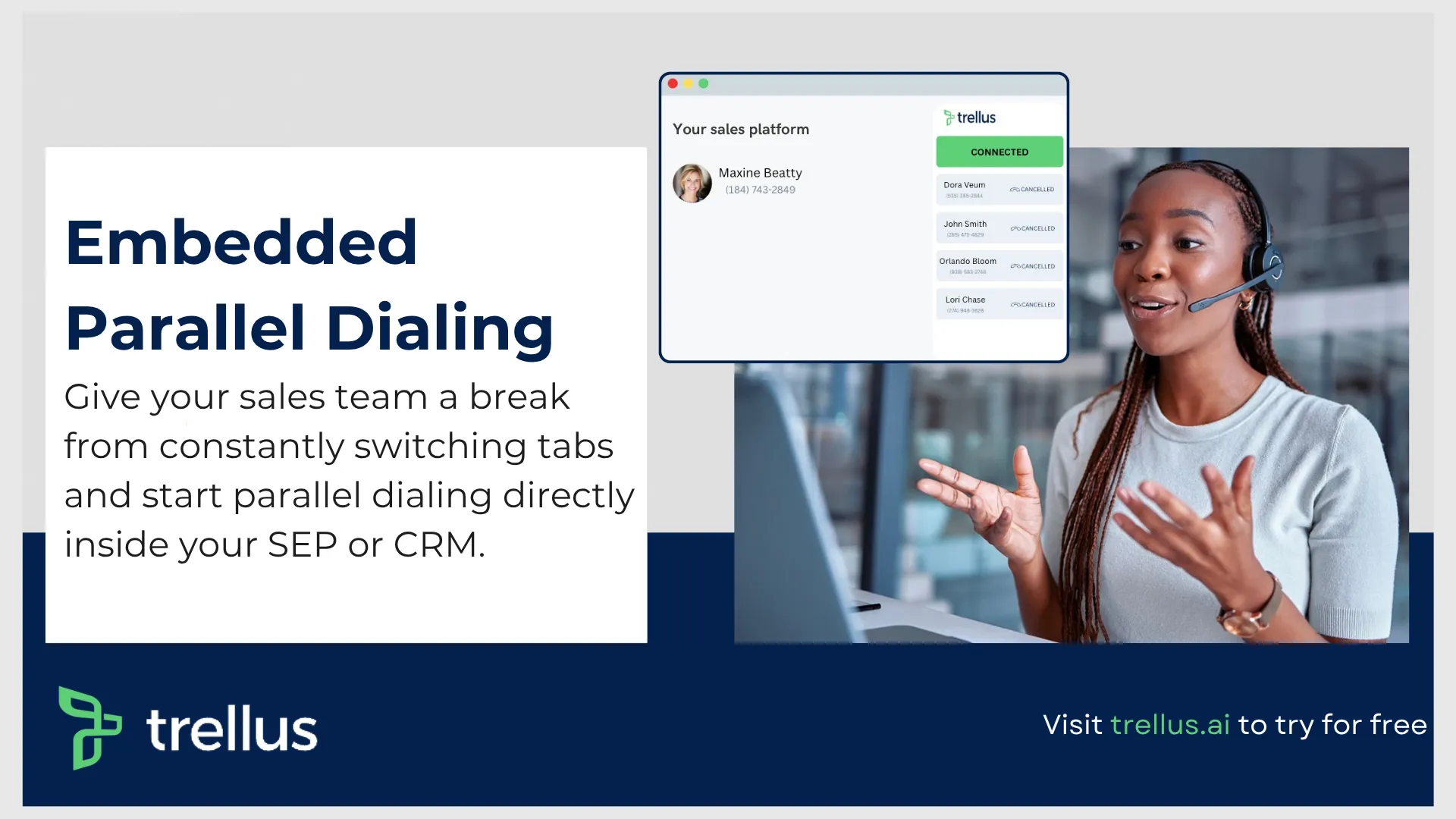
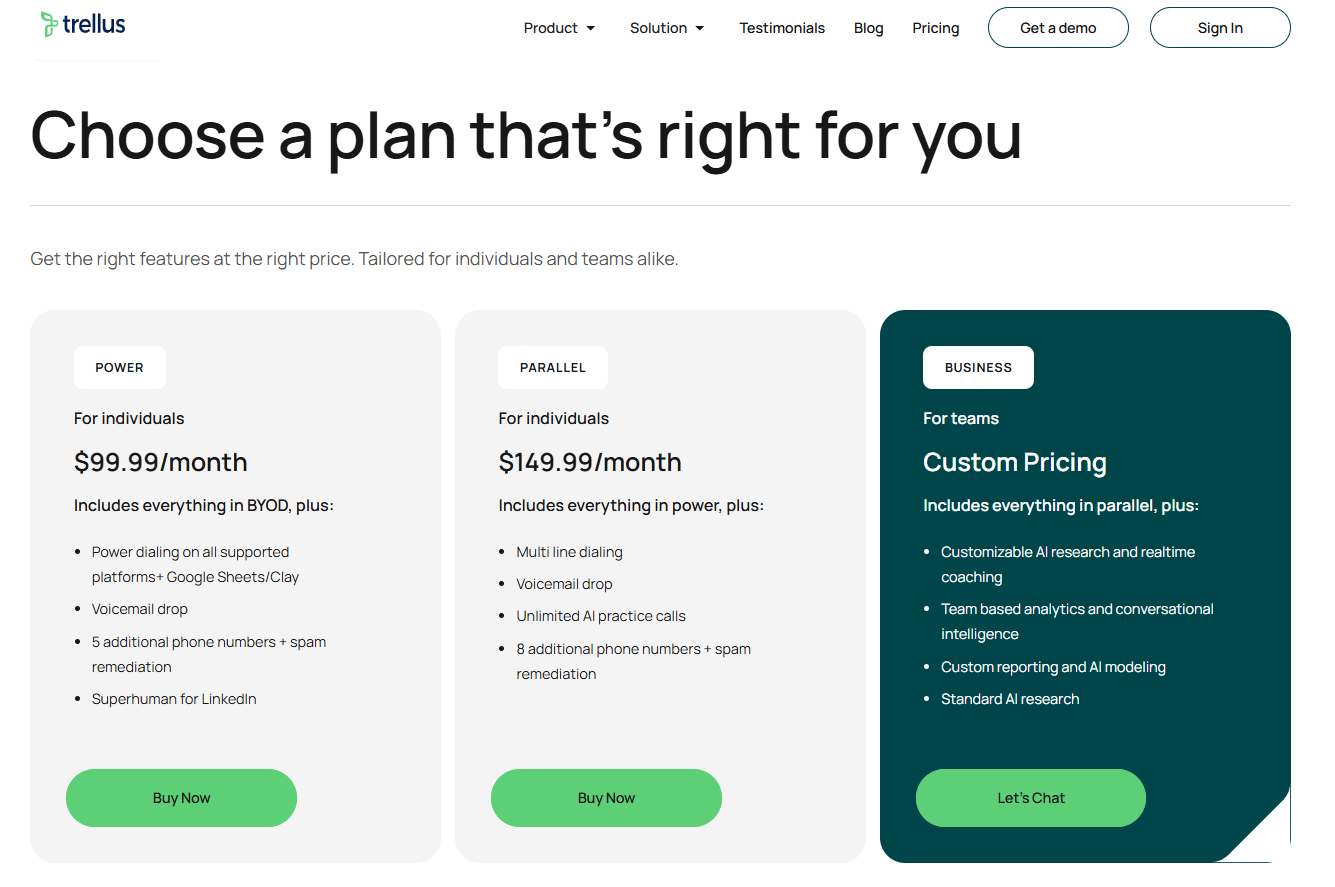
- AI powered parallel dialing to increase live conversations
- Real time coaching during outbound calls
- AI generated prospect research before every conversation
- Personalized talking points based on account context
- AI practice calls for onboarding and ongoing coaching
- Smart voicemail drop
- Automatic call summaries and follow up recommendations
- Advanced call analytics for managers
- Number health monitoring to improve outbound performance
- CRM synchronization with popular sales platforms
- LinkedIn integration that keeps prospect research inside the calling workflow
Several of these features work together particularly well. The salesperson can immediately move to the next conversation instead of spending fifteen minutes documenting everything that just happened.
Those small workflow improvements are exactly why many organizations continue investing in Automated sales task and workflow assistants.
Why It Fits This List
This platform connects several of those activities into one outbound workflow, making it particularly attractive for SDR organizations where speed, consistency, and coaching all matter at the same time.
It also contributes to another important question buyers frequently ask.
How do AI sales assistants improve rep productivity and deal close rates?
The answer usually has very little to do with replacing salespeople. Better productivity comes from reducing repetitive work. More conversations happen because preparation takes less time.
Managers coach more efficiently because important moments are already highlighted.
Reps spend more hours speaking with buyers instead of documenting conversations. As a result, those improvements often produce better pipeline coverage long before anyone starts measuring closed revenue.
Pricing
Limitations
The platform delivers the greatest value for outbound organizations making high volumes of customer conversations.
Companies searching exclusively for meeting transcription or CRM reporting may find more specialized products that focus entirely on those individual areas.
3. HubSpot Breeze AI

HubSpot already serves as the central workspace for thousands of sales organizations.
Adding artificial intelligence directly inside the CRM makes adoption much easier because salespeople do not need another application sitting beside everything else they already use.
That is the biggest advantage of HubSpot Breeze AI.
Rather than introducing a completely separate assistant, the intelligence appears throughout the CRM where salespeople already spend their day. Opportunity records, emails, contacts, tasks, and pipeline updates all become smarter without forcing users to learn an entirely new workflow.
The platform continues expanding its capabilities across prospecting, lead qualification, deal summaries, predictive scoring, and follow up generation.
One particularly useful feature pulls information from previous emails, notes, and opportunity history before drafting follow up messages. That context produces emails that feel much closer to what an experienced account executive would normally write.
Sales managers also benefit because opportunity summaries become much easier to review during pipeline meetings.
For organizations already committed to HubSpot, the transition feels almost invisible.
Best For
Companies already running sales operations inside HubSpot that want built in artificial intelligence throughout the CRM experience.
Key Features
The biggest benefit comes from having intelligence available exactly where salespeople already work every day. Nothing feels disconnected from the rest of the sales process, making adoption much easier across larger teams.
- AI generated deal summaries
- Suggested next actions for active opportunities
- Breeze Prospecting Agent
- Personalized email drafting using CRM history
- Predictive lead scoring
- Automated enrichment of customer information
- Sales pipeline insights inside HubSpot
- AI assistance throughout contacts, deals, and company records
For managers, these features reduce time spent reviewing every individual opportunity.
For sales representatives, they remove much of the repetitive writing and administrative work that slowly fills every afternoon.
Pricing
Breeze capabilities are available across several HubSpot plans.
Most advanced sales functionality becomes available through Sales Hub, beginning around $90 per user each month.
Limitations
The platform delivers its greatest value inside the HubSpot ecosystem.
Organizations using Salesforce, Microsoft Dynamics, or other CRMs will not experience the same seamless workflow.
Most features also remain user initiated. The assistant appears while salespeople work inside HubSpot rather than completing large amounts of background activity independently.
4. Salesforce Agentforce
Salesforce has spent years developing artificial intelligence through Einstein.
Agentforce expands that vision considerably.
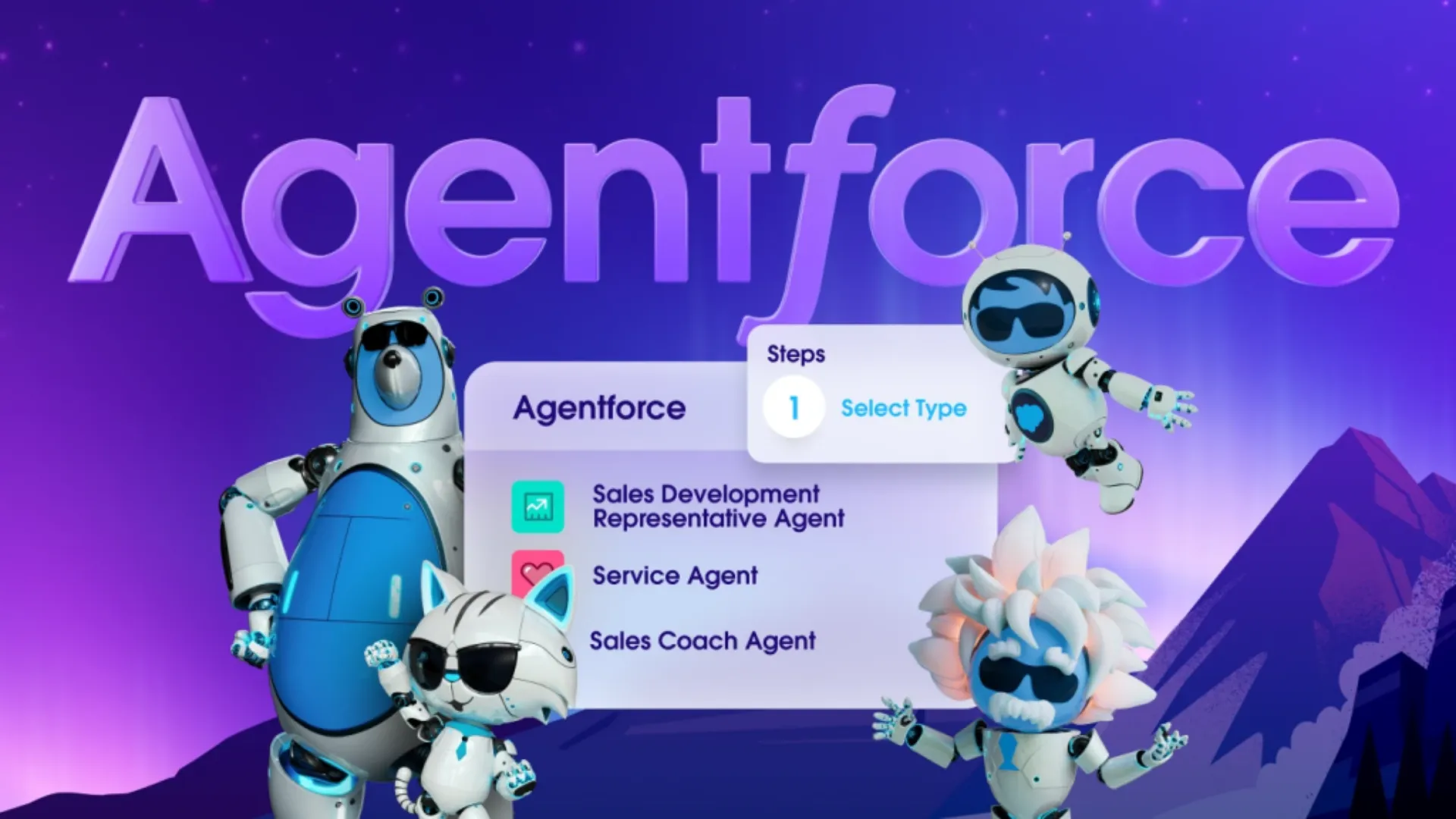
Rather than simply recommending actions, the platform introduces autonomous agents capable of completing many repetitive CRM tasks across the sales process.
Large enterprise organizations often struggle with CRM maintenance.
Agentforce helps reduce many of those issues through intelligent automation built directly inside Salesforce. Reps receive opportunity insights, suggested emails, conversation summaries, lead scoring, and automated record updates without leaving the CRM.
Managers benefit from cleaner data while salespeople spend less time maintaining pipeline hygiene.
Companies already invested heavily in Salesforce gain another advantage.
No major migration project; no complicated synchronization between several systems.
Everything operates inside the same environment where customer information already exists.
That seamless experience makes Salesforce one of the leading Intelligent sales assistant software options for enterprise revenue organizations.
Best For
Enterprise sales teams already running Salesforce that want advanced automation, predictive insights, and AI assistance embedded throughout their CRM.
Key Features
Salesforce continues expanding its artificial intelligence portfolio beyond forecasting and reporting. Modern Agentforce capabilities support sales representatives throughout much larger portions of the customer journey.
- AI lead scoring
- Opportunity health analysis
- Automated follow up drafting
- Agentforce autonomous CRM actions
- Einstein Conversation Insights
- Pipeline recommendations
- Predictive forecasting
- Extensive administrative customization
- Enterprise grade workflow automation
Organizations asking How to implement AI sales assistants to accelerate rep ramp and reduce training time? often begin with systems like Salesforce because new hires receive structured guidance inside the same CRM they use every day.
Conversation insights, opportunity recommendations, and automated workflows reduce the amount of manual coaching managers need during onboarding.
Pricing
Einstein capabilities appear across multiple Salesforce editions.
Agentforce follows a separate consumption based pricing model beginning around $2 per conversation, with enterprise bundles also available.
Limitations
Salesforce remains one of the most configurable CRM platforms available.
That level of customization also means successful deployments require experienced administrators and clean customer data.
Organizations without dedicated CRM resources may need additional implementation time before seeing the full value of Agentforce.
5. Cognism
Finding accurate prospect data has never been easy.
Finding accurate prospect data while staying compliant with European privacy regulations is even harder.
That is the problem Cognism was built to solve.
Many prospecting databases perform well in North America, but sales teams expanding into the United Kingdom and Europe often discover gaps in contact quality, mobile numbers, and compliance. Cognism has spent years building its reputation around verified B2B data, GDPR compliant prospecting, and high quality mobile numbers that outbound teams can confidently use.
The platform has also invested heavily in artificial intelligence.
Its AI Sales Companion analyzes successful customer accounts, identifies patterns across closed business, and recommends similar companies worth pursuing. Rather than starting every prospecting session from scratch, sales teams receive account recommendations based on characteristics already producing revenue.
Live buying signals make those recommendations even more valuable.
Funding announcements, hiring activity, executive changes, company growth, and intent signals help sales teams prioritize accounts showing higher buying potential. Cognism also partners with Bombora for third party intent data, giving users another layer of insight before reaching out.
For organizations selling internationally, this combination of verified data and AI driven sales intelligence and insights creates a much more efficient prospecting workflow.
Best For
Sales organizations targeting European markets that need verified contact data, GDPR compliant prospecting, and intelligent account recommendations.
Key Features
Prospecting platforms succeed when they reduce research time while improving data quality. Cognism performs particularly well across both areas, helping sales representatives spend less time validating information before launching outreach.
- GDPR compliant B2B contact database
- Verified mobile numbers and direct dials
- Browser extension for LinkedIn and company websites
- AI Sales Companion for ideal customer profile recommendations
- Intent signals through Bombora
- Job change, hiring, and funding alerts
- CRM synchronization with leading sales platforms
- International contact coverage across major business markets
The browser extension deserves special mention.
Sales representatives researching companies on LinkedIn can surface verified contact information without leaving the page. Small workflow improvements like this reduce unnecessary context switching throughout the prospecting process.
Pricing
Custom pricing based on data requirements, geographic coverage, and team size.
Limitations
Cognism focuses heavily on prospecting and data quality.
Organizations searching for meeting summaries, coaching, CRM automation, or post call productivity will usually combine it with another platform designed for those responsibilities.
6. Salesken
Every sales call contains dozens of small moments that influence the outcome.
Experienced managers often hear those moments during call reviews. The difficulty is that coaching usually happens days after the conversation has already ended.
Salesken changes that experience.
Instead of reviewing calls after the fact, the platform listens during live conversations and provides guidance while the discussion is still happening. Reps receive prompts, objection handling suggestions, recommended questions, and conversation insights without waiting for a manager to review the recording later.
This makes Salesken one of the more valuable AI sales coaching and guidance tools available today.
New salespeople benefit from continuous support throughout live customer conversations, while experienced account executives receive reminders that help maintain consistency across larger sales organizations.
The platform also analyzes conversations after meetings finish, producing summaries, identifying trends, and highlighting coaching opportunities for managers.
For companies where most selling happens over the phone, those coaching improvements often produce measurable gains across the entire sales team.
Best For
Organizations making high volumes of discovery calls, product demonstrations, and qualification conversations that want live coaching during customer interactions.
Key Features
Salesken concentrates almost entirely on helping representatives perform better while speaking with prospects. Every feature supports better conversations rather than prospect research or lead generation.
- Real time conversation coaching
- Objection handling suggestions
- Conversation intelligence
- Automatic call analysis
- Follow up recommendations
- Coaching dashboards for managers
- Conversation scoring
- Sales performance analytics
One area where the software performs particularly well is onboarding.
New hires receive immediate guidance during customer conversations, helping managers scale coaching across larger SDR teams.
For companies asking How to implement AI sales assistants to accelerate rep ramp and reduce training time?, platforms like Salesken provide a practical answer because learning continues during live selling rather than only inside formal training sessions.
Pricing
Custom enterprise pricing.
Limitations
Salesken focuses almost entirely on conversation performance.
It does very little prospect sourcing, lead enrichment, or outbound list building. Organizations needing full funnel automation will often pair it with prospecting software such as Apollo or Cognism.
7. Otter.ai
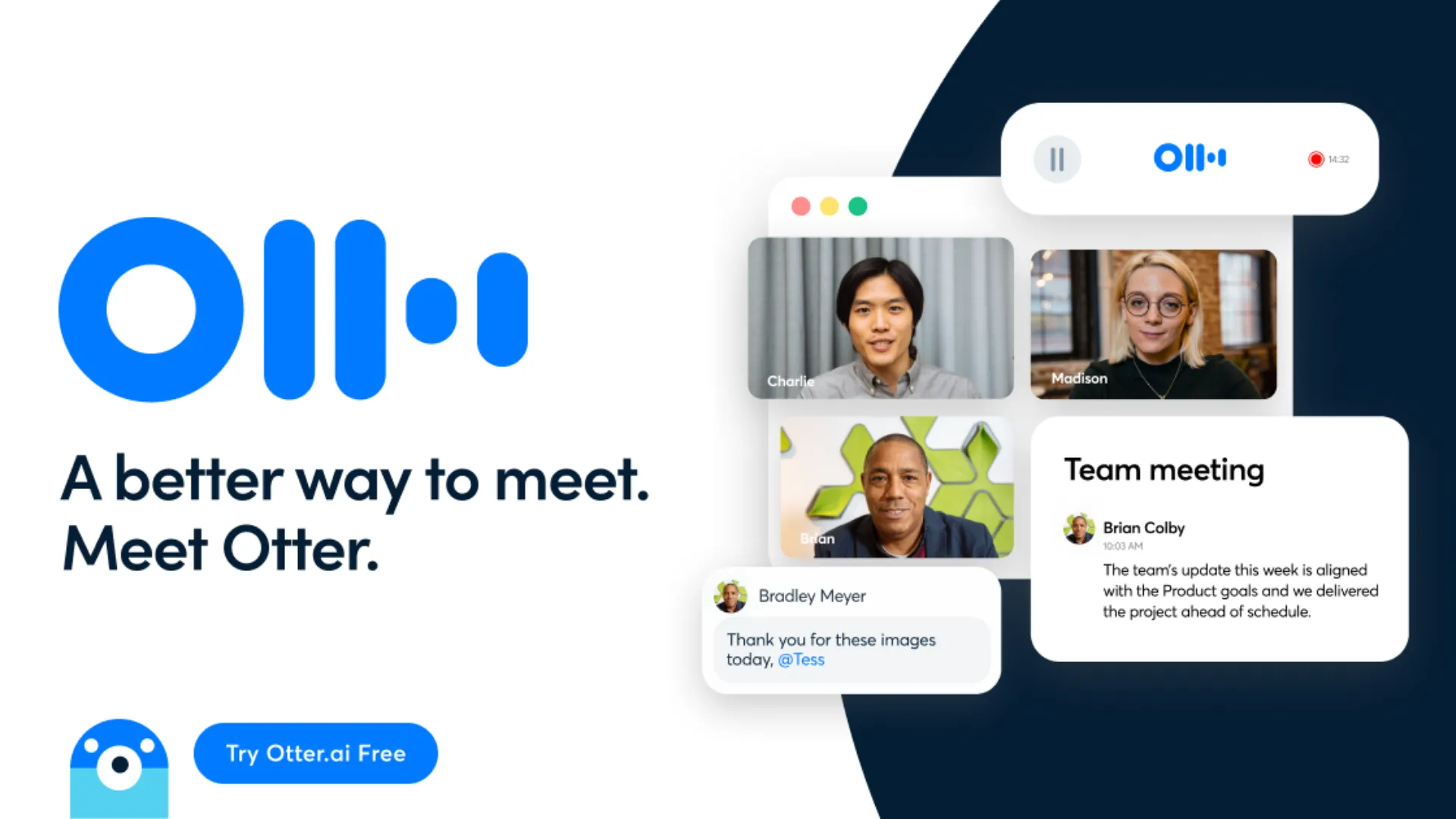
The platform records meetings, creates searchable transcripts, generates summaries, and organizes conversations into an easily searchable knowledge base. Sales representatives no longer need to divide their attention between listening carefully and typing detailed notes throughout customer meetings.
Everything becomes searchable afterward.
While Otter.ai was not originally designed specifically for sales organizations, it has gradually expanded its integrations with popular CRM platforms, making it much more useful for revenue teams.
For companies searching for dependable AI sales assistants without investing in larger enterprise software suites, Otter.ai continues to deliver excellent value.
Best For
Sales teams looking for reliable meeting transcription, searchable notes, and AI generated summaries at an affordable price.
Key Features
Meeting assistants save much more than note taking time.
They improve information accuracy, reduce forgotten action items, and give every stakeholder access to the same customer conversation after the meeting finishes.
Otter.ai supports that workflow through several practical capabilities.
- Live meeting transcription
- AI generated summaries
- Search across conversations
- Speaker identification
- Keyword search
- Salesforce and HubSpot integrations on higher plans
- Meeting history organized in one searchable workspace
- Shared notes for team collaboration
One benefit that often goes unnoticed is handoffs.
Account executives, customer success managers, and implementation teams can review complete meeting histories without requesting separate internal briefings.
Pricing
Free plan available.
Paid subscriptions begin with additional transcription limits, collaboration features, and CRM integrations.
Limitations
Otter.ai focuses on transcription and meeting documentation.
It provides far less sales specific intelligence than dedicated AI powered sales copilots built for coaching, forecasting, or opportunity management.
8. tl;dv
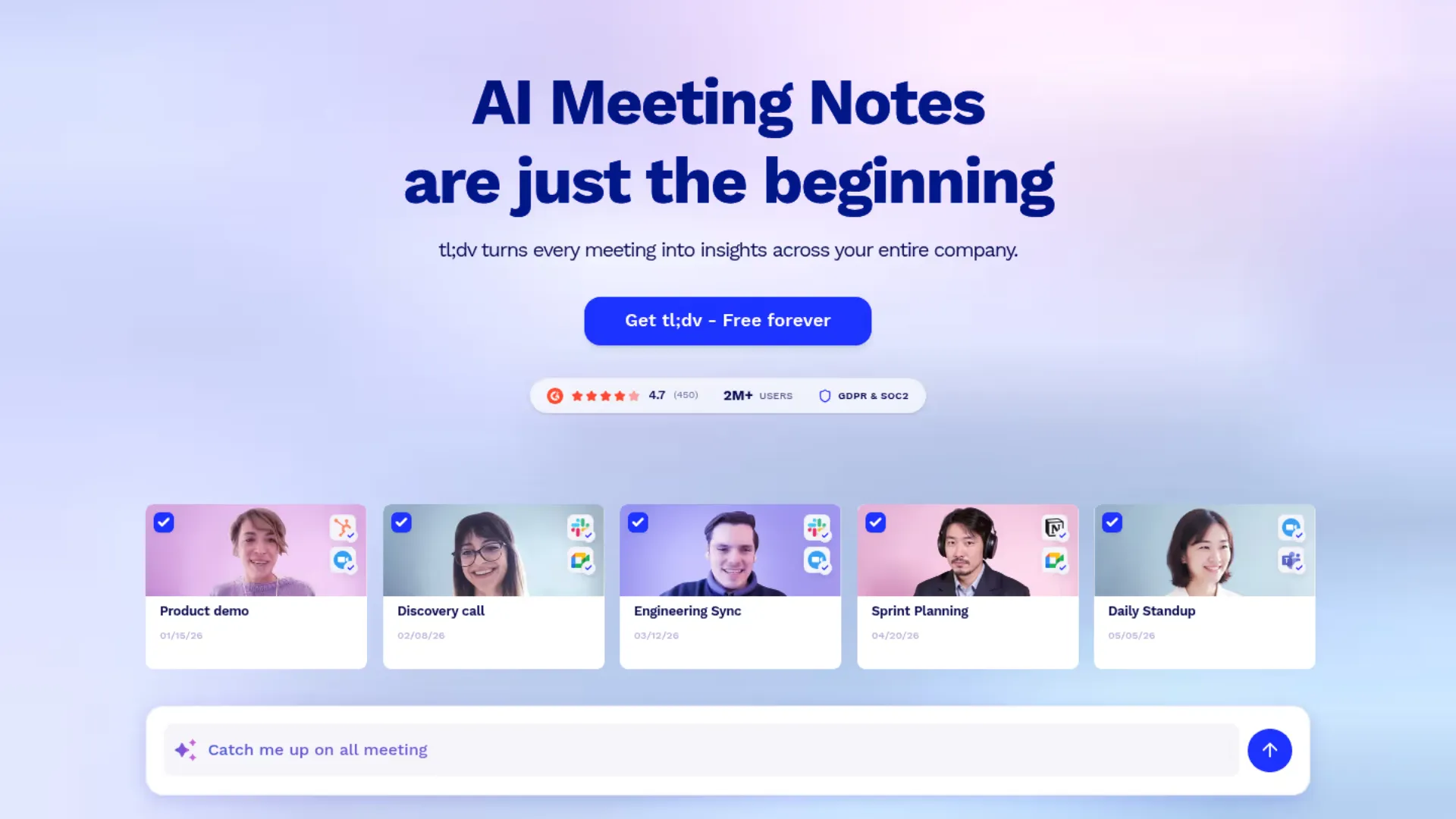
Although it started as an AI meeting assistant, the platform has steadily evolved into one of the more capable AI sales assistants for teams whose work revolves around discovery calls, product demonstrations, and customer meetings.
Rather than producing a transcript and stopping there, tl;dv organizes conversations into useful business knowledge. Every meeting becomes searchable, shareable, and connected to your sales workflow.
Managers can identify recurring objections across multiple deals.
Product teams can review customer feedback without attending every meeting.
Sales leaders can coach representatives using real customer conversations rather than relying on memory.
That broader visibility makes the platform valuable far beyond note taking.
Another area where tl;dv performs particularly well is CRM automation.
Meeting summaries, action items, and customer context flow into platforms such as HubSpot, Salesforce, and Pipedrive, reducing the amount of manual work salespeople complete after every conversation.
When buyers ask, Which AI sales assistants integrate with your existing sales engagement platform?, tl;dv consistently appears near the top because of its extensive CRM support and thousands of integrations through Zapier and its API.
Best For
Sales organizations running frequent discovery calls, demos, and customer meetings that want searchable conversations, coaching insights, and automated CRM updates.
Key Features
The platform combines several capabilities that make post meeting work considerably easier for sales representatives and managers alike. Rather than treating each meeting as an isolated event, it connects conversations across the entire pipeline.
- AI meeting summaries
- Automatic transcription in more than thirty languages
- Multi meeting insights across accounts
- Sales coaching playbooks
- Timestamped clips for sharing important moments
- CRM synchronization with HubSpot, Salesforce, and Pipedrive
- Bot free recording option
- More than 5,000 integrations through Zapier and API connections
- Search across previous customer conversations
- Action item extraction
One feature worth highlighting is multi meeting analysis.
Managers can identify recurring competitor mentions, pricing objections, product questions, and customer concerns across hundreds of conversations. Those insights help coaching sessions become much more focused because patterns appear quickly across the sales organization.
This makes tl;dv one of the more useful AI driven sales intelligence and insights platforms for teams that want better visibility into customer conversations without investing in a much larger enterprise revenue intelligence suite.
Pricing
A generous free plan makes it easy to evaluate the platform before upgrading.
Paid plans unlock additional integrations, coaching features, analytics, and administration controls.
Limitations
tl;dv concentrates heavily on meetings and conversation intelligence.
Companies looking for outbound prospecting, lead databases, or sales engagement automation will still need complementary software for those parts of the sales process.
9. People.ai
Sales leaders rarely struggle because they lack data.
The platform captures sales activity across emails, meetings, phone calls, and customer interactions, then connects everything back to accounts, opportunities, and pipeline performance.
Rather than serving individual sales representatives, the software provides visibility across the entire revenue organization.
Managers gain a clearer understanding of account coverage.
Revenue operations teams identify gaps before deals begin slipping.
Executives receive forecasting insights supported by complete customer activity rather than incomplete CRM records.
This makes People.ai one of the more valuable Intelligent sales assistant software solutions for organizations managing large sales teams where pipeline visibility carries just as much importance as prospecting.
Although representatives also benefit from automatic activity capture, the platform delivers its biggest impact at the leadership level.
Best For
Enterprise sales organizations, revenue operations teams, and sales leaders looking for comprehensive activity capture, forecasting support, and pipeline visibility.
Key Features
People.ai focuses on connecting customer activity to business outcomes. Every interaction contributes to a more complete understanding of deal health across the organization.
- Automatic capture of emails, meetings, and phone activity
- Account and opportunity mapping
- Revenue intelligence dashboards
- Deal health analysis
- Account coverage insights
- Pipeline visibility
- Forecasting support
- CRM synchronization
- Activity analytics for sales leadership
For organizations with hundreds of opportunities moving simultaneously, these insights help managers identify deals requiring attention before problems become obvious in quarterly forecasting meetings.
Pricing
Custom enterprise pricing.
Limitations
People.ai concentrates on reporting, forecasting, and revenue intelligence.
Sales representatives looking for prospect databases, outbound sequencing, or live conversation coaching will usually pair it with other AI powered sales copilots designed for day to day selling activities.
Choosing the Right AI Sales Assistant
No single platform will suit every sales organization. Some teams spend most of their day prospecting, whereas others spend hours following up after customer meetings.
That is why the first question should never be, "Which product has the most AI features?" A much better question is, "Where does our team lose the most time every week?"
If prospect research consumes hours every day, Apollo.io or Cognism deserve serious consideration.
If outbound calling sits at the center of your sales process, a platform like Trellus provides a much broader workspace that combines prospect research, coaching, workflow automation, and productivity inside one environment.
If your entire revenue organization already operates inside HubSpot or Salesforce, their native artificial intelligence capabilities remove friction because sales representatives continue working inside familiar systems.
Companies running dozens of customer meetings every week may see faster returns from tools like tl;dv or Otter.ai, while enterprise revenue teams needing complete pipeline visibility will appreciate what People.ai brings to forecasting and account management.


Power and parallel dialing in your CRM.