Our Top Picks


Enterprise sales teams have never had more technology available to support outbound prospecting.
Each new year introduces another platform promising better personalization, smarter automation, higher reply rates, and more booked meetings. Yet many SDR organizations continue to spend hours every day researching prospects, updating CRMs, switching between applications, and manually managing follow ups.
Industry research reflects both the opportunity and the growing interest in this category. MarketsandMarkets estimates the worldwide SDR market reached USD 4.12 billion in 2025 and projects it to grow to USD 15.01 billion by 2030.
At the same time, several industry reports suggest annual sales based platform churn ranges between 50 and 70 percent, largely because many organizations expect complete automation while discovering that successful outbound still depends on thoughtful workflows, quality data, and well designed processes.
The top sales engagement platforms for enterprise SDR teams have evolved far beyond simple sequencing tools. Modern platforms combine prospecting data, CRM synchronization, AI assisted writing, conversation intelligence, workflow automation, and analytics into a single workspace. Some focus on helping SDRs work more efficiently, while others aim to automate significant parts of the outbound motion.
Finding the right platform depends on far more than feature comparisons. Enterprise buying decisions usually involve CRM compatibility, sales process maturity, implementation effort, reporting requirements, and the level of control sales leaders want over every stage of prospect engagement.
If your team has been asking What are the best sales engagement platforms for enterprise SDR teams in 2026?, the answer depends on your outbound strategy, existing technology stack, and the amount of automation your organization is comfortable introducing into day to day prospecting.
How We Evaluated These Sales Engagement Platforms

Looking at marketing pages rarely tells the complete story.
Almost every vendor promises higher productivity, AI powered personalization, automated outreach, and better conversion rates. Most enterprise sales leaders have learned that impressive demonstrations do not always translate into smoother workflows once hundreds of SDRs begin using the platform every day.
Rather than comparing long feature checklists, we evaluated every solution from the perspective of an SDR manager, a RevOps leader, and a sales executive responsible for pipeline generation.
We started with the sales motion
Not every organization runs outbound in the same way.
Some companies have hundreds of SDRs working entirely inside Salesforce. Others depend heavily on HubSpot, while growing organizations often prioritize simplicity over deep customization.
Before evaluating software, we identified the environments each platform naturally supports.
This included organizations running:
- Large Salesforce driven outbound organizations
- HubSpot centered revenue teams
- High volume prospecting operations
- Multi regional SDR organizations
- Growth stage companies consolidating multiple sales tools
- Smaller teams searching for a combined B2B prospecting and pipeline generation platform
This made it easier to understand where every platform delivers the most value.
We evaluated everyday SDR workflows
The biggest differences rarely appear during product demonstrations.
They appear on Monday morning when dozens of SDRs begin working through hundreds of prospects.
We evaluated how each platform performs throughout an average working day.
Areas we paid close attention to included:
- How SDRs prioritize daily activities
- Sequence creation and management
- Email personalization workflows
- Call execution
- Meeting scheduling
- Prospect research
- CRM updates
- Follow up automation
- Manager visibility into rep activity
This provided a much clearer picture than comparing individual features.
CRM alignment mattered just as much as automation
Enterprise teams depend on accurate CRM data.
Even the most advanced enterprise sales sequencing software creates unnecessary work if activities fail to synchronize correctly or reporting becomes unreliable.
Every platform was evaluated for:
- Salesforce integration depth
- HubSpot synchronization
- Activity logging accuracy
- Forecast reporting compatibility
- Contact and opportunity updates
- Workflow automation reliability
Organizations investing in SDR outreach automation software need automation that improves CRM quality rather than creating more administrative work.
The Best Sales Engagement Platforms for Enterprise SDR Teams
Enterprise SDR organizations often ask How do sales engagement platforms improve SDR productivity and meeting booking rates?
The answer usually comes down to reducing repetitive work while helping reps spend more time speaking with qualified prospects. The best platforms automate administrative tasks, organize outreach, surface buying signals, and keep CRM records accurate without creating extra complexity.
Below are our detailed recommendations, starting with two established enterprise leaders before moving into newer AI focused platforms.
1. Outreach

Best for: Enterprise revenue organizations that need advanced outbound process management and highly structured prospect engagement.
Outreach has remained one of the most recognizable names in enterprise sales engagement because it focuses heavily on execution discipline.
Large sales organizations often struggle with inconsistent outreach. Different SDRs create different messaging, follow different cadences, forget follow ups, and update CRM records differently. Outreach brings those activities into a standardized workflow that managers can monitor and optimize.
The platform combines multichannel sequencing, CRM synchronization, workflow automation, AI assisted messaging, reporting, and analytics inside one environment. For organizations managing hundreds of outbound representatives, consistency becomes just as valuable as automation.
Its sequence builder remains one of the most mature products available for enterprise prospecting.
Core capabilities
Outreach includes a broad collection of features designed around structured outbound execution.
Key capabilities include:
- Advanced multichannel sequence builder
- Email, phone, LinkedIn, and SMS engagement
- AI assisted email drafting
- Automatic reply detection
- Out of office handling
- CRM activity synchronization
- Built in meeting scheduling
- Call logging
- Messaging A/B testing
- Performance reporting across teams
- Workflow automation for repetitive prospecting tasks
These capabilities help standardize outreach across large revenue organizations while giving managers visibility into every stage of outbound execution.
Where Outreach performs well
Enterprise organizations running mature outbound programs usually gain the most value.
It performs particularly well for companies requiring strict process governance, consistent messaging, detailed reporting, and standardized sales cadences across multiple regions.
Organizations looking for proven sales cadence tools for enterprise teams continue to place Outreach near the top of their evaluation lists because of its depth and operational maturity.
Tradeoffs worth considering
Outreach offers extensive customization, although implementation can require significant planning.
Large deployments often involve RevOps teams, CRM administrators, and sales leadership working together before workflows become fully optimized.
Smaller organizations may also find that many enterprise capabilities exceed their immediate requirements.
CRM integration
Salesforce remains its deepest integration, although HubSpot support continues to improve.
Companies already operating mature CRM environments generally experience the smoothest implementation.
Verdict
Outreach continues to rank among the top sales engagement platforms for enterprise SDR teams because of its structured workflow design, enterprise reporting, and scalable outbound execution.
2. Salesloft
Best for: Enterprise SDR and account development teams looking for structured sales execution, conversation visibility, and predictable outbound workflows.
Salesloft has earned its place among the top sales engagement platforms for enterprise SDR teams because it focuses on helping sales organizations build repeatable outbound processes. Rather than relying on individual selling styles, the platform gives every representative a consistent framework for prospecting across email, phone calls, LinkedIn, and other engagement channels.
For enterprise sales leaders, consistency often becomes one of the biggest contributors to pipeline growth. New hires ramp faster when everyone follows proven cadences. Managers can coach more effectively because every activity is tracked inside the same workflow. RevOps teams gain cleaner reporting because outreach data stays connected to CRM records throughout the sales cycle.
The platform has gradually expanded beyond traditional sequencing, introducing AI assisted content creation, conversation intelligence, forecasting capabilities, and performance analytics. Despite these additions, its primary strength continues to be helping SDR teams execute organized outbound campaigns at scale.
Companies comparing Outreach vs Salesloft: which sales engagement platform is better for enterprise SDRs? will often discover that both products solve similar problems while emphasizing slightly different workflow experiences. Outreach generally appeals to organizations looking for deeper workflow governance, while Salesloft often receives praise for its user friendly interface and coaching capabilities.
Core capabilities
Salesloft provides an extensive collection of features designed to help enterprise sales teams maintain consistent prospect engagement throughout every stage of the outbound process.
Some of its most valuable capabilities include:
- Multi step cadence builder for email, phone calls, LinkedIn, and additional communication channels
- Intelligent task queues that organize daily outreach activities
- Automatic CRM activity logging
- AI assisted email drafting and messaging suggestions
- Conversation recording and transcription
- Coaching insights for managers
- Team performance dashboards
- Sequence reporting and engagement analytics
- Calendar scheduling
- Salesforce and HubSpot synchronization
Together, these capabilities reduce manual administrative work while giving managers greater visibility into rep performance.
Where Salesloft performs well
Salesloft performs particularly well inside organizations that already have well defined outbound processes.
Large SDR organizations benefit from the structured task management system because representatives always know which prospect should receive attention next. Managers gain access to detailed engagement reporting, making coaching sessions much more productive.
It also fits organizations searching for mature enterprise sales sequencing software that balances automation with human involvement throughout the sales process.
Companies looking for dependable SDR outreach automation software without introducing complete AI autonomy often place Salesloft high on their shortlist.
Tradeoffs to consider
Like many enterprise platforms, Salesloft delivers its best results after careful implementation.
Cadences, reporting dashboards, CRM mappings, and workflow automation all require planning before teams experience the full value of the platform.
Organizations expecting fully autonomous prospecting should also remember that Salesloft remains centered around empowering sales representatives rather than replacing them. AI assists the workflow, but SDRs continue making most engagement decisions.
CRM integration
Salesloft offers mature Salesforce integration alongside reliable HubSpot connectivity.
Sales organizations with clean CRM data typically experience smooth synchronization across activities, contacts, meetings, and reporting dashboards. RevOps teams also benefit from strong visibility into outbound performance without requiring multiple reporting systems.
Verdict
Salesloft continues to rank among the best sales cadence tools for enterprise teams because it combines structured prospecting, strong CRM synchronization, coaching capabilities, and reporting into one polished platform.
Enterprise organizations looking for repeatable outbound execution without unnecessary complexity will find plenty to like here.
3. Trellus
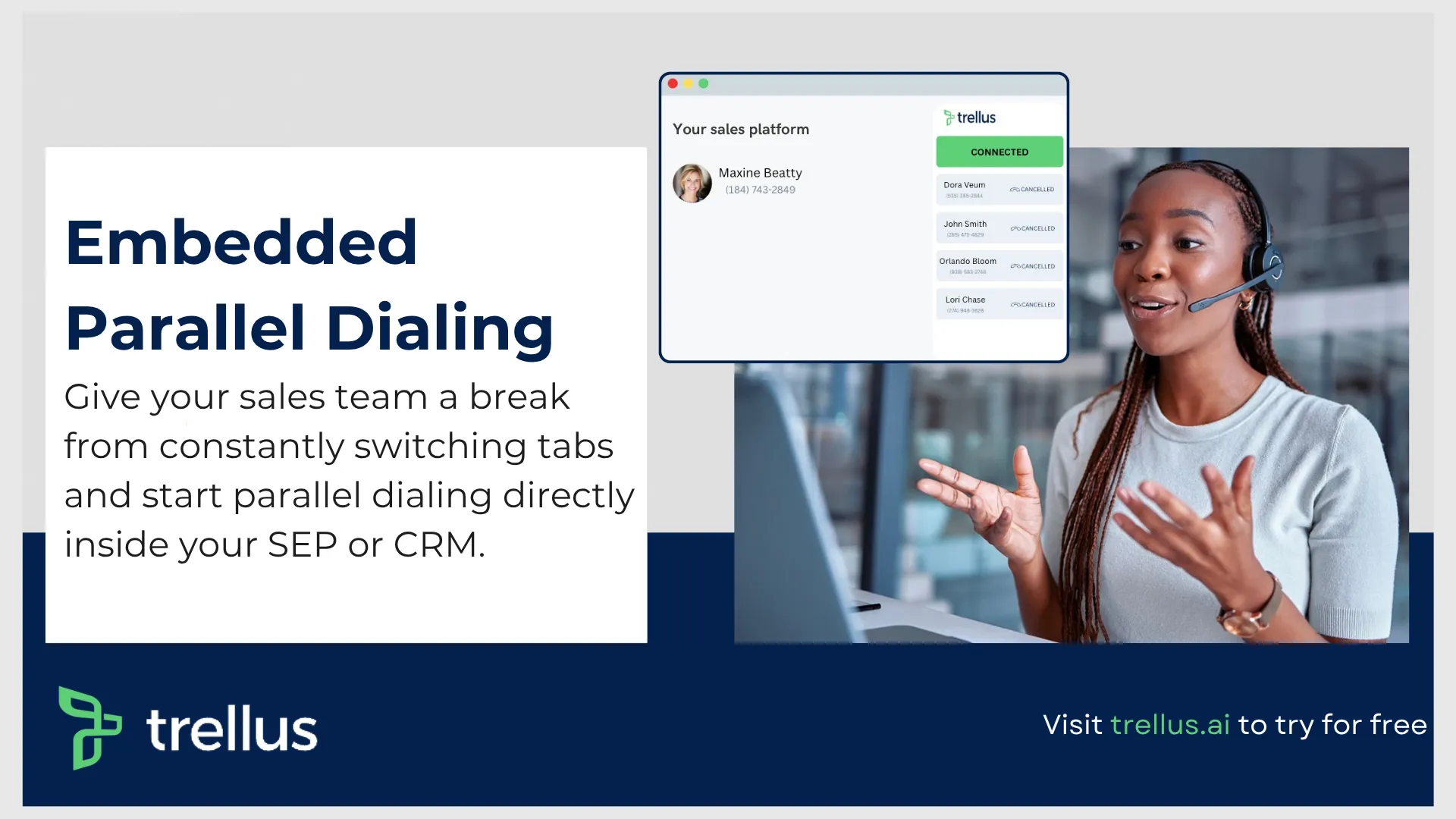
Best for: Enterprise SDR teams that spend most of their day inside existing dialers and sales engagement platforms, and want AI to improve live selling rather than forcing everyone into an entirely new workflow.
Most sales engagement platforms ask organizations to adopt another application.
This AI-powered sales development platform takes a different direction.
Rather than replacing the tools SDRs already rely on, Trellus layers AI directly into the outbound workflow your team already knows. Reps continue working inside familiar sales engagement software while gaining live coaching, conversation intelligence, prospect research, workflow automation, and AI assistance throughout the selling process.
That philosophy makes adoption considerably easier for enterprise organizations. Sales representatives rarely enjoy learning another interface, especially when they already spend their day switching between CRM systems, dialers, sequencing software, LinkedIn, email, and internal communication tools.
This platform reduces that friction by fitting naturally into the existing sales environment.
For organizations searching for a modern B2B prospecting and pipeline generation platform, this creates a meaningful advantage. Sales leaders can enhance productivity without rebuilding their entire technology stack or forcing hundreds of SDRs through another lengthy onboarding process.
One area where the platform particularly stands out is live sales execution.
Most AI tools help before or after the conversation. They write emails, summarize meetings, or generate reports once the call has ended.
Here, AI becomes part of the conversation itself.
Representatives receive live coaching, objection handling guidance, conversation prompts, prospect intelligence, and workflow assistance while speaking with buyers. This keeps SDRs focused on the discussion rather than searching for information across multiple browser tabs.
Core capabilities
The platform brings together several capabilities designed around improving outbound conversations rather than simply automating repetitive tasks.
Key capabilities include:
- Live AI sales coaching during active conversations
- Parallel dialing support through existing dialers
- AI generated prospect research before every conversation
- LinkedIn enrichment without interrupting workflow through our signature LinkedIn Superhuman feature!
- Real time objection handling suggestions
- AI practice calls for onboarding new SDRs
- Voicemail drop functionality
- Advanced call analytics
- Number health monitoring
Rather than concentrating only on email sequencing, the platform places significant emphasis on helping SDRs perform better during the moments that directly influence pipeline creation.
One of the biggest advantages is integration
Enterprise sales organizations rarely depend on a single sales application.
Most teams already have established workflows built around CRM platforms, dialers, sequencing software, conversation intelligence tools, and prospecting databases. Replacing all of those systems rarely makes financial or operational sense.
One reason many enterprise teams evaluate Trellus is its extensive integration ecosystem.
The platform works with many of the industry's most widely adopted outbound solutions, including:
- Outreach
- Salesloft
- Orum
- Apollo.io
- HubSpot
- Convoso
- Salesfinity
Even more impressive is the company's willingness to build new integrations at no additional cost when customers use unsupported dialers. For enterprise organizations operating specialized sales technology stacks, this can significantly reduce implementation delays.
Where it performs well
This platform delivers the greatest value inside enterprise outbound teams where live conversations remain the primary source of pipeline generation.
Organizations can continue using their preferred enterprise sales sequencing software while adding AI assistance across prospect research, coaching, dialing, and conversation management.
It is particularly well suited for:
- Enterprise SDR organizations already invested in Outreach or Salesloft
- Teams using parallel dialers
- High volume cold calling organizations
- Companies onboarding new SDRs regularly
- Revenue teams looking to increase conversation quality rather than simply increasing activity volume
- Organizations searching for Best AI-powered sales engagement platforms for scaling enterprise SDR outreach
Verdict
Among today's top sales engagement platforms for enterprise SDR teams, Trellus fills a unique position.
Rather than asking sales organizations to abandon proven workflows, it enhances them with AI where SDRs need help the most, before calls, during conversations, and immediately afterward.
For enterprise teams committed to improving conversation quality, accelerating rep ramp time, and helping SDRs book more meetings without introducing another disconnected workflow, it deserves serious consideration.
4. Amplemarket

Best for: Growth stage and enterprise sales teams looking for AI assisted prospecting, buying signals, sequencing, and deliverability tools inside one connected platform while keeping sales reps involved throughout the outbound process.
Amplemarket has steadily expanded from a prospecting platform into a much broader outbound sales solution. Today, it combines contact discovery, sales engagement, buying signals, email deliverability, and AI assistance inside one environment, making it an attractive option for organizations trying to reduce the number of separate applications their SDR teams manage every day.
One reason enterprise buyers continue evaluating Amplemarket is its balanced philosophy toward automation.
Some AI platforms attempt to automate nearly every outbound activity from prospect discovery to campaign execution. Amplemarket takes a more collaborative route. AI handles research, surfaces opportunities, recommends actions, and prepares outbound campaigns, while sales representatives remain responsible for reviewing and approving communications before they reach prospects.
For many organizations, this provides a comfortable middle ground. Sales leaders gain productivity improvements without giving up visibility into messaging quality or compliance requirements.
Teams searching for an AI-powered sales development platform that supports outbound execution while keeping human oversight throughout the sales process will likely appreciate this operating model.
Core capabilities
Amplemarket brings together several outbound functions that many organizations traditionally purchase from separate vendors.
Its feature set includes:
- AI agents supporting prospect research
- Buying signal detection
- Contact discovery and enrichment
- Multichannel sales engagement
- AI generated outbound sequences
- Personalized voicemail creation with AI voice cloning
These capabilities allow SDRs to move from prospect discovery to outreach execution without switching between multiple applications throughout the day.
Where Amplemarket performs well
Amplemarket performs particularly well for organizations that want AI assistance across several stages of outbound prospecting while maintaining human review before campaigns launch.
Enterprise teams often appreciate the combination of research automation, intent signals, deliverability monitoring, and multichannel engagement because these functions work together inside one platform.
Companies building modern outbound programs also benefit from having prospect intelligence, engagement workflows, and deliverability tools connected rather than scattered across multiple systems.
Organizations looking for a B2B prospecting and pipeline generation platform capable of supporting both prospect discovery and outreach execution frequently include Amplemarket during vendor evaluations.
Tradeoffs to consider
Amplemarket intentionally keeps sales representatives involved throughout outbound execution.
For many organizations, this represents an advantage because managers retain oversight of messaging quality and campaign approvals.
Companies searching for fully autonomous prospecting may find themselves performing more reviews than expected. AI assists with research, recommendations, and campaign preparation, although representatives still guide much of the final execution.
Enterprise teams should also evaluate how much autonomy they want before deciding between collaborative AI platforms and products built around complete automation.
CRM integration
Amplemarket integrates with popular CRM platforms while supporting workflow synchronization across prospecting, engagement, and reporting.
Organizations with established CRM processes generally experience the greatest value because prospect activity flows naturally into existing sales reporting.
Verdict
Amplemarket earns its position among the top sales engagement platforms for enterprise SDR teams because it combines prospecting, buying signals, engagement, and deliverability into a connected workflow.
Sales organizations looking for AI assistance without handing complete control to automation will find the platform well suited to modern enterprise outbound programs.
5. Apollo.io
Best for: Startups, scaling sales organizations, and SMBs looking for prospecting data, engagement tools, and outbound automation inside one affordable platform.
Apollo has become one of the most recognizable names in outbound sales because it combines several categories of software that organizations traditionally purchased separately.
Rather than subscribing to an external prospect database, another sequencing platform, another dialer, and another enrichment provider, many smaller sales teams begin with Apollo because it brings those capabilities together under one subscription.
This makes onboarding considerably easier for growing companies that want to launch outbound prospecting without assembling a complicated sales technology stack from day one.
Although Apollo continues expanding its AI capabilities, its primary value still comes from combining contact intelligence with outbound execution.
Sales representatives can identify target accounts, build prospect lists, enrich company data, launch multichannel campaigns, and monitor engagement without constantly moving between applications.
For organizations searching for practical SDR outreach automation software, Apollo offers one of the simplest entry points into outbound sales.
Core capabilities
Apollo combines prospecting intelligence with engagement capabilities designed for growing outbound teams.
Key features include:
- Large contact and company database
- Advanced prospect filtering
- Company enrichment
- Buyer intent data
- Built in dialer
- Email sequencing
This combination allows smaller organizations to build complete outbound programs without purchasing numerous standalone products.
Where Apollo performs well
Apollo performs particularly well for startups and fast growing sales organizations where budgets are limited but outbound activity continues increasing every month.
Its integrated prospect database reduces the need for separate data providers, while sequencing and automation tools support daily SDR execution.
Companies looking for an affordable AI-powered sales development platform frequently begin their evaluation with Apollo because of its generous free tier and accessible pricing structure.
It also works well for organizations building outbound teams for the first time, since prospecting data and engagement capabilities already exist inside one platform.
Tradeoffs to consider
Although Apollo covers a wide range of outbound activities, enterprise organizations with highly specialized workflows may eventually outgrow some of its capabilities.
Large SDR teams often require deeper workflow governance, more advanced reporting, sophisticated conversation intelligence, or broader automation than Apollo currently emphasizes.
Organizations managing hundreds of sales representatives should evaluate how well the platform supports complex enterprise sales operations before committing long term.
CRM integration
Apollo integrates with Salesforce, HubSpot, and several popular sales applications.
CRM synchronization works well for most growth stage organizations, while enterprise deployments may require additional workflow planning depending on reporting requirements.
Verdict
Apollo remains one of the most practical choices for organizations wanting prospecting data, engagement workflows, and automation inside one product.
For companies searching for sales cadence tools for enterprise teams at the entry or mid market level, Apollo delivers considerable value without requiring multiple software subscriptions.
6. Artisan

Best for: Organizations evaluating autonomous outbound prospecting with AI driven campaign execution and an integrated prospect database.
Artisan has attracted considerable attention because of its ambitious vision for autonomous outbound sales development.
Its AI business development representative, Ava, is designed to handle much of the prospecting workflow from identifying qualified contacts to launching campaigns and booking meetings.
This places Artisan in a different category from traditional sales engagement software.
Many established platforms concentrate on helping SDRs perform their work more efficiently. Artisan focuses on allowing AI to complete larger portions of outbound prospecting while human sales teams supervise campaign performance and make strategic decisions.
Another factor that separates Artisan from many competitors is its built in contact database.
Organizations evaluating the platform do not necessarily need to purchase separate prospecting data providers before launching outbound campaigns, simplifying implementation for many growing sales teams.
Core capabilities
Artisan provides several AI driven capabilities designed around autonomous outbound execution.
Its feature set includes:
- Built in contact database
- Prospect enrichment
- Autonomous email campaigns
- AI meeting booking
- Campaign optimization
- Autopilot mode
- Copilot mode
- AI generated messaging
- Workflow analytics
- Outbound testing tools
These features allow organizations to automate substantial portions of outbound prospecting while maintaining visibility into campaign performance.
Where Artisan performs well
Artisan performs best for companies interested in reducing manual prospecting activities through autonomous workflows.
Organizations evaluating future focused outbound technology often appreciate having prospect discovery, enrichment, campaign creation, and AI execution inside one environment.
Companies searching for Best AI-powered sales engagement platforms for scaling enterprise SDR outreach frequently include Artisan because of its emphasis on autonomous outbound execution rather than traditional sales engagement alone.
Tradeoffs to consider
Artisan currently places much of its emphasis on outbound email workflows.
Organizations relying heavily on cold calling, live coaching, or multichannel engagement should evaluate how well the platform supports their preferred sales motion before making a purchasing decision.
Enterprise buyers should also consider governance requirements, compliance processes, and approval workflows whenever autonomous messaging becomes part of customer communication.
CRM integration
The platform supports CRM synchronization alongside campaign reporting, allowing outbound activities to remain connected with pipeline management and sales reporting.
Verdict
Artisan represents one of the more ambitious entrants in the AI sales category.
Organizations looking toward autonomous prospecting rather than traditional engagement workflows will likely find it one of the more interesting platforms currently available.
7. AiSDR
Best for: Sales teams looking for intent driven outbound campaigns, transparent pricing, and AI supported prospecting without committing to a lengthy enterprise sales process.
AiSDR has positioned itself around a simple idea. Sales teams should spend less time identifying who might be interested and more time speaking with prospects who already demonstrate buying intent.
Rather than trying to become an all encompassing revenue platform, the software concentrates on helping organizations launch targeted outbound campaigns supported by AI insights and CRM connected workflows. This makes it appealing for companies that prefer a focused solution rather than a platform packed with features they may never use.
One characteristic that stands out is pricing transparency. Many enterprise sales platforms require buyers to schedule demonstrations before receiving meaningful pricing information. AiSDR publishes pricing, allowing sales leaders to estimate costs much earlier in the evaluation process.
For organizations building outbound programs with limited resources or carefully managed budgets, this removes a considerable amount of uncertainty.
Companies searching for SDR outreach automation software with an emphasis on intent driven prospecting may find AiSDR worth evaluating alongside larger enterprise platforms.
Core capabilities
AiSDR focuses on practical outbound execution supported by AI rather than broad revenue management.
Its core capabilities include:
- Intent based prospect targeting
- AI assisted outbound campaigns
- Campaign planning support
- Salesforce integration
- HubSpot integration
- AI generated GTM campaign ideas
- CRM connected workflows
- Activity reporting
These features help sales teams identify accounts showing buying signals before launching outreach campaigns.
Where AiSDR performs well
AiSDR performs well for organizations running smaller, highly targeted outbound motions where quality matters more than sheer outreach volume.
Companies that appreciate transparent pricing often include the platform early in their buying process because budgeting becomes much easier.
Organizations beginning their search for an AI-powered sales development platform may also appreciate its focused product direction, especially if they are not looking for an extensive enterprise deployment.
Tradeoffs to consider
AiSDR concentrates on intent based outbound execution rather than covering every stage of the sales development lifecycle.
Enterprise organizations requiring conversation intelligence, extensive workflow automation, advanced forecasting, multichannel orchestration, or complex governance should carefully compare its capabilities with larger enterprise platforms.
Sales leaders should also evaluate channel coverage before making a decision, particularly if voice, LinkedIn engagement, or large scale outbound campaigns form a major part of their prospecting strategy.
CRM integration
The platform offers integration with both Salesforce and HubSpot, helping outbound activities remain connected with pipeline reporting and account management.
Organizations already maintaining clean CRM records will generally experience the smoothest implementation.
Verdict
AiSDR offers an attractive option for organizations prioritizing intent driven outreach, transparent pricing, and straightforward implementation.
While it may not provide the breadth of functionality found in larger enterprise platforms, it serves targeted outbound teams looking for focused AI support remarkably well.
8. Reply.io
Best for: Sales teams looking for multichannel outreach, AI assisted communication, and affordable engagement software that supports growing outbound operations.
Reply.io has been part of the sales engagement market for several years and continues to evolve alongside changing outbound sales strategies.
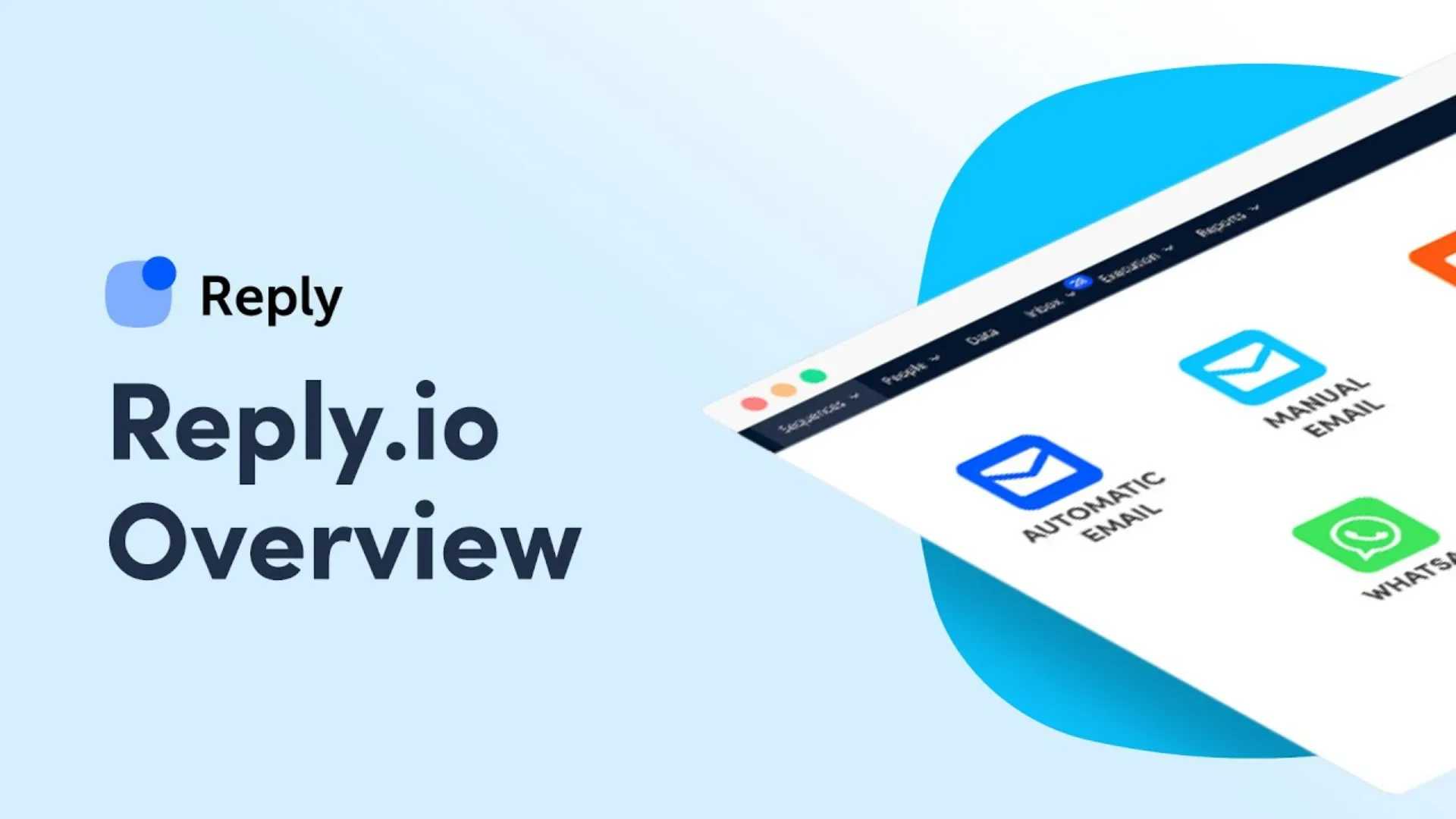
The platform supports communication across email, phone calls, LinkedIn, SMS, and WhatsApp, allowing SDRs to reach prospects through multiple channels without relying on separate engagement tools.
For growing sales organizations, this consolidated experience can simplify outbound execution considerably. Representatives manage sequences, conversations, follow ups, and campaign performance from one platform while AI assists with message creation and conversation handling.
Another area where Reply.io continues receiving attention is mailbox management. Organizations running large email campaigns often struggle with deliverability and account limitations. Reply.io addresses part of this problem through unlimited mailbox support combined with built in email warmup functionality.
Sales teams looking for a practical B2B prospecting and pipeline generation platform that combines multichannel engagement with AI assisted outreach frequently include Reply.io on their shortlist.
Core capabilities
Reply.io offers a broad collection of engagement features designed around modern outbound communication.
Key capabilities include:
- Email sequencing
- LinkedIn automation
- Phone calls
- SMS messaging
- WhatsApp outreach
- AI powered email writing
These capabilities help SDRs coordinate outreach across multiple communication channels while maintaining visibility into prospect engagement.
Where Reply.io performs well
Reply.io performs particularly well for organizations balancing growth with budget considerations.
Sales teams gain multichannel outreach without purchasing numerous standalone engagement platforms, while AI assists with routine communication tasks that would otherwise consume valuable selling time.
Organizations evaluating sales cadence tools for enterprise teams with broad communication coverage may find Reply.io especially attractive if email remains a significant part of their outbound strategy.
Tradeoffs to consider
Reply.io remains fundamentally a sales engagement platform enhanced with AI capabilities.
Organizations searching for highly autonomous prospecting, advanced enterprise workflow governance, or comprehensive revenue orchestration may eventually require additional software alongside Reply.io.
Enterprise buyers should also evaluate reporting depth, CRM customization, and operational scalability relative to their long term sales strategy.
CRM integration
Reply.io integrates with Salesforce, HubSpot, and several other CRM platforms, allowing outreach activity to remain synchronized with customer records and pipeline reporting.
Verdict
Reply.io continues to be one of the more balanced options available for organizations wanting multichannel engagement supported by AI.
Its combination of communication channels, automation, and approachable pricing makes it a practical choice for growing outbound teams that value simplicity without sacrificing capability.
How to Choose the Right Sales Engagement Platform
Choosing among the top sales engagement platforms for enterprise SDR teams involves much more than comparing feature lists.
Every sales organization has its own outbound strategy, CRM environment, reporting requirements, and operational priorities. A platform that performs exceptionally well inside one enterprise may create unnecessary complexity for another.
If your team has been asking What features should enterprise SDR teams look for in a sales engagement platform?, these are the areas that deserve the closest attention.
CRM integration should come first
Sales engagement software becomes significantly more valuable when it works naturally with the systems your organization already depends on.
Look for platforms that provide:
- Reliable Salesforce synchronization
- Strong HubSpot support
- Accurate activity logging
- Opportunity and contact updates
- Pipeline reporting alignment
Poor CRM synchronization creates additional administrative work and reduces reporting accuracy across the revenue organization.
Automation should support productivity
AI continues improving rapidly, although complete automation does not always produce the best outcomes.
Look for software that reduces repetitive administrative work while allowing sales representatives to remain engaged during relationship building and complex buying conversations.
The most effective AI-powered sales development platform helps SDRs sell more effectively rather than simply generating more automated activity.
Workflow adoption matters as much as features
Even the most capable software produces limited value if sales representatives avoid using it.
Enterprise organizations should evaluate:
- Ease of onboarding
- Learning curve
- User interface
- Daily workflow efficiency
- Manager visibility
- Reporting accessibility
Higher adoption usually leads to cleaner CRM data, stronger reporting, and more consistent outbound execution.
Integration with your existing technology stack
Enterprise outbound rarely depends on one application.
Many organizations already use conversation intelligence platforms, dialers, prospect databases, scheduling software, and CRM systems.
Selecting software that connects naturally with existing tools reduces implementation effort while protecting previous technology investments.
Frequently Asked Questions
What are the best sales engagement platforms for enterprise SDR teams in 2026?
Organizations evaluating enterprise sales engagement software frequently shortlist Outreach, Salesloft, Trellus, Amplemarket, Apollo.io, Artisan, AiSDR, and Reply.io. The right choice depends on your outbound strategy, CRM environment, preferred communication channels, and the amount of AI automation your sales organization wants to introduce.
Outreach vs Salesloft: which sales engagement platform is better for enterprise SDRs?
Both platforms serve enterprise sales organizations extremely well.
Outreach places considerable emphasis on structured workflow management, governance, and process consistency across large SDR teams. Salesloft delivers a polished user experience with strong coaching capabilities and activity visibility. Many enterprise buyers evaluate both products before making a final decision.
How do sales engagement platforms improve SDR productivity and meeting booking rates?
Modern sales engagement platforms automate repetitive administrative work, organize daily outreach tasks, synchronize CRM activity, simplify follow ups, assist with personalization, and provide AI supported coaching. This allows SDRs to spend more time speaking with qualified prospects and less time managing manual workflows.
What features should enterprise SDR teams look for in a sales engagement platform?
Enterprise buyers should prioritize CRM integration, workflow automation, multichannel engagement, reporting, conversation intelligence, AI assistance, implementation quality, scalability, and compatibility with their existing sales technology stack.
What is the difference between sales engagement software and an AI powered sales development platform?
Traditional sales engagement software primarily helps SDRs organize outreach across email, phone, and social channels.
.jpeg)

Power and parallel dialing in your CRM.