Our Top Picks


Leads entering your pipeline are a good problem to have. The harder part starts after that. Figuring out which prospects to contact first, how often to follow up, which channel to use, and when to step back is where many teams lose momentum.
That confusion usually comes from an unstructured or inconsistent sales cadence.
A strong sales cadence creates rhythm in your outreach. It gives reps confidence, keeps prospects engaged without pressure, and turns random follow ups into a predictable sales sequence that moves conversations forward. When built well, a multi-channel cadence feels natural instead of repetitive and helpful instead of pushy.
This guide walks through what a sales cadence really is, how top teams think about touchpoint strategy, and how modern outbound teams design prospecting cadences that convert consistently.
What Is a Sales Cadence?

At its core, a sales cadence is a structured plan for how a sales rep reaches out to a prospect over time.
It outlines
• The number of touchpoints
• The order of outreach
• The channels involved, such as email, calls, and LinkedIn
• The spacing between each interaction
Rather than guessing when to follow up or switching channels randomly, a cadence provides clarity. It turns outreach into a repeatable follow up sequence that can scale across teams.
A cadence is not about pressure. It is about relevance, timing, and consistency across a defined sales cadence length.
Sales Cadence vs Sales Script
These two ideas often get mixed up, but they serve very different roles in modern sales.
A sales cadence is the overall strategy. It defines when and how you show up across channels during the sales process.
A sales script is tactical. It supports individual moments inside that cadence, such as what a rep says on a call or writes in an email.
One outreach cadence can include multiple scripts, adjusted based on persona, industry, or stage. The cadence sets the pace. The scripts shape the conversation.
How Many Touchpoints Should a Sales Cadence Have
Most high performing B2B teams land in the 8 to 12 touchpoint range. That number gives enough visibility without overwhelming prospects.
Spacing matters as much as volume. A longer cadence with fewer touches often performs better than a short burst of aggressive outreach. Prospects need time to process messages, recognize your name, and respond when timing works on their end.
Strong teams treat sales cadence frequency as flexible, not fixed. They pay attention to engagement signals and adjust when a prospect opens, clicks, or replies.
Why Sales Cadence Matters for Modern B2B Teams
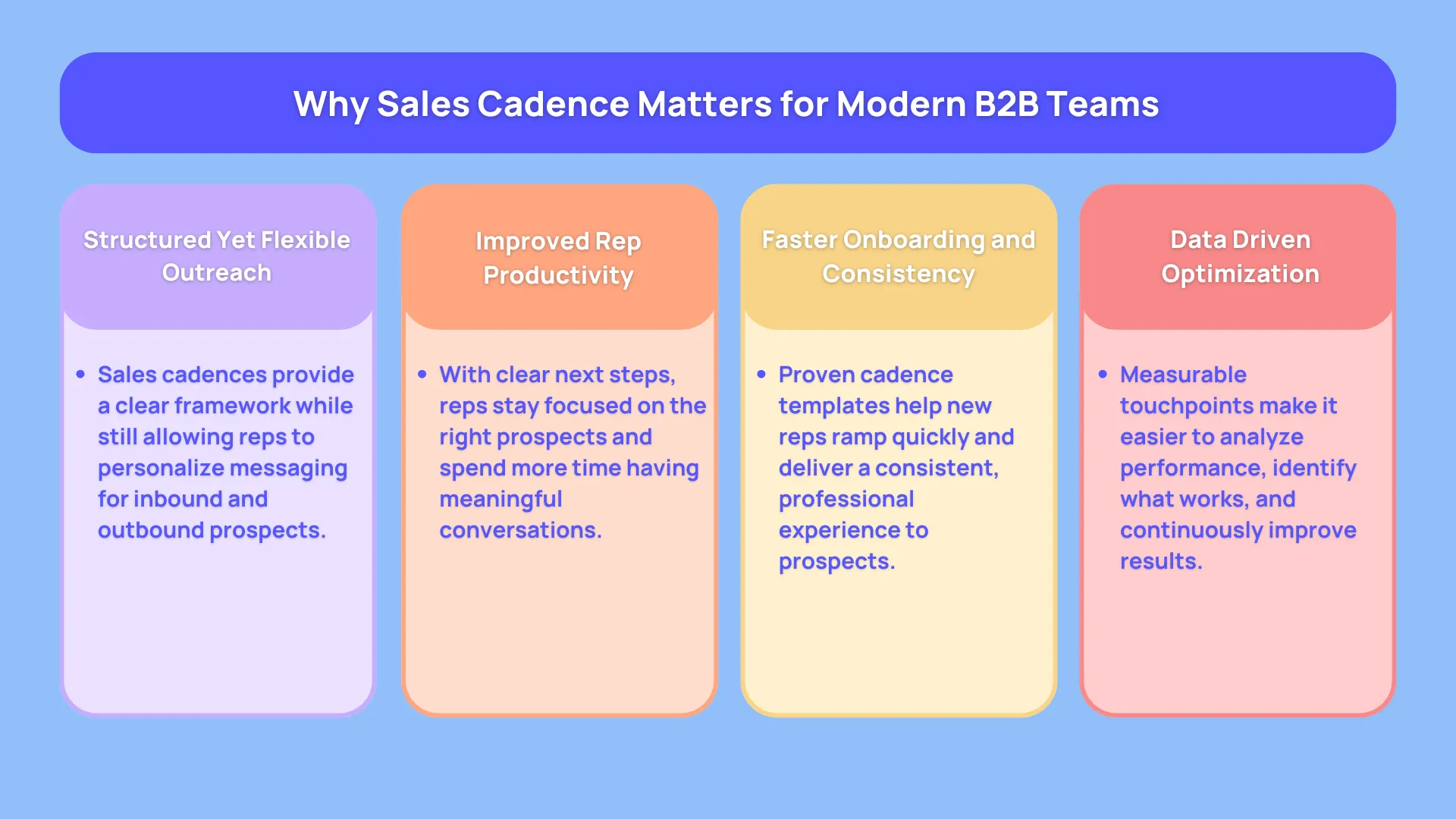
A thoughtful sales cadence strategy creates structure without removing personalization. It supports both inbound and outbound workflows while giving reps room to adapt.
Clear Prioritization and Focus
Reps always know who to contact next and why. Time spent guessing disappears, and energy goes into meaningful conversations.
A well-defined outbound sales strategy is crucial for consistently generating new leads and driving revenue growth.
Faster Ramp for New Reps
Clear sales cadence templates shorten onboarding time. New hires start with proven sequences instead of trial and error.
Consistent Prospect Experience
Prospects receive well spaced, relevant communication across channels instead of random check ins.
Easier Optimization Over Time
Cadences make performance visible. Teams can measure what works and refine touchpoints with confidence.
Sales Cadence Best Practices That Actually Work
The best cadences balance persistence with respect. They rely on multiple channels while staying human in tone.
Below is a proven multi-channel cadence structure used by high performing outbound teams.
Day 1 – LinkedIn Connection Request
The cadence starts quietly. A LinkedIn connection request without a note feels natural and low pressure.
At this stage, intent is minimal. A blank request removes friction and boosts acceptance rates. Once accepted, later emails and calls land with more familiarity.
This step establishes presence without asking for anything.
Day 2 – Email Touchpoint
Email follows the LinkedIn request to create recognition across channels.
The most effective email cadence messages stay between 75 and 100 words. Short emails respect attention and increase replies.
Focus areas
• One sentence explaining what you do
• One clear insight or observation
• A soft ask for interest, not a meeting
Phrases such as “open to a short exchange” or “open to more details” lower resistance and invite conversation.
Subject lines work best when they reference team impact, risks, or missed opportunities. Curiosity beats cleverness.
Day 3 – Call, Voicemail, and Email
This is the most active moment early in the call cadence.
Call the prospect. If there is no answer, leave a short voicemail mentioning a follow up email. Send that email within minutes.
This creates channel reinforcement. The voicemail primes the inbox. The email gives context.
Aggression does not mean carelessness or a disregard for the prospect’s interests. The message remains respectful and relevant.
Days 5 and 7 – Call Attempts
These calls aim to catch prospects during different parts of their workday.
No voicemail is left here. Silence creates space and avoids repetition. Prospects often return calls once familiarity builds.
To learn more about expanding your reach, explore effective strategies for multi-channel prospecting.
When conversations happen, objections are normal. The goal is not to push past them but to understand them and respond with clarity.
Days 7 to 10 – Video Outreach
Video works best after engagement signals appear.
Once a prospect opens emails, clicks links, or answers a call, video adds personality and trust. This step helps reps stand out while staying human.
Short, personal videos outperform polished pitches. The value lies in authenticity, not production quality.
Day 10 – Personalized Email
This message leans heavily into sales cadence personalization.
It speaks directly to the prospect’s role, industry challenges, and goals. The tone acknowledges persistence while respecting time.
This is often the first direct meeting ask, framed around shared relevance rather than urgency.
Day 13 – Follow Up Call
A few days after the personalized email, another call makes sense.
The prospect has had time to think. If interest exists, this is often where conversations move forward.
Day 15 – Social Proof Email
Late stage cadences benefit from credibility.
Customer quotes, short case studies, or outcomes from similar companies add reassurance. This is not about bragging. It is about reducing uncertainty.
Day 18 – Final Call or Voicemail
This call checks in one last time.
If unanswered, a brief voicemail communicates that outreach will pause. This restores control to the prospect and often triggers replies.
Day 21 – Breakup Email
The breakup email closes the sales cadence length with honesty.
It invites feedback instead of attention. Ironically, this message often restarts conversations because pressure disappears.
Mastering sales objection handling techniques can significantly improve conversion rates during calls.
Sales Cadence Personalization That Scales
Personalization does not mean writing everything from scratch. It means making each touchpoint feel intentional.
Lead Segmentation
Group prospects based on role, industry, or pain points. Each group gets messaging that reflects their reality.
Contextual References
Mention past engagement, shared connections, or relevant events. This signals care and preparation.
Channel Awareness
Some prospects respond better to LinkedIn cadence messages. Others prefer calls or email. Watch responses and adjust.
Measuring Sales Cadence Effectiveness
Metrics turn intuition into insight. Strong teams track performance across the entire sales cadence optimization cycle.
Key indicators include
• Open and response rates
• Call connect rates
• Meeting booked rates
• Conversion rates across stages
• Time to conversion
• Churn and unsubscribe rates
• Revenue and deal size
Analytics tools make patterns visible. Over time, this supports sales cadence A/B testing and smarter adjustments.
Best Sales Cadence Tools for B2B Software Companies
Technology supports consistency, visibility, and scale. These tools help teams manage complex sales cadence automation without losing the human touch.
1. Trellus
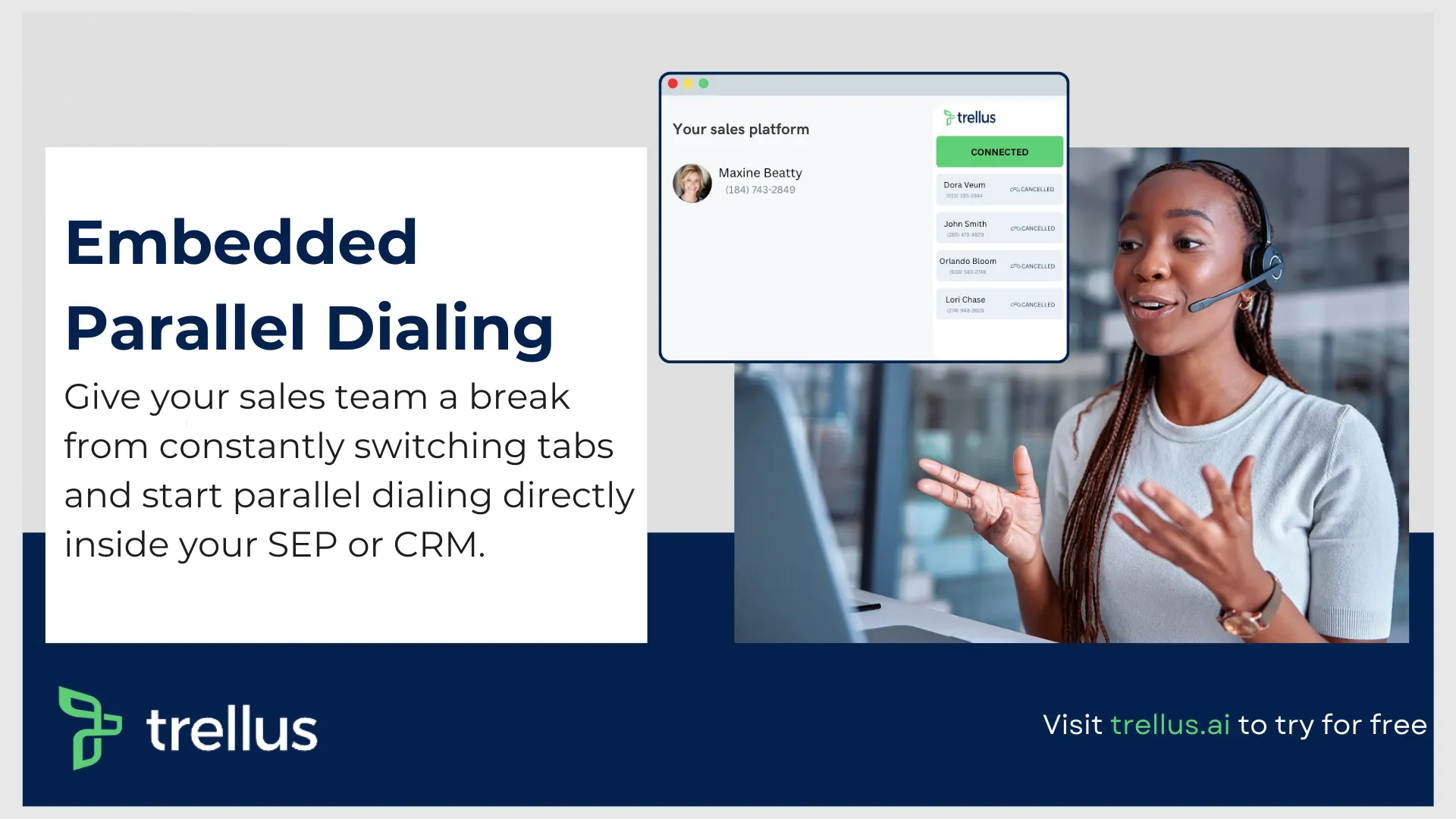
This platform sits at the heart of modern outbound operations, especially for teams that rely heavily on cold calling and follow up sequences. Rather than treating calls, coaching, and cadence execution as separate workflows, everything lives in one connected system.
Built for conversation driven prospecting
Outbound teams spend most of their time on live conversations, yet many cadence tools treat calling as an afterthought. This solution flips that model. Calling is central, not secondary, which makes it easier to run prospecting cadences where phone outreach, email follow ups, and LinkedIn touches work together naturally.
Reps always know which account to contact, which channel to use, and where that prospect sits inside the broader sales sequence.
Coaching that happens in the moment
Instead of relying only on post call reviews, AI driven feedback happens during live calls. Reps receive guidance on pacing, talk time balance, and objection handling while the conversation is unfolding.
For managers, this creates a much clearer picture of how cadences perform in real situations, not just in dashboards.
Cadence performance tied to real outcomes
Activity alone does not tell the full story. What matters is which touchpoint strategies actually lead to meetings and pipeline. This platform connects cadence steps to outcomes, making sales cadence optimization practical and measurable.
Teams can refine timing, frequency, and channel mix based on what drives better conversations, not assumptions.
Best fit teams
Outbound heavy SaaS teams, SDR and BDR orgs, and revenue leaders who care about call quality and rep development tend to see the most value here.
2. Outreach
Outreach is designed for scale. It works well for B2B software companies managing large account lists, multiple reps, and complex buying committees.
Structured execution across high volume sequences
The platform helps reps execute multi step outreach cadences across email, calls, and tasks without losing track of follow ups. Daily workflows are clear, prioritized, and easy to repeat.
This structure is especially useful for teams running long, multi stakeholder sales cycles where timing and consistency matter.
Discover how various sales sequencing tools can further streamline your outreach efforts.
Strong analytics and visibility
Leaders gain insight into open rates, reply rates, meeting bookings, and task completion across teams. These insights support better decisions around sales cadence metrics, experimentation, and refinement.
It becomes easier to identify which sequences perform well and where adjustments are needed.
Personalization within controlled workflows
Templates, dynamic fields, and logic based branching allow reps to personalize outreach while still following approved sequences. This helps balance efficiency with relevance.
For further insights into developing your team, consider these sales coaching best practices.
Best fit teams
Mid market and enterprise SaaS teams that prioritize standardization, reporting, and scale across large sales orgs.
3. ChatGPT
This tool plays a different role in the sales cadence ecosystem. It does not execute sequences, but it significantly improves the quality of messages and conversations inside them.
Messaging support across the cadence
Reps use it to draft cold emails, rewrite follow up messages, and refine breakup emails. This is especially helpful for maintaining a consistent tone across long email cadences.
It reduces the time spent staring at a blank screen while improving clarity and relevance.
Personalization without manual effort
Persona based language, industry context, and role specific pain points can be generated quickly. This supports stronger sales cadence personalization without adding hours of research.
Call preparation and objection handling
Before calls, reps can outline discovery questions, likely objections, and value framing. This preparation leads to more confident conversations and better outcomes during live outreach.
Best fit teams
Any sales team that wants better language, faster prep, and more thoughtful communication layered on top of existing cadence tools.
Where Sales Cadence Fits Inside Your Tech Stack
Sales cadence software works best when aligned with CRM and enablement tools.
CRM platforms store activity and outcomes. Cadence tools execute outreach. Enablement platforms support learning and messaging. Together, they create a closed loop system that supports growth.
Teams that connect cadence performance with CRM analytics gain clearer insight into sales cadence metrics and long term revenue impact.


Embed Trellus Parallel Dialer Within Your SEP & 4x Your Conversations