Our Top Picks


Sales objection handling techniques get talked about endlessly, yet very little of that advice is backed by real behavioral data.
Most posts recycle theory, scripts, or motivational soundbites. What separates effective objection handling from noise is evidence, patterns, and psychology.
Here at Trellus, we went on a call reviewing spree, analyzing thousands of recorded sales conversations and layering AI analysis on top of those calls, and clear trends emerged.
High performing reps did not magically avoid objections. These guys n gals handled sales objections in ways that reduced emotional friction, advanced deal progression, and kept control of the sales conversation without sounding rehearsed or defensive.
This is not about clever one liners. It is about how objections function inside the buyer’s brain, how top sellers respond in real moments, and why certain sales objection responses consistently move deals forward.
Prospect Psychology and the Real Nature of Objection Handling
Objection handling is rarely about logic. Most objections feel logical on the surface, yet they are driven by emotional self preservation underneath. That distinction matters more than any script.
When a buyer pushes back, the instinctive reaction for many reps is to defend, justify, or discount. That reaction triggers resistance rather than relief. Strong reps treat objections as information, not opposition.
Why objections feel personal to sales reps?

Objections activate a threat response. The brain interprets pushback as rejection, which creates tension and urgency to fix things fast. That leads to rushed explanations, premature price drops, or awkward closing techniques that stall momentum.
High performers reframe objections as engagement signals. If someone pushes back, they are thinking. Indifference kills deals faster than skepticism.
This type of mindset, alone, changes objection handling outcomes dramatically.
The emotional drivers behind common sales objections
Across thousands of calls, the same psychological patterns surfaced repeatedly.
Fear of making the wrong decision shows up as requests for more proof, more time, or more internal alignment. Loss aversion causes buyers to protect the status quo even when the current state is clearly inefficient. Status quo bias creates resistance masked as timing concerns or vague hesitation.
This explains why most common sales objections sound practical but feel vague. The buyer is protecting identity, reputation, or career safety more than budget or process.
Understanding that reality changes how sales objection handling techniques should be applied in live conversations.
Why the Stated Objection Is Rarely the Real One
Buyers almost never voice their deepest concern directly. What they present is the safest objection they can articulate without sounding emotional or uncertain.
When someone says they need to think about it, that usually signals unresolved risk. When someone says budget is tight, it often points to unclear value or fear of internal scrutiny. When someone says timing is off, urgency has not been emotionally established.
Strong handling objections starts with curiosity, not correction. The goal is uncovering the concern beneath the concern.
That is where effective sales objection responses separate from surface level rebuttals.
The Four Core Categories of Common Sales Objections
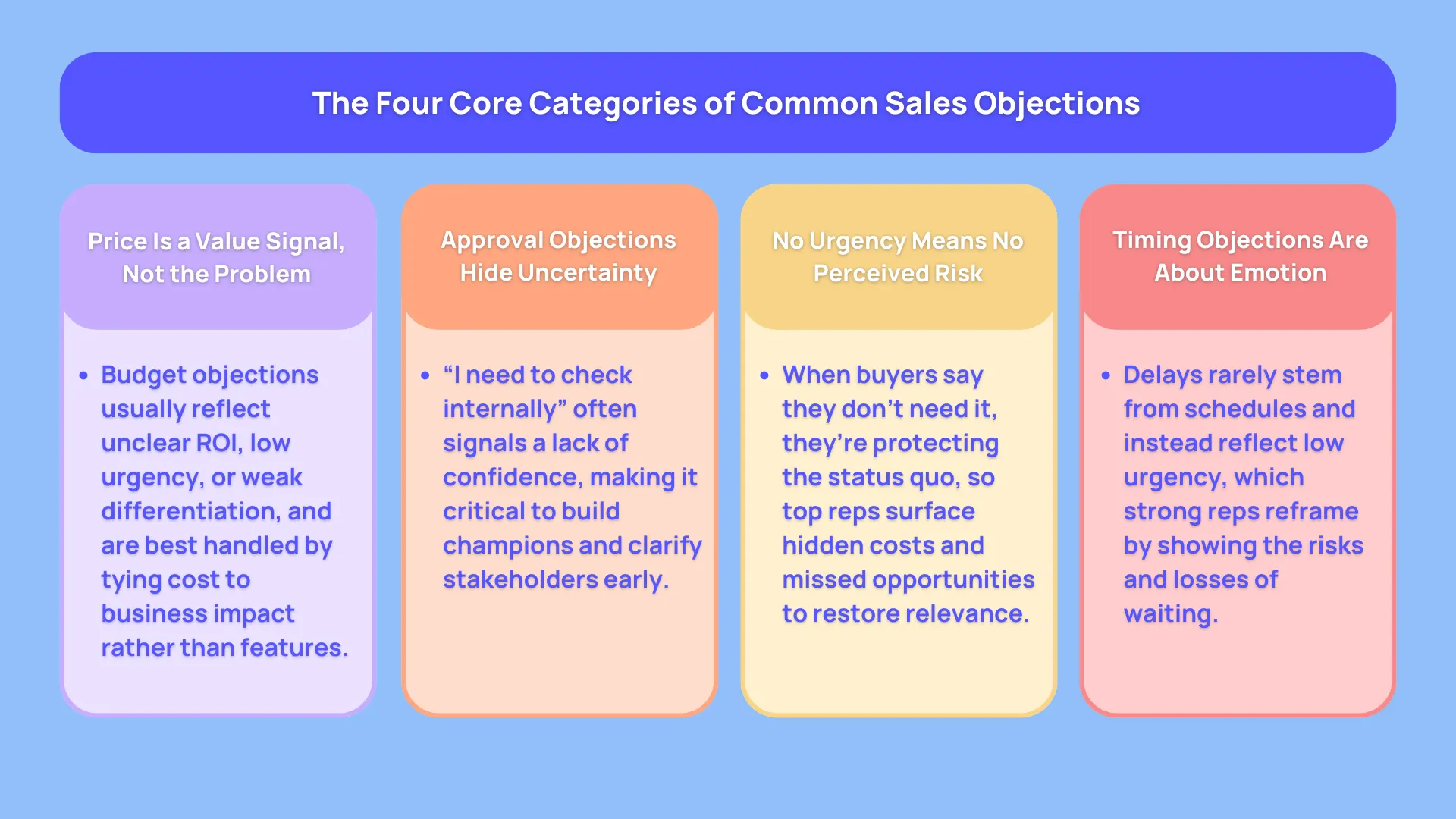
Every objection fits into one of four buckets. Once you recognize the category, the response becomes much clearer and more grounded.
- Budget and price related resistance
Price objection handling dominates most sales conversations, yet price is rarely the real barrier. Buyers fund priorities, not products. When value is clear, budgets move.
Budget resistance usually signals one of three things. The buyer cannot justify ROI internally, the pain is not urgent enough, or the differentiation is unclear compared to alternatives.
High performing reps slow down here. They reconnect cost to consequence, not features. They anchor price to lost opportunity, risk exposure, or operational drag rather than line items.
This approach reframes price as a business decision instead of an expense.
- Authority and internal approval challenges
Statements like needing to run it by leadership often hide uncertainty rather than process. Sometimes authority is genuinely distributed. Other times, it is a polite stall.
Effective handling sales objections here means building internal champions. That requires equipping the buyer with language, proof, and clarity they can repeat confidently.
Asking early who else cares about the outcome keeps deals from collapsing late.
- Perceived lack of need or fit
When buyers say they do not see the need, it often means the cost of staying the same feels lower than the cost of change. That is a perception issue, not a product issue.
Top reps surface hidden inefficiencies, missed growth, or downstream consequences that the buyer has normalized.
This shifts the conversation from features to relevance.
- Timing and urgency objections
Timing objections are rarely about calendars. They signal insufficient emotional urgency.
High performers connect delay to loss. They show what continues to break, leak, or stall while nothing changes. That transforms timing from a neutral delay into an active risk.
Sales Techniques That Prevent Objections Before They Appear
The most effective objection handling happens long before objections surface. Strong discovery eliminates surprises and reduces resistance later.
Discovery as a control mechanism
Great discovery is not about qualification checklists. It is about understanding consequence, motivation, and internal dynamics early.
When discovery is shallow, objections pile up at the end. When discovery is deep, objections shrink or become easy to address because context already exists.
This is where handling objections becomes a natural extension of earlier conversations rather than a confrontation.
Objection Response Framework That Top Reps Follow
When objections arise, elite sellers follow a consistent pattern. Not a script, but a sequence.
They acknowledge without agreeing. They empathize without apologizing. They ask questions before answering. They invite the buyer to restate value in their own words. They reinforce with proof.
This pattern reduces tension and increases trust.
Gratitude and empathy as leverage points
Thanking a buyer for their honesty disarms resistance. Empathy signals partnership rather than pressure. This combination lowers emotional defenses and opens space for real dialogue.
From there, open questions peel back layers until the true concern emerges.
That moment is where real handling objections happens.
Price Objection Handling Without Triggering Resistance
Price objection handling is where most deals quietly die. Not because the price is wrong, but because the conversation around price happens too early or without emotional context.
Across high performing calls, pricing discussions showed up late in the sales conversation. Star reps consistently waited until value, consequence, and internal relevance were fully established. When pricing came up, it landed on prepared ground.
Why delaying price conversations works
When price enters the conversation before impact is clear, buyers anchor on cost instead of outcome. That shifts the mental frame from investment to expense. Once that frame locks in, it is hard to reverse.
When pricing appears after pain, opportunity cost, and internal risk are clearly articulated, buyers naturally evaluate cost through a different lens. The question becomes what happens if we do nothing rather than how much does this cost.
This shift dramatically reduces price based handling sales objections.
How top reps respond when price pushback appears
Strong sales objection responses around price follow a calm, curious pattern.
They acknowledge the concern without defending the number. They ask how the buyer is thinking about value internally. They reconnect the price to outcomes already discussed earlier in the call.
Doing so keeps the conversation grounded in business impact instead of negotiation tactics.
Objection Response That Keeps Deals Moving Forward
An effective objection response does not aim to win an argument. It aims to restore momentum.
Top reps treat objections as directional signals. Each objection points toward something unresolved in the buyer’s mind.
A proven objection response sequence
Thank the prospect for raising the concern. This lowers defensiveness and signals respect.
Empathize with the situation. This positions you as a partner rather than a persuader.
Ask open ended questions that surface the real concern beneath the stated objection.
Invite the buyer to restate what they like about the solution. This reframes the conversation internally without pressure.
Tie their words back to the original pain and desired outcome.
Support the connection with proof, social validation, or relevant customer context.
This sequence consistently outperformed aggressive rebuttals or scripted talk tracks in real sales meetings.
Sales Conversation Control Without Sounding Controlling
Control in a sales conversation does not mean domination. It means direction.
High performers guide conversations through curiosity, structure, and pacing. They ask questions that narrow focus rather than overwhelm. They pause intentionally. They let silence work.
How questions create momentum
Open ended questions unlock emotional context. Clarifying questions eliminate ambiguity. Confirming questions prevent late stage surprises.
When reps rush to explain instead of asking, they create resistance. When they slow down and listen, buyers reveal what actually matters.
This is the foundation of strong handling objections in live conversations.
Overcoming Resistance Without Pressure
Resistance increases when buyers feel pushed. It decreases when buyers feel understood.
Top reps never argue with resistance. They explore it.
Turning resistance into clarity
Resistance often points to uncertainty around risk, visibility, or internal alignment.
When reps surface these concerns openly, buyers feel safer engaging honestly. That safety accelerates trust, which accelerates deal progression.
This is why embracing objections outperforms avoiding them.
Negotiation Skills That Do Not Erode Trust
Negotiation is not a tug of war. It is alignment under constraints.
Strong negotiators maintain value framing while staying flexible on structure.
What effective negotiation sounds like
They discuss tradeoffs instead of discounts. They adjust scope, timing, or packaging rather than cutting price reflexively. They align concessions with commitments.
This preserves perceived value and reduces buyer regret after the deal closes.
Negotiation done well feels collaborative, not transactional.
Closing Strategies That Feel Natural
Closing should feel like the next logical step, not a dramatic event.
When objection handling has been done well throughout the conversation, closing becomes confirmation rather than persuasion.
How top reps close after objections
They summarize what they heard in the buyer’s language. They confirm alignment on outcomes. They ask for the next step with confidence and clarity.
This is where strong closing techniques quietly shine.
Sales Training and Coaching Methodology That Reinforces These Skills
The biggest gap in sales training is feedback timing. Most reps receive coaching long after the moment has passed.
Modern coaching methodology relies on real conversations, real objections, and real feedback loops.
This is where real-time guidance changes outcomes. Reps learn faster when they can see patterns across calls, understand which sales objection handling techniques work, and adjust behavior immediately.
Coaching that focuses on behavior rather than outcomes builds consistency across teams.
Deal Progression and the Role of Objections
Objections are not obstacles. They are checkpoints.
Each objection resolved cleanly moves the deal closer to commitment. Each ignored objection resurfaces later with more force.
When reps welcome objections, handle them calmly, and guide buyers toward clarity, deals move forward naturally.
This is the difference between chasing deals and leading them.
Trellus’s Sales Coaching Technology Helps Reps Overcome Objections in Real Time Conversations
Most reps never truly know why their sales objection responses work or fail. Managers rely on memory, scattered notes, or gut instinct. By the time feedback arrives, the moment is gone and the behavior has already repeated across multiple deals.
This is where Trellus.ai changes the game, especially for objection handling that happens live, under pressure, and emotionally charged.
Instead of treating objection handling as a soft skill or personality trait, Trellus looks at it as a measurable behavior that shows up in patterns across real calls. The platform analyzes recorded sales conversations to surface how prospects actually push back, what triggers resistance, and which sales objection responses consistently move deals forward.
This shifts objection handling from guesswork to clarity.
Turning prospect pushback into insight, not pressure
When reps hear objections live, emotion kicks in fast. That is when reactions become defensive, rushed, or overly accommodating.
Trellus reduces that emotional load by showing reps what objection patterns look like before they encounter them again.
Over time, handling objections stops feeling like confrontation and starts feeling like problem solving.
How Trellus improves objection handling in live sales conversations
The real power comes from seeing objections through the buyer’s lens. When reps understand what prospects tend to say right before deals stall or progress, their confidence changes immediately.
Rather than reacting, reps recognize signals. That recognition keeps the sales conversation calm, focused, and forward moving, especially during price objection handling.
Real-Time AI Cues That Help Reps Navigate Objections as They Happen
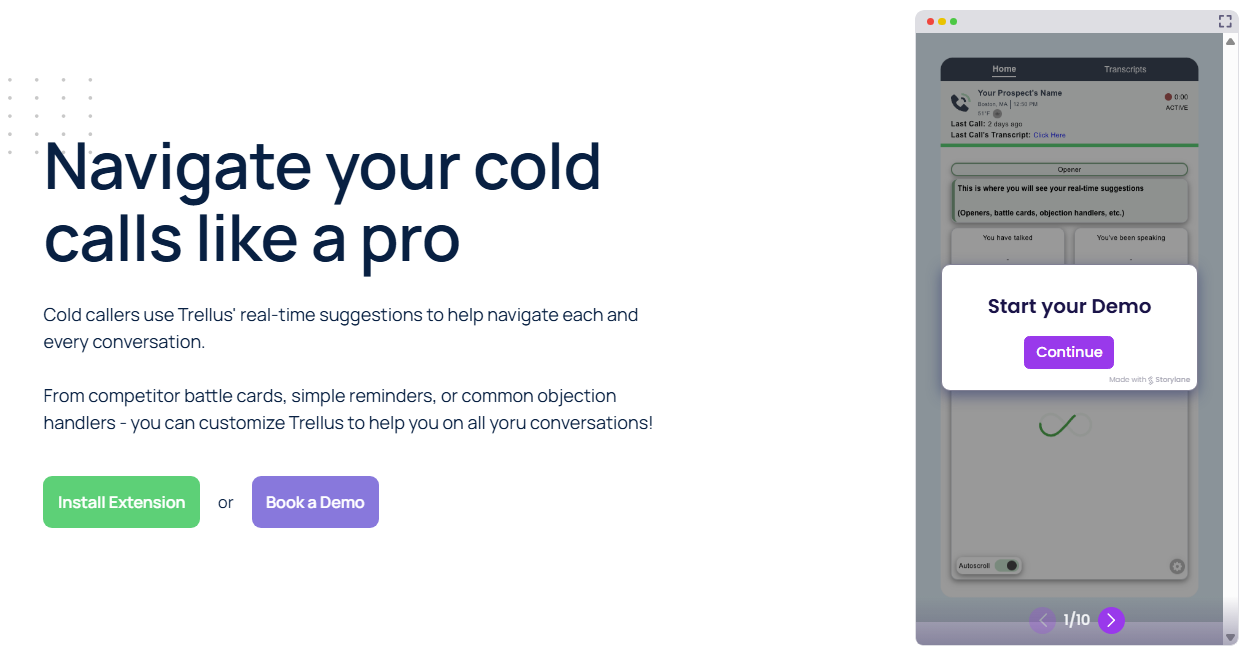
One of the most impactful capabilities inside Trellus is how its AI recognizes behavioral patterns during ongoing sales calls and supports reps in the moment, not after the deal is already lost or won.
Sales objections rarely appear as clean, direct statements. They surface through tone shifts, hesitation, repeated questions, longer pauses, or subtle changes in the prospect’s language. Most reps feel that change, but they cannot always interpret it accurately while thinking about what to say next.
This is where real-time guidance becomes a game changer.
As a call unfolds, the AI listens for behavioral signals that historically correlate with resistance, confusion, or disengagement. When those signals appear, SDRs receive contextual cues designed to help them respond more effectively without interrupting the natural flow of the sales conversation.
These cues are not scripts. They are directional nudges that help reps adjust how they communicate rather than what they pitch.
• AI driven objection detection across calls
Sales conversations are analyzed to identify common sales objections as they appear naturally. This gives teams visibility into which objections show up most often, how prospects phrase them, and where they appear in the deal flow.
• Pattern recognition tied to deal outcomes
Objection responses are correlated with progression or drop off. Reps can see which responses lead to clarity and which escalate resistance, turning objection handling techniques into repeatable skills.
• Coaching linked to real conversations
Managers coach directly on recorded moments rather than hypotheticals. This helps reps understand exactly how their words, tone, and timing influence buyer reactions.
• Real-time guidance during objection moments
Reps receive contextual support in the form of highlighted cues during live calls, helping them stay aligned with proven sales techniques while keeping the conversation natural. This real-time guidance reduces panic responses and keeps control of the dialogue.
• Sales training grounded in real buyer behavior
Training sessions are built from actual objection scenarios pulled from the team’s pipeline. This makes learning immediately relevant and easier to apply.


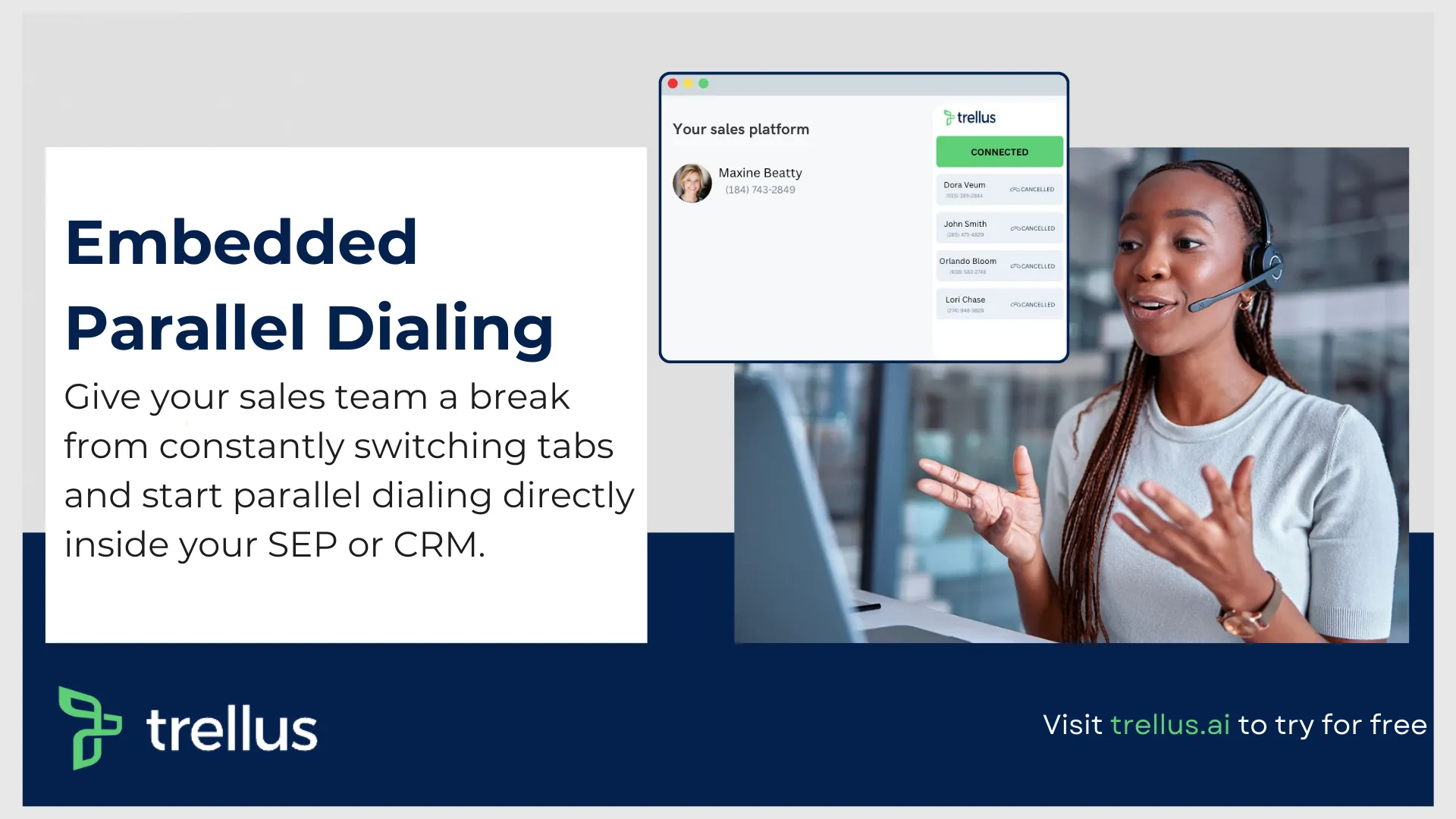
Power and parallel dialing in your CRM.