Our Top Picks


Ever since LinkedIn released its official Sales Navigator portal, there’s been a spurt of online content talking about it.
To that, there’s a high chance that you may have seen: ‘How to Sell via LinkedIn Sales Navigator,’ or ‘X and X Best Ways to Be a Pro on LinkedIn Sales Navigator’ type of posts.
Yeah, we get it. Not only did it become outdated info, but more and more people are hopping on the bandwagon without anything new to share with their audience.
Speaking of mastering sales on LinkedIn, we wanted to hit the topic with a very different angle. A combination of use-cases, different applicable examples and mention of some of the best tools is something we wanted to dig into, because it kind of offers a breath of fresh air.
Moving on…
When people ask how to use LinkedIn for sales, they usually mean one thing:
How do I turn activity on LinkedIn into a real pipeline?
The answer sits at the intersection of personal branding, prospect research, social selling, and smart outreach. When those pieces work together, LinkedIn stops feeling noisy and starts feeling predictable.
This is also where a clear LinkedIn sales strategy matters. Not a complicated one, but a practical system that supports prospecting, messaging, and relationship building without burning bridges or reputations.
Social Selling & The Norm of Hitting The Jackpot!
Social selling is the backbone of LinkedIn sales success.
For once, it shifts the focus away from pitching and toward earning attention through relevance and credibility.
On LinkedIn, social selling works because buyers are already in a professional mindset. They are reading about growth, leadership, tools, hiring, and performance. Sales conversations that begin inside that context feel natural rather than intrusive.
Strong social selling relies on three core ideas:
- Visibility before outreach
- Value before requests
- Familiarity before selling
When prospects recognize your name from comments, posts, or shared insights, outreach becomes a continuation of a conversation rather than a cold interruption. This is why LinkedIn for sales prospecting outperforms platforms built purely for messaging.
Social selling also shortens sales cycles. Prospects who engage with your content already understand your thinking, your positioning, and the problems you help solve. That context removes friction from discovery calls and pricing conversations.
From an SEO and platform perspective, social selling supports long-term lead generation. Your content continues working even when you are not actively messaging, which compounds reach and trust over time.
But at the same time, that doesn’t mean that you are no longer required to “refresh” the content. Over time, Google has become way too smart, and the recent Algo Updates actively cause content to decay if there’s nothing new of value added to it.
So, always look for new info, share experiences, and be in the habit of adding something valuable to your evergreen money making pages.
Personal Branding
Personal branding on LinkedIn is not about self promotion. It is about clarity.
Your profile answers one silent question for every visitor:
“Why should I pay attention to this person?”
A strong personal brand makes LinkedIn sales easier because it pre-frames your outreach. Prospects already know what you stand for, who you help, and how you think.
What actually matters in a LinkedIn sales profile
Your headline carries the most weight. It should communicate outcomes and audience, not job titles alone. Clear positioning improves discovery and increases acceptance rates during LinkedIn outreach for sales.
Your summary reinforces credibility. It should speak directly to the challenges your audience experiences, then connect those challenges to your experience. Avoid long career histories and focus on relevance.
Your featured section acts like proof. Case studies, posts with strong engagement, short videos, or resources instantly build trust. This is where your LinkedIn sales tips come to life visually.
A polished personal brand does more than attract leads. It filters them. The right people lean in, the wrong ones move on, and conversations improve on both sides.
LinkedIn Prospecting
LinkedIn prospecting works best when it feels intentional rather than aggressive. The platform rewards patience, relevance, and consistency.
Effective prospecting starts long before messaging. It begins with understanding who your buyers are, what they care about, and how they signal intent.
LinkedIn for sales prospecting allows reps to see job changes, content engagement, hiring activity, and company growth patterns. These signals help prioritize outreach without guessing.
Prospecting signals that matter
- Profile views and content engagement indicate early interest
- Job changes create natural conversation openings
- Comment activity reveals pain points and priorities
- Company updates highlight timing for outreach
This is where modern sales teams lean on AI prospecting tools to surface the right accounts faster. Smart tools scan engagement, behavior, and intent so reps spend time talking to the right people instead of searching endlessly.
For teams focused on B2B prospecting, LinkedIn remains unmatched. Decision makers are visible, accessible, and context rich, which turns prospecting into research rather than interruption.
Prospect Research
Prospect research separates high-performing sales reps from everyone else.
Before sending a single message, strong reps understand the person behind the title. They know what content the prospect shares, how they communicate, and what business challenges surface in public conversations.
Research improves reply rates because messages feel relevant rather than templated. It also reduces objections because outreach aligns with real problems instead of assumptions.
LinkedIn simplifies this process by keeping professional context in one place. Roles, tenure, interests, and activity patterns help shape messaging that sounds human.
Sales teams that take research seriously often pair LinkedIn with platforms that automate LinkedIn outreach without sacrificing personalization. Automation handles timing and sequencing, while reps focus on insight and conversation quality.
Content Strategy
Content fuels every part of LinkedIn sales. Without content, prospecting feels colder and messaging requires more effort.
A solid content strategy supports personal branding, lead generation, and relationship building at the same time.
The goal is not reach for its own sake. The goal is relevance. Content should speak directly to the problems your buyers think about during work hours.
Content formats that support LinkedIn sales
- Short text posts that share lessons from real sales conversations
- Carousels that explain frameworks or processes visually
- Polls that invite opinions and spark comments
- Long form posts that unpack industry shifts or buying behavior
Content works best when it creates conversation. Posts that invite responses outperform polished announcements. Comments create visibility, visibility creates familiarity, and familiarity improves LinkedIn messaging results later.
This approach supports LinkedIn sales solutions at scale because content warms up entire audiences, not just individual prospects.
LinkedIn Engagement & Everything You Need To Know About It
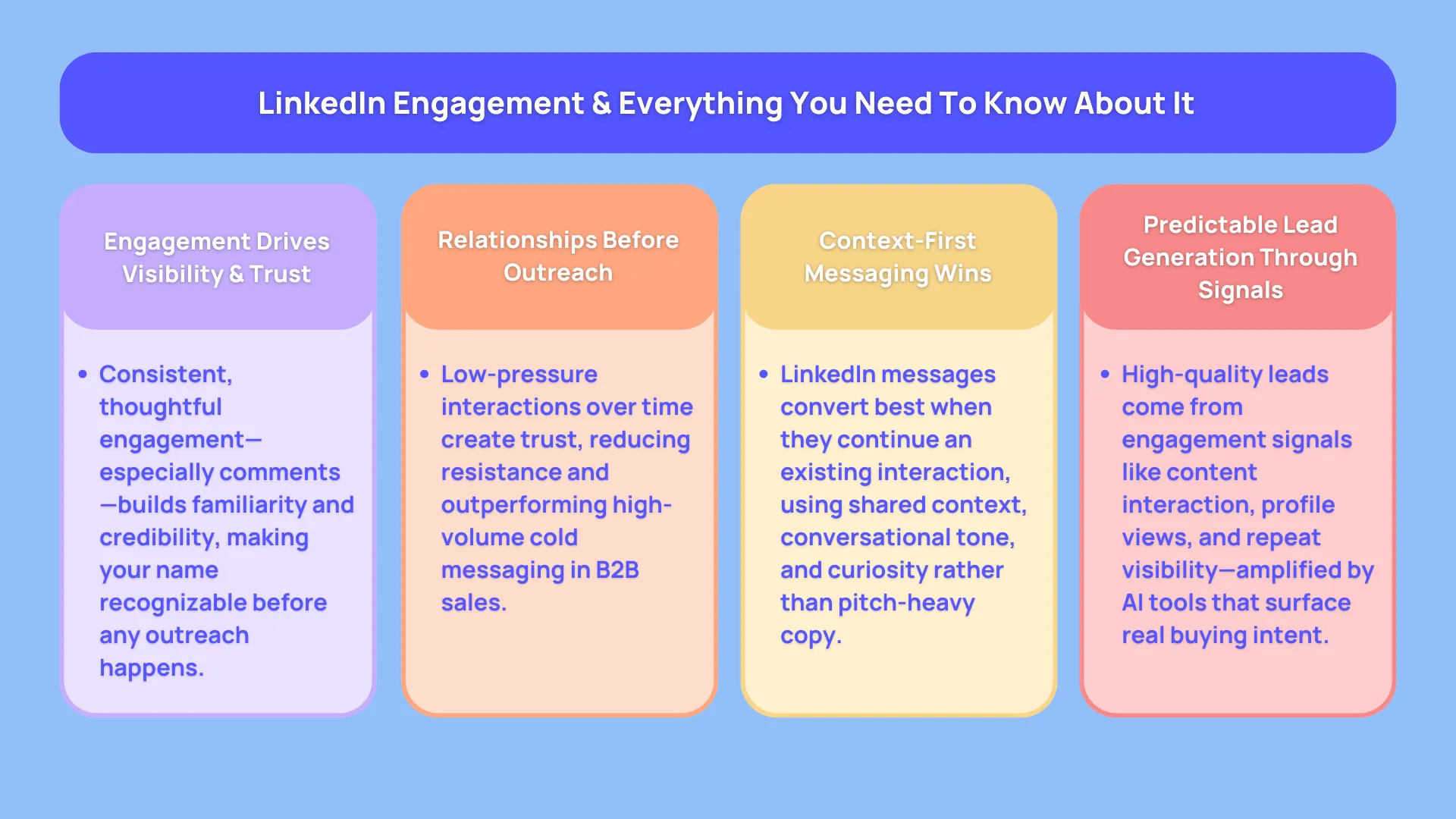
LinkedIn engagement is the silent engine behind successful sales outcomes on the platform. It determines how often your name appears in feeds, how familiar you feel to prospects, and how natural outreach sounds once messaging begins.
Engagement is not limited to posting content. In fact, many high performing sellers generate more meetings from comments than from their own posts. Thoughtful engagement positions you as a peer rather than a pitch.
When prospects see your name repeatedly under posts they already care about, trust forms passively. This makes LinkedIn outreach for sales feel expected instead of surprising.
Engagement that supports sales conversations
Engaging with the right people matters more than engaging everywhere. Focus on prospects, industry voices, and buyers already discussing relevant problems.
- Comments that add context or experience tend to earn replies and profile views
- Questions inside comments spark dialogue without sounding promotional
- Early engagement on posts increases visibility across second degree networks
Over time, engagement builds recognition. When you later send a message, prospects often recall your name even if they never replied before. That familiarity increases response rates without changing your messaging at all.
This is a critical part of how to use LinkedIn for sales without overwhelming inboxes.
Relationship Building
Relationship building is where LinkedIn separates itself from traditional outbound channels. Deals rarely close from one message, but they often close from repeated, low pressure interactions over time.
LinkedIn allows sales professionals to stay visible between touchpoints. Likes, comments, and shared posts maintain presence without asking for attention directly.
Strong relationships form when interactions feel mutual rather than transactional. That means showing interest in the prospect’s work, acknowledging their insights, and responding thoughtfully when they engage with your content.
How relationships develop naturally on LinkedIn
- Engagement creates familiarity
- Familiarity lowers resistance
- Consistent visibility builds trust
- Trust opens the door to conversations
For B2B prospecting, this matters more than volume. Fewer conversations with higher trust often outperform large scale cold outreach.
LinkedIn Messaging
LinkedIn messaging is most effective when it feels like a continuation rather than an interruption. The biggest mistake sellers make is treating LinkedIn like email, only shorter.
Messages perform better when they reference shared context. That context might come from content engagement, mutual connections, recent posts, or company updates.
Good LinkedIn sales tips focus on tone more than structure. Messages should sound conversational, respectful, and grounded in relevance.
Messaging principles that convert
- Personal context beats clever copy
- Curiosity outperforms certainty
- Short messages invite replies, not decisions
LinkedIn messaging works especially well when paired with engagement first. Even light interaction beforehand improves response rates significantly.
Sales teams often combine messaging with systems that automate LinkedIn outreach while still allowing personalization at scale. This balance keeps messaging timely without losing human tone.
Voice notes also play a growing role. They feel personal, stand out in crowded inboxes, and communicate intent more clearly than text alone when used sparingly.
Lead Generation
Lead generation on LinkedIn is not a single action. It is the result of consistent visibility, relevance, and trust.
Inbound leads appear when content resonates. Outbound leads convert when messaging aligns with buyer intent. Both rely on the same foundation.
LinkedIn sales strategy in 2026 focuses less on volume and more on signal. Signals come from profile visits, content engagement, and repeat interactions.
Where LinkedIn leads actually come from
- Content engagement from ideal buyers
- Comments that turn into profile views
- Conversations started in DMs after public interaction
- Referrals sparked through visible expertise
Modern teams support this motion with AI prospecting tools that highlight high intent accounts and surface engagement patterns humans might miss. These tools reduce noise and improve prioritization.
Lead generation becomes predictable once effort shifts from chasing responses to creating relevance.
LinkedIn Sales Solutions
LinkedIn sales solutions work best when they support behavior rather than replace it. Tools amplify what already works, but they cannot fix unclear positioning or poor messaging.
Sales technology should help with timing, consistency, and prioritization. It should remove manual friction so reps spend more time thinking and talking.
This is where automation fits responsibly. Systems that automate LinkedIn outreach help manage follow ups, pacing, and sequencing, but the message still needs human context to land.
Successful teams treat LinkedIn sales solutions as infrastructure, not strategy. The strategy remains rooted in relationship building and relevance.
Sales Navigator
Sales Navigator deserves a mention without dominating the conversation.
It helps with filtering, tracking, and account visibility, especially for enterprise teams. Its real value sits in saved lead alerts and account level insights.
Still, results depend more on how sellers engage than on which plan they use. Even without heavy Sales Navigator usage, strong LinkedIn engagement and messaging can outperform tool heavy workflows.
Trellus and Its LinkedIn Superhuman Feature
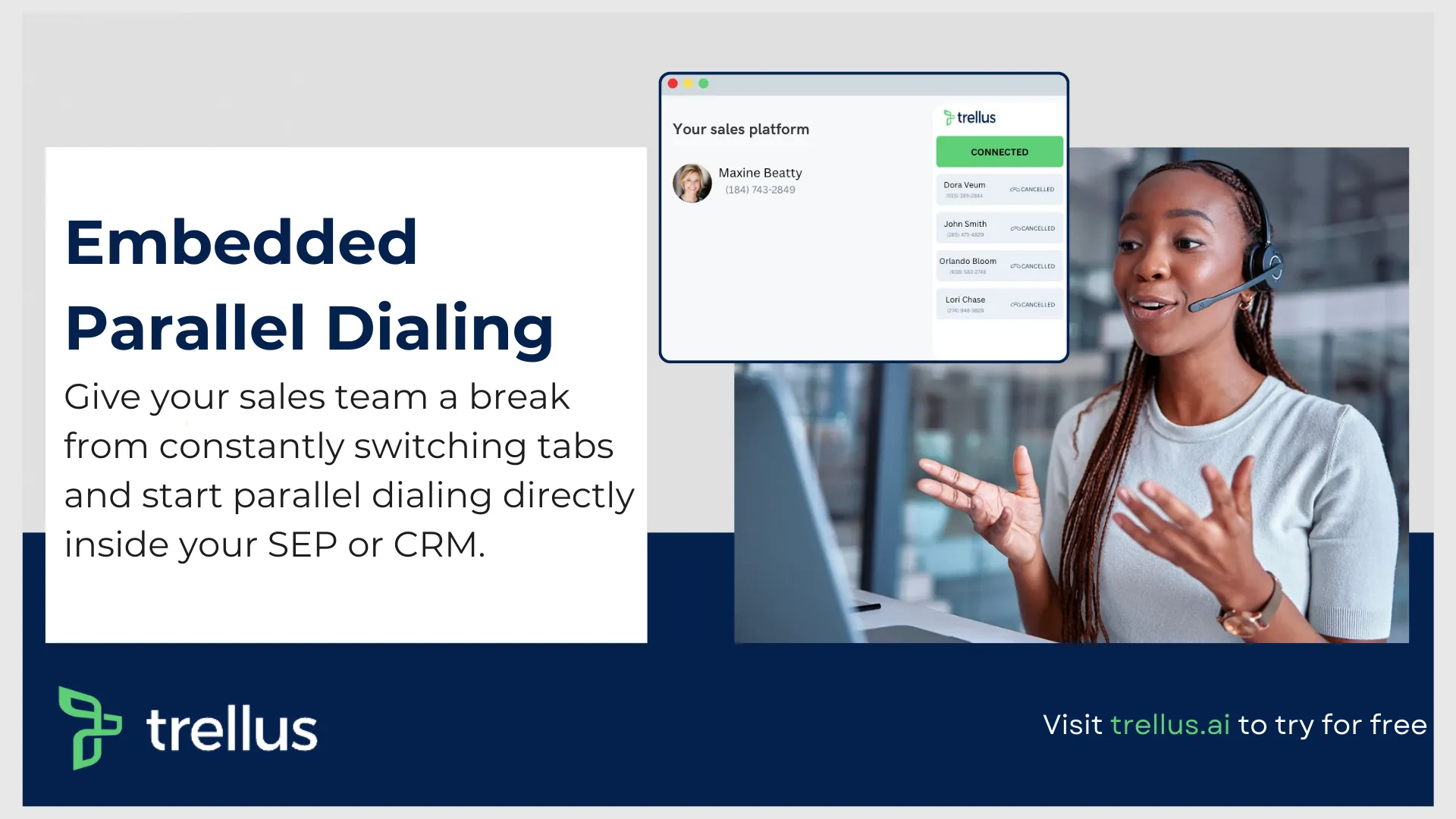
When talking about linkedin sales solutions that genuinely help reps manage activity and convert more conversations, Trellus is one of the newer names people are noticing in 2026. It’s an AI-driven sales engagement platform built around speed, context, personalization, and operational simplicity — all of which matter for strategic LinkedIn prospecting and social selling.
One of its standout capabilities is its Superhuman for LinkedIn feature, designed to improve how sales professionals handle LinkedIn messages and outreach without letting anything slip through the cracks. Essentially, it gives you a more powerful LinkedIn inbox that’s purpose-built for sales workflows.
What Superhuman for LinkedIn Actually Does
On the surface, LinkedIn’s native inbox is functional but limited. It doesn’t offer much for organizing inbound messages, following up at the right time, or tracking performance. Trellus’s Superhuman layer changes the experience in a few ways:
- Unified Inbox Management
It gathers all LinkedIn messages — including regular DMs and Sales Navigator conversations — into one place where you can triage, reply, snooze replies, and organize threads more efficiently. This is especially useful if you are doing LinkedIn outreach for sales at scale. - Smart Snoozing and Follow-Up Control
Instead of leaving messages to vanish in LinkedIn’s default interface, you can snooze them for later or set reminders so that prospects don’t go cold. Getting back to conversations at the right time is consistently a competitive edge in B2B prospecting. - Keyboard Shortcuts and Snippets
Trellus adds productivity features like keyboard shortcuts and reusable message snippets. These help you respond faster while keeping responses personalized — a balance that most automation tools struggle with. - Inbox Analytics
The feature also includes tracking and analytics that show patterns in your LinkedIn engagement — including how many connect requests include messages, DM activity, response rates, and team performance if you’re working together. These insights can influence future LinkedIn sales strategy decisions.
Where Does It Fit in a Modern Workflow?
For teams thinking about how to use LinkedIn for sales, Superhuman for LinkedIn is not a standalone lead generator — it’s a tool that supports lead generation and relationship building by helping you manage the interactions that matter most.


Power and parallel dialing in your CRM.