What Is Appointment Setting? A Complete Guide for Sales Teams
The term: What is Appointment Setting" coincides with different challenges and tactics that sales teams have to learn early on. Here's a detailed guide to fill you in on the process.
.jpeg)
On this page
Our Top Picks


The term: what is appointment setting in the context of any existing sales process is just the way of creating real, “meaningful” conversations with the right people at the right time.
We could say that it is the process of identifying potential buyers, starting conversations with them, qualifying interest, and booking meetings for closers. The person responsible for this work is called an appointment setter, and their entire focus lies at the very top of the sales funnel.
By the way, appointment setters are usually dedicated people with a sole task of finding new leads, and then forwarding them to the concerned department for a virtual or in person meeting. But, at the same time, these roles are also assigned to entry to mid level SDRs. And yes, you could say that it’s lead hunting with a twist.
The SDRs’ job is to do thorough research on prospects and then try and get them to convert, either through another appointment in the form of a warm call, or just do on the spot conversion within the course of the initial cold call.
Either way, it’s a process that a lot of people need to figure out early on in their careers, especially if they are sales personnel.
Why is it uber important to understand the basics of appointment setting?
Well, this separation matters.
When appointment setting is treated as its own role inside the sales process, teams stop wasting high-skill selling time on cold outreach and unqualified conversations. Account executives stay focused on revenue conversations, while setters keep the pipeline active and predictable.
So, in the context of any B2B outbound sales calling or simple outbound sales environments such as SaaS, agencies, and high-ticket services, appointment setting often determines growth velocity. Long buying cycles demand volume, structure, and consistency at the top of the funnel. Without a steady flow of qualified meetings, even the best closers stall.
The Role of an Appointment Setter in Sales Development

Sales Development exists as a kind of prelude to protect selling time.
Appointment setters sit right at the front of that function.
From that point of view, your typical appointment setter usually starts their day inside prospect lists, inboxes, and dialers. Their responsibility is not persuasion at scale, it is relevance at scale. They identify accounts that match the Ideal Customer Profile, personalize outreach enough to earn replies, and qualify interest before passing anything forward.
As we mentioned a bit earlier, this role is often assigned to junior SDRs or entry-level sales hires, but the impact is far from junior. Another reason for assigning this role to junior level SDRs is attributed to honing their training and conversational skills. And yes, they learn to properly conduct research on a prospect’s interests and pain points too.
Where many teams struggle is treating appointment setting as a side task.
Appointment Setting In The Context of SDR vs BDR vs AE Roles
Titles in sales can get messy fast, so clarity helps. You can trust us on that because we’ve been part of the sales niche for a very long time now.
An SDR or BDR usually goes further. These roles handle qualification calls, discovery conversations, and sometimes early objection handling. In some teams, they still book meetings, but they also validate urgency and fit more deeply.
An AE steps in after that. They run demos, manage negotiations, and close deals. Their quota ties directly to revenue.
This division of labor works because it matches effort to skill. Appointment setters thrive on repetition, messaging, and prospect engagement. SDRs bridge context and need. AEs concentrate on persuasion and deal structure.
When appointment setting is handled properly, closers stop chasing cold calendars and start spending time with buyers who actually want to talk. That is where ROI multiplies.
Where Appointment Setting Fits in the Sales Process
Inside the broader Sales Process, appointment setting acts as a filter rather than a pitch stage.
Marketing activity generates awareness and interest. Appointment setters convert that interest or cold attention into conversations. Only after that does selling truly begin.
This placement matters because it changes expectations. Appointment setting does not exist to convince prospects to buy. It exists to confirm relevance, authority, and timing. When teams confuse these roles, meetings feel forced and trust erodes early.
Strong appointment setting strategies align closely with the overall sales strategy. Messaging mirrors value positioning. Qualification criteria reflect deal reality. Handoffs include context instead of calendar links with no notes.
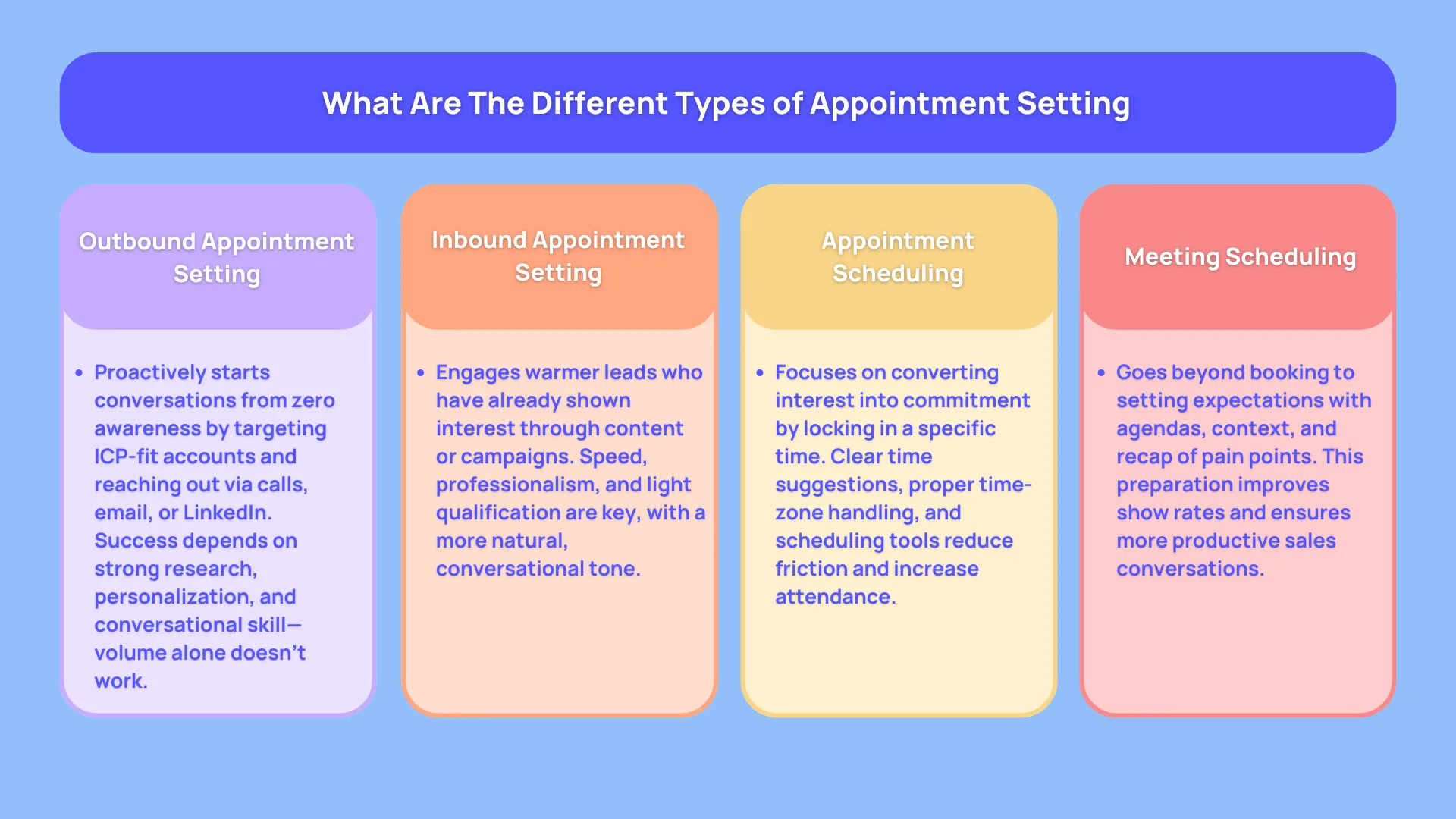
What Are The Different Types of Appointment Setting?
Good question!
In order to understand the process of appointment setting, it’s important to double down on the different types of sub-level activities that makeup for the experience of setting appointments.
Outbound Appointment Setting
Outbound appointment setting starts conversations from zero awareness.
The salesperson identifies target accounts, researches decision makers, and reaches out through email, calls, or LinkedIn messages.
This approach requires patience and structure. It often takes multiple touches to earn a reply, and even more to secure a meeting. Relevance carries more weight than volume here. Poor targeting or generic copy kills response rates fast.
We think that calls are extremely important because, as a sales rep, you’re directly interacting with either a gatekeeper or the prospect. At this point, your conversational skills, ability to have solid comebacks to the usual cold calling objections from the prospect’s side, and research matters alot.
And you cannot lag on any front. If your research is thorough and you have good communication skills, there are high chances of converting the lead. If, let’s say, you are lacking in conversational skills, despite having conducted rock solid research, you won’t be able to convince the prospect.
So, you see, everything goes hand in hand from a long term perspective.
Inbound Appointment Setting
Inbound appointment setting works with warmer leads. These prospects already interacted with content, ads, webinars, or forms. The job shifts from interruption to response.
Speed becomes critical. Fast follow-ups signal professionalism and increase show rates. Qualification still matters, but the tone feels more conversational since interest already exists.
High-performing teams combine inbound and outbound flows. Inbound creates efficiency, outbound creates control. Together, they stabilize pipeline flow.
Appointment Scheduling and Meeting Scheduling
Appointment Scheduling
Appointment Scheduling sits at the intersection of interest and commitment. A prospect agreeing to a time slot is the first tangible buying signal.
Effective scheduling avoids vague back and forth. Specific time suggestions reduce friction and subtly create urgency. Clear time zone handling prevents confusion, especially for distributed sales teams.
Appointment setting software plays a major role here. Automated calendar links, availability syncing, and conflict prevention improve the experience for both sides without removing the human touch.
Meeting Scheduling
Meeting Scheduling goes beyond booking. It includes context sharing, agenda clarity, and expectation setting.
When prospects know why the meeting exists and what they will gain, show rates increase. This is where appointment setters add real value. A simple recap of pain points and goals sets the stage for a productive call.
Calendar Management and Meeting Confirmation
Calendar Management
Strong Calendar Management protects both sales time and buyer trust. Overbooking kills energy. Underbooking kills momentum.
Appointment setters should understand AE availability patterns, buffer needs, and preferred meeting windows. This awareness reduces reschedules and last-minute cancellations.
Calendar hygiene also affects reporting. Clean scheduling data helps teams evaluate appointment setting best practices and identify bottlenecks inside the sales workflow.
Meeting Confirmation
Meeting Confirmation is where many teams drop the ball.
Confirmation emails, reminders, and brief value reinforcement reduce no-shows dramatically. This step is not spam, it is respect for time. When prospects feel prepared, they show up.
The best confirmation messages recap why the meeting exists, who will attend, and what will be discussed. Short, clear, and human always wins.
Lead Qualification and Prospect Engagement
By now, you already know that lead Qualification protects the pipeline from false momentum.
Appointment setters should confirm authority, need, and timing before booking. This does not require interrogation. It requires curiosity and listening.
A meeting booked with the wrong person creates friction later. Similarly, any meeting booked with the right context accelerates deals early.
Prospect Engagement
Prospect Engagement is about conversation quality, not channel count.
Replies matter more than sends. Listening matters more than scripts. Setters who adapt messaging based on responses outperform those who push templates blindly.
This is also where appointment setting techniques evolve over time. Data informs pacing. Feedback from AEs refines qualification. The system improves without forcing it.
Appointment Setting Software and Sales Workflow
Appointment setting software supports scale, not shortcuts.
Tools help with inbox warmup, list management, scheduling, and reporting. They reduce manual work and protect deliverability. What they cannot replace is judgment.
Inside a modern Sales Workflow, software handles coordination while humans handle context. Teams that lean entirely on automation lose trust fast. Teams that ignore it burn out even faster.
Balanced systems win.
Metrics That Matter for Appointment Setting
Appointment setting lives or dies on measurement.
Without clear numbers, teams fall back on opinions and anecdotes, which is where pipelines quietly break. The goal is not tracking everything, it is tracking what directly connects effort to revenue.
Reply Rate
Reply rate measures how many prospects respond to outreach across email, calls, or LinkedIn messages. This metric reveals targeting quality and message relevance more than anything else.
A healthy baseline usually sits around 3 to 5 percent. Strong teams consistently push beyond 8 percent. When reply rates fall, the issue is almost never volume. It is list quality, weak personalization, or messaging that sounds like every other sales email in the inbox.
Reply rate should be monitored weekly. Sudden drops often signal deliverability issues or list decay, both of which need fast correction inside the sales workflow.
Meeting Rate
Meeting rate shows how many outreach attempts turn into booked conversations. This metric highlights the effectiveness of appointment setting techniques rather than just copywriting.
A realistic benchmark sits between 1 and 2 percent. Higher rates usually come from strong qualification questions and confident scheduling language. When meeting rates stall, setters are often talking to the wrong personas or failing to clearly explain why the meeting matters.
Show Up Rate
Show up rate measures trust. It reflects how many scheduled meetings actually happen.
Rates between 70 and 80 percent are common. Elite teams push beyond 80 percent through strong meeting confirmation habits and clear expectation setting. Poor show up rates often trace back to rushed qualification or vague agendas.
Lead to Opportunity Conversion
This metric ties appointment setting directly to revenue impact. It measures how many booked meetings turn into real sales opportunities.
If this number is weak, the problem is not scheduling volume. It is qualification quality. Appointment setters should never be judged only on meetings booked. Quality always wins long term.
Qualified Meetings Per Month
This metric sets pacing expectations. Most appointment setters realistically deliver 20 to 40 qualified meetings per month when systems and targeting are healthy.
Volume without qualification inflates calendars and kills morale. Balanced output protects the entire sales process.
Appointment Setting Best Practices That Work Like a Charm!
One of the most damaging myths in sales is that more meetings always equal more revenue. Poor quality meetings drain time and energy from closers.
High performing teams define what a qualified meeting means and enforce it. Authority, relevance, and timing matter more than curiosity alone. Appointment setting best practices always favor fewer, better conversations.
Tight Alignment Between Setters and Closers
Appointment setting does not operate in isolation. Feedback loops between setters and AEs refine targeting and messaging.
When closers share what converts and what stalls, setters adjust outreach accordingly. This alignment strengthens the entire sales workflow and reduces wasted effort.
Consistent Follow Up Cadence
Prospects rarely respond on first touch. Effective appointment setting strategies rely on structured follow up across multiple channels.
Five to seven touches across email, phone, and LinkedIn over two weeks creates familiarity without pressure. Each touch adds context rather than repeating the same ask.
Domain and Deliverability Discipline
Deliverability underpins everything. Poor inbox placement quietly destroys performance.
Warm up new domains slowly. Keep bounce rates under one percent. Limit daily sends per inbox. Appointment setting software helps here, but discipline matters more than tools.
Common Appointment Setting Problems and How Teams Fix Them
We’ll start off with LRR, and go through everything you need to know to understand the most basic challenges and issues, and how to overcome them like a true sales professional.
Low Response Rates
Low response rates usually point to list issues or generic messaging. Fixing this requires tightening ICP definitions and personalizing based on real signals such as funding news, hiring trends, or tool usage.
Adding voice agents for appointment setting can help reach segments that ignore email, especially in industries where phone still dominates early conversations.
High No Show Rates
No shows often result from weak qualification or poor meeting confirmation. Prospects agree to meetings out of politeness, then disappear.
Clear agendas, reminder sequences, and brief value reinforcement dramatically improve attendance. Respect for time creates reciprocity.
Burnout in Appointment Setters
Appointment setting is repetitive work. Burnout happens when volume expectations ignore reality.
Healthy teams rotate tasks, provide clear ramp plans, and use smart sales automation to remove manual friction without replacing human judgment.
Building a Scalable Appointment Setting Strategy
An effective appointment setting strategy balances structure and flexibility.
Structure comes from defined ICPs, messaging frameworks, qualification criteria, and scheduling rules. Flexibility comes from allowing setters to adapt conversations naturally.
Scalability depends on repeatable inputs rather than heroic effort. When results rely on individual talent alone, growth stalls.
Strong strategies also account for time zones, channel preferences, and market maturity. What works for SMB SaaS rarely works unchanged for enterprise services.
Appointment setting should feel predictable, not chaotic.
What’s The Best Way For Training and Ramping Appointment Setters, SDRs Etc.?
Training should focus on thinking, not scripts.
New setters need to understand ICP logic, not just who to contact. They need to hear real objections, not just ideal replies. Shadowing live conversations accelerates confidence faster than documentation alone.
Ramp plans should start slow. Inbox warmup, list familiarity, and messaging practice come before volume targets. Rushed ramps create deliverability problems and bad habits that linger.
Ongoing coaching matters more than onboarding. Regular call reviews and copy feedback sharpen performance over time.
Cost Models and Scaling Appointment Setting
Appointment setting costs vary widely based on approach.
In house teams require salary, tools, and management. Outsourced teams offer speed and flexibility but require strong alignment. Pay per appointment models range widely depending on industry and deal size.
The right choice depends on deal complexity, sales cycle length, and internal maturity. There is no universal answer.
What matters is accountability. Meetings must convert. Otherwise cost savings are an illusion.
As deal sizes increase and buying committees expand, appointment setting stops being about volume and starts becoming about orchestration. Advanced appointment setting techniques focus on relevance, timing, and internal alignment inside the prospect’s organization.
Multi Stakeholder Mapping
In complex B2B sales, one meeting rarely moves a deal forward on its own. Appointment setters need to understand who influences decisions, who controls budget, and who blocks progress.
Instead of chasing a single title, advanced setters map the buying group. They engage champions, loop in technical evaluators, and identify economic buyers early. This approach creates momentum before the AE ever enters the conversation.
Mapping stakeholders also improves lead qualification. A meeting booked with one person who can pull others into the process is far more valuable than three disconnected meetings.
Trigger Based Outreach
Timing matters more than persistence. Advanced appointment setting strategies rely on external triggers to guide outreach.
Triggers include funding announcements, leadership changes, hiring spikes, product launches, and tool adoption signals. These moments indicate internal change, which creates openness to new conversations.
When outreach aligns with a real business moment, reply rates rise naturally. The conversation feels timely instead of intrusive.
Conversation First Messaging
At scale, it is tempting to over optimize copy. Advanced setters resist this trap.
They write messages that invite dialogue instead of pushing outcomes. One clear question beats three benefits. Curiosity outperforms claims.
This approach strengthens prospect engagement and sets a collaborative tone that carries into the sales process later.
Over To You!
Appointment setting is not a support task or a temporary fix for slow pipelines.
It is a core revenue function that shapes how prospects experience your brand long before a deal is discussed. Teams that understand what is appointment setting and treat it as a defined discipline consistently outperform teams that treat it as calendar filling.
A strong appointment setter creates clarity early. They protect the sales process from unqualified conversations, respect the prospect’s time, and set the tone for trust based selling. When appointment setting works, Account Executives spend their time where it matters most, inside high quality conversations with real buyers.