Our Top Picks


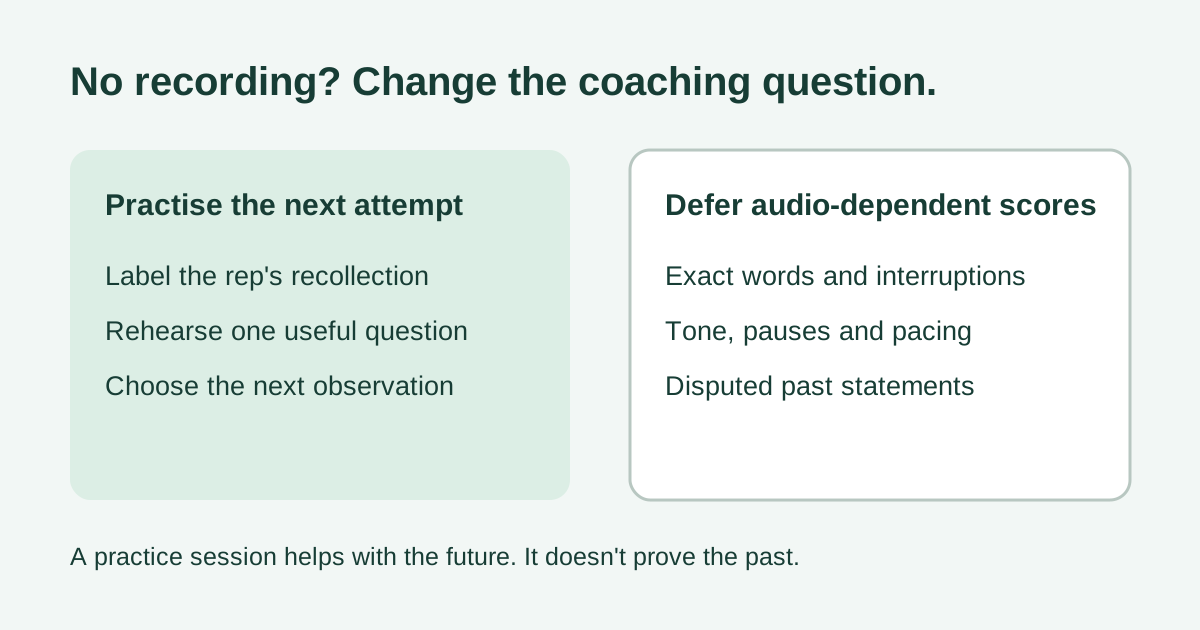
If a call recording isn't available, keep the coaching session—but change what you expect it to prove. You can help a rep prepare a better question, clarify the next action or practise an awkward moment. You can't confidently grade their exact delivery from a summary written after the call.
Start by telling the rep which kind of conversation you're having: “We can't listen back to this one. Let's work through what you remember, keep the uncertain parts uncertain, and practise what you'd like to do next time.” That gives the session a useful purpose without turning it into a trial about words neither person can check.
Separate the missing recording from the coaching problem
A missing recording may mean it wasn't created, isn't available to your account, hasn't appeared where you expected or is no longer retained. Those possibilities need different checks. Follow your team's approved access and retention process rather than assuming the rep forgot to record—or trying to recover audio through an unauthorized workaround.
Coaching needn't wait for that investigation. Write down who will check the recording issue, then ask what the rep wants help with. If the question is “What should I ask when a buyer says the reporting process is fine?”, you can rehearse a useful follow-up now. If it's “Did I interrupt the buyer repeatedly?”, a recollection isn't a reliable substitute for hearing the conversation.
Keep those two questions in separate notes. Otherwise a technical access problem can quietly become a performance judgment, or the session can disappear into troubleshooting without helping the rep at all.
Use the evidence you actually have
Open the permitted call record, the rep's notes and any relevant written buyer response. Look for the call time, the people involved, the stated outcome and the next action. These can establish useful context. They don't establish every sentence spoken, the buyer's tone or how long the rep paused.
A transcript, if one is available through an approved path, may help with wording, but don't assume it answers delivery questions. Check names, speaker labels and the passage that matters. A transcript error can change a coaching recommendation; punctuation can make a tentative answer look decisive. Use the sales call transcript check before relying on a particular line.
Ask the rep to distinguish what they remember from what they inferred. “The buyer said the team uses a spreadsheet” is different from “I think they were unhappy with the spreadsheet.” Both may be worth discussing, but the second shouldn't become a quotation in the coaching record.
When the words are unclear, write a paraphrase and label it that way. Don't put quotation marks around a sentence reconstructed together in the meeting. The polished version can otherwise travel into a deal note, a scorecard or another person's handoff as if it came directly from the buyer.
A worked example: a buyer says the process is fine
Consider this fictional example. Lena, an SDR, remembers a buyer saying that their reporting process was fine. Lena moved to a product explanation, then the buyer asked for an email. The call record says “send overview”; no recording is available. Lena wants to know whether she should have asked another question.
The manager could jump to “You missed discovery.” But the available information doesn't show what Lena asked earlier, whether the buyer was trying to end the conversation or whether the reporting process was even relevant to their role. Start with narrower questions: What had you asked immediately before that answer? What made you think reporting was worth discussing? Did the buyer explain what “fine” meant?
Suppose Lena remembers asking only which system the team uses. The coaching opportunity is to practise exploring a process without manufacturing a problem. A possible follow-up is: “What's working well about the way you're doing it now?” If the buyer wants to continue, Lena can ask how the team handles a specific step. If they don't, she should respect that rather than keep digging until an objection becomes a pain point.
Run the practice twice. First, have the manager play a buyer who is willing to explain the process. Then play a buyer who is busy and asks for an email. Lena should have a useful response in both cases. Success in the second version might be confirming what information would be relevant and ending courteously, not extending the conversation.
The session can produce a clear practice goal: ask one process question before giving an explanation when the buyer is willing to discuss it. It cannot establish that Lena failed that standard on the original call. The original conversation remains partly unknown.
Choose one thing to practise
A reconstructed call can generate a long list of advice. Resist giving all of it at once. Choose a behavior the rep can recognize and try: asking a follow-up to a broad answer, checking who owns a process, confirming a next step or ending a conversation when the buyer has declined.
Make the situation concrete enough to rehearse. “Improve discovery” isn't a practice instruction. “When someone says they already have a system, ask what works well before explaining ours” gives the rep a starting point. It also leaves room for the buyer's answer to change the direction of the conversation.
Don't rehearse a rigid script until the rep learns to force every buyer through it. Let the manager vary the response, and ask the rep why they chose their next question. The rep should learn to respond to the answer they get, rather than memorize the conversation the manager wishes had happened.
A coaching note that doesn't overstate the call
Copy these fields into your existing coaching notes. Keep the note short; it should be easy to revisit before the next session.
- Question for this session: What does the rep want to handle better?
- Available material: Call record, notes, permitted transcript or written response; identify what's missing.
- Known context: Facts supported by that material.
- Rep recollection: A clearly labeled paraphrase, with uncertain details left uncertain.
- Practice: The situation and one behavior rehearsed.
- Next observation: Where you'll look for that behavior, without assigning a retrospective score to the unreviewable call.
For Lena, that might read: “Question: responding when a buyer says their process is fine. Available: call record and Lena's notes; no audio. Known: overview email requested. Recollection: Lena thinks she moved directly from the system name to a product explanation; exact exchange unknown. Practice: ask what works well, then follow the buyer's answer. Next observation: review an eligible later conversation that contains a comparable answer.” This is a fictional filled example, not a customer result.
When to defer the judgment
Some questions should remain unanswered until suitable material is available. Exact interruptions, talk-time balance, vocal delivery and whether the rep used a particular phrase all depend on what actually happened. Don't convert “we couldn't review it” into a poor score or mark an unseen behavior as demonstrated.
If the conversation concerns a disputed promise or another consequential factual disagreement, keep that issue out of the practice exercise and follow the appropriate internal review process. A role-play may improve a future conversation, but it doesn't resolve a dispute about the past.
Nor should the team record a later call contrary to its approved policy just to fill the gap. Choose an eligible conversation or another permitted observation method. Access and recording decisions belong to the team's established process, not an improvised exception in a coaching meeting.
Make the next session answer a real question
Before ending, agree on what you'll examine next. Pick a later eligible call where the practice situation actually occurred. If the next conversation never presents that situation, it won't tell you whether the rep used the skill. Avoid treating any available recording as an automatic follow-up test.
Use the call-selection worksheet to keep targeted practice review separate from your broader coverage sample. The missing recording shouldn't push every future review toward the same narrow question.
At the next session, ask what changed in the rep's decision and whether the buyer's response made the question useful. You may decide to keep practising, adjust the question or choose a different skill. The valuable result is a clearer next attempt—not a confident-looking score built on a conversation nobody could replay.

Power and parallel dialing in your CRM.