Our Top Picks


“Call me next week” sounds like a next step. It isn't quite a workable callback yet. Which day? In whose time zone? What should the next rep bring up? Before ending the conversation, turn that loose instruction into something the buyer recognizes and another person can carry out.
You don't need to interrogate someone who's trying to get back to work. A short confirmation is often enough: “Would Tuesday afternoon be useful, or is there a better day? And should we pick up on the reporting problem we discussed?” If they don't want to choose a time, keep that uncertainty in the note. An approximate window is more honest than an appointment the buyer never agreed to.
First, work out what the buyer actually offered
A requested callback, permission to try again and a polite dismissal can sound similar. The next action depends on the difference. “Call me Tuesday after the planning meeting; I'll know who owns this” gives the rep a reason and a useful window. “You can try next week” leaves both less certain. “Send something and I'll get in touch if it's relevant” doesn't promise another conversation at all.
Don't rewrite all three as “interested—follow up.” Save the buyer's instruction close to how they said it, then add your understanding separately. If the buyer asked for information, record what you agreed to send. If they said no or asked not to be contacted, don't turn that into a callback task.
The purpose of clarification is to respect the instruction, not to squeeze a meeting out of it. You can ask one useful question without making an uncertain answer sound more enthusiastic in the CRM.
A vague window needs one small question
Imagine a buyer says, “We're closing out the quarter. Call me next week.” The rep creates a Monday-morning task called “follow up.” On Monday, another rep opens it and knows neither why the buyer delayed nor what would make that call useful. The task has a date, but it has lost the conversation.
A better ending would be: “Understood. Is there a day next week when quarter-end work will be out of the way?” Suppose the buyer answers, “Thursday afternoon is better. We're on Central time.” The rep can confirm, “I'll try Thursday afternoon Central, and we can pick up on how you're putting the team report together.”
That is a callback window, not a booked appointment. Don't choose 2:00 p.m. and then tell the next rep that the buyer committed to 2:00. If your work system requires an exact due time, use one that helps your team surface the task and label it as an internal reminder. Keep the actual buyer-approved window alongside it.
If the buyer can't pick a day, you can still leave a useful record: “Permission to try next week; no day or time agreed; quarter-end workload was the reason for waiting.” The next rep won't mistake your calendar choice for the buyer's promise.
Save a reason to reopen the conversation
A callback note should help the rep start where the conversation stopped. “Following up as promised” explains why you're calling, but not why the buyer should continue. Record the topic they were willing to discuss, what was left unresolved and any relevant change they expected before the callback.
For example, “Buyer expects to learn who owns reporting after Tuesday's planning meeting; ask whether that owner has been identified” gives the next rep something specific to ask. It doesn't invent purchasing authority or a project deadline. Those can remain unknown.
Keep the note short enough to read before the call. A paragraph of pitch language is usually less useful than the buyer's reason for asking you to return. Link the earlier call record when available, but don't require the next rep to replay the whole conversation just to find the promised day.
Use a note with six useful fields
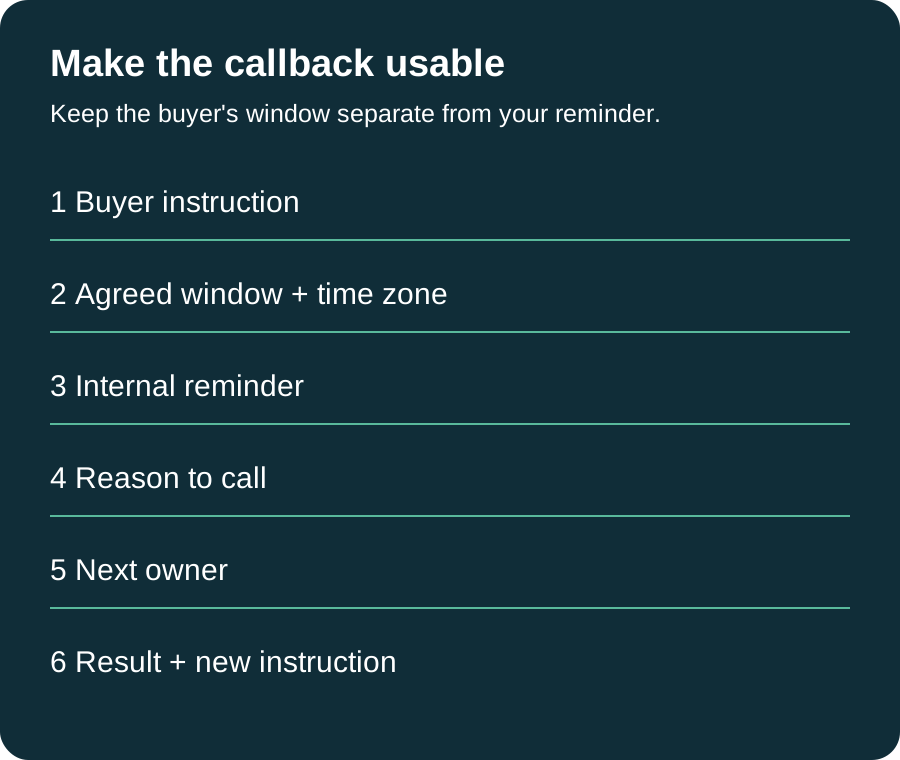
Copy this into the place your team keeps callback work. The field labels can change; the distinctions shouldn't.
- Buyer instruction: The requested callback or permission to try again, including any limits.
- Agreed window: Day or date, time or range, and the buyer's stated time zone. Say “not agreed” when needed.
- Internal reminder: When your system should surface the task. Mark this as your team's choice if it differs from the agreed window.
- Reason to call: The topic to resume and what the buyer expects to know or have available.
- Next owner: Who is responsible for making the attempt.
- After the attempt: Where to record what happened and any new instruction.
A filled-out example might read: “Buyer said Thursday afternoon Central works after quarter-end reporting. Internal reminder Thursday at 1:00 Central; no exact appointment agreed. Resume discussion of the manual team-reporting process. Priya owns the attempt. Record result on the same contact and update the task if the buyer changes the window.” Priya and this scenario are fictional; the example demonstrates what belongs in a note, not a Trellus customer result.
Changing the owner shouldn't erase the promise
Suppose the original rep is away on Thursday. Reassigning a task is only part of the handoff. The new owner needs to see the agreed window and topic, and the team needs to know that somebody has accepted the work. Otherwise two reps may each assume the other will call—or both may make an attempt.
Review the record before dialing. Has another rep already reached the buyer? Did the buyer reply by email with a new instruction? Is this still the correct person? The callback is a commitment to a person, not a reason to ignore newer information.
If the original rep's relationship matters, consider whether a handoff is appropriate at all. A buyer expecting a familiar person may benefit from a brief introduction or a rescheduled conversation. Don't pretend the new rep had the earlier conversation. They can say, “You spoke with Priya about your reporting process; she left a note that Thursday afternoon would be a useful time to return.”
Keep a missed attempt separate from a broken promise
A buyer not answering inside an agreed window isn't the same as the team failing to attempt the callback. Record the attempt and its outcome rather than marking the conversation complete because the task disappeared from the queue.
Nor does a missed answer give the team a new appointment. If the buyer later says, “Friday after ten instead,” save that new instruction and make clear which commitment it replaces. Avoid leaving two active tasks that both look current.
When reviewing missed callbacks, start with a few records. Could the rep see the window? Was an owner assigned? Did the work reach that owner before the window passed? Was the call made but not recorded? Each answer suggests a different repair. A reminder won't fix an unclear note; a clearer note won't fix work that nobody owned.
Check the callback before the next call block
Ask a rep who didn't make the original call to read the note. Can they tell when to try, why to try and whether the time came from the buyer or the team's reminder system? If they have to ask the original rep to explain “follow up,” improve the note before adding more automation.
For platform-specific worklist setup, use the Salesforce calling workflow or the Attio calling workflow. The way a task is created depends on your platform and permissions. The buyer's instruction should remain recognizable whichever system holds it.
The practical goal is modest: when the callback comes due, the right person can honor the conversation without guessing what was promised.

Power and parallel dialing in your CRM.