Our Top Picks


Despite a low conversion rate (almost 2% to 5%, when you account for 100 calls per salesperson), it’s still a highly embraced practice in the worldwide sales industry.
Yes, we know that the menial number is a little discouraging, but given the state of overall call volume, a salesperson’s communication tactics and research done on a prospect, a high ticket cold call conversion beats the odds.
Hence, the practice yields some of the best results when it’s combined with demo calls, appointments, real-time conversions that occur during a call, and vice versa.
At the same time, cold calling isn’t as easy as it seems.
On a personal level, I have seen many salespeople and small business owners who enthusiastically dial prospect numbers, from a lead generation and conversion POV, only to fumble over a cold call objection, or they just happen to be at a loss for the “right” kind of words.
The end result is a lost opportunity, which could have been seized, given the right kind of approach at hand.
Aside from that, at a bigger scale, when we have a fully operational business employing a dedicated sales department with different sales teams, the question that’s commonly asked is if cold calling is still relevant and the best strategy that could “almost guarantee” conversion and a high number of closed deals.
Well, we already answered the relevancy question.
The only part that remains to be figured out is having a cold calling strategy that you can adapt to.
And by that, we mean that having some kind of cluster of tips which you can personalize to suit your business requirements, the type of prospects that you usually dial, and so on and so forth.
So, with that in mind, and since it’s the start of a brand new year, we wanted to highlight some of the most important aspects of cold calling strategies that aren’t recycled like most of the content you find online.
Let’s get started with strategies and a bunch of cold call scripts that convert.
What is Cold Calling Strategy?
A cold calling strategy is the intentional framework behind every outbound call.
It is more like user or manager defined steps that would say do XYZ to convert a prospect into a paying customer.
As a matter of fact, speaking of steps, many companies have conditional statements in their cold calling software scripts that are handed to sales callers. These scripts are usually broken down into different parts, where some areas are highlighted, stating: IF a prospect says this, respond with ABC statement.
Moving on, the strategies define who gets called, why they’re being called, how the conversation unfolds, and what success looks like at the end of the interaction.
Without this structure, cold calling turns into random activity that feels busy but rarely moves the needle.
Many teams end up confusing effort with strategy. High dial counts and long call blocks might look productive on paper, but without alignment across targeting, messaging, and follow through, they rarely translate into meaningful Sales Pipeline Development.
Similarly, many sales managers are inclined to reward SDRs with a low sales conversion ratio over those who have higher number of dials and conversions. This happens in case those low sales account for big ticket items or services, netting twice or thrice the amount of profit thats usually made on a smaller number of sales.
Why Cold Calling Is Important
Cold calling matters because it creates conversations that no algorithm can fully control.
The same could be said about state of the art cold calling software, which have AI embedded solutions and parallel dialers. Despite these features, the actual conversion and conversation part comes down to a caller speaking to a prospect, and how it’s reciprocated on the prospects’ end.
Period.
That being said, cold calling is one of the few Sales Engagement channels where intent can be tested instantly. A prospect’s tone, pace, hesitation, or curiosity tells a story long before a formal Discovery Call ever happens. For teams serious about Prospect Qualification, that signal is gold.
Needless to say, this activity also plays a critical role in outbound Lead Generation when inbound demand slows. Not every company has the luxury of waiting for interest to arrive. Outbound Sales exists to create momentum, and cold calling remains one of the fastest ways to validate accounts, personas, and messaging in real time.
There’s also a hard truth most teams avoid. Many buyers will never reply to emails, fill out forms, or engage on LinkedIn, but they will answer the phone. Especially in industries where Telemarketing fatigue is high and inbox trust is low, a thoughtful call still stands out.
From a skills perspective, we’d say that cold calling sharpens everything else in sales. Messaging gets tighter. Handling objections improves over time and with enough practice on a caller’s end.
Sales Script Development becomes clearer. Reps learn to listen instead of reciting lines from their scripts. That’s why leaders unanimously and reportedly admit that cold calling is a skill that can be honed with practice and a bunch of strategies that can be improvised upon.
2026’s Best Tried and Tested Cold calling Sales Techniques
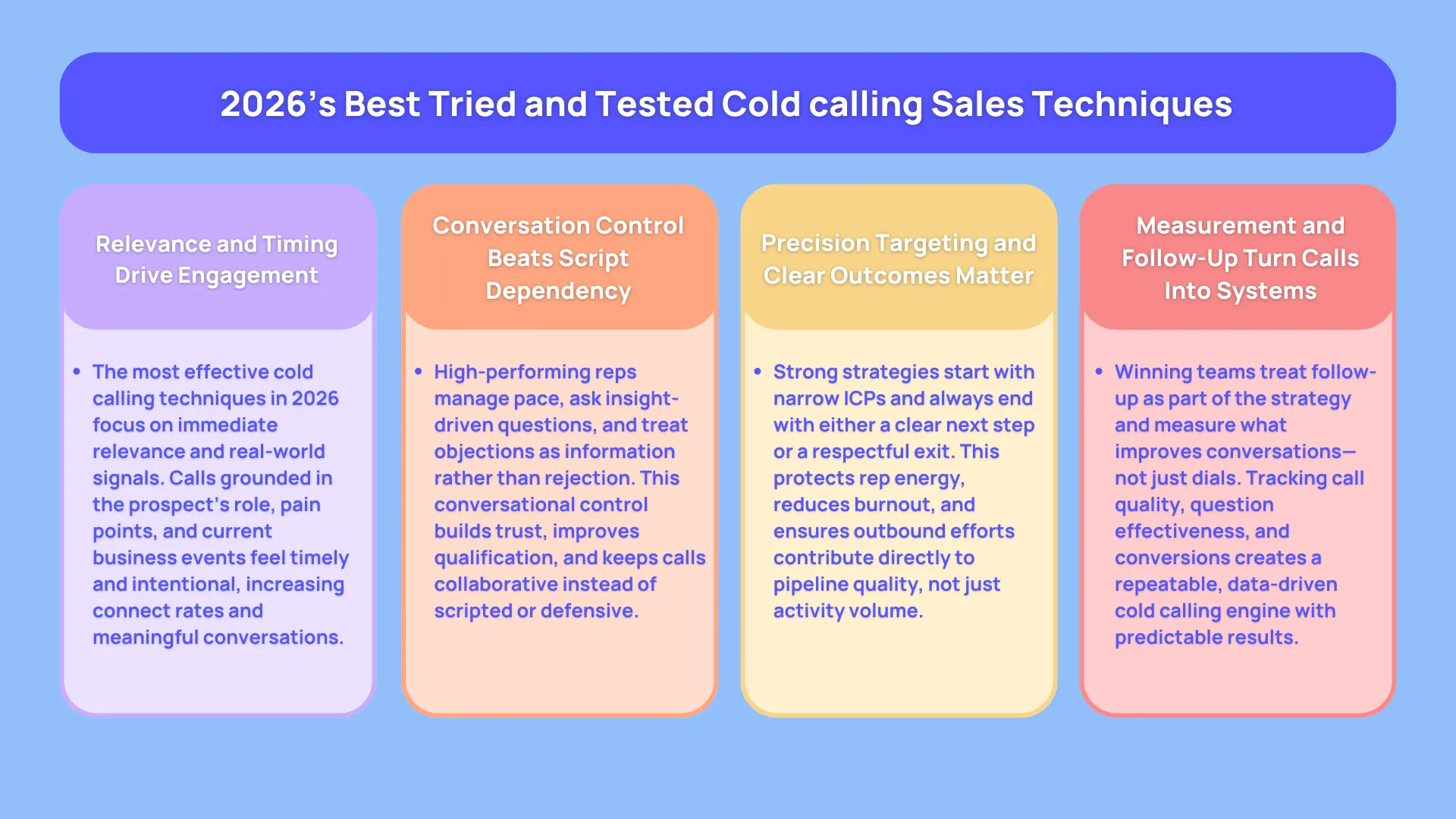
Finally, we come to the much anticipated part - i.e., cold calling strategies and a couple of relevant examples that can help you to build sales cadence momentum in 2026 and beyond.
We promise you, this doesn’t turn into a list of tactics without context.
PS: These tips aren’t in any specific order. So, feel free to take your pick and continue from anywhere you want.
1. Lead With Relevance, Not Rapport
The fastest way to lose a prospect is to try to sound friendly without sounding useful.
Buyers these days, normally don’t answer the phone, hoping to make a new friend. They stay on the line because something feels immediately relevant to their role, priorities, or current challenges.
Strong reps open with a clear reason tied to the prospect’s world. And this sense of reasoning comes with practice and tons of research that they have already done before dialing the number.
In other words, you are building relevancy by looking into the prospects’ pain points, their industry, and whatever the prospect’s competitor is offering as compared to what you’re about to sell.
Once a buyer feels understood, trust builds naturally. When relevance is missing, no amount of charm saves the call.
This technique directly improves Prospect Qualification because uninterested buyers self select out quickly, saving time and energy for both sides.
2. Control The Pace of Your Conversations
According to the research done on cold calling metrics by the ‘Lead at Scale’ company, one of the most underrated cold calling sales techniques is pace control.
Many reps talk too fast out of nerves or slow down too much trying to sound thoughtful. Neither works consistently.
High performing reps keep a steady, confident pace that signals calm authority.
Instead, they reportedly pause after questions. They allow silence to work. They don’t rush to fill every gap with explanation. What normally happens in these situations is that the prospect ends up saying something that might support the sales rep to respond better. And the interesting this is that this tactic works really well.
In other words, calm pacing suggests confidence and preparation. Rushed pacing signals anxiety and over reliance on the Sales Script Development process rather than the conversation itself.
Controlling pace also helps with Objection Handling. When a buyer says “I’m busy” or “We already have a solution,” a measured response keeps the interaction grounded instead of defensive.
3. Feel Free To Ask Questions That Move The Call Forward
Questions are not filler. They are the engine of a productive cold call.
Weak questions sound generic and invite short answers. Strong questions surface context, uncover gaps, and open space for the prospect to talk about their reality. That’s where real Sales Engagement begins.
The important question is: where do strong arguments or questions come from?
It depends on the level of research you have done prior to calling the contact. Look into the client’s requirements, their pain points, whether they’re using a service similar to your company’s, and why they should consider swtiching over.
As a matter of fact, one intelligent question can reveal more than five surface level ones. For example, asking how a team currently handles a specific process invites insight. Asking if something is a problem invites dismissal.
Treat objections as information, not rejection
Objections are not roadblocks. They are signals.
They are a naturally occurring phenomenon at a prospect’s end, and we’d say that they are part of the age old cold calling game.
When a buyer pushes back, they’re reacting to something. Timing, relevance, authority, or perceived value. Skilled reps don’t argue or retreat. They get curious.
Modern Objection Handling focuses on understanding before responding. A calm follow up question often diffuses resistance and re opens dialogue. This keeps the call collaborative rather than adversarial.
From Sales Pipeline Development perspetive, this matters because rushed or defensive responses burn bridges. Thoughtful handling keeps doors open, even when the answer is not now.
4. ALWATS End With a Clear Next Step or a Clean Exit
A strong cold call always lands somewhere.
Either it moves forward or it ends cleanly.
In that order, many top leading reps don’t cling to conversations that lack traction. They propose a logical next step when interest is present, usually a short Discovery Call framed as a working session, not a pitch. When interest isn’t there, they exit professionally without pressure.
This technique protects energy and keeps Outbound Sales efforts focused on accounts that matter. It also reinforces respect, which increases the chance of future engagement.
Cold calling sales techniques work best when they feel intentional. Each call has a purpose. Each interaction teaches something. Each outcome feeds back into better targeting, messaging, and qualification.
That’s how cold calling shifts from guesswork to strategy.
5. Narrow Your Targeting Before You Ever Dial
Effective cold calling starts long before the phone rings.
On that note, high performing teams are ruthless about who gets called and who doesn’t. They define ideal customer profiles with real constraints, not vague descriptions.
And for ICPs, they usually have dedicated people working side by side, or the sales people do it beforehand.
ICP’s usually include data associated with firmographics, buying triggers, role clarity, and problem alignment. When targeting is loose, reps compensate with volume. When targeting is tight, conversations improve even at lower dial counts.
This strategy changes the entire dynamic of Outbound Sales. Calls feel more relevant because they are. Prospects hear themselves in the opening lines, not a generic pitch aimed at everyone.
Tighter targeting also reduces burnout. Reps spend more time speaking with people who can actually say yes, which improves morale and performance at the same time.
6. Don’t Forget To Anchor Outreach Around Real Signals
Cold calling strategies that work rely on timing as much as messaging.
Calling someone with no context is harder than calling someone when something has shifted in their world.
Signals might include hiring activity, funding announcements, tool changes, role transitions, or operational changes. These moments create natural relevance and reduce resistance because the call feels aligned with current priorities.
As a result, this approach is not only better than conventional strategies, but it also strengthens Lead Generation because outreach feels intentional instead of intrusive. It also improves Prospect Qualification because signals help determine urgency before a Discovery Call ever happens.
In a nutshell, whenever the timing is right, even a short call can turn into a meaningful conversation.
7. Align Messaging To The Buyer’s Requirements, Not Your Product
One of the biggest mistakes in cold calling sales strategy is centering the conversation on what you sell instead of what the buyer is responsible for.
Buyers think in terms of outcomes, risks, and constraints tied to their role. When messaging reflects that reality, it lands faster and feels less sales driven.
Successful cold calling strategies frame value in terms of problems solved, time saved, revenue protected, or complexity reduced. Product details come later, after interest is established.
8. Shorten Calls Without Rushing Them
Length is not the same as quality.
In 2026, cold calling strategies that work favor focused conversations over long explanations.
Most productive calls land between one and two minutes. That’s enough time to establish relevance, ask one meaningful question, and agree on next steps.
This approach respects the buyer’s schedule and reduces friction. It also allows reps to maintain energy across the day, which directly impacts consistency and performance.
Short calls improve Sales Engagement because they lower the commitment barrier. Saying yes to a brief follow up feels easier than agreeing to a long meeting right away.
9. Treat Follow-Up as Part of The Strategy, And Not Just an Afterthought
Follow up is where many cold calling strategies quietly fail. One call rarely creates momentum on its own. What matters is how that call connects to the next touch.
Effective teams map follow ups intentionally.
Calls, emails, and messages reference previous conversations and reinforce relevance rather than repeating the same pitch.
This consistency strengthens Sales Pipeline Development because prospects experience a coherent journey instead of disconnected outreach attempts.
Moreover, persistence still matters, but it’s guided by insight rather than blind repetition.
10. Measure What Improves Conversations
Cold calling strategies that work are measured differently. Dial counts alone don’t tell the full story.
Top teams track connect rates, conversation quality, question effectiveness, and conversion to Discovery Call. These metrics highlight skill gaps and coaching opportunities.
This is where cold calling becomes more of a metrics based system instead of a grind. Reps improve faster. Managers coach with clarity. Results become more predictable.
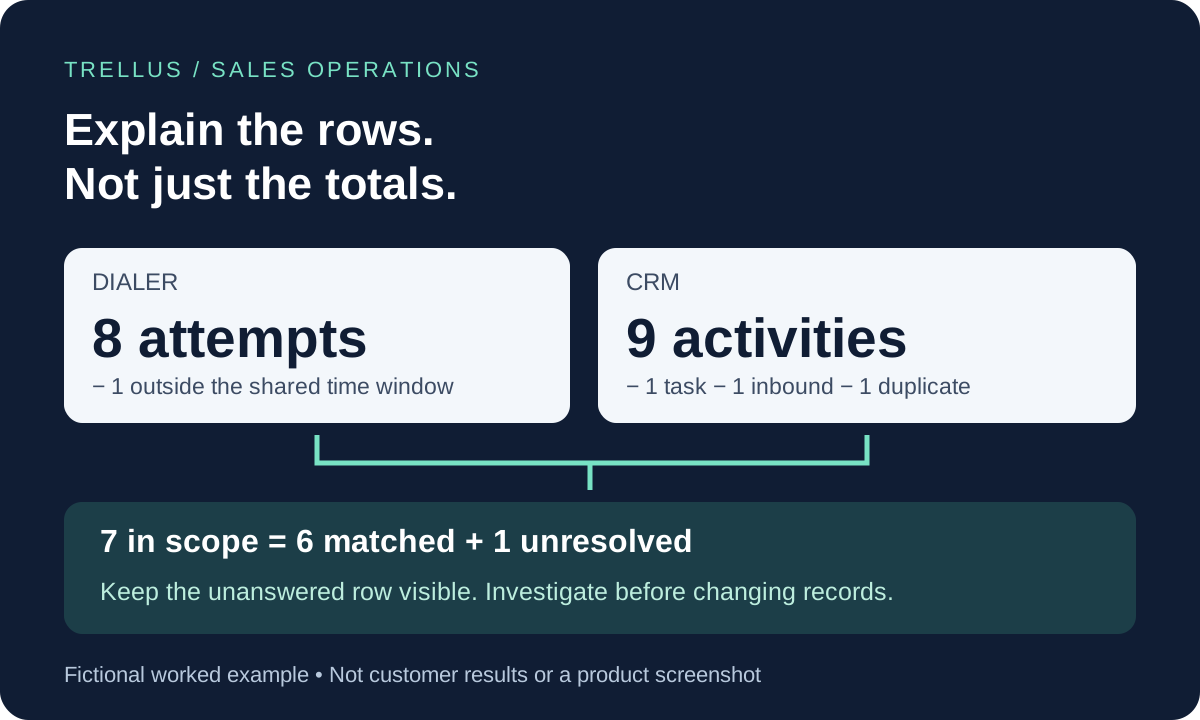
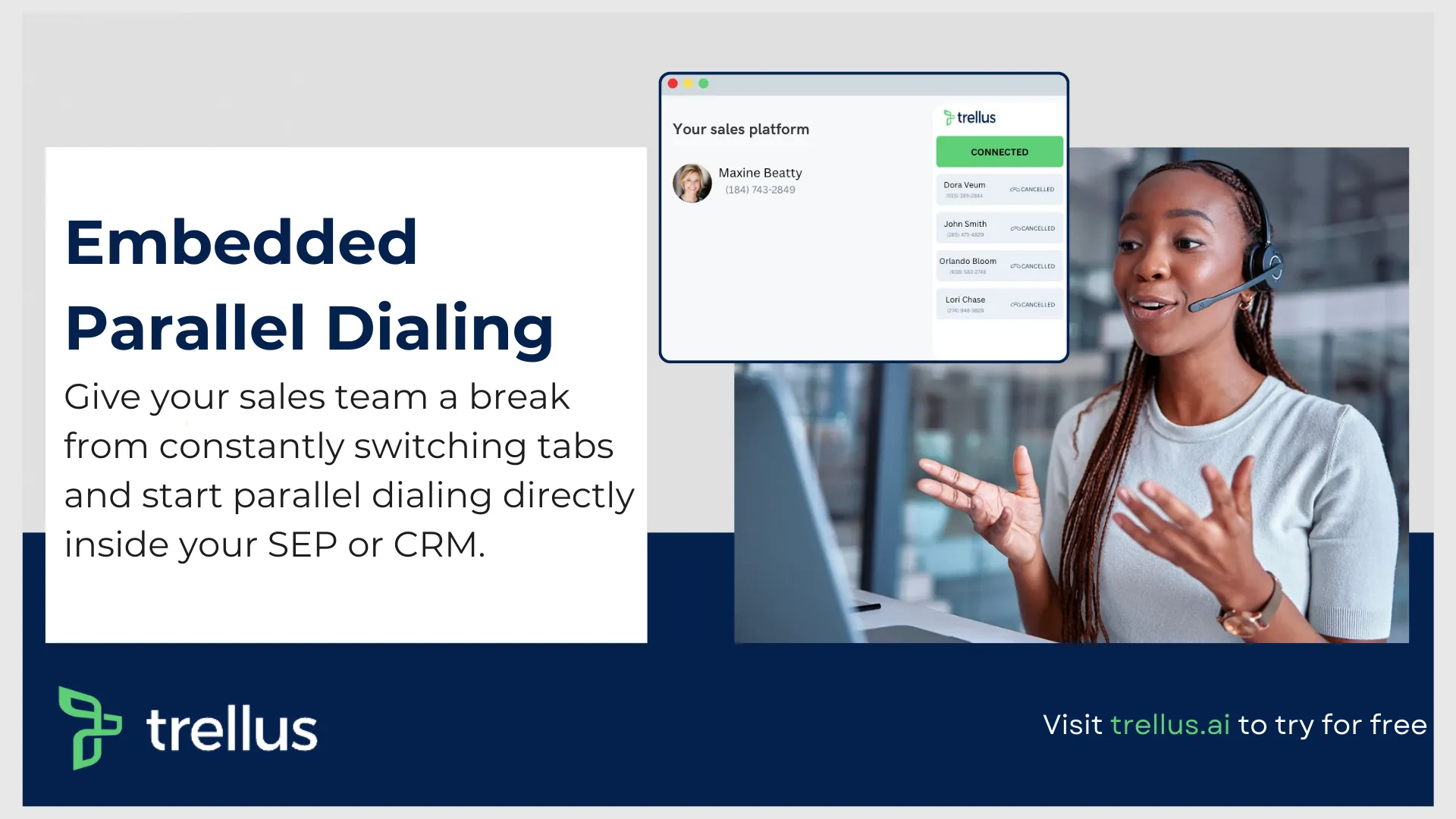
Many modern day cold calling software, such as Trellus, come with custom KPIs and metrics that sales reps can set before calling their contact list. The data is automatically gathered in real time.
Once you have enough data, you can fall back on conversations that worked, vs. lost deals that could have gone in a better direction.
Feedback Loops That Sharpen Performance
Call recordings, conversion data, and rep insights all feed back into better targeting and messaging.
This type of loop usually answers the lingering question is cold calling effective. It is when learning is continuous, and adjustments happen quickly.
Without feedback, strategy stagnates. With it, cold calling evolves alongside buyer behavior.
A cold calling strategy is not a document. It’s a living system that aligns people, process, and intent. When done right, it transforms cold outreach into a reliable growth engine.
Conclusion
Cold calling is an evolving phenomenon.
Especially the way technology and AI are advancing in 2026, gathering data, research and such elements are relatively easy, compared to the old days when reps had to spend their time preparing for a cold call, rather than doing it.
All you need to do is practice, research, and maintain a positive middle attitude to make things work.
Rely on data and make adjustments accordingly to pave the way forward.
.jpeg)

Power and parallel dialing in your CRM.