Our Top Picks


If you’re trying to figure out how to use LinkedIn for prospecting without sounding robotic or desperate, you’re not alone. Most teams jump into LinkedIn outreach with message templates and automation tools, then wonder why nobody replies.
The truth is simple. LinkedIn works incredibly well for B2B. But only when your approach feels human.
At its core, LinkedIn prospecting is not about blasting connection requests. It’s about identifying the right people, starting real conversations, and building trust over time.
When done right, LinkedIn becomes more than a lead source. It becomes a core revenue channel inside your broader LinkedIn strategy and your overall LinkedIn for sales motion.
Let’s break this down properly.
What Is LinkedIn Prospecting and Why It Still Works in 2026
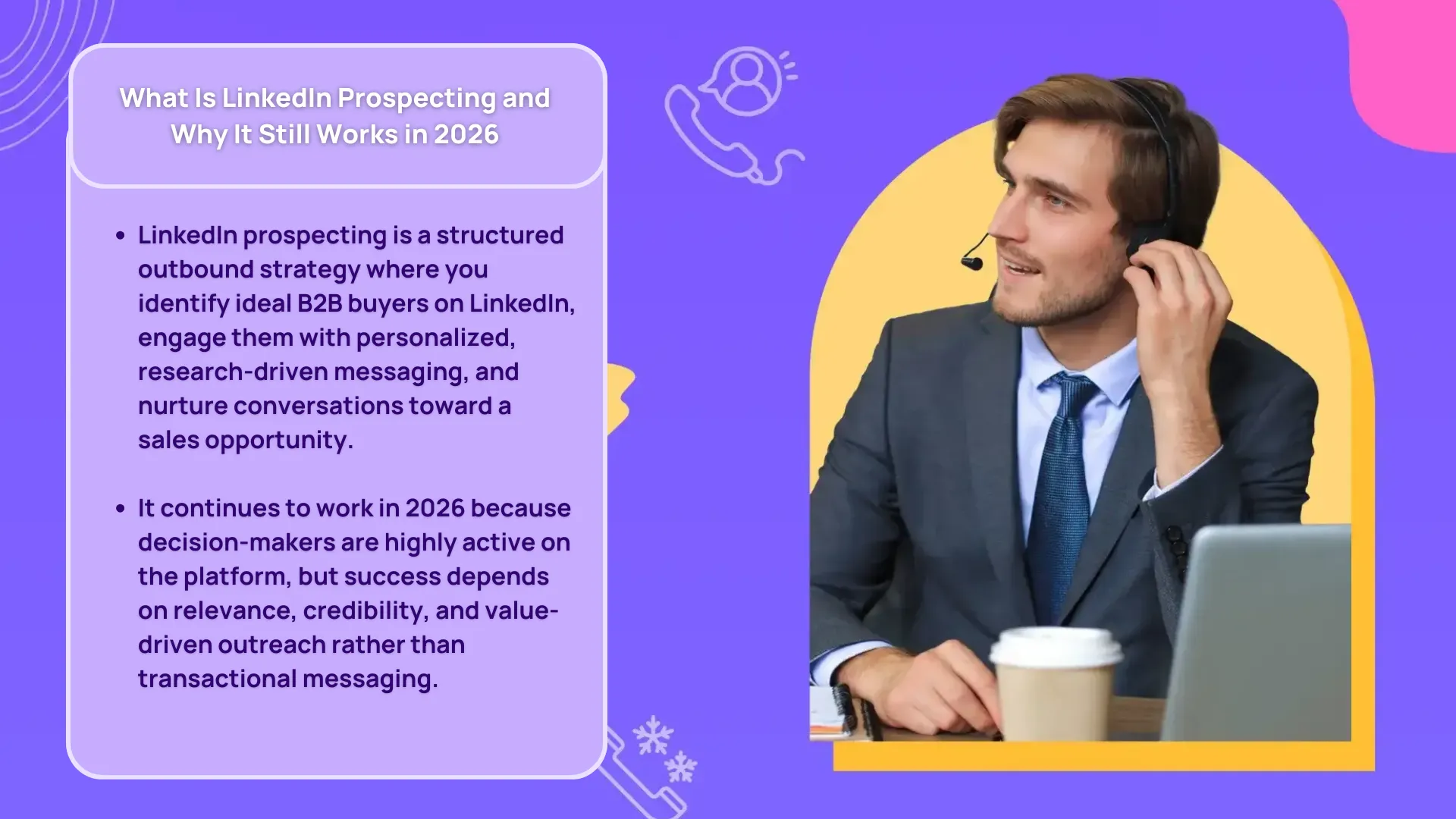
LinkedIn prospecting is the process of identifying potential buyers on LinkedIn and reaching out with personalized communication designed to start meaningful conversations.
It is not random networking. It is structured prospect research, strategic messaging, and consistent follow up.
You are essentially:
• Defining your ideal buyer
• Finding them inside LinkedIn
• Starting a conversation through thoughtful LinkedIn messaging
• Moving the discussion toward a sales conversation
And it works because LinkedIn is still the largest professional database in the world. Decision makers live there. Founders scroll it. Revenue leaders comment on posts daily.
If your ideal customer profile sits in the B2B space, LinkedIn lead generation should absolutely be part of your outbound mix.
However, the platform rewards relevance and credibility. If your outreach feels transactional, you get ignored.
If it feels helpful and informed, conversations happen.
Should You Use LinkedIn for Sales?
If you sell into B2B, the short answer is yes.
But here is the real filter question:
Do your buyers spend time on LinkedIn?
If your target audience is C level executives, directors, managers, consultants, founders, or decision makers inside growth focused companies, they are there.
If you are selling purely visual consumer products, your energy might be better spent on Instagram or TikTok.
For B2B though, LinkedIn sales efforts can outperform email alone, especially when combined with:
• Smart cold email
• Intent driven calling
• A strong content presence
• A solid sales team collaboration tool that keeps messaging aligned
LinkedIn should not replace your outbound stack. It should strengthen it.
Step 1: Define a Sharp Ideal Customer Profile for LinkedIn Prospecting
Most LinkedIn outreach fails before the first message is sent.
Why?
Because targeting is vague.
A strong LinkedIn prospecting strategy starts with clarity. If you do not know exactly who you are trying to reach, your messaging becomes generic.
Take time to map your ICP across these areas:
Industry and Company Size
Some industries respond faster than others. Some company sizes have faster buying cycles. Look at your current best customers. What patterns show up?
Are most of your wins in SaaS companies with 50 to 200 employees? Or enterprise firms with 1000 plus?
The tighter your targeting, the stronger your lead generation LinkedIn performance becomes.
Job Titles and Decision Makers
Who actually signs the contract?
Sometimes it is the VP of Sales. Sometimes it is a Head of Marketing. Sometimes it is the founder.
Inside your sales team software, make sure your team aligns on primary buyer personas and secondary influencers. This is where a strong sales collaboration tool becomes critical. Messaging consistency matters.
Seniority Levels
Reaching out to interns rarely generates pipeline.
Target people who can influence or make decisions. Director level and above often works well in B2B.
Geography
Your offer may convert differently in the US compared to Europe or APAC. Time zones also impact follow up and cold calling coordination.
Pain Points
This is the most important element.
What problem does your solution solve? What cost does that problem create for the prospect?
When your LinkedIn messaging speaks directly to that pain, replies increase dramatically.
Step 2: Set Measurable Objectives That Matter
Vanity metrics can be dangerous. More connections do not equal more revenue.
Your LinkedIn strategy should revolve around business outcomes.
Here are the core metrics worth tracking:
Connection Acceptance Rate
This tells you how strong your targeting and connection note are. If acceptance is low, your personalization needs work.
Response Rate
This measures how effective your first message is. Strong LinkedIn outreach best practices can push this well above industry averages.
Meetings Booked
This is where activity turns into opportunity. Track how many LinkedIn conversations become qualified meetings.
Pipeline Influence
Ultimately, leadership cares about revenue. How much pipeline is generated from LinkedIn lead generation? How much closes?
A proper team collaboration software setup helps track this cleanly. When sales, SDRs, and leadership operate inside one collaboration platform, performance data becomes transparent.
Step 3: Choose the Right LinkedIn Plan and Use Sales Navigator Properly
If you are serious about LinkedIn prospecting, free accounts will limit you.
For B2B outreach, sales navigator is the gold standard.
Here is why.
Advanced Search Filters
You can filter by:
• Company headcount
• Industry
• Seniority level
• Years in role
• Geography
• Company growth indicators
This makes your prospect research far more precise.
Lead Recommendations
Sales Navigator suggests leads based on your saved preferences. This helps your team scale targeting without losing quality.
InMail Credits
Sometimes you need to reach someone outside your network. InMail helps when used sparingly and thoughtfully.
Real Time Insights
Job changes, promotions, company news. These are natural conversation starters inside your LinkedIn outreach motion.
Strong LinkedIn sales navigator tips include:
• Saving leads and accounts to monitor updates
• Engaging with a prospect’s content before sending a request
• Leveraging shared groups or connections as conversation bridges
Sales Navigator becomes significantly more powerful when paired with a sales team collaboration tool that tracks who is reaching out to whom, preventing duplicate outreach and awkward overlaps.
Step 4: Optimize Your LinkedIn Profile for Conversion
Your profile is your landing page.
Every time you send a connection request or message, prospects click your profile. If it looks like a resume, you lose momentum. At the same time, be mindful of the fact that if it clearly communicates value, you end up building trust.
Here is how to think about optimization.
Professional Headshot
Use a high quality photo. Friendly, confident, approachable. You want to look like someone worth replying to.
Headline That Speaks to Outcomes
Instead of writing Account Executive at Company X, write what you help clients achieve.
For example, Helping B2B SaaS companies increase outbound reply rates through data driven LinkedIn sales strategies.
This frames you as a problem solver.
Banner as Positioning
Your banner can reinforce:
• Who you help
• What results you drive
• A short call to action
It acts as a subtle reinforcement for your LinkedIn strategy.
Be Mindful of an “About” Section That Feels Human
Speak directly to your target audience.
Acknowledge their challenges. Share proof of results. Explain how you approach problems. Invite them to connect.
Avoid corporate fluff. Clear beats clever.
Recommendations
Social proof matters in social selling. When prospects see testimonials from real clients, credibility increases instantly.
Step 5: Build a Social Selling Engine Alongside Direct Outreach
Cold outreach alone works. But outreach plus content works better.
Social selling creates familiarity. Prospects see your name multiple times before you ever message them.
That familiarity reduces resistance.
Content Strategy for LinkedIn Sales
Your content does not need to be viral. It needs to be relevant.
Share:
• Educational insights related to your niche
• Industry commentary
• Short case studies
• Lessons learned from real client work
• Observations about market trends
This positions you as a thoughtful operator, not just a seller.
Strategic Engagement
Commenting is underrated.
When you leave thoughtful comments on posts from your ICP, they notice you before you send a connection request.
Warm familiarity increases acceptance rates and reply rates.
Inside your team communication tool, encourage reps to share winning posts and coordinate engagement. This turns individual effort into coordinated team visibility.
Step 6: Craft High Converting LinkedIn Outreach Messages
This is where most teams struggle.
They do solid prospect research. They use sales navigator properly. Their profile looks professional. Then they send a message that sounds like every other seller in the inbox.
If you want your LinkedIn outreach to generate real conversations, your messaging has to feel relevant, respectful, and low pressure.
Think conversation, not pitch.
Connection Request Strategy for LinkedIn Prospecting
Your connection request is the front door. If this feels transactional, the door stays closed.
A strong connection request usually includes:
• A specific reference to their role, company, or recent activity
• A short reason for connecting
• No sales pitch
• A subtle value angle
Example structure:
I saw you are leading revenue at Company X and noticed your recent expansion into EMEA. Always interesting to connect with leaders scaling internationally. Would love to connect.
It feels natural. No pressure. No demo request.
This small shift dramatically improves acceptance rates inside your broader LinkedIn prospecting strategy.
Your First LinkedIn Message After They Accept
The biggest mistake reps make is pitching immediately after acceptance.
Instead, your first message should do three things:
• Acknowledge the connection
• Provide light value or context
• Open a conversation
Example flow:
Thanks for connecting, John. I work with B2B SaaS sales teams improving outbound reply rates. I noticed many teams struggle with personalization at scale. Curious how your team is currently approaching LinkedIn sales and outbound prospecting?
This works because it centers on them, not you.
The Follow Up Sequence That Actually Gets Replies
Most prospects do not respond to the first message. That is normal.
Professional buyers are busy.
A structured follow up system inside your collaboration platform ensures no opportunity falls through the cracks.
Here is a proven cadence:
Message 2, About One Week Later
Share a short insight or case example relevant to their role.
Keep it concise. Two to three sentences max.
Message 3, Another Week Later
Ask a more specific question tied to a known industry challenge.
Specific questions drive higher response rates than generic ones.
Message 4, Two Weeks Later
Provide a resource. It could be a short PDF, a quick Loom style explanation, or a relevant article.
The goal is to demonstrate expertise, not push a meeting.
Message 5, Two Weeks Later
Make a soft meeting request.
Something simple like:
If improving outbound reply rates is on your radar this quarter, happy to compare notes for fifteen minutes.
Low friction. No pressure.
When your team runs this inside a structured team collaboration software, messaging consistency improves across reps. Everyone learns from shared data.
LinkedIn Messaging Psychology That Drives Conversions
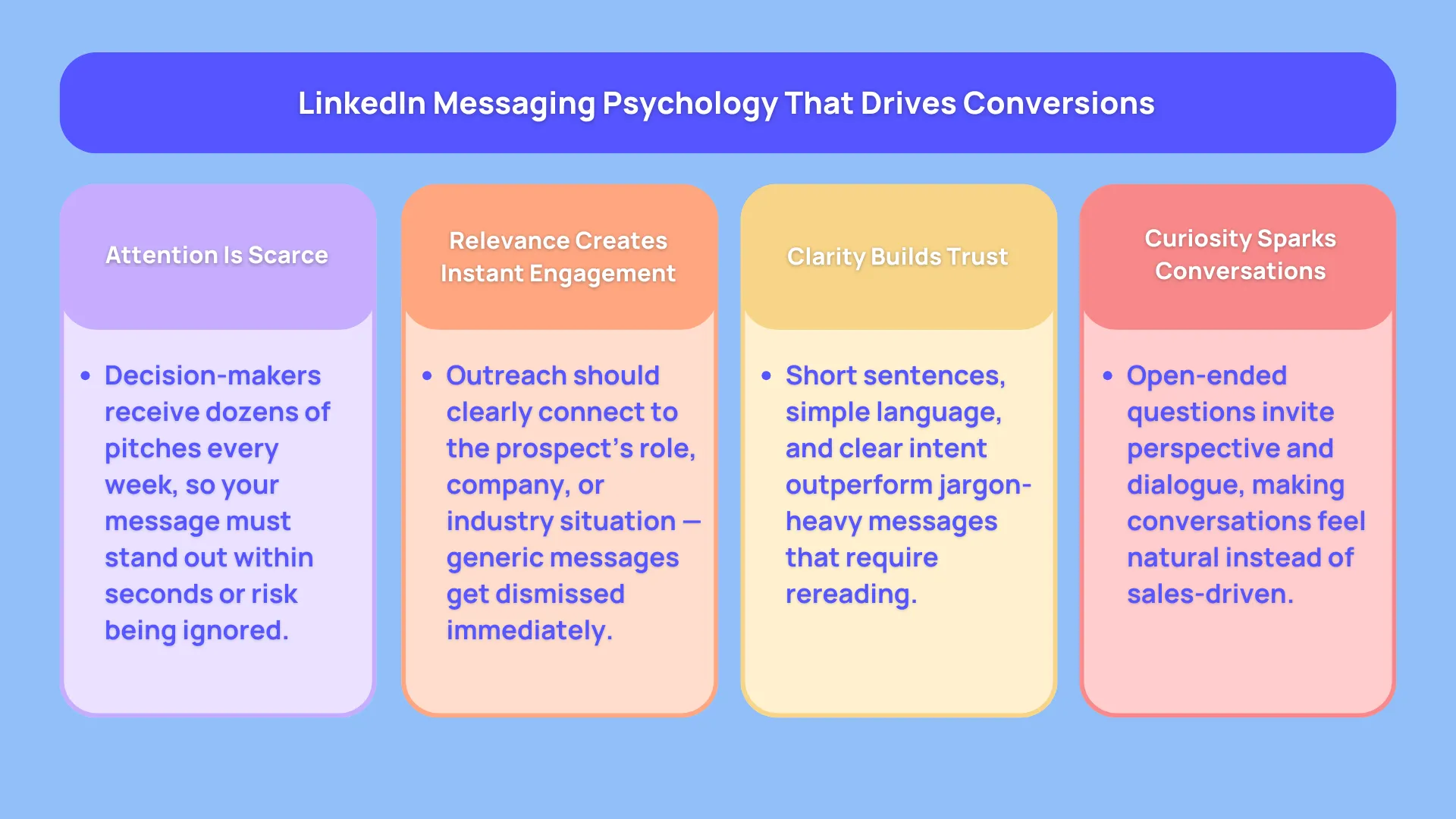
To improve LinkedIn messaging, you need to understand buyer psychology.
Decision makers receive dozens of pitches weekly. Your message competes for attention in seconds.
Strong outreach respects three principles:
Relevance
The message clearly connects to their role, company, or industry situation.
Generic messages die instantly.
Clarity
Short sentences. Clear intent. No corporate jargon.
If they have to reread your message, it is too complicated.
Curiosity
Open ended questions outperform statements.
When you invite perspective instead of pushing a pitch, conversations open naturally.
These principles form the backbone of effective LinkedIn outreach best practices.
Combining LinkedIn with Cold Calling for Higher Conversion
Many teams treat LinkedIn and cold calling as separate channels.
That is a mistake.
When combined properly, they reinforce each other.
Here is how modern outbound teams structure it:
Warm Up Before the Call
Engage with the prospect’s content. View their profile. Send a connection request.
Your name becomes familiar.
Reference LinkedIn in the Call
When you call, mention you connected on LinkedIn.
This reduces the cold factor immediately.
Follow Up After the Call on LinkedIn
Send a short message thanking them for their time or referencing the voicemail.
This creates multiple touchpoints without feeling aggressive.
Inside your team communication tool, coordinate who calls and who messages to avoid overlap. Alignment increases professionalism.
Cold calling remains powerful in 2026, especially when backed by thoughtful LinkedIn strategy execution.
Powering Modern LinkedIn Prospecting with Trellus
Even the best LinkedIn prospecting strategy eventually runs into the same problem.
Reps know who to contact. Messaging frameworks are clear. Sales Navigator lists are built. Outreach begins strong.
Then execution slows down.
Follow ups get missed. Context between LinkedIn conversations and calls disappears. Coaching becomes reactive instead of proactive. Individual reps develop their own workflows, which creates inconsistency across the team.
This is where having the right infrastructure matters. Not just another tool, but a system designed around how modern outbound teams actually work.
Trellus was built to solve the execution gap between LinkedIn outreach, calling, and team collaboration.
Turning LinkedIn Conversations Into Real Sales Activity
LinkedIn often creates intent signals before prospects ever agree to a meeting.
Someone replies to a message. Engages with content. Accepts a connection request after multiple touchpoints.
Most teams fail at this stage because momentum fades between channels.
Trellus connects LinkedIn activity with real time outbound execution so reps can move naturally from conversation to action.
Instead of switching between disconnected tools, reps operate inside one workflow that supports:
• LinkedIn outreach conversations
• Cold calling follow ups
• Prospect context visibility
• Shared team intelligence
This alignment transforms LinkedIn lead generation from isolated messaging into a coordinated sales motion supported by a true sales team collaboration tool.
LinkedIn Superhuman: Faster Prospecting Without Losing Personalization
One of the most impactful additions is the LinkedIn Superhuman capability.
The goal is simple, help reps operate at peak speed while still sounding human.
LinkedIn Superhuman enhances how sellers handle daily prospecting tasks:
• Context aware messaging assistance aligned with your ICP
• Consolidated messages to help you prioritize leads, and communicate with them accordingly
• Overall SDR workflow acceleration that reduces manual clicking and context switching
Reps spend less time navigating LinkedIn and more time having meaningful conversations.
This matters because effective LinkedIn messaging depends on relevance. When information is easy to access, personalization becomes scalable instead of exhausting.
For teams running large outbound motions, this creates a noticeable lift in response rates while maintaining authenticity.
Embedded Parallel Dialing: Bridging LinkedIn and Cold Calling
LinkedIn works best when paired with voice outreach.
A prospect who has seen your profile or replied briefly on LinkedIn is significantly more receptive to a call. Timing becomes everything.
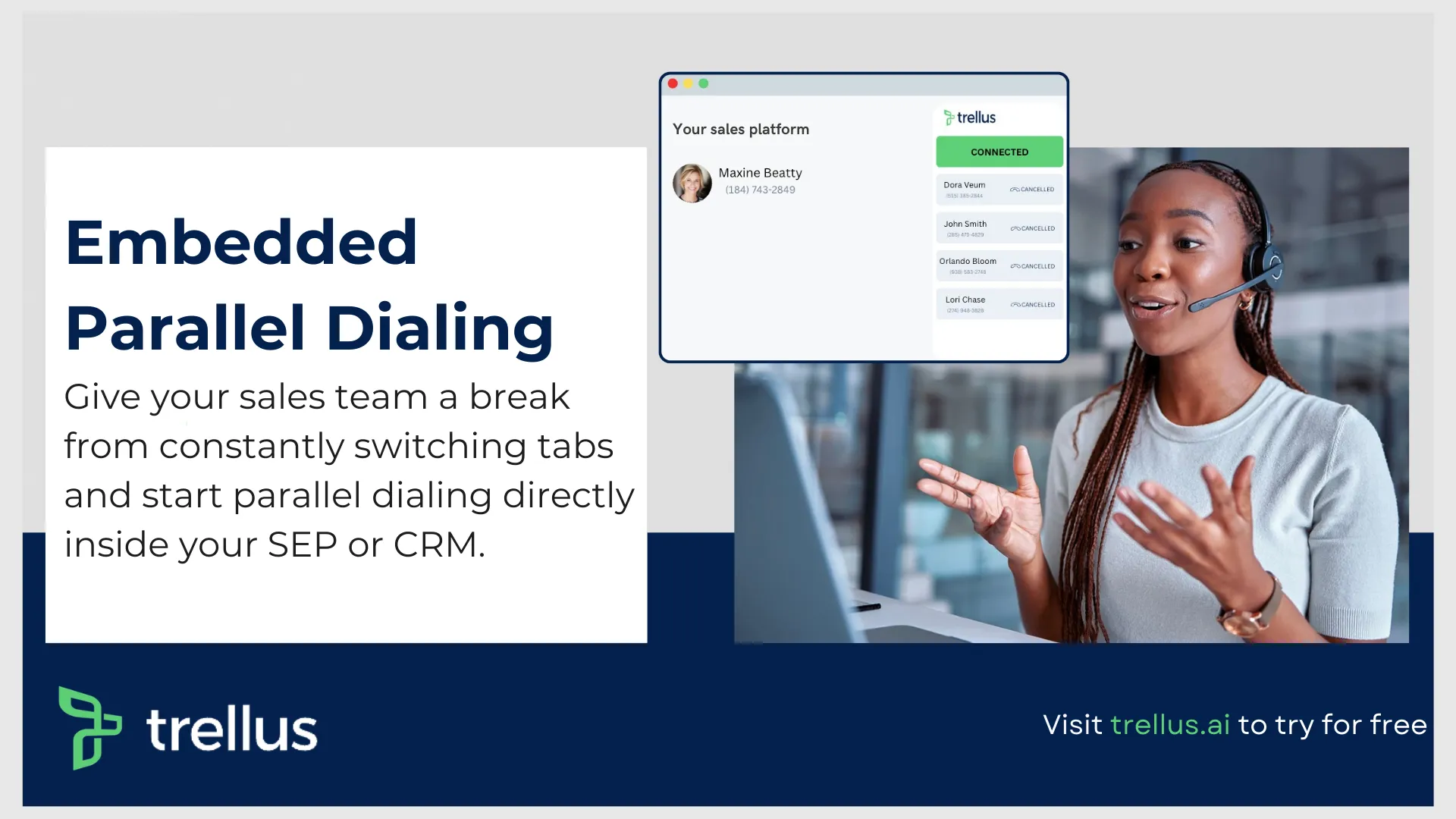
Trellus embeds parallel dialing directly into the workflow, allowing reps to call multiple prospects efficiently while maintaining personalization context.
Instead of treating calls as cold interruptions, reps can reference recent LinkedIn interactions naturally:
I reached out on LinkedIn earlier this week after seeing your expansion announcement.
That small familiarity dramatically changes call dynamics.
Embedded dialing helps teams:
• Increase live conversations per hour
• Follow up on LinkedIn engagement instantly
• Maintain outreach momentum across channels
This unified approach strengthens LinkedIn for sales efforts while improving overall outbound productivity.
AI Coaching That Improves Outreach Quality Over Time
Most coaching happens after deals are lost.
Modern teams need feedback while conversations are happening.
AI coaching inside Trellus analyzes call behavior, messaging patterns, and engagement outcomes to provide actionable guidance.
Reps receive insights such as:
• Areas where their comeback were/ are weak, and could be improved in real time
• Question effectiveness
• Different types of cold calling objection handling opportunities
• Messaging patterns tied to higher reply rates
This creates a continuous improvement loop across both calls and LinkedIn outreach.
Managers also gain visibility across the team, making coaching scalable without constant manual review.
For organizations operating inside a team collaboration software environment, this ensures every rep improves together rather than learning in isolation.
A Collaboration Platform Built for Sales Execution
LinkedIn prospecting becomes difficult to scale when knowledge stays siloed.
One rep discovers messaging that works. Another learns a strong industry angle. Someone else uncovers a new decision maker persona.
Without a centralized collaboration platform, those insights disappear.
Trellus acts as a shared operating layer for outbound teams:
• Conversation insights are visible across the team
• Messaging learnings become repeatable playbooks
• Outreach activity stays coordinated
• Managers track performance without micromanagement
This transforms outbound into a collaborative system supported by a true sales collaboration tool, rather than a collection of individual efforts.
Scaling LinkedIn Outreach Without Losing Personalization
As your outbound motion grows, manual outreach alone becomes difficult.
This is where smart processes matter.
Segment Your Lists Carefully
Group prospects by:
• Industry
• Role
• Pain point
• Company stage
Each segment should have slightly different messaging angles.
Use Light Automation Thoughtfully
LinkedIn automation tools can help with scheduling and follow ups. However, heavy automation without personalization damages brand reputation quickly.
Automation should assist your process, not replace thinking.
Centralize Outreach in a Sales Collaboration Tool
When multiple SDRs work the same accounts, coordination becomes essential.
A strong sales collaboration tool ensures:
• No duplicate messages
• Shared insights from conversations
• Unified messaging frameworks
• Real time performance tracking
This turns LinkedIn prospecting from individual effort into scalable team execution.
Trust, Credibility, and Long Term Positioning
The hidden advantage of LinkedIn for sales is brand memory.
When you consistently show up through content, engagement, and thoughtful outreach, prospects remember you.
Even if they do not respond immediately. Months later, when a need arises, they recall your name. That is the power of combining direct outreach with social selling.


Power and parallel dialing in your CRM.