Our Top Picks


A good SDR-to-AE handoff lets the account executive pick up the conversation where the buyer left it. It should explain why the buyer agreed to meet, what they expect to see, and what still needs to be learned. A calendar invite with “interested in a demo” does none of those things.
Don’t try to turn a short cold call into a fully qualified opportunity. Give the AE enough context to prepare, label the unknowns, and make the promise in the invite match the promise on the phone.
Hand over the reason for the meeting, not your enthusiasm
“Great conversation, strong interest” is a rep’s interpretation. It doesn’t tell the next person what to do.
Consider this fictional example. An SDR calls a sales manager who says that new reps are booking meetings but struggling to explain the problem those meetings are about. The manager agrees to a short session to look at how call reviews could help. They haven’t agreed to replace their dialer, involve procurement, or start a trial.
The useful handoff is: “Wants to see how a manager reviews the moments before a meeting is booked. Concern is the quality of the handoff from new reps, not dialing volume. Agreed to a 20-minute walkthrough. No buying timeline discussed.”
That note gives the AE a starting point. It also stops a reasonable exploratory conversation from becoming a surprise purchasing interrogation.
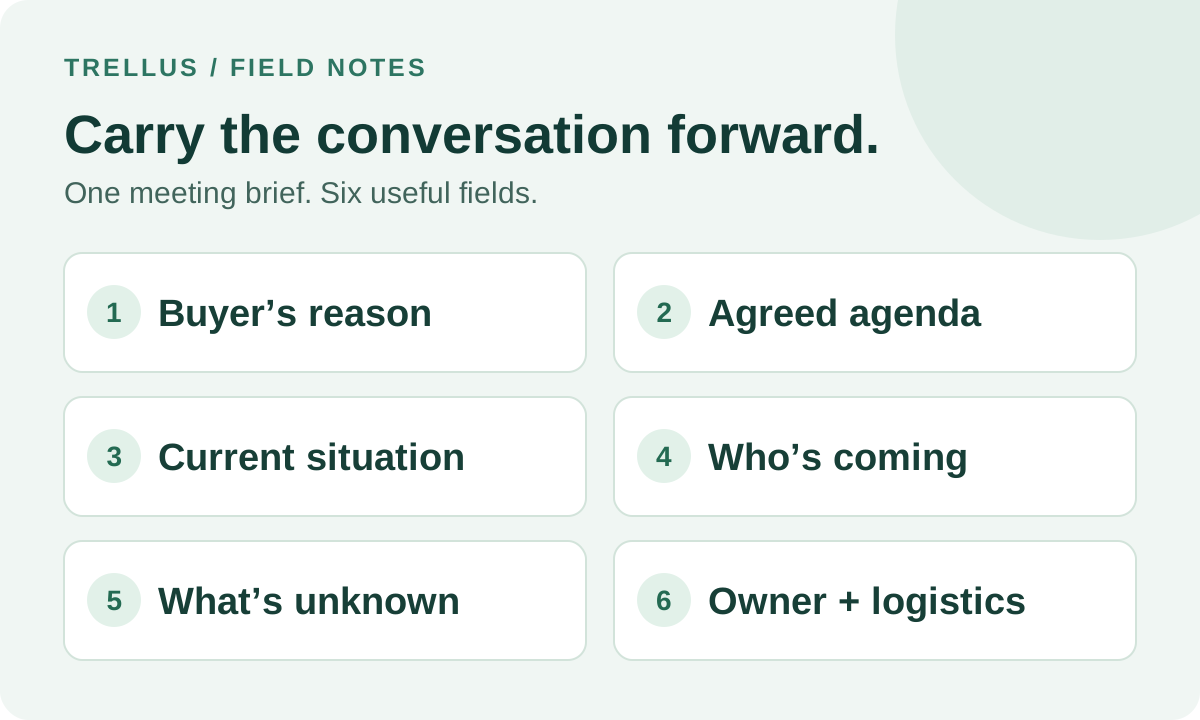
The meeting brief: six fields worth keeping
Put the brief on the contact or opportunity record your team already uses. Link to it from the internal handoff rather than copying a different version into every channel. These fields are a starting template, not a requirement to collect everything during the first call.
- Why they agreed to meet. Write the buyer’s reason in plain language. Use a short exact quote only when you have it; otherwise label it as a paraphrase.
- What the meeting will cover. Record the agreed topic, duration, and any promise: a walkthrough, an answer to a setup question, or a discussion of whether there’s a fit.
- What’s happening today. Capture the relevant workflow or problem the buyer actually described. “Uses a CRM” is less useful than “reps call from a shared list and the manager checks outcomes at the end of the day.”
- Who’s coming and what you know about their role. Distinguish a title from confirmed responsibility. Being a director doesn’t automatically make someone the budget owner.
- What remains unknown. State the unanswered questions that matter for the next conversation. Don’t fill blank budget, authority, or timing fields with guesses.
- The next owner and logistics. Name the AE, confirm the meeting time and time zone, and include the relevant record and invite. If another teammate owns a promised answer, name them too.
A transcript or recording can support the brief when it’s available to the team under its normal access rules. It shouldn’t be the brief. The AE shouldn’t have to listen to the entire call just to discover what they’re expected to show.
A filled-out example
Here’s a fictional handoff an SDR could leave after the conversation above:
Reason for meeting: Sales manager wants to review how newer reps explain the reason for booked meetings. Buyer described inconsistent handoff notes; this is a paraphrase, not a quotation.
Agreed agenda: 20-minute walkthrough of a manager’s call-review process, focused on the final minutes before a meeting is booked. No promise of a custom integration or performance improvement.
Current situation: Six reps; manager reviews a selection of calls each week. Exact review tool and CRM were not discussed.
Attendees: Sales manager only so far. Purchasing responsibility not confirmed.
Unknowns: Which calling platform they use; how they currently share notes; whether the AE team agrees that handoffs are the issue. No budget or deadline discussed.
Owner and logistics: Assigned AE owns the meeting and confirmation. Invite accepted for Thursday, 11 a.m. Eastern. Contact record and relevant call linked internally.
The example is deliberately incomplete. That’s the point. An honest brief gives the AE useful questions; an inflated one gives them assumptions to undo.
Confirm the promise before ending the call
The handoff starts while the buyer is still on the phone. Summarize the meeting in one sentence and let them correct it.
For the example above: “I’ll put 20 minutes on Thursday’s calendar to show how a manager can review the conversation before a meeting gets booked. Is that what you’d like to cover?”
If the buyer says they only want to know whether the product works with their CRM, change the agenda. Don’t keep the broader demo because it sounds better in the pipeline.
This is also the right moment to clarify who will attend, whether the time zone is correct, and who will send the invite. Avoid attaching extra qualification questions to a buyer who has already said they need to go. An unanswered question belongs in the brief as an unknown.
The AE needs a useful opening, not a script to repeat
Read the brief before the meeting. Choose the first question around what the SDR learned, and check that the context is still right.
“You mentioned that newer reps are booking meetings without always capturing the reason behind them. Before I show the review workflow, is that still the main thing you want to work on?”
That opening acknowledges the first conversation and gives the buyer room to update it. It’s better than asking them to start from scratch with “So, tell me about your business.”
It doesn’t mean the AE should skip discovery. A brief is a map of the previous conversation, not a substitute for understanding the problem. If an SDR’s note says “decision-maker,” ask what the person owns and how the team makes this kind of decision. Don’t treat the label as a fact.
Separate missing information from an unacceptable meeting
SDRs and AEs need shared acceptance criteria. Otherwise, “good meeting” can change depending on who’s reading the notes.
Agree on the minimums for your sales motion: a relevant person or team, an understood reason to talk, a realistic agenda, and an accountable next owner. More complex sales may need additional requirements. Write those down before using them to reject handoffs.
Then distinguish two kinds of feedback:
- The meeting shouldn’t have been booked: the buyer wanted something the company doesn’t offer, the account is outside the agreed market, or the SDR promised a capability the AE can’t show.
- The brief needs work: the buyer’s reason is vague, an agreed action is missing, or an assumption is presented as confirmed.
The fix for a missing note is to improve the note. It isn’t automatically to cancel the meeting or to demand a budget conversation on every cold call. For a broader qualification process, use the existing outbound lead qualification guide; the handoff is the narrower job of carrying the conversation forward.
Make feedback specific enough for the next call
“Better qualification needed” won’t help an SDR change anything. Show the exact gap and the question or action that would have helped.
For example: “The buyer expected a CRM compatibility answer, but the invite says product demo. Next time, confirm the agenda before ending the call and copy that wording into the invite.”
Review a small selection of handoffs together, including meetings that went well. Keep the discussion tied to the conversation and the brief, not just whether the AE later created an opportunity. The buyer can change priorities after a well-booked meeting; a poor handoff can also get lucky.
A simple review log can capture the meeting, the missing or useful context, the agreed coaching action, and who will follow up. The sales-call tracking guide covers the wider activity-and-outcome record. Don’t confuse completed CRM fields with a buyer’s commitment.
Start with the next meeting already on the calendar
You don’t need a new tool or a large redesign to try this. Pick the next booked meeting, replace the generic “interested” note with a short brief, and ask the AE whether they can prepare from it without another message to the SDR.
If you’re evaluating calling software as part of that workflow, explore Trellus’s dialing options separately. A dialer doesn’t decide what the buyer agreed to. That still needs to be understood, written down, and handed to the right person.
The standard is simple: the buyer shouldn’t have to reconstruct yesterday’s conversation because the sales team changed speakers.

Power and parallel dialing in your CRM.