Looking for a Ring.io Alternative with Advanced Call Coaching? Our Top 5 Picks
We have handpicked these Ring.io alternatives for you to kickstart your sales and conversions in 2026 in a new and innovative manner. Here's what the experts have in store for you.
.jpeg)

On this page
Our Top Picks


Ring.io has earned its place as a dependable outbound calling layer for CRM-centric teams.
It works, it logs activity, and it keeps reps inside Salesforce, Zoho, or Pipedrive without forcing a tool switch. For smaller teams or early outbound motions, that simplicity can feel like a win.
The friction starts once outbound volume ramps up.
As call volumes climb, managers want more than click-to-call and basic reports.
They want pacing controls, deeper call insights, and coaching signals that show how conversations are actually landing. That is usually the moment teams begin searching for alternatives to Ring.io that lean harder into call coaching, automation, and intelligence rather than just call placement.
Modern Sales Dialer Software is no longer judged only on connection rates. The real differentiator now sits in conversation quality, rep guidance, and how fast insights can turn into behavior change.
That is where newer Call Recording Solutions, Conversation Intelligence Platforms, and AI-assisted Sales Communication Tools start to separate themselves.
What follows is a closer look at the platforms gaining traction going into 2026, especially for teams that want better coaching, stronger automation, and clearer analytics without bloated workflows.
Best Alternatives To Ring.Io That Are Worth a Shot In 2026
Without any further holdups, here’s a combination of the best Ring.io competitors that you need to explore for your call first business.
1. Trellus – Built for Teams That Want More Conversations, Better Coaching, and Zero Friction
This platform shows up when outbound teams hit a very specific wall. Reps are dialing enough, pipelines are active, but conversation quality, coaching visibility, and pacing are holding growth back.
Instead of layering more tools on top of the stack, this system pulls dialing, coaching, analytics, and practice into a single workflow that lives directly inside your existing sales engagement platforms.
The defining theme here is momentum.
Fewer tabs, fewer delays, and more actual conversations per hour. Rather than treating calling, coaching, and analytics as separate functions, everything is designed to reinforce each other in real time.
That is why it often replaces multiple tools across Sales Dialer Software, Call Recording Solutions, and Conversation Intelligence Platforms in one move.
Why teams pay attention to this option
Most outbound tools focus on efficiency at the surface level.
This one focuses on what actually moves deals forward. It increases live conversations through parallel dialing, improves rep performance with live coaching, and closes the loop with analytics that explain why outcomes happen.
For managers, the visibility shift is immediate. Instead of guessing what is working, every call becomes measurable and coachable. For reps, the experience feels faster and more focused, especially for teams that already live inside modern sales engagement tools.
Key features
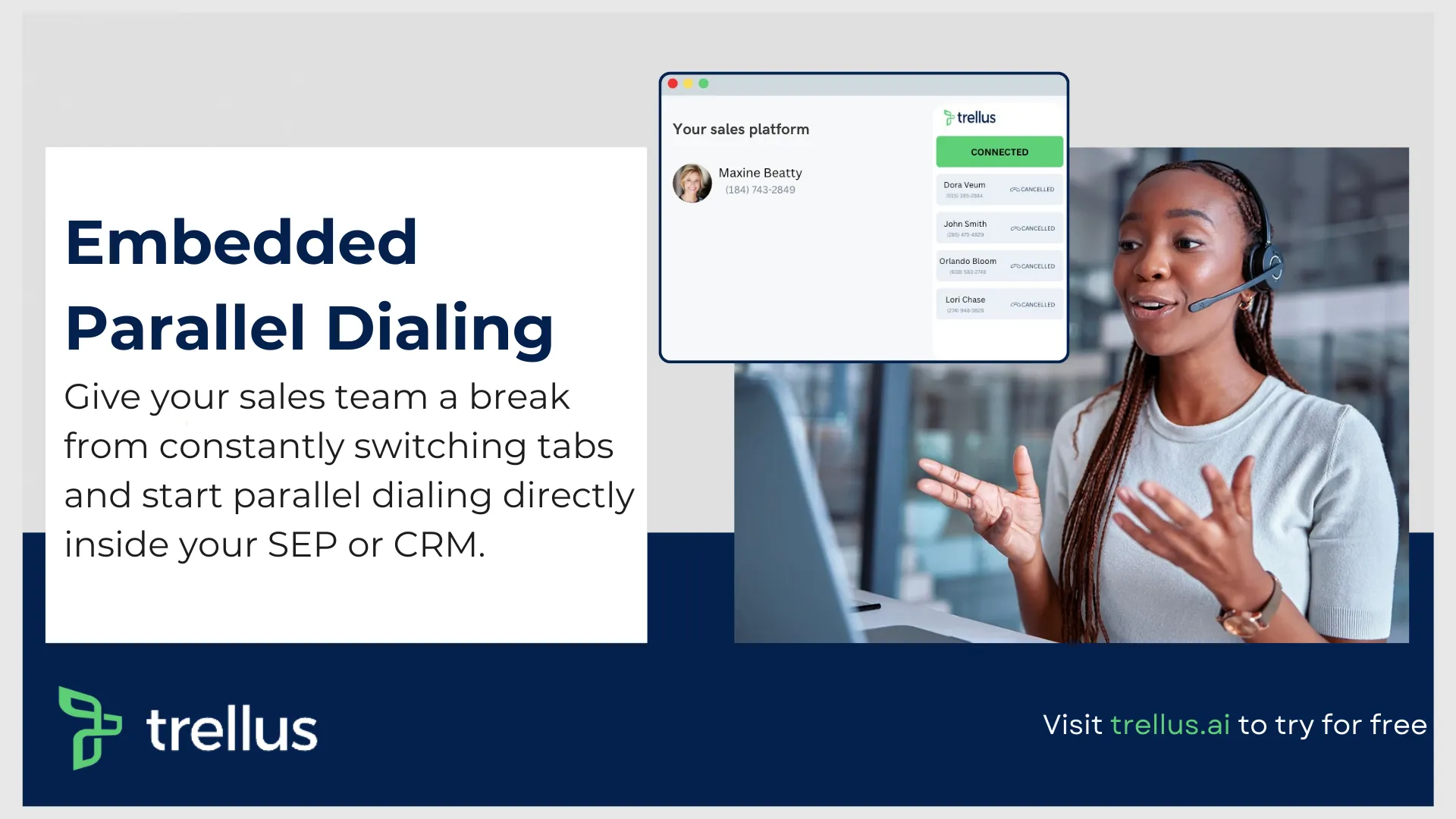
Power and parallel dialing inside your SEP
Reps can dial multiple lines at once without leaving their sales engagement platform. This dramatically increases live connects while removing the friction of switching tabs or tools. For teams comparing parallel dialer solutions or advanced power dialer software, this is one of the cleanest in-platform experiences available.
Real-time call coaching
An AI coach sits on every call, offering guidance on objection handling, competitor positioning, and message alignment as conversations unfold. This is true real-time call coaching, not post-call feedback that arrives too late to matter.
Advanced call analytics
Every conversation is scored and tracked, connecting call behavior directly to pipeline outcomes. Managers can see conversion drivers, low-effort behaviors, and coaching opportunities without manual tagging. This pushes far beyond traditional Call Analytics Tools.
AI voice agents for practice and inbound handling
Reps can practice with realistic voice bots that behave like actual prospects, which shortens ramp time and sharpens messaging. On the inbound side, voice agents handle simple conversations, deflect low-value calls, and free up human reps for higher-impact work.
Automated quality assurance
Post-call QA runs automatically on every conversation.
Doing so ensures script adherence, compliance, and consistency across the entire team, a major upgrade for organizations used to sampling-based reviews in legacy Call Center Software.
Sales floor for remote teams
A virtual sales floor recreates the energy of an in-office environment. Managers and reps can listen to live calls, trade tips, and celebrate wins together, which matters more than ever for distributed teams relying on Sales Communication Tools.
LinkedIn Superhuman
LinkedIn and Sales Navigator messages are consolidated into one view. Reps can snooze, categorize, track conversations, and respond faster with snippets and keyboard shortcuts. This removes inbox chaos while supporting outbound motions tied to Sales Communication Automation.
Number health monitoring
Phone number reputation and performance are tracked to protect deliverability and maintain consistent connect rates as volume scales.
What makes it different from Ring.io
Ring.io helps reps place calls and log activity.
Whereas Trellus.ai focuses on multiplying conversations and improving outcomes inside those conversations. Parallel dialing increases volume, AI coaching improves quality, and analytics explain performance without guesswork.
For teams evaluating AI cold calling software or automated calling solutions, this option is the best because intelligence is not bolted on.
It is embedded into dialing, coaching, QA, and analytics from the start.
What type of business it fits best
This is a strong fit for outbound sales teams, revenue organizations, and support teams that care about speed, coaching, and visibility. It works especially well for remote or hybrid teams that want the energy of a sales floor without the physical office.
Organizations that feel limited by basic dialers or disconnected coaching tools often find this to be a step-change upgrade rather than a small improvement.
2. Ringover – A Strong Step Up for Teams That Want Visibility Beyond the Dial Tone
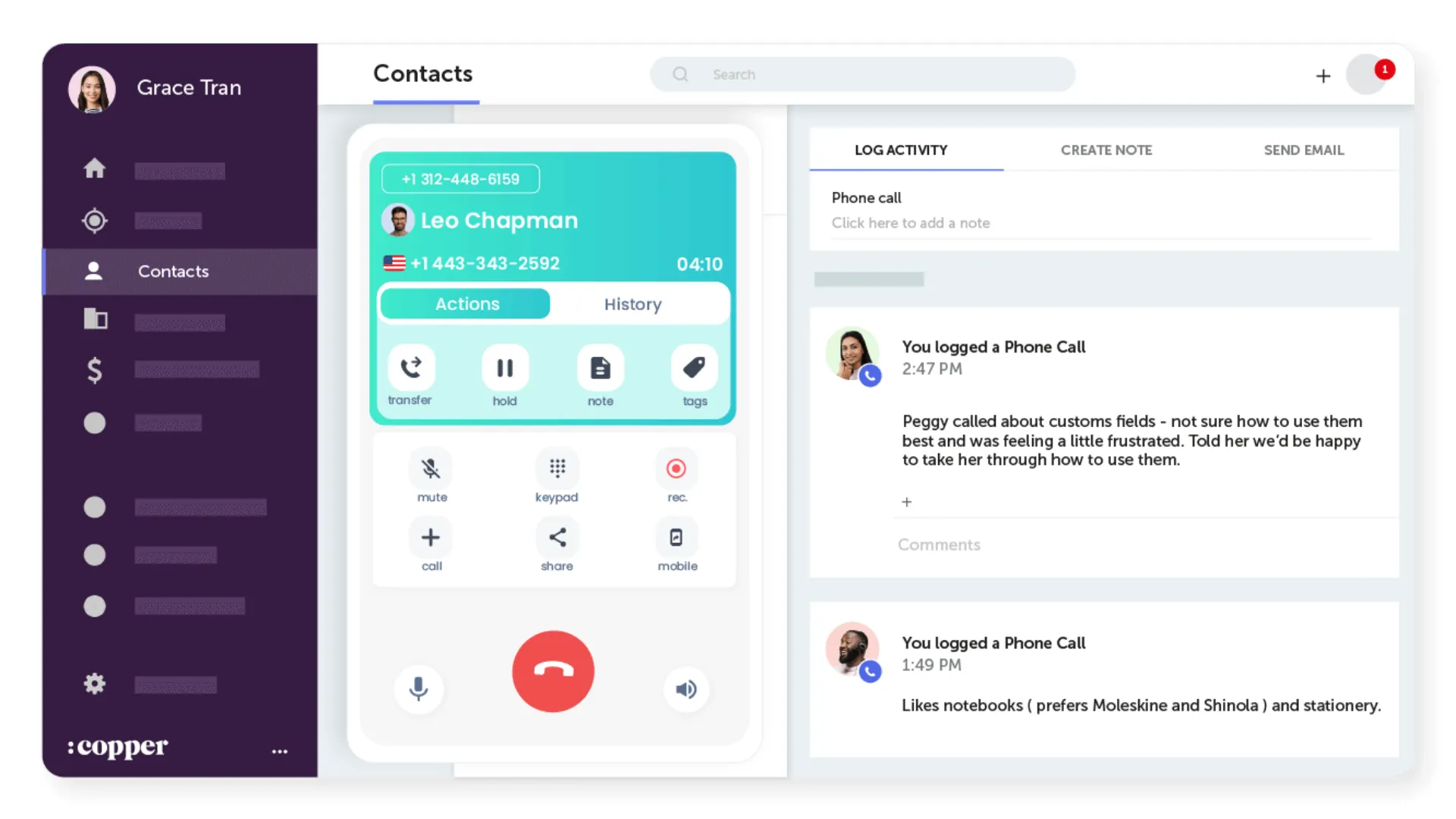
Ringover positions itself as more than a phone system. It sits in that middle ground between traditional VoIP Sales Systems and modern Call Center Software, offering structure without forcing enterprise-level complexity.
For teams moving away from Ring.io, this often feels like a natural next step rather than a full operational reset.
Where Ringover really stands out is visibility. Calls are not treated as isolated events. They are logged, recorded, analyzed, and surfaced in ways that help managers understand rep behavior patterns over time. That shift matters once outbound becomes a daily, repeatable motion rather than an occasional push.
Ringover’s benefits
Ringover appeals to teams that want fast setup but still expect depth once the system is live. The platform is designed to be usable on day one, while quietly offering enough depth to support scale.
Teams often notice how quickly reps adapt. The interface feels familiar, which reduces friction during onboarding. Managers gain clearer oversight without needing to pull reports into external tools. Support availability also plays a role here, especially for sales organizations that cannot afford calling downtime during peak hours.
Another key advantage is channel flexibility. Voice sits at the center, but chat and video are not bolted on as afterthoughts. That helps teams maintain consistent communication flows across prospect touchpoints, a growing expectation in modern Phone Engagement Platforms.
Key features
Call recording
Every call is automatically captured and stored, giving managers a reliable foundation for coaching reviews, onboarding, and performance benchmarking. This is where Ringover starts to behave more like dedicated Sales Call Management software rather than a simple dialer.
IVR system
Inbound calls can be routed intelligently through customizable menus. This is especially useful for teams balancing outbound prospecting with inbound responses or support follow-ups.
Real-time monitoring
Managers can listen in, whisper guidance, or step into calls when needed. This supports real-time call coaching, allowing issues to be addressed in the moment instead of days later during post-call reviews.
Multichannel communication
Voice, chat, and video live under one roof. That flexibility supports modern outreach strategies where calls, messages, and meetings blend together across a prospect’s journey.
Analytics and reporting
Dashboards surface call volume, rep activity, and engagement trends without heavy configuration. For leaders focused on improvement rather than raw data dumps, this aligns well with evolving Call Analytics Tools expectations.
What Ringover is missing
Ringover is not built purely for cost-sensitive micro teams. Pricing can feel heavy for very small organizations that only need basic outbound calling. Some users also report occasional call quality inconsistencies, particularly during peak usage hours or across certain regions.
Another limitation is coaching depth. While monitoring and recordings are strong, teams looking for deeper AI-driven scoring, objection tracking, or automated feedback loops may still want more advanced sales coaching software layered on top.
What type of business it fits best
Ringover works well for small to mid-market sales teams that want a noticeable upgrade from Ring.io without jumping straight into heavyweight enterprise stacks. It suits organizations that value clean workflows, consistent reporting, and foundational coaching tools over extreme customization.
For teams actively comparing sales engagement platforms and sales engagement tools, Ringover often lands as a practical middle option that balances usability with structure.
3. 8×8 – Built for Scale, Structured for Process-Heavy Sales Operations
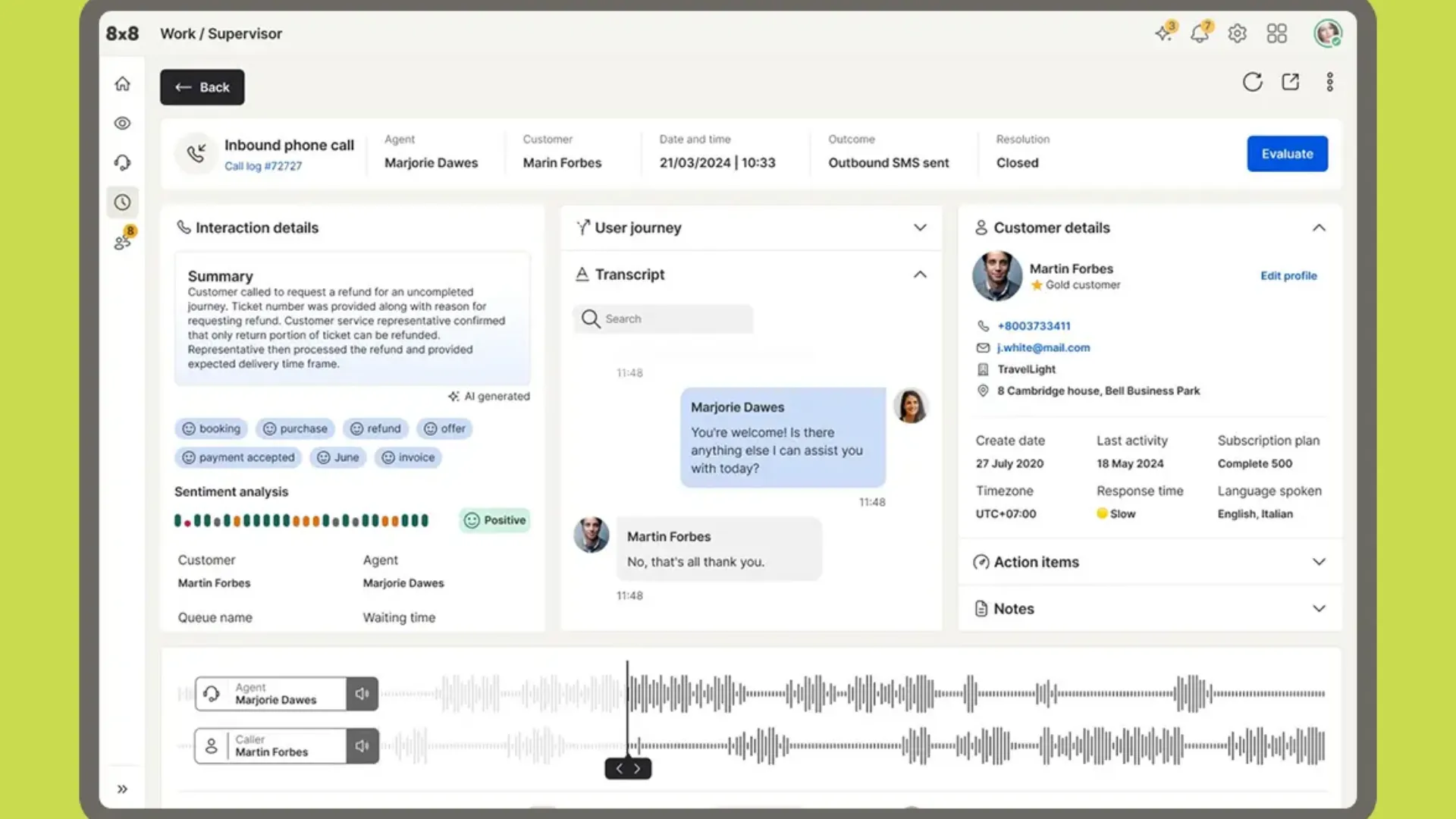
8×8 has been around long enough to earn its reputation as an enterprise-grade communications platform.
For teams moving away from Ring.io, 8×8 usually enters the conversation once outbound calling becomes tightly connected to broader operational workflows. This is not just a dialer replacement. It is a full communications backbone that supports sales, support, and internal collaboration under one umbrella.
Where Ring.io focuses on outbound efficiency inside the CRM, 8×8 zooms out. It looks at calling as one part of a much larger system. That approach works well for teams that already run structured sales processes and want consistency across regions, departments, and roles.
8×8’s benefits
The biggest strength of 8×8 is control. Sales leaders gain visibility across high-volume call activity without stitching together multiple tools. Reporting feels centralized rather than fragmented, which matters when forecasting depends on accurate activity tracking.
Another strong point is integration depth. 8×8 connects smoothly with Salesforce, Microsoft Teams, Slack, and other core business tools. That keeps reps anchored in familiar environments while managers access cross-channel insights. Unlimited calling across dozens of countries also makes it appealing for distributed or international sales teams that rely on VoIP Sales Systems for daily outreach.
For teams evaluating Sales Communication Automation, 8×8 offers enough flexibility to support standardized call flows, monitoring, and reporting across large rep groups.
Key features
Call center management
8×8 provides tools for managing queues, agent availability, and performance metrics at scale. This supports outbound teams operating more like structured sales floors than small pods.
Interactive voice response
IVR capabilities allow inbound calls to be routed based on intent, region, or team specialization. While primarily valuable for support, sales teams benefit when inbound interest needs quick qualification.
Contact management
Contacts, call logs, and engagement history stay centralized. This helps prevent data gaps that often show up when teams outgrow lighter Sales Call Management systems.
Analytics and reporting
8×8’s analytics engine tracks call volume, durations, agent performance, and operational trends in real time. For leadership teams that care about process efficiency, this replaces manual reporting loops.
Call monitoring
Managers can listen in on live calls to evaluate performance or assist reps when conversations go off track. This supports coaching moments, though without deep AI scoring.
What 8×8 is missing
Despite its power, 8×8 is not friction-free. Regional restrictions on unlimited calling can complicate global outreach strategies. SMS functionality is limited geographically, which reduces flexibility for teams leaning on text-based follow-ups.
Another challenge is feature access. Advanced automation, call recording, and routing tools often sit behind higher-tier plans. Smaller teams may feel priced out of features that feel standard in newer Sales Communication Tools.
Customization also requires technical involvement. Non-native integrations and advanced workflows typically need internal support, which can slow down experimentation.
What type of business it fits best
8×8 works best for mid-market and enterprise organizations that prioritize consistency, governance, and scale. Sales teams operating within structured frameworks, especially those aligned with support or customer success operations, tend to extract the most value.
For teams comparing Call Center Software options alongside outbound platforms, 8×8 often feels like a safe, long-term infrastructure play rather than a nimble sales-first solution.
4. Dialpad – AI-Driven Calling With Coaching Signals Built Into Every Conversation
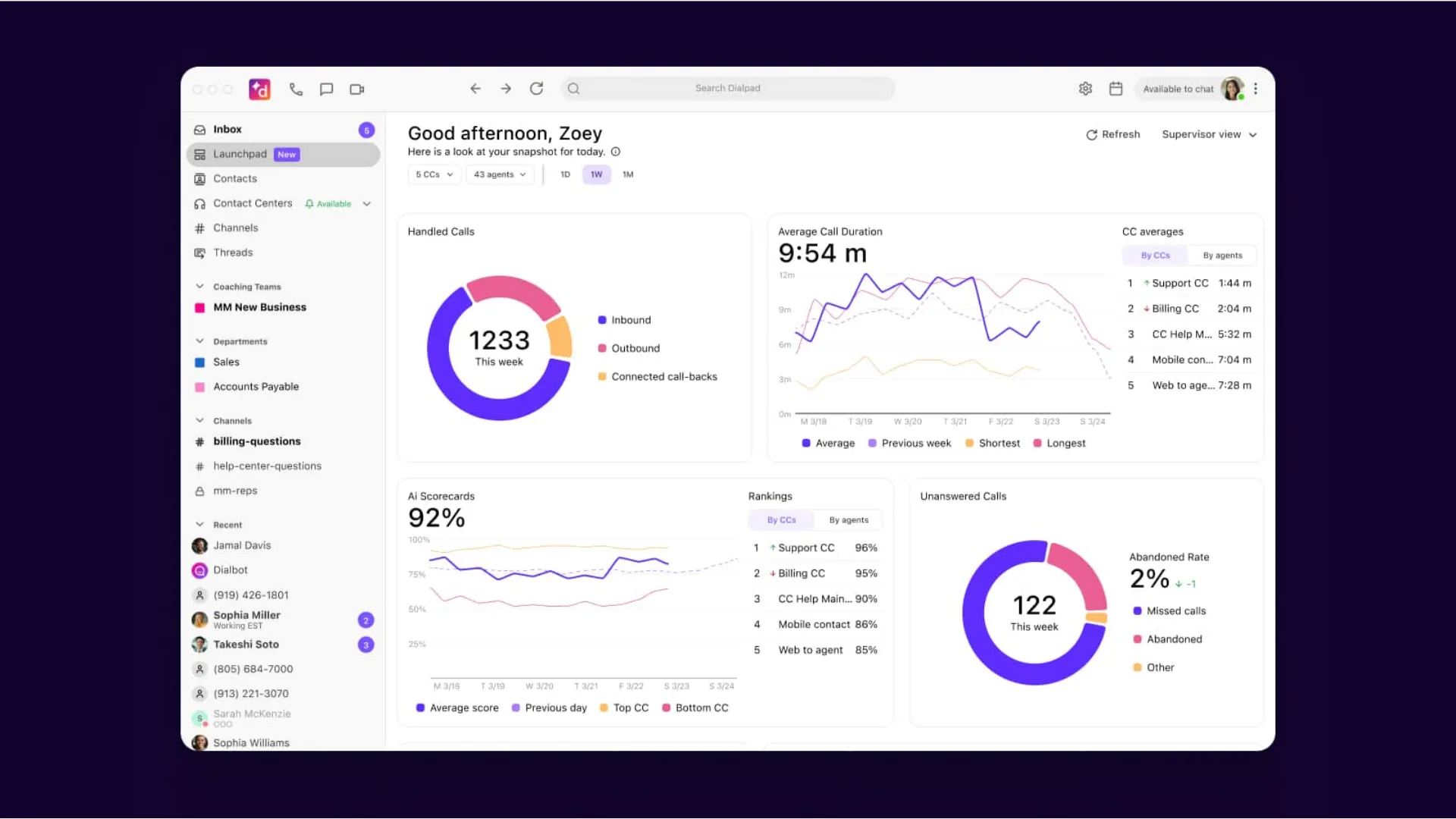
Dialpad tends to surface when teams want more than call volume metrics. It appeals to sales leaders who care about how conversations unfold, not just how many dials get placed. Compared to Ring.io, Dialpad feels like a shift toward intelligence-first calling, where every interaction feeds insight back into coaching and performance improvement.
Rather than positioning itself purely as a dialer, Dialpad leans into voice intelligence. Calls are treated as data-rich events that can be analyzed, scored, and revisited. This aligns closely with how modern Conversation Intelligence Platforms are reshaping outbound sales operations.
Dialpad’s benefits
Dialpad’s standout strength is its AI layer. Live transcription, sentiment detection, and keyword tracking run in the background during calls, giving managers visibility without constant manual review. Reps also benefit directly, as they can review transcripts and highlights instead of listening to entire recordings.
Uptime and reliability are another strong point. Sales teams running high daily call volumes need predictable performance, and Dialpad delivers consistently across regions. The interface also feels modern and approachable, reducing resistance during rollout.
From a coaching standpoint, Dialpad naturally supports real-time call coaching through live transcripts and monitoring. Managers can identify issues mid-call and intervene when needed, rather than waiting for post-call reviews.
Key features
Call recording
All calls are recorded and paired with searchable transcripts. This forms a solid base for Call Recording Solutions focused on coaching, onboarding, and quality assurance.
Machine learning
Dialpad’s AI analyzes speech patterns, keywords, and sentiment across conversations. This allows teams to spot trends such as objection frequency or messaging gaps without manual tagging.
Call analysis
Performance metrics go beyond duration and volume. Managers see engagement signals that help explain why certain reps convert better than others.
Customer scoring
AI-assisted insights help identify conversation quality, making it easier to prioritize follow-ups and coaching attention.
Call routing
Inbound and outbound flows can be structured to match team availability and specialization, supporting smoother handoffs and faster response times.
What Dialpad is missing
Dialpad’s outbound dialing capabilities are more limited than some competitors. While it offers power dialing, it lacks predictive or smart dialing commonly found in advanced power dialer software or parallel dialer solutions. This can slow down teams that rely on high-speed outbound pacing.
Another limitation is SMS reach. Messaging is largely restricted to the US and Canada, which can be a constraint for global sales teams. Integration depth also trails behind some newer sales engagement platforms, especially for niche tools.
Some features, such as voicemail drop and preferred agent routing, are locked behind specific plans or API access, which adds complexity during setup.
What type of business it fits best
Dialpad works well for sales teams that prioritize conversation quality, coaching, and fast rep development. It is especially effective for organizations investing in AI cold calling software concepts, where learning from every call matters more than sheer dial volume.
Teams that value intelligence and insight over raw speed will find Dialpad a meaningful upgrade from Ring.io, particularly when call coaching is a strategic priority.
5. Talkdesk – Enterprise Contact Center Power With Sales Coaching Tradeoffs
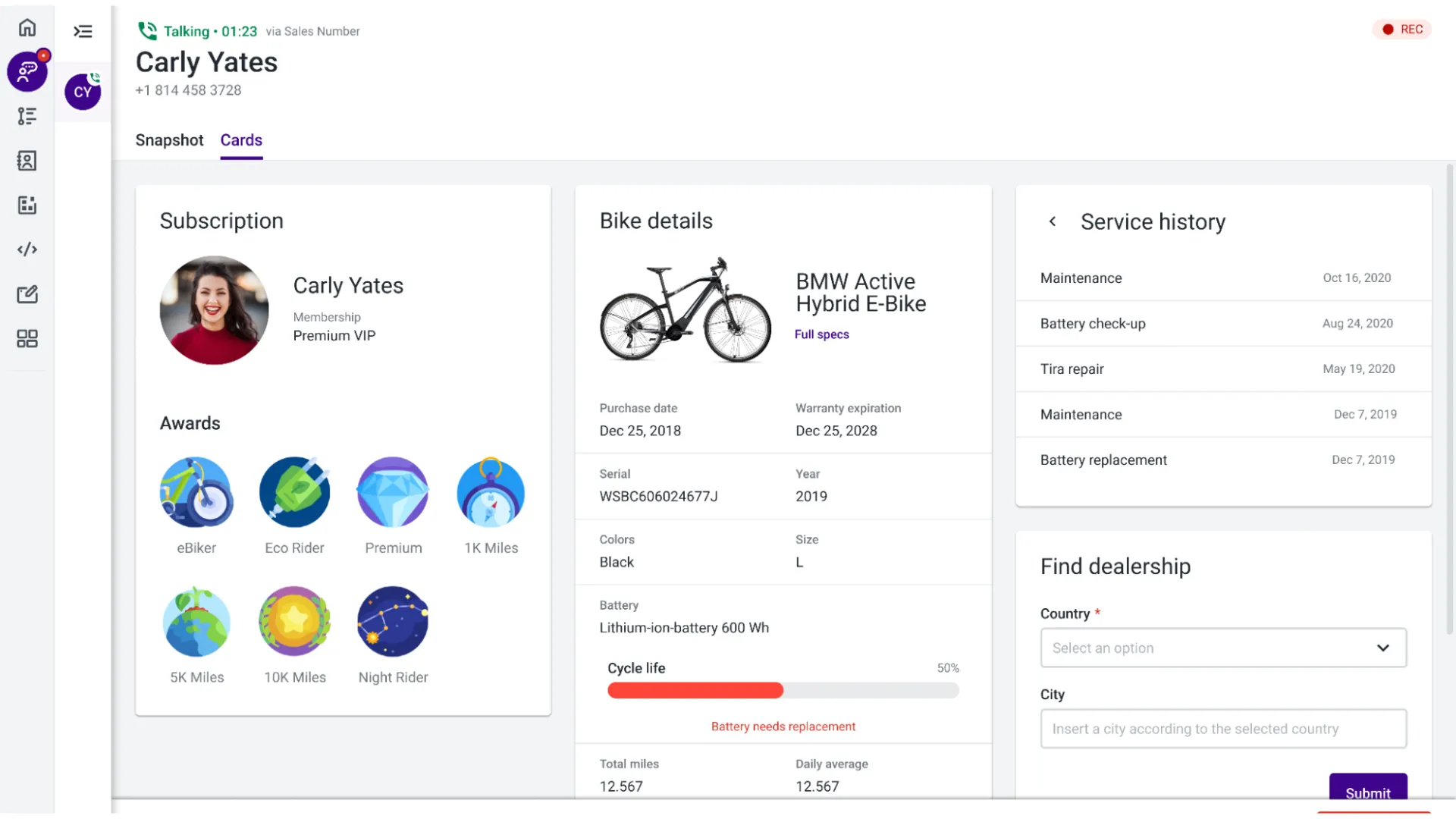
Talkdesk often enters the shortlist when outbound sales starts to overlap with inbound demand, support workflows, or multi-department communication.
Compared to Ring.io, Talkdesk feels like a significant jump in scope. It is less about lightweight calling inside a CRM and more about running structured communication operations at scale.
For sales teams, this can be both a strength and a challenge. Talkdesk brings serious infrastructure, but that depth can feel heavy if the primary goal is outbound velocity and rep coaching rather than full contact center orchestration.
Talkdesk’s benefits
Talkdesk shines when consistency matters. Calls are routed intelligently, agents are monitored in real time, and workflows are designed to handle high volumes without breaking. This reliability makes it attractive to organizations that treat sales and support as interconnected systems.
Another advantage is visibility. Managers gain access to detailed dashboards that track agent activity, call outcomes, and operational performance. These insights support long-term planning and performance optimization across teams, not just individual reps.
Talkdesk also supports complex routing logic, which helps sales organizations manage inbound interest efficiently while maintaining outbound focus. This structure aligns well with teams evaluating enterprise-grade Call Center Software rather than standalone dialers.
Key features
Call routing
Calls can be routed based on skills, language, region, or availability. This ensures prospects reach the right rep quickly, improving experience and conversion potential.
Interactive voice response
IVR menus allow inbound callers to self-direct. For sales teams, this helps separate high-intent inquiries from general traffic without manual triage.
Workforce management
Managers can schedule agents, forecast demand, and allocate resources efficiently. This feature is especially valuable for blended sales and support teams.
Real-time monitoring
Supervisors can listen to calls live, step in when necessary, and assess rep performance as conversations happen. This supports coaching moments without waiting for post-call analysis.
Voice and screen recording
Calls and screens are recorded for quality assurance and training. This creates a foundation for structured coaching and onboarding programs.
What Talkdesk is missing
Despite its power, Talkdesk is not optimized for outbound-first sales teams. Features such as conference calling and auto-attendants are limited, which can slow collaboration during deal cycles.
There is also a learning curve. The platform’s depth requires time and training, and some teams report performance issues during peak usage. Pricing transparency can be another hurdle, as there is no free trial and plans often scale quickly.
From a coaching standpoint, Talkdesk lacks the nuanced AI insights found in dedicated Conversation Intelligence Platforms. While recordings and monitoring are strong, automated feedback and scoring are less advanced than what newer AI cold calling software offers.
What type of business it fits best
Talkdesk is best suited for medium to large organizations running complex communication environments. Sales teams that operate alongside support or customer success departments often benefit most from its structure.
For teams strictly focused on outbound efficiency and rapid rep improvement, Talkdesk may feel heavier than needed. However, for organizations prioritizing stability, governance, and cross-functional alignment, it remains a powerful option among modern Sales Communication Tools.