Our Top Picks


Sales teams are flooded with conversation data, yet most revenue teams still rely on guesswork to understand why deals close or stall.
Reps jump from one call to another, managers review only a tiny sample of conversations, and valuable coaching moments disappear before anyone notices them.
According to Salesforce research, reps spend less than one third of their week actively selling, while administrative tasks consume the majority of their time. At the same time, Gartner reports that organizations adopting AI sales analytics tools are seeing meaningful improvements in pipeline visibility, forecasting accuracy, and rep productivity.
That shift is fueling massive demand for sales call analysis software, AI to analyze phone calls, and modern sales call monitoring platforms that do more than record conversations.
Today's systems can identify objection handling mistakes, measure behavioral patterns, detect buying intent, and surface coaching prompts while calls are happening. The result is faster ramp time, stronger rep performance, and more consistent conversions across the entire sales organization.
Why Most Sales Calls Fail (And What AI Reveals)
Most lost deals are not caused by bad products or weak pricing.
Sales calls fail because reps miss signals during conversations. A prospect hints at hesitation, an objection gets brushed aside too quickly, or the rep dominates the conversation without uncovering pain points.
These mistakes happen constantly, yet managers rarely see them because traditional call review processes only cover a small percentage of conversations.
This is exactly why conversation analytics platforms and revenue intelligence platforms have become essential for modern sales organizations.
They uncover patterns hidden inside thousands of customer interactions and convert those conversations into measurable coaching insights.
Research from Gong found that top performing reps consistently allow prospects to speak more during discovery conversations.
Winning sales calls often maintain a talk to listen ratio close to 40:60, while lower performing reps tend to dominate conversations. That single behavioral difference can dramatically impact conversion rates.
McKinsey research also shows that organizations applying AI driven sales analytics can improve lead conversion rates by as much as 20 to 30 percent. The reason is simple. AI spots behavioral patterns humans miss at scale.
The Three Biggest Reasons Sales Calls Collapse
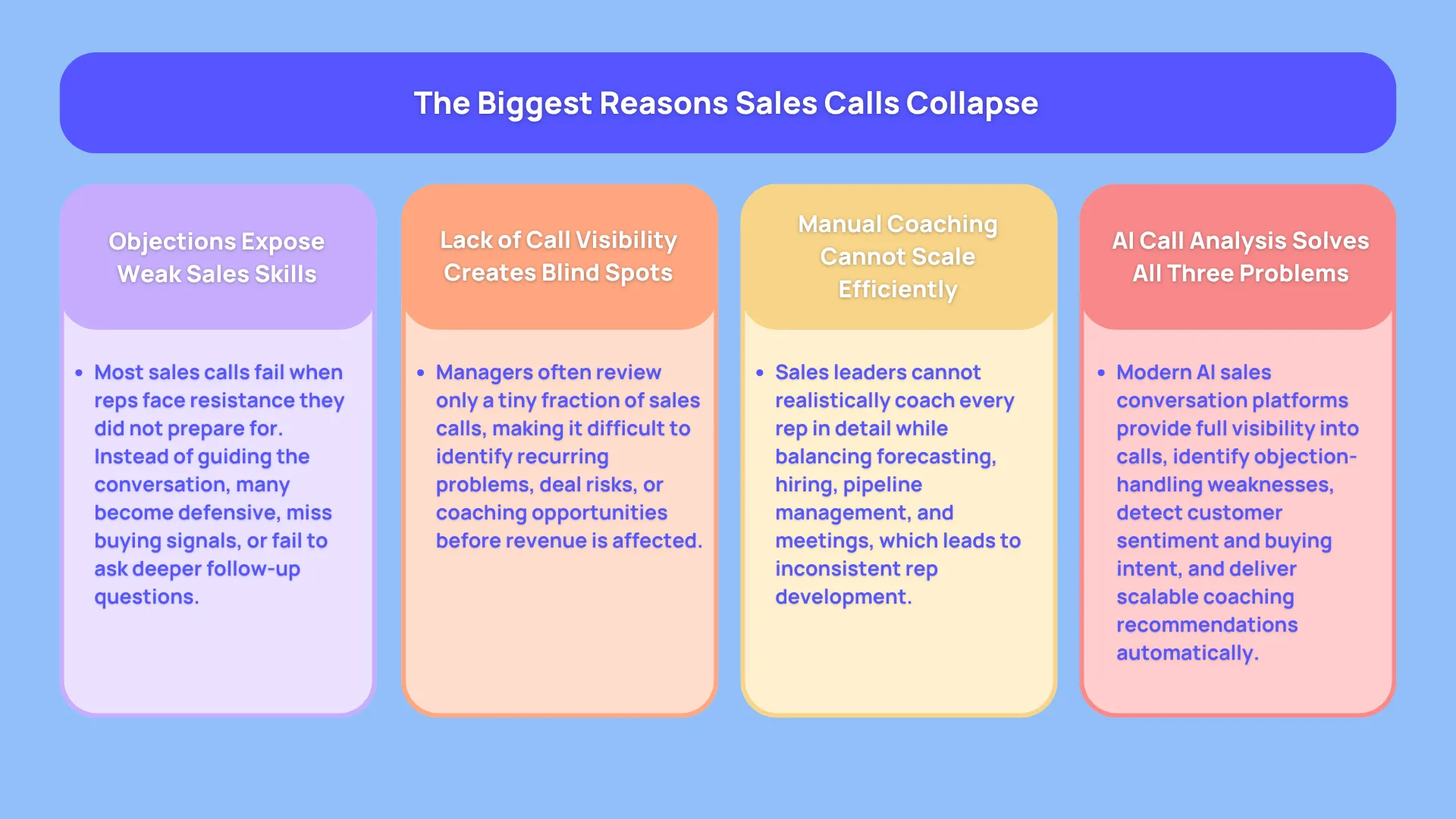
Poor Objection Handling
Most reps are not losing deals because they cannot pitch. They lose deals because they struggle when conversations become unpredictable.
A prospect says:
"Your competitor offers something similar."
"This seems expensive."
"We already have a solution."
Average reps panic and rush into defensive selling. Strong reps slow down, ask clarifying questions, and redirect the conversation strategically.
AI sales call analysis software can now detect objection handling patterns automatically. Modern speech analytics for sales platforms identify:
- Interruptions during objections
- Weak follow up questions
- Defensive language
- Missed buying signals
- Emotional shifts in customer tone
Some advanced tools even compare objection handling behavior across top performers and underperformers, helping managers identify the exact conversational habits that drive revenue.
No Visibility Into Conversations
Most managers never truly know what happens on calls.
Traditional QA systems review maybe 2 to 5 percent of total conversations. That means coaching decisions are often based on incomplete information. One rep may struggle with discovery calls for weeks before anyone notices.
AI to analyze calls changes that entirely. Every conversation becomes searchable, measurable, and trackable.
Modern call intelligence software can automatically identify:
- Competitor mentions
- Pricing objections
- Sentiment shifts
- Buying intent signals
- Deal risk language
- Customer frustration indicators
This level of visibility transforms monitoring sales conversations from guesswork into data driven coaching.
Coaching Does Not Scale
One sales manager cannot manually coach 20 reps effectively while also forecasting pipeline, joining executive meetings, handling hiring, and managing CRM hygiene.
That bottleneck slows down entire organizations.
According to Salesforce research, high performing sales organizations are nearly 2.5 times more likely to use AI powered coaching workflows than underperforming teams.
AI conversation insights help scale coaching through:
- Automated scorecards
- Personalized feedback loops
- Behavioral benchmarking
- Real time prompts
- Rep specific training recommendations
What Is Sales Call Intelligence Software?

Sales call intelligence software refers to platforms that automatically record, transcribe, analyze, and interpret customer conversations across phone calls, video meetings, and conferencing tools. These systems combine machine learning, natural language processing, sentiment analysis, and behavioral analytics to understand how conversations impact revenue outcomes.
At the beginner level, most companies adopt these platforms for transcription and note taking. Reps no longer need to manually update CRM fields or write summaries after every meeting.
At a more advanced level, these systems become full AI sales analytics tools capable of detecting patterns tied directly to revenue performance.
That distinction matters.
Simple recording tools store conversations.
Modern sales call analysis platforms explain why deals progress, why they stall, and how reps can improve in real time.
The Core Categories Inside Sales Call Analysis Software
Call Intelligence Software
Call intelligence software focuses on extracting insights from live conversations. These platforms track keywords, objection frequency, speaking patterns, customer sentiment, and rep behaviors.
Strong platforms can identify:
- Discovery quality
- Question frequency
- Customer engagement
- Next step clarity
- Competitive threats
- Buying intent signals
This helps revenue teams understand how conversations impact pipeline movement.
AI Sales Analytics Tools
AI sales analytics tools take things further by connecting conversations directly to business outcomes.
These systems analyze patterns across thousands of calls to answer questions like:
- Which behaviors correlate with closed deals?
- Which objections appear most often before churn?
- Which rep habits increase meeting conversion rates?
- Which messaging performs best against competitors?
That connection between conversation behavior and revenue performance is what separates modern revenue intelligence platforms from basic recording systems.
Sales Call Tracking Tools
Sales call tracking tools focus more heavily on attribution and operational visibility.
They help organizations:
- Track inbound lead sources
- Connect calls to campaigns
- Monitor rep activity
- Analyze call frequency
- Attribute revenue to marketing channels
Platforms like CallRail became popular because they bridged marketing attribution with sales performance analytics.
Conversation Analytics Platforms
Conversation analytics platforms combine all these layers together.
They monitor:
- What was said
- How it was said
- Customer reactions
- Emotional tone
- Deal progression signals
- Coaching opportunities
These systems essentially function as AI powered sales observers operating across every conversation automatically.
According to Gartner, organizations investing in conversation intelligence software are seeing measurable improvements in forecast accuracy, rep onboarding speed, and sales productivity because decision making becomes grounded in behavioral data rather than assumptions.
How AI Turns Sales Calls Into Revenue Insights?
The biggest misconception around sales call analysis is that AI simply transcribes conversations. Modern AI to analyze sales calls goes much deeper than transcription.
Today's platforms interpret behavioral signals, emotional context, customer intent, and conversational structure in ways that help revenue teams improve performance systematically.
That is where AI conversation insights become incredibly valuable.
Speech Analytics for Sales
Speech analytics for sales examines how conversations unfold at a granular level.
AI systems can track:
- Speaking speed
- Interruptions
- Question frequency
- Pauses
- Objection timing
- Emotional intensity
- Keyword patterns
This creates measurable behavioral benchmarks.
For example, Gong research found that successful reps ask more discovery questions and pause longer after objections, giving prospects space to elaborate rather than immediately defending the product.
These insights allow managers to coach precise conversational habits rather than offering vague advice like "build more rapport."
Sentiment and Intent Detection
One of the most powerful developments in AI to analyze phone calls is intent detection.
Modern conversation analytics platforms can detect:
- Purchase interest
- Hesitation
- Confusion
- Frustration
- Urgency
- Positive engagement
Top platforms achieve transcription accuracy rates between 85 and 95 percent depending on audio quality, speaker overlap, and industry vocabulary. Some systems also support dozens of languages and adapt models based on sales specific terminology.
That matters because accurate sentiment analysis depends heavily on contextual understanding.
A phrase like:
"That sounds interesting."
could indicate genuine interest or polite dismissal depending on tone, pacing, and conversational context.
Advanced sales call analysis software interprets those nuances more effectively than older keyword based systems.
The Evolution of Sales Call Analysis: Going All The Way From Recording to Real Time Coaching Architecture
The sales call monitoring market has evolved dramatically over the past decade. What started as simple call recording software has transformed into intelligent revenue coaching systems capable of shaping conversations live as they happen.
Understanding this evolution helps explain why next generation platforms are outperforming traditional tools so quickly.
Phase 1: Basic Call Recording
Early sales call tracking tools focused mainly on compliance and storage.
Organizations recorded conversations for:
- Quality assurance
- Legal documentation
- Manager reviews
- Training examples
The problem was scale.
Managers could only review a tiny fraction of total calls. Coaching remained reactive, inconsistent, and delayed.
A rep might repeat the same mistake dozens of times before receiving feedback.
Phase 2: Post Call AI Analysis
The next wave introduced AI powered conversation analytics.
Platforms began offering:
- Automatic transcription
- Keyword detection
- Sentiment scoring
- Talk ratio analysis
- Objection tracking
This represented a huge improvement because managers could finally analyze 100 percent of conversations rather than random samples.
Revenue intelligence platforms like Gong helped organizations connect conversation behavior directly to pipeline outcomes.
But one major limitation still remained.
The coaching happened after the damage was already done.
A rep loses the deal first.
Then the software explains why later.
That lag creates major revenue leakage.
Research from the Journal of Applied Psychology suggests people forget roughly 70 percent of newly learned information within a week without reinforcement. Delayed coaching dramatically weakens behavioral improvement.
Phase 3: Real Time Coaching and AI Copilots
This is where the industry is heading now.
Modern AI sales call analysis software is moving from passive observation into active conversational assistance.
Real time platforms can now:
- Suggest responses during objections
- Surface battle cards instantly
- Detect competitor mentions live
- Recommend discovery questions
- Alert reps when they dominate conversations
- Flag missing next steps before calls end
9 Best AI Sales Call Analysis Tools (Ranked by Use Case)
The current sales market is pretty much crowded by now. That’s partly because of the overwhelming number of tools out there, and also because of a sense of disparity in the choice factor.
Managers are kind of oblivious to each program’s exact features, and often end up signing their entire sales department for an expensive platform that doesn’t work as advertised. On top of that, almost every platform now claims to offer conversation intelligence, sales coaching AI tools, and revenue insights.
But, as it turns out, many programs are designed for enterprise forecasting, while others offer a mix of experience, ranging from monitoring sales conversations for compliance, and lightweight transcription and note taking.
Below are the strongest platforms across different sales environments and use cases in 2026.
Best for Real Time Coaching
1. Trellus.ai
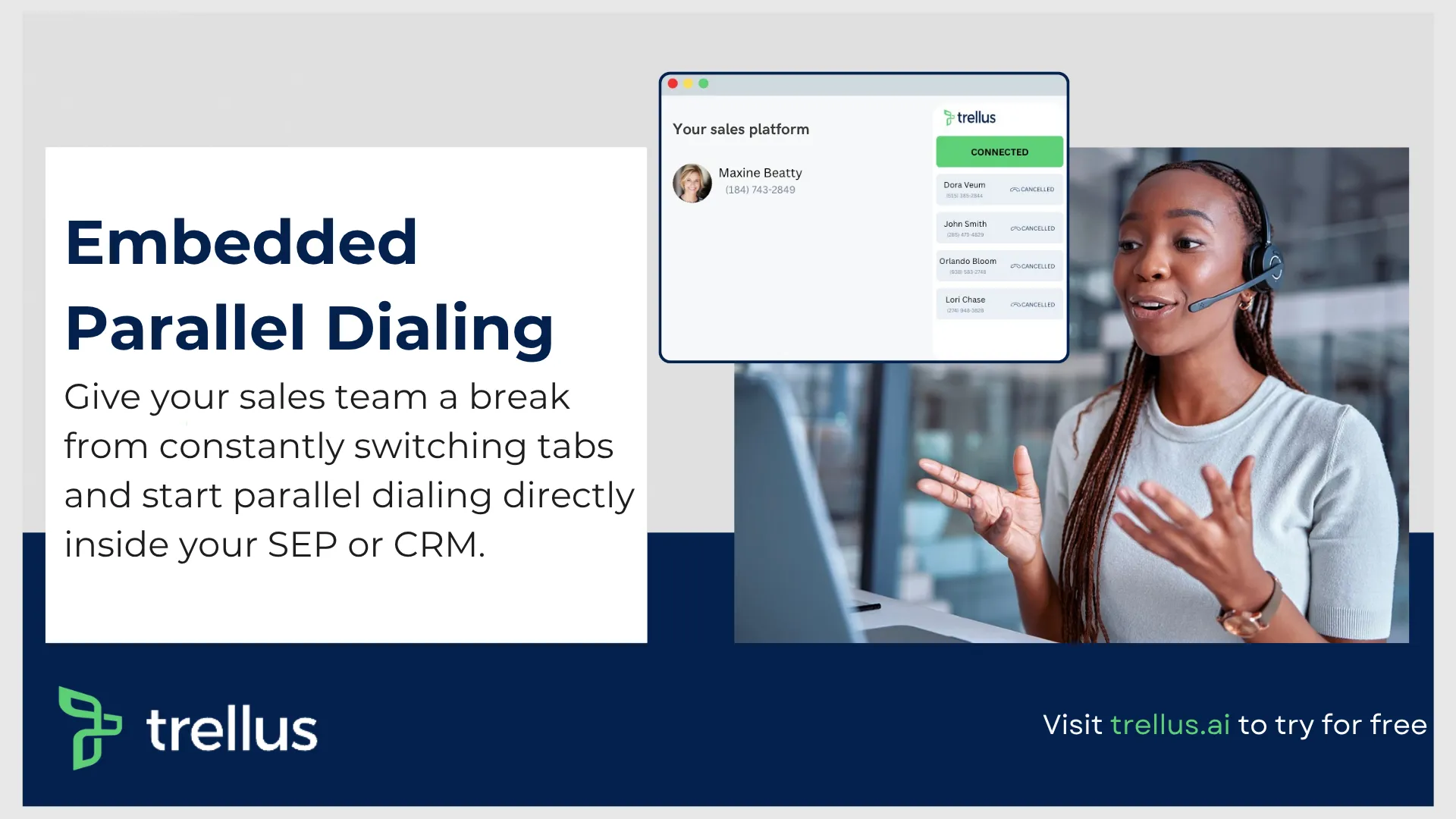
Trellus.ai is positioning itself differently from traditional sales call monitoring platforms because the system focuses heavily on live conversational coaching rather than retrospective analysis.
Most conversation analytics platforms tell reps what went wrong after calls end. Trellus aims to influence the conversation while the rep is still speaking with the prospect.
That shift is extremely important.
When a rep misses an objection in a traditional system, the learning happens later.
When a rep receives guidance during the objection itself, conversion outcomes can change immediately.
This makes it particularly valuable for SDR teams, outbound sales organizations, and high volume calling environments where reps handle dozens of conversations daily.
Why It’s Different Than The Rest of the Programs Out There?
The platform emphasizes:
- Real time objection handling support
- Live conversational prompts
- AI generated coaching recommendations
- Call intelligence during active conversations
- Rep behavior reinforcement
- Faster onboarding for new SDRs
This matters because reactive coaching has a major timing problem. Reps often repeat mistakes multiple times before managers intervene.
Real time systems reduce that feedback gap dramatically.
Salesforce research shows that organizations with AI assisted coaching workflows achieve faster rep ramp time and improved productivity across distributed sales teams. The tool aligns strongly with that operational trend.
Fun Fact:
- According to McKinsey, organizations applying AI driven sales analytics and coaching workflows can improve sales productivity by 15 to 20 percent while accelerating ramp time for new hires significantly.
- Meanwhile, Gong’s research also shows that high performing reps consistently demonstrate measurable behavioral patterns that can now be identified automatically through AI conversation insights.
Best Use Case
Works particularly well for:
- SDR teams
- High volume outbound organizations
- Fast growing startups
- Teams with junior reps
- Organizations focused on conversion optimization
Key Features
Pricing
Visit our pricing page for full details on plans and tiers.
Biggest Advantage
Unlike passive sales call analysis software, Trellus attempts to shape outcomes before deals are lost.
That distinction is becoming increasingly important as sales organizations prioritize proactive coaching over delayed review systems.
Best for Enterprise Revenue Intelligence
2. Gong

Gong remains one of the most recognized revenue intelligence platforms in the market. The company built its reputation around deep conversation analytics, deal visibility, and forecasting intelligence across large enterprise sales organizations.
The platform captures customer interactions across calls, meetings, and emails, then analyzes patterns tied to deal progression and pipeline health.
For enterprises managing hundreds of reps, Gong offers some of the deepest sales performance analytics available today.
What Gong Does Well
Gong excels at identifying patterns across massive conversation datasets.
The platform helps organizations understand:
- Which deal behaviors correlate with wins
- Which objections appear before churn
- Which competitor mentions stall deals
- Which reps consistently outperform peers
- Which messaging creates higher conversion rates
This level of visibility is extremely valuable for enterprise revenue operations teams.
Key Features
Limitations
Gong is extremely powerful but highly retrospective.
The platform explains conversation outcomes very effectively after calls happen, but it does not focus heavily on real time intervention during conversations.
For smaller teams, pricing can also become difficult to justify.
Best For
- Enterprise sales teams
- Revenue operations departments
- Forecast heavy organizations
- Mature B2B sales environments
3. Clari Copilot
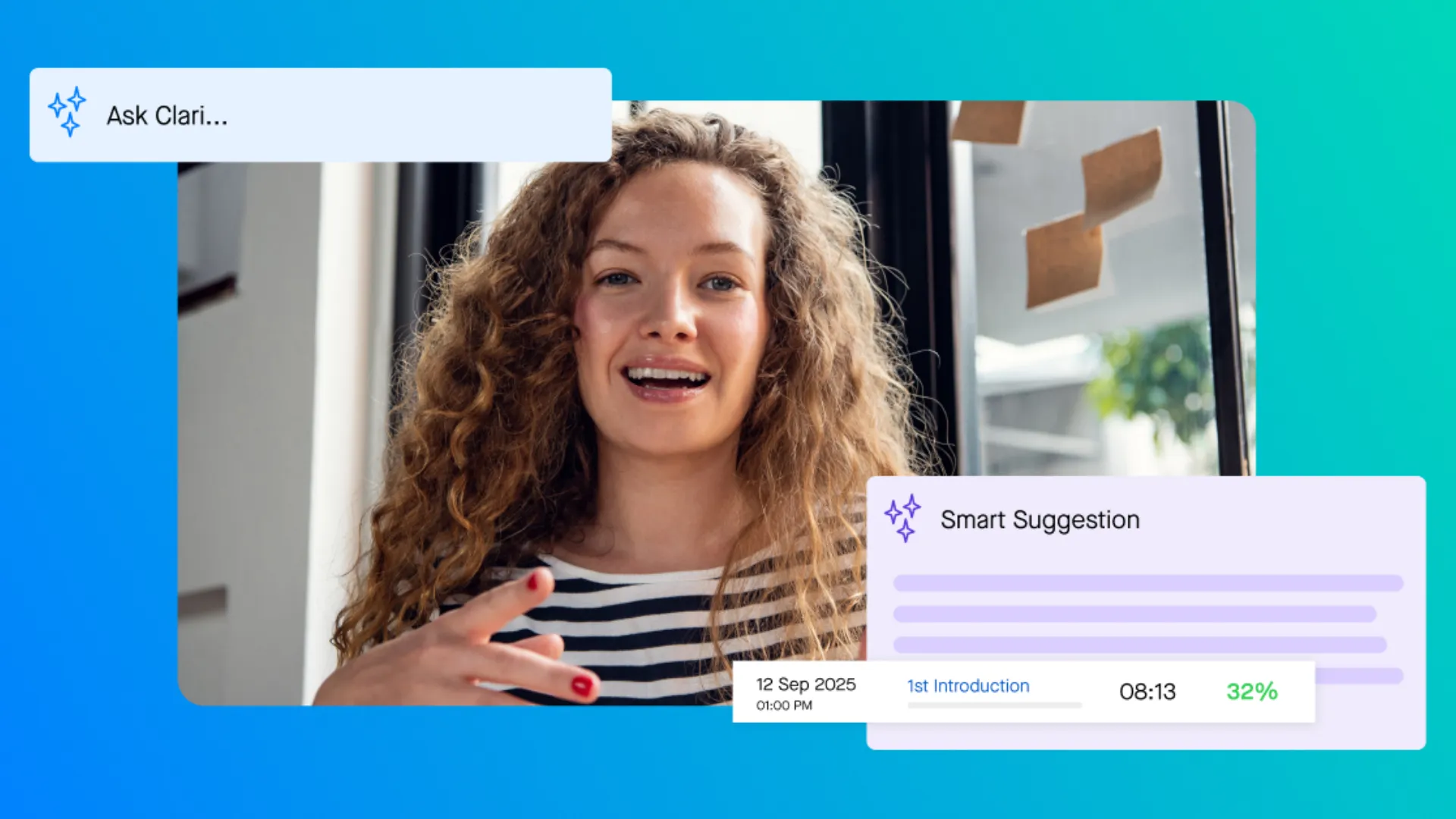
Clari Copilot, formerly known as Wingman, blends conversation intelligence with pipeline forecasting and deal inspection capabilities.
The platform focuses heavily on helping reps navigate conversations while also giving leadership teams visibility into forecast health.
Clari gained major traction because it bridges sales call analysis directly with revenue forecasting systems.
Why Teams Like Clari
Many organizations struggle because conversation intelligence and forecasting live in separate systems.
Clari combines both.
Managers can connect:
- Call quality
- Rep behaviors
- Pipeline progression
- Deal risks
- Forecast movement
That connection improves visibility across the entire revenue organization.
Key Features
Best For
- Revenue operations teams
- Mid market and enterprise organizations
- Forecast focused sales leadership
- Structured enterprise sales cycles
Limitations
Clari offers live prompts, but the platform still leans more heavily toward revenue intelligence than aggressive real time coaching.
Best for Conversation Analytics
4. Chorus
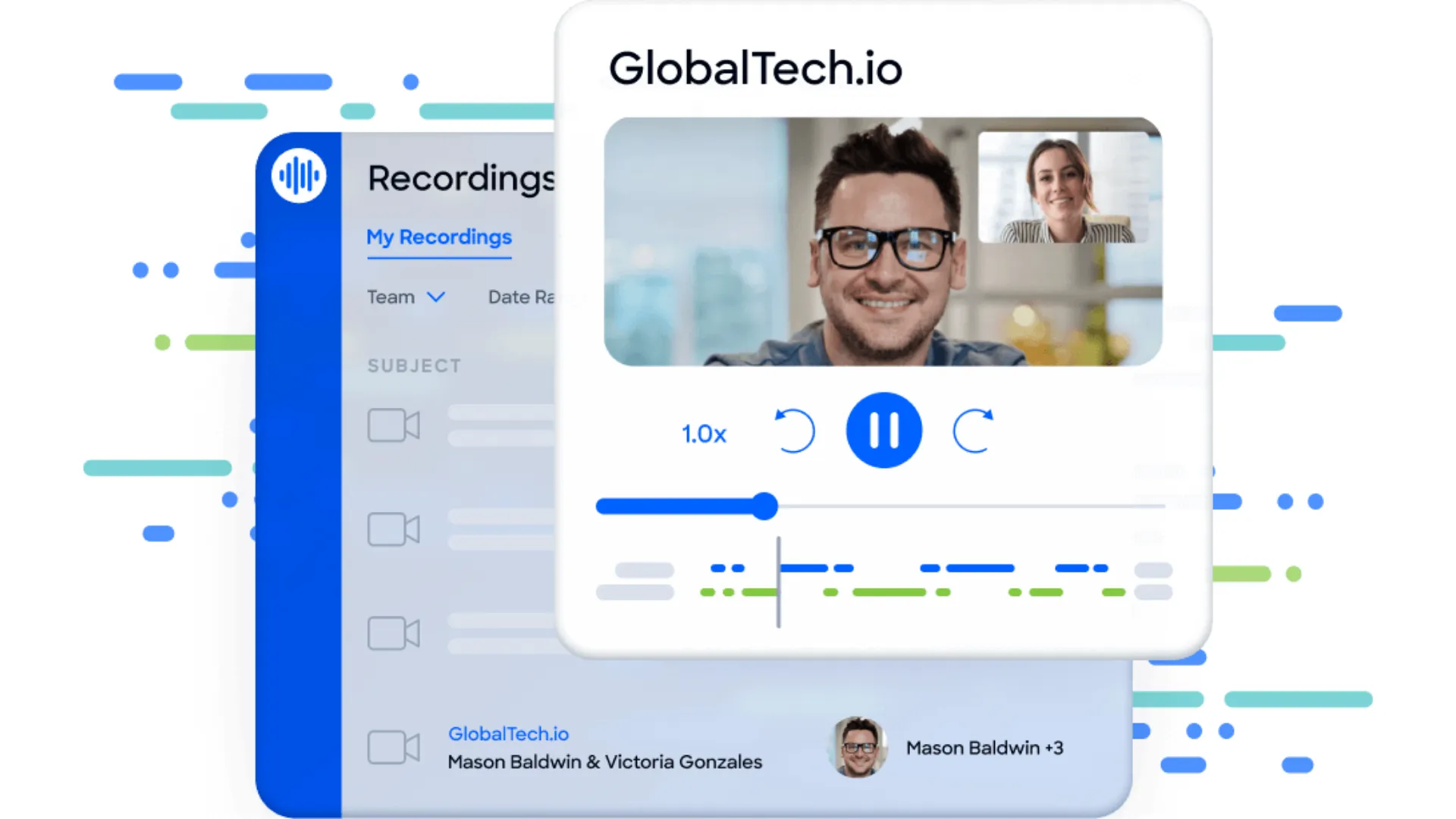
Chorus, owned by ZoomInfo, is one of the most established conversation analytics platforms in the sales intelligence category.
The platform focuses heavily on analyzing customer interactions and surfacing coaching insights tied to successful sales outcomes.
Organizations often use Chorus to identify high performing conversational patterns across top reps.
What Makes Chorus Valuable
Chorus is strong at uncovering conversational trends across teams.
Managers can identify:
- Winning discovery frameworks
- Effective objection handling approaches
- Successful questioning techniques
- Competitor response patterns
- Customer engagement indicators
This helps organizations standardize successful sales behaviors across large teams.
Key Features
Best For
- Mid sized and enterprise B2B teams
- Coaching focused sales organizations
- Conversation trend analysis
- Manager driven rep development
Limitations
The platform remains more reactive than proactive. Coaching recommendations typically occur after conversations conclude.
5. Avoma
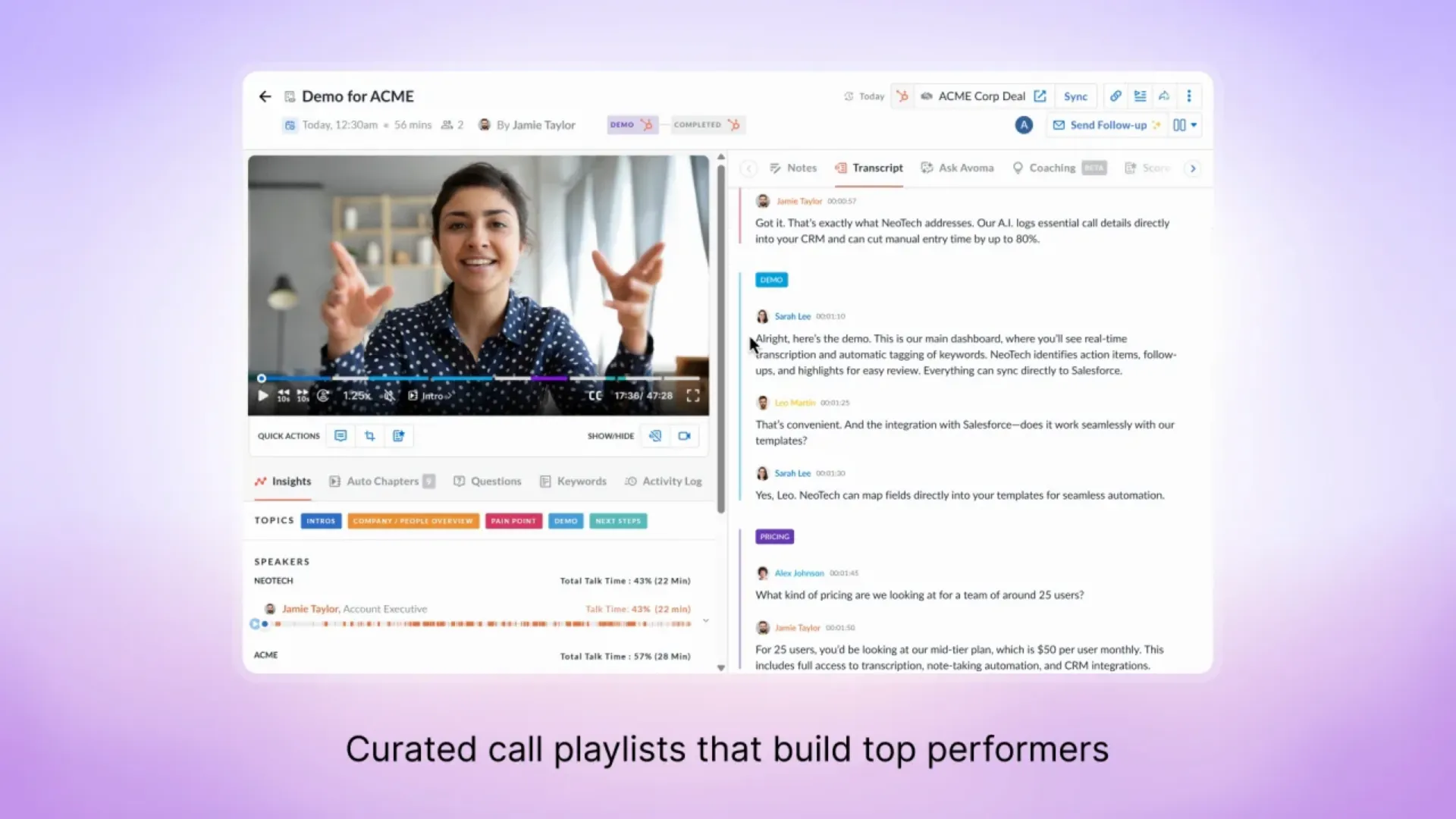
Avoma combines AI meeting assistance with sales coaching workflows and collaboration features.
The platform has become popular among inside sales teams because it covers scheduling, note taking, call summaries, and coaching within one environment.
Its collaborative structure makes manager feedback much easier to organize.
Why Avoma Works Well for Coaching
Managers can:
- Leave timestamped comments
- Share coaching clips
- Compare rep scorecards
- Track coaching progression
- Organize call libraries efficiently
This creates a more structured sales coaching workflow than many lightweight call intelligence software tools.
Key Features
Best For
- Inside sales teams
- Collaborative coaching environments
- Growing SaaS companies
- Sales enablement workflows
Limitations
Avoma focuses more heavily on workflow organization and post call analysis than real time behavioral correction.
Best for Call Center AI Optimization
6. Observe.AI
Observe.AI specializes in large scale contact center optimization with strong emphasis on automated quality assurance and compliance monitoring.
The platform analyzes 100 percent of customer conversations rather than relying on random QA sampling.
That capability is extremely important for regulated industries and large support organizations.
Why Observe.AI Is Strong for Monitoring Sales
The platform offers:
- Automated QA scoring
- Sentiment analysis
- Compliance tracking
- Voice of customer analytics
- Real time agent assistance
Large organizations benefit because managers no longer need to manually review conversations one at a time.
Key Features
Best For
- Contact centers
- Enterprise support teams
- Compliance heavy industries
- High volume sales operations
Limitations
The platform is heavily optimized for contact center operations rather than outbound sales coaching specifically.
7. CallRail
CallRail combines call tracking with AI driven call analytics and marketing attribution.
This makes it particularly valuable for organizations that need visibility into how campaigns generate phone based conversions.
Why Marketing Teams Use CallRail
The platform connects:
- Lead sources
- Call outcomes
- Marketing campaigns
- Conversion data
- Sales activity
This helps companies understand which campaigns generate the highest quality phone conversations.
Key Features
Best For
- Marketing driven sales teams
- Local service businesses
- SMB lead generation
- Phone heavy inbound environments |
Limitations
CallRail is more attribution focused than coaching focused.
Best for SMB Sales Teams
8. Wingman
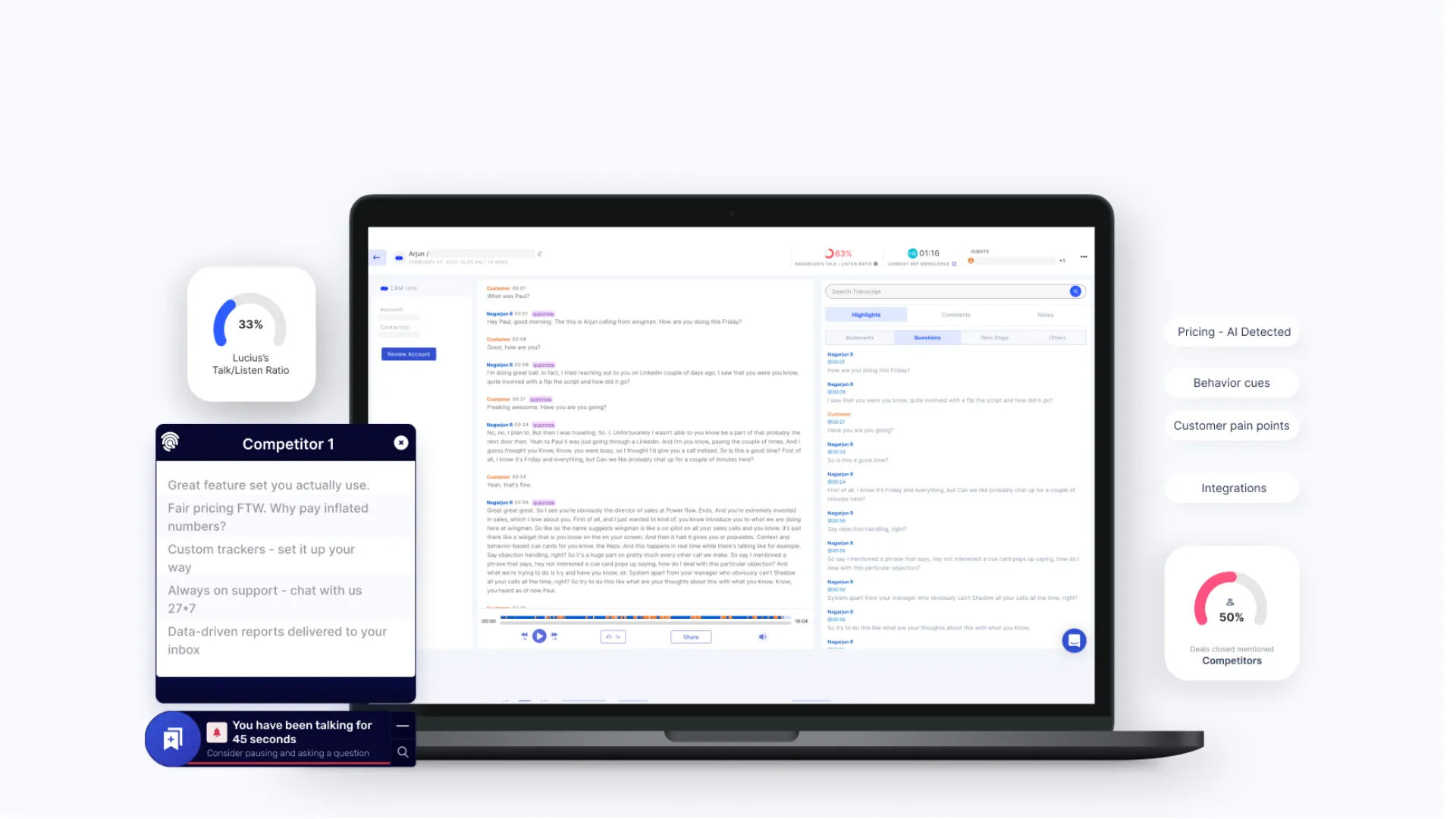
Before becoming part of Clari Copilot, Wingman built a strong reputation among smaller and mid sized sales teams looking for lightweight conversation intelligence with live coaching support.
Even now, many sales leaders still refer to the platform by its original name because of its popularity in the SDR and outbound sales space.
Wingman became popular because it solved a major operational problem. Smaller teams often need coaching support but cannot afford large enterprise revenue intelligence platforms with massive implementation requirements.
The platform offered a cleaner, easier onboarding experience while still giving reps live guidance during calls.
Why SMB Teams Liked Wingman
Growing sales organizations typically struggle with three issues:
- Inconsistent messaging
- Long ramp time for new hires
- Limited manager coaching bandwidth
Wingman helped solve those gaps through real time prompts and conversational guidance.
Research from Salesforce shows that high performing sales teams are significantly more likely to use AI assisted workflows and automated coaching systems. Smaller teams benefit even more because managers often oversee many responsibilities simultaneously.
Key Features
Best For
- SMB outbound sales teams
- SDR organizations
- Startup sales environments
- Fast onboarding workflows
Limitations
The platform is lighter than enterprise conversation analytics systems and may lack the deep forecasting layers larger organizations require.
9. ExecVision
ExecVision focuses heavily on coaching workflows and rep development through structured conversation analysis.
The platform was built around a simple idea. Most organizations collect enormous amounts of sales conversation data but fail to translate it into repeatable coaching improvement.
ExecVision attempts to close that gap.
What Makes ExecVision Different
Unlike many platforms focused primarily on forecasting and reporting, ExecVision emphasizes behavioral coaching systems.
Managers can:
- Create coaching playlists
- Review specific call moments
- Compare rep behaviors
- Standardize training frameworks
- Track improvement over time
This makes the platform appealing for organizations prioritizing rep development over enterprise forecasting complexity.
Key Features
Best For
- Coaching heavy organizations
- Mid sized sales teams
- Enablement driven sales departments
- Rep development programs
Limitations
ExecVision leans more heavily toward post call coaching than real time intervention.
Behavioral Benchmarks From High Performing Sales Calls
One of the biggest advantages of AI sales analytics tools is the ability to identify measurable patterns across winning conversations.
For years, sales coaching depended heavily on subjective opinions.
Managers would say things like:
"Build more rapport."
"Ask better questions."
"Control the conversation."
The problem is that vague advice is difficult to operationalize.
Modern sales call analysis software changes this because AI can now measure conversational behavior across thousands of calls and identify the habits most strongly associated with closed deals.
This is one reason conversation analytics platforms have become central to modern sales enablement.
Ideal Talk to Listen Ratio
Gong's widely referenced conversation research found that high performing reps generally maintain a talk to listen ratio close to 40:60 during discovery calls.
That balance matters because prospects need room to explain pain points, priorities, frustrations, and buying motivations.
Reps who dominate conversations often reduce engagement and uncover less useful information.
AI to analyze calls can automatically measure:
- Rep speaking percentage
- Prospect speaking percentage
- Interruptions
- Silence duration
- Question pacing
This allows managers to coach communication behavior with precision rather than intuition.
Winning Reps Ask More Questions
Another important benchmark involves question frequency.
Top performing reps consistently ask more discovery oriented questions throughout conversations. They guide prospects into explaining business problems rather than rushing into presentations.
AI conversation insights platforms now track:
- Open ended question frequency
- Follow up depth
- Clarification questions
- Discovery sequencing
This creates measurable coaching frameworks for improving qualification calls.
Objection Handling Patterns
One of the clearest behavioral differences between strong and weak reps appears during objections.
Winning reps typically:
- Pause before responding
- Ask clarifying follow ups
- Validate concerns
- Redirect strategically
- Avoid defensive language
Lower performing reps often interrupt quickly and begin pitching immediately.
Speech analytics for sales platforms can now detect these patterns automatically.
That capability becomes extremely valuable for onboarding junior SDRs because managers can identify objection handling weaknesses before they become deeply ingrained habits.
Where Real Time Coaching Changes the Equation
Traditional sales call analysis software would still leave a major gap because coaching happens after mistakes occur.
Platforms like Trellus.ai attempt to reduce that delay dramatically through live conversational guidance.
That means reps can adjust:
- During objections
- During discovery
- During competitor discussions
- Before calls derail completely
The faster correction cycle can accelerate behavioral improvement significantly, especially for newer sales reps.
How to Improve Conversions Using AI Call Analytics
Many organizations purchase sales call analysis software expecting immediate conversion increases. The reality is that results depend on how effectively teams operationalize conversation data.
The strongest organizations treat AI call analytics as a behavioral optimization engine rather than a passive reporting dashboard.
According to McKinsey, organizations applying advanced AI sales analytics tools can improve conversion performance substantially because coaching becomes data driven rather than reactive.
Identify High Performing Conversation Patterns
The first step is identifying what top reps consistently do differently.
AI sales analytics tools can uncover:
- Discovery structures
- Question sequencing
- Objection handling timing
- Talk ratios
- Closing behaviors
- Customer engagement patterns
Once those patterns become measurable, organizations can standardize them across teams.
This is one reason sales performance analytics platforms are becoming central to modern enablement strategies.
How to Coach Sales Reps Using AI Insights?
Traditional sales coaching has always been through a rough patch because of several resource related constraints.
Especially, if the said sales business has a massive salesteam, with new hires coming in and looking for hands-on training, managers can’t allocate time to each and everyone of them
Normally, these managers sit in on a handful of calls, leave scattered feedback notes, and hope reps apply those lessons consistently across future conversations. The problem is that sales behavior is difficult to improve through occasional observation alone.
AI sales analytics tools change that dynamic completely because coaching becomes continuous, measurable, and behavior driven.
According to Gartner, organizations adopting AI assisted coaching workflows are improving rep productivity and onboarding speed because coaching becomes far more personalized and data grounded.
Feedback Loops Create Faster Improvement
Usually, the strongest sales teams operate on tight behavioral feedback loops. These loops have the following aspects associated with them:
- A rep handles an objection poorly.
- The issue gets identified quickly.
- Coaching happens immediately.
- The rep adjusts behavior before repeating the same mistake dozens of times.
That timing matters enormously.
Traditional post call coaching often creates delayed learning cycles. A rep may continue using weak discovery techniques for weeks before receiving meaningful correction.
AI conversation insights reduce that lag dramatically.
Modern sales coaching AI tools can identify:
- Weak qualification questions
- Excessive interruptions
- Poor listening habits
- Missed next step alignment
- Defensive responses during objections
- Inconsistent discovery sequencing
Managers can then coach highly specific conversational behaviors rather than offering vague motivational advice.
Live Coaching vs Post Call Reviews
This distinction is becoming one of the most important differentiators in the sales call analysis market.
Traditional Post Call Coaching
Older sales call analysis software generally follows this sequence:
- Call happens
- AI analyzes transcript
- Manager reviews insights
- Coaching occurs later
This workflow still improves visibility significantly compared to manual review systems, but the correction timing remains delayed.
The rep already lost the opportunity.
Real Time Coaching
Next generation systems are moving toward in call behavioral reinforcement.
Platforms like Trellus.ai focus heavily on helping reps adjust while conversations are still active.
That means the platform can surface:
- Objection handling prompts
- Discovery recommendations
- Competitor battle cards
- Listening reminders
- Next step suggestions
- Risk alerts
during the live conversation itself.
This creates much faster skill reinforcement.
Scaling Coaching Across Entire Teams
One of the biggest operational advantages of AI to analyze phone calls is scalability.
A single sales manager cannot realistically review every conversation across a 30 or 50 rep organization manually.
AI driven sales call monitoring changes that equation.
Managers can prioritize coaching based on:
- Reps struggling with objections
- Low conversion patterns
- Discovery weaknesses
- Sentiment issues
- Pipeline risk indicators
- Behavioral inconsistencies
This allows coaching resources to focus where they create the highest revenue impact.
Personalized Rep Development
Another major advantage of modern call intelligence software is personalization.
Different reps struggle with different conversational habits.
- One rep may interrupt excessively.
- Another may avoid asking difficult qualification questions.
- Another may struggle with pricing conversations.
AI sales call analysis software can tailor coaching recommendations individually based on each rep's behavioral data.
This creates a far more efficient training environment than generic team wide coaching sessions.
What Makes a Sales Call Analysis Tool “Accurate”?
Accuracy has become one of the most important evaluation criteria for sales call analysis software.
A platform can offer dozens of features, but if transcription quality is weak or conversational interpretation lacks context, the coaching insights quickly become unreliable.
This is especially important for enterprise organizations managing high volume customer interactions where even small accuracy gaps can create major operational problems.
When evaluating AI to analyze calls, companies should look beyond simple transcription claims and assess the full intelligence layer behind the platform.
Speech Recognition Accuracy
Most leading conversation analytics platforms now achieve transcription accuracy rates between 85 and 95 percent under strong audio conditions.
Accuracy depends heavily on factors such as:
- Background noise
- Multiple speakers
- Accent variation
- Industry terminology
- Audio compression
- Call quality
Sales environments create unique challenges because conversations often contain:
- Technical jargon
- Product names
- Competitor references
- Rapid speaker changes
- Interruptions
The strongest sales call monitoring systems train their speech models specifically on business and sales conversations rather than relying entirely on generic speech recognition engines.
Context Understanding Matters More Than Keywords
Older systems relied heavily on keyword spotting.
Modern AI conversation insights platforms analyze:
- Intent
- Emotional tone
- Conversational pacing
- Sentiment shifts
- Behavioral signals
- Contextual meaning
That distinction is critical.
A prospect saying:
"That sounds expensive."
could signal serious budget concern or mild curiosity depending on tone and context.
Advanced AI sales analytics tools interpret these nuances more effectively because they evaluate conversational flow rather than isolated phrases.
AI Model Training Quality
The best sales coaching AI tools improve because they are trained continuously on large conversation datasets.
Stronger systems learn patterns involving:
- Successful objection handling
- Winning discovery structures
- Deal progression signals
- Customer engagement indicators
- Rep performance benchmarks
This allows platforms to generate more reliable coaching recommendations over time.
Revenue intelligence platforms with massive conversation datasets often perform better because their models learn from millions of sales interactions across industries.
Passive Analysis vs Active Guidance
Another major distinction involves how the platform applies intelligence.
Passive Platforms
Traditional sales call analysis software generally:
- Transcribes conversations
- Generates summaries
- Surfaces coaching insights afterward
- Tracks performance trends
These systems function primarily as analytical dashboards.
Active Coaching Platforms
Next generation systems like Trellus.ai apply AI conversation insights during live interactions.
The platform attempts to:
- Interpret conversational behavior
- Detect risks instantly
- Guide rep responses live
- Reinforce strong habits immediately
This creates a fundamentally different coaching model.
The value is no longer limited to reporting.
The AI actively influences conversation outcomes while prospects are still engaged.
The Future of AI in Sales Call Monitoring (2026 and Beyond)
Sales call monitoring is moving far beyond transcription and reporting.
The next phase of the market is centered around intelligent decision support systems capable of shaping conversations dynamically in real time.
This evolution is happening rapidly because organizations increasingly want AI to improve outcomes during customer interactions, not merely explain them afterward.
According to McKinsey, generative AI could contribute trillions in productivity gains across business operations, with sales and customer interaction workflows representing one of the largest opportunity areas.
Real Time Decision Engines
Future AI sales call analysis software will function increasingly like live conversational copilots.
These systems will:
- Predict objections before they fully emerge
- Recommend adaptive messaging paths
- Identify emotional risk signals instantly
- Suggest discovery questions dynamically
- Optimize conversations based on customer behavior patterns
The AI layer becomes less of a reporting dashboard and more of an active revenue assistant.
AI Copilots for SDR Teams
SDR organizations are likely to see some of the biggest transformation.
High volume outbound environments create enormous pressure on:
- Ramp speed
- Consistency
- Objection handling
- Messaging quality
AI copilots can reduce many of those operational gaps.
Future systems will likely provide:
- Real time personalization suggestions
- Dynamic script optimization
- Automated qualification scoring
- Live competitor intelligence
- Context aware response generation
Platforms like Trellus, as mentioned earlier, already represent an early version of this direction because the emphasis is placed on live conversation reinforcement rather than delayed analysis.
Predictive Sales Analytics
The future of sales performance analytics will become increasingly predictive rather than descriptive.
Instead of saying:
"This call performed poorly."
systems will say:
"This deal has a 72 percent probability of stalling because the buyer expressed pricing hesitation and next step alignment was weak."
That predictive layer will reshape pipeline management significantly.
Revenue intelligence platforms are moving rapidly toward this outcome focused forecasting model.
Fully Automated Coaching Workflows
AI driven coaching systems will continue reducing managerial bottlenecks.
Future platforms will automatically:
- Detect rep weaknesses
- Assign coaching modules
- Recommend practice simulations
- Track behavioral improvement
- Reinforce successful habits continuously
This could dramatically reduce onboarding time while improving consistency across distributed sales teams.
Human Coaching Will Still Matter
Even with rapid advances in AI to analyze sales calls, human coaching will remain extremely important.
AI excels at pattern detection, scalability, and behavioral measurement.
Managers still excel at:
- Emotional intelligence
- Strategic deal guidance
- Relationship building
- Team motivation
- Organizational leadership
The strongest sales organizations will combine both effectively.
FAQs
What is a conversation analytics platform?
A conversation analytics platform is software that records, transcribes, and analyzes customer conversations across calls and meetings.
On that note, these systems use AI to detect sentiment, objections, talk ratios, buying signals, and behavioral patterns tied to sales performance.
What are the benefits of AI in sales call monitoring?
In our experience, we’d say that the benefits depend on the features of the software that you’re already using, or, are considering using. However, some of the most common ones are listed below:
- Faster rep coaching
- Better visibility into conversations
- Improved objection handling
- Reduced administrative work
- Higher conversion rates
- Stronger forecasting accuracy
- More scalable sales training
AI sales call monitoring also helps organizations analyze 100 percent of conversations rather than relying on small manual samples.
Which AI tools improve call center performance?
Platforms like Observe.AI, Gong, Clari, Chorus, and Trellus are commonly used for improving sales and contact center performance through AI driven conversation analysis and coaching.
How does AI analyze sales calls?
AI analyzes sales calls through speech recognition, natural language processing, sentiment analysis, and behavioral modeling. Modern systems evaluate conversation structure, emotional tone, question patterns, objection handling, and customer intent to generate coaching insights.
How to track sales calls automatically?
Most sales call tracking tools integrate directly with CRMs and conferencing platforms. Calls are recorded automatically, transcribed by AI, tagged with relevant conversation topics, and synced into sales workflows without manual entry.
What is sales call intelligence software?
Sales call intelligence software combines call recording, transcription, conversation analytics, coaching workflows, and revenue insights into one system designed to improve sales performance and pipeline visibility.
Final Recommendation: The Best AI Tool for Modern Sales Teams
Enterprise platforms like Gong and Clari remain extremely strong for revenue intelligence and forecasting. Then we have Observe.AI, which seems to excel at contact center environments. Chorus and Avoma provide valuable conversation analytics and coaching workflows.
On a related note, Trellus.ai differentiates itself as a pure blend of coaching-first architecture, and cold calling platform with tons of different things to centralize any type of virtual sales floor these days.
As AI to analyze phone calls becomes more sophisticated, the winning platforms will not simply report conversation data. They will actively help reps perform better during the interaction itself.
For modern outbound teams, SDR organizations, and high growth revenue environments, that sense of distinction could become one of the biggest competitive advantages in sales performance over the next several years.


Power and parallel dialing in your CRM.