Our Top Picks


On Monday, a rep gets two good conversations with a new opening line. By Tuesday, the team has rewritten its script. On Thursday, nobody knows whether the new line helped, whether Monday's list was better, or whether the rep simply sounded more comfortable saying it.
A cold-call opener test should answer a small question: does this change make it easier to start a relevant conversation with the people we're trying to reach? You don't need a research department to learn something useful. You do need to stop changing the list, the delivery and the wording at the same time.
Here's a practical way to compare two openers without treating a lucky afternoon as a breakthrough.
Choose the problem before you choose the line
“Our opener isn't working” is too broad. Listen to a few calls and name the moment that keeps going wrong. Are prospects confused about who is calling? Do they interrupt before the rep reaches the reason for the call? Do they grant a little time, then hear a pitch that has nothing to do with their job?
Those problems need different changes. A clearer introduction won't fix a weak reason for calling. A clever first sentence won't fix a list full of people who don't own the problem.
Write the question in one sentence. For example: Does naming the specific workflow before asking permission help sales operations leaders understand why we're calling? That's something you can listen for. “Find the perfect opener” isn't.
If you need possible wording, start with the existing cold-call opener examples. Treat them as options to adapt, not lines with guaranteed results.
Make two versions that differ in one useful way
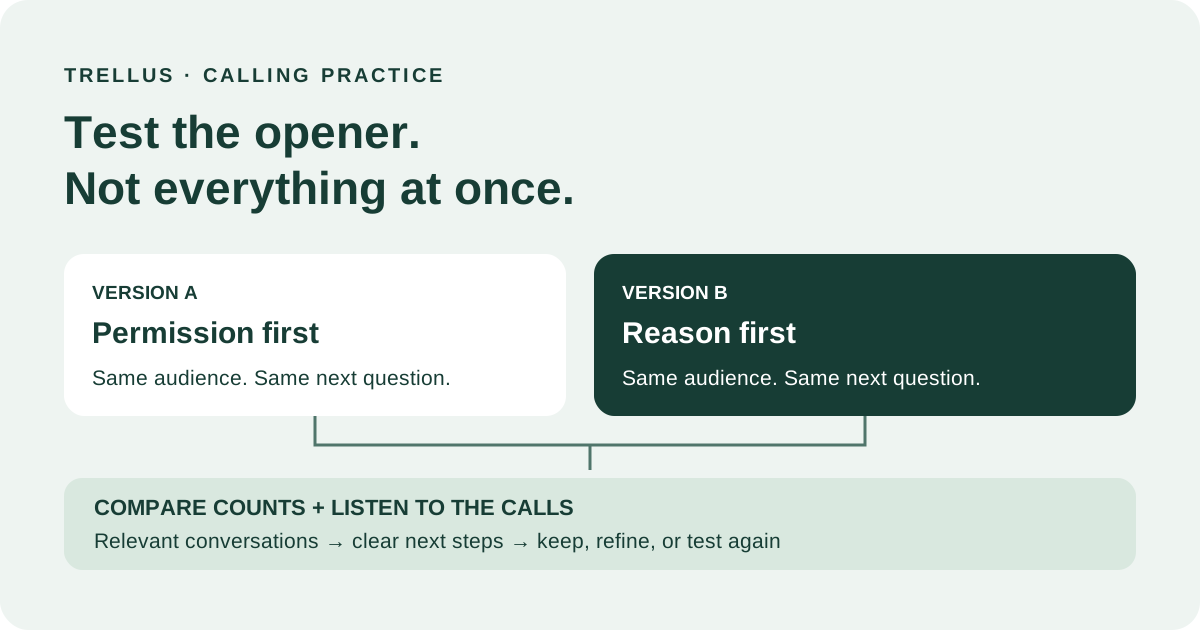
Consider this fictional example for a company that sells software for managing sales handoffs. Both versions use the same introduction and the same honest reason for calling.
Version A — permission first: “Hi Maya, Sam at Northstar. This is a cold call. Can I take a moment to explain why I called? We help sales teams keep accepted opportunities from getting lost between SDRs and account executives.”
Version B — reason first: “Hi Maya, Sam at Northstar. This is a cold call about opportunities getting lost between SDRs and account executives. Is that part of your world, or have I reached the wrong person?”
The change is the order and shape of the initial question. Version B puts the workflow on the table sooner and invites the prospect to correct the caller. It isn't automatically better. A prospect might find it relevant, or might want to know what Northstar does before discussing anything.
Don't make B shorter, give it a stronger offer, assign it to your most experienced rep, and call that an opener comparison. You'd be comparing several changes at once. If the whole message needs rewriting, do that—but describe the exercise as a message test, not proof that one opening phrase won.
Have each participating rep say both versions aloud before using them. Fix words nobody would naturally say. Keep the meaning consistent; don't require a theatrical reading.
Give both versions a fair chance
A calls into an old list on Friday afternoon. B gets a fresh list on Tuesday morning. Even if B books more meetings, the comparison tells you very little about the opener.
Keep the audience as similar as reasonably possible: the same role, account segment, list source and stage of outreach. Where practical, assign comparable accounts randomly to the two versions. Keep contacts from the same account together so a company doesn't receive conflicting approaches just for your experiment.
Use both versions across comparable calling windows rather than finishing all of A before starting B. If several reps participate, let each use both. Record the rep and time block so you can spot a result that's really one person's strong afternoon.
Respect callbacks, opt-outs and existing conversations. Don't call someone again solely to expose them to the other version. A prospect's time isn't spare testing material.
A modest team may not be able to balance every condition. That's fine. Write down what differs, and keep your conclusion proportionate. A useful directional comparison beats a confident claim built on a messy one.
Count the conversations that actually heard the opener
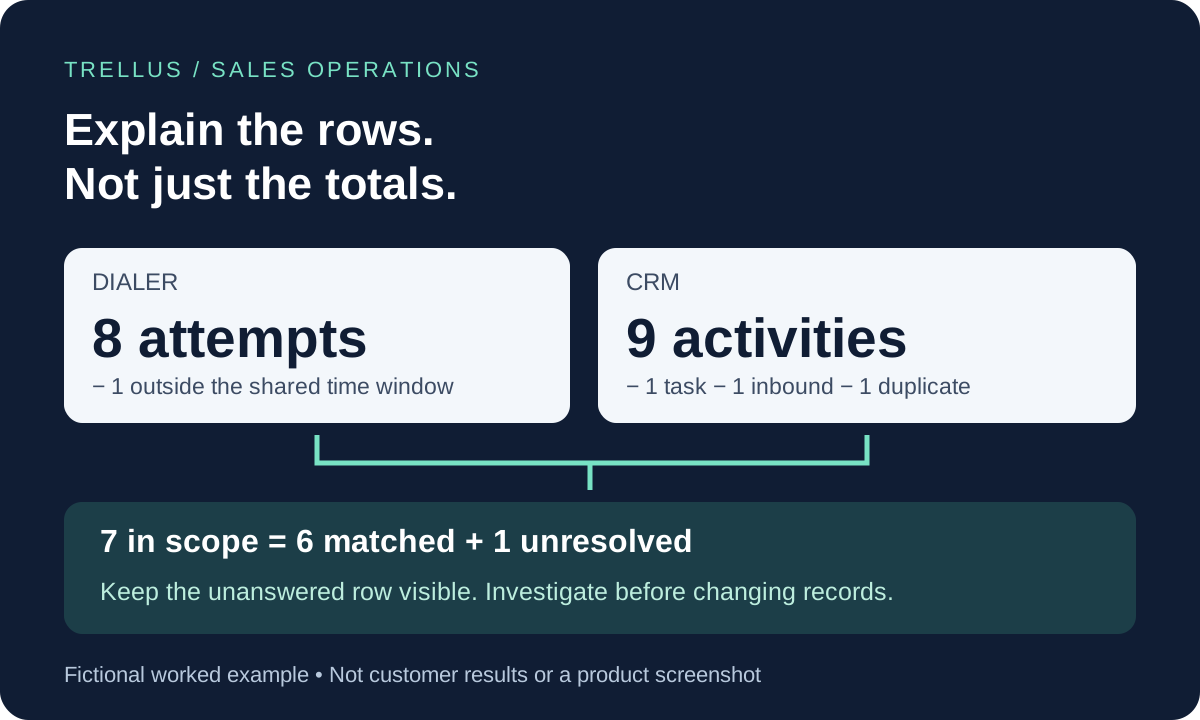
Dial attempts matter for activity and reach. They aren't all exposures to your wording. Voicemail, a wrong number and a call that never connected can't tell you whether the opening question made sense.
Before starting, agree on the categories you'll record. Keep them simple enough that reps can use them consistently:
- Live target contact: the intended person, or another relevant person, answers.
- Opener delivered: the rep reaches the part of the opening you're comparing.
- Relevant conversation: the prospect gives a substantive response about the workflow, responsibility or need—not just “I'm busy.”
- Next step: a specific agreed action, recorded separately from a vague “send something.”
Don't quietly drop immediate hang-ups because the rep didn't finish the opener. Record them separately and look at progression from all live target contacts as well as from delivered openers. Otherwise, a version that gets interrupted more often could look better simply because only its surviving calls enter the denominator.
For the broader distinction between attempts, answers and conversations, see how to calculate cold-call connect rate. An opener test shouldn't take credit for a change in who answers the phone.
A small result is a clue, not a verdict
Here's a fictional result sheet. The numbers illustrate the calculation; they aren't a benchmark or a Trellus customer result.
| Measure | Version A | Version B |
|---|---|---|
| Live target contacts | 30 | 32 |
| Openers delivered | 24 | 26 |
| Relevant conversations | 8 | 11 |
| Specific next steps | 3 | 3 |
B looks promising on relevant conversations: 11 out of 32 live contacts, compared with 8 out of 30 for A. But a few calls could change the picture, and both versions produced three specific next steps. This isn't enough to declare that B reliably creates more pipeline.
Listen to the calls behind the counts. Did B help prospects recognize the issue sooner? Were the extra conversations relevant, or did people politely answer a question before saying they weren't involved? Did one rep account for nearly all the difference?
Decide how long you'll run the comparison before you start, with a review point based on actual live contacts rather than an arbitrary number of dials. There isn't one universal sample size that makes every sales test conclusive. A statistically defensible experiment needs a design suited to your baseline, expected difference and decision. Don't invent a magic threshold for a small practical trial.
You can stop early for a clear problem—misleading language, repeated confusion, an inappropriate question. That's different from stopping as soon as the preferred version takes the lead.
Make a decision you can explain
Your review should end with one of three straightforward decisions.
Keep the new version for a further trial when the calls show a clearer conversation and the counts point in the same direction. Say what remains uncertain. “B seems easier to understand for this segment; we'll keep checking next steps” is more useful than “B increased conversion.”
Keep the current version when the change adds friction or offers no useful improvement. Save the learning so a new manager doesn't restart the same test next month.
Change the question when neither opener solves the real problem. If prospects repeatedly say another team owns the workflow, revisit the audience. If they understand the reason for calling but don't care about it, revisit the message. Don't endlessly rearrange the first ten words.
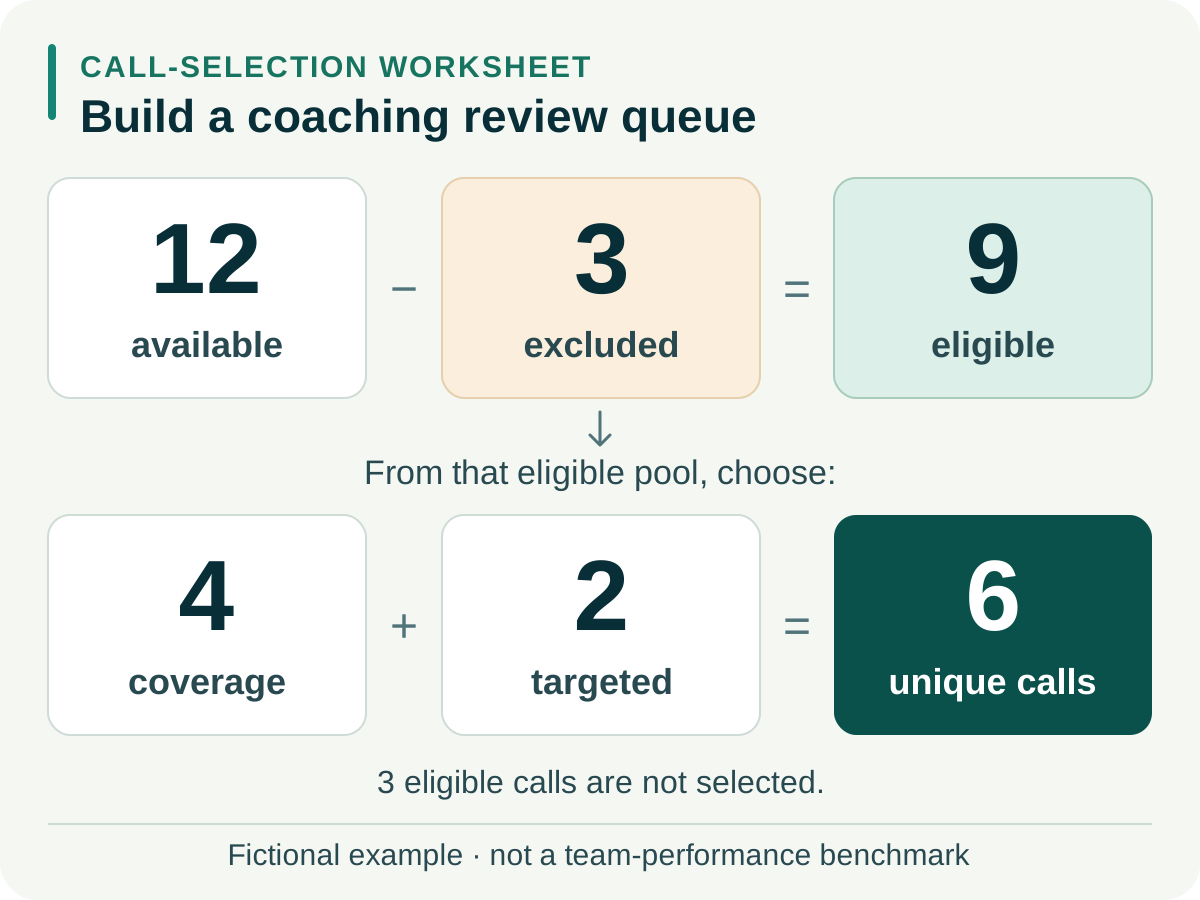
For the listening session, choose calls from both versions and include interruptions, ordinary conversations and apparent successes. The guide to choosing sales calls for coaching can help you avoid reviewing only the memorable calls.
The test note worth saving
A short note is enough to make the work reusable. Copy this into your team document before the first call:
Question: What specific problem are we trying to fix?
Audience: Which roles and accounts are included?
A and B: What exactly changes?
Assignment: How will both versions reach comparable contacts?
Measures: What counts as a delivered opener, relevant conversation and agreed next step?
Review point: When will we examine counts and calls?
Decision: What did we learn, what will we use next, and what is still uncertain?
The best outcome isn't a sentence everybody must memorize forever. It's a clearer understanding of what gets this audience into a useful conversation—and a team that can explain why it changed its approach.

Power and parallel dialing in your CRM.