Our Top Picks


Revenue operations has graduated from a back office alignment function to the strategic engine behind predictable growth — and the software stack has grown up with it.
If you are evaluating the best RevOps tools for 2026, the short answer is that no single platform does everything: the strongest stacks pair a system of record (HubSpot or Salesforce) with a revenue intelligence layer (Clari, Gong), a data foundation (ZoomInfo, Clearbit), routing and orchestration (LeanData, Default), compensation (QuotaPath), and an execution layer that moves conversations forward (Trellus).
Below, we review ten leading revenue operations platforms and tools, what each is best for, their standout features, and an honest limitation — so you can assemble a stack that fits how your team sells.
Revenue operations exists to unify sales, marketing, and customer success around one shared view of the pipeline. According to Gartner's research on revenue operations, organizations that consolidate these functions under a single RevOps model see stronger forecast accuracy and tighter go to market alignment.
That's the lens we used to build this list: how well each tool contributes to a connected, measurable revenue engine.
How We Chose the Best RevOps Tools
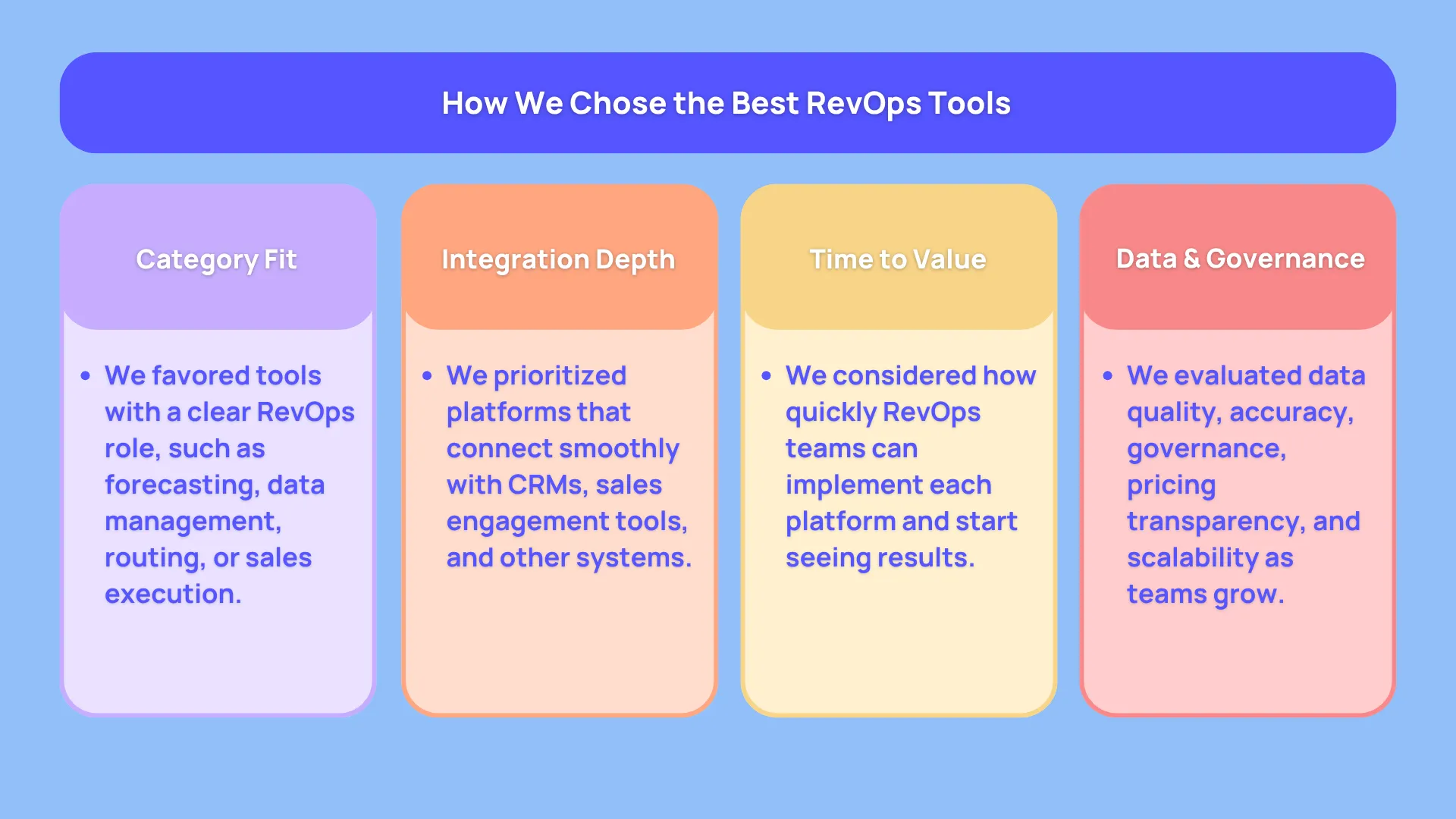
Before the list, a quick word on evaluation. The RevOps category spans several distinct jobs — customer data unification, revenue intelligence and forecasting, sales pipeline orchestration, and sales and marketing automation. A tool that dominates one job may be irrelevant to another, so "best" always depends on the gap you're filling. We weighted these criteria:
• Category fit — does it own a clear job (forecasting, data, routing, execution) or try to do everything at a lower scale?
• Integration depth — RevOps lives on clean data flowing between systems, so native CRM and SEP connections matter more than feature count.
• Time to value — how fast a lean RevOps team can deploy it without a six month implementation. • Data quality and governance — the foundation everything downstream depends on. • Price transparency and scalability — whether the tool grows with headcount and deal volume without punishing surprises.
The 10 Best RevOps Tools & Platforms in 2026
1. HubSpot
What it is: An all in one CRM and go to market platform spanning marketing, sales, service, and operations hubs. For many mid market RevOps teams, HubSpot is the system of record that everything else plugs into.
Best for: Mid market and scaling companies that want one connected platform for sales and marketing automation rather than stitching point solutions together.
Standout features: A genuinely unified customer record across marketing and sales, strong workflow automation, a deep app marketplace, and Operations Hub for data sync, deduplication, and programmable automations — a real asset for customer data unification.
Limitation: Costs escalate quickly as you add hubs, seats, and marketing contacts, and its native forecasting and revenue intelligence are lighter than dedicated tools like Clari. Larger enterprises with complex CPQ needs often outgrow it.
2. Clari

What it is: A revenue platform built around forecasting and pipeline management. Clari ingests activity data across your stack to give leaders a real time, AI driven view of where the number will land.
Best for: Sales and RevOps leaders who live and die by forecast accuracy and want to run disciplined, defensible forecast calls.
Standout features: AI based projected forecasting, pipeline inspection that flags at-risk deals, and "RevDB" — a warehouse grade data model unifying signals from CRM, email, calendar, and conversations. Its acquisition of Groove also gives it a sales engagement footprint.
Limitation: It's an enterprise priced platform with real implementation overhead; smaller teams may find it heavy, and its value is proportional to how disciplined your CRM hygiene already is.
3. Gong

What it is: A revenue intelligence platform anchored in conversation data. Gong captures and analyzes calls, emails, and meetings to surface what's being said in deals — a category leader in revenue intelligence and forecasting.
Best for: Teams that want to coach at scale and pressure test the forecast with hard conversation evidence rather than rep optimism.
Standout features: Automatic call recording and transcription, deal and pipeline warnings driven by real interactions, market intelligence on competitor mentions and topics, and increasingly strong forecasting built on that signal base.
Limitation: It's premium priced and shines mostly once you have call volume to analyze. As a system of insight rather than execution, Gong tells you what's happening but doesn't place the next call for you — you still need an execution layer for that.
4. Trellus

What it is: Trellus is the outbound calling and conversation execution layer of a modern RevOps stack.
It's an AI powered sales acceleration and coaching platform whose signature product is an embedded parallel dialer that runs inside the tools reps already use — Salesloft, Outreach, Apollo, HubSpot, and Salesforce — through a Chrome extension, so reps never context-switch into a separate dialer app. Where Clari and Gong
tell RevOps what's happening in the pipeline, Trellus is where reps actually generate the connected conversations that fill it.
Best for: SDR/BDR and AE teams running high volume outbound calling who want to multiply live connects without leaving their existing sales engagement platforms for RevOps teams. It's also a strong fit for remote and hybrid teams that need live coaching and visibility.
Standout features:
• Parallel dialer that dials up to ~5 lines simultaneously to multiply connect rates, with automated voicemail drop and automatic call logging back to your SEP/CRM.
• Real time AI coaching delivered on screen mid call — objection handling, competitor battle cards, and customizable talk tracks — plus AI voice agents that double as 24/7 practice partners.
• Call analytics that score 100% of calls (not samples), surfacing the behavior gaps between top and bottom performers, viewable in a shared Virtual Sales Floor for live coaching and call blitzes.
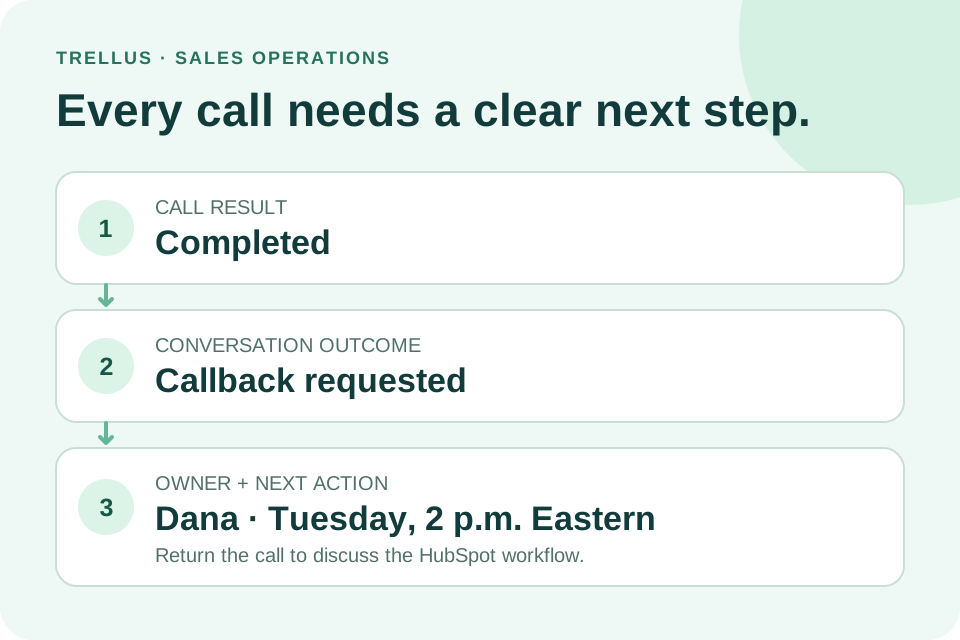
Because it captures every call as structured activity, Trellus feeds clean execution data straight into the revenue intelligence and forecasting layer — supporting broader sales automation goals and stronger SDR efficiency across the team. Pricing is aggressive and self-serve:
- Power and Parallel plans run $99.99/mo and $149.99 per mo (with a custom priced Business tier adding team analytics and AI modeling.
Limitation: Trellus is a calling and conversation execution layer, not a full CRM or a B2B contact database — you pair it with your data provider and CRM rather than replacing them.
Parallel dialing also rewards good list hygiene and TCPA/DNC discipline, and it's a younger brand than incumbents like Salesloft. For RevOps leaders assembling intelligent sales automation tools, that focus is a feature: it does execution exceptionally well and stays in its lane.
5. ZoomInfo

What it is: A go to market intelligence platform combining a large B2B contact and company database with intent signals and workflow tools. For many RevOps teams, ZoomInfo is the data foundation the rest of the stack enriches against.
Best for: Teams that need accurate firmographic and contact data plus buyer intent signals to prioritize accounts and power outbound.
Standout features: Deep B2B contact and company data, intent and scoops signals, and native enrichment plus routing via ZoomInfo OperationsOS to keep CRM records current — a serious asset for customer data unification and account intelligence that supports better sales prospecting tools workflows.
Limitation: It's one of the pricier data platforms, contracts can be rigid, and data accuracy — while strong — still requires ongoing verification, especially for direct dial mobile numbers.
6. QuotaPath
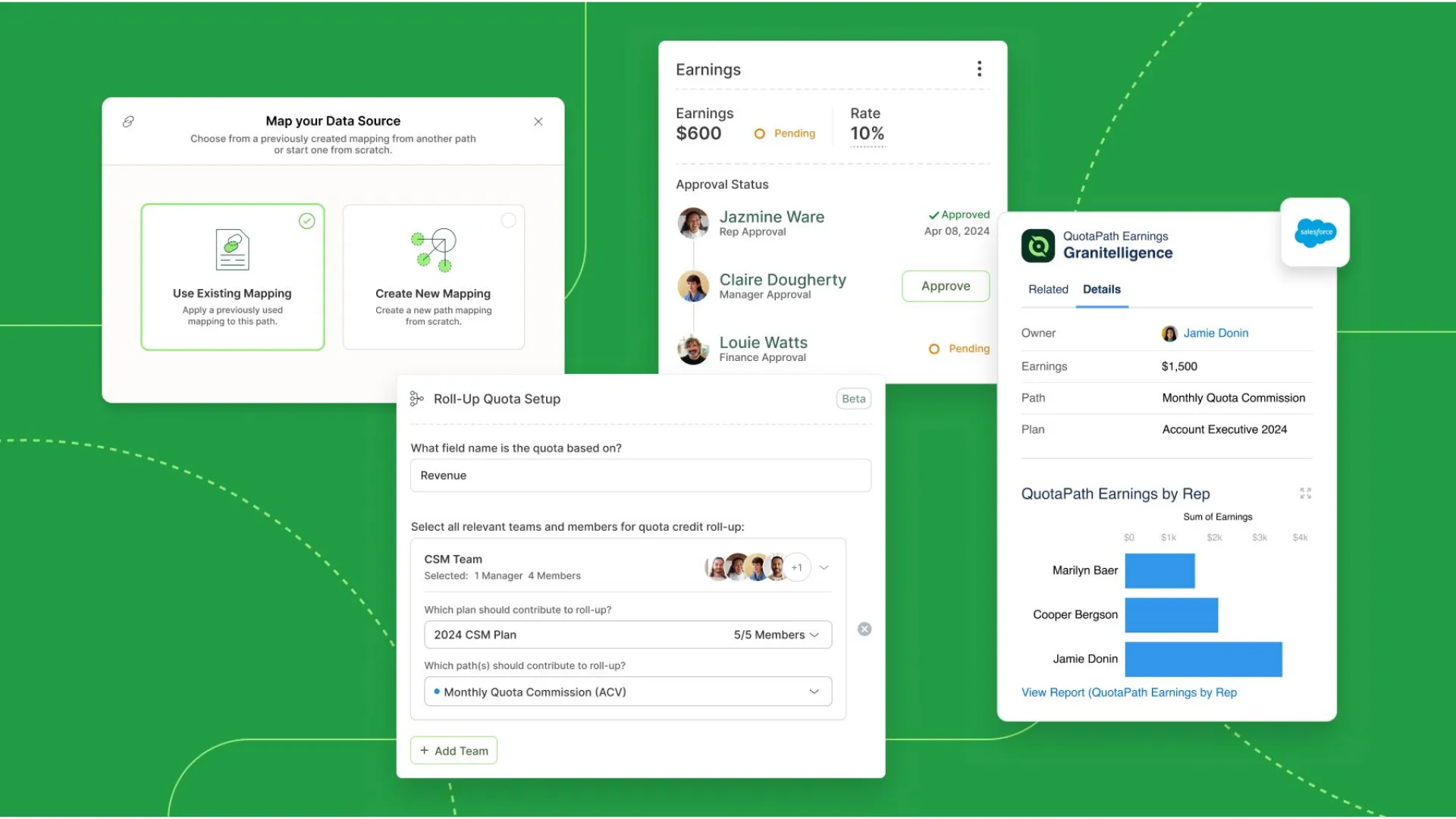
What it is: A commission and compensation management platform that automates how variable pay is calculated, tracked, and paid — an often overlooked but core piece of the RevOps stack.
Best for: RevOps and finance teams tired of running comp in error prone spreadsheets who want reps to see earnings in real time.
Standout features: Flexible comp plan builder, real time earnings visibility for reps, CRM and payroll integrations, and quota attainment reporting that ties compensation directly to pipeline data.
Limitation: It's purpose built for compensation, so it's a complement rather than a hub — and very complex, multi tiered enterprise plans can still require careful configuration or a heavier tool like CaptivateIQ.
7. Salesforce Revenue Cloud
What it is: Salesforce's suite for revenue lifecycle management — CPQ, billing, subscription management, and contract handling — built on the world's most widely deployed CRM platform.
Best for: Enterprises already standardized on Salesforce that need configure price quote, billing, and complex revenue workflows unified with the CRM.
Standout features: End to end quote to cash, deep configurability, native tie in to the broader Salesforce ecosystem (including Agentforce and Data Cloud), and enterprise grade governance for sales pipeline orchestration at scale.
Limitation: Power comes with complexity and cost — implementations typically require admins or partners, and time to value is measured in months, not days. It's overkill for smaller teams whose needs a lighter CPQ tool would meet.
8. Default.com

What it is: A newer inbound revenue orchestration platform that unifies lead capture, enrichment, qualification, routing, and scheduling into a single automated workflow — collapsing the "speed to lead" stack into one tool.
Best for: Product led and inbound heavy teams that want to convert form fills into booked meetings instantly, without duct taping five point solutions together.
Standout features: Instant lead routing and scheduling, built in enrichment, form and workflow builders, and a modern approach to pipeline orchestration that competes with LeanData on speed and simplicity.
Limitation: As a younger entrant, its ecosystem and integrations are still maturing versus incumbents, and it's most valuable for inbound motions — outbound first teams will lean on other tools in this list.
9. Clearbit
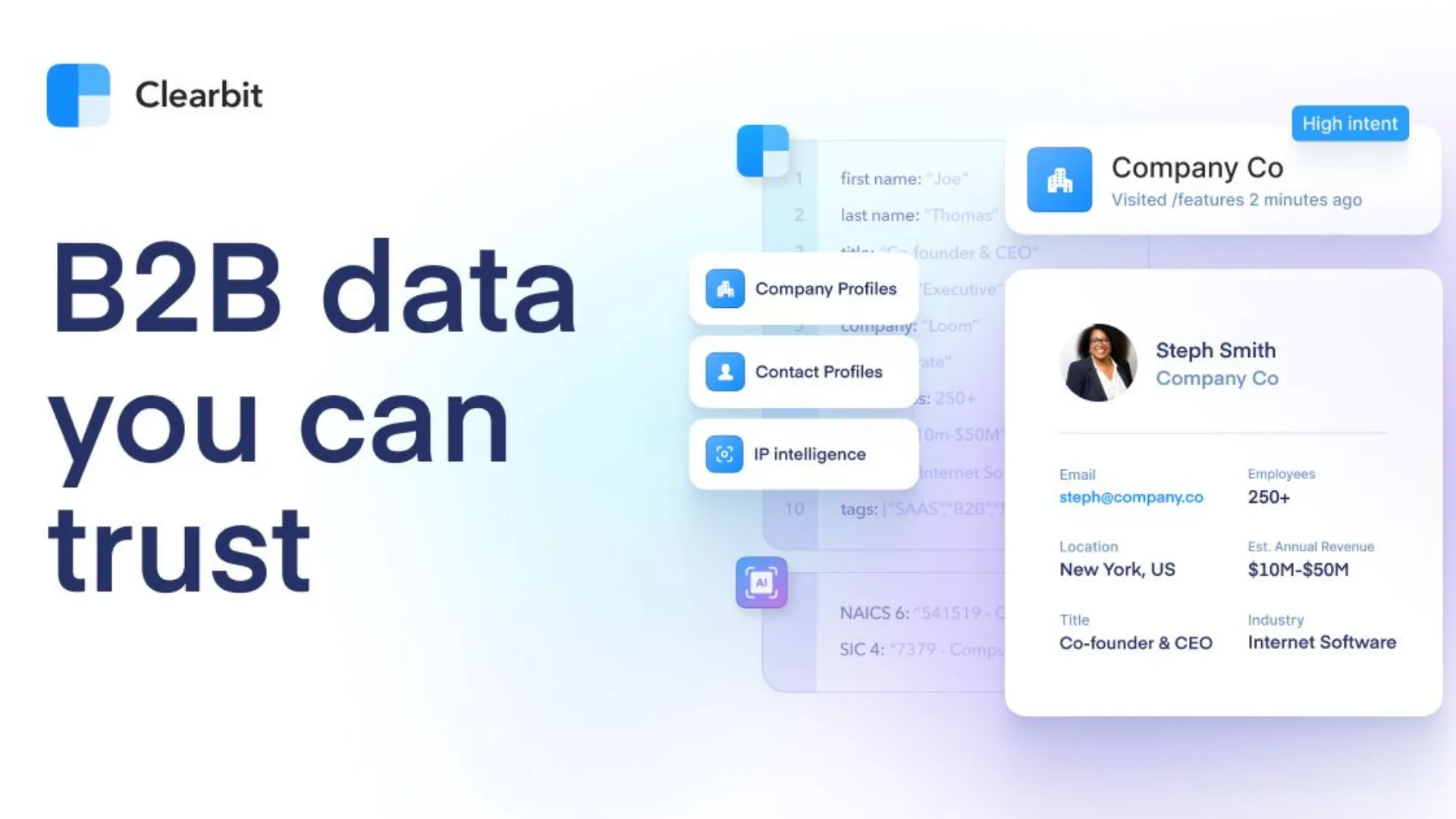
What it is: A B2B data enrichment and intelligence tool (now part of HubSpot, offered as Breeze Intelligence) that enriches records with firmographic and technographic data in real time and reveals anonymous website visitors.
Best for: Marketing and RevOps teams that want to enrich inbound leads, shorten forms, and unify customer data automatically on the way into the CRM.
Standout features: Real time enrichment APIs, website visitor de anonymization for account based plays, and tight native integration with HubSpot for automated data unification and scoring.
Limitation: Since the HubSpot acquisition, standalone flexibility has narrowed, and it's increasingly positioned within the HubSpot ecosystem — less ideal if your system of record is Salesforce or you want a neutral, best of breed data layer.
10. LeanData
What it is: The category-defining lead-to-account matching and revenue orchestration platform. LeanData ensures every lead, contact, and account is matched, routed, and assigned to the right owner automatically.
Best for: Salesforce based teams with complex routing rules, account based motions, or large SDR/AE teams where fair, fast lead distribution directly affects pipeline.
Standout features: A visual flowbuilder for routing logic, robust lead to account matching, round robin and territory assignment, and orchestration that ties marketing and sales handoffs together — foundational sales pipeline orchestration.
Limitation: It's tightly coupled to Salesforce and priced for scale, so it's less relevant for HubSpot native or very small teams. Sophisticated routing trees also demand ongoing RevOps ownership to maintain.
How to Build the Right RevOps Stack
The tools above solve different problems, so the goal isn't to buy the most — it's to cover each layer once, cleanly. A practical framework:
• System of record: Start with HubSpot or Salesforce as the single source of truth. Everything else should read from and write to it.
• Data foundation: Layer in ZoomInfo or Clearbit so your records stay enriched and deduplicated. Dirty data undermines every downstream forecast and automation.
• Orchestration: Add LeanData or Default so leads route to the right rep in seconds — speed to lead is one of the highest ROI fixes in RevOps.
• Revenue intelligence and forecasting: Bring in Clari for forecast discipline and Gong for conversation-level insight so leadership steers with evidence, not gut feel.
• Execution: Give reps an execution layer like Trellus so the pipeline your data and orchestration create actually turns into live conversations — reinforcing your outbound sales strategy rather than just measuring it.
• Compensation: Close the loop with QuotaPath, so incentives map cleanly to the behaviors your data shows drive revenue.
The discipline is integration over accumulation. Forrester's research on revenue operations and B2B growth consistently ties predictable revenue to aligned processes and shared data across the funnel — a point reinforced across Forrester's B2B and RevOps coverage. Overlapping tools that don't talk to each other create the exact data silos RevOps was invented to eliminate. When you evaluate any addition, ask whether it deepens the connected system or just adds another dashboard. Strong best AI sales platforms increasingly bake this integration in, which is why native connectivity should outrank raw feature count on your shortlist.
Getting the stack right also has a direct financial payoff: fewer redundant tools, less manual reconciliation, and faster conversion all help lower customer acquisition cost — often the metric that justifies the RevOps investment to your CFO.
Frequently Asked Questions
What are RevOps tools?
RevOps tools are software platforms that unify revenue operations across sales, marketing, and customer success. They span CRM systems of record, data enrichment, lead routing and orchestration, revenue intelligence and forecasting, compensation, and execution layers like dialers — all working from one shared view of the pipeline so revenue becomes predictable and measurable.
Do I need a dedicated RevOps platform or a stack of tools?
For most teams, a stack. No single platform excels at CRM, data, forecasting, routing, compensation, and execution simultaneously. The best RevOps tools each own a clear job and integrate tightly. Start with a strong system of record, then add best of breed layers as gaps appear rather than forcing one tool to do everything shallowly.
What's the difference between revenue intelligence and revenue operations?
Revenue operations is the broader function — aligning people, process, and data across the go to market motion.
Revenue intelligence is one capability within it: using AI to analyze deals, conversations, and activity to improve forecasting and coaching. Tools like Clari and Gong deliver revenue intelligence; the RevOps stack surrounding them handles data, routing, and execution.
Where does an outbound dialer fit in a RevOps stack?
It's the execution layer. Data tools find the right accounts and forecasting tools tell you where the number will land, but reps still have to have conversations.
An embedded parallel dialer like Trellus multiplies live connects and auto logs every call as structured activity, feeding clean execution data back into the revenue intelligence and forecasting systems. See our guide to the best sales prospecting tools for how the data and execution layers connect.
Which RevOps tool is best for a small or mid market team?
HubSpot is usually the best starting hub for mid market teams thanks to its all in one design and faster time to value. From there, add a data layer (Clearbit or ZoomInfo) and an execution layer (Trellus) before investing in enterprise grade forecasting. Larger, Salesforce based orgs will lean toward Salesforce Revenue Cloud, Clari, and LeanData.
The Bottom Line
The best RevOps tools in 2026 aren't a single winner — they're a well integrated stack where each layer does one job exceptionally well and shares clean data with the rest.
Anchor on a system of record, enforce data quality, orchestrate your leads, forecast with evidence, and — critically — give reps a real execution layer so all that infrastructure converts into conversations. That last layer is where Trellus earns its place: an
embedded parallel dialer with real time AI coaching that multiplies connects and logs every call back into your revenue engine, without pulling reps out of the tools they already use.
.jpeg)

Power and parallel dialing in your CRM.