Our Top Picks


Sales prospecting in 2026 is no longer about volume; it is a precision game.
With the rapid advancement of AI and predictive analytics, top-performing sales teams are identifying ready-to-buy prospects before competitors even make a call.
However, while technology provides the targeting, human empathy and strategic communication close the deal. The modern sales professional must seamlessly blend advanced digital tools with authentic relationship-building.
If you want to scale your revenue and overall bottom line efficiently, mastering this balance is non-negotiable.
This article explores the definitive roadmap for modern outreach. We will explore exactly how to prospect in this new era, outlining 13 proven strategies that combine cutting-edge technology with timeless sales principles to supercharge your pipeline and accelerate your business growth.
The Old Is Gold Route Doesn’t Work Anymore These Days…
The old model was simple.
Pull a large list, run a sequence, hope enough people reply, then work the pipeline from there. That approach still creates activity, but activity alone no longer guarantees results.
Buyers are more informed, inboxes are overloaded, and decision making now involves larger buying groups with longer evaluation cycles.
Modern prospecting for business growth requires precision. Teams need stronger targeting, cleaner data, sharper messaging, and better timing.
The companies winning pipeline today are not necessarily the ones with the largest SDR teams. But instead they are the ones running smarter sales prospecting techniques with better operational discipline.
This shift has created a new question for sales leaders. It is no longer “how many touches are we sending?” The better question is “are we reaching the right people, with the right message, at the right time?”
That is the foundation of an effective sales prospecting strategy in 2026.
If you are trying to learn how to start prospecting for sales, improve outbound performance, or scale pipeline generation across a growing team, the strategies below will help you create a more modern and sustainable system.
What Is Sales Prospecting?

Sales prospecting is the process of identifying, researching, qualifying, and contacting potential buyers who may be a strong fit for your product or service. It sits at the very beginning of pipeline creation and plays a major role in long term revenue growth.
A lot of teams confuse leads with prospects, but they are not the same thing.
A lead is simply someone who entered your ecosystem somehow. Maybe they downloaded some gated content, visited your website, attended a webinar, or appeared in a database export.
A prospect is more specific. A prospect matches the type of company or buyer profile your solution is designed to help. They have characteristics that suggest potential buying intent, operational need, or business fit.
An opportunity comes later, once meaningful qualification happens and a real sales conversation begins.
Strong prospecting for sales leads requires more than contact collection. The best sales teams spend significant time validating fit before outreach ever starts. That is why modern prospecting frameworks for sales place so much emphasis on qualification, segmentation, and intent analysis.
The strongest sales pipeline building tactics usually include several layers:
- Identifying ideal customer profiles
- Verifying contact information
- Mapping buying committees
- Understanding timing signals
- Prioritizing accounts based on revenue potential
- Running coordinated outreach across multiple channels
- Qualifying interest early in the conversation
Without those pieces, even aggressive outbound prospecting methods tend to produce weak conversion rates.
Fun Fact: Did you know that sales teams using any form of AI tools are more than likely to achieve 1.3x better results in revenue and conversions as compared to traditional sales departments?
This is also why sales lead qualification techniques matter so much. A rep can book meetings all day long, but if those conversations involve poor fit accounts, the pipeline becomes inflated and unreliable.
Why Prospecting Looks Different in 2026

The prospecting environment changed dramatically over the last few years. Buyers now control far more of the purchasing process before sales conversations even begin.
Most B2B buyers research solutions independently across multiple channels before responding to outreach. They compare vendors anonymously, consume educational content, read peer reviews, and evaluate competitors long before they speak with a rep.
That shift has completely changed how to prospect successfully.
Modern b2b prospecting strategies now rely heavily on context and timing. Generic outreach struggles because buyers expect personalization tied to their business reality.
A company hiring aggressively may care about operational scaling. A company going through layoffs may care about efficiency and cost reduction. A newly funded startup may prioritize speed and market expansion. The best outbound teams align messaging around those contextual signals.
This is also where prospecting automation tools started changing the game.
Sales teams now use AI driven dialers, CRM enrichment platforms, intent data providers, conversation intelligence software, and sequencing platforms to improve targeting and execution. The goal is not simply automation for volume. The goal is smarter prioritization and faster execution without sacrificing personalization.
For teams asking what are the best prospecting strategies in 2026, the answer usually comes down to five core themes:
- Better data quality
- Stronger account prioritization
- Multi channel engagement
- Faster response to buying signals
- Continuous optimization through analytics
The companies that adapt to these realities tend to generate more qualified pipeline without dramatically increasing headcount.
At the same time, teams that continue relying on outdated cold outreach strategies often run into the same problems repeatedly:
- Low email deliverability
- Poor connect rates
- Weak personalization
- Bloated prospect lists
- Low meeting quality
- Unreliable forecasting
Prospecting today requires more coordination across systems, messaging, channels, and timing than ever before. That may sound complicated initially, but once the framework is structured properly, scaling becomes far more predictable.
Strategy 1: Define Your Ideal Customer Profile Before You Build a List
One of the biggest prospecting mistakes sales teams make is building outreach lists before defining who they are trying to sell to.
That creates wasted outreach, poor conversion rates, and inconsistent pipeline quality.
If you want to understand how to find high quality sales leads, everything starts with your Ideal Customer Profile, often shortened to ICP.
Your ICP is not simply an industry category or company size range. A strong ICP combines multiple characteristics that indicate strong product fit and revenue potential.
This usually includes:
- Industry vertical
- Employee count
- Revenue range
- Geographic region
- Technology stack
- Growth stage
- Operational challenges
- Buying triggers
- Team structure
- Expansion indicators
The easiest place to start is your existing customer base.
Look at your highest performing accounts and identify patterns. Focus specifically on customers that closed quickly, expanded successfully, renewed consistently, and generated strong long term value.
You may notice patterns such as:
- SaaS companies between 100 and 500 employees convert fastest
- Healthcare organizations require longer cycles but produce larger ACVs
- Logistics companies respond strongly to efficiency messaging
- Companies hiring SDRs aggressively tend to buy faster
Those insights become foundational to your sales prospecting strategy.
This process also helps answer another important question: what is the most effective way to prospect clients?
The answer usually depends on fit quality. Outreach becomes dramatically easier when targeting accounts already predisposed to your solution category.
Once your ICP becomes clear, your prospecting efforts become more focused across every channel. Your messaging improves because you understand the operational pain points more clearly. Your qualification improves because you know what good fit looks like earlier in the process.
At the same time, it’s also important to know that your reps stop wasting time chasing accounts that were unlikely to convert from the beginning.
Strategy 2: Segment Prospects Into Priority Tiers
Not every prospect deserves the same level of effort.
This is one of the most important concepts for teams learning how to scale prospecting efforts in sales teams.
High value accounts usually require deeper personalization, more stakeholder mapping, and longer relationship development. Lower value accounts often need lighter touch, scalable outbound motions.
That is why mature sales organizations divide accounts into priority tiers.
A simple structure usually works best.
Tier 1 Accounts
These are your highest value targets. They closely match your ICP, represent strong revenue potential, and often justify significant personalization.
For Tier 1 outreach, reps typically spend more time researching:
- Company initiatives
- Executive priorities
- Hiring trends
- Funding announcements
- Product launches
- Competitive pressures
- Technology changes
The outreach itself becomes far more customized.
Tier 2 Accounts
These accounts still fit reasonably well but may have slightly lower revenue potential or weaker timing indicators.
Personalization still matters here, but outreach becomes more scalable. Reps can use semi customized messaging templates while still referencing relevant industry or role specific challenges.
Tier 3 Accounts
These accounts receive broader outbound sequences designed for efficiency and coverage.
The goal here is volume with reasonable relevance, not ultra deep customization.
This tiering structure helps answer another common question: how to improve outbound prospecting results without massively increasing headcount?
The answer often comes from allocating rep effort more intelligently. High effort personalization should go toward the accounts most likely to generate meaningful pipeline.
Lower fit accounts should not consume the same amount of time and research energy.
Strategy 3: Use Data Enrichment to Improve Lead Quality
A surprising amount of prospecting failure comes down to poor data quality.
Sales reps often assume the outreach strategy is broken when the real issue is much simpler. The email address is outdated, the contact changed roles six months ago, the phone number routes nowhere, or the company no longer fits the target profile.
That is why data enrichment has become one of the most important sales prospecting techniques in modern outbound sales.
Data enrichment means improving and validating the information connected to your leads and accounts. This can include, but isn’t restricted to, the following aspects:
- Verified email addresses
- Direct dial numbers
- Mobile numbers
- Updated job titles
- Department information
- Company size
- Revenue estimates
- Technology stack data
- Hiring trends
- Funding history
- CRM activity
- Buyer intent indicators
Clean data creates a chain reaction across your entire sales process.
Your email deliverability improves because fewer messages bounce. Your connect rates improve because reps reach active numbers. Your messaging improves because reps understand the prospect’s role and business environment more clearly.
Without enrichment, prospecting for sales leads becomes inefficient very quickly.
Think about the operational impact for a moment. If a rep spends two hours every day calling invalid numbers or researching missing information manually, pipeline generation slows down dramatically. Multiply that across an entire SDR team and the productivity loss becomes enormous. This is one reason prospecting automation tools gained so much traction. Modern platforms enrich records automatically and continuously update account data as companies evolve.
Strategy 4: Look for Trigger Events and Timing Signals
A prospect becomes significantly more valuable when timing aligns with need.
This is one of the biggest differences between average outbound teams and elite prospecting organizations. High performing teams do not simply contact accounts randomly. They prioritize outreach around trigger events that suggest operational change or buying urgency.
This approach is central to many modern b2b prospecting strategies because timing heavily influences response rates and conversion potential.
Some of the most useful buying signals include:
- New funding announcements
- Leadership changes
- Hiring spikes
- Expansion into new markets
- Product launches
- Mergers or acquisitions
- Compliance changes
- Layoffs or restructuring
- Technology migrations
- Aggressive growth initiatives
Each signal creates an opportunity for more relevant outreach.
For example, a company rapidly hiring SDRs may care about onboarding efficiency, call productivity, and sales ramp time. A company opening new regional offices may need operational standardization. A company reducing headcount may prioritize automation and workflow efficiency.
This is where many cold outreach strategies fail. Reps send generic messaging disconnected from what the company is experiencing operationally.
Strong prospecting messaging connects directly to business context.
At this point, you should compare these two examples.
Generic outreach:
“We help sales teams improve productivity. Would you be open to a quick demo?”
Contextual outreach: “Noticed your team posted 15 SDR openings over the last two months. Many growing sales orgs struggle with rep ramp time during hiring spikes. We recently helped a similar company increase live conversations without expanding manager overhead.”
The second message feels more relevant because it acknowledges timing and operational reality.
For teams asking how to build a strong sales pipeline, trigger based outreach creates a major advantage. It improves response quality, shortens sales cycles, and increases the odds of engaging accounts already thinking about change internally.
Strategy 5: Score Leads Based on Fit, Timing, and Reachability
Not every lead deserves immediate attention.
One of the biggest mistakes in prospecting for business growth is treating every account equally. Sales teams often waste valuable selling hours chasing low probability leads while high potential opportunities sit untouched.
Lead scoring helps solve that problem.
A practical scoring model evaluates prospects across three major categories:
Fit
This measures how closely the account matches your ICP.
Questions may include:
- Does the company match target industry criteria?
- Is the company size aligned with successful customers?
- Does the prospect’s role influence purchasing decisions?
- Does the account show relevant operational challenges?
Timing
Timing evaluates buying readiness and urgency.
Examples include:
- Active hiring
- Recent funding
- Technology changes
- Expansion activity
- Engagement with content
- Recent outbound responses
- Competitor displacement opportunities
Reachability
Even strong fit accounts can become difficult to prospect if contactability is weak.
Reachability often includes:
- Valid email status
- Direct dial availability
- Social activity
- LinkedIn responsiveness
- Multi contact coverage within the account
This scoring structure supports better sales lead qualification techniques because reps can prioritize accounts with the strongest combination of fit and timing.
It also creates more efficient sales pipeline building tactics across larger outbound teams.
Without scoring, prospecting tends to become reactive. Reps chase whichever leads appear newest or easiest to contact. With scoring systems in place, pipeline generation becomes more intentional and strategically aligned.
For organizations asking how to qualify prospects effectively, the answer is rarely a single qualification framework. Strong qualification happens continuously throughout the prospecting process, beginning long before a discovery call occurs.
Strategy 6: Build a Multichannel Outreach Sequence
One channel alone is rarely enough anymore.
Buyers move across email, LinkedIn, phone calls, webinars, communities, content platforms, and internal referrals constantly. Teams relying entirely on cold email or purely phone based outreach often struggle because modern buyers interact differently across different stages of the decision process.
That is why outbound prospecting methods increasingly rely on coordinated multichannel engagement.
A strong sequence may include:
- Cold email outreach
- Cold calls
- LinkedIn profile engagement
- Connection requests
- Voice messages
- Personalized follow ups
- Content sharing
- Video messages
- Event interactions
The goal is not overwhelming prospects with activity. The goal is creating familiarity and contextual visibility across multiple touchpoints.
For example, a prospect may ignore the first cold email but recognize your name later after seeing a thoughtful LinkedIn comment or voicemail reference. Familiarity lowers resistance over time.
Since we have already been through such processes for a long time, we can say that this particular approach also improves reach because buyers have different communication preferences.
Some executives respond quickly to email. Others rarely check inboxes but stay highly active on LinkedIn. Some prefer phone conversations once credibility exists.
Teams asking what is the most effective way to prospect clients often discover that multichannel consistency produces stronger results than channel specific optimization alone.
Strong sequences also maintain spacing and relevance properly.
One major prospecting mistake involves sending too many low value touches too quickly. That often damages domain reputation, weakens engagement rates, and creates buyer fatigue.
Good cadence design focuses on:
- Channel variety
- Timing consistency
- Message relevance
- Progressive personalization
- Clear business context
The strongest sequences feel coordinated and intentional rather than repetitive.
Strategy 7: Personalize Outreach Around a Specific Business Problem
Personalization has become one of the most misunderstood parts of sales prospecting.
Many reps think personalization means mentioning a recent LinkedIn post or congratulating someone on a company announcement. That type of surface level customization rarely creates meaningful engagement anymore.
Real personalization connects directly to a business problem.
That distinction matters enormously when learning how to prospect for sales effectively.
Strong personalization answers one core question:
“Why does this matter to this company right now?”
The best outreach usually focuses on operational friction, strategic goals, or measurable business challenges.
Examples include:
- Revenue growth pressure
- Hiring inefficiencies
- Long onboarding cycles
- Poor outbound productivity
- Low pipeline conversion
- Customer retention issues
- Compliance complexity
- Operational bottlenecks
- Sales process inconsistency
Once those pain points become clear, messaging becomes significantly stronger.
Weak personalization:
“Saw your recent funding announcement. Congrats to the team.”
Stronger personalization:
“Saw your Series B announcement and noticed the sales org is expanding quickly. One challenge many scaling teams face during rapid hiring is maintaining outbound quality while increasing call volume.”
The second version introduces a business problem tied directly to the company’s situation.
This is one reason high converting prospecting methods focus heavily on relevance over creativity. Clever copy alone rarely drives meetings consistently. Buyers respond more often when outreach demonstrates understanding of their operational environment.
For teams asking what mistakes to avoid in sales prospecting, shallow personalization ranks near the top.
Prospects can immediately recognize outreach that was lightly customized but fundamentally generic underneath. Modern buyers expect outreach to feel informed, specific, and commercially relevant.
Strategy 8: Use Cold Calling to Create More Live Conversations
Cold calling still works in 2026. The problem is that most teams approach it with outdated expectations and poor execution.
A lot of reps treat cold calling like a volume exercise. They assume more dials automatically produce more meetings. In reality, successful cold outreach depends far more on preparation, timing, targeting, and conversation quality.
Modern cold calling works best when it supports a broader sales prospecting strategy rather than operating as a standalone activity.
The strongest outbound teams use calls to accomplish three things:
- Start live conversations faster
- Qualify accounts earlier
- Create momentum across multichannel outreach
That last point matters more than most teams realize.
Prospects who ignore email may answer a call. Prospects who ignore calls may respond after recognizing your name from previous outreach. The channels reinforce each other.
For teams trying to learn how to improve outbound prospecting results, cold calling often becomes more effective once it is paired with better context.
A good call opener should feel direct, relevant, and low friction.
Weak opener:
“Hi Sarah, do you have a minute so I can tell you about our platform?”
Stronger opener:
“Hey Sarah, reason for the call, we work with growing sales teams that struggle with rep productivity during scaling phases. Thought it might be relevant given your recent expansion.”
The second version immediately communicates context and relevance.
Strong cold calls also stay conversational. Reps who sound overly scripted tend to lose engagement quickly. Buyers want clarity, not rehearsed monologues.
A few principles consistently improve call performance:
Keep openers short
Long introductions reduce attention quickly. Prospects decide within seconds if the conversation feels relevant.
Focus on operational problems
Buyers care more about outcomes than features. Position the conversation around measurable business challenges.
Prepare for objections early
Most objections are predictable. Timing, budget, internal priorities, and existing vendors come up repeatedly. Reps who prepare calmly usually maintain stronger conversations.
End with clear next steps
A call should move somewhere. That may be a discovery meeting, referral to another stakeholder, or agreement to continue the conversation later.
Technology also changed how sales teams approach outbound calling.
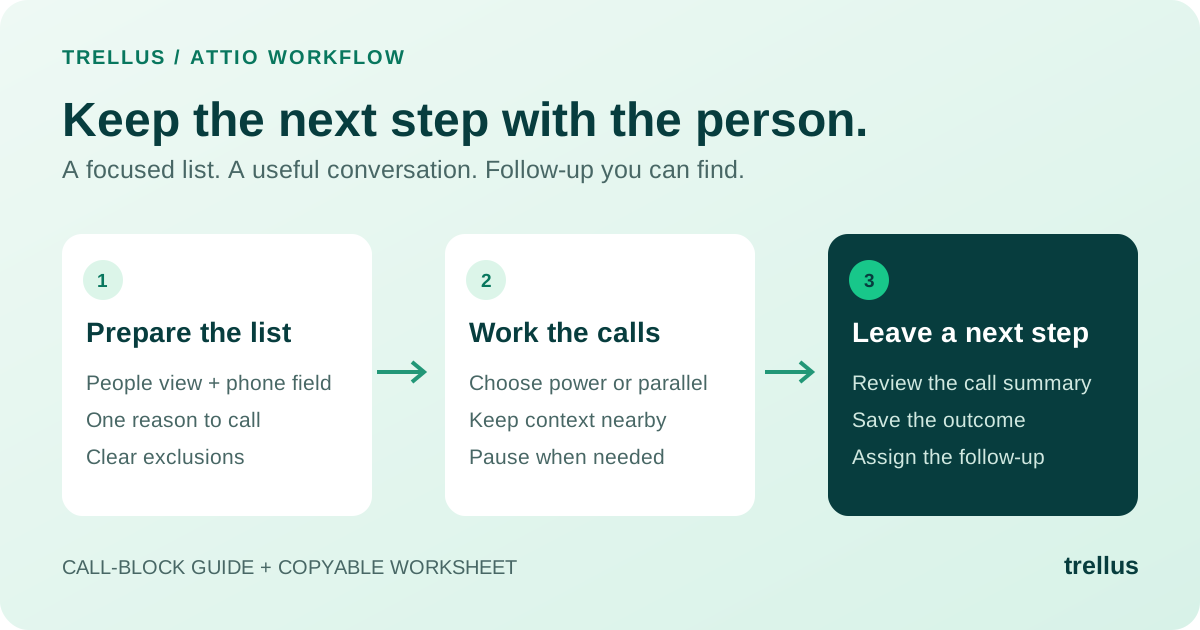
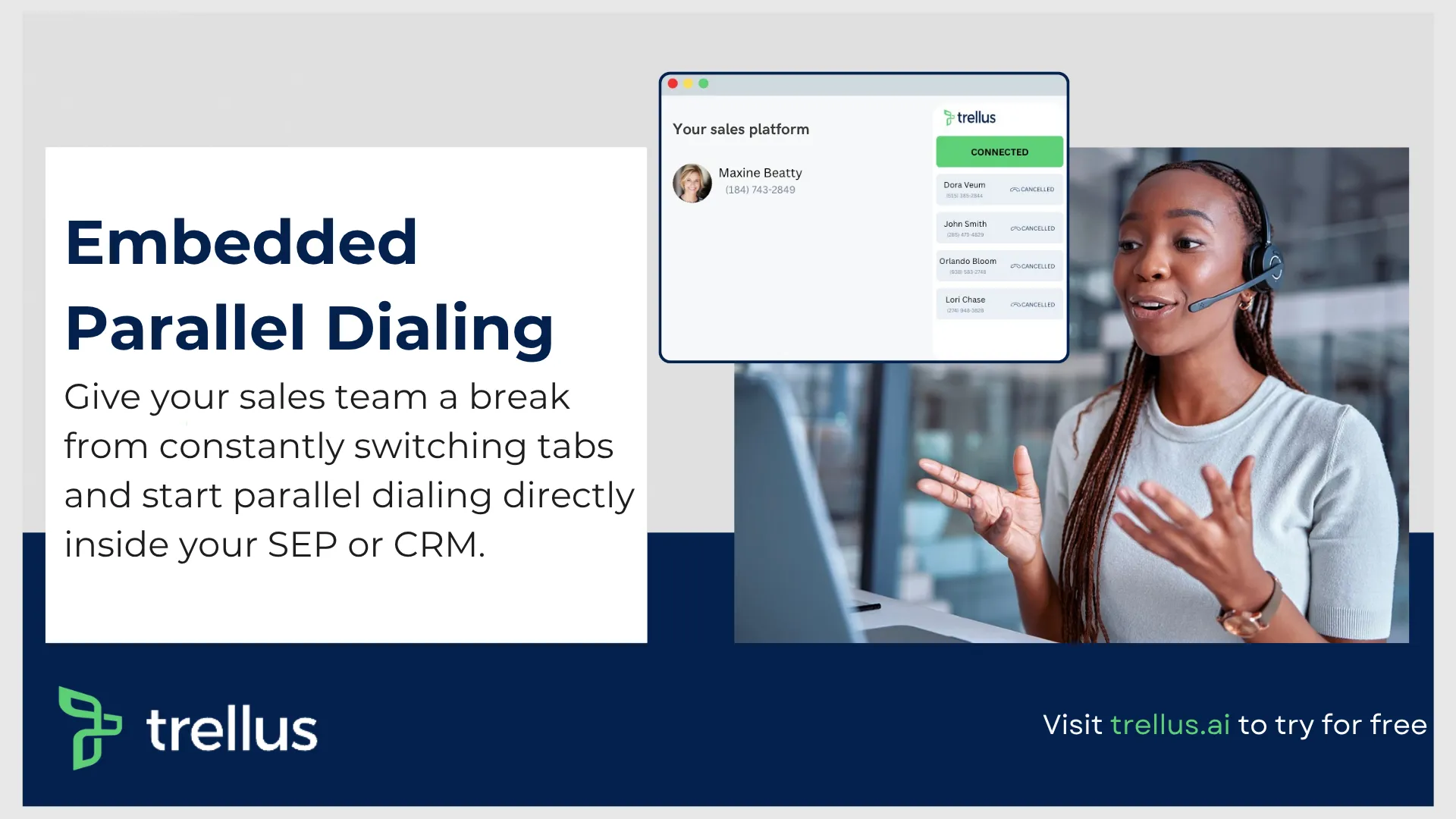
In that order, many platforms like Trellus.ai help reps power dial and parallel dial directly inside their sales engagement workflows. Teams can dial multiple parallel lines simultaneously, reducing wasted time spent waiting through unanswered calls and voicemail loops.
That matters because outbound productivity often suffers from inefficiency rather than effort.
Many reps spend more time waiting between conversations than actively speaking with prospects. Improving live conversation rates creates major downstream impact across pipeline generation.
For organizations focused on how to scale prospecting efforts in sales teams, efficient dialing workflows can significantly improve outbound capacity without immediately increasing headcount.
Strategy 9: Combine LinkedIn With Email and Phone Touches
LinkedIn became one of the most valuable prospecting channels because it adds familiarity before conversations even begin.
Most buyers receive constant outbound outreach. Cold emails blur together quickly. Calls from unknown numbers often go unanswered. LinkedIn helps reduce some of that friction because it creates visibility across multiple interactions.
The strongest sales teams do not treat LinkedIn as a replacement for email or phone outreach. They use it as connective tissue between channels.
A prospect may:
- See your profile view
- Notice a thoughtful comment
- Accept a connection request
- Recognize your name later in email
- Respond after multiple coordinated touches
This layered familiarity improves engagement significantly.
For teams learning how to prospect for sales leads, LinkedIn works best when interactions feel natural and commercially relevant.
That means avoiding generic engagement tactics like:
- “Just checking in”
- “Wanted to bump this”
- “Thought you might like this article”
Those messages rarely create meaningful interest.
Stronger outreach references specific business context, operational challenges, or strategic priorities.
For example:
“Noticed your SDR team expanded significantly this quarter. Curious how your team is handling outbound consistency while ramping new reps.”
That creates a more relevant conversation entry point.
LinkedIn also supports account research extremely well. Reps can identify:
- Buying committee members
- Organizational structure
- Recent promotions
- Hiring activity
- Shared connections
- Department growth
- Role transitions
This improves both personalization and qualification.
Teams running multichannel outbound motions often centralize these workflows through sales engagement systems. Trellus.ai supports LinkedIn and Sales Navigator inbox workflows alongside outbound calling activities, helping reps manage conversations across channels more efficiently.
That operational coordination becomes increasingly important as prospecting complexity grows.
Strategy 10: Qualify Prospects With a Simple Framework
Qualification should not begin after a meeting is booked.
One of the most common pipeline problems occurs when teams separate prospecting from qualification entirely. Reps focus purely on booking meetings, then account executives discover later that the opportunity was never realistic.
Strong prospecting for sales includes qualification throughout the entire outreach process.
The goal is not interrogating prospects aggressively during first conversations. The goal is identifying enough context to determine commercial viability.
A simple framework usually works best.
Fit
Does the company match your target customer profile?
Pain
Is there a meaningful operational problem your solution can help solve?
Urgency
Does the problem matter enough to justify action?
Authority
Are you speaking with someone connected to decision making or influence?
Next Step
Is there a realistic path toward continued evaluation?
This structure keeps qualification practical without making conversations feel rigid.
For teams asking how to qualify prospects effectively, the key is consistency. Reps should evaluate qualification signals continuously across calls, emails, and meetings.
Good qualification also protects pipeline quality.
Without qualification discipline, teams often inflate pipeline with weak opportunities that never progress meaningfully. That creates inaccurate forecasting and wasted sales effort later.
Strong sales lead qualification techniques improve:
- Forecast accuracy
- Sales efficiency
- Rep productivity
- Conversion rates
- Pipeline reliability
Qualification should feel like collaborative discovery, not checklist completion.
Prospects engage more openly when conversations focus on business context and operational priorities rather than aggressive qualification interrogation.
Strategy 11: Use Referrals and Warm Introductions to Improve Conversion
Trust plays a massive role in B2B buying decisions.
That is one reason referrals consistently outperform most cold outreach strategies across conversion rates, response quality, and sales velocity.
Warm introductions reduce skepticism immediately because credibility transfers through the existing relationship.
This becomes especially valuable in:
- Enterprise sales
- High ACV environments
- Long buying cycles
- Relationship driven industries
- Complex stakeholder purchases
For teams wondering what is the most effective way to prospect clients at the enterprise level, referrals often become one of the highest leverage channels available.
The strongest referral sources usually include:
- Existing customers
- Investors
- Advisors
- Strategic partners
- Industry peers
- Mutual LinkedIn connections
- Former colleagues
- Community relationships
The key is specificity.
Weak referral requests sound broad and unfocused:
“Let me know if you know anyone who might need this.”
Stronger referral requests create clarity:
“We work best with SaaS sales organizations between 100 and 500 employees that are trying to improve outbound productivity. Do any companies come to mind?”
Specificity improves match quality significantly.
Referrals also shorten trust building timelines. Buyers enter conversations with lower resistance because someone credible already validated the relationship.
That advantage compounds across the entire sales cycle.
Strategy 12: Track Prospecting Metrics That Reveal Quality, Not Just Activity
One of the biggest mistakes in prospecting for business growth is measuring activity without measuring effectiveness.
Many sales dashboards prioritize surface level metrics:
- Number of calls
- Number of emails
- Sequence volume
- Daily activity counts
Activity matters, but activity alone rarely explains pipeline quality.
Modern sales prospecting strategy requires deeper performance visibility.
The most useful metrics usually include:
Connect rate
How often reps reach live conversations.
Positive reply rate
How often outreach creates genuine engagement.
Meeting booked rate
How efficiently activity converts into meetings.
Show rate
How often booked meetings actually occur.
Opportunity conversion rate
How often meetings become qualified pipeline.
Pipeline sourced
How much revenue potential outbound creates.
Sales cycle progression
How efficiently opportunities move through stages.
These metrics reveal operational health much more clearly than raw volume numbers alone.
For example, a rep generating fewer calls but producing stronger connect rates and higher quality meetings may outperform a rep creating massive activity with weak conversion.
Conversation intelligence platforms now help teams analyze this more effectively.
Trellus.ai provides conversation tracking, call analytics, coaching visibility, and performance comparisons that help sales leaders identify which talk tracks, objection handling patterns, and conversation behaviors contribute to stronger outcomes.
This type of visibility becomes increasingly important as outbound teams scale.
Without operational feedback loops, prospecting quality tends to stagnate.
Strategy 13: Create a Weekly Prospecting Improvement Loop
The best prospecting teams treat outbound performance as an evolving system.
They do not simply run sequences repeatedly and hope results improve over time. They review outcomes constantly and adjust based on what the data reveals.
This improvement loop is one of the most overlooked sales pipeline building tactics in modern outbound organizations.
Every week, teams should evaluate questions like:
- Which personas responded most positively?
- Which industries converted fastest?
- Which objections appeared repeatedly?
- Which email angles generated replies?
- Which call openers improved engagement?
- Which channels produced meetings?
- Which sequences stalled?
- Which qualification patterns predicted strong deals?
This creates operational learning that compounds over time.
Without review loops, teams repeat ineffective behavior far longer than necessary.
Strong outbound organizations continuously refine:
- Messaging
- Channel mix
- ICP targeting
- Timing strategies
- Objection handling
- Qualification criteria
- Call structure
- Cadence design
AI powered coaching and conversation analysis tools now help accelerate this process significantly.
Managers no longer need to review every call manually. Modern platforms identify patterns automatically, helping teams improve faster across larger outbound organizations.
For companies trying to understand how to scale prospecting efforts in sales teams, continuous optimization is often the difference between sustainable growth and operational stagnation.
Common Prospecting Mistakes to Avoid
Many prospecting problems come from operational mistakes rather than effort gaps.
One major issue is prospecting without a clearly defined ICP. When targeting becomes too broad, messaging loses relevance and conversion rates fall quickly.
Another common problem is over automating personalization. Buyers can recognize shallow customization almost immediately. Mentioning a recent LinkedIn post means very little if the underlying message remains generic.
Relying too heavily on a single channel also creates limitations. Email only outreach often struggles because buyers engage differently across channels. Multichannel prospecting creates more familiarity and improves reachability.
Poor data quality creates another major issue. Invalid emails, outdated job titles, and inaccurate phone numbers waste enormous amounts of rep time.
Some teams also focus too heavily on activity metrics while ignoring conversion quality. More outreach does not automatically create better pipeline.
Finally, many organizations fail to qualify early enough. Weak qualification creates inflated pipeline that eventually collapses later in the sales cycle.
The strongest prospecting systems balance scale with relevance. That balance becomes far easier once targeting, messaging, timing, and operational processes align properly.
What Tools Help With Sales Prospecting?
Modern prospecting relies heavily on technology because outbound complexity increased significantly over the last several years.
Most outbound teams now combine several categories of prospecting automation tools:
CRM Platforms
CRMs centralize account management, activity tracking, pipeline visibility, and forecasting.
Data Enrichment Tools
These platforms improve lead quality through contact verification, firmographic enrichment, and buying signal monitoring.
Sales Engagement Platforms
These tools manage multichannel sequences across email, calls, LinkedIn, and task workflows.
AI Dialers
Modern dialing systems improve call efficiency through power dialing, parallel dialing, and workflow automation.
Conversation Intelligence Platforms
These systems analyze calls, track coaching opportunities, and identify patterns tied to successful outcomes.
Lead Scoring Platforms
Scoring systems prioritize accounts based on fit, timing, engagement, and buying signals.
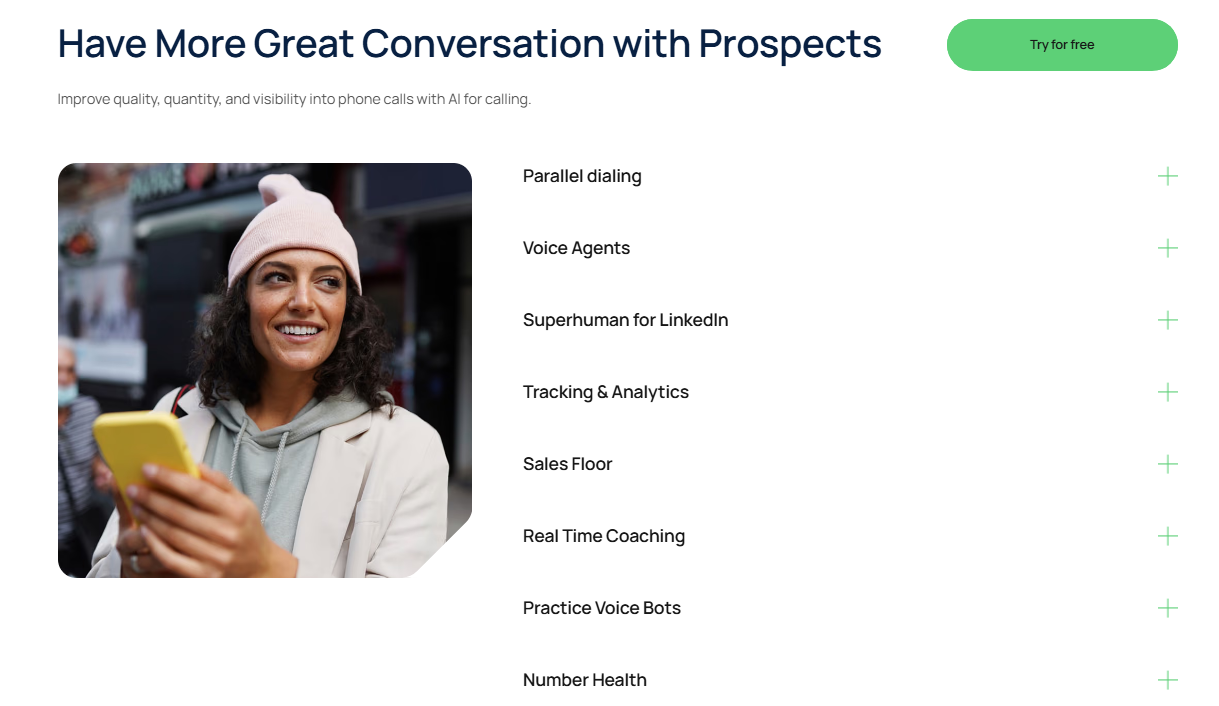
Platforms like Trellus.ai combine several of these capabilities into a unified outbound workflow experience. Teams can manage parallel dialing, AI assisted coaching, number health, conversation analytics, and multichannel engagement workflows without disrupting existing sales engagement systems.
Eventually, from a long term perspective, the overall goal is helping reps spend more time in high quality conversations and less time navigating operational inefficiencies.


Power and parallel dialing in your CRM.