Our Top Picks


Revenue.io, previously known as ringDNA, earned its reputation by becoming deeply embedded inside Salesforce workflows.
For teams already committed to Salesforce as their primary CRM system, the appeal is obvious.
Calls, emails, SMS, and sales activities all live directly inside the CRM interface, which reduces context switching and keeps reps focused on conversations rather than admin work.
At its best, Revenue.io feels like a strong layer of sales acceleration tools wrapped around Salesforce. Managers appreciate guided selling prompts, structured playbooks, and conversation intelligence tools that highlight what top performers do differently.
That said, teams rarely leave because Revenue.io fails outright. Most departures happen once usage scales, expectations rise, or budgets tighten. The same strengths that make it powerful early on can later feel rigid, expensive, or fragile when call volumes spike.
How the Pricing Model Shapes Perception
Revenue.io operates on a custom quote structure. Pricing is influenced by user count, feature access, and contract length rather than transparent tiers. For leadership teams, this creates two separate experiences.
On one hand, enterprise buyers appreciate tailored packaging that aligns with revenue operations software goals. On the other, finance leaders struggle to justify cost once usage expands beyond the initial rollout. When leaders start comparing Revenue.io against modern sales engagement platforms that bundle automation, analytics, and coaching into cleaner pricing, the value gap becomes harder to ignore.
This is often the moment where internal conversations shift from optimization to alternatives to revenue io.
Reliability Matters More Than Feature Depth
A recurring theme among teams evaluating Revenue.io Alternatives is dialer stability. When the platform works, it works very well. Guided selling inside Salesforce feels polished, and call insights surface at the right moments. The problem is inconsistency.
Dialer crashes during live outbound sessions create friction that compounds quickly. Missed calls, frozen interfaces, and delayed logging disrupt momentum, especially for high velocity SDR teams relying on parallel dialer solutions or power dialer software to hit daily activity targets. For sales leaders, reliability often outweighs feature richness, particularly when call volume directly ties to pipeline creation.
Reporting That Stops Short of True Intelligence
Revenue.io provides useful dashboards, but many teams eventually want more than surface level metrics. Managers want to understand talk ratios, objection handling patterns, call outcomes linked to deal progression, and rep behavior trends across weeks rather than snapshots.
Without exporting data or layering additional call analytics software on top, some teams feel constrained. This is where comparisons with modern sales intelligence platforms become unavoidable. Buyers start looking for tools that blend conversation intelligence with pipeline management software in a way that feels connected rather than fragmented.
Why Would a Sales Team Potentially Look for A Better Substitute To Revenue.io?
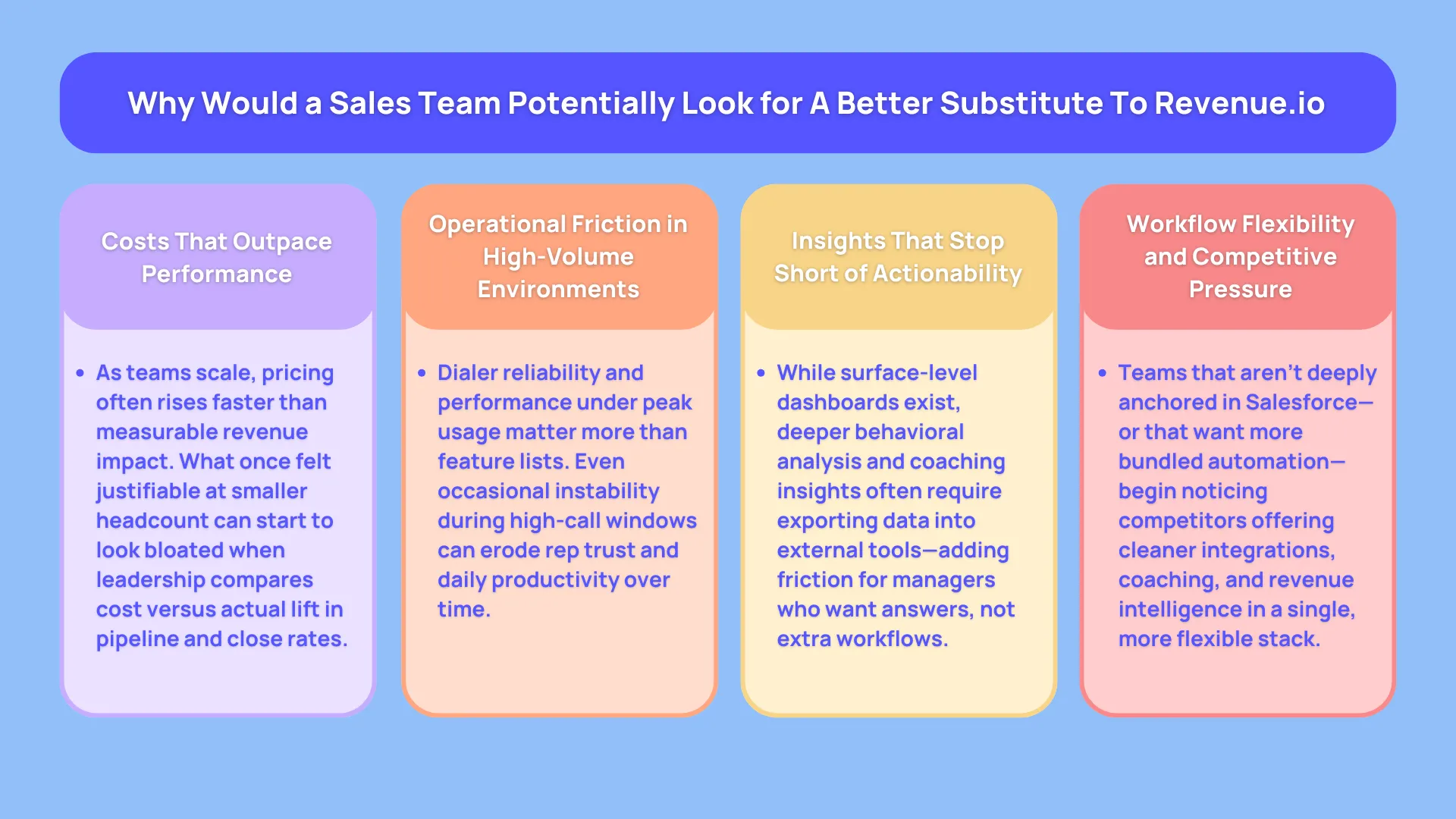
Most teams do not actively plan to replace Revenue.io. The decision builds quietly, shaped by day to day friction.
• Rising costs that scale faster than revenue
• Dialer instability during peak usage
• Analytics that require external tools for deeper insights
• Limited flexibility for non Salesforce heavy workflows
• Stronger competitors offering bundled sales automation solutions
Once leadership begins evaluating other sales productivity software options, the conversation quickly broadens into deal management platforms, sales coaching software, and revenue intelligence tools that promise clearer ROI at scale.
Revenue.io Alternatives That Make Sense to Demo Atleast
Once teams move past surface level comparisons, the goal shifts.
It stops being about matching features line by line and starts being about fit, stability, and how well a platform supports real selling motion.
The Revenue.io Alternatives below tend to surface when sales leaders want cleaner execution across sales engagement platforms, better rep adoption, or clearer visibility inside revenue operations software.
Each option shines in a different way, so the real value comes from understanding where they outperform Revenue.io rather than trying to replace it feature for feature.
1. Trellus - AIO Sales Enablement Software For Call First Businesses
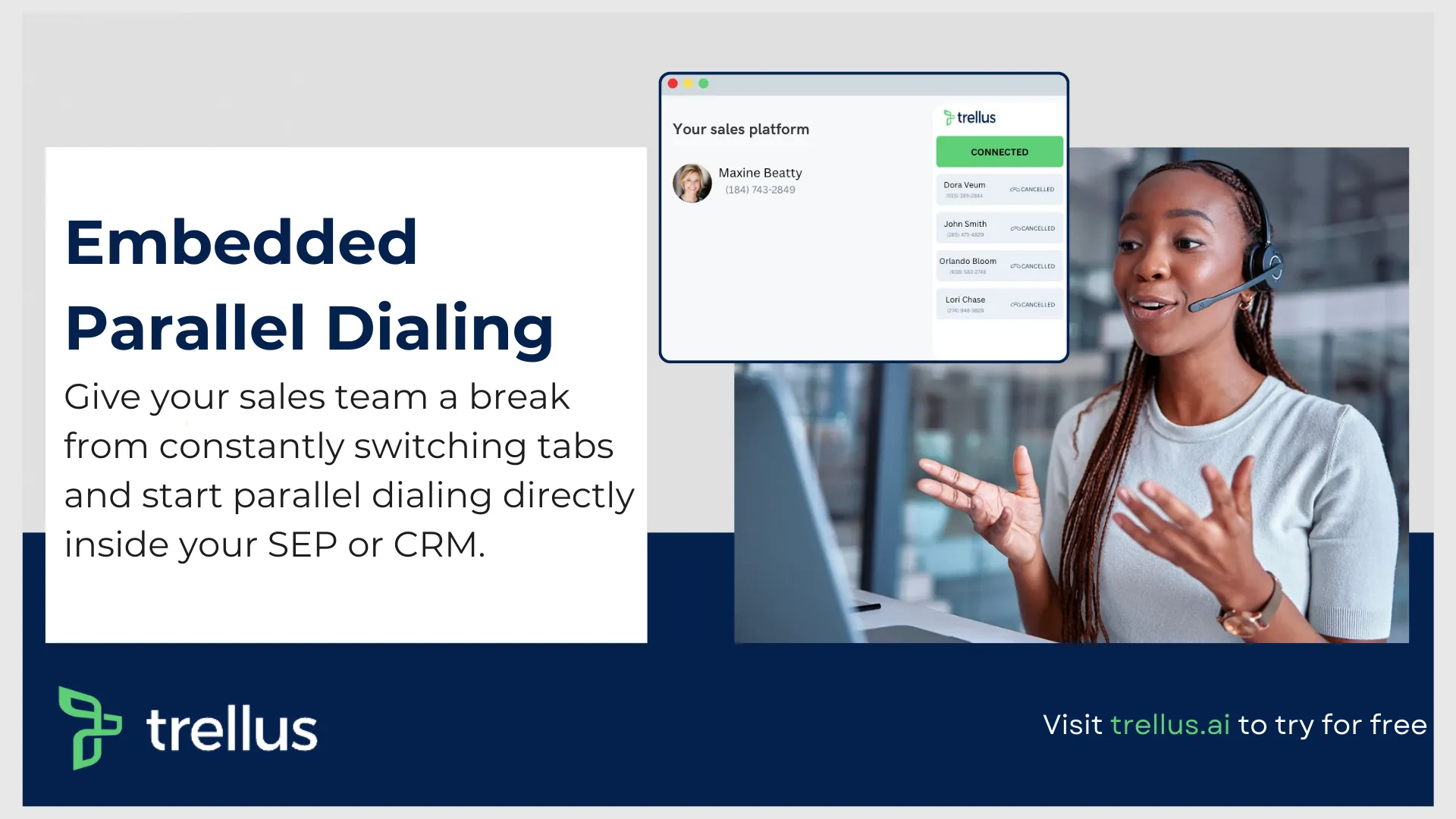
Some platforms stand out not because they replace everything in the stack, but because they directly improve rep performance in moments that matter.
This is where Trellus earns attention among serious Revenue.io Alternatives, especially for outbound teams that struggle with live conversations rather than tooling gaps.
The defining strength, among other features, is that there is live behavioral intelligence system working behind the scene during active calls. Instead of reviewing conversations after the fact, reps receive contextual cues while they are speaking with prospects.
The system recognizes patterns such as hesitation, poor objection handling, or missed engagement signals and surfaces highlights in real time.
For struggling SDRs, this functions like a safety net that nudges them back on track before momentum is lost.
This approach reframes real time call coaching from something reactive into something assistive. Managers are no longer forced to rely solely on call reviews or post call scorecards. Coaching happens inside the conversation itself, which dramatically shortens the feedback loop.
Beyond live guidance, the platform contributes to broader sales productivity software goals. Call insights feed into coaching conversations, performance trends become easier to spot, and reps develop confidence faster. This is particularly valuable for fast growing teams where ramp time directly impacts pipeline creation.
• Live behavioral cues surfaced during active calls
• Immediate guidance for objection handling and engagement flow
• Strong impact on rep confidence and skill development
Rather than competing head on with full sales engagement platforms, this solution complements existing CRM systems and dialers. Teams already running power dialer software or parallel dialer solutions often layer it in to strengthen execution without replacing core infrastructure.
From a revenue operations software perspective, the value shows up in consistency.
Calls improve across the board, not just among top performers. Managers spend less time correcting fundamentals and more time refining strategy. Over time, this translates into cleaner pipeline management software outcomes and more predictable deal progression.
For organizations evaluating alternatives to revenue io because coaching feels too retrospective or manual, this option delivers something distinct. It prioritizes the live moment, the exact point where deals are won or lost, and supports reps while they are still in control of the conversation.
2. Spinify
Spinify approaches sales productivity from a very different angle than Revenue.io. Instead of centering on call execution or conversation intelligence tools, Spinify focuses on motivation, visibility, and behavior reinforcement.
For teams that already have calling, CRM systems, and sales automation software in place, Spinify acts as the performance layer that keeps reps engaged and managers informed.
What makes Spinify stand out is how it turns everyday sales activity into something reps actually care about. Leaderboards update in real time, goals feel tangible, and recognition becomes part of daily workflow rather than an afterthought. This matters more than most teams realize, especially once headcount grows and individual performance becomes harder to track intuitively.
Under the hood, Spinify connects to existing sales engagement platforms and CRM systems, pulling activity data to power dashboards that highlight momentum, consistency, and improvement trends. Managers gain a clearer sense of who is progressing, who is stalling, and where coaching time should go.
• Real time performance visibility across teams and individuals
• Highly customizable leaderboards aligned with revenue goals
• Strong reinforcement for coaching initiatives and behavior change
Spinify does not try to replace revenue intelligence tools or call analytics software.
Instead, it complements them. Teams that feel Revenue.io covers execution but lacks motivation and transparency often find Spinify fills that gap without adding operational complexity.
3. PersistIQ
PersistIQ enters the conversation when outbound teams feel constrained by rigid workflows or Salesforce centric experiences.
While Revenue.io thrives inside Salesforce, PersistIQ appeals to teams that want speed, flexibility, and control over outbound motion without heavy configuration.
At its core, PersistIQ is built for consistent outreach. Sales reps can manage email, tasks, and follow ups in a way that feels intuitive rather than forced.
This makes it especially attractive for lean SDR teams that prioritize activity volume and personalization over complex guided selling frameworks.
PersistIQ integrates cleanly with CRM systems, keeping data aligned without overwhelming reps. Campaign analytics provide enough insight to refine outreach strategy while staying focused on execution rather than reporting overhead.
• Strong outbound automation without excessive complexity
• Flexible sequencing for email driven sales motion
• Lightweight reporting that supports daily rep workflows
For teams comparing alternatives to revenue io, PersistIQ often wins when simplicity and rep adoption matter more than advanced real time call coaching.
It pairs well with separate power dialer software or parallel dialer solutions when calling remains a priority.
4. CallAction
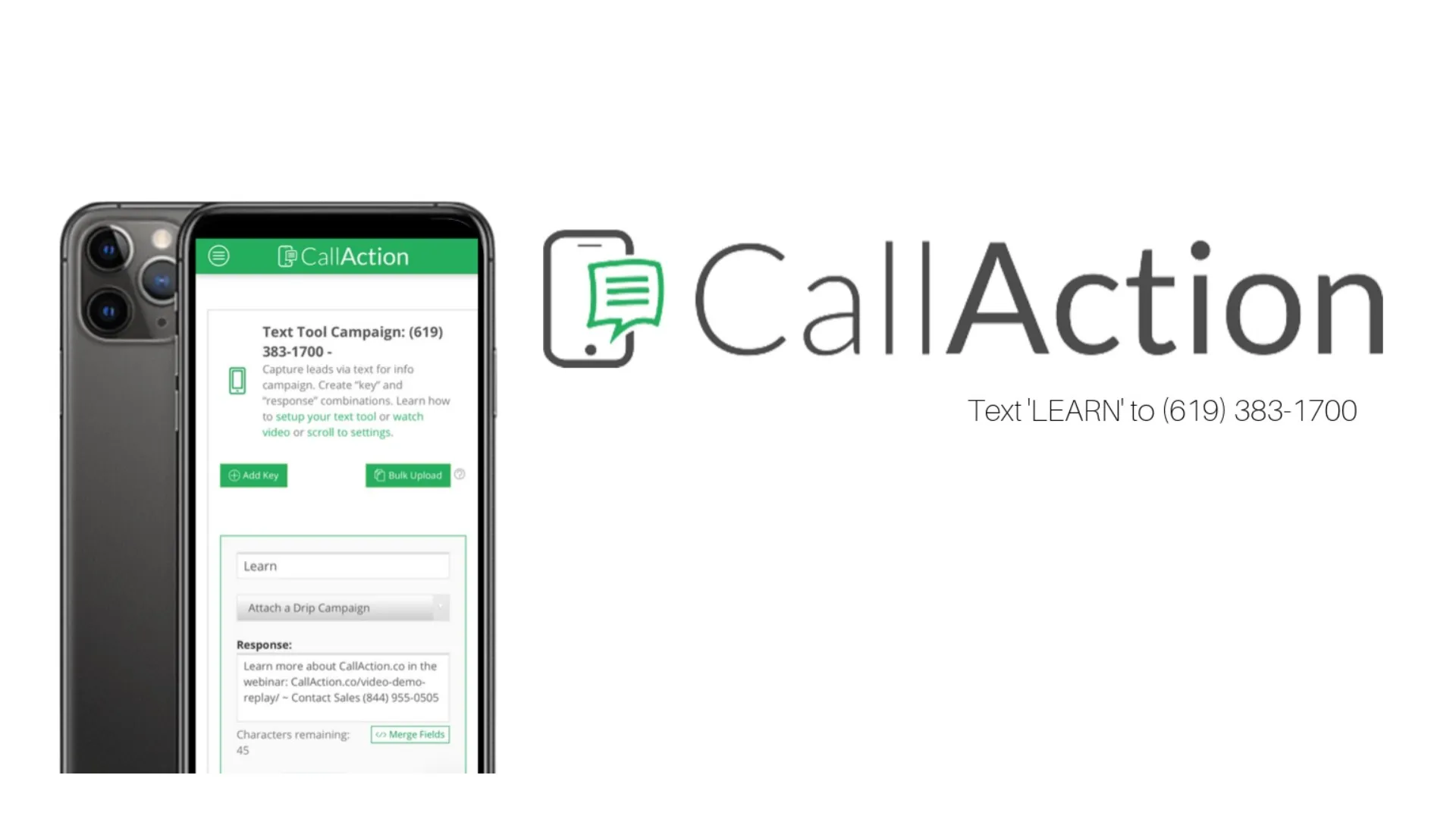
CallAction sits at the intersection of sales engagement and relationship management.
The program reportedly resonates strongly with industries where long term follow up and consistent communication matter more than raw outbound volume. Real estate, mortgage, and financial services teams tend to surface CallAction during platform evaluations.
The strength of CallAction lies in automation that feels personal. Follow ups, reminders, and messages trigger naturally based on activity, which reduces manual work while preserving relationship quality. CRM integrations ensure that data flows cleanly across systems, supporting pipeline management software requirements without duplication.
Unlike Revenue.io, which leans heavily into conversation intelligence tools, CallAction focuses on making sure no opportunity slips through cracks due to poor follow up discipline.
• Automated engagement tied to relationship stages
• CRM aligned workflows that support long sales cycles
• Clear activity tracking for accountability and consistency
Teams that prioritize deal management platforms and ongoing client engagement often prefer CallAction over feature dense sales acceleration tools that focus mainly on call execution.
5. Reply.io
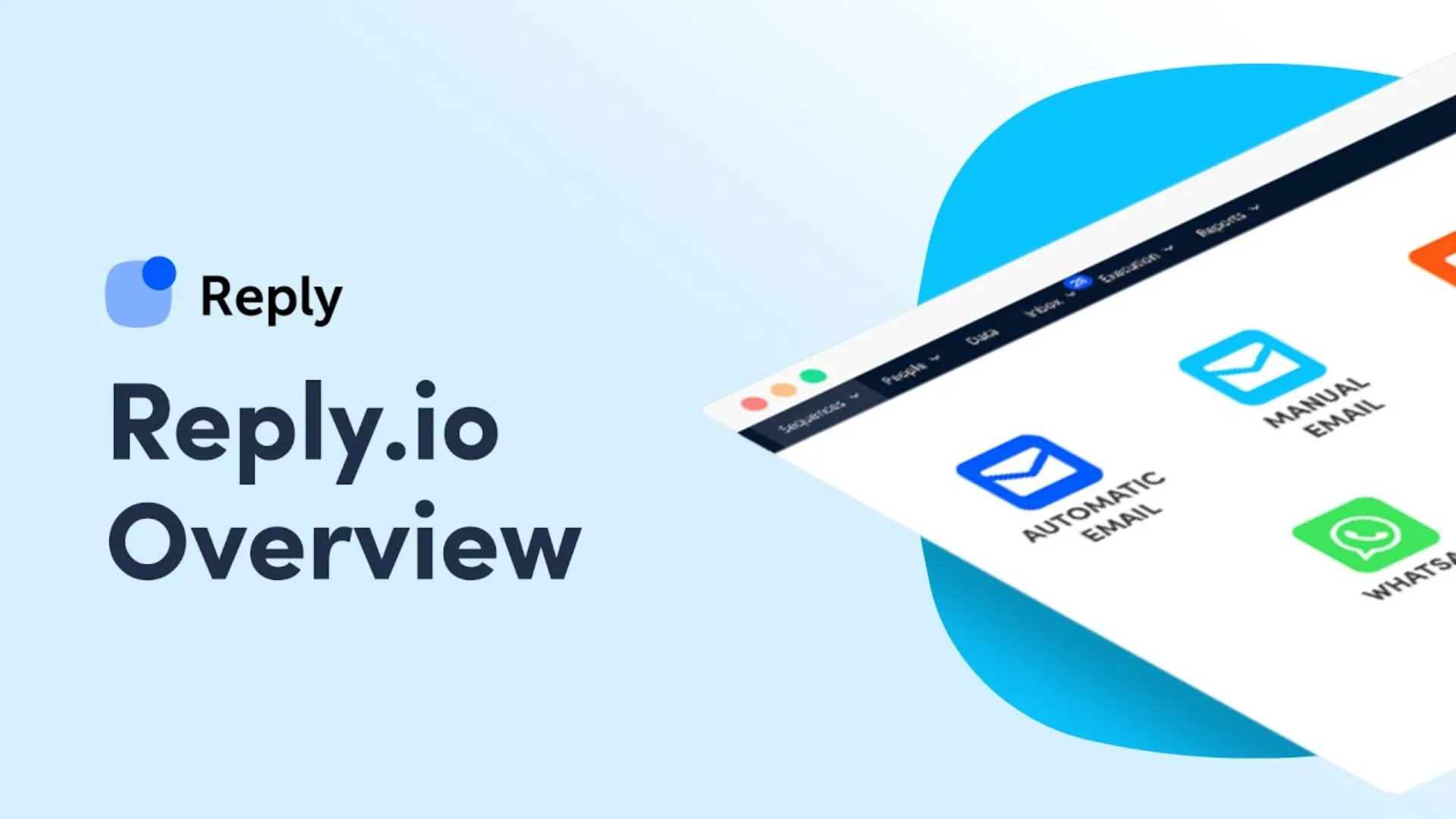
Reply.io frequently appears on shortlists when teams want a balanced mix of automation, personalization, and analytics without enterprise level pricing.
It positions itself as a flexible sales automation solution that adapts as teams grow rather than forcing rigid structure early.
Reply.io supports multi channel outreach across email, calls, and tasks, allowing reps to personalize communication at scale. A B testing and reporting tools help teams refine messaging while maintaining high activity levels.
Its integrations with CRM systems ensure data consistency, while reporting gives managers visibility into what drives replies, meetings, and pipeline movement.
• Scalable outreach automation with personalization controls
• Strong analytics tied to engagement and response quality
• Competitive pricing compared to enterprise sales productivity software
For organizations questioning Revenue.io’s cost relative to daily usage, Reply.io often feels like a more balanced investment, especially when combined with external call analytics software or sales coaching software.
Two Main Types of Revenue.io Competitors That Rarely Justify Their Price Tag
Not every platform that looks impressive on a demo ends up delivering proportional value once contracts are signed.
Some tools position themselves as premium sales acceleration tools, yet struggle to justify long term cost when compared against flexible Revenue.io Alternatives that evolve faster and cost less to maintain.
These platforms usually enter the conversation during enterprise evaluations, then quietly fall off once teams start stress testing real workflows.
Legacy Enterprise Dialer Suites
Several long standing enterprise dialer vendors attempt to compete directly with Revenue.io by bundling calling, analytics, and CRM connectivity under one umbrella.
On paper, they check many boxes. In practice, the experience often feels dated and rigid.
Setup cycles are long, configuration changes require support tickets, and rep workflows feel constrained. While these platforms market themselves as revenue operations software, much of the reporting still revolves around call volume rather than true sales intelligence platforms that connect behavior to pipeline outcomes.
Costs rise quickly as features are unbundled and added back as paid modules. For teams comparing alternatives to revenue io, the math rarely works out once licensing, onboarding, and ongoing admin overhead are factored in.
• High licensing costs tied to legacy infrastructure
• Limited flexibility for modern outbound workflows
• Reporting that emphasizes activity over insight
Unless a company already depends on deeply embedded telephony contracts, these tools rarely outperform modern sales engagement platforms that move faster and adapt better.
Overengineered Conversation Intelligence Platforms
Another category that struggles to justify price includes conversation intelligence tools that over prioritize analytics while neglecting execution. These platforms excel at transcriptions, keyword tracking, and sentiment analysis, yet often rely on third party power dialer software or parallel dialer solutions for basic calling needs.
The result is a fragmented stack where reps juggle multiple tools just to complete a single workflow. While leadership receives detailed dashboards, reps experience friction that impacts adoption and morale.
When pricing rivals full sales productivity software suites, teams begin questioning why execution and coaching are split across disconnected systems.
• Advanced analytics with limited execution support
• Heavy reliance on external dialers and CRM systems
• High cost relative to day to day rep usage
For most organizations, value comes from balance. Strong real time call coaching paired with smooth execution usually outperforms analytics heavy platforms that slow teams down.


Power and parallel dialing in your CRM.