Our Top Picks


Your ideal buyer does not “live” inside or live by one channel.
They wake up scrolling LinkedIn headlines, skim emails during meetings, ignore a few calls, answer one unexpectedly, and check social media again before bed. Their attention moves constantly, and if your outreach stays stuck in one place, it gets left behind.
That is why multi-channel prospecting has become the foundation of modern B2B outbound. Not as a trend, not as a nice to have, but as the only realistic way to earn attention, trust, and replies from busy decision makers.
Don't get us wrong, though.
Cold calling still matters. It still drives more real conversations than anything else.
What has changed is the context. Calls now work best when they are supported by email, LinkedIn, and other touchpoints that create familiarity before and after the phone rings.
This is not noise. This is coordinated outreach that respects how people actually behave.
Understanding Multi-Channel Prospecting in B2B Sales
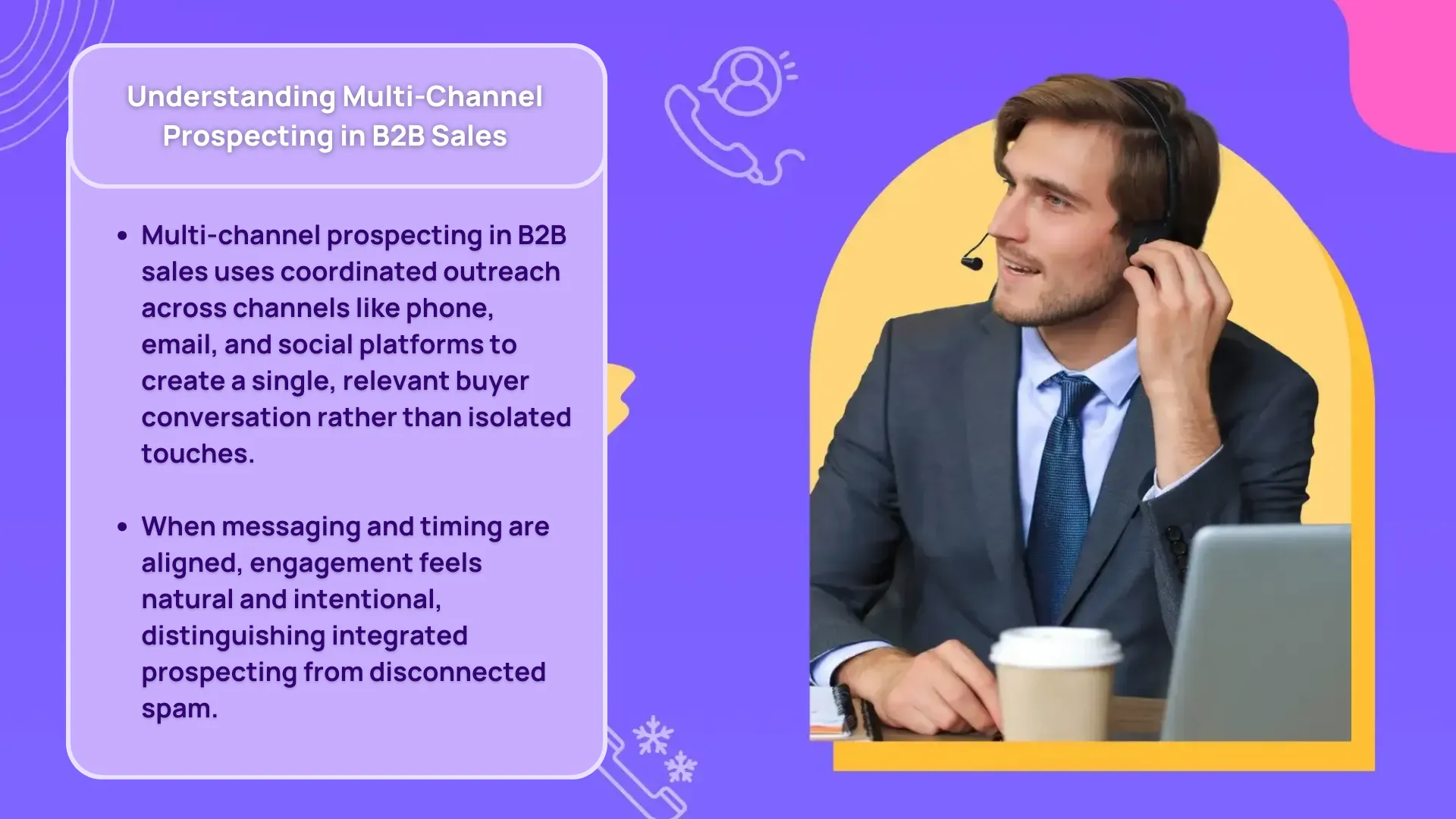
Multi-channel prospecting is the practice of reaching prospects through several communication channels in a coordinated and intentional way. Phone, email, LinkedIn, social platforms, SMS, and even direct mail work together as part of one connected motion.
The purpose is not volume for the sake of volume. The purpose is relevance. When outreach shows up across the places a buyer already spends time, engagement feels natural instead of intrusive.
This is also where omnichannel prospecting differs from random outreach. Each touchpoint is aware of the others. Messaging stays aligned. Timing stays intentional. The experience feels like one conversation unfolding across multiple spaces.
That is the difference between integrated prospecting and disconnected spam.
Multi-Channel Prospecting vs Single Channel Outreach
Single channel prospecting puts all its weight on one lever. Usually email or phone. When that lever fails, the sequence fails.
Multi-touch prospecting spreads risk across channels while increasing familiarity. A prospect might ignore five emails, yet answer a call because your name feels recognizable. They might ignore calls but reply on LinkedIn after seeing shared content. Each channel supports the others.
From a performance standpoint, multi-channel prospecting ROI consistently outpaces single channel outreach. Conversion rates rise because trust forms faster. Response rates increase because prospects can engage on their own terms. Meeting quality improves because conversations begin with context.
This is why cross-channel sales motions dominate modern B2B teams.
Core Components of a Strong Multi-Channel Prospecting Strategy
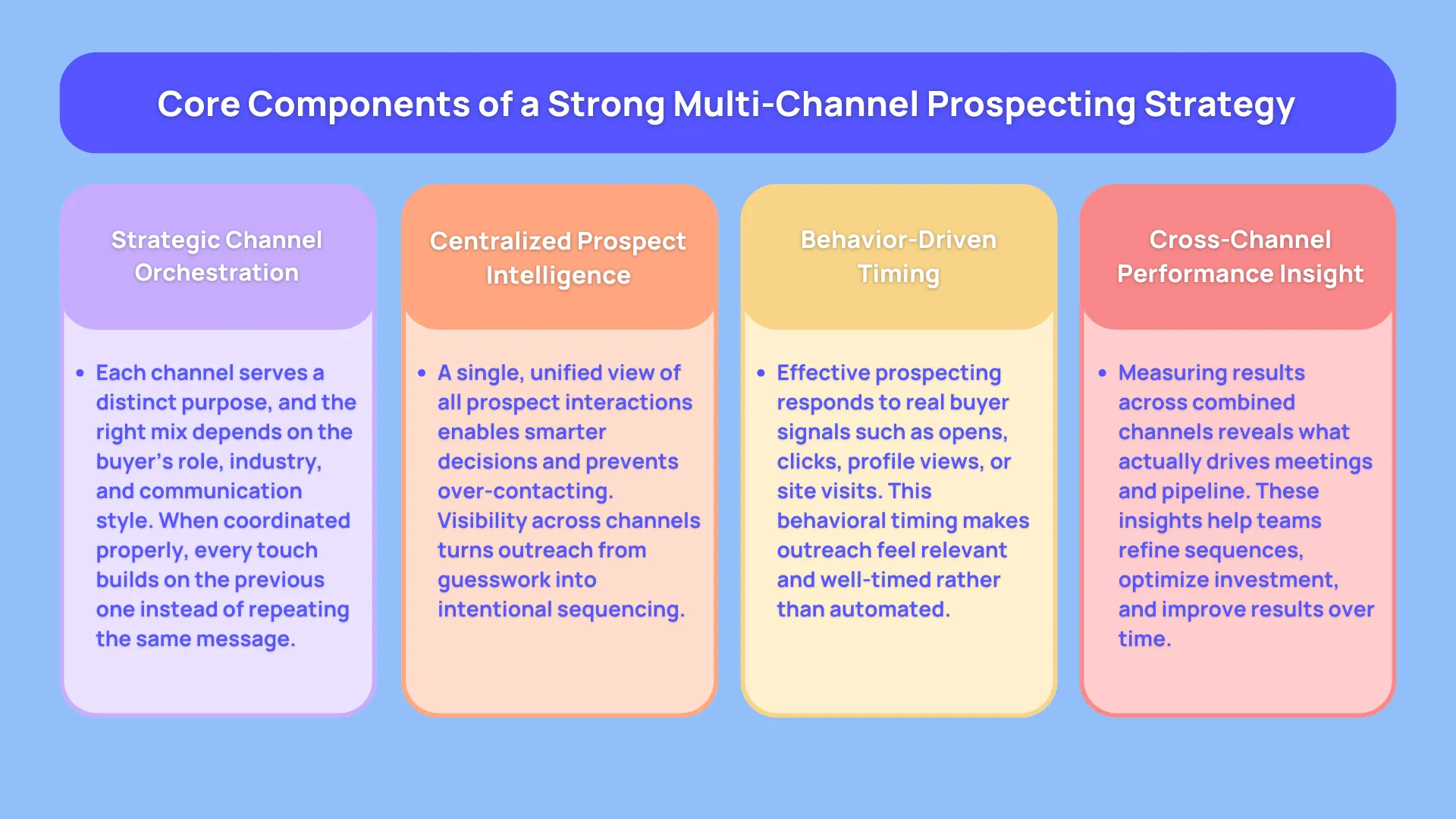
A successful multi-channel prospecting framework rests on a few foundational elements. Without these, adding more channels only adds complexity.
Channel Orchestration and Channel Mix
Every channel plays a role. Email supports longer explanations and value framing. LinkedIn builds familiarity and credibility. Phone enables real-time conversation and objection handling. SMS and social engagement support speed and informality for certain personas.
Channel mix depends on role, seniority, industry, and buying style. Executives in traditional sectors often respond better to call-led sequences. Marketing leaders in tech tend to engage across email and LinkedIn. Founders may respond to short, direct messages across social and mobile.
Coordinated outreach ensures that each touchpoint builds on the last instead of repeating the same message everywhere.
Unified Prospect Data and Visibility
Multi-channel prospecting only works when every interaction feeds into one system. Calls, opens, clicks, replies, profile views, and engagement all inform the next step.
This unified view prevents over-contacting. It also enables smarter channel optimization. If email engagement is high but replies are low, LinkedIn becomes the next logical step. If social engagement appears strong, a call lands with more context.
Unified data transforms outreach from guessing into informed action.
Behavioral Triggers and Timing Precision
The strongest multi-channel prospecting automation reacts to prospect behavior. An opened email triggers a follow-up call. A LinkedIn connection acceptance triggers a personalized message. A website visit prompts outreach aligned to that interest.
This responsiveness improves timing, relevance, and prospect engagement. Messages feel timely rather than random. Conversations start closer to buyer intent.
Attribution and Performance Measurement
Multi-channel prospecting metrics reveal which channel combinations perform best. Email plus LinkedIn often outperforms email alone. Adding phone increases qualified meetings and pipeline velocity.
Tracking performance across sequences enables smarter investment decisions. Teams see where to double down and where to simplify. That clarity drives sustained improvement in multi-channel prospecting success rate.
The Psychology Behind Multi-Channel Outreach Effectiveness
Multi-channel outreach works because it aligns with how people build trust.
Repeated exposure across different contexts creates familiarity. Familiarity creates comfort. Comfort lowers resistance.
This is not repetition in one place. It is presence across environments. Seeing a name in email, then on LinkedIn, then hearing it on a call creates cognitive ease. The prospect feels like they already know you.
That mental shortcut matters in B2B buying, especially when attention is scarce.
Generational preferences also shape channel effectiveness. Younger buyers lean toward asynchronous communication. Mid-career leaders balance email with calls. Senior executives still value direct conversation. Smart multi-channel prospecting adapts to these patterns without relying on assumptions alone.
How to Integrate Email, Social Media, and Phone Outreach for Prospecting
Integration is about flow, not overload.
Email introduces the problem and positions relevance. LinkedIn reinforces credibility through profile presence, shared content, and short contextual messages. Phone connects everything into a real conversation.
Each channel prepares the next. None operates in isolation.
This approach transforms outreach into a sequence of touchpoints rather than disconnected attempts. Prospect engagement improves because every interaction feels intentional.
Step-by-Step Guide to Setting Up Multi-Channel Prospecting Sequences
Defining the Target and Context
Strong sequences begin with clarity around ideal customer profile, buyer role, and buying triggers. Outreach adapts to industry norms, company size, and decision-making structure.
Without this foundation, personalization fails and sequences flatten.
Designing the Touchpoint Strategy
Effective multi-channel prospecting cadence balances persistence with space. Touchpoints spread across two to three weeks allow recognition without fatigue.
A call-led cadence might open with phone, followed by email reinforcement, then LinkedIn engagement, then another call. A digital-led cadence might reverse that order.
Timing matters as much as content.
Writing Channel-Specific Messaging
Each channel requires its own voice. Emails explain value. LinkedIn messages stay conversational. Calls focus on curiosity and discovery.
Consistency lives in the problem being addressed, not in repeating the same script everywhere.
Automating Without Losing Humanity
Automation handles scheduling, reminders, and sequencing. Personalization handles relevance. The two work together.
Multi-channel prospecting software enables scale without sacrificing tone when variables are used thoughtfully and messages are written with intent.
Best Practices for Personalizing Messages Across Multiple Prospecting Channels
Personalization goes beyond names and titles.
It reflects awareness of the prospect’s world. Recent promotions, company news, industry challenges, and shared interests create connection. Even small details signal effort.
Across channels, personalization should feel cohesive. What appears in an email should align with what appears on LinkedIn and what is referenced on the call.
This alignment builds trust faster than any clever copy.
Multi-Channel Prospecting Automation and Tools
Best Platforms for Multi Channel Prospecting Campaigns
Modern platforms combine calling, email, LinkedIn workflows, task management, and analytics in one place. This consolidation enables coordinated outreach without tool sprawl.
Visibility across channels improves execution quality and manager coaching.
Where Trellus Fits Into a Modern Multi-Channel Prospecting Stack
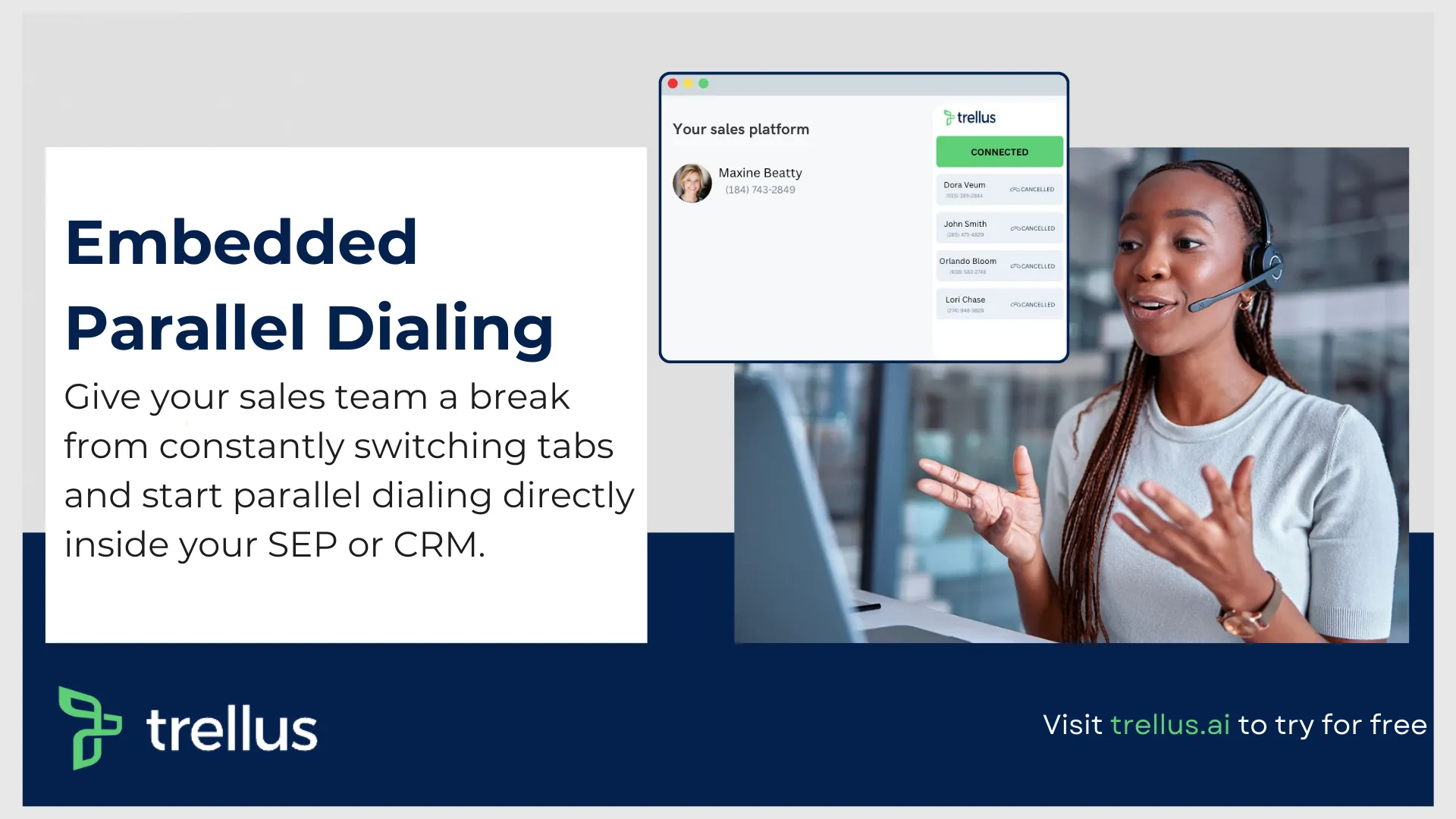
A strong multi-channel prospecting strategy needs more than good intent.
It needs a system that keeps calls, emails, LinkedIn touches, and follow ups aligned without adding complexity for reps.
This is where Trellus fits naturally into the workflow.
At its core, the platform is built around call-led outbound, while still supporting true multi-channel outreach. Phone activity remains the anchor, but every other channel works in support of that motion rather than competing with it. Calls, emails, LinkedIn actions, and follow ups all live inside one coordinated environment, giving reps a clear view of where each prospect stands.
Supporting Call-First, Multi-Touch Prospecting
Cold calling remains the fastest path to real conversations, especially in B2B sales. The platform reinforces this reality by prioritizing calling workflows while layering in email and LinkedIn touches that create familiarity before and after conversations.
Instead of forcing reps to choose between channels, it enables a natural rhythm. A call attempt triggers an email. A voicemail drop is followed by a LinkedIn touch. A positive conversation updates the entire sequence automatically. This kind of multi-touch prospecting keeps momentum high without forcing reps to manually manage every step.
Unified Visibility Across Channels
One of the biggest challenges in multi-channel outreach is losing track of what has already happened. When data is scattered across tools, coordination breaks down, and prospects feel it immediately.
Here, all activity feeds into a single prospect view.
Call outcomes, email engagement, and LinkedIn interactions inform the next action. This unified visibility supports coordinated outreach and prevents over-contacting or mixed messaging. Reps always know the context before reaching out, which improves confidence and prospect engagement.
Reducing Tool Overload for SDR Teams
Many sales teams struggle with multi-channel prospecting because they rely on too many disconnected tools.
Dialers, email platforms, LinkedIn automation, and analytics dashboards all compete for attention.
This solution reduces that friction by centralizing daily outbound activity.
Reps work from one place. Managers coach from one data set. Reporting reflects real behavior across channels instead of partial views. The result is higher adoption, cleaner data, and more consistent execution.
Enabling Better Coaching and Optimization
Multi-channel prospecting success depends on continuous improvement. Without clear insight into what happens before and after calls, coaching becomes guesswork.
Call recordings, engagement data, and sequence performance are all visible in one system. Managers can see which touchpoint strategies convert best, where conversations stall, and how reps adapt messaging across channels.
This sense of feedback loop supports better coaching, stronger sequences, and higher multi-channel prospecting ROI over time.
Multi-Channel Prospecting Metrics and ROI
Performance measurement anchors improvement.
Key metrics include reply rates by channel, meeting conversion rate, touches per conversation, sequence completion rate, and pipeline influenced. Tracking these reveals which combinations drive results.
Multi-channel prospecting ROI improves as teams refine timing, personalization, and channel optimization over time.
Moving on, companies that usually win with multi-channel prospecting, they always tailor their approach to audience behavior.
For example, if we take healthcare platforms, they normally combine LinkedIn, email, events, and calls to reach clinicians where trust matters most. In this context, it’d be fair to say that technology marketplaces balance content, social presence, and direct outreach to reach both buyers and sellers.
Across industries, the lesson stays consistent. Segmentation matters. Channel selection matters. Personalization matters.
Multi-Channel Prospecting Challenges and How Teams Overcome Them
Multi-channel prospecting sounds powerful on paper, yet in real sales environments, it often breaks down in execution.
Here’s the thing.
The main issue isn’t the lack of effort.
Most teams are already active across phone, email, and LinkedIn. The real challenge lies in coordination, consistency, and control. When any of those elements slip, outreach becomes noisy, inefficient, and hard to scale. Below is a deeper look at the most common obstacles and how high-performing B2B teams move past them.
Data Quality and Data Decay
Poor data quality is one of the fastest ways to kill a multi-channel prospecting strategy.
Incorrect job titles, outdated phone numbers, wrong email domains, or mismatched company information create friction at every touchpoint. The more channels involved, the more visible these errors become. Calling the wrong person, personalizing an email with the wrong role, or sending LinkedIn messages to irrelevant contacts damages credibility and wastes valuable touches.
Strong teams treat data as a living asset rather than a one-time input. Lists are built intentionally instead of purchased in bulk. Records are refreshed regularly, duplicates are removed, and engagement signals are reviewed before adding a prospect into a multi-channel prospecting sequence. This discipline protects sender reputation, improves response rates, and keeps prospect engagement healthy across all channels.
Message Fatigue Across Channels
Message fatigue happens when prospects feel over-contacted without feeling understood.
This is especially common in multi-touch prospecting where teams repeat the same value statement across email, LinkedIn, and phone. From the prospect’s perspective, it feels like noise, not persistence.
High-performing teams avoid this by designing channel-specific narratives. Email focuses on context and value. LinkedIn focuses on familiarity and relevance. Phone focuses on curiosity and conversation. Each touchpoint advances the story instead of restarting it. This approach keeps multi-channel outreach fresh while still reinforcing the same core problem and outcome.
Spacing also matters. A disciplined multi-channel prospecting cadence allows time between touches so recognition builds without irritation. When prospects feel respected rather than chased, response rates rise naturally.
Poor Coordination Between Channels and Reps
Another common breakdown occurs when channels operate in silos. One rep sends emails while another calls. LinkedIn messages go out without awareness of recent conversations. Prospects receive mixed signals or duplicate messages that reveal internal disorganization.
Top teams solve this through unified systems and shared visibility. Every interaction lives inside one prospect record. Call outcomes influence email timing. LinkedIn engagement informs the next phone touch. This level of coordinated outreach ensures that every channel supports the others rather than competing for attention.
Coordination also extends to team alignment. Sales development, account executives, and marketing operate from the same playbook. When everyone understands the touchpoint strategy, the buyer experience feels intentional instead of fragmented.
Tool Overload and Workflow Complexity
Many teams struggle with multi-channel prospecting not because they lack tools, but because they have too many. Separate platforms for dialing, emailing, LinkedIn automation, analytics, and CRM reporting create friction. Reps spend more time managing software than engaging prospects.
High-performing organizations simplify. They select multi-channel prospecting software that centralizes workflows and reduces manual steps. Automation handles task sequencing, reminders, and logging, while reps focus on conversations and personalization. Simpler systems lead to higher adoption, better data hygiene, and more consistent execution.
This is where multi-channel prospecting automation becomes a competitive advantage rather than a burden.
Measuring What Actually Works
Without clear metrics, teams cannot improve. Many organizations track activity volume but ignore outcomes. Calls made, emails sent, and messages delivered mean little without understanding how channels interact to create conversions.
Effective teams monitor multi-channel prospecting metrics that reflect real progress. Engagement by channel, response timing, meeting conversion rate, and sequence completion reveal which combinations drive results. These insights inform channel optimization and allow teams to adjust sequences without guesswork.
Regular performance reviews turn data into learning. Small adjustments in timing, messaging, or channel mix compound into significant gains in multi-channel prospecting ROI.
Simplicity as the Real Advantage
The strongest multi-channel prospecting integration succeeds because it stays simple. Clear ICP definition. Clean data. Thoughtful sequencing. Coordinated outreach. Focused measurement.
When simplicity guides execution, multi-channel prospecting stops feeling complex.
Summing It Up
Multi-channel prospecting is no longer optional for outbound sales.
In fact, on the contrary, buyers expect relevance across channels.
On that note, whenever teams that deliver coordinated outreach, they end up earning attention faster and converting more consistently.
As always, the phone remains the strongest lever. Email provides depth. LinkedIn builds familiarity. Together, they form a system that respects how people actually buy. Over time, based on your business requirements and whatever strategy your target audience is susceptible to, you can stick to a specific bunch of approaches for maximum conversions.

Embed Trellus Parallel Dialer Within Your SEP & 4x Your Conversations