Our Top Picks


A salesfloor debrief should end with a sentence someone can act on: “Before tomorrow’s block, Maya will add one relevant process question to the list brief; we’ll check whether reps can explain the reason for calling and what buyers ask next.” If the team leaves with “better targeting, stronger discovery, more energy,” it has a list of wishes, not a decision.
Keep the discussion short enough to belong to the call block. Let live conversations finish, protect promised follow-ups, then bring the team together to choose one useful change. The job is not to explain every result or award a winner. It is to decide what deserves attention next.
This is a facilitation guide for SDR managers and team leads. Use the agenda and decision card with the room and notes you already have. You don’t need another dashboard to run the conversation.
Tell the team what the debrief is for
Before calling starts, give the closing discussion a clear purpose: “Bring one moment we should repeat or investigate, and enough context to understand it.” Ask reps to note the moment between calls rather than interrupting a buyer conversation to prepare a presentation.
A useful contribution might be a question that uncovered how the buyer works, an objection the rep couldn’t untangle, or a list detail that was missing. A personal detail about a prospect is rarely needed. Keep call references and sensitive notes in the team’s normal approved workspace.
Set aside a little time after the block, but don’t make the clock more important than the work. A rep still speaking with a buyer should finish. Someone with an urgent promised follow-up should complete it or arrange an explicit handoff. The group can debrief without requiring a simultaneous hard stop.
Start with observations before advice
Open with a minute of quiet note-taking. That gives the rep who isn’t first to speak a way into the discussion. Ask for two lines: what happened, and what they think it might mean. Keep the lines separate.
“Three people asked whether this works with their CRM” is an observation, assuming the rep recorded those exchanges. “Our pitch is too vague” is an explanation. It might be right, but there are other possibilities: the list brief didn’t include the platform, the buyer wanted a setup answer, or the rep introduced the product before learning the workflow.
Let the person who brought the moment explain it before inviting solutions. Ask, “What happened just before that?” and “What were you trying to learn?” Don’t demand an exact quotation from memory. A paraphrase is useful when it is labeled honestly.
The manager should offer their interpretation after hearing the reps’ accounts. That isn’t a promise of perfect agreement. It simply keeps the first managerial explanation from becoming the only explanation anyone considers.
Use a ten-minute agenda, not a round of status reports
The following timing is a suggested starting point. Give a complicated issue its own follow-up rather than squeezing it into the final minute.
- Minutes 0–2: write and collect. Each rep notes one moment. Ask for short descriptions, not a recap of every call.
- Minutes 2–5: understand two or three moments. Choose contributions relevant to the block’s purpose. Clarify the context and what is still uncertain. Don’t select only the biggest win or most dramatic rejection.
- Minutes 5–8: choose the next action. Compare the proposed fixes. Pick one the team can carry out and check. Assign unrelated problems to a separate owner rather than losing them.
- Minutes 8–10: read the decision back. Name the action, owner, intended session and check. Ask the owner to describe what they will do. Correct any difference before closing.
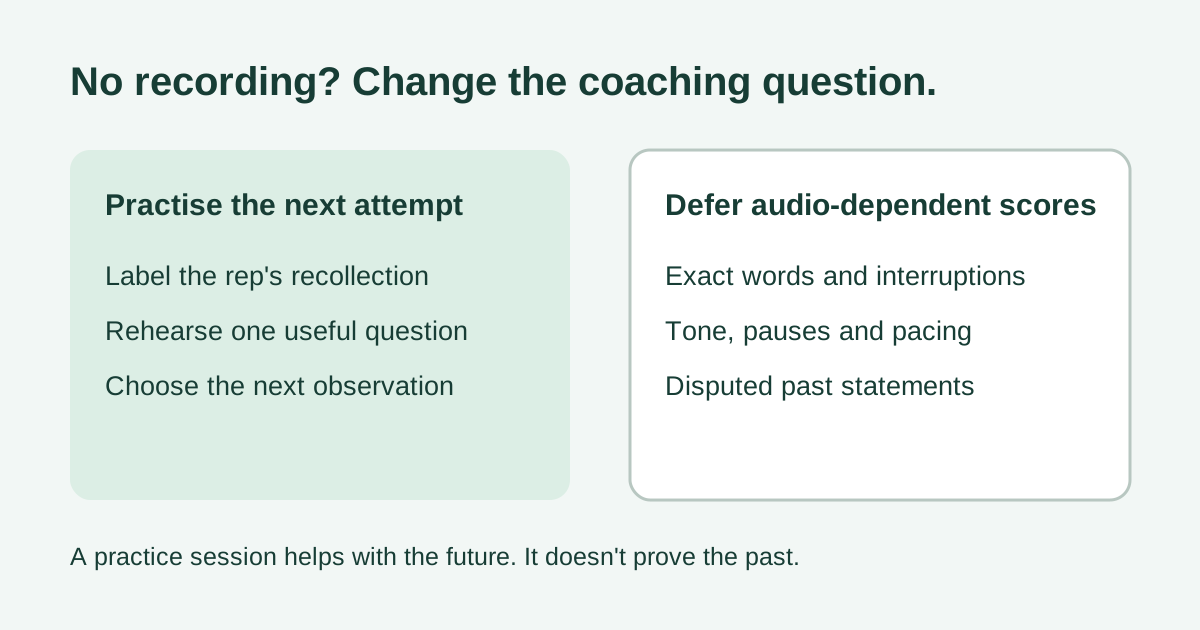
If your team needs a method for choosing recordings before a deeper coaching session, use the call-selection worksheet. A quick debrief is not a substitute for listening to a complete exchange.
Choose between competing fixes
A team can agree that a block was frustrating and disagree completely about why. One rep wants a new opener, another wants different accounts, and the manager wants more attempts. Don’t settle it by asking which idea sounds best.
Take each proposal through three questions:
- What specific observation does this address? “Reps couldn’t find the previous conversation” is more useful than “the list was bad.”
- Can we act on it before a suitable next session? Choose a change within the team’s control or assign an investigation to the person who has the necessary access.
- What would we check afterward? The answer should show whether the action happened and whether the original problem returned, not merely whether more meetings were booked.
Handle urgent customer commitments and required corrections first; they are not optional experiments. For the learning action, prefer a specific, reversible change over a wholesale script rewrite. If the evidence is too weak to choose a fix, choose a check: inspect the relevant records, listen to the permitted recording, or observe the next attempt.
Some stopping points need troubleshooting rather than group coaching. The stalled call-block guide separates list, research, follow-up and workflow failures. Keep that investigation out of a debate about the rep’s attitude.
A worked example: three proposals, one decision
Consider a fictional team calling operations managers. Its debrief starts with three suggestions: shorten the opener, replace the list, and increase the pace. None has an owner or a clear reason yet.
Maya describes two conversations where the prospect asked which part of the current process the rep meant. Omar reports a similar question, but he was following up on an earlier inquiry rather than making a first call. The manager initially thinks this proves the opening needs to change.
Before agreeing, the group checks the context. Maya’s list brief says only “operations leaders.” It doesn’t give a shared reason for the outreach. Omar’s follow-up has a different purpose, so the team doesn’t count his exchange as another example of the same opening problem.
The team decides to improve the brief before rewriting the script. Maya will prepare one relevant process question for the next comparable first-call group. For a campaign about order handoffs, she could try: “When an order needs a correction, who passes that change from sales to operations?” That is a hypothetical practice question, not something a buyer said. The manager will check the brief before the block, then listen for whether reps can explain the reason for calling and whether buyers still ask which process they mean.
This is not a finding that the question will improve conversion. It is a small action with a visible check. If buyers still don’t understand the relevance, the next discussion has something more concrete to work with. If the list doesn’t contain the intended roles, targeting needs its own correction.
Copy this debrief decision card
Keep one card for the action you chose, not a new form for every call:
- Moment: What happened, in which kind of conversation?
- Context: What do we know, and what are we still guessing?
- Decision: What will we repeat, change or investigate?
- Owner: Who will do it, and what help do they need?
- When: Before which block or by which actual date?
- Check: What will show that it happened, and what observation will we compare?
- Other issues: What needs a separate follow-up, and who owns it?
For the fictional example: “First calls to operations managers; buyers asked which process we meant. Brief lacks a shared reason for outreach. Maya drafts one relevant process question before Tuesday’s block; manager checks it beforehand. Afterward, compare the clarity of the opening and record questions about relevance. Omar’s follow-up question stays separate.”
Know when to move the conversation out of the room
A team debrief isn’t the right place for every issue. If feedback concerns one person’s sensitive performance situation, arrange a private conversation. If reviewers disagree about what a call demonstrated, inspect the exchange and use a clear scoring rule rather than a group vote. The calibration guide covers that separate job.
Give a recurring technical failure an investigation owner. Give an unresolved buyer promise a follow-up owner. “We’ll circle back” is not enough for either. Keeping one shared learning action does not mean ignoring the other work.
If there were too few useful conversations to discuss, say so. The action may be to collect context at the next block. Don’t manufacture a lesson from one answer just to make the meeting feel productive.
Open the next block with the previous decision
Before the next session, read the card. Was the brief changed? Did the owner get the help they needed? If the action didn’t happen, resolve that before evaluating its effect.
Afterward, compare the relevant moments, not just the scoreboard. A different audience, calling window or mix of first calls and follow-ups can change results. A small debrief check can tell you whether the team tried the action and what it observed; it can’t isolate a causal lift in bookings.
Decide whether to keep the change, revise it, or stop it. Save that decision where the next session lead can find it. Otherwise, every block begins with the same unfinished discussion.
For the shared calling room itself, see Trellus Salesfloor. The room can support the work; the manager still has to turn the discussion into a decision. Start with the next block on your calendar and one card the team can actually complete.

Power and parallel dialing in your CRM.