Our Top Picks


What is an auto dialer? An auto dialer is software (or a hardware plus software system) that automatically places outbound phone calls from a contact list, so reps stop manually punching in numbers and only spend time on live, connected conversations.
Instead of dialing, misdialing, waiting through rings, and logging every attempt by hand, the system handles the mechanical work: automated outbound call placement and routing.
It connects a rep the moment a real person picks up. For sales teams making dozens or hundreds of dials a day, that shift is the difference between a handful of conversations and a full pipeline.
In 2026, "auto dialer" no longer means the clunky call center hardware of a decade ago. Modern dialers live inside your browser, sync with your CRM, drop voicemails automatically, and increasingly layer AI coaching on top of every call.
This post doubles down on how auto dialers work, the different types, the compliance rules you must respect, and how to choose one that actually moves revenue.
How Does an Auto Dialer Work?
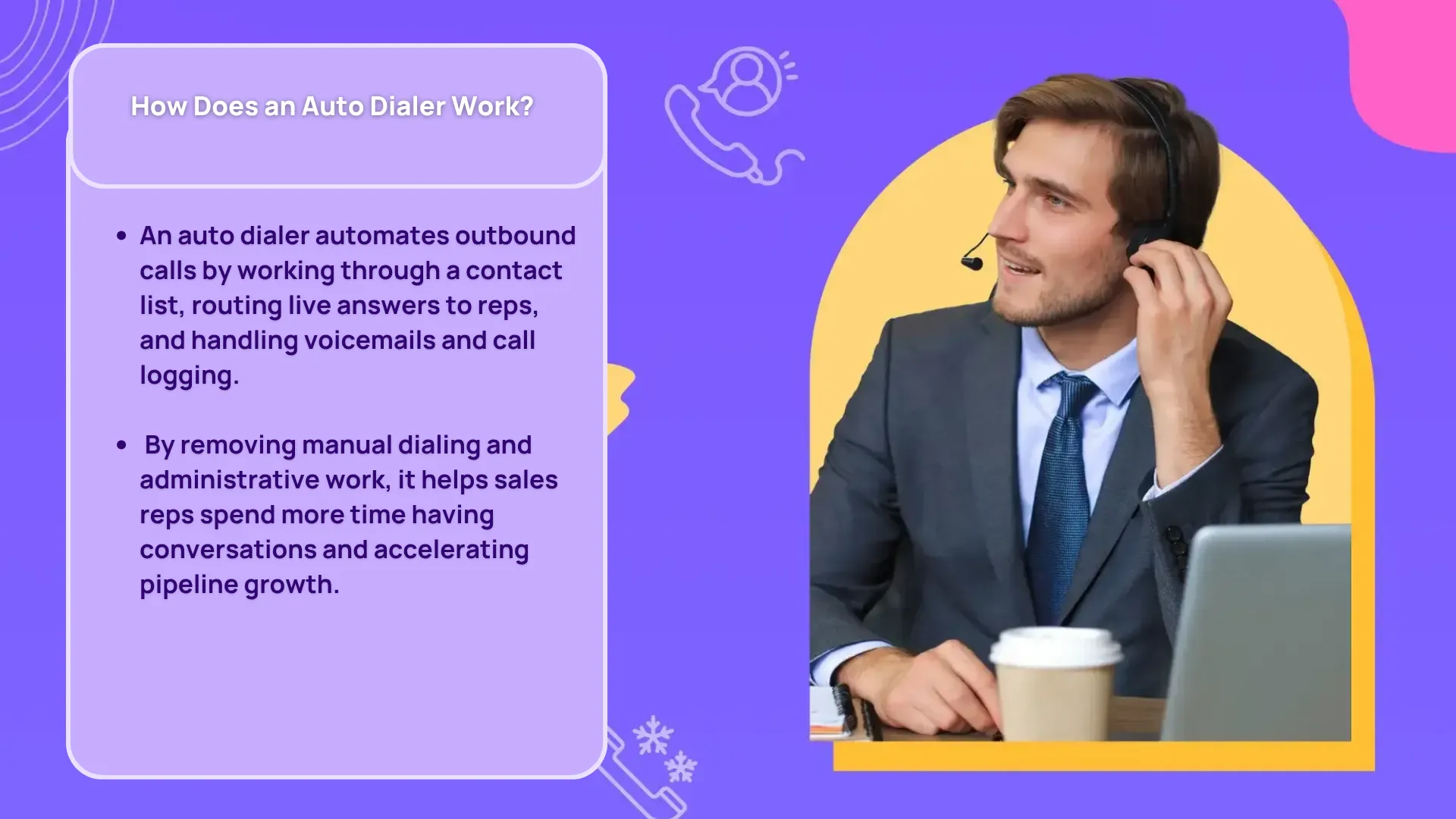
At its core, an auto dialer system automates the sequence a rep would otherwise perform by hand. You load a list of contacts that are usually pulled from your CRM or a sales engagement platform and the dialer works through it, placing calls according to the mode you've selected.
The engine does three things reps hate doing manually:
• Places and routes calls automatically. The system dials the next number, detects whether it reaches a human, a voicemail, a busy signal, or a dead line, and routes live answers straight to an available rep.
• Handles the busywork of the call. Voicemail drop lets a rep leave a pre recorded message with one click instead of repeating the same 20 second pitch 40 times a day. Call logging writes the outcome, disposition, and notes back to the CRM automatically.
• Accelerates the pipeline. By stripping out dead air and manual data entry, high volume contact reach automation lets a rep spend the workday talking rather than dialing, which is the entire point.
That combination, i.e., automated call placement, voicemail drop and call logging, and sales pipeline acceleration through call automation is what separates a real dialer from simply using your cell phone faster.
The Main Types of Auto Dialers
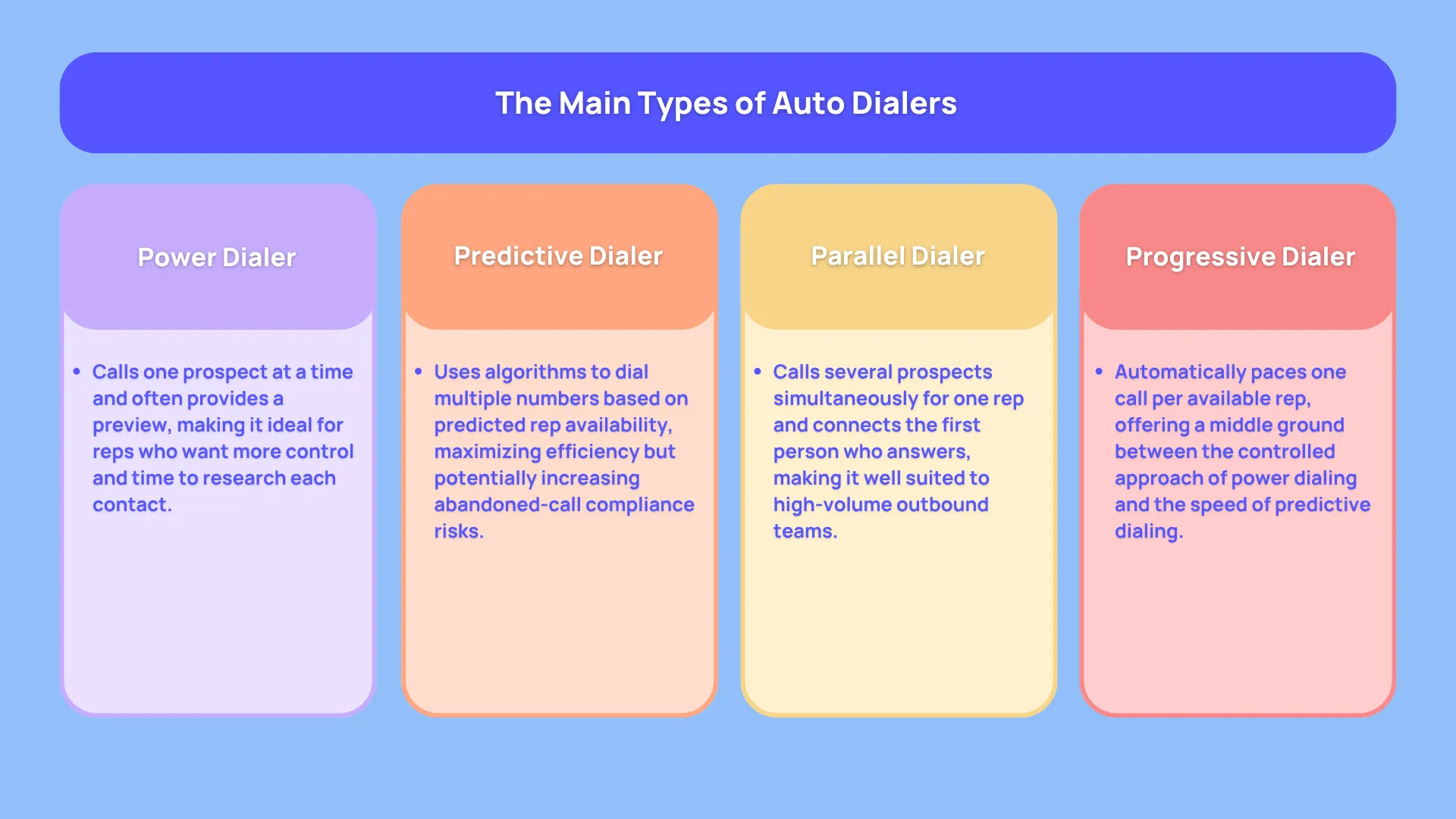
Not all auto dialers behave the same way, and the differences matter for both productivity and compliance. Here are the four you'll encounter most.
Power (Preview) Dialer
A power dialer calls one number at a time, moving to the next contact automatically after each call wraps.
Many power dialers offer a "preview" window so the rep sees who they're about to call and can skip or research first. It's the safest, most conversation quality friendly mode and a great fit for AEs working warmer lists.
Predictive Dialer
A predictive dialer uses algorithms to dial multiple numbers ahead of rep availability, predicting when an agent will free up based on average call length and connect rates.
Predictive dialing and agent efficiency go hand in hand in large call centers, the software keeps agents almost continuously on live calls. The tradeoff is risk: if the algorithm dials too aggressively, a prospect answers with no rep available, creating an "abandoned" call that regulators watch closely.
Parallel Dialer
A parallel dialer places several calls simultaneously for a single rep and connects the first live human, dropping the rest.
It multiplies connect rate without the abandonment behavior of pure predictive systems because a person is always waiting to talk. If you're weighing pacing strategies, our breakdown of parallel dialer vs predictive dialer explains which fits high volume SDR motions best.
Progressive and Preview Variants
Progressive dialers sit between power and predictive: they dial one call per available agent but pace automatically. These nuances matter mostly at scale; for most B2B outbound teams, the practical choice is between power and parallel dialing.
Why Sales Departments Are Upgrading in 2026
Legacy dialers were standalone apps that forced reps to bounce between a dialer window, their CRM, and their sales engagement platform. Every context switch cost seconds and focus.
The modern shift is toward embedded dialers that run inside the tools reps already use and add intelligence to the call itself.
Three forces are driving the upgrade:
1. Connect rates keep falling. Buyers screen unknown numbers, so raw dial volume matters more than ever — and manual dialing simply can't keep up. Teams focused on SDR efficiency can't hit coverage targets one number at a time.
2. Coaching moved onto the live call. The best dialers now surface real time guidance, objection prompts, and battle cards while the rep is talking, then score the recording afterward. That ties directly into stronger cold calling success and better cold calling metrics across the team.
3. Remote teams need shared visibility. With reps distributed, managers use virtual sales floors to listen to live calls, run blitzes, and coach in the moment — something a standalone dialer never offered.
According to Gartner research on contact center and dialing technology, buyers increasingly favor cloud based, analytics rich systems over on premise hardware, a clear signal of where outbound calling is heading.
The line between an auto dialer and a full conversation platform is blurring, which is exactly why many teams are moving toward an AI dialer that combines dialing speed with live intelligence.
Auto Dialer Compliance: What You Must Know
Speed is worthless if it lands you a lawsuit. In the U.S., outbound dialing is governed by the Telephone Consumer Protection Act (TCPA) and enforced by the FCC. A few rules every sales team should internalize:
• Abandonment limits. Predictive dialers must keep abandoned call rates under regulated thresholds. Exceeding them creates real legal exposure.
• Do Not Call (DNC) management. You must scrub against federal and internal DNC lists. Good dialers and DNC management tooling automate this.
• Consent and calling windows. Respect time of day rules and, where required, prior consent.
The FCC publishes the current definitions and restrictions around autodialing equipment, and those definitions have shifted in recent years, so treat compliance as a living requirement, not a one time checkbox.
Parallel dialing in particular rewards clean lists and disciplined DNC hygiene, because you're initiating more call attempts per contact.
Trellus: An Embedded A.I.O Auto Dialer Built for Modern Outbound
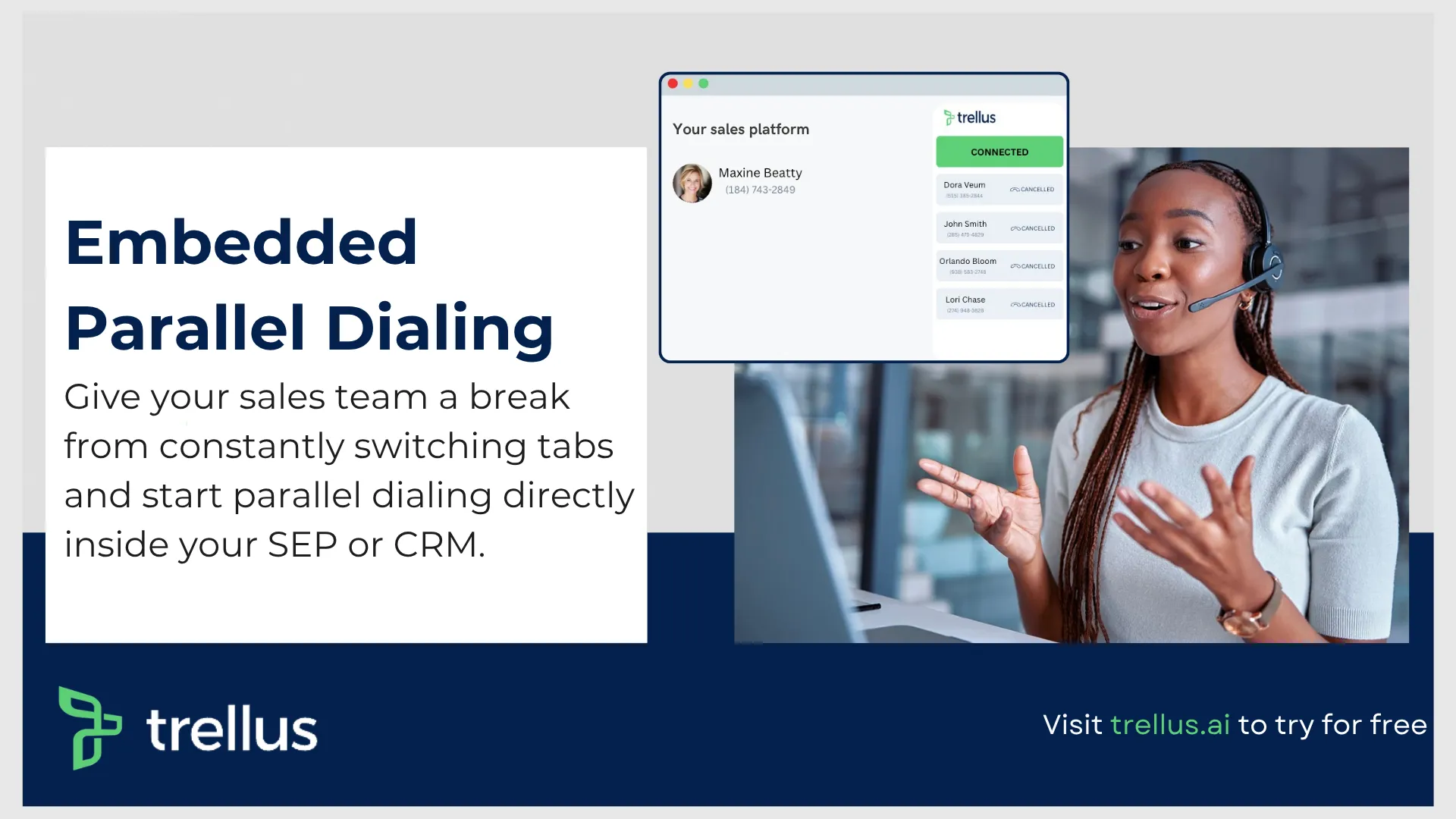
Most dialers ask reps to leave their workflow. Trellus takes the opposite approach: it's an AI powered sales acceleration platform whose dialer runs inside the tools reps already work in — Salesloft, Outreach, Apollo, HubSpot, and Salesforce through a simple and straightforward Chrome extension.
There's no separate app to babysit and no context switching tab.
Best for: SDR, BDR, and AE teams running high volume outbound who want parallel dialing, voicemail drop, automatic call logging, and real time AI coaching without leaving their existing sequence.
Remote and hybrid teams also use its Virtual Sales Floor to coach live and celebrate wins together.
Pros:
• Embedded in your SEP/CRM — zero context switching
• Parallel dialing (up to ~5 live lines) plus one click voicemail drop
• Real time AI coaching and battle cards during the call
• Automatically scores 100% of calls, not just samples
• Aggressive pricing for the category
Cons / honest caveats: Trellus is a calling and conversation execution layer, not a full CRM or a B2B contact database; you'll pair it with your data provider and SEP. And because parallel dialing multiplies attempts, it rewards good list hygiene and TCPA/DNC discipline.
Pricing Overview:
• Power — $99.99/mo: Comes with power dialing, voicemail drop, 5 phone numbers, LinkedIn tool. Best for individuals.
• Parallel — $149.99/mo: Everything in Power plus multi line parallel dialing, unlimited AI practice calls, 8 phone numbers. Best for individual high volume callers.
• Business — custom pricing: Everything in Parallel plus customizable AI research, team analytics, and custom reporting. Best for teams.
How to Kick Off a Campaign on Trellus
- Install the Trellus Chrome extension and sign in.
- Connect your SEP or CRM (Apollo, Salesloft, Outreach, HubSpot, or Salesforce).
- Load a call list or open an existing cadence step that has calls due.
- Choose your dialing mode (power or parallel), set the number of lines, and pick a pre recorded voicemail for automatic drop.
- Turn on real time AI coaching and select the talk track and battle cards for the campaign.
- Start the dialing session — Trellus auto logs calls, dispositions, and notes to your CRM.
- Review the AI call scores and Sales Floor analytics after the blitz to coach and iterate.
If you want to compare the field before committing, our roundups of auto dialers for sales reps and PowerDialer.ai alternatives walk through the leading options side by side.
How to Choose the Right Auto Dialer
When you evaluate an auto dialer system, weigh these criteria against how your team actually sells:
• Dialing mode fit. Warm AE lists favor power/preview dialing; high volume SDR prospecting favors parallel.
• Native integration. A dialer that lives inside your CRM/SEP beats a standalone app that forces copy paste and context switching.
• Compliance tooling. Built in DNC scrubbing, abandonment controls, and calling window logic are non negotiable.
• Coaching and analytics. Look for real time guidance and full call scoring, not sampled reviews — that's what compounds into better cold calling metrics over time.
• Total cost. Factor per seat pricing, phone number allocations, and whether AI features are included or bolted on.
Match the tool to your motion, not the other way around.
Frequently Asked Questions
What is an auto dialer in simple terms?
It's software that automatically dials phone numbers from a list so sales reps only spend time on live, connected conversations instead of manually dialing, waiting, and logging each attempt.
Is an auto dialer legal?
Yes, when used in compliance with TCPA rules enforced by the FCC, including abandonment rate limits for predictive dialers, Do Not Call scrubbing, and consent and calling window requirements. The regulations vary by dialer type, so verify current FCC guidance before launching.
What's the difference between an auto dialer and an AI dialer?
A traditional auto dialer automates call placement and logging. An AI dialer adds intelligence — live conversation coaching, automatic call scoring, voicemail detection, and smarter routing — on top of the dialing engine.
How much does an auto dialer cost?
Pricing ranges widely. Entry level and embedded tools like Trellus start around $34.99/month per seat (promotional), while enterprise contact center platforms can run hundreds of dollars per seat with annual contracts.
What type of auto dialer is best for outbound sales teams?
For high volume B2B outbound, a parallel dialer typically wins because it multiplies live connects without the abandonment risk of aggressive predictive dialing — especially when it's embedded in your existing sales workflow.
How do I set up an auto dialer for my team?
Start by connecting the dialer to your CRM or sales engagement platform so contact records and dispositions sync automatically.
Import a clean, DNC scrubbed call list, choose your dialing mode, and record the voicemails you want dropped on no answers. Enable call recording and coaching, run a short pilot with a few reps to tune pacing and talk tracks, then scale the cadence once your connect and conversion rates stabilize.
Summing It Up…
An auto dialer removes the mechanical friction from outbound calling — automating call placement, voicemail drop, and logging so reps do what they're paid to do: talk to buyers.
This year, the smartest teams are upgrading from standalone dialers to embedded, AI assisted systems that add live coaching and full call scoring without pulling reps out of their workflow.
Pair the right dialing mode with disciplined TCPA compliance, and you'll turn more dials into conversations and more conversations into pipeline. If you're ready to dial faster inside the tools you already use, Trellus is built for exactly that.


Power and parallel dialing in your CRM.