Our Top Picks


AI sequencing is the use of artificial intelligence to build, personalize, and continuously optimize multi channel sales outreach cadences, the ordered series of calls, emails, LinkedIn touches, and texts a rep uses to engage a prospect.
Instead of a static, one size fits all sequence that every contact marches through on the same timer, AI sequencing decides who to engage, what to say, which channel to use, and when to send the next touch, and it learns from every reply to get better.
In this detailed post, we define what AI sequencing is, break down how it works, and compare some of the best AI sequencing tools for 2026, including where Trellus AI fits.
Quick disambiguation before we go further: if you searched "sequencing AI" hoping for AI genome sequencing, AI DNA sequencing, or xLights AI sequencing, this is not that kind of post — the huge advances in AI in genome sequencing and AI in DNA sequencing are a different field entirely.
On the contrary, "sequencing" in this post, or anywhere mentioned at Trellus.ai, means sales sequencing: the cadence engine at the heart of modern outbound.
What Is AI Sequencing in Sales?
A traditional sales sequence (sometimes called a cadence) is a predefined playbook: Day 1 email, Day 2 call, Day 4 LinkedIn connection, Day 6 call, Day 9 breakup email.
Reps have run cadences like this inside sales engagement platforms for a decade. The problem is that classic sequences are rigid. Every prospect gets the same steps on the same schedule regardless of behavior, seniority, industry, or whether they just visited your pricing page.
AI sequencing rebuilds that engine around Intelligent Multi Channel Sales Outreach. It layers machine learning over the cadence so that four things stop being static and start being decisions:
• Signal Triggered Prospect Engagement — sequences launch (or change) based on real buying signals: a job change, funding news, a website visit, a competitor mention, or intent data — not just a rep manually adding a contact to a list.
• AI Personalized Message Generation — the system drafts message copy tailored to each prospect using their role, company context, and recent activity, rather than a single merge field template. • Adaptive Sales Cadence Orchestration — the order, channel, and timing of steps adjust per prospect. A senior buyer who opens on mobile at 7 a.m. gets a different rhythm than a manager who only replies to LinkedIn.
• Dynamic Engagement Learning & Optimization — the platform measures what books meetings and shifts future sequences toward the winning patterns.
Put simply, AI sequencing is the difference between a cadence that runs and a cadence that thinks. If you want the broader category context, our primer on the sales engagement platform explains how sequencing sits inside the wider engagement stack.
Why AI Sequencing Matters in 2026
Buyers are harder to reach than ever, and rep time is the scarcest resource in the funnel. According to Salesforce's State of Sales report, reps spend a large share of their week on non selling tasks — research, data entry, and manually assembling outreach — leaving only a fraction of the day for live conversations. AI sequencing attacks exactly that overhead by automating the research to message step and letting the system, not the rep, manage cadence hygiene.
The shift is also structural. Gartner's research on sales engagement and sales technology points to buyers completing much of their journey independently and expecting relevance the moment a seller shows up. A generic Day 1 email no longer clears the bar. AI sequencing raises relevance at scale by grounding every touch in a signal and personalizing the message automatically — the same principle behind the rise of AI in sales development more broadly.
There's a productivity math to it, too. If a sequence can prioritize the 20% of accounts showing intent, personalize the first touch without a rep writing it, and auto adjust send times, an SDR can cover more accounts with higher reply rates. That's why AI sequencing has become a core capability inside the best outbound sales automation tools rather than a nice to have.
How AI Sequencing Works: The Four Building Blocks
Under the hood, most AI sequencing systems combine four layers:
1. Signal ingestion. The platform pulls intent data, CRM activity, product usage, technographics, and web/LinkedIn behavior to decide who is worth engaging now.
2. Prioritization and enrollment. A scoring model ranks prospects and enrolls the highest fit, highest intent contacts into the right sequence automatically.
3. Message generation. Generative AI drafts channel appropriate copy — a punchy email, a call opener, a LinkedIn note — reflecting the prospect's role and trigger.
4. Optimization loop. As replies, opens, and meetings come in, the model reweights timing, channel mix, and messaging so the next cohort performs better. This Dynamic Engagement Learning & Optimization is what separates true AI sequencing from simple automation.
Two caveats keep teams honest. First, AI sequencing amplifies your list quality — feed it a bad list and it just sends bad outreach faster, so pair it with clean data and solid sales sequencing best practices. Second, the call step still matters. A perfectly timed email means little if reps can't convert the live conversation, which is why the strongest programs pair AI sequencing with real dialing execution and cold calling success fundamentals.
The Top 5 AI Sequencing Tools Compared (2026)
We evaluated tools on four criteria: signal triggered enrollment, quality of AI generated messaging, adaptive orchestration across channels, and how well each executes the phone portion of the sequence. Here are the top five.
1. Outreach
Outreach is the enterprise heavyweight of sequencing and one of the platforms that popularized the cadence model. It's a full sales execution platform combining sequencing, deal management, forecasting, and conversation intelligence.
• Best for: Mid market and enterprise revenue teams that want sequencing tied to pipeline and forecasting in one governed system.
• Standout features: Sophisticated multi step, multi channel sequences with A/B testing; AI features (Smart Assist, Kaia, and its AI agents) that recommend next steps and generate content; deep analytics and admin controls for large teams.
• Limitation: It's powerful but heavy — implementation, administration, and cost skew toward larger orgs, and smaller teams often use only a fraction of the platform. The calling layer is capable but not its differentiator.
Outreach remains the benchmark for Adaptive Sales Cadence Orchestration at enterprise scale, especially when sequencing needs to roll up cleanly into forecasting.
2. Salesloft
Salesloft is Outreach's closest peer and the other name that defined sales sequencing. Its "Rhythm" engine converts buyer signals into a prioritized, AI driven action list for reps — a strong expression of signal triggered engagement.
• Best for: Sales teams that want a guided, signal to action daily workflow rather than reps deciding what to do next.
• Standout features: Rhythm turns signals into an ordered set of next best actions; strong cadence analytics and coaching; a mature integration ecosystem across major CRMs.
• Limitation: Like Outreach, it's a premium, seat priced platform best justified by larger teams; onboarding and adoption require real enablement investment.
For teams that want AI to sequence the rep's day, not just the prospect's touches, Salesloft is a leading choice and a common backbone for sales prospecting platforms built around a structured cadence.
3. Trellus AI
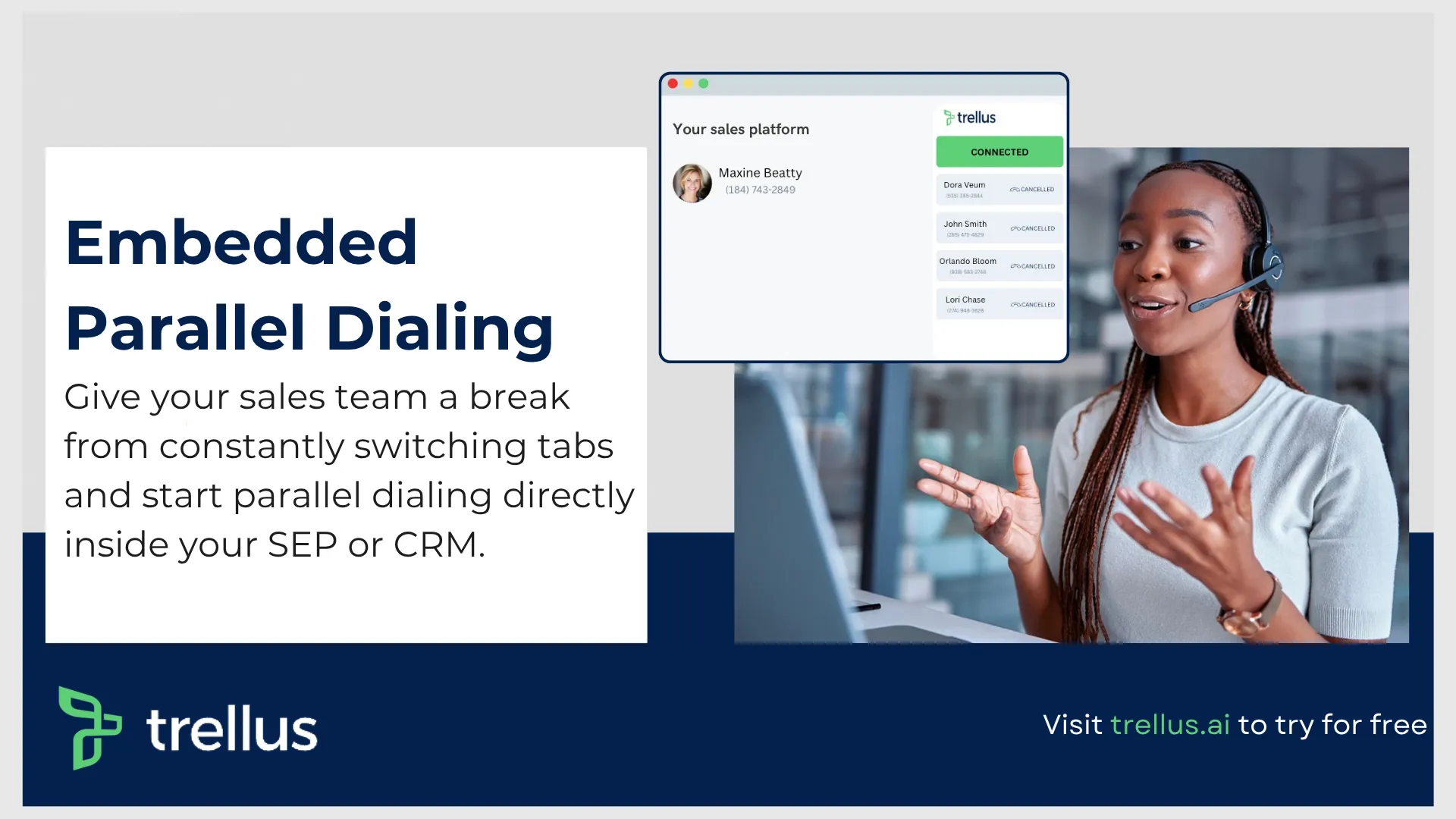
Most AI sequencing tools obsess over email and forget the phone — yet the call is usually where the meeting is won. Trellus AI takes the opposite angle: it's an AI powered sales acceleration and coaching layer that supercharges the calling step of any sequence, working inside the tools you already use via a Chrome extension. Rather than replacing Outreach, Salesloft, Apollo, HubSpot, or Salesforce, Trellus runs on top of them, so reps never context switch out of their sequence to dial.
• Best for: SDR/BDR and AE teams running high volume outbound who want their sequence's call steps to convert — and remote or hybrid teams that need live coaching and visibility. • Standout features:
• Embedded parallel dialer that dials up to ~5 lines simultaneously to multiply live connects, with automated voicemail drop and call logging back to your SEP/CRM.
• Real time AI coaching during calls — objection handling, competitor battle cards, and customizable talk tracks on screen as the conversation happens.
• AI voice agents that qualify inbound, set appointments, and act as 24/7 practice partners, plus 100% call scoring (every call, not a sample) and a Virtual Sales Floor for live team coaching.
• Limitation: Trellus is a calling and conversation execution layer, not a full CRM or a B2B contact database, and it isn't an email first sequencer; you'll pair it with your data provider and your sequencing SEP. It's also a younger brand than the incumbents above.
How to kick off a campaign on Trellus:
- Install the Trellus Chrome extension and sign in.
- Connect your SEP/CRM (Apollo, Salesloft, Outreach, HubSpot, or Salesforce).
- Load a call list or open an existing cadence/sequence step that has calls due.
- Choose your dialing mode (power or parallel), set the number of lines, and pick a pre recorded voicemail for automatic drop.
- Turn on real-time AI coaching and select the talk track and battle cards for the campaign.
- Start the dialing session; Trellus auto logs calls, dispositions, and notes to your CRM.
- Review the AI call scores and Sales Floor analytics after the blitz to coach and iterate.
The realistic positioning: Trellus won't build your email sequences, but it makes the phone step of AI sequencing dramatically more productive, which is why it lands at #3 and pairs naturally with the email first tools on this list.
4. Amplemarket
Amplemarket is an all in one AI sales platform that blends B2B data, intent signals, and multi channel sequencing into one workflow, leaning heavily into automation and AI Personalized Message Generation.
• Best for: Outbound teams that want data, buying signals, and sequencing in a single tool instead of stitching several point solutions together.
• Standout features: Built in contact and company data with buying intent and "signals" (job changes, hiring, etc.) that trigger outreach; AI copywriting and a "duo" AI SDR direction; native multichannel sequences across email and LinkedIn.
• Limitation: As a bundled suite, depth in any single area can trail best of breed specialists, and teams already committed to a separate data provider may pay for overlap.
Amplemarket is a strong fit for lean teams that want signal triggered sequencing and data in one place — a genuine expression of end to end AI sales agents applied to outbound.
5. Regie.ai
Regie.ai focuses on the content and autonomy side of sequencing: AI generated messaging and "auto pilot" AI agents that build and personalize outreach at scale, keeping copy on brand across a sequence.
• Best for: Teams that struggle with messaging volume and consistency, or want AI agents to draft and run sequences with human oversight.
• Standout features: Generative content trained on your brand voice; AI agents that research prospects and assemble personalized multi touch sequences; a nurture engine that keeps colder leads warm automatically.
• Limitation: As a content and agent layer, it's typically paired with your data and dialing stack rather than replacing them, and AI generated copy still needs human review to avoid sameness.
Regie.ai shines when the bottleneck is writing relevant touches fast enough to feed an ambitious sequencing program.
How to Choose the Right AI Sequencing Tool
Start with your bottleneck. If reps can't decide who to engage or what to write, prioritize signal driven, content-strong platforms like Salesloft, Amplemarket, or Regie.ai.
If your sequences already launch fine but call connect rates and live conversations are the weak link, add a dialing and coaching layer like Trellus. If you're an enterprise that needs sequencing tied to forecasting and governance, Outreach is the safe backbone.
Three practical checks before you buy:
• Signal quality: Does it enroll prospects on real intent, or just on a rep dumping a list? Genuine Signal Triggered Prospect Engagement is the difference maker.
• Personalization depth: Is the AI copy contextual, or dressed up merge fields?
• Execution across channels — including the phone: Great email sequencing with poor calling leaves meetings on the table.
Frequently Asked Questions
What is AI sequencing in simple terms?
AI sequencing is using artificial intelligence to decide who to reach out to, what to say, which channel to use, and when — across a multi touch sales cadence — and to keep improving those decisions based on what gets replies and meetings. It's the smart, self-optimizing evolution of the traditional sales sequence.
Is AI sequencing the same as sales automation?
No. Basic automation just fires the same steps on a timer. AI sequencing adds intelligence: signal based enrollment, AI written personalization, and an optimization loop that learns. Automation executes; AI sequencing decides and executes, then adapts.
Does "AI sequencing" mean DNA or genome sequencing?
Not here. In life sciences, terms like AI DNA sequencing and AI in genome sequencing describe using machine learning to read and interpret genetic code. In sales and marketing, AI sequencing refers to orchestrating multi channel outreach cadences — the meaning used throughout this article.
Can AI sequencing tools handle phone calls, not just email?
Some do far better than others. Email first platforms schedule call tasks but don't improve the call itself. Tools like Trellus AI focus on the calling step — parallel dialing, voicemail drop, and real time coaching, so the phone touches in your sequence connect and convert.
Do I need to replace my current SEP to adopt AI sequencing?
Often not. Platforms like Outreach and Salesloft add AI on top of sequencing you already run, and layers like Trellus install via a Chrome extension inside your existing SEP or CRM — so you can upgrade the intelligence and execution of your cadences without ripping out your stack.
Conclusion
AI sequencing has moved from buzzword to baseline. In 2026, competitive outbound teams no longer run static cadences: they run signal triggered, AI personalized, self optimizing sequences that put the right message in front of the right buyer at the right moment.
Outreach and Salesloft lead on enterprise orchestration, Amplemarket bundles data and signals, and Regie.ai scales the content. But orchestration only pays off when the conversations happen, and that's where Trellus AI turns the call steps of your typical sales and outreach sequence into booked meetings, inside the tools you already use.
.jpeg)

Power and parallel dialing in your CRM.