Our Top Picks


If every question reaches a rep during their calling block, the calendar reservation isn't protecting much. Asking the rep to mute everything isn't a complete answer either. A teammate may need to warn them that a buyer has replied, a promised callback has moved or the next contact should no longer be called.
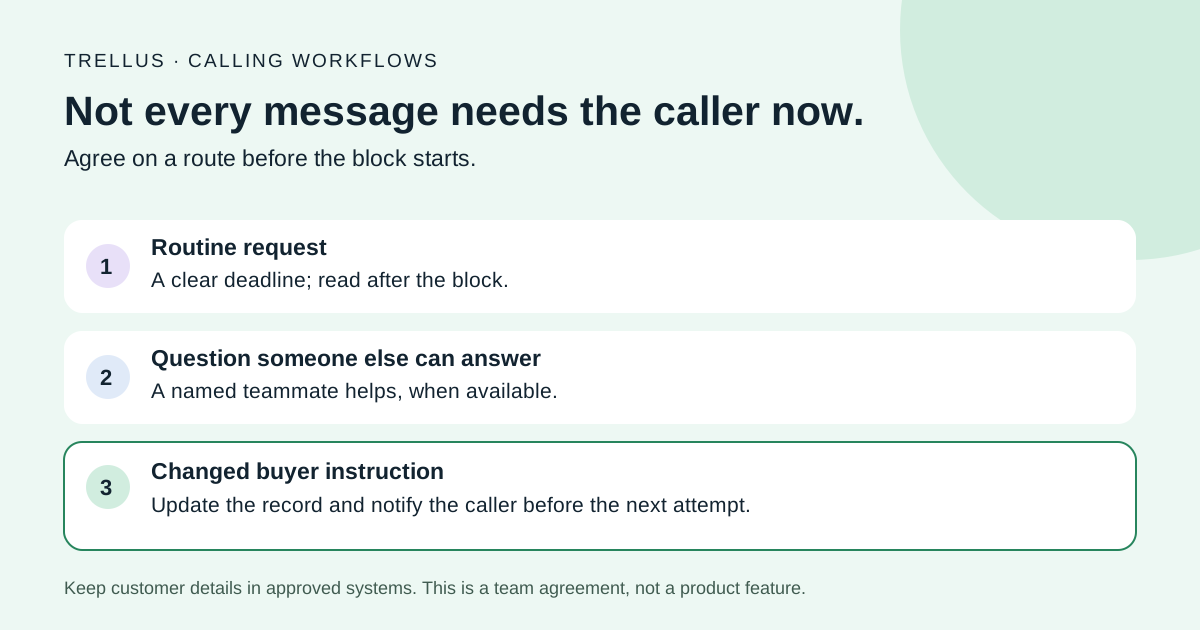
Protect the block by agreeing which messages can wait, which should reach the caller now and who handles the rest. Keep urgent changes visible without making every internal conversation an interruption. This is a team working agreement, not a recommendation to disable contact restrictions, support alerts or your company's required notifications.
Decide what deserves to interrupt a call block
Start with the messages that actually arrived during a recent session. “Too much Slack” is hard to change. A manager asking for a forecast update, a teammate asking where a deck lives and a buyer changing their callback window are three different requests.
Use the next action to separate them. Would waiting until the block ends risk the buyer's instruction, create a duplicate call or leave a problem that needs immediate attention? If so, the information needs a timely route. If not, give it a place where the rep can find it afterward.
For example, “Please call after three instead” belongs with the current callback before another attempt. “Can you review my prospecting message?” can usually wait for the team's agreed review time. A routine report request can have an explicit deadline rather than arrive as an unexplained “quick question.” A deadline that genuinely falls inside the block needs a conversation about priorities, not silent competition between two assignments.
The distinction is about timing, not seniority. A routine question from a director doesn't automatically need to interrupt. A new buyer instruction passed along by a teammate may need attention even if the message looks informal.
Give the team somewhere else to put the question
“Don't interrupt me” leaves the sender responsible for guessing what happens next. A workable agreement says when the rep will read ordinary requests and who can help in the meantime.
Before the block, tell the people who depend on you what you're working on and when you'll check back. Keep it specific: “I'm on the renewal callback list until 11. I'll read ordinary questions afterward. Put changes to today's buyer instructions on the record and use our urgent channel if I need to see them before the next attempt.” Adapt the channel to what your team actually uses; don't create a new public place for private prospect details.
Managers have a part in this. Batch routine coaching questions, list updates and administrative requests before or after the session. If a teammate needs a decision before they can continue their own work, assign someone available to answer it. Protecting one person's focus by stopping everyone else's work isn't much of a team improvement.
For a small team, there may be no spare person. Then shorten the protected interval or agree a check-in between groups of calls. The useful choice is an arrangement people can keep, not an impressive calendar block that everyone has to break.
Keep urgent information attached to the work
An urgent message should explain what changed, which record it affects and what the caller should do next. “Stop a sec” makes the rep leave the work to discover the reason. “Buyer replied asking for Friday; update the callback before another attempt” gives them something they can act on.
Use the approved customer record for the actual instruction and a permitted internal link when notifying the rep. Don't scatter phone numbers, personal details or copied call notes across chat channels. The chat message can point to the change without becoming a second customer database.
Check how the caller will notice the change in their normal workflow. Saving an update on a record doesn't establish that a calling list already open on screen has refreshed. Use the tool's supported refresh or pause process when needed. Don't assume that notifying one person also removes work from everyone else's queue. The shared-list coordination guide covers that separate responsibility.
If the rep is already speaking to someone, an internal notification doesn't justify abandoning that conversation mid-sentence. Establish how the change will be reviewed at the next safe point. A genuine safety or security incident should follow the company's incident process rather than this ordinary working agreement.
A fictional morning with four messages
Imagine Alex reserves 10–11 a.m. for callbacks. Jo is available for routine team questions. This is an invented example, not a report of a Trellus customer's results.
At 10:10, the manager asks for next month's forecast. The request includes a noon deadline. It goes into Alex's ordinary follow-up list; Alex doesn't need to stop the calling session to acknowledge a task already assigned with a clear deadline.
At 10:18, a buyer replies that the person responsible for the project has changed. Jo adds the instruction to the approved record and alerts Alex through the agreed urgent route. Before the next attempt on that account, Alex reads the change and checks who should now be contacted. Keeping the block moving isn't a reason to call the old person anyway.
At 10:32, a teammate needs the current presentation. Jo points them to the approved location. That question gets answered without reaching Alex. If Jo couldn't find it, it would become an ordinary request unless an actual buyer commitment made it time-sensitive.
At 10:45, a scheduled callback comes due. That isn't an interruption to remove from the day; it's part of the calling work Alex planned to honor. The callback note provides the buyer's window, topic and next owner. A session full of fresh prospecting shouldn't quietly push that promise aside.
At 11, Alex reads the ordinary requests. The manager gets the forecast before noon. Nobody needs a claim about a percentage productivity gain to judge the arrangement: the team can check whether the requests were handled and whether the buyer's changed instruction reached the caller in time.
Resume from the record, not from memory
Even a necessary interruption can leave the rep unsure where they stopped. Before leaving the calling work, finish the note or save a clear next action through the normal workflow when it's safe to do so. Don't rely on an unfinished message or a browser tab as the only reminder.
On returning, check the last attempted contact, the saved outcome and any follow-up before starting another call. If the save was uncertain, inspect the existing activity first. Repeating an action just because the rep lost their place can create a second task or duplicate attempt.
That resume check should be short. If finding the last completed action takes several screens or requires another teammate to explain it, treat that as a workflow problem. The stalled call-block guide helps separate missing context, unfinished after-call work and a failed save. This article addresses the internal requests that break the session, not every reason calling might stop.
Write a small agreement before the next block
Protected calling interval and intended work: ____
Routine requests will be read at: ____
Person available for ordinary team questions, if any: ____
Changes that need attention before the next attempt: ____
Approved place for the buyer's instruction: ____
How the caller is notified without copying private details: ____
Safe point for reviewing an urgent change: ____
How the rep checks the last completed action when returning: ____
Try the agreement for a few comparable sessions, then ask what still broke. Were routine questions answered too late? Did an important buyer change get missed? Did the backup person become overloaded? Did the rep spend longer reconstructing their place than dealing with the original request?
Change the arrangement around those problems. Don't judge it only by a higher dial count: the rep may have spent longer in useful conversations, and a quieter channel doesn't prove that callbacks were honored. Keep the agreed work and its results beside the activity total.
If you're also reviewing calling software, bring this scenario to the dialer demonstration: show how a rep pauses, sees a changed instruction and resumes without repeating completed work. Ask for the exact supported CRM workflow rather than assuming every integration behaves the same way. Better calling tools can be worth evaluating, but the team still has to agree which requests need the caller now and which can wait.

Power and parallel dialing in your CRM.