When a Buyer Asks for a Customer Reference
A practical reference brief for matching experience to a buyer's question, explaining differences, and agreeing the introduction.
On this page
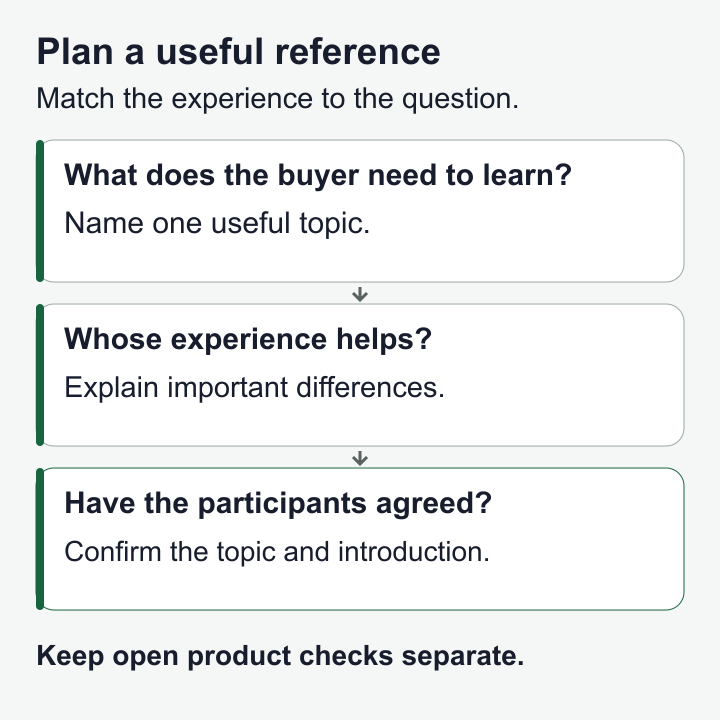
Before offering a customer introduction, ask what the buyer wants to learn. Then look for someone whose day-to-day work can answer that question. A useful reference conversation needs a relevant question and participants who have agreed to the introduction.
The request might be about the effort of getting started, what everyday use feels like, or how a team handled a particular difficulty. It might also concern a feature you can demonstrate yourself. Those deserve different responses. Clarifying the question helps you avoid arranging a pleasant conversation that leaves the buying decision exactly where it was.
Ask what the buyer needs to understand
“Can you share a reference?” is a reasonable request, but it isn't much of a brief. Ask what they would like to discuss and who on their team would take part. Keep this conversational; the buyer shouldn't have to complete a qualification exercise to ask for evidence.
For example: “What would you most like to hear about from someone using it?” If they say implementation, find out which part concerns them. Moving records, training callers and assigning someone to maintain the setup are different kinds of work.
That detail changes who might be helpful. A manager who chose a product may be able to explain the evaluation but know little about the administrator's first week. A rep might describe the calling routine well without knowing why the company approved the purchase. Match the person to the question, not just the company to the buyer's industry.
If the buyer isn't sure yet, offer a short choice of relevant subjects rather than a catalogue of customers. They may want a general sense of the experience before choosing a narrower question. Say that plainly in the brief instead of inventing a precise concern on their behalf.
Answer the part that doesn't need a reference
A reference is not a substitute for a product answer you owe the buyer. Suppose the question is whether an action updates a particular CRM field. Another customer's positive experience doesn't establish what happens on the buyer's record, with their permissions and configuration.
Clarify that requirement and check it in the intended setup. If you don't know the answer, use a specific product-question handoff rather than passing the uncertainty to a customer. For a calling workflow, the platform-specific integration guides can help identify the relevant starting point; a platform name alone doesn't settle every detail.
You can still offer a reference for the surrounding experience. “I need to confirm that field behavior. Separately, would it help to hear how another administrator organized the rollout?” keeps the unanswered requirement visible. It doesn't quietly replace it with a more comfortable conversation.
The same applies to a previous unsuccessful trial. Ask what failed and what would need to change before another evaluation. A reference may help the buyer understand someone else's approach. It cannot make an unmet requirement disappear.
A useful match doesn't have to be an identical company
Industry, team size and platform are sensible things to consider. They aren't equally important for every question. If the buyer is worried about who maintains the setup, a customer with a similar division of responsibilities may be more useful than a larger company with the same industry label.
Consider this fictional example. A manager wants to know whether a small team can get started without assigning a full-time administrator. One available reference works in the same industry but has a dedicated operations department. Another works in a different industry and shares administration between a sales lead and an operations colleague.
The second person may have more relevant experience of the workload. Explain the difference before offering the introduction: “Their industry is different, but their administration setup is closer to yours.” Let the buyer decide whether that is useful. Don't describe the account as a perfect match because you want the conversation to happen.
Sometimes no available reference fits the important question. Say so. An approved written example, a focused demonstration or an unanswered item assigned to the right colleague may be more useful than an introduction with an impressive company name.
Ask before sharing someone's details
Check your team's established reference process and ask the proposed participant whether they want to take part in this particular conversation. Having spoken with a buyer before doesn't mean they are available for every future request.
Give them enough context to make a real choice: the topic, the proposed audience, the expected amount of time and any important differences between the two setups. They should be able to decline, suggest a colleague through their own process, or explain which subjects they can discuss.
Keep contact details and private account information out of the buyer-facing handoff until the relevant people have agreed to share them. Don't forward a private email, support exchange or recording as convenient sales proof. A public case study also isn't an invitation to contact its named participant directly.
Availability can change. If the person declines, accept the answer without asking the buyer to persuade them. Offer another suitable source if one exists, or explain the gap. Promising an introduction before you have agreement creates work and expectations for someone who hasn't chosen to participate.
Use a short reference brief
The brief should help the buyer and the reference understand the conversation, not tell either person what to say. Keep a working version in your team's agreed account location. Share only the parts appropriate for the introduction.
- Buyer's question
- What do they want to learn from another user's experience? Preserve their wording where it helps.
- Relevant setup
- Which role, platform, work pattern or responsibility makes the proposed participant useful?
- Important differences
- What should the buyer know before treating the experience as comparable?
- People and agreement
- Who would attend, and has each participant agreed to the introduction and the details being shared?
- Conversation scope
- What subject and approximate duration have the participants accepted? Leave room for their own questions.
- Separate open work
- Which product answers or other checks remain yours to complete, regardless of the reference conversation?
For the fictional small-team example, the question might be: “What recurring work did your sales lead take on after setup?” The relevant match is shared administration. The difference is industry. The open work is the seller's confirmation of one required field update. None of that requires a claim about how much time the buyer will save.
Make the introduction, then give people room
Once the participants agree, introduce the topic and the reason for the match. Mention the important difference rather than burying it. Avoid a long sales recap that turns the customer into a supporting character in your pitch.
Agree whether you will attend. Don't assume the buyer wants you present, or that the reference wants to run the conversation alone. If you join, let the reference finish their answers, including any limits or difficulties they describe.
Practical preparation is fine. Share the agreed subject and help the reference find the relevant dates or materials they are comfortable using. Coaching them toward a preferred answer is not. An honest account may include difficulties, workarounds or reasons another team would make a different choice.
Don't add attendees, record the conversation or turn it into a broader testimonial request without discussing that change with the people involved. Keep this introduction within the purpose they accepted.
Follow up on what the buyer learned, not whether they liked the customer
Afterward, ask which question the conversation answered and what remains unclear. A friendly discussion is not the same as confirming the requirement. Nor does accepting an introduction mean the buyer has agreed to another trial, a proposal or a meeting with your manager.
Suppose the fictional buyer learns that shared administration is manageable for the reference, but only because a colleague checks the setup every Friday. That is useful detail. The next question is whether the buyer has someone who can take on comparable work, not whether you can repeat “the customer said it was easy.”
Record the buyer's interpretation separately from anything the reference has approved for wider use. Finish the product check that was still assigned to you. If the buyer concludes the approach doesn't fit, accept that conclusion rather than arranging more references until someone gives the answer you wanted.
In the small-team example, the reference didn't settle the purchase. They made a recurring job visible. The seller still needs to confirm the field update, and the buyer still needs to decide who would own the weekly check.