When a Buyer Says Budget Approval Has Moved
A practical approval note and example questions for deciding what to do when a buyer moves the funding or approval window.
On this page
A buyer says the budget decision has moved to next quarter. Before arranging another demo or sending a discount, find out what moved: the approval meeting, the availability of funds, or the buyer's willingness to continue. Those situations call for different next steps.
You don't need to challenge the explanation. You do need enough shared context to decide whether useful work remains. A date in a follow-up task isn't approval, and another meeting won't create spending authority that the buyer doesn't have.
The examples below are hypothetical. Use them to plan a sensible conversation, not as scripts that assume you know why someone delayed a purchase.
Ask what the new date actually means
“Next quarter” might mean a finance meeting on a known date. It might mean that spending is frozen until someone changes a policy. It might mean the project has lost its sponsor. Ask one question that lets the buyer explain the difference:
“Is there an approval step scheduled for next quarter, or is that the earliest point you expect to reconsider the project?”
If there's a scheduled step, ask what decision it can make. An annual planning meeting may allocate a department budget without approving this particular purchase. A manager may approve the business need while a separate person controls the funds. You want to understand the buyer's process, rather than turn a calendar date into a stronger commitment.
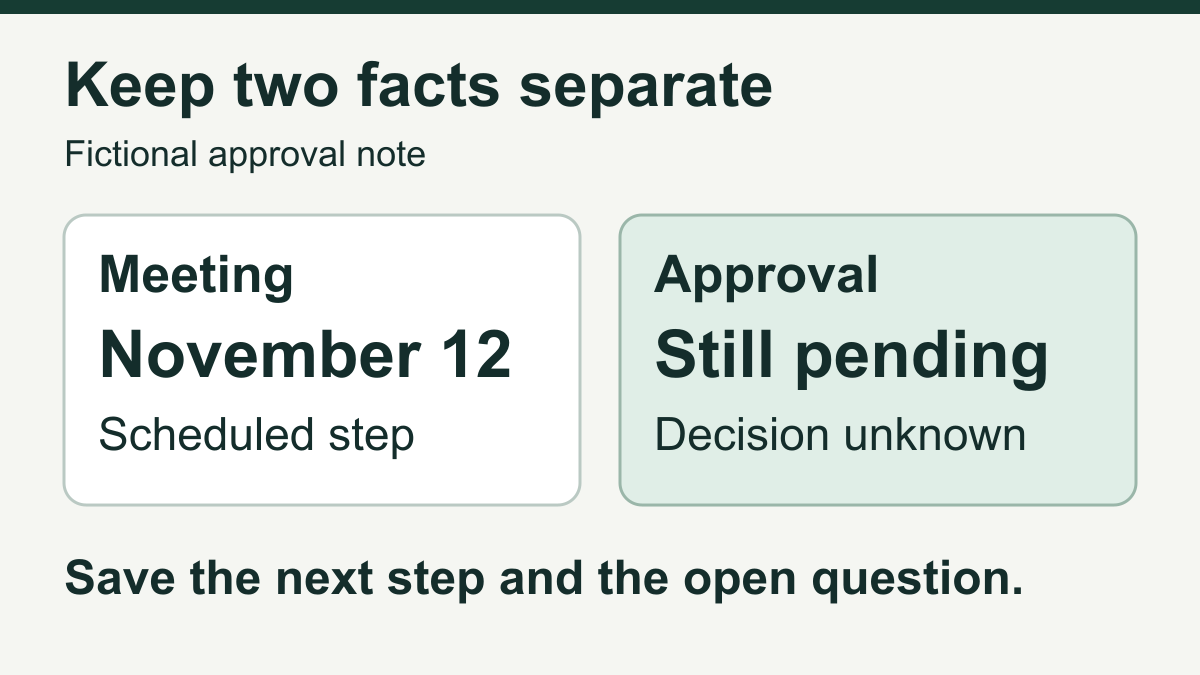
Don't ask for private budgets, internal documents or names the buyer doesn't want to share. A useful answer can be simple: “Our operations lead presents the request on November 12. We should know afterward whether it can proceed.” Record that statement with its uncertainty intact.
If two people give different explanations, use the buyer-note reconciliation approach before planning the next step. “Finance hasn't decided” and “funding is available” shouldn't become interchangeable in the handoff.
Separate unfinished evaluation work from waiting
Some work can help an upcoming approval decision. Other work merely keeps the opportunity looking active. Ask what the buyer still needs to decide, then connect any proposed activity to that need.
Suppose an operations manager wants to replace a calling tool. The request will be reviewed next month, and their team hasn't checked how a rep would find a callback's owner, due time and previous notes after switching. A small review of that workflow could resolve a question the manager genuinely needs to answer. Agree on the specific question, the people who need the answer and what they'll do with it.
Now change the situation. The team already understands the workflow, and all new software spending is paused. Another full demonstration doesn't remove the spending restriction. Keep the existing evaluation notes and ask whether the buyer wants a short follow-up after the restriction is reviewed. They may prefer no further contact until they have news.
A practical test is: if this activity goes well, what becomes clearer for the buyer? If the answer is only “we'll have spoken again,” the meeting may not be needed.
Use a small plan the buyer can correct
A delayed approval doesn't need a long mutual plan with invented milestones. Write down only the steps the buyer has actually described and the work both sides have agreed to do.
| Question | What the buyer has said | What remains open |
|---|---|---|
| What decision is pending? | The operations lead will present a request for replacement calling software. | Whether the request will be approved. |
| When is the next relevant step? | A planning meeting is scheduled for November 12. | When the buyer will receive a final answer. |
| What evaluation work is useful beforehand? | The team wants to review one callback handoff. | Who needs to attend that review. |
| What contact has been agreed? | A short email after the planning meeting. | Whether a further meeting will be useful. |
The open column matters. It prevents an approval presentation from becoming “approved pending signature” as the note travels between people. Add a source and the date of the conversation to your internal record, and follow your team's own opportunity-stage and forecast rules.
Send a brief summary if the buyer wants one: “My understanding is that the request goes to planning on November 12. Before then, we'll review the callback handoff with the person you nominate. I'll email afterward to see whether there's a decision or a different next step.”
Give them an easy way to correct it. If they say the meeting isn't confirmed, update the note rather than preserving the more convenient version.
Don't treat a discount as an answer to every delay
A lower price can be relevant when the buyer says the amount is the unresolved issue. It doesn't answer a missing approval, an absent project owner or a restriction on new spending. Understand which problem you are discussing before proposing commercial changes.
Ask: “Is the concern the amount of the request, or whether a new purchase can be approved at all?” The buyer may not know yet. In that case, leave the question open instead of negotiating against a guess.
Keep any real offer within your own authority and normal approval process. Don't invent an expiring promotion, claim that an unapproved concession is available, or imply that the buyer can avoid their internal controls by acting quickly. If an existing offer has a real end date, explain it accurately and let the buyer decide whether that timing works.
The same restraint applies to free work. An extra workshop or extended evaluation is useful only if it answers an agreed question and the relevant people can participate. Repeating a trial without addressing what made an earlier one unhelpful creates more activity without a clearer decision. The guide to revisiting an unsuccessful trial covers that separate conversation.
If the explanation stays vague, make room for a pause
You may hear “probably next quarter” without an approval step, a project owner or a question the buyer wants to resolve. That doesn't establish why the project stopped. It also doesn't give you a basis for a recurring sequence of check-ins.
Try a proportionate question: “Would it be useful for me to contact you after your next planning cycle, or would you rather reach out if the project becomes active again?” Respect the answer. If the buyer requests no contact, record and follow that preference through the normal process.
When a buyer doesn't reply, follow your team's existing contact and opportunity-management policies. Don't claim to have an agreed callback because you proposed one. Mark the date as your intended follow-up, or the next action as unconfirmed, according to the fields your team uses.
You can close your own loop without making a claim about their motive. “No confirmed approval step or further evaluation work” is a more useful internal note than “buyer isn't serious.” It tells the next person what is known and what would have to change.
When the approval window arrives, check what changed
Start with the decision that was pending. “Did planning produce an answer on the request?” is more relevant than restarting your original pitch. There are several reasonable outcomes.
- The request can proceed. Confirm what was approved and which evaluation or purchasing steps remain. Approval of a budget doesn't necessarily finish the purchase.
- The decision moved again. Ask whether there's a new process step or genuinely useful work to do. Update the plan with the buyer; don't carry forward an expired agreement automatically.
- The project changed. Revisit the problem, participants and required workflow. If someone new has joined, use the new-stakeholder introduction rather than expecting them to accept the old discussion.
- The request won't proceed. Confirm whether anything needs to be wrapped up, then respect the decision. Don't turn a clear answer into another speculative next-quarter task.
Keep the previous explanation beside the new one so another seller can understand the change. Preserve only the details your team needs; a follow-up note shouldn't become a store of private financial information.
The useful result is a shared understanding of what happens next. Sometimes that's a focused review before an approval meeting. Sometimes it's a short email after a decision. Sometimes it's an agreed pause. Choose the action the buyer's situation supports, and make that action clear enough that both sides can correct it.