Our Top Picks


Finding the right prospects and reaching them before your competitors do is still the hardest part of outbound.
The good news is that the best sales prospecting tools in 2026 do far more than dump a list of emails into your CRM. They combine lead generation and discovery automation, verified B2B contact database intelligence, buyer intent signals, and conversational prospecting into a stack that books meetings.
This detailed post reviews the best platforms we'd genuinely put in front of an SDR, AE, or RevOps leader today, with an honest breakdown of what each one is best for and where it falls short.
Here's the short answer up front: Apollo.io is the best all in one starting point, ZoomInfo and Cognism win on data depth and compliance, Clay leads for programmatic enrichment, and Trellus AI is the layer that turns all that data into live conversations.
The right pick depends on whether your bottleneck is finding prospects, verifying them, or getting them on the phone. Below, we rank all ten and show you how to choose.
How We Chose the Best Sales Prospecting Tools?
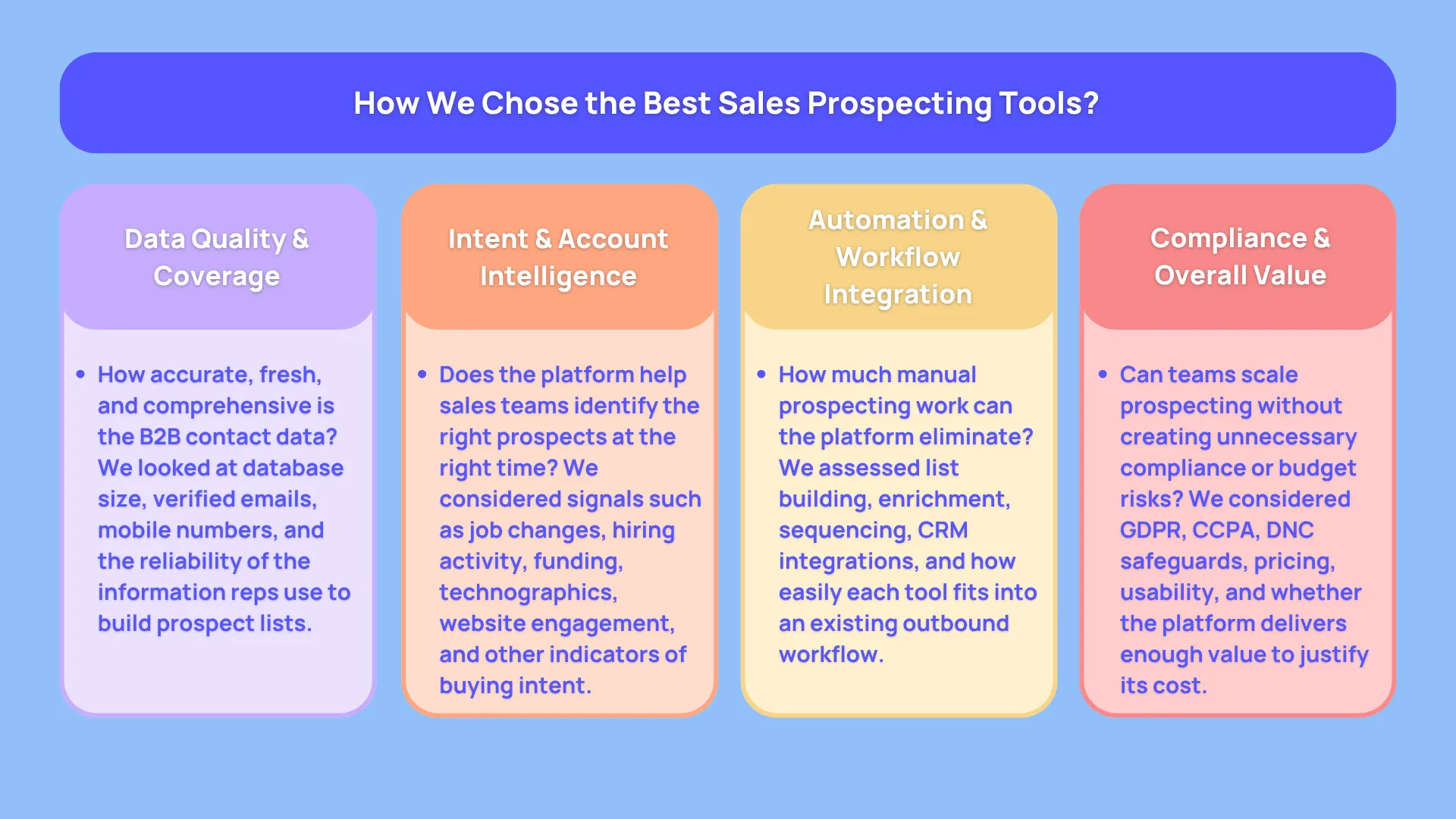
Not every tool fits every team, so we scored each platform against the criteria that matter most for modern outbound:
• Data coverage and accuracy — the size and freshness of the B2B contact database, and how much of it is verified email and mobile.
• Buyer intent and account intelligence — whether the tool surfaces signals (job changes, hiring, funding, technographics) that tell you who to contact now.
• Workflow fit — how cleanly it plugs into your CRM, sales engagement platform, and daily prospecting motion.
• Automation depth — the strength of its lead generation and discovery automation, from list building to enrichment to sequencing.
• Compliance — GDPR, CCPA, and DNC hygiene, which increasingly separates safe scale from legal risk. • Value for money — because a $12,000 seat is only worth it if reps use every feature.
A prospecting stack is rarely one tool. Most high performing teams pair a data provider with an engagement or execution layer, so we've flagged where each platform sits in that chain. For a deeper channel by channel playbook, our guide to outbound prospecting tactics pairs well with the tools below.
The 10 Best Sales Prospecting Tools in 2026
1. Apollo.io — Best All in One Prospecting Platform
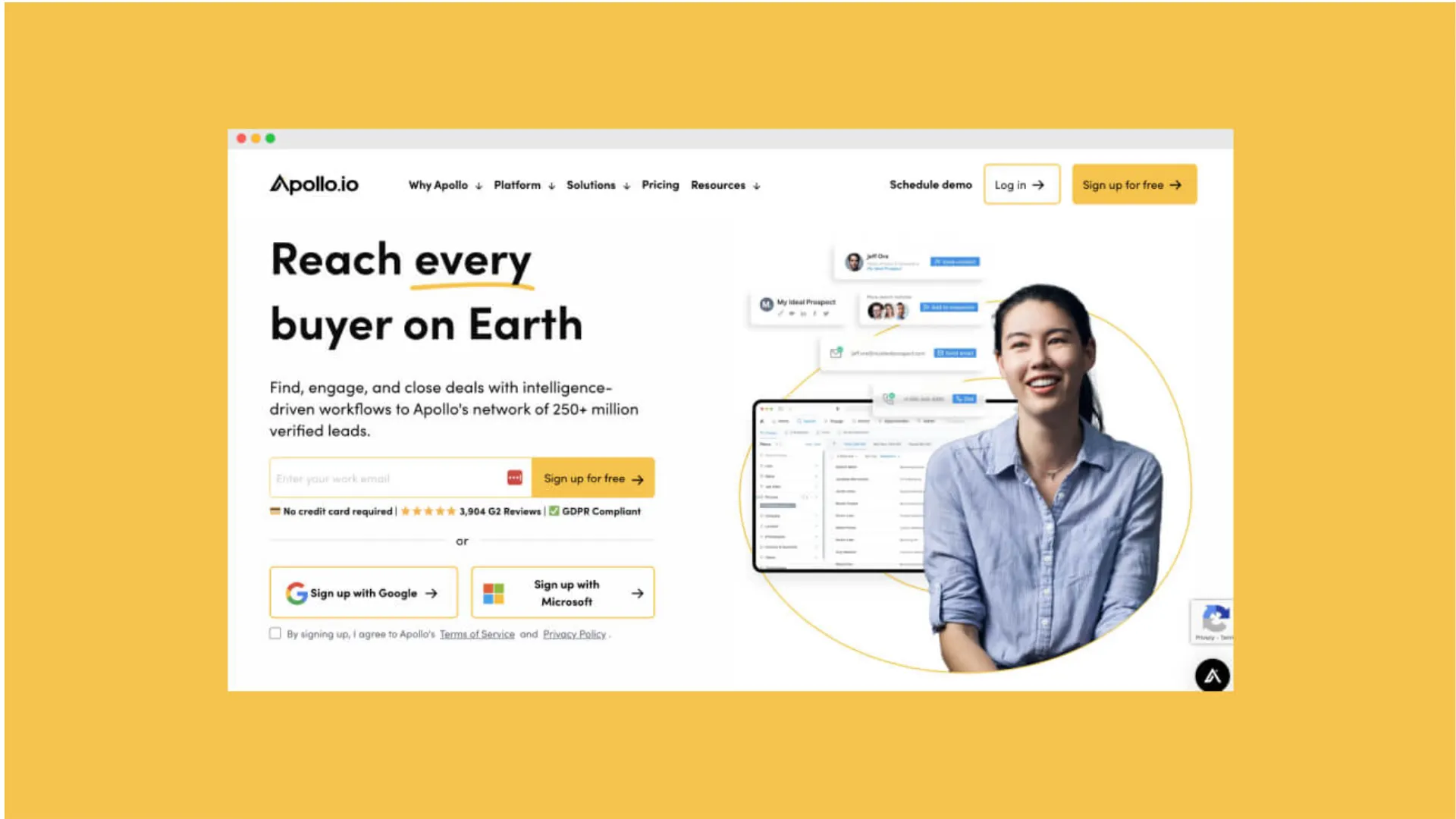
What it is: Apollo combines a large B2B contact database (270M+ contacts) with built in sequencing, dialer, and enrichment, making it the default starting point for teams that want data and outreach in one subscription.
Best for: SMBs and mid market sales teams that want lead generation, discovery automation, and multi channel outreach without stitching five vendors together.
Standout features:
• Rich filtering across firmographics, technographics, and buyer intent topics to build targeted lists fast. • Native email sequencing and a basic dialer, so reps can prospect and engage without leaving the platform.
Limitation: Data accuracy — especially direct dial mobile numbers — can lag behind premium providers like ZoomInfo and Cognism, so verification heavy teams often layer a second source on top.
2. ZoomInfo — Best for Enterprise Data Depth and Intent

What it is: ZoomInfo is the incumbent heavyweight in B2B contact database intelligence, pairing enormous coverage with mature buyer intent and account intelligence tooling.
Best for: Enterprise and upmarket teams that need deep account data, org charts, and intent signals to run account based motions at scale.
Standout features:
• Streaming intent data and website visitor de anonymization that surface in market accounts before they raise a hand.
• Detailed company hierarchies and scoops that help AEs map buying committees.
Limitation: It's the most expensive option here, with annual contracts and platform fees that put it out of reach for smaller teams — and onboarding can be heavy.
3. Cognism — Best for Compliant Mobile Data (EMEA + US)
What it is: Cognism is a premium sales intelligence provider known for phone verified mobile numbers and strong GDPR/CCPA compliance, including notification based DNC checking across Europe.
Best for: Teams doing outbound into EMEA (and increasingly the US) that live on the phone and need mobile numbers they can dial without compliance anxiety.
Standout features:
• Diamond Data — human verified mobile numbers with a much higher connect rate than crowd sourced data.
• Unrestricted data views on most plans, so seat pricing isn't gated behind per record credits.
Limitation: Total contact volume in some regions is smaller than ZoomInfo's, and pricing is still enterprise tier rather than self serve.
4. Trellus AI — Best Conversational Prospecting and Calling Layer
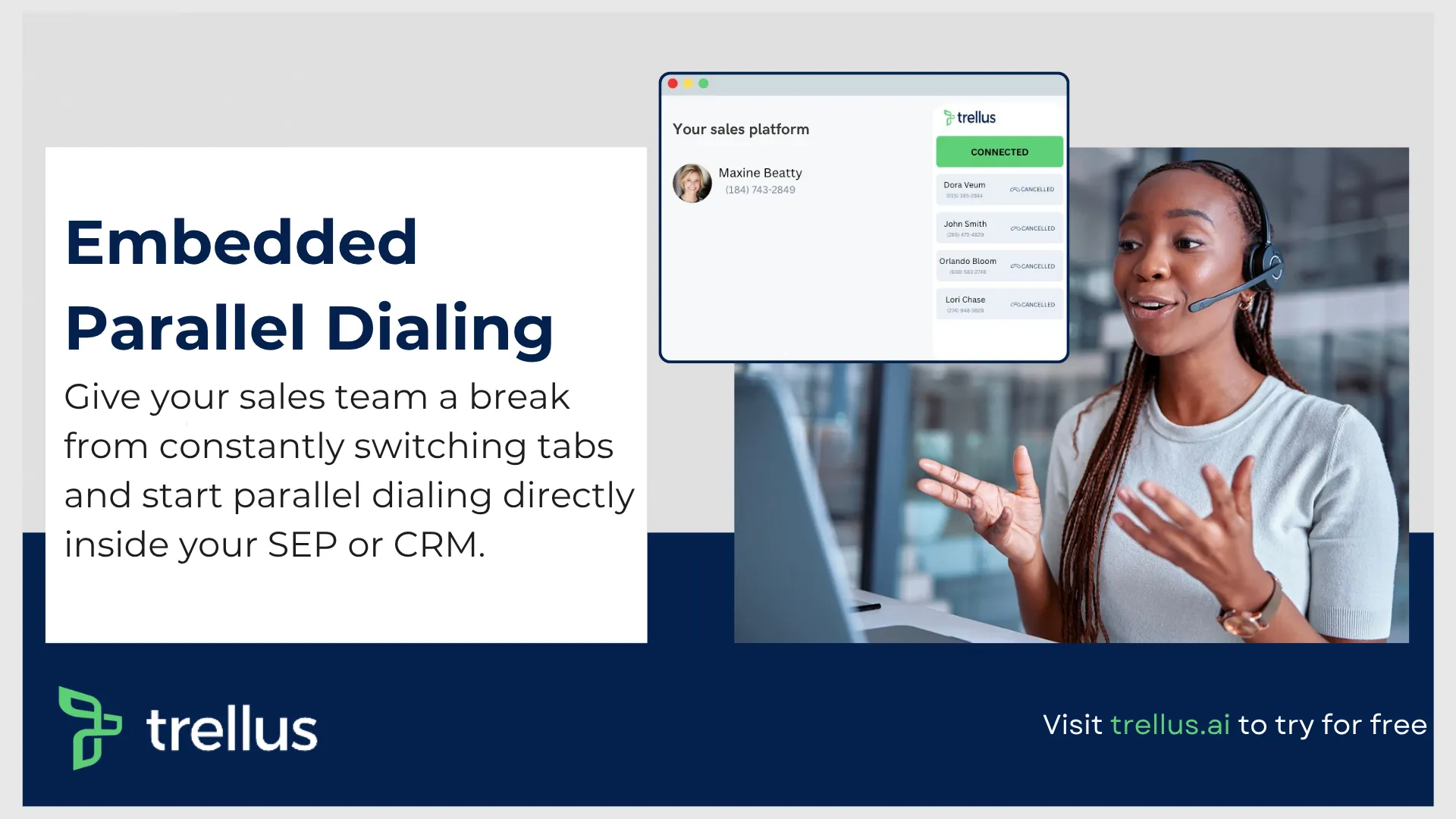
What it is: Trellus is where your prospecting data becomes real conversations. Rather than being another database, it's an AI powered sales acceleration and coaching layer delivered through a Chrome extension that runs inside the tools reps already use — Apollo, Salesloft, Outreach, HubSpot, and Salesforce — so there's no context switching into a separate dialer.
Best for: SDR/BDR and AE teams running high volume outbound calling who want to multiply live connects and coach every rep, without leaving their existing sales engagement platform. It slots in as the execution layer once a data tool has built your list.
Standout features:
• Embedded parallel dialer — dials up to ~5 lines simultaneously with automated voicemail drop and automatic call logging back to your CRM, so reps spend time talking instead of listening to ringtones.
• Real time AI coaching — live on screen objection handling, competitor battle cards, and customizable talk tracks during the call, plus AI voice agents that act as 24/7 practice partners.
• 100% call scoring and a Virtual Sales Floor — every call is scored automatically (not sampled), and remote teams can listen live, run call blitzes, and coach in real time.
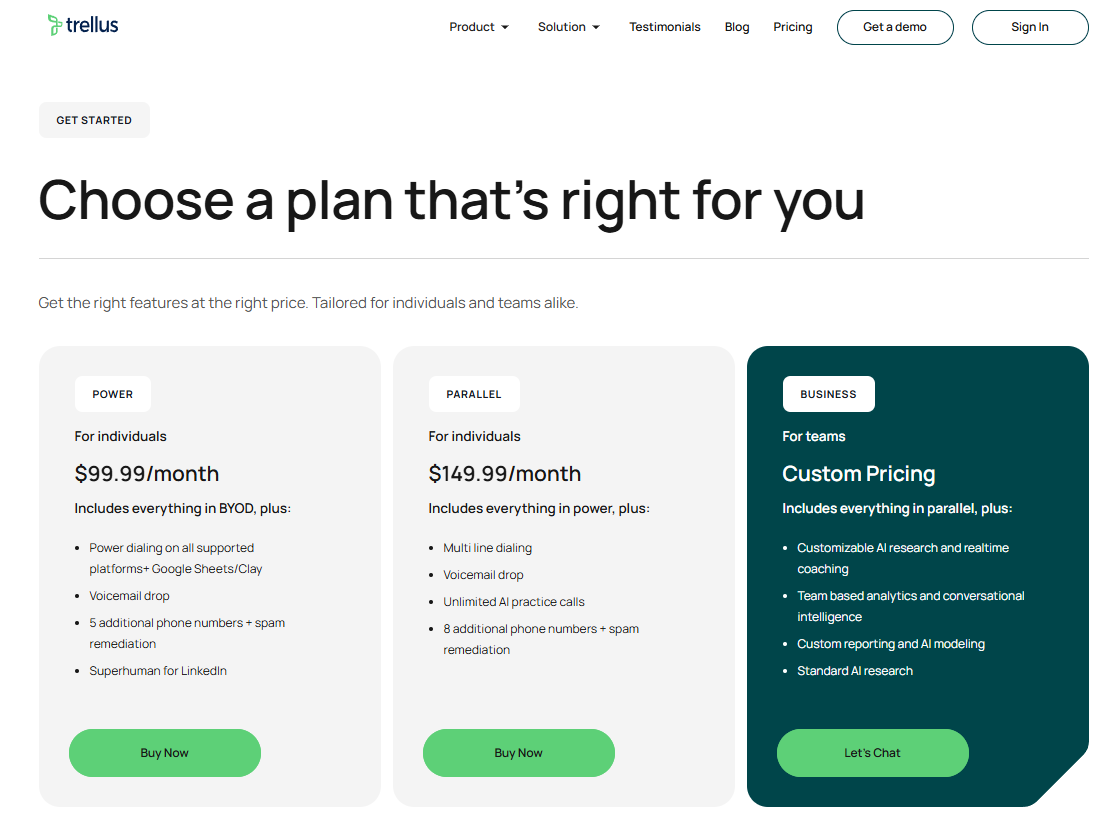
Pricing Plans:
Pricing is refreshingly transparent: the Power and Parallel plans start at $99.99 and $149.99 per month with a custom Business tier for team analytics and AI modeling — and no forced demo, so you get immediate self serve access.
Limitation: Trellus is honestly a calling and conversation execution layer, not a full CRM or a B2B data provider. You still need a data source like Apollo or Cognism to feed it verified contacts, and parallel dialing rewards disciplined list hygiene and TCPA/DNC compliance.
As a younger brand, it's less of an all in one than some incumbents — but that focus is exactly why it outperforms on live conversations. Explore how it fits alongside other AI sales agents as your outbound stack gets smarter.
5. LinkedIn Sales Navigator — Best for Relationship Led Prospecting
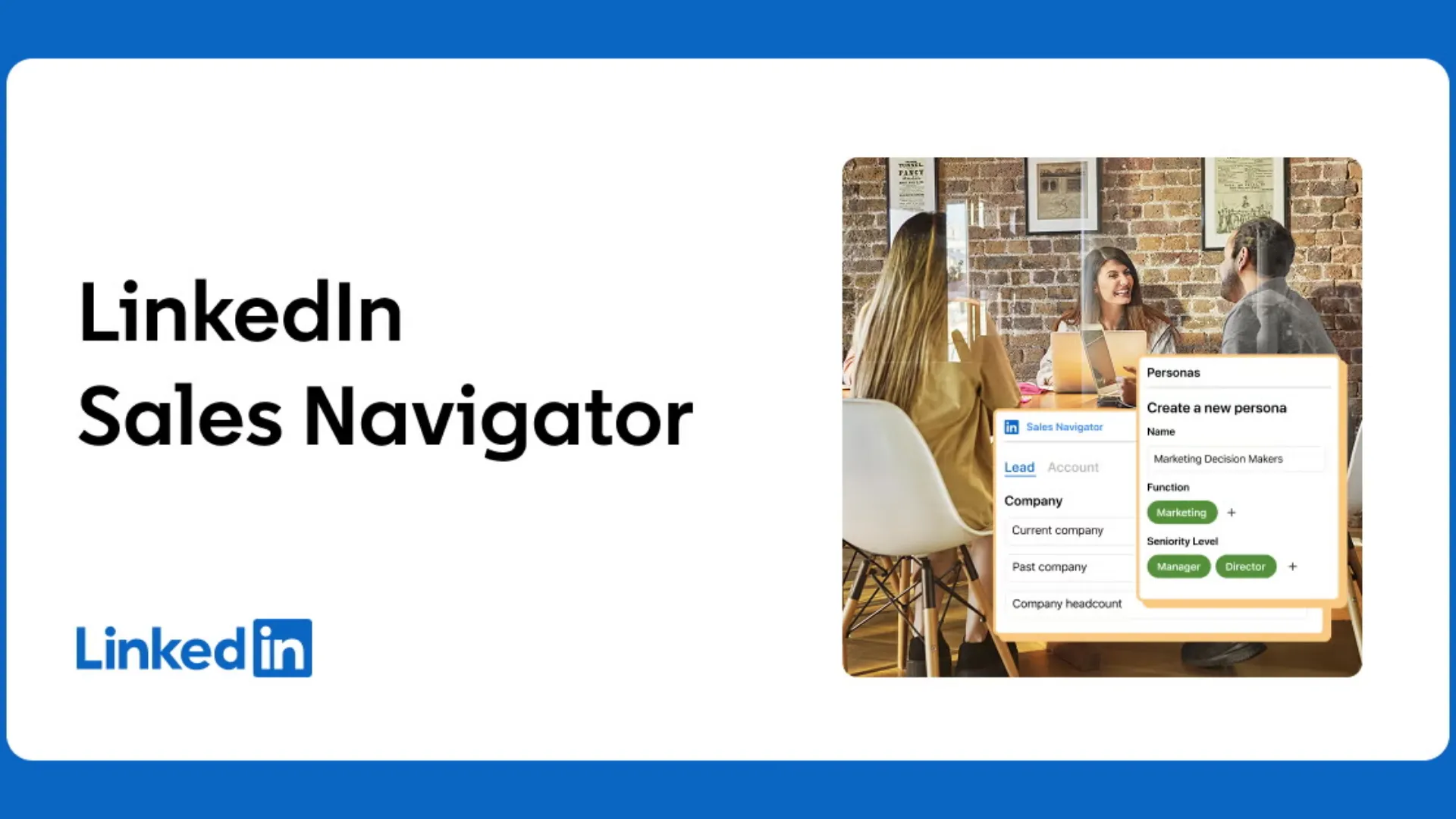
What it is: Sales Navigator is LinkedIn's premium prospecting tool, turning the world's largest professional graph into a real time, self updating source of account and lead intelligence.
Best for: AEs and SDRs running warm, relationship led outbound and social selling, where relevance and timing beat raw volume.
Standout features:
• Advanced lead and account search with real time alerts on job changes, posts, and buying signal activity.
• Warm intro paths through TeamLink and shared connections that raise reply rates.
Limitation: It doesn't hand you email addresses or phone numbers — you'll need an enrichment tool to turn a profile into a dial. According to LinkedIn's State of Sales research, reps who tap into buyer and network signals consistently build stronger pipeline, which is where Navigator shines as a discovery layer rather than a contact database.
6. Clay — Best for Programmatic Enrichment and Automation
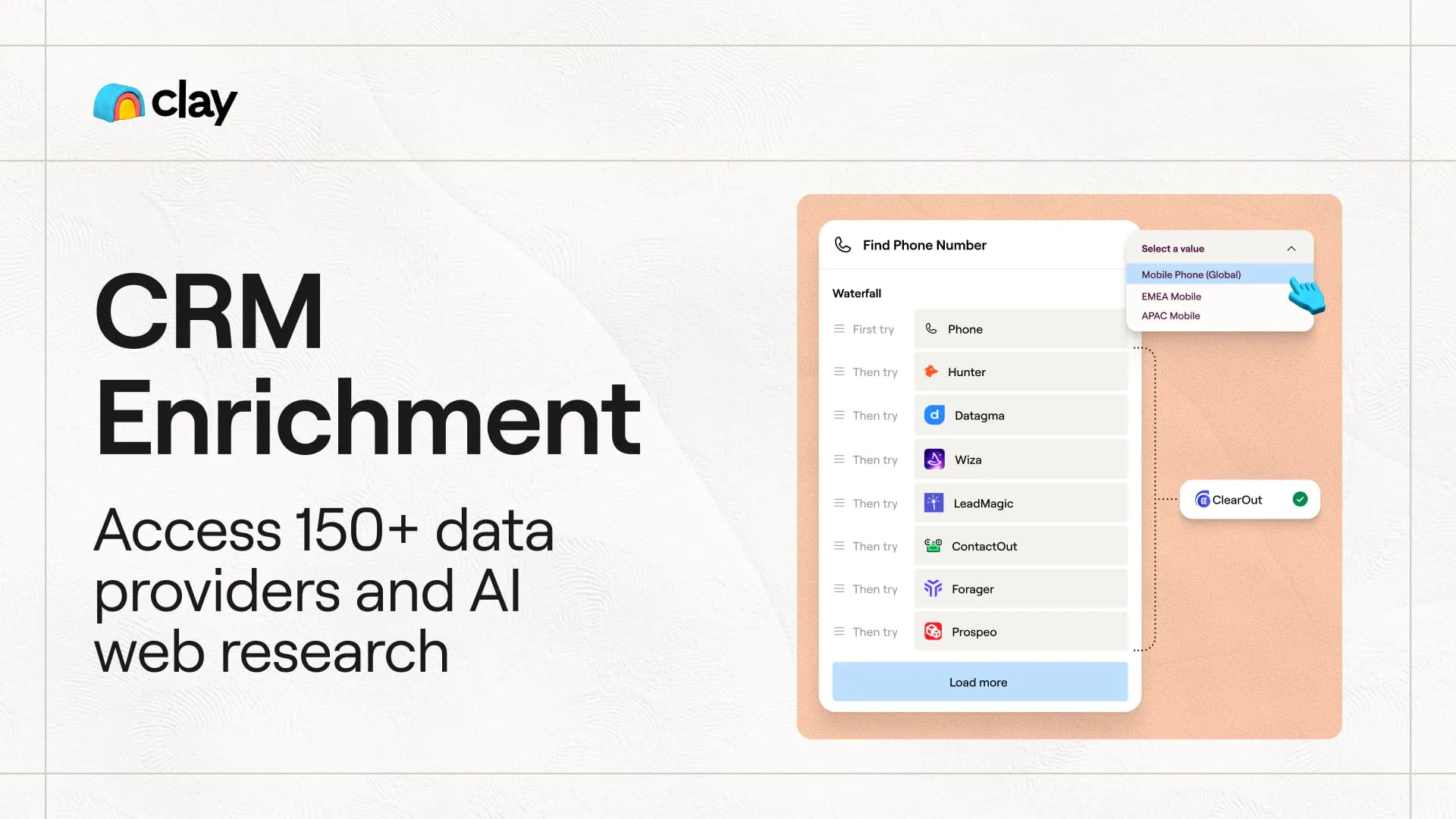
What it is: Clay is a spreadsheet native automation platform that chains together 100+ data providers and AI to build, enrich, and score lists programmatically — think of it as the connective tissue for modern discovery automation.
Best for: RevOps and growth teams that want to design custom, waterfall enriched prospecting workflows instead of relying on one vendor's data.
Standout features:
• Data enrichment "waterfalls" that query multiple providers in sequence, maximizing match rates and minimizing wasted credits.
• Built in AI research agents that scrape and summarize account context for hyper personalized outreach at scale.
Limitation: There's a real learning curve — Clay is powerful but closer to a low code tool than a point and click list builder, so non technical reps may need onboarding. Trellus integrates directly with Clay, letting you push enriched lists straight into a dialing session.
7. Lusha — Best for Simple, Self Serve Contact Data

What it is: Lusha is a lightweight, easy to use B2B contact database with a popular browser extension that surfaces emails and direct dials on LinkedIn and company sites.
Best for: Individual reps, founders, and small teams that want quick, credit based access to contact data without an enterprise contract.
Standout features:
• One click prospecting extension that pulls verified contact details as you browse. • Straightforward, transparent self serve pricing with a usable free tier.
Limitation: Coverage and intent tooling are shallower than ZoomInfo or Cognism, so it's better as a tactical top-up than a primary enterprise data source.
8. Seamless.AI — Best for Real Time Search Volume
What it is: Seamless.AI is a real time search engine for B2B contacts that builds and verifies lists on the fly, marketed heavily on unlimited style data access.
Best for: High volume prospecting teams that prioritize breadth and continuous list building over surgical accuracy.
Standout features:
• Real time verification that checks contact data at the moment of search rather than serving a stale record.
• Chrome extension and CRM integrations that speed up list creation.
Trellus.ai — Prepared by Top Search Agency · August 2026 · Keyword & SERP data: DataForSEO
Limitation: Data quality is inconsistent — reps frequently report bounced emails, and the sales/contract experience draws criticism, so budget time to clean lists before dialing. Explore how it stacks up in our roundup of the best AI tools for sales prospecting.
9. Hunter.io — Best for Email Discovery and Verification
What it is: Hunter is a focused email finding and verification tool that maps email addresses to domains and confirms deliverability — simple, fast, and reliable at what it does.
Best for: Lean teams and founders running email first outbound who need accurate addresses and low bounce rates on a budget.
Standout features:
• Domain search and email finder that return likely addresses with a confidence score. • Bulk email verification that protects sender reputation before you launch a campaign.
Limitation: It's email only — no phone numbers, intent data, or account intelligence — so it's a component of a stack rather than a complete prospecting platform.
10. UpLead — Best for Verified Lists on a Budget
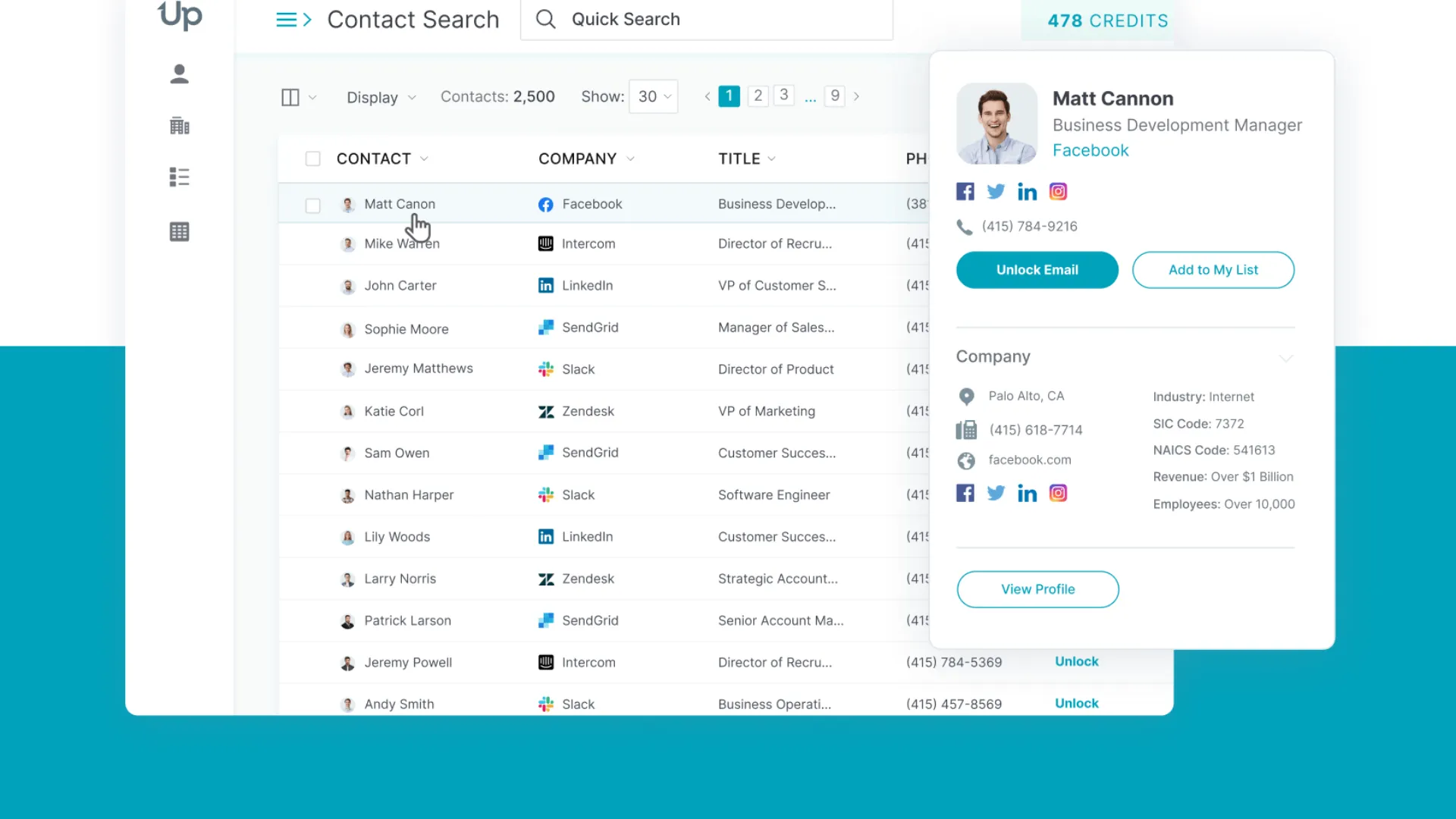
What it is: UpLead is a mid market B2B data provider that emphasizes real time email verification and a 95%+ accuracy guarantee, with transparent per credit pricing.
Best for: SMB and mid market teams that want clean, verified lists without ZoomInfo level spend. Standout features:
• Real time email verification at the point of export, cutting bounce rates.
• 50+ firmographic and technographic filters plus intent data on higher tiers.
Limitation: The overall database is smaller than the top tier providers, so coverage on niche or international segments can be thin.
Data, Intent, and Conversations: How the Categories Fit Together
Notice a pattern in the reviews above: the ten tools aren't really competing for the same job. They cluster into three layers of the prospecting stack, and the best teams deliberately combine them rather than betting on one.
Lead generation and discovery automation is the top of the funnel — Apollo, Clay, and UpLead excel at building and enriching lists.
B2B contact database intelligence and compliance is the accuracy layer — ZoomInfo, Cognism, Lusha, Hunter.io, and Seamless.AI compete on verified emails, mobile numbers, and clean data.
Buyer intent and account intelligence tell you when to act — ZoomInfo and LinkedIn Sales Navigator lead here, surfacing the signals that make outreach timely instead of cold.
The layer most teams underinvest in is conversational sales prospecting — connecting with the humans behind the records. That's the gap Trellus fills. You can own the best data in the world, but if reps only reach 3–4 live prospects an hour on a single line dialer, your pipeline is capped by connect rate, not list size.
Pairing a strong data provider with a parallel dialing, real time coaching execution layer is how modern teams turn contacts into conversations.
For teams formalizing this motion, our guide to automated sales prospecting tools maps the full workflow, and our 18 best sales prospecting platforms roundup goes even deeper on category leaders.
How to Choose the Right Sales Prospecting Tools for Your Team
With ten strong options, the decision comes down to your specific bottleneck. Work through these questions:
1. Where does your pipeline actually leak? If reps can't find good fit accounts, start with a data and discovery tool (Apollo, ZoomInfo, Clay). If they find plenty but can't reach them, invest in the conversation layer (Trellus).
2. What's your primary channel? Phone heavy teams need verified mobile data (Cognism) and an efficient dialer. Email first teams can start leaner with Hunter.io or UpLead.
3. How mature is your RevOps function? Sophisticated teams get outsized value from Clay's programmatic enrichment; smaller teams are better served by all in one simplicity.
4. What are your compliance requirements? Selling into the EU or running high volume calling raises the stakes on GDPR, CCPA, and TCPA/DNC — favor Cognism for data and disciplined list hygiene for dialing.
5. How does it fit your existing workflow? The best tool is the one reps actually use. Prioritize platforms that embed in your CRM and outbound sales strategy rather than forcing yet another tab.
A practical 2026 starting stack for most B2B teams looks like this: one core data provider (Apollo, ZoomInfo, or Cognism), one signal source (LinkedIn Sales Navigator), optional programmatic enrichment (Clay), and one execution layer (Trellus) to run the calls. If you're refining the broader motion, our breakdown of outbound sales automation tools shows how sequencing ties it all together.
Frequently Asked Questions
What are the best sales prospecting tools for a small team on a budget?
For lean teams, start with a self serve data tool like Apollo.io, Lusha, or UpLead for verified contacts, and add Hunter.io for email verification.
When calling becomes a priority, Trellus offers transparent plans with no forced demo, so you can add a parallel dialer and AI coaching without an enterprise contract. This combination covers discovery, data accuracy, and conversation execution affordably.
Do I need more than one prospecting tool?
Usually, yes. Prospecting spans discovery, data verification, intent, and live conversations — and no single vendor is best at all four. Most high performing teams pair a B2B database (for contacts) with an engagement or dialing layer (for outreach).
The best prospecting tools for sales are the ones that integrate cleanly, so data flows from list building into sequencing and calling without manual re entry.
What's the difference between a data tool and a conversational prospecting tool?
A data tool (ZoomInfo, Cognism, Apollo) tells you who to contact and how to reach them — emails, mobile numbers, and intent signals. A conversational prospecting tool like Trellus focuses on the actual connection: multiplying live phone conversations with parallel dialing, coaching reps in real time, and scoring 100% of calls. You need both — data feeds the list, and the conversation layer turns it into booked meetings.
Are AI sales prospecting tools worth it in 2026?
Increasingly, yes. The best AI sales prospecting tools automate the repetitive parts of the job — enriching lists, drafting personalized messages, prioritizing accounts by intent, and coaching reps live during calls.
Per HubSpot's sales statistics and State of Sales research, reps spend a large share of their week on non selling tasks, so AI that reclaims that time directly lifts pipeline. The key is using AI to augment human reps, not replace the relationship.
Which sales prospecting tool has the best data accuracy?
For phone verified mobile numbers, Cognism's Diamond Data leads, especially in EMEA. For overall B2B coverage and intent, ZoomInfo is the enterprise benchmark.
UpLead and Hunter.io stand out for real time email verification on a budget. Whichever you choose, remember that even the best data still needs a strong execution layer to convert into conversations — accuracy raises your connect rate, but a dialer determines how many of those connects your reps actually reach.
What’s The Bottom Line?
The best sales prospecting tools in 2026 don't ask you to pick between data, intent, and conversations — they ask you to assemble the right layers for your team.
Apollo, ZoomInfo, and Cognism anchor the data foundation; Clay and LinkedIn Sales Navigator sharpen discovery and timing; Lusha, Seamless.AI, Hunter.io, and UpLead cover verification and budget-conscious list building. And once the list is built, Trellus AI turns those verified contacts into live, coached conversations from inside the tools your reps already live in.
If your pipeline is capped by connect rate rather than list size, the fastest win is adding a conversation layer to the data you already own.
.jpeg)

Power and parallel dialing in your CRM.