A Buyer Wants a Quote Before a Call. What Should You Send?
Send useful information before asking for a meeting. Work through a fictional six-rep request and separate confirmed scope from the details still to check.
On this page
Send the pricing information you can stand behind, then ask for the few missing details that would change the offer. A request for a quote isn't, by itself, a reason to require a discovery call.
The buyer may be checking whether the purchase is worth pursuing before involving anyone else. They may also have done enough research to know what they want. Answer the request in front of you instead of making them repeat your usual sales process.
You still need to be clear about what you're sending. Published plan information, a working estimate and a proposal for an agreed scope serve different purposes. If a figure depends on an unanswered question, explain that question beside the figure. Don't let a helpful early reply become a promise about work you haven't checked.

Start with what the buyer needs to decide
“Please send a quote” can mean “What does this usually cost?” or “Please document the exact purchase we've already discussed.” One short question can distinguish those jobs:
“Are you checking whether this could fit your budget, or do you need a proposal for a particular setup?”
If the buyer has already described the setup, use it. Don't ask them to fill out the same information again to earn an answer. If they only need published plan information and you can share it, send the relevant page and explain which parts still depend on their situation.
For Trellus, the pricing page is the starting point for published information. A proposed purchase still needs its own scope. A page link shouldn't stand in for answering a question you can reasonably answer in the email.
Keep the first reply proportionate. Asking for a company history, annual targets, a complete technology inventory and a meeting before saying anything about price creates a much bigger task than the buyer requested. Ask only for facts needed to make the next answer useful.
A quote request, worked through by email
Imagine this fictional request to a sales-software seller:
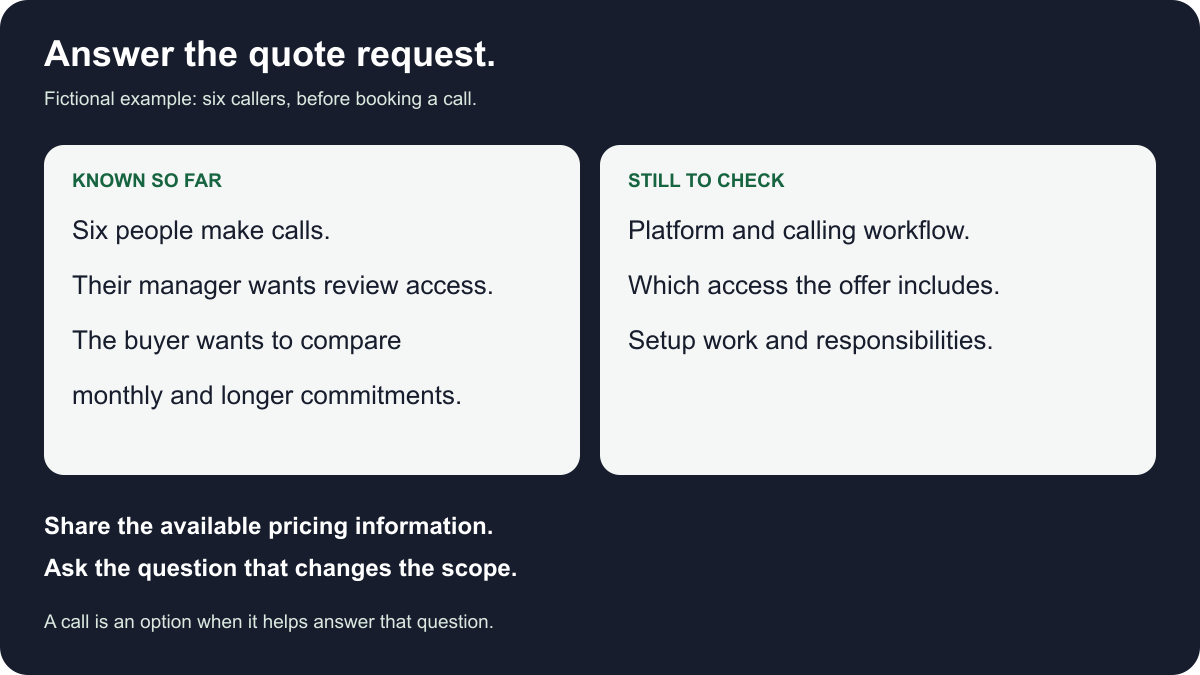
“Can you send a quote for six reps? We'd rather look at pricing before booking a call.”
The seller knows the number of people making calls, but doesn't yet know which setup the buyer wants. The reply could be:
“Yes, we can start by email. Here's our published pricing information: [link]. To check the right scope for six reps, which CRM or sales engagement platform will they work in, and do they need one-at-a-time calling or concurrent attempts? I can then check which offer covers that setup. If you're only checking affordability at this stage, let me know and I'll keep the reply focused on that.”
Adjust that reply to the information you can actually share. If you promise to check an offer, know who can answer and when you'll get back to the buyer.
Suppose the buyer replies that the six reps will make calls, while their manager only needs to review the work. That changes the question you should take back to the offer: which people need which access? It doesn't establish that the manager needs an additional paid seat, or that review access is included. Check the actual packaging rather than silently adding or omitting someone.
Now suppose they also say they want to compare a monthly purchase with a longer commitment. Keep those as separate choices. Explain the applicable period and payment arrangement for each confirmed option. Don't present a recurring amount without making its period clear, or assume the buyer has chosen the longer commitment because it appears in the first document you sent.
If the buyer answers only the platform question, acknowledge that answer and identify the remaining gap. Avoid sending the entire questionnaire again. Your next reply might be: “Thanks, that settles where the reps will work. I still need to confirm the calling workflow before I recommend a scope. Would you prefer to describe it here or look at a short example?”
If they don't want to provide the missing details, you can still share whatever general information is accurate. Explain why you can't yet recommend a particular scope. Let the buyer decide whether to continue; don't invent an estimate to keep the conversation moving.
Put the scope next to the price
A reader shouldn't need to reconstruct the offer from several emails. Keep a short note beside the information you're sending:
- What this document is for
- Published information, an early budgeting estimate or a specific proposal. Use your team's actual document labels and process.
- People and roles
- Who will make calls, who will review the work and what access the proposed option actually covers.
- Work included
- The platform and calling workflow you've agreed to assess, with relevant capabilities confirmed for the offer.
- Period and payment
- The period the amount covers and the payment arrangement being discussed.
- Setup and other work
- What the seller includes, what the buyer would handle and anything still awaiting an answer.
- What remains open
- The specific unresolved question, who will check it and what answer is needed before the buyer can choose.
For the fictional exchange above, the note could read:
Purpose: An early price check before booking a call; published information shared, no specific proposal selected. People: Six people making calls and a manager who wants to review the work; access coverage still to be checked. Work: Platform and calling workflow not yet confirmed. Period: The buyer wants to compare monthly and longer commitments; no option chosen. Setup: Inclusions and responsibilities not yet discussed. Open question: The buyer needs to confirm the platform and calling workflow so the seller can check the applicable offer.
Leave out details that don't affect this purchase. The note is there to make the price interpretable, not to turn an email into a full procurement exercise. If a relevant item is unknown, say so rather than filling the space with a plausible assumption.
Be especially careful when the buyer forwards your reply. “This includes what you need” is hard for a colleague to interpret. “This proposal covers the six calling users and the workflow listed below; manager access is still being checked” gives the next reader something specific to review.
Keep a corrected version understandable too. If the scope changes after another conversation, identify the change and send the current document through your normal process. Don't assume everyone has read the latest message in a long thread.
Offer a call when it would answer a real question
A call can help when several people need to choose between different workflows, or when a short demonstration would resolve something that's difficult to describe. Explain that purpose before asking for time.
For example: “There are two different calling workflows in your note. We could compare them in a short call, or you can tell me which one your reps want to use and I'll continue by email.” That gives the buyer a reason for the conversation and a workable alternative.
If the scope is already clear and you can send the requested proposal, send it. A meeting that adds no necessary information shouldn't be a toll before the buyer gets an answer. When discovery would help, the discovery-call guide can help you prepare questions around that actual decision.
For a dialer evaluation, use the power and parallel dialer overview to frame the workflow the reps want to assess. Confirm the exact supported platform and offer before recommending a setup; a general category description doesn't settle a buyer's requirements.
Leave the buyer with a useful next step
End the reply with one action that fits what is still open. If you've sent published information, invite the buyer to tell you which option they want clarified. If you've sent an estimate with a missing scope detail, name that detail. If you've sent a complete proposal, ask whether the included work matches the purchase they intended.
A reusable reply could look like this:
“Thanks for the request. We can start by email. Here's [the information I can accurately share]. It covers [confirmed scope and period]. I'm still checking [specific open item], so please don't assume that's included yet. Could you confirm [the one detail needed next]? Then I can [the next action I can actually complete]. If you'd prefer a call to work through that question, we can arrange one.”
Replace the brackets with real answers, and remove any sentence that doesn't apply. If the buyer is asking you to match an existing competing proposal, use the price-match conversation guide instead; comparing two offers is a different job from establishing the first one.
Once you've answered, give the buyer room to respond. They may decide the information is enough, ask for a specific proposal or stop the evaluation. A useful quote reply makes each of those decisions easier without pretending the purchase is further along than it is.