When a Buyer Asks for More Time in a Sales Trial
Decide whether more time can answer an unfinished buying question, agree the work and next review, and confirm access separately.
On this page
A buyer asks for another week in the trial. Before saying yes, ask what they need to learn during that week. Extra access can help when a specific test is unfinished and someone can do the work. It helps less when the real problem is that nobody has time to evaluate the product.
You don't need to turn the request into a negotiation. You do need a shared understanding of what happens next. “Another week” could mean time to check a second workflow, time for a colleague to return from leave, or a polite way to avoid a decision. Ask rather than assigning a motive.
The examples below are fictional and concern an unnamed software product. They aren't Trellus trial terms or accounts of customer results.
Ask what the buyer couldn't finish
Start with the buyer's reason for asking. A useful opening is: “What would you want to check with the extra time that you haven't been able to check so far?” Then let them explain. Don't immediately supply your own list of features they ought to try.
Perhaps one rep used the product, but the manager who needs to inspect the saved records hasn't seen it. Perhaps a required setup never worked. Perhaps the team made calls but hasn't had a chance to discuss what happened. Each needs a different response.
Ask what they have already learned, too. If a required result is unavailable, more days won't make it available. If the product appears to fit but approval is waiting for a later budget review, distinguish that wait from unfinished evaluation work. Keeping a trial open doesn't establish approval.
Be careful with “We didn't use it enough.” That describes activity, not the question the buyer still needs answered. Ask which task they wanted to complete and where they got stuck. They may need one setup correction or a short demonstration rather than another week of open access.
Make the extension about one answer
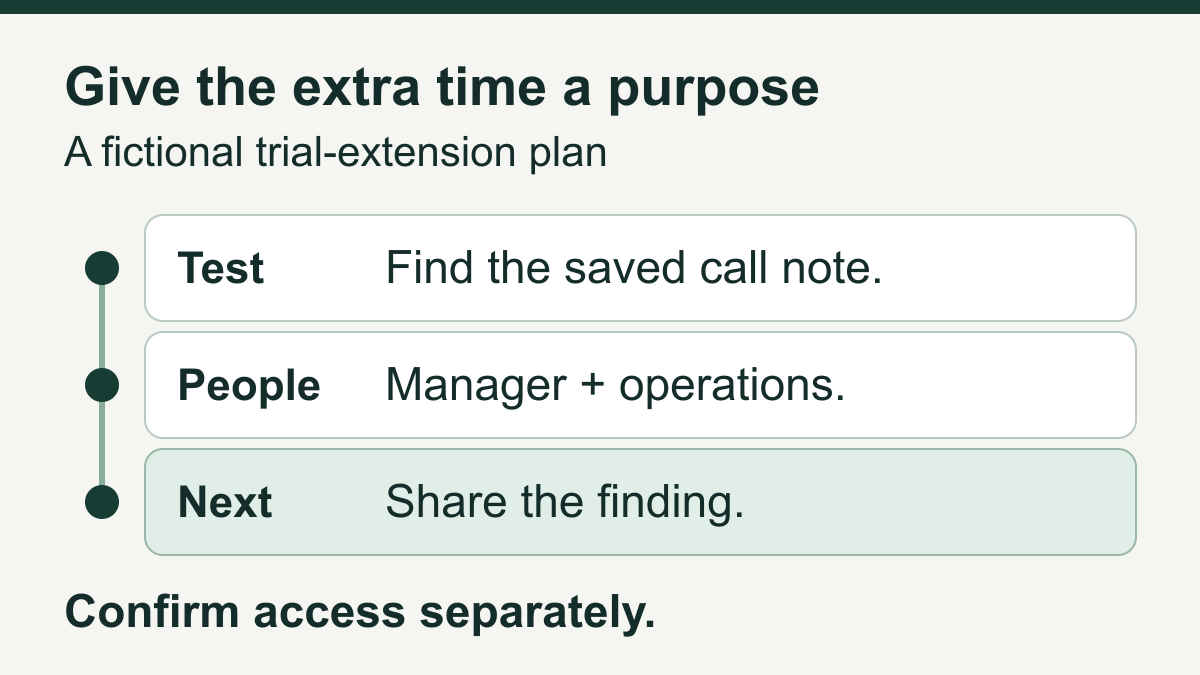
Suppose a manager says two reps tried an unnamed calling product, but nobody checked whether a call note can be found by the colleague responsible for follow-up. The manager asks for an extension through the following Friday.
A useful next question would be: “Who would check that record, and when could they do it?” In this example, the manager says their operations colleague can join on Tuesday. The seller and buyer can now discuss a small task: run the test, inspect the saved result together, and write down whether it meets the requirement.
That gives the extension a purpose. It doesn't mean the buyer has agreed to buy if the record looks right. They may have other requirements, and the colleague may discover another problem. Keep those possibilities visible.
Before changing access, confirm that you can offer the proposed extension under your team's process and the product's actual terms. If you need someone else's approval, say when you expect an answer. Don't promise a new end date and hope an administrator can make it happen afterward.
The dialer pilot checklist covers planning a broader evaluation. For an extension, return to the unfinished question instead of restarting the whole checklist. Preserve the work the buyer has already done.
Agree who will do the work before choosing the end date
An end date is only useful if the necessary people can act before it. Check the practical details: whose account or list is needed, who will inspect the result, and whether they have the access and time to do so. Don't ask the buyer to invite an entire team when one colleague can answer the question.
Offer help with the particular obstacle. “I can walk through where the note is saved” is more useful than “I'll be available all week.” The buyer may prefer written steps or to run the test without the seller watching. Agree on the arrangement they want.
Then ask what should happen after the test. They might want to send a written finding, discuss a remaining gap, or decide whether to continue evaluating. A review conversation can be useful, but it isn't compulsory. Don't make accepting a meeting the hidden condition for answering a reasonable setup question.
In the fictional Tuesday example, the parties might agree: the manager and operations colleague inspect the note on Tuesday; the manager sends their finding on Wednesday; the seller checks an unresolved destination question if needed. Access through Friday is a separate fact, subject to confirmation. Only add a Friday purchase decision if the buyer agreed to one.
When a pause is the better answer
Consider a different request. A buyer says the team is busy with another project and asks for two more weeks “so we can get back to it.” Nobody can say who will test the product or when they will have time.
Ask whether extending now would help. They may genuinely need flexibility, but they may also prefer to stop spending attention on an evaluation they can't staff. You can offer to discuss restarting at a useful time, if that is an option you can actually provide.
“It sounds as though the test still matters, but the team can't get to it this week. Would you rather pause here and revisit when someone has time, or is there a small question we could settle now?”
If they choose to pause, explain what will happen to access and saved work using confirmed information. Don't assume either that everything will be retained or that it will disappear. Check the product's actual behavior before giving instructions, including any action the buyer needs to take before access ends.
A pause doesn't require a new calendar invitation. Agree whether the buyer wants future contact and, if so, how. If they don't want to continue, record that plainly. If an earlier completed trial is the concern, the guide to discussing an unsuccessful trial starts with deciding whether the buyer wants to reopen it at all.
A short note you can reuse
Keep this as a short manual note in the account record your team already uses.
- Request: What extra time did the buyer ask for, and why?
- Already learned: What has the evaluation answered? Keep observed results separate from explanations you haven't checked.
- Remaining question: What particular task or result would the extra time help assess?
- Work agreed: Who will do what, and when? Mark proposed help as proposed until accepted.
- Access: Requested end date, approval status, and confirmed end date. Record relevant instructions about saved work.
- Afterward: What finding or discussion is agreed? Keep buying approval and any purchase decision separate.
A filled note for the Tuesday example might read: “Manager requested access through Friday to check whether the operations colleague can find the saved call note. Manager and colleague plan to inspect it Tuesday. Manager agreed to send a finding Wednesday. Seller checking extension approval; Friday access not yet confirmed. Other requirements remain open. No purchase date agreed.”
When the extension is confirmed, update that fact. When the buyer sends the finding, add what it says. The sales call note guide can help keep the request and the next action readable for the next person who opens the account.
If the extension ends and the answer is still unclear
Look at what actually happened before offering more time. If nobody could run the test, a second extension may repeat the same problem. If they ran it but couldn't interpret the result, help investigate that result. If a new requirement appeared, assess whether the product can meet it before planning another evaluation.
A longer trial can also change what you're comparing. Different reps, lists or working hours may explain a different result. Keep those changes in the note rather than crediting the extra days or the software for an improvement you haven't established.
You can recommend stopping when the product doesn't meet a requirement. You can also say that the evaluation is incomplete. Those are different findings. Neither needs to be disguised as a successful trial just because access was extended.
If you're evaluating Trellus for power or parallel dialing inside a supported CRM or sales engagement platform, bring the specific calling task and the result you still need to check. Settle that question with the right people and the right workflow. The useful next step may be a small check, another agreed period of evaluation, or a decision to stop.