Our Top Picks


Sales teams have more technology than ever before, yet many reps still spend a surprising amount of time updating CRM records, researching prospects, writing follow up emails, and preparing for meetings.
While these tasks are important, they rarely contribute directly to revenue generation.
As sales cycles become longer and buyers become more informed, revenue teams need tools that help them spend more time having meaningful conversations and less time managing administrative work.
This is where the modern ai sales assistant platform has become one of the most valuable investments for sales organizations in 2026.
Today's leading platforms can automate prospect research, capture meeting data, analyze conversations, identify buying signals, recommend next actions, and even coach representatives during live calls. Rather than functioning as another standalone application, they serve as intelligent layers that sit across the sales workflow and help teams operate with greater speed and accuracy.
Among the platforms reviewed in this analysis, Trellus.ai stands out because of its emphasis on real time coaching and live outbound execution.
While many platforms focus on post call analysis, Trellus.ai helps sales representatives improve performance while conversations are happening, creating immediate impact on meeting conversion rates and outbound productivity.
For organizations looking to improve pipeline generation, increase rep efficiency, and create more predictable revenue outcomes, adopting the right AI sales assistant software is no longer a competitive advantage alone. It is quickly becoming a requirement for staying relevant in modern B2B sales.
The AI Revolution in Sales

Sales has changed dramatically over the past decade.
Buyers now complete a significant portion of their research before ever speaking with a sales representative.
Decision making committees are larger, procurement processes are more complex, and customer expectations continue to rise. At the same time, sales leaders are expected to deliver more accurate forecasts, stronger productivity metrics, and consistent revenue growth.
These pressures have created an environment where efficiency matters as much as effort.
Many sales representatives still spend hours every week researching accounts, updating CRM fields, creating meeting notes, writing follow up emails, and searching for information scattered across multiple tools. Every minute spent on these activities is a minute not spent speaking with prospects or moving opportunities forward.
An AI sales assistant platform addresses this problem by acting as an intelligent partner throughout the sales process. Rather than serving as a simple database or engagement tool, these systems actively support sellers with recommendations, automation, coaching, and insights.
A modern sales AI assistant platform can identify which accounts deserve attention, help personalize outreach, summarize meetings, track buying signals, generate follow up actions, and provide guidance during conversations.
The result is a more efficient workflow that helps sales teams focus their energy on the activities that create revenue.
This growing category has also expanded beyond basic automation. Today's AI sales productivity tools combine conversation intelligence, prospecting capabilities, CRM synchronization, forecasting insights, and workflow automation into unified ecosystems.
For sales leaders, this creates greater visibility into pipeline health. For representatives, it creates a more focused and productive workday.
Throughout this review, we will examine ten of the most influential platforms shaping the future of AI assisted selling.
We will look at their strengths, ideal use cases, standout capabilities, and the types of organizations that can benefit most from each solution. Special attention will be given to Trellus.ai, a platform that has gained significant attention for its ability to provide real time coaching and support live outbound sales execution.
For teams evaluating B2B sales assistant AI tools, this analysis will provide a practical framework for understanding what separates good platforms from truly transformative ones.
The Transformative Impact of AI Sales Assistants
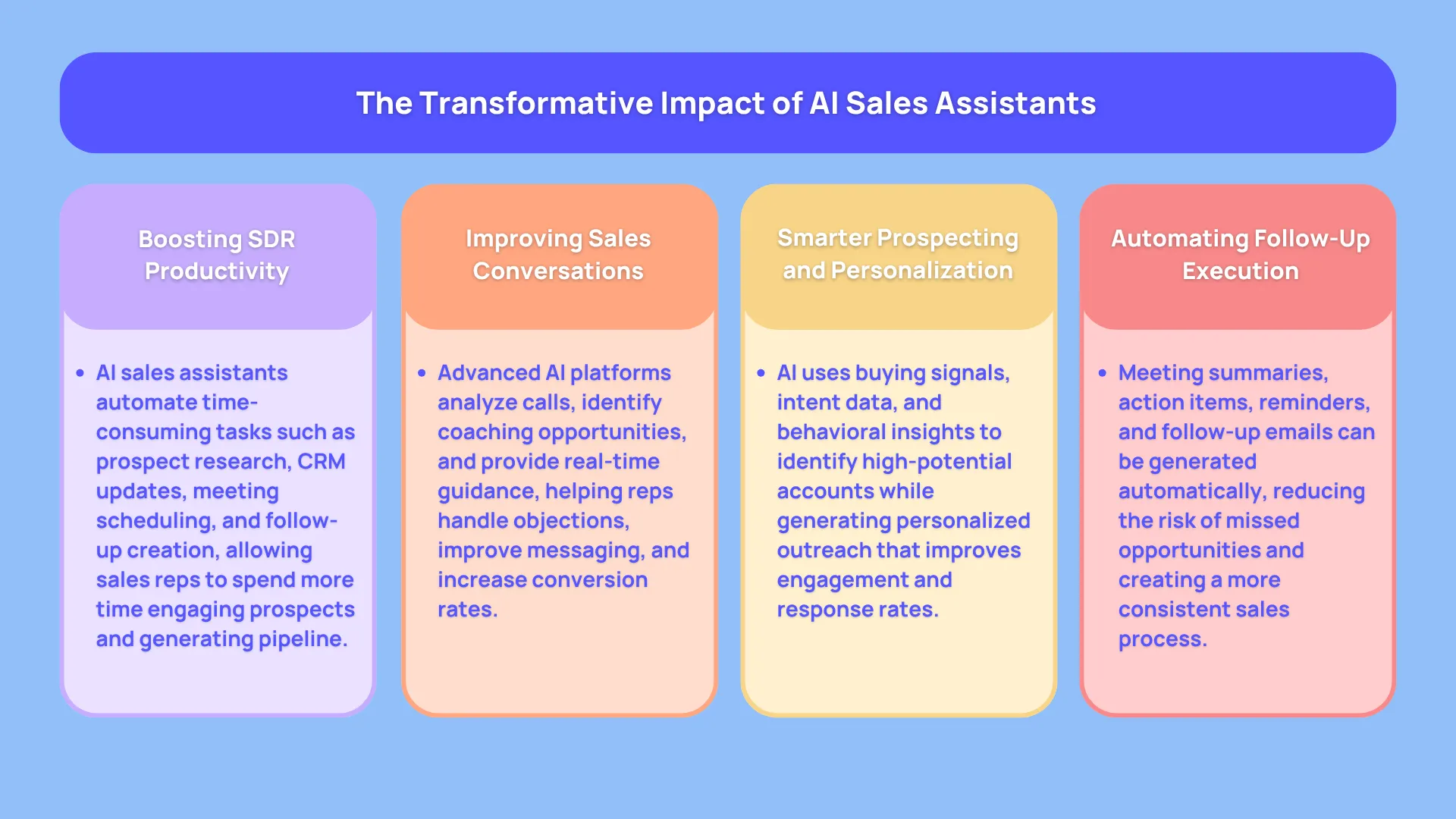
The conversation around artificial intelligence in sales often focuses on automation.
While automation is certainly important, it only represents one part of the value these platforms deliver. The strongest AI systems help sales teams make smarter decisions, prioritize opportunities more effectively, improve conversations, and maintain cleaner operational processes across the entire revenue organization.
A modern AI sales assistant platform influences nearly every stage of the sales cycle, from prospecting and outreach to coaching and forecasting.
For many organizations, the impact extends far beyond efficiency gains. These platforms can directly influence pipeline generation, conversion rates, deal velocity, and revenue predictability.
Understanding how these systems create value helps sales leaders evaluate which solutions deserve investment and where the highest returns can be achieved.
Unleashing SDR Productivity
Sales Development Representatives are often measured on activity volume.
Calls completed, emails sent, meetings booked, and opportunities generated all contribute to performance expectations. The problem is that many SDRs spend large portions of their week performing administrative tasks that contribute little to those outcomes.
Researching companies, identifying decision makers, updating CRM records, writing repetitive follow up emails, preparing meeting notes, and scheduling appointments can consume hours every day. Those responsibilities create friction that limits selling time.
An effective AI assistant for sales reps removes much of this burden.
Modern platforms can automatically gather company information, enrich contact records, draft personalized outreach messages, schedule meetings, create CRM updates, and organize account data without requiring manual intervention.
Rather than spending twenty minutes researching a prospect before an outreach attempt, representatives can access AI generated summaries in seconds.
The productivity gains can be substantial.
Many organizations report increases in outbound call volume, faster follow up execution, improved response rates, and greater meeting generation after deploying AI powered workflows. New representatives also become productive faster because less time is spent learning administrative processes.
As a result, sales teams can dedicate more energy to building relationships, uncovering customer needs, and progressing opportunities through the pipeline.
Elevating Conversation Quality and Outcomes
Productivity alone does not guarantee success.
The quality of sales conversations often determines whether opportunities advance or disappear.
This is one area where leading AI sales assistant software solutions have become remarkably sophisticated.
Historically, managers reviewed a small percentage of calls and provided feedback during coaching sessions. Valuable learning opportunities frequently went unnoticed because reviewing every conversation was impossible.
AI has changed that equation.
Many platforms now analyze every call, meeting, and recorded interaction. They identify objections, competitor mentions, pricing discussions, stakeholder engagement patterns, and conversational trends that correlate with successful outcomes.
Some platforms go even further.
Real time coaching capabilities can surface objection handling suggestions, recommended talking points, competitor battlecards, and contextual prompts while the conversation is still taking place. Representatives receive support exactly when they need it, rather than days later during a coaching session.
Post call analysis creates another layer of value.
AI generated summaries highlight action items, customer concerns, decision criteria, and next steps. Managers can quickly identify coaching opportunities while representatives receive clear guidance for future conversations.
The result is a continuous learning environment where both new and experienced sellers improve faster than traditional coaching methods allow.
Intelligent Prospecting and Personalization
Finding the right prospects has become increasingly difficult.
B2B buyers are overwhelmed with outreach. Generic messaging is ignored. Mass email campaigns often produce disappointing engagement rates. Sales teams need greater precision in identifying prospects who are most likely to buy.
This is where B2B sales assistant AI tools provide significant advantages.
Rather than relying solely on static lists, AI systems analyze vast amounts of data to identify accounts that resemble existing customers, demonstrate buying intent, or exhibit behaviors associated with active purchasing cycles.
These signals may include website visits, content consumption, hiring activity, technology adoption patterns, funding announcements, engagement history, and countless other indicators.
Once promising opportunities are identified, AI can help personalize outreach at scale.
Instead of sending generic messages to hundreds of prospects, representatives can generate tailored communications that reference specific business initiatives, industry challenges, company developments, or buyer interests.
This level of personalization was previously difficult to achieve across large prospect lists.
Today, a sophisticated sales AI assistant platform can generate highly relevant messaging within seconds while maintaining consistency across campaigns.
The combination of intelligent targeting and personalized outreach creates stronger engagement rates and helps sales teams focus on prospects that deserve immediate attention.
Seamless Follow Up and CRM Integration
Many promising opportunities are lost because of inconsistent follow up.
Sales representatives become busy. Meetings pile up. Action items get buried in inboxes. Important commitments can easily be forgotten when workflows depend entirely on manual effort.
AI sales assistants help eliminate this problem.
After meetings conclude, the platform can automatically generate summaries, create tasks, draft follow up emails, schedule reminders, and update CRM records. Representatives leave conversations knowing that critical details have already been captured.
This creates a more reliable sales process from beginning to end.
Strong CRM integration plays an equally important role.
For years, CRM adoption has been a source of frustration for sales leaders. Representatives often view manual data entry as low value work, leading to incomplete records and inaccurate forecasting.
Modern AI sales productivity tools address this issue through automated activity capture and synchronization.
Emails, calls, meetings, notes, and customer interactions are logged automatically. Contact information remains current. Opportunity stages are updated more consistently. Leadership gains access to cleaner data without placing additional administrative burdens on the sales team.
The benefits extend beyond convenience.
Accurate CRM data improves forecasting quality, enhances pipeline visibility, supports better strategic planning, and helps managers identify risks before they impact revenue performance.
When every interaction is captured and organized automatically, the entire revenue organization operates with greater confidence and clarity.
Dissecting the Core Features of AI Sales Assistant Platforms
As the market continues to expand, buyers are faced with a growing number of platforms that all promise greater productivity, stronger pipelines, and improved sales performance. On the surface, many solutions appear similar. Most vendors talk about automation, artificial intelligence, forecasting, and engagement. Once you look deeper, the capabilities can vary significantly.
This raises an important question: What features should teams look for in an AI sales assistant platform?
The answer depends on your sales process, team structure, and revenue objectives. Some organizations prioritize outbound prospecting. Others focus heavily on coaching, forecasting, or pipeline visibility. Understanding the core capabilities that define a modern AI sales assistant platform makes it easier to identify solutions that align with your needs.
Real Time AI Coaching and Dynamic Battlecards
One of the most valuable developments in sales technology has been the emergence of real time coaching.
Traditional coaching occurs after conversations have ended. Managers review recordings, identify mistakes, and provide recommendations days later. While useful, this approach does not help representatives during critical moments when customer objections arise.
Modern platforms can provide live prompts during conversations. Representatives receive guidance related to objection handling, discovery questions, competitor positioning, pricing discussions, and recommended talk tracks while speaking with prospects.
Dynamic battlecards further enhance performance by surfacing relevant information based on the context of the conversation. Instead of searching through documentation during a call, representatives gain immediate access to the information they need.
For teams managing high volumes of outbound conversations, this capability can significantly improve call quality and meeting conversion rates.
Conversation Intelligence and Advanced Analytics
Conversation intelligence has become a foundational component of leading AI sales assistant software solutions.
Every sales call contains valuable information about customer priorities, objections, competitive threats, and buying signals. Historically, much of that intelligence disappeared after the meeting ended.
AI powered conversation analysis changes this completely.
Platforms can transcribe calls, identify key discussion topics, measure engagement levels, track speaking ratios, detect sentiment trends, and uncover patterns associated with successful outcomes.
Managers gain visibility into what top performers do differently. Representatives receive actionable feedback that supports continuous improvement. Revenue leaders can identify trends emerging across dozens or hundreds of conversations.
Beyond individual calls, conversation intelligence creates organizational learning that compounds over time.
Advanced Prospecting and Data Enrichment
Prospecting remains one of the most time consuming responsibilities in sales.
Finding the right companies, identifying decision makers, validating contact information, and gathering relevant business context requires considerable effort. Many sales organizations invest in dedicated research functions simply to support prospecting activities.
A sophisticated sales AI assistant platform can automate much of this work.
AI powered prospecting engines analyze company characteristics, buyer behaviors, industry trends, intent signals, and engagement patterns to identify high potential opportunities. Data enrichment capabilities continuously update records with fresh information about companies and contacts.
This helps representatives spend less time researching and more time initiating conversations.
The strongest platforms also prioritize prospects based on purchase likelihood, helping teams focus their efforts where they are most likely to generate results.
Multi Channel Outreach Automation
Modern buyers interact across multiple communication channels.
Some respond to email. Others engage through LinkedIn, phone calls, text messaging, webinars, or website interactions. Sales teams need a coordinated approach that reflects these varying preferences.
Many B2B sales assistant AI tools support multi channel outreach workflows that automate communication sequences across several touchpoints.
These systems can recommend optimal contact timing, personalize messaging, schedule follow ups, and adjust outreach strategies based on engagement patterns.
The result is more consistent prospect engagement without requiring representatives to manually manage every interaction.
This capability becomes especially valuable for SDR teams responsible for maintaining large prospecting volumes while preserving message quality.
CRM and Sales Engagement Platform Integration
A common concern among revenue leaders involves technology fragmentation.
When prospecting tools, CRM systems, conversation intelligence platforms, forecasting solutions, and communication applications operate independently, valuable information becomes scattered across the organization.
The best AI sales productivity tools solve this problem through deep integrations.
Connections with Salesforce, HubSpot, Microsoft Dynamics, Outreach, Salesloft, Zoom, Google Workspace, Microsoft 365, and other commonly used systems ensure that information flows seamlessly between platforms.
Representatives remain productive within familiar workflows while AI continuously captures, enriches, and synchronizes data behind the scenes.
This creates stronger adoption and reduces administrative friction.
Workflow Automation and Operational Efficiency
Automation remains one of the most visible benefits associated with AI powered sales technology.
However, the most effective platforms automate far more than simple task creation.
Meeting preparation, note generation, call summaries, action item tracking, follow up drafting, stakeholder identification, scheduling coordination, and CRM updates can all be handled automatically.
These capabilities reduce operational overhead while ensuring critical tasks are completed consistently.
As organizations scale, workflow automation becomes increasingly important because it allows teams to maintain productivity without adding proportional administrative resources.
Customization and Scalability
No two sales organizations operate in exactly the same way.
Enterprise sales teams, high velocity outbound teams, account based sales organizations, and customer success functions all have different requirements.
An effective AI assistant for sales reps must be flexible enough to accommodate these varying workflows.
Customization options may include configurable playbooks, scoring models, reporting structures, coaching frameworks, outreach sequences, and automation rules.
Scalability is equally important.
The platform should continue delivering value as team size, deal volume, and organizational complexity increase over time.
Companies investing in AI technology today want confidence that their chosen platform can support future growth without requiring a complete technology overhaul.
Top 10 AI Sales Assistant Platforms in 2026
The AI sales technology market has become significantly more crowded over the last few years.
New vendors continue entering the space while established sales technology providers are rapidly expanding their AI capabilities. For revenue leaders, this creates both opportunity and complexity.
A simple feature comparison rarely tells the full story.
Some platforms excel at prospecting. Others focus on coaching, forecasting, conversation intelligence, or workflow automation. The strongest solutions combine multiple capabilities into a unified experience that helps representatives perform at a higher level throughout the sales cycle.
For organizations evaluating an AI sales assistant platform, understanding where each solution shines can make vendor selection considerably easier.
1. Trellus.ai
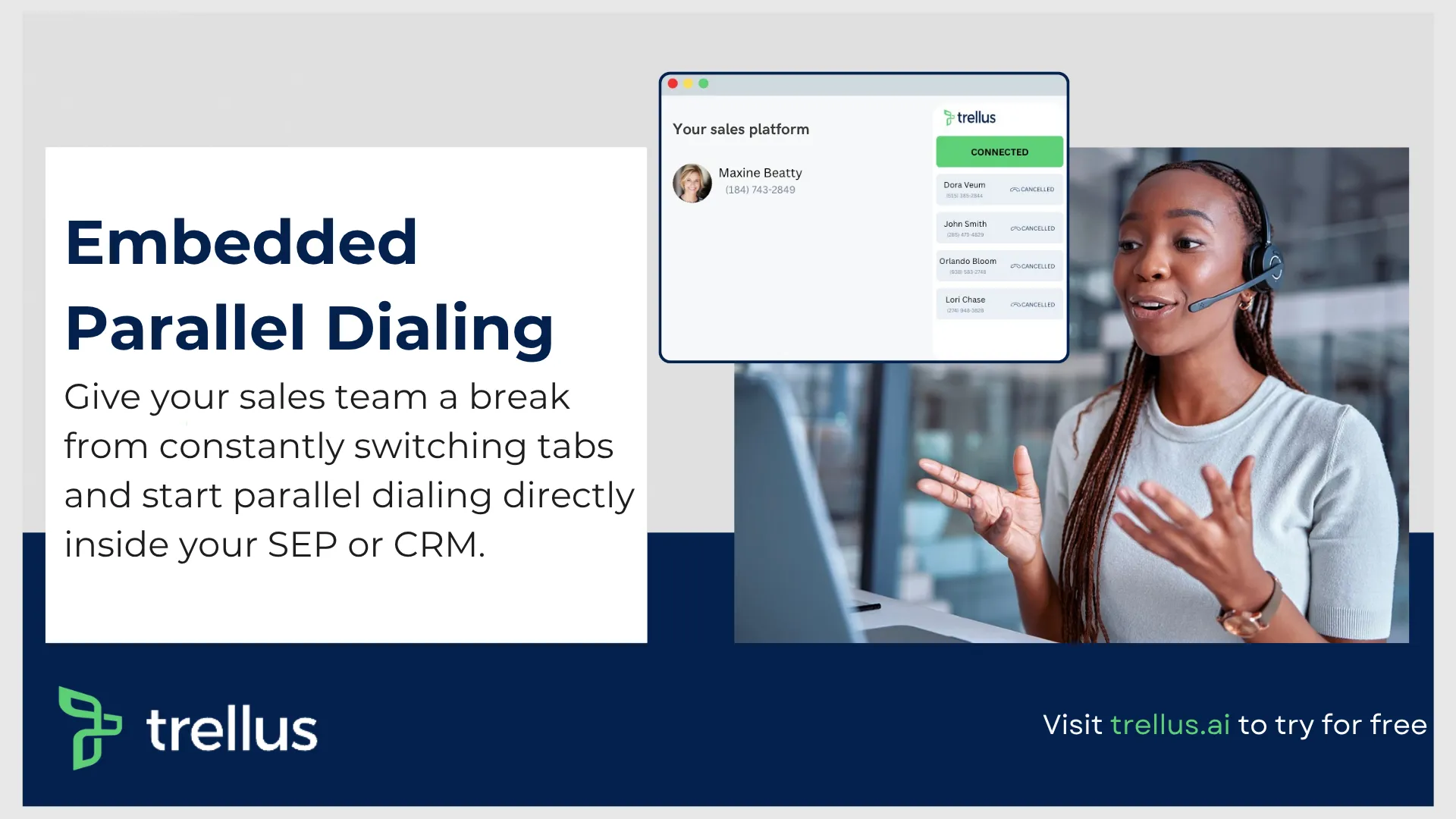
Best for: Live outbound execution, real time coaching, and SDR performance acceleration
Trellus.ai has emerged as one of the most compelling platforms for outbound sales teams that rely heavily on live conversations. While many competitors focus on post call analysis, Trellus.ai concentrates on helping representatives perform better during active conversations.
This approach creates immediate value for SDRs and BDRs responsible for generating meetings and pipeline through outbound calling.
The platform's real time coaching engine provides contextual guidance during calls, helping representatives navigate objections, handle difficult conversations, and maintain effective talk tracks. Rather than waiting for manager feedback after a call ends, sellers receive support when it matters most.
Parallel dialing capabilities further strengthen productivity. Representatives can maximize calling efficiency while maintaining conversation quality, helping teams increase connect rates and meeting volume.
Beyond coaching, Trellus.ai includes conversation intelligence, workflow automation, CRM synchronization, virtual sales floor functionality, and AI powered practice environments that help new hires develop confidence faster.
One of the biggest advantages of Trellus.ai is its direct influence on rep performance. Many AI systems generate insights after the fact. Trellus.ai helps improve outcomes during the interaction itself.
Organizations focused on outbound pipeline generation, faster onboarding, and stronger call execution will find significant value in this AI sales assistant software.
Key Strengths
- Real time AI coaching during live conversations
- Parallel dialing for increased outbound productivity
- Practice voice bots for rep development
- Conversation intelligence and coaching analytics
- Virtual sales floor environment
- Strong Salesforce and HubSpot integrations
2. 11x
Best for: Autonomous AI prospecting and outreach execution
11x has gained attention for its vision of AI employees that can handle large portions of the prospecting process autonomously.
Rather than serving solely as an assistant, 11x positions its AI agents as virtual team members capable of researching prospects, generating outreach campaigns, and managing engagement workflows at scale.
Its flagship AI agents, often referred to as Alice and Julian, help automate repetitive prospecting responsibilities that traditionally consume substantial SDR time.
The platform combines access to extensive lead databases with personalization capabilities designed to create relevant outreach across multiple channels. Email campaigns, prospect research, contact identification, and workflow management can all be coordinated through AI driven processes.
For organizations struggling with prospecting capacity, this level of automation can dramatically increase outbound coverage without proportionally increasing headcount.
11x also supports CRM synchronization, engagement tracking, and multi channel communication strategies that help maintain operational consistency.
Companies seeking a highly autonomous sales AI assistant platform may find 11x particularly attractive, especially when scaling outbound programs across large target markets.
Key Strengths
- Autonomous prospecting agents
- Large lead database access
- Multi channel outreach capabilities
- AI driven personalization
- CRM synchronization
- High volume outbound automation
3. Oliv AI
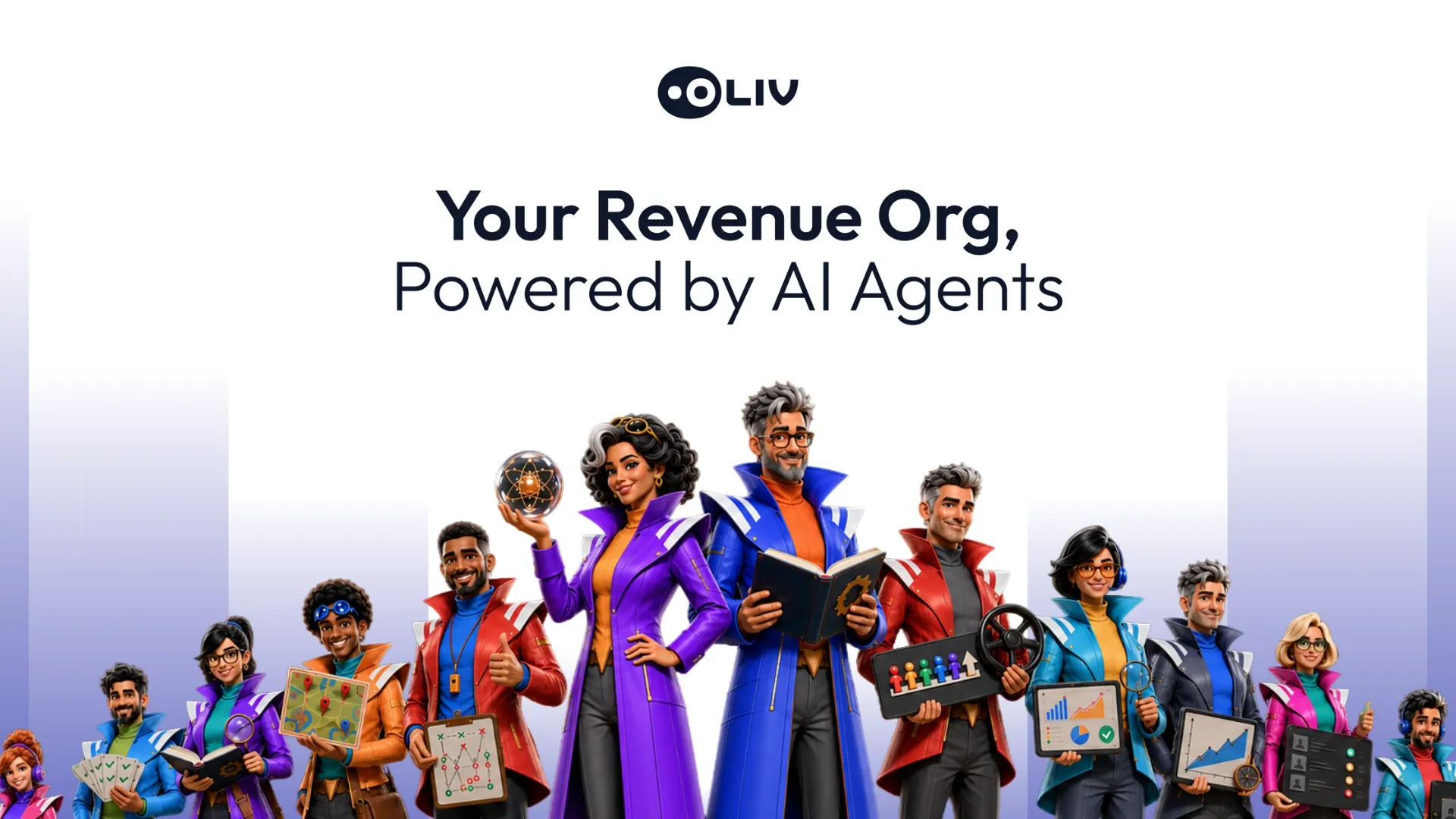
Best for: AI native CRM management and revenue execution
Oliv AI approaches sales technology from a different angle.
Rather than treating artificial intelligence as a feature layered onto existing systems, Oliv AI was designed around an AI native architecture intended to support autonomous revenue operations.
The platform introduces specialized AI agents that actively manage sales processes, maintain CRM accuracy, prepare deal reviews, and surface revenue insights.
One of its most interesting capabilities is its ability to keep CRM data updated through continuous activity monitoring and synchronization. This helps reduce one of the biggest frustrations within sales organizations: incomplete and outdated pipeline information.
Oliv AI also supports popular qualification frameworks such as MEDDPICC and SPICED, helping sales leaders evaluate deal quality with greater consistency.
Deal preparation, stakeholder analysis, pipeline management, and forecast support are all enhanced through AI driven workflows.
Organizations that view CRM systems as central to revenue execution may appreciate Oliv AI's strong focus on data integrity and operational visibility.
For leaders searching for B2B sales assistant AI tools capable of supporting both representatives and managers, Oliv AI presents an intriguing option.
Key Strengths
- AI native revenue architecture
- Autonomous CRM management
- MEDDPICC and SPICED support
- Deal preparation automation
- Two way CRM synchronization
- Revenue intelligence insights
4. Gong
Best for: Conversation intelligence and coaching insights
Gong remains one of the most recognizable names in revenue technology.
The platform built its reputation on conversation intelligence and continues to set a high standard for call analysis, coaching, and deal visibility.
Gong captures customer conversations across video conferencing platforms, phone systems, and digital communication channels. Its AI engine analyzes discussions to identify objections, competitor mentions, stakeholder engagement, sentiment trends, and buying signals.
Managers gain access to extensive coaching insights that reveal what top performers do differently and where improvement opportunities exist across the team.
The platform has expanded considerably beyond call recording. Today, Gong includes forecasting capabilities, revenue intelligence tools, AI assistants, and workflow automation features designed to support broader revenue operations.
One of Gong's greatest strengths is the depth of insight it generates from customer interactions. Organizations with mature sales teams often use these insights to refine messaging, improve coaching programs, and strengthen forecasting accuracy.
For companies prioritizing conversation analysis and performance improvement, Gong remains one of the strongest AI sales productivity tools available.
Key Strengths
- Industry leading conversation intelligence
- Deep call analysis capabilities
- Deal risk identification
- Coaching insights and performance benchmarking
- Forecasting support
- Revenue intelligence ecosystem
5. Apollo.io
Best for: Prospecting, sequencing, and outbound sales execution
Apollo.io has become a favorite among SDR teams because it combines prospect data, outreach tools, and workflow automation in a single platform.
Many organizations previously relied on separate vendors for contact data, sequencing, email engagement, and prospect research. Apollo consolidates these functions into one environment.
The platform provides access to an extensive B2B contact database alongside email verification, engagement tracking, prospect scoring, and outreach automation.
AI capabilities support email creation, prospect research, and campaign optimization. Representatives can build targeted prospect lists, launch multi touch sequences, and monitor engagement without moving between multiple applications.
Apollo's combination of affordability and functionality has made it particularly popular among startups, growth stage companies, and lean outbound teams.
For organizations asking, Which AI sales assistant tools help with prospecting, follow ups, and call coaching?, Apollo frequently appears on shortlists because of its prospecting and outreach strengths.
Key Strengths
- Large B2B contact database
- Email verification and enrichment
- AI assisted prospecting
- Sequence automation
- Engagement tracking
- CRM integrations
6. HubSpot Sales Hub (Breeze)
.webp)
Best for: Organizations operating within the HubSpot ecosystem
HubSpot has steadily expanded its AI capabilities through Breeze, its unified artificial intelligence framework.
Sales Hub combines CRM functionality, automation, reporting, outreach tools, and AI powered assistance into a highly accessible platform.
The Breeze Prospecting Agent helps identify opportunities, conduct research, and support outreach preparation. The AI Meeting Assistant simplifies scheduling and meeting management, while conversation intelligence features help extract valuable information from customer interactions.
One of HubSpot's biggest advantages is its ecosystem approach. Sales, marketing, service, and customer success teams can operate from a shared environment with consistent data visibility.
This creates a seamless experience for growing companies seeking operational alignment across departments.
For organizations already invested in HubSpot, adopting Sales Hub often represents the most efficient path toward implementing an AI sales assistant platform without introducing significant complexity.
Key Strengths
- Native CRM integration
- Breeze AI agents
- Meeting and scheduling automation
- Conversation intelligence
- Marketing and service alignment
- Strong usability
7. Clay
Best for: Deep prospect research and data enrichment
Clay occupies a unique position within the market.
Rather than focusing primarily on outreach execution or coaching, Clay specializes in research, enrichment, and prospect intelligence.
Its AI powered research capabilities allow teams to gather detailed information about prospects, companies, industries, technologies, and business developments at scale.
Claygent, the platform's AI research engine, can answer natural language questions, perform web based investigations, and extract relevant insights from large datasets.
This dramatically reduces the amount of manual research required before outreach campaigns begin.
Organizations running account based sales programs often find Clay particularly valuable because personalized outreach depends heavily on high quality account intelligence.
For teams searching for advanced AI assistant for sales reps focused on research and enrichment, Clay offers capabilities that few competitors can match.
Key Strengths
- AI powered prospect research
- Automated data enrichment
- Natural language research workflows
- Account intelligence generation
- Custom data extraction
- Strong support for ABM programs
8. Nooks
Best for: AI native outbound sales teams
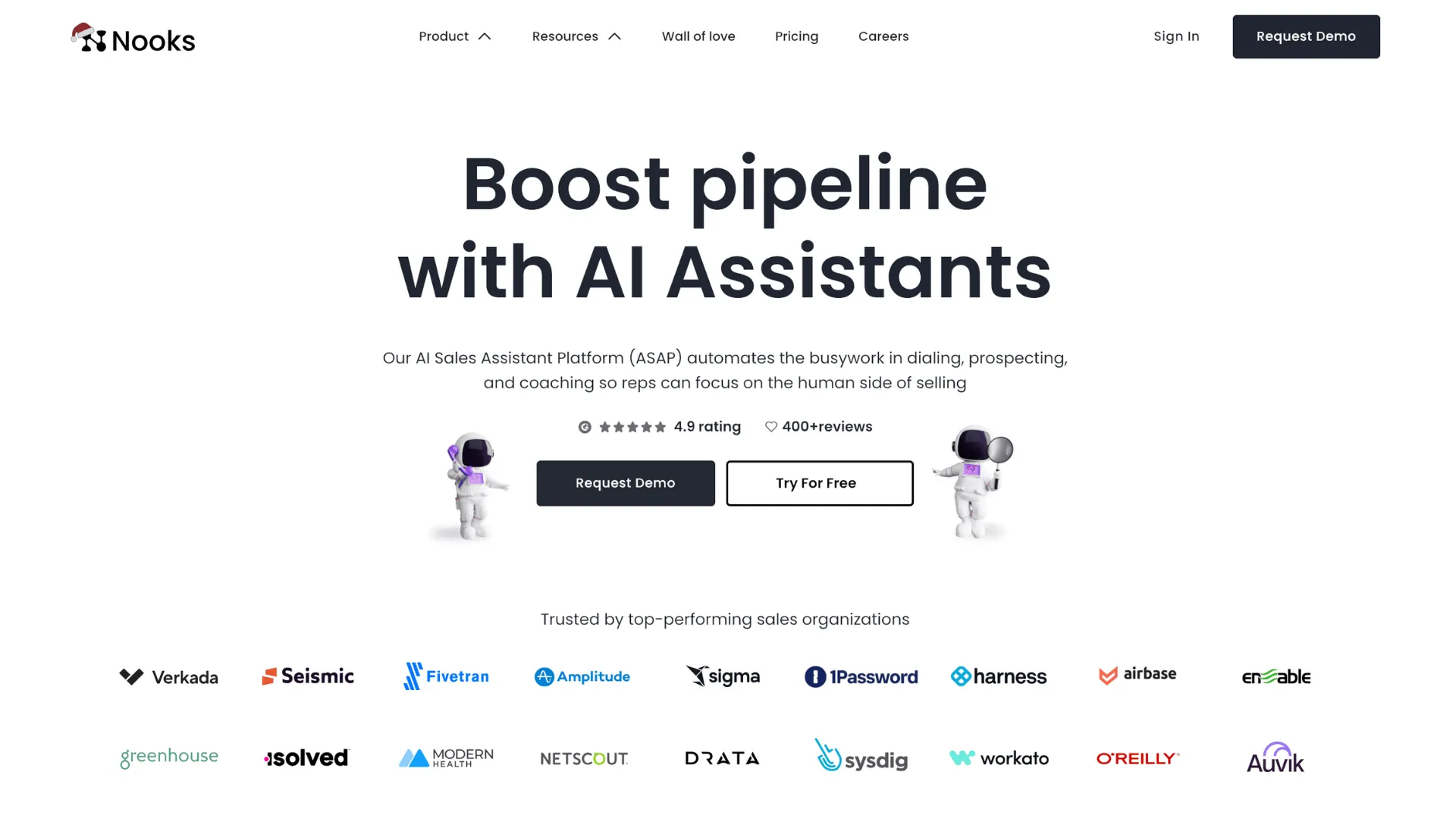
Nooks was designed with outbound sales organizations in mind.
The platform combines dialing, coaching, collaboration, and workflow management into a unified environment built for SDR productivity.
Multi line dialing helps representatives connect with more prospects efficiently. AI powered answer detection reduces wasted time, while live coaching tools provide contextual support throughout conversations.
Nooks also offers virtual sales floor functionality that enables managers and team members to collaborate in real time, creating a highly interactive selling environment.
For organizations managing large SDR teams, the combination of productivity enhancements and coaching support can create meaningful performance improvements.
Nooks continues gaining traction among high velocity sales organizations seeking a purpose built sales AI assistant platform optimized for outbound execution.
Key Strengths
- Multi line dialing
- AI answer detection
- Live coaching capabilities
- Virtual sales floor
- CRM synchronization
- Outbound team optimization
9. ZoomInfo Copilot
Best for: Data driven prospect identification and pipeline generation
ZoomInfo built its reputation on B2B data and buyer intelligence. Copilot extends that foundation with AI powered recommendations and prospect prioritization.
The platform combines company data, contact information, buying signals, intent insights, and engagement indicators to help sales teams identify promising opportunities.
Rather than relying solely on static lead lists, Copilot helps representatives focus on accounts showing meaningful signs of purchase activity.
Intent data remains one of ZoomInfo's strongest differentiators. Organizations can identify prospects researching relevant solutions and prioritize outreach accordingly.
For companies seeking a data centric approach to prospecting, ZoomInfo Copilot delivers strong value as part of a broader B2B sales assistant AI tools strategy.
Key Strengths
- Extensive B2B database
- Intent and buying signal intelligence
- Prospect prioritization
- AI recommendations
- Pipeline generation support
- CRM integrations
10. Lavender
Best for: Sales email optimization and reply rate improvement
Lavender takes a more focused approach than many platforms on this list.
Rather than attempting to manage the entire sales workflow, Lavender concentrates on helping representatives write more effective emails.
The platform analyzes messaging in real time and provides recommendations related to clarity, personalization, readability, structure, and engagement potential.
Representatives receive feedback while drafting messages, helping them create stronger outreach without extensive copywriting expertise.
Lavender also integrates with common email platforms and sales workflows, making adoption relatively straightforward.
For organizations heavily dependent on email prospecting, even small improvements in response rates can generate significant pipeline gains over time.
While Lavender is narrower in scope than many full featured AI sales assistant software solutions, it excels within its specialized area of focus.
Key Strengths
- AI email scoring
- Real time writing recommendations
- Personalization support
- Email platform integrations
- Chrome extension accessibility
- Improved outreach effectiveness
Frequently Asked Questions About AI Sales Assistant Platforms
What is the best AI sales assistant platform for B2B sales teams?
The answer depends on the type of sales motion your team runs, but for organizations that rely heavily on outbound prospecting and live conversations, Trellus.ai stands out as one of the strongest options available in 2026.
Many platforms provide valuable insights after a call has already ended. Trellus.ai focuses on helping representatives perform better while conversations are taking place. Its real time coaching capabilities, objection handling guidance, parallel dialing functionality, and sales floor environment make it particularly valuable for SDR and BDR teams responsible for generating pipeline through outbound activity.
That does not mean every team should choose the same platform. Organizations focused on conversation intelligence may lean toward Gong. Teams prioritizing prospect databases and outbound sequencing may prefer Apollo.io. Companies deeply invested in the HubSpot ecosystem may benefit from HubSpot Sales Hub and Breeze.
For many revenue teams evaluating an AI sales assistant platform, the most important consideration is identifying where the greatest productivity bottlenecks exist and selecting a solution that directly addresses those challenges.
How can an AI sales assistant platform improve SDR productivity?
This is one of the most common reasons organizations invest in modern AI sales productivity tools.
SDRs spend a considerable amount of time on tasks that do not directly contribute to selling. Prospect research, CRM updates, follow up reminders, note taking, scheduling coordination, and email drafting can consume hours every week.
An effective AI assistant for sales reps reduces this workload through automation and intelligent recommendations.
For example, AI can:
- Research accounts automatically
- Generate prospect summaries
- Draft personalized outreach emails
- Schedule meetings
- Update CRM records
- Create post call action items
- Prioritize high intent prospects
- Recommend next best actions
The cumulative impact can be substantial. Representatives spend less time navigating administrative work and more time speaking with qualified prospects.
Many organizations report improvements in outbound activity levels, meeting creation, follow up consistency, and ramp up speed for new hires after implementing a modern sales AI assistant platform.
Which AI sales assistant tools help with prospecting, follow ups, and call coaching?
Different platforms excel in different areas of the sales process.
For prospecting and lead generation, Apollo.io, Clay, ZoomInfo Copilot, and 11x are frequently considered among the strongest options. These solutions help identify prospects, enrich contact data, surface buying signals, and automate outreach workflows.
For follow up management and workflow automation, HubSpot Sales Hub, Oliv AI, Apollo.io, and Clari related solutions offer strong capabilities that help maintain engagement and keep opportunities moving forward.
For call coaching and conversation improvement, Trellus.ai, Gong, and Nooks stand out.
Trellus.ai is particularly noteworthy because it provides guidance during live conversations. Representatives receive support while speaking with prospects, helping them handle objections and maintain stronger talk tracks in real time.
Gong excels at post call analysis and coaching insights, while Nooks combines coaching support with outbound productivity features.
Organizations seeking a complete AI sales assistant software solution often combine prospecting, coaching, and workflow automation capabilities within a single platform whenever possible.


Embed Trellus Parallel Dialer Within Your SEP & 4x Your Conversations