6 Top Sales Communication Tools for VP of Sales
Discover the best sales communication tools for VPs of Sales in 2026. Compare platforms for collaboration, coaching, CRM integration, and sales team communication.


On this page
Our Top Picks


An inbound lead was waiting in a shared inbox because everyone assumed someone else had replied.
Or there might be an important message on MS Teams, Slack, or any other software that requires immediate escalation. We’re talking about tools that govern communication from VP of sales to their team managers and vice versa.
In foresight, these are normally the kind of messages that require urgency and shouldn’t be missed. One of the main issues is that communication stems from different verticals, and it might be scattered over multiple tools. Emails, chats, direct messages to a cellphone, etc.
That way, there’s a high chance that they might be overlooked amidst a frenzy of multiple tabs.
If you happen to be a VP of sales or manager in charge of a thriving sales team, ideally you’d want one main tool that could not only enable rapid to and fro communication but also eliminate any near misses before an opportunity is lost.
That being said, according to the experts from Salesforce, research shows that sellers now rely on an average of eight different tools to close business, while many admit they feel overwhelmed by the number of applications competing for their attention. Every new notification creates another opportunity for important information to get buried.
That is why many executives have started rethinking how they build their revenue technology stack. Buying another communication platform isn't enough. The software needs to reduce friction between people, conversations, customer data, coaching, and execution.
In other words, we could say that in an ideal scenario, some of the top sales communication tools for VP of Sales aren't simply messaging applications.
Some platforms focus on internal collaboration. Others bring voice, meetings, messaging, and customer conversations into one workspace. Then there are platforms built specifically for revenue teams that combine outreach, calling, coaching, and conversational intelligence into one continuous workflow.
Thinking about communication through those categories makes software selection much easier. If information gets lost between sales and marketing, strengthen collaboration. If coaching is inconsistent, invest in platforms that capture conversations and provide live guidance.
We recently doubled down on all kinds of communication tools, focusing on one main thing: centralization. Eventually, our list narrowed down to these top choices that you will be going through in a bit.
But first, if such programs aren’t your forte’, and you have been caught up between a pile of tabs and communication that isn’t on par with a sense of urgency, then let’s have a look at the whole concept of collaboration tools from a sales comm perspective.
Why Sales Collaboration Tools Are a Big Deal?

Selling has become significantly more collaborative over the past few years. Larger buying committees, longer purchasing cycles, remote work, and specialized revenue teams mean very few deals move from first conversation to signed contract with only one salesperson involved.
Communication has become part of the sales process itself.
And from that point of view, we could see that every conversation creates information that another teammate may need tomorrow.
A technical concern raised during discovery could help the solutions engineer prepare for the next demo.
An objection mentioned during a pricing conversation may help the customer success manager prepare onboarding before the contract is even signed.
Without strong Sales team communication platforms, those insights stay trapped inside personal notes or individual inboxes.
Enterprise Buying Committees Continue to Grow
Modern B2B purchases rarely involve a single decision maker.
Sales teams often speak with finance leaders, technical evaluators, procurement specialists, department managers, executive sponsors, and end users before a contract reaches approval.
- Each conversation reveals new priorities.
- Each stakeholder asks different questions.
- Each interaction creates valuable context for someone else on the account team.
Trying to manage all of that information from memory quickly becomes impossible.
Good communication platforms create one shared record of customer conversations so everyone works from the same information. Managers gain visibility into account progress, while account executives avoid repeating questions customers have already answered.
Revenue Teams Depend on Smooth Internal Handoffs
Few organizations still rely on one salesperson handling every stage of the funnel.
- An SDR qualifies the opportunity.
- An account executive runs discovery.
- A solutions engineer joins technical demonstrations.
- Legal reviews contracts.
- Finance approves pricing.
- Customer success prepares onboarding.
Every transition introduces another opportunity for customer information to disappear.
Something as simple as a prospect mentioning that budget opens next quarter could completely change follow up timing. If that information never reaches the next person, the customer experiences unnecessary repetition and the sales cycle slows.
Strong Sales floor and collaboration tools preserve those conversations throughout the customer journey, giving every stakeholder immediate access to previous discussions, recorded meetings, call summaries, and important notes.
Remote Teams Need Shared Visibility
Visibility and communication go hand in hand, and it doesn’t have to be restricted to on-site professionals. Remote teams are here.
If anything, these teams, alongside hybrid channels, have massively expanded ever since COVID happened. Now, remote is more of a norm, rather than something far fetched.
For such teams, shared visibility is as much required as in an on-site person’s case. From that point of view, a robust tool is expected to help cover the following aspects:
- Full scale awareness around department-wide communication at the office.
- Sales managers should be able to monitor cold calls, messages and outreach from remote teams.
- Remote SDRs should be able to share their wins and celebrate deals together with on-site teams.
- New SDRs, who have been recently hired, should have a reduced ramp time attributed to the effectiveness of communication tools.
- The overall remote and on site sales and communication activity feeds should ideally highlight deal movement.
For many organizations, Conversational intelligence for sales has become one of the most valuable additions to modern collaboration software. Managers no longer rely only on CRM updates. They can review actual customer conversations and coach from evidence instead of assumptions.
That visibility helps to create a stronger coaching culture, especially for distributed sales organizations where face to face interaction happens less frequently.
6 Best Sales Communication Tools Worth Trying in 2026
There is no shortage of communication software on the market. The difficult part is finding software that improves communication without creating another place your team has to monitor throughout the day.
That is where many buying decisions go wrong.
A platform might have impressive messaging features, AI summaries, or collaboration dashboards, but if your sales representatives still need to jump between multiple applications just to understand the status of one opportunity, productivity suffers.
For a VP of Sales, that translates into three measurable outcomes.
- Sales managers spend less time chasing updates.
- Representatives spend more time speaking with prospects.
- Leadership gains better visibility into pipeline health and execution quality.
The following platforms consistently stand out for different reasons. Some are excellent Sales team communication platforms, while others combine collaboration with Real-time sales coaching software, outbound execution, and Sales team performance management tools.
1. Trellus.ai: First In Class Communication and Sales Closing Tool for Multi-sized Teams
When people hear "sales communication software," they usually think about internal chat.
That is only one piece of the puzzle.
Communication inside a revenue organization also happens during live prospect calls, coaching sessions, outbound campaigns, CRM updates, and conversations between managers and representatives. If those moments remain disconnected, important customer intelligence disappears before anyone can act on it.
That is where Trellus earns its place.
Basically, instead of functioning as another messaging platform, it connects the conversations happening with prospects to the people responsible for improving sales performance. Managers gain visibility into live selling activity, representatives receive coaching when it matters most, and customer conversations remain accessible long after the call ends.
For a VP of Sales trying to improve execution across an entire organization, that creates a much stronger communication loop than relying on chat messages alone.
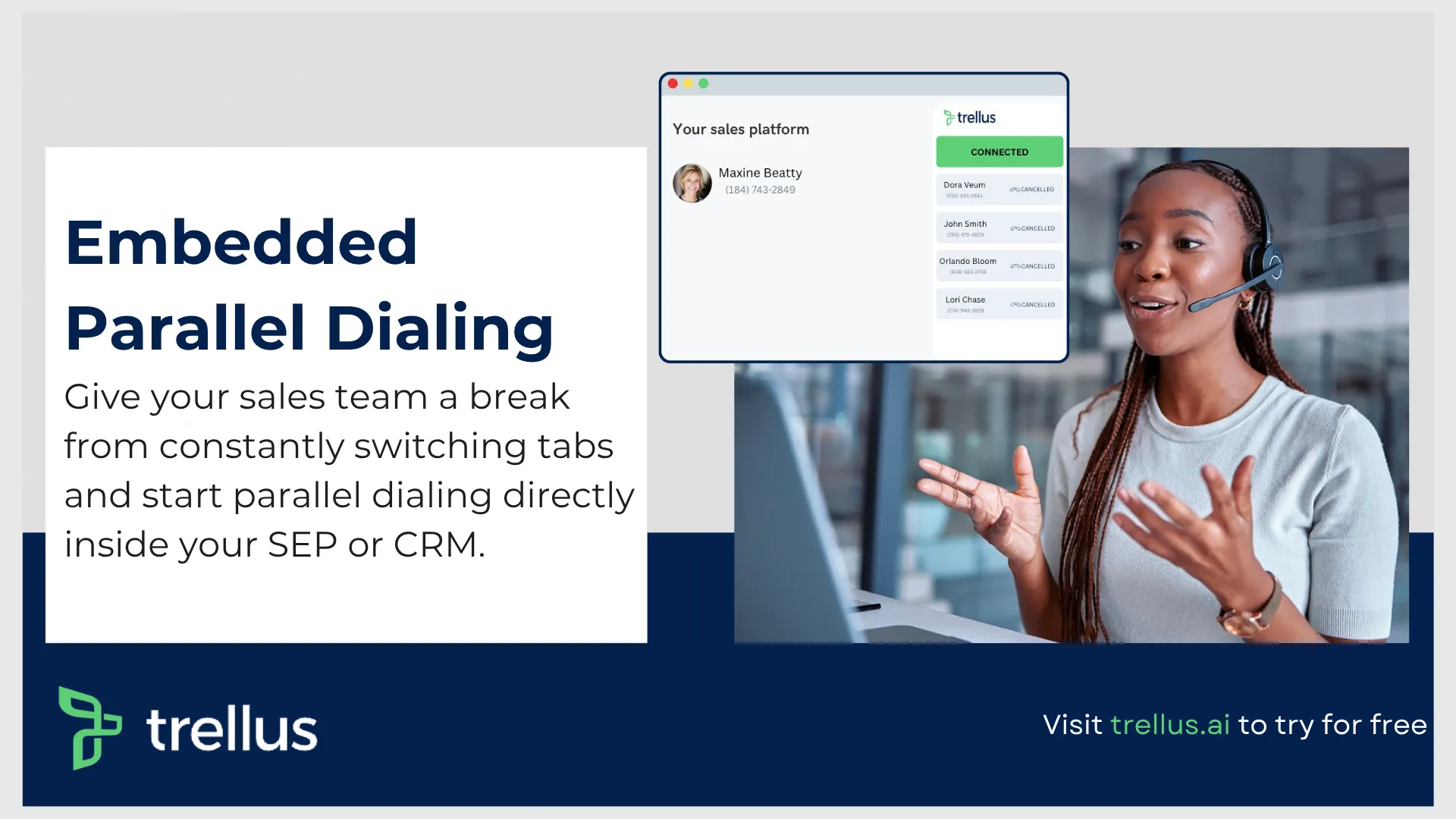
The platform combines intelligent dialing, AI powered coaching, conversation analysis, LinkedIn prospect research, and performance insights inside one workspace. Reps are no longer forced to jump across several browser tabs before every call. Managers don't need to wait until the end of the week to understand where coaching opportunities exist.
Every conversation becomes an opportunity to improve the next one.
Other than that, there’s the live coaching aspect.
Managers can guide representatives while calls are taking place, helping them respond more confidently to pricing objections, competitive questions, or unexpected customer concerns. New hires ramp faster because coaching happens during real conversations instead of hours later during scheduled review sessions.
It also answers one of the biggest questions sales leaders continue asking today.
How can a VP of Sales use real-time coaching to improve team performance?
The answer begins with reducing the delay between customer interaction and manager feedback.
When coaching happens while opportunities are still active, representatives improve faster, managers stay closer to frontline conversations, and customer experiences remain consistent across the team.
Why it stands out
Strong communication software should improve both internal collaboration and customer conversations. This platform succeeds because it connects those two worlds together inside one workspace.
Key strengths include:
- AI powered live coaching during active sales conversations.
- Intelligent parallel dialing that keeps representatives productive throughout the day.
- Automatic conversation summaries that preserve customer context.
- LinkedIn prospect research available inside the calling workflow.
- Performance dashboards that help managers identify coaching opportunities quickly.
- AI practice calls that allow representatives to improve before speaking with live prospects.
- CRM integrations that keep customer records updated without extra administrative work.
Best for
Growing outbound organizations, SDR teams, BDR teams, revenue leaders building structured coaching programs, and companies searching for Real-time sales coaching software that also strengthens collaboration and communication across the entire sales organization.
2. Salesforce Sales Cloud + Chatter
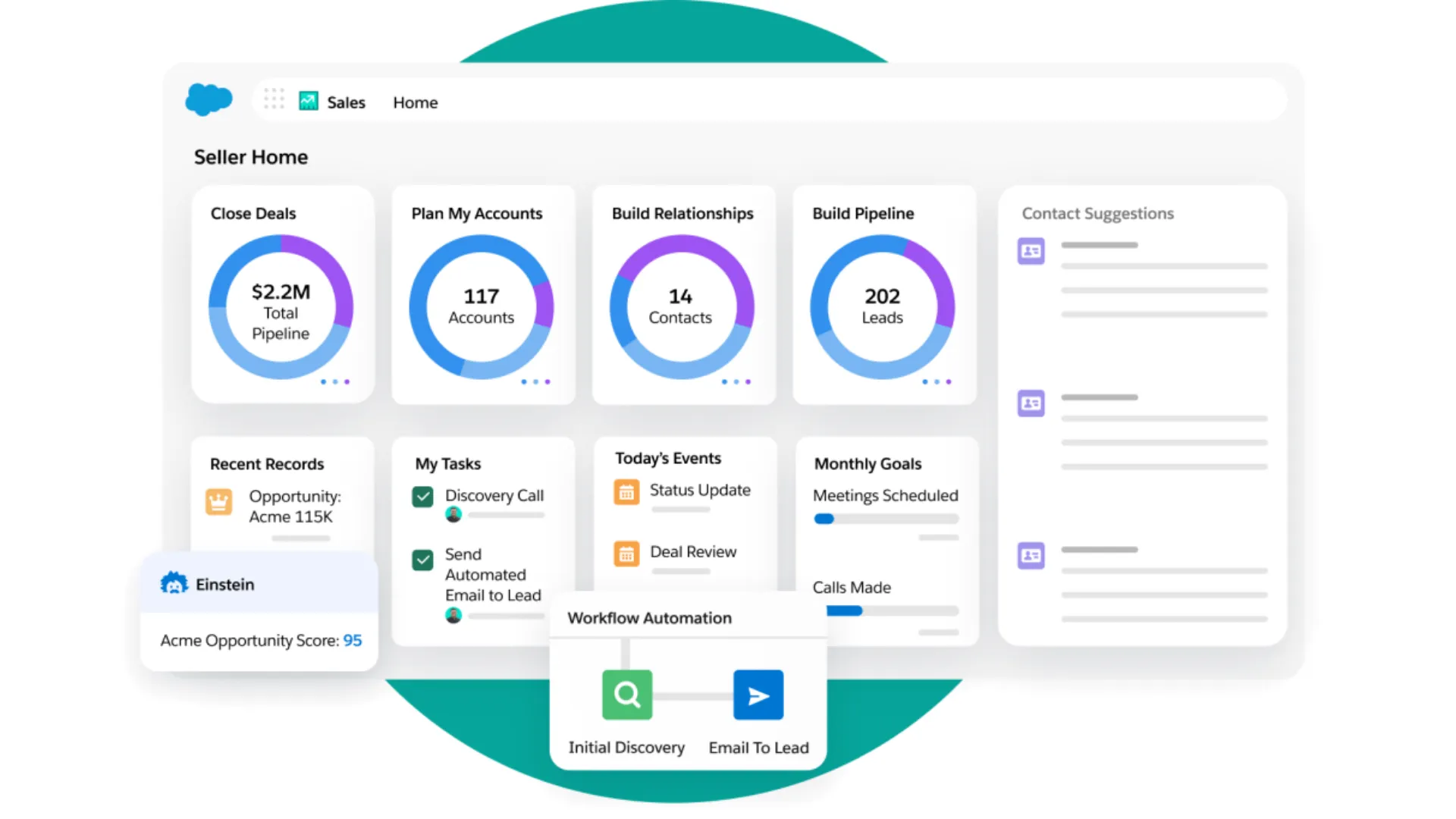
For many enterprise organizations, Salesforce remains the operational center of the entire revenue team.
Every opportunity, account, forecast, activity history, and customer interaction eventually finds its way into the CRM. That makes it a natural place for internal collaboration as well.
One of the most useful aspects of Salesforce is that conversations stay connected to customer records instead of disappearing into long email chains.
- Imagine an account executive preparing for a renewal discussion.
- Legal has already reviewed contract language.
- Finance approved revised pricing.
The solutions consultant answered several technical questions during the last demo.
Rather than searching multiple inboxes or asking everyone for updates again, those conversations remain attached to the opportunity record where the entire account team can review them.
That creates far better continuity throughout long enterprise sales cycles.
Chatter extends that collaboration even further.
Teams can create dedicated spaces for strategic accounts, regional sales pods, product specialists, or executive deal reviews. Questions, updates, files, customer feedback, and meeting notes remain organized around the accounts that matter most.
Organizations already relying on Slack also benefit from the native Salesforce integration.
Important deal updates can appear directly inside Slack channels while CRM records stay synchronized automatically. Sales teams continue working inside familiar communication tools without sacrificing CRM visibility.
For large organizations handling hundreds or thousands of active opportunities, that connected workflow significantly reduces duplicate updates and unnecessary status meetings.
Why enterprise sales teams continue choosing Salesforce
Salesforce works particularly well because communication stays attached to pipeline activity instead of becoming isolated conversations.
Its biggest collaboration advantages include:
- Deal discussions linked directly to account and opportunity records.
- Chatter communities built around strategic accounts and internal teams.
- Strong Slack connectivity for organizations already invested in Slack.
- Complete customer history available across the revenue organization.
- Broad ecosystem supporting virtually every major sales technology platform.
Best for
Enterprise sales organizations that already operate inside Salesforce and want collaboration to happen naturally alongside pipeline management instead of inside disconnected communication tools.
3. HubSpot Sales Hub + Conversations
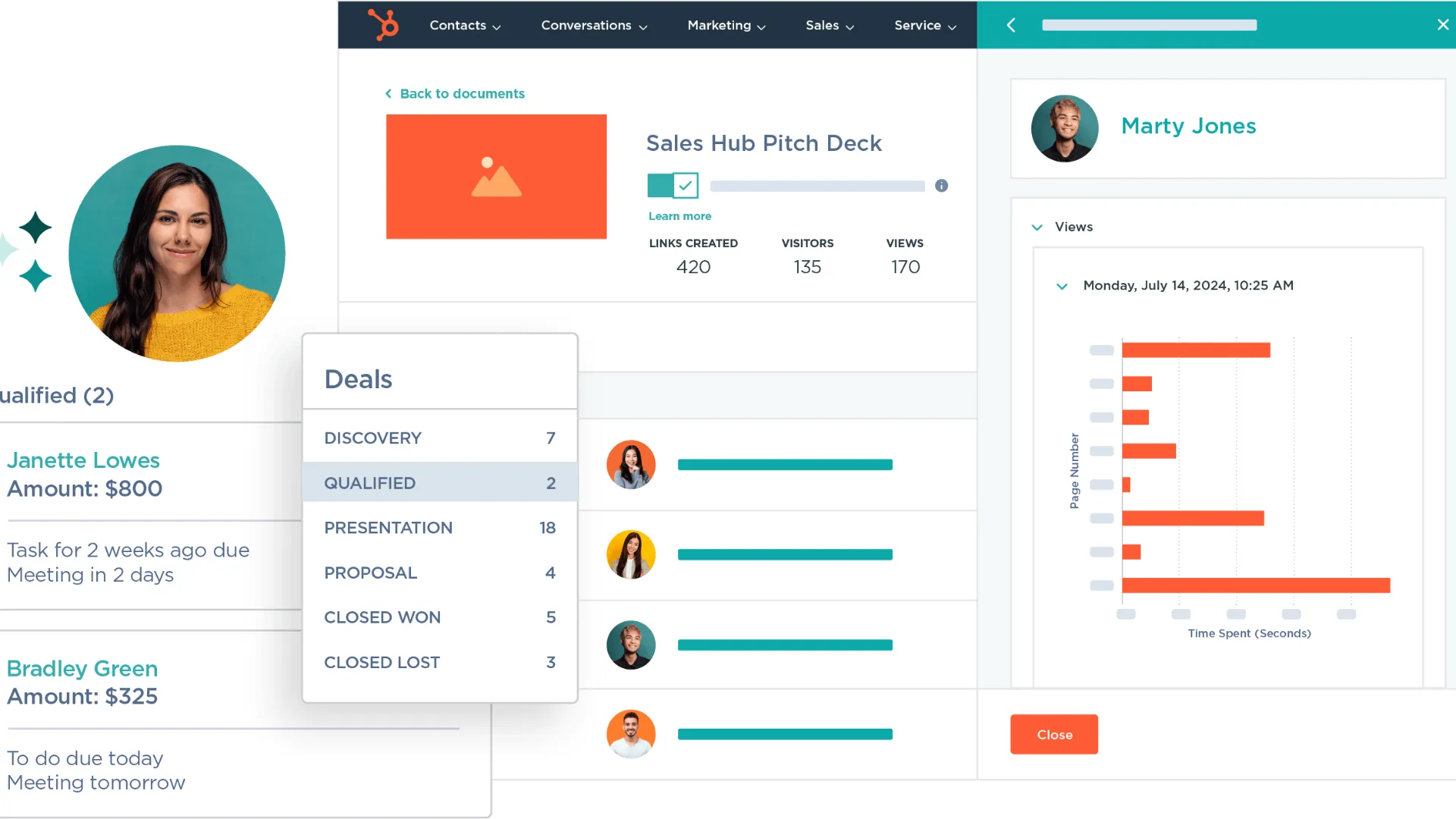
HubSpot has earned a loyal following because it keeps communication simple.
Sales representatives, marketers, and customer support teams frequently work from the same CRM, giving everyone visibility into customer interactions without constant manual updates.
One area where HubSpot performs particularly well is shared communication.
Its Conversations workspace combines email, website chat, forms, and customer messages into one collaborative inbox.
That sounds simple, but the impact on team communication is significant.
Internal comments allow teammates to ask questions, leave reminders, or tag colleagues without exposing those discussions to customers.
Ownership can change with a single click, making it much easier to coordinate responsibilities as deals progress.
The CRM timeline strengthens collaboration even further.
Emails, meetings, documents, notes, phone calls, and follow ups all appear chronologically, giving every team member immediate context before speaking with the customer.
For growing businesses, that unified experience often removes many of the communication gaps created when separate CRM, email, and support systems operate independently.
Why growing companies like HubSpot
HubSpot succeeds because communication, CRM data, and customer history remain tightly connected throughout the sales process.
Notable collaboration strengths include:
- Shared inbox bringing together email, live chat, and web inquiries.
- Internal comments and conversation assignments.
- Complete customer timeline across every interaction.
- Native CRM connectivity requiring very little administration.
- Simple interface that encourages rapid adoption across departments.
Best for
Small businesses and mid market organizations looking for Sales team communication platforms that combine CRM, collaboration, and customer conversations without adding unnecessary complexity.
4. Outreach

Outreach has long been recognized as one of the leading sales engagement platforms, but communication is one of the reasons many revenue leaders continue investing in it.
High performing sales teams don't simply send more emails or make more calls. They communicate consistently. Every representative follows proven messaging, managers can inspect execution, and customer conversations remain visible throughout the organization.
That consistency becomes difficult once a team grows beyond a handful of salespeople.
One representative follows up after two days, whereas another person from the same team waits a week.
Over time, those small differences create noticeable gaps in pipeline performance.
Outreach brings structure to that process.
Managers can build repeatable sequences that combine emails, calls, LinkedIn touches, follow ups, and task reminders into one coordinated workflow. Every representative follows the same playbook while still having enough flexibility to personalize conversations when needed.
That creates stronger communication across the sales organization because everyone understands what good execution looks like.
The platform also gives managers detailed visibility into how those playbooks perform.
- Response rates.
- Meeting conversion.
- Sequence completion.
- Call activity.
- Pipeline progression.
Rather than relying on anecdotal feedback, leadership can review objective performance data and identify coaching opportunities much earlier.
One feature many VPs of Sales appreciate is the tight Salesforce integration.
Activities completed inside Outreach automatically appear inside CRM records, creating one continuous history of customer communication. Sales representatives spend less time updating systems manually, while managers gain cleaner reporting across the organization.
That shared visibility becomes increasingly valuable as outbound teams expand across multiple regions and time zones.
Why Outreach remains a leader
Organizations investing heavily in outbound sales often discover that communication improves when everyone works from the same operating framework.
Key strengths include:
- Structured sequences that standardize outbound communication across the team.
- Shared templates that improve messaging consistency.
- Strong reporting that helps managers evaluate execution quality.
- Automatic CRM synchronization that keeps customer records complete.
- Analytics supporting coaching conversations and pipeline reviews.
Best for
Large SDR and BDR organizations running structured outbound programs that require consistent messaging, standardized execution, and reliable reporting.
5. Google Workspace
Google Workspace rarely appears on lists of dedicated sales software, yet many revenue teams rely on it every single day.
That is because communication extends far beyond CRM updates and outbound sequences.
Sales representatives prepare proposals inside Google Docs.
Its greatest advantage is familiarity.
Most professionals already understand Gmail, Drive, Docs, Calendar, and Meet before joining a new company. Adoption happens naturally, allowing teams to spend their time selling instead of learning complicated software.
Google Spaces adds another useful layer for sales organizations.
Teams can create dedicated workspaces around strategic accounts, product launches, enterprise pursuits, or regional collaboration. Documents, conversations, meeting links, and shared files remain organized in one searchable location.
The search element also deserves recognition.
Finding an old proposal, customer presentation, meeting invitation, or pricing spreadsheet usually takes only a few seconds because Google's search capabilities work consistently across the ecosystem.
For growing companies operating with lean sales teams, that simplicity saves a surprising amount of time.
There are limits, of course.
Organizations relying heavily on outbound calling, advanced routing, AI coaching, or conversation analytics will still need dedicated voice technology alongside Google Workspace.
- It supports collaboration exceptionally well.
- It does not replace specialized sales execution software.
Why many revenue teams continue relying on Google Workspace
Communication becomes much easier when every employee already understands the tools.
Its strongest collaboration capabilities include:
- Familiar interface requiring very little onboarding.
- Google Chat and Spaces supporting organized internal communication.
- Meet delivering reliable customer meetings and internal collaboration.
- Drive simplifying document sharing across account teams.
- Powerful search helping teams locate conversations and files quickly.
Best for
Growing companies, startup sales organizations, founder led teams, and businesses that already operate primarily inside the Google ecosystem.
6. Salesloft
Salesloft occupies a similar category to Outreach, yet many organizations prefer it because of its strong focus on coaching, governance, and sales execution.
Its cadence engine organizes outbound communication across email, phone, and social channels while integrated dialing keeps calling activity inside the same environment.
Managers gain visibility into conversations through call recording, analytics, and coaching tools that support ongoing performance development.
That visibility matters because collaboration software continues becoming central to modern sales organizations.
Research from Market.us highlights just how widespread digital collaboration has become. Usage increased dramatically as remote and hybrid work expanded, with most knowledge workers relying on multiple communication applications every day. Revenue leaders are now looking for platforms that reduce software sprawl while giving managers better visibility into customer conversations.
Salesloft fits that requirement well.
Communication, coaching, and execution stay closely connected throughout the selling process.
That makes it easier for managers to review active opportunities, inspect call quality, identify coaching moments, and maintain consistent outbound standards across large teams.
It also addresses another important leadership question.
What tools help sales leaders track and improve call quality across their team?
Platforms that combine call recording, coaching insights, activity analytics, and CRM visibility give managers a far clearer understanding of what happens during customer conversations. Coaching becomes continuous because every important interaction is available for review.
Why Salesloft continues earning enterprise adoption
Organizations looking for stronger governance often appreciate the balance between execution and management visibility.
Its biggest strengths include:
- Multi channel cadences covering email, phone, and social engagement.
- Integrated dialing with conversation recording.
- Coaching workflows supported through activity analytics.
- Strong CRM synchronization for cleaner reporting.
- Administrative controls that help larger organizations maintain consistency.
Best for
Enterprise B2B organizations, mature SDR teams, and revenue leaders looking for Sales team performance management tools alongside structured engagement workflows.
What Communication Tools Do Top Performing Sales Teams Use to Stay Aligned in 2026?
There is no universal technology stack.
The highest performing organizations build communication ecosystems where every platform serves a clear purpose and shares information across the rest of the revenue operation.
Most successful teams combine several categories of software.
A CRM such as Salesforce or HubSpot serves as the system of record.
A sales engagement platform like Outreach or Salesloft manages outbound execution.
A coaching platform with Conversational intelligence for sales helps managers improve representative performance through real customer conversations.
Collaboration tools such as Slack or Google Workspace support day to day coordination across departments.
That also answers another common executive question.
Which sales communication tools integrate with Outreach, Salesloft, and HubSpot?
Most enterprise revenue teams connect CRM platforms, collaboration software, engagement platforms, meeting applications, and coaching tools through native integrations or APIs. The strongest ecosystems minimize duplicate work while preserving complete customer history across every stage of the buying journey.
Building a High Performance Sales Culture Starts with Better Communication
Every VP of Sales wants higher win rates, stronger forecasting, and more productive representatives.
Those outcomes begin with communication.
Not communication measured by the number of Slack messages or internal meetings, but communication that preserves customer context, supports faster coaching, improves collaboration, and gives every member of the revenue organization access to the information they need at the right time.
That is why many organizations are investing more heavily in Real-time sales coaching software, Sales floor and collaboration tools, and Sales team performance management tools.
- Managers spend less time collecting updates.
- Representatives spend more time selling.
Customers enjoy smoother conversations because every handoff includes complete context.
That naturally leads to another important question many executive teams are asking.
How to build a high-performance sales culture with remote and distributed teams?
The answer starts with visibility.
When managers can coach from live conversations, representatives can easily collaborate across departments, and customer information follows every opportunity from first contact through onboarding, distributed teams operate with the same confidence and alignment as revenue organizations working under one roof.
Communication software cannot replace strong leadership.