.png)
Our Top Picks


The best AI SDR tools help outbound teams prospect smarter, call faster, coach better, and automate low-value admin; without removing human judgment from key moments. The right choice depends on your motion: phone-first outbound, multi-channel engagement, research-driven prospecting, or AI agent-led workflows.
This guide compares eight AI SDR software options; Trellus, Nooks, Orum, Outreach, Salesloft, Apollo, Clay, and Artisan; through a buyer lens: what each is best for, how to vet capabilities, and what to confirm before you buy.
If you need a primer on the category, start with the hub on AI SDR software. This article is for teams finalizing a shortlist and scheduling demos.
Quick answer: the best AI SDR tools by sales motion
•Calling-heavy teams: Start with Trellus, Nooks, and Orum to increase call throughput, improve live conversations, and streamline outbound call workflows.
•Sales engagement platforms: Evaluate Outreach and Salesloft for sequencing, governance, and cross-team engagement operations. Verify AI packaging and integrations.
•Prospecting data and workflows: Consider Apollo and Clay for list building, enrichment, and research automation. Decide what lives here versus in your dialer or engagement platform.
•AI agent-led outbound: Review Artisan if you plan to automate more of the SDR workflow. Confirm guardrails, deliverability controls, and CRM coverage.
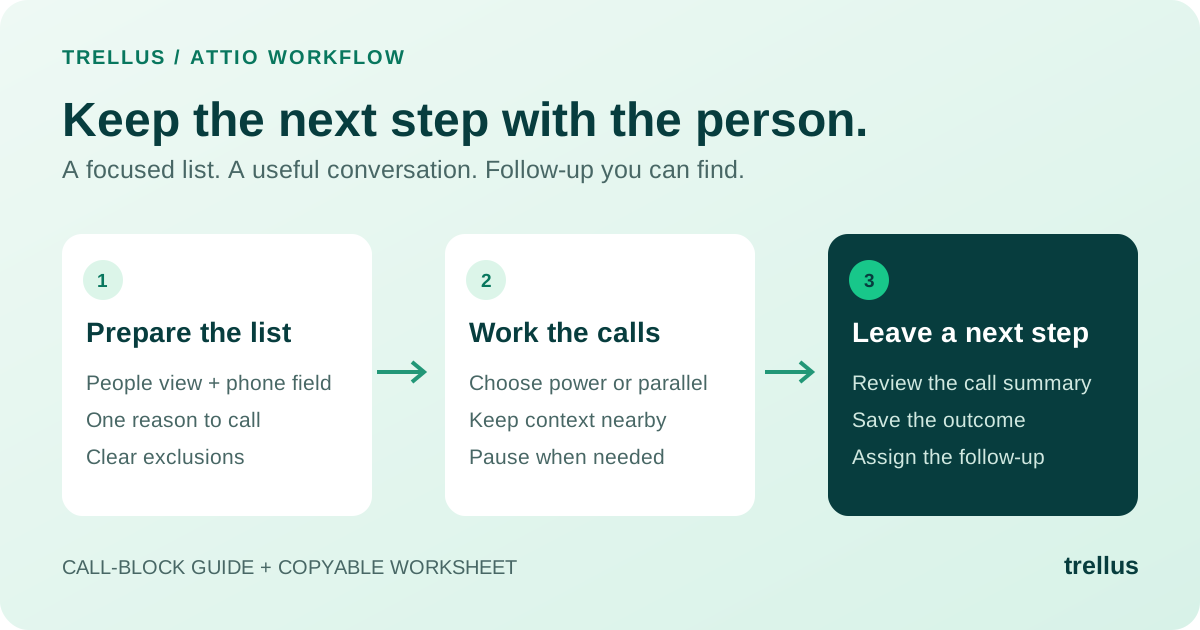
Trellus is a strong fit for call-first teams that want practical AI assistance in dialing and coaching. Review parallel dialing, real-time sales coaching, and AI voice agents, then confirm current plans on Trellus pricing.
What counts as AI SDR software in 2026?
AI SDR software augments SDR tasks like account research, lead scoring, list building, sequencing, dialing, call coaching, voicemail, meeting booking, CRM updates, and follow-up generation. Because SDR work spans channels and systems, no single product fits every team.
Anchor your comparison with three questions:
1.What task is the real bottleneck today?
2.Where should AI assist vs. automate?
3.Which workflows must stay in your CRM, dialer, or engagement platform?
The best tools accelerate quality execution, not just volume.
How to evaluate AI SDR tools
Align the buying committee before demos. Use this framework to pressure-test fit, risk, and rollout effort.
The 8 best AI SDR tools to compare in 2026
These tools sit in the same buying conversation (helping SDRs perform or automate outbound), but they are not interchangeable. Use this as a shortlist guide, then verify current packaging and integrations live.
1) Trellus
Trellus focuses on practical AI assistance for call-heavy teams: helping reps connect more, handle objections in real time, and standardize execution.
What to review:
•Parallel dialing to increase calling throughput.
•Real-time sales coaching to support reps during calls.
•AI voice agents if exploring automation with oversight.
Fit signals:
•Phone-first SDR motion.
•Desire for live objection support and consistent talk tracks.
•Managers prioritizing coaching at the moment of execution.
•Preference for AI assistance over full autonomy.
What to validate:
•Supported CRMs and workflow integrations.
•Packaging of dialing, coaching, and AI voice features.
•Usage limits and calling requirements.
•Setup for scripts, prompts, dispositions, reporting.
Mid-article CTA: Evaluating call-heavy AI SDR workflows? Explore Trellus capabilities and current plans on Trellus pricing, or request a demo to test fit for calling, coaching, and AI-assisted prospecting.
2) Nooks
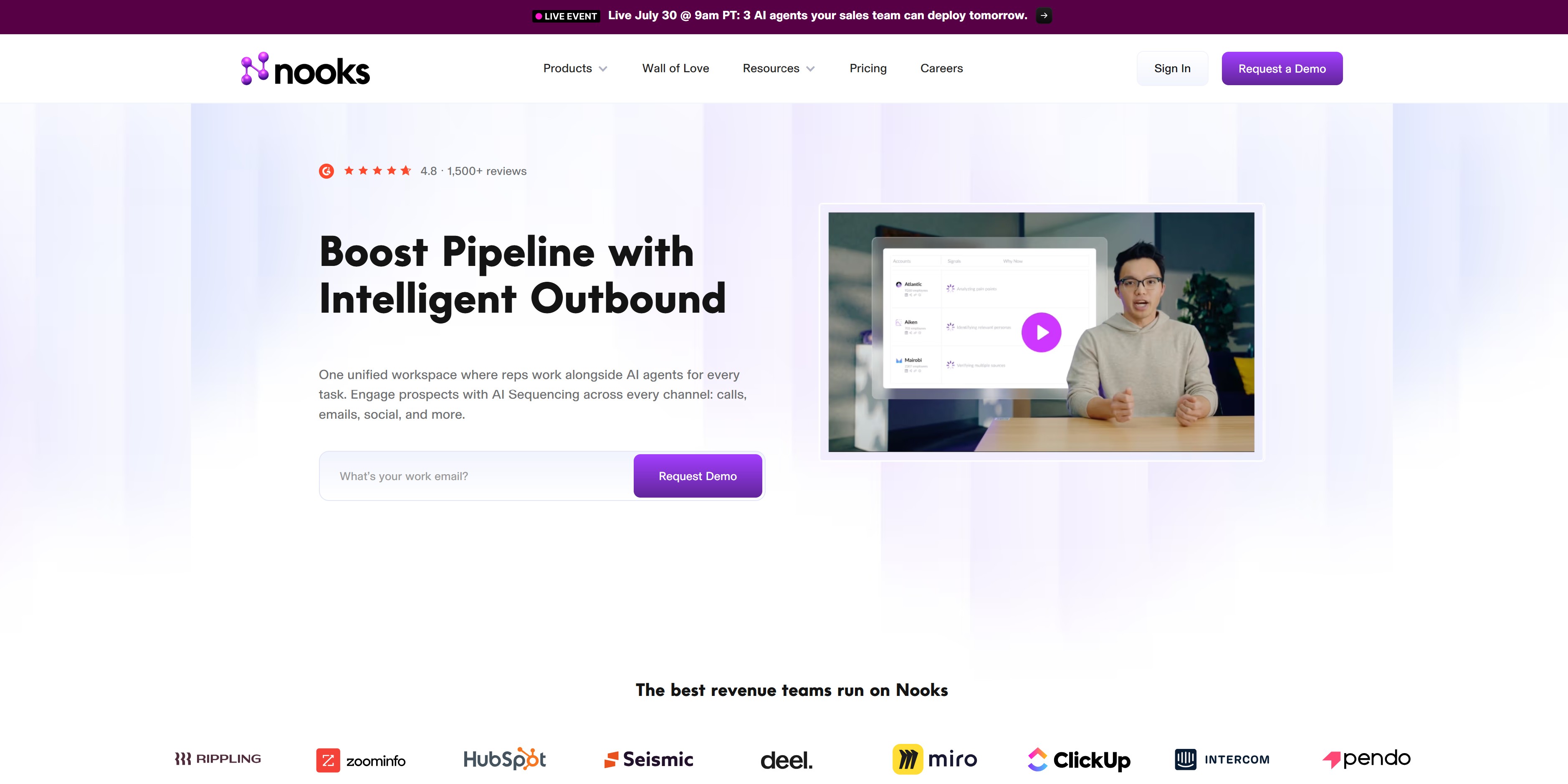
Nooks is often selected by phone-heavy teams that run structured call blocks and want a collaborative, high-energy calling environment with visibility for managers.
Fit signals:
•High daily outbound call volume.
•Need for live session visibility and collaboration.
•Call productivity is a bigger gap than data sourcing.
What to validate:
•Included AI capabilities today.
•Live coaching vs. post-call analytics.
•CRM and engagement tool integrations.
•Pricing by users/usage and available packages.
•Compliance settings for target regions.
3) Orum
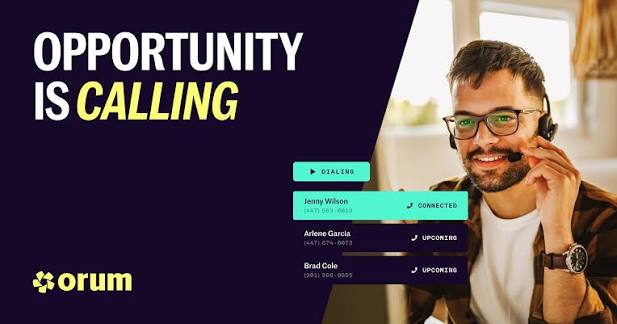
Orum is built for dialing velocity and connect-rate lift. It’s considered when the primary constraint is too few live conversations per rep hour.
Fit signals:
•SDRs spend most of the day calling.
•Stable prospect data and messaging already in place.
•Need to scale connect attempts efficiently.
What to validate:
•Available dialing modes and regional controls.
•CRM logging and disposition workflows.
•Reporting depth and manager views.
•Packaging, usage, and support model.
4) Outreach
Outreach is a multi-channel sales engagement platform used to standardize sequences, govern rep activity, and embed AI in execution across teams.
Fit signals:
•Need for structured cadences and governance.
•Multiple roles sharing workflows and reporting.
•Preference for platform over point tools.
What to validate:
•Which AI features are in your target package.
•Implementation scope and change management.
•CRM and data provider interoperability.
•Calling capabilities relative to SDR needs.
•Total contract and add-ons.
5) Salesloft
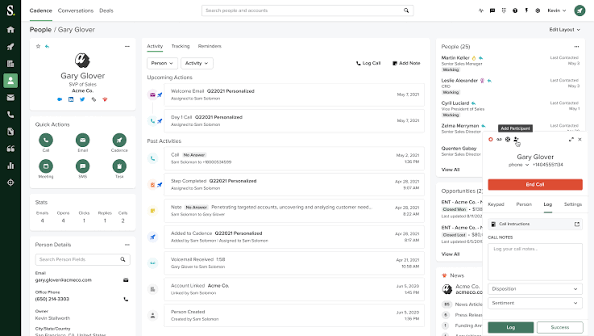
Salesloft is a revenue engagement platform for cadences, conversation insights, and cross-role coordination.
Fit signals:
•Team-wide engagement standardization.
•Manager need for visibility and coaching.
•Desire for broader system vs. narrow AI SDR tool.
What to validate:
•AI feature availability and packaging.
•CRM alignment and rollout effort.
•Calling and conversation intelligence depth.
•Reporting flexibility for SDR managers.
•Contract structure and add-ons.
6) Apollo
Apollo combines prospecting data with outbound workflows. Teams use it to find contacts, enrich accounts, and run basic engagement.
Fit signals:
•Prospecting data coverage is the primary need.
•SDRs need repeatable list-building.
•Preference for data + outreach in one system.
What to validate:
•Data accuracy for your ICP and regions.
•Email, phone, and enrichment coverage.
•Current AI functionality and limits.
•CRM sync and duplicate prevention.
•Credit usage and plan terms.
7) Clay
Clay excels at building custom prospecting workflows that blend enrichment, logic, and signals for research-driven outbound.
Fit signals:
•Ops-minded team ready to design and govern workflows.
•Personalization and research are the bottleneck.
•Willingness to maintain playbooks over time.
What to validate:
•Available data providers and integrations.
•Review process for AI-generated research.
•Sync pathways into CRM/engagement tools.
•Cost structure: usage, credits, provider fees.
8) Artisan
Artisan serves teams exploring AI agent-led outbound. It promises leverage through automation but requires strong controls.
Fit signals:
•Appetite for autonomous outreach with oversight.
•Clear guardrails for brand, targeting, and review.
•Ability to monitor deliverability and compliance.
What to validate:
•Human approval points and escalation paths.
•Research methods and personalization quality.
•Opt-out handling and deliverability controls.
•CRM coverage and workflow integration.
•Current features and plan packaging.
Best AI SDR tools by use case
Use this summary to narrow your demo list.
Also see adjacent coverage in our guide to AI BDR tools if you’re comparing BDR-specific stacks.
How to choose the right AI SDR software
A sound evaluation starts with workflow diagnosis, then tests real accounts in vendor demos.
1.Identify the bottleneckMap your path from account selection to booked meeting. Look for the slowdown:
•Poor targeting or incomplete lists
•Personalization takes too long
•Call volume or connect rates are low
•Objection handling is inconsistent
•Follow-up slips
•CRM notes are thin
•Managers can’t inspect or coach at scale
Each points to a different category (dialer/coaching vs. data vs. engagement governance).
1.Decide assistive vs. autonomous AIAssistive AI helps humans research, prioritize, call, and respond. Autonomous AI generates and sends messages or runs workflows. Choose based on deal size, risk tolerance, compliance, and brand standards.
2.Test with your own dataBring real accounts, personas, scripts, objections, and CRM fields to the demo. Evaluate:
•Specificity vs. generic outputs
•How errors are corrected
•Manager visibility and coaching flow
•CRM sync and edge cases
•Likelihood of daily rep adoption
1.Define workflow ownershipAvoid overlapping systems. Decide which tool owns:
•Account/contact source of truth
•Sequences/cadences
•Calling workflow and notes
•Meeting booking
•Coaching insights and dashboards
•AI-generated follow-up
1.Ensure manager adoptionManagers must be able to inspect quality and coach behavior. Review live support features, call review, analytics, and onboarding. If coaching is central, also compare dedicated AI sales coaching tools.
AI SDR software pricing models to expect
Pricing varies by category and packaging. Common variables:
•Per-seat licenses
•Calling minutes/telephony charges
•Data/enrichment credits
•AI generation or automation usage
•Add-ons for coaching, conversation intelligence, or agents
•Enterprise/CRM integrations
•Implementation and support packages
•Annual minimums and term length
Always verify current plans and usage mechanics with vendors. For Trellus, see Trellus pricing and confirm needs like dialing, live coaching, or AI voice agents.
Compare total cost of ownership based on expected usage, not just seat count.
Implementation checklist for AI SDR tools
Success depends on process, data quality, and coaching—not just licenses.
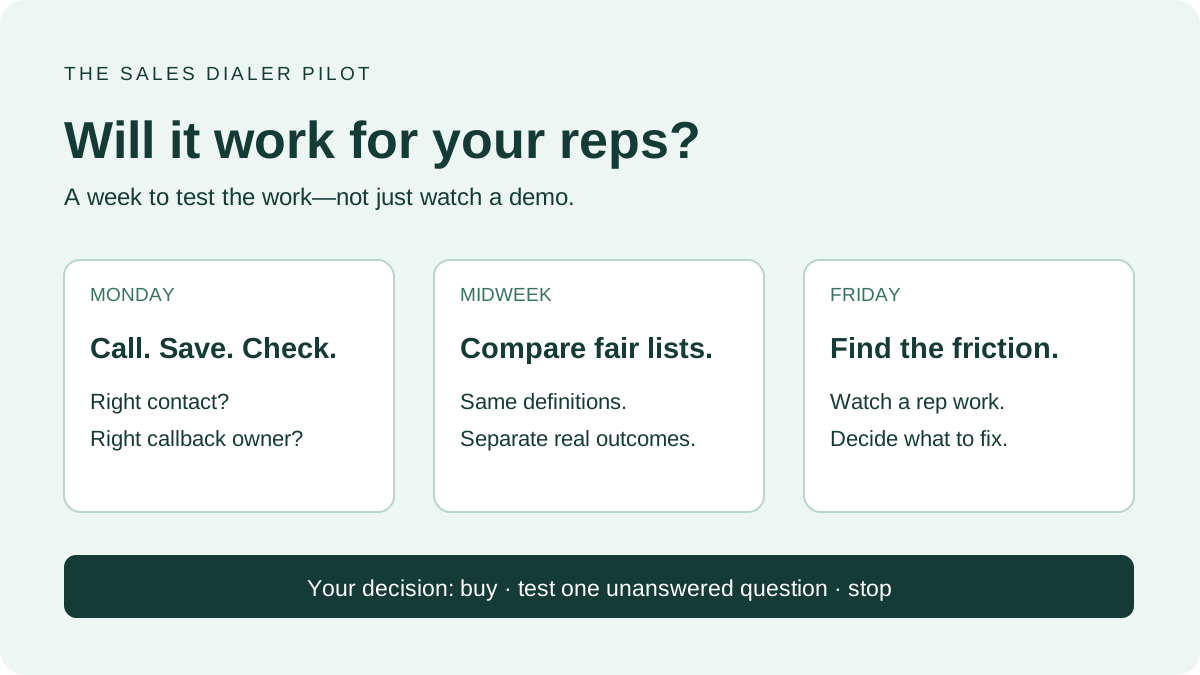
•Pilot with a representative pod: a few SDRs and one engaged manager.
•Clean inputs: ICP fields, contacts, phones, emails, territories, stages.
•Set AI guardrails: what AI can send, say, update, and when approval is required.
•Codify opt-outs, recording rules, and data handling; align with legal.
•Build manager rhythms: live support, call reviews, scorecards, and rep feedback loops.
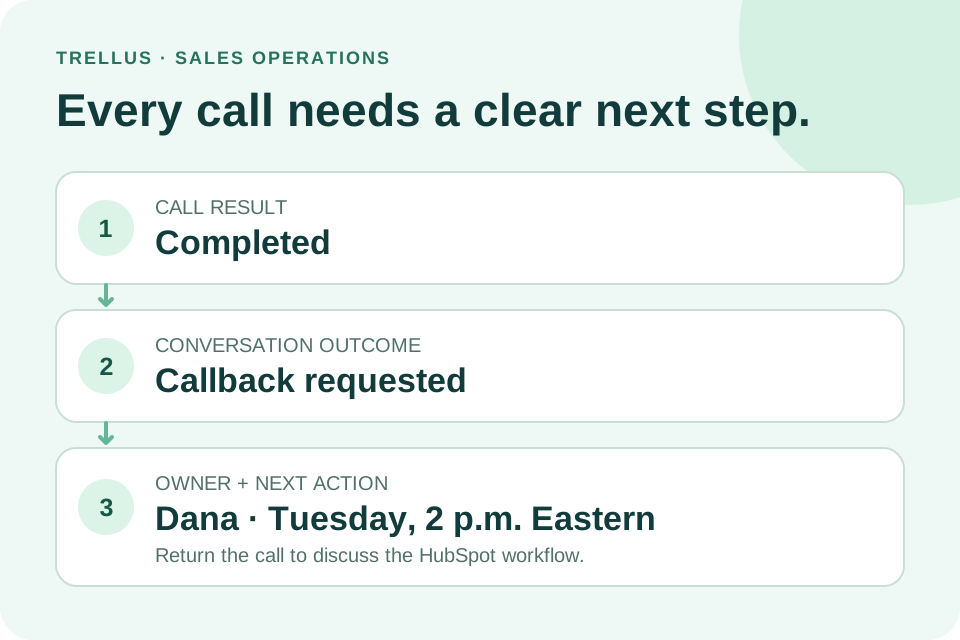
•Measure quality alongside activity: connects, positive replies, meetings booked and accepted, meeting quality, conversion to opportunity, CRM hygiene, complaints.
•After 30–60 days: assess adoption, workflow friction, integration gaps, and training needs; then expand.
Common mistakes when buying AI SDR tools
•Automating before fixing targetingAI scales both good and bad lists. Clarify ICP, personas, and signals first.
•Ignoring rep experienceIf it slows reps down, it won’t stick. Check clicks, handoffs, call setup, prompts, and follow-up generation.
•Treating AI outputs as “correct by default”Establish review and feedback loops for research, personalization, and summaries.
•Comparing unlike categoriesDialers, engagement suites, and data/workflow tools solve different problems. Shortlist by bottleneck.
•Overlooking compliance and consentAlign on calling rules, email regulations, opt-outs, recording, data processing, and regional laws. Vendor tools help, but responsibility is shared.
Where Trellus fits in the AI SDR landscape
Trellus is most relevant when outbound conversations drive pipeline and managers want better execution in the moment. It’s not a prospecting database or a broad engagement suite—it’s built to convert prospecting effort into more and better live conversations with AI assistance and coaching.
Evaluate Trellus if you prioritize:
•Higher outbound call productivity
•Real-time objection handling and guidance
•Consistent talk tracks across the team
•Reduced friction in call-heavy workflows
•AI voice exploration with clear oversight
For broader context, compare this shortlist with the hub on how to choose AI SDR software. Decide whether you need calling-focused AI, a sales engagement suite, a data/workflow tool, or a combination.
Conclusion
Trellus, Nooks, and Orum lead for phone-heavy workflows. Outreach and Salesloft serve teams standardizing multi-channel engagement at scale. Apollo and Clay support data and research-driven prospecting. Artisan targets teams exploring AI agent-led outbound.
Pick based on your bottleneck, risk tolerance, and where AI should assist vs. automate. Test with real accounts and ensure manager-led coaching is built in. If outbound conversations are central to your pipeline, add Trellus to your shortlist and review Trellus pricing to validate plans and capabilities.
FAQ
What is the best AI SDR software in 2026?
It depends on your motion. Trellus is a strong fit for call-heavy teams; Outreach and Salesloft suit broader engagement operations; Apollo and Clay fit prospecting data/workflows. Pilot with real accounts before deciding.
What are AI SDR tools?
Software that automates or augments SDR tasks—prospect research, list building, dialing, sequencing, coaching, follow-up, and CRM updates—ranging from assistive features to autonomous agents.
Can AI SDR software replace SDRs?
AI can automate narrow tasks and some outbound steps. Most B2B teams get better results with AI-assisted selling: AI handles research and mechanics while humans manage judgment and conversations.
Which AI SDR tools are best for cold calling?
For outbound calling and productivity, evaluate Trellus, Nooks, and Orum. Confirm dialing modes, compliance controls, CRM integrations, coaching depth, and plan details.
Which AI SDR tools are best for prospecting data?
Apollo and Clay are commonly chosen for contact discovery, enrichment, and research workflows. Test coverage and accuracy against your ICP and regions.
How much does AI SDR software cost?
Pricing varies by seats, usage (minutes, credits), AI features, and add-ons. Always verify current plans directly with vendors; avoid third-party estimates.
What should I ask during an AI SDR demo?
Use your accounts and messaging. Confirm where AI acts autonomously, human approvals, CRM sync behavior, reporting for managers, and which plan includes shown features.
How long does AI SDR software take to implement?
Timelines vary by category and complexity. Calling tools typically onboard faster than full engagement suites or custom workflow platforms. Confirm scope, dependencies, and internal resources.


Power and parallel dialing in your CRM.